Weebou Editorial Team
 10 min read


 In this article
A little preparation
Pick a calm moment and a small group — two children are easier than five, and three is plenty for a first try. Sit on the floor at the same height as the children, with materials in sight but not scattered: large blocks, soft toys, crayons, a basket of pictures. Keep one copy of each popular item and several of the rest, so waiting is short and no one has to fight over the only red block. Allow about fifteen minutes and stop while it is still going well.
Tell everyone the plan before you start, including how to pause: a child can say stop, hold up a hand or simply walk to the quiet cushion, and joining back in later is always allowed. An adult stays nearby to name what is happening rather than to referee every move. If you are new to this kind of play, these games that build a shared idea explain the difference between playing together and playing the same game. No child needs to touch anyone, speak in sentences or share a treasured object to take part; choosing to watch first is a real contribution.

What to know and try
Practise a clear invitation
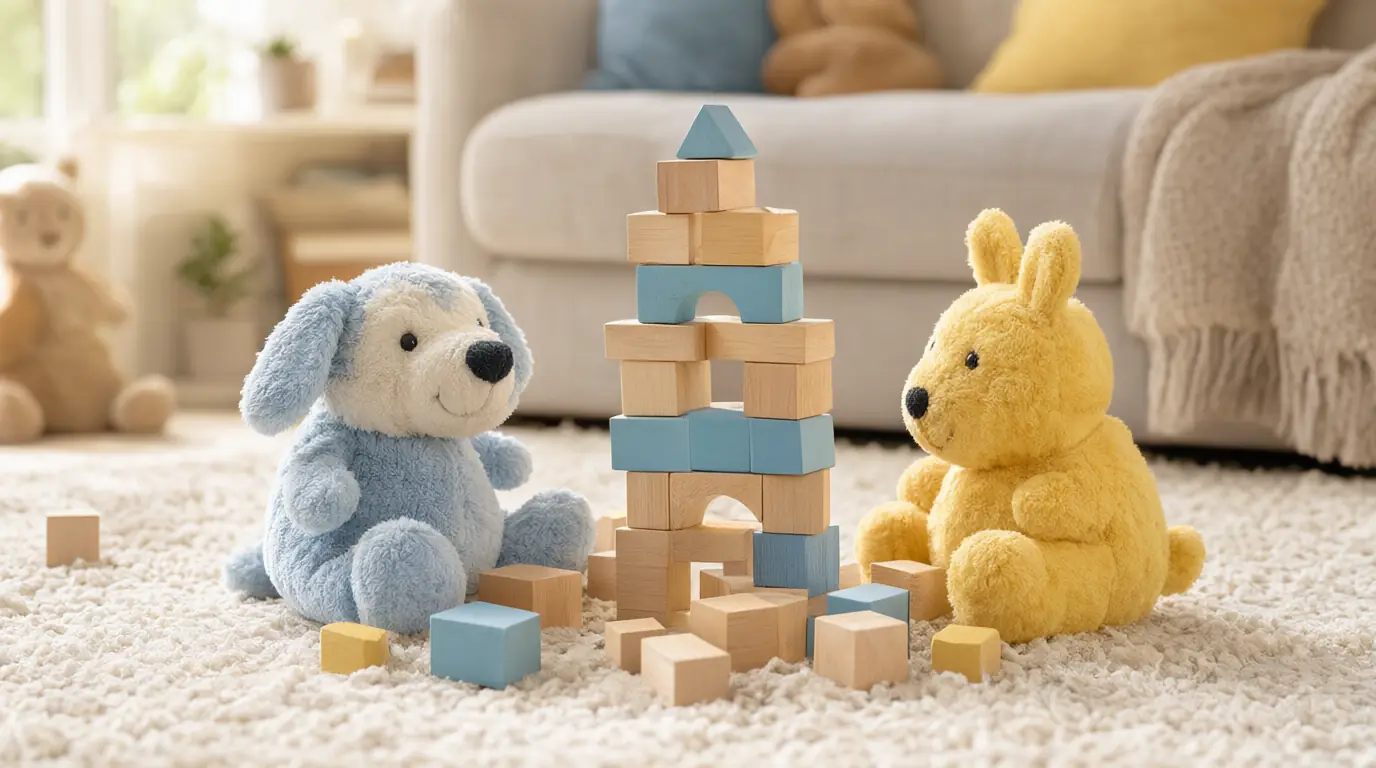
Role-play is a safe place to try the exact words of an invitation, because the toy is the one being asked. Children hear that "Would you like to build with me?" can be answered with yes, no or not now, and that none of those answers ends the friendship or the game. Keeping a second activity nearby means a no is easy to live with, and a shy child can watch the toy version first.
 You’ll need
- 2–3 soft toys
- A few large blocks or a small puzzle
- Two nearby play spots (a mat and a table)
How to do it
- Set two soft toys facing each other with the blocks between them.
- Give one toy the words: "Would you like to build with me?" and let your child choose the reply.
- Try all three answers — yes, no and not now — and keep the scene going after each one.
- Show the second play spot, so the toy that said no has somewhere to be.
- Swap roles and let your child hold the asking toy.
- Finish by asking your child to try the same words with you, then with a real playmate if they want to.
Make it your own: Younger children can copy your sentence word for word. Older ones can add a reason or a counter-offer, such as "Not now — after this tower." For children who do not use spoken words yet, an outstretched hand, a picture card or simply sitting down beside the builder can serve as the invitation. These gentle icebreakers offer a few more low-pressure openings.
Ask before borrowing
Borrowing is where most small-group play goes wrong, so it deserves its own rehearsal. Playing it as a block game gives children a script: ask, wait for an answer, and hear an offer of something else as a genuine yes. The rule stays the same for adults too, which makes the whole thing feel fair rather than like a test.
You’ll need
- Large blocks split into two equal piles
- One extra item everyone wants (a small figure or car)
- A tray or mat to mark each player's space
How to do it
- Give each player the same number of blocks in the same colours.
- Let each player build on their own tray for a few minutes.
- Ask for something you need: "May I borrow one of your blue blocks?"
- Offer your child a genuine choice — hand it over, offer a different block, or agree on a later turn.
- Accept every answer without comment and carry on building.
- Invite your child to ask you for a block and answer in the same way.
- If a swap happens, say what you noticed: "You found a block I could use instead."
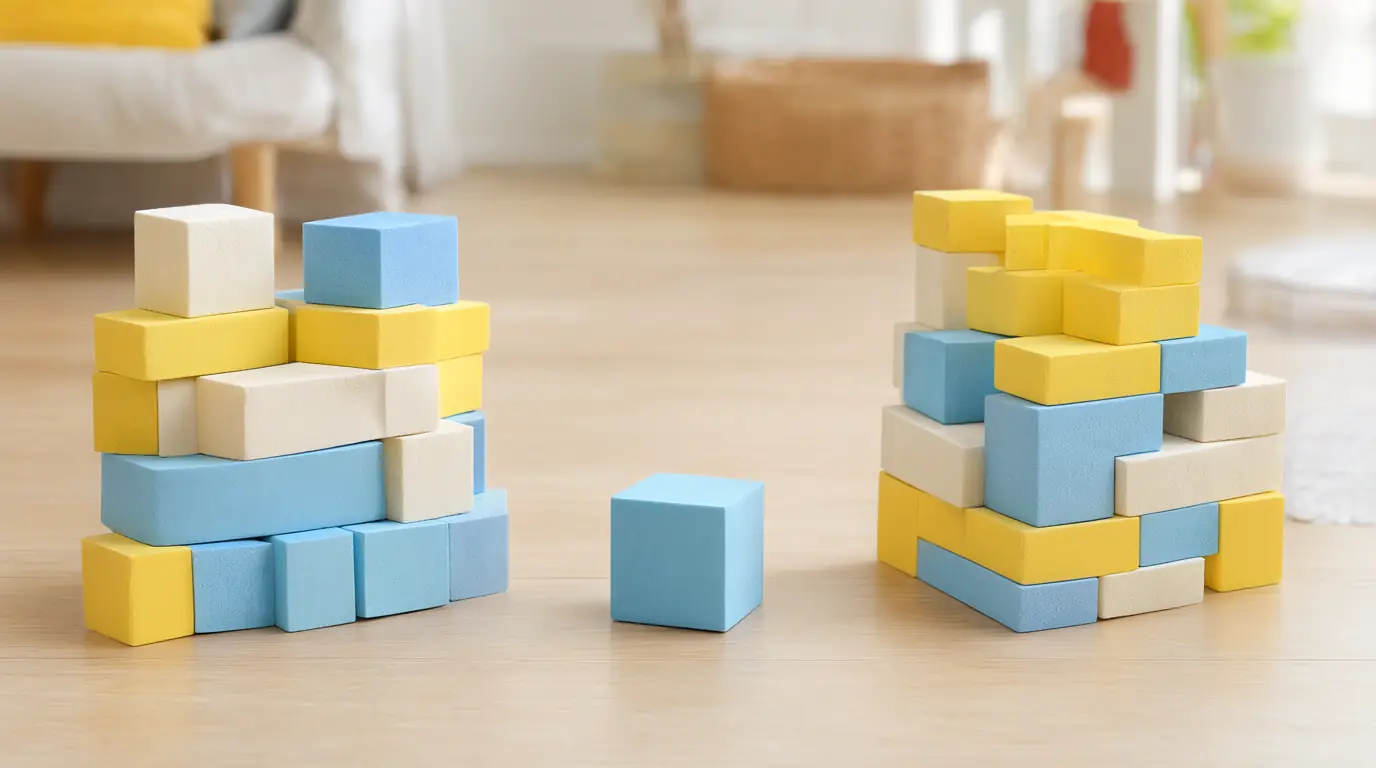
Make it your own: Toddlers can practise with duplicates so nothing is lost. Older children can add a trade, an exchange that lasts a set number of turns, or a written list of who has which piece. If a child is not ready to lend a favourite, put it away before the game starts rather than making it the test.
Repair a mixed-up message
Misunderstandings are normal, not misbehaviour, and children get better at fixing them when they see it done out loud. This game deliberately muddles a rule so your child can practise asking, showing and trying a different explanation. The message is the shared task; nobody has to be the one who was not listening.
You’ll need
- Paper and thick crayons
- A simple two-step game your child already knows
- A small toy to be the confused player
How to do it
- Start a game your child already knows and play one round normally.
- Give the toy a rule that is slightly wrong: "The toy thinks we turn the cards face up first."
- Ask: "How could we help the toy understand?"
- Draw the correct sequence together as pictures, one box for each step.
- Play again using the drawing as the instructions.
- Point out the fix rather than the mistake: "You explained it a different way and now it works."
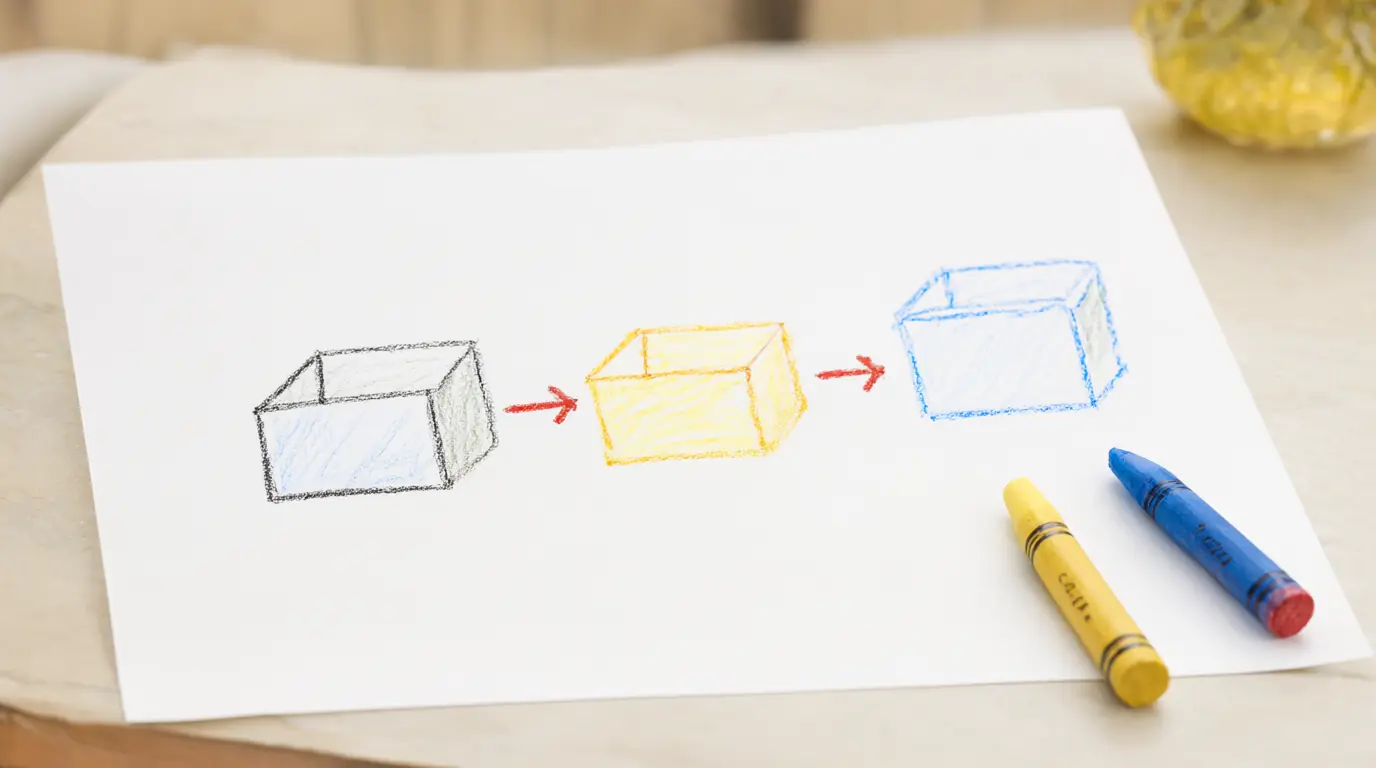
Make it your own: With younger children, keep it to one muddled rule and solve it by showing rather than talking. Older children can plan two ways to explain the same thing and pick the one that worked. Children who prefer not to speak can point, nod or draw their answer instead.
A picnic where everyone has a job
A shared goal gives children a reason to negotiate that is not about personalities. Setting out a toy picnic needs carrying, spreading, placing, counting and checking, and each job is genuinely useful. When the jobs are named, a child who finds the middle of a game hard can still see exactly where they belong, and roles can be swapped at any point.
You’ll need
- A mat, blanket or low table
- Soft toys, a basket and a few play-food pieces
- A cushion for each place
- Paper and crayons for a job list
How to do it
- Announce the goal: a picnic for four soft toys, ready in ten minutes.
- List the jobs out loud — carry, spread, place, count, check — and let each child choose one.
- Let children swap jobs whenever they like, and keep the list visible on the mat.
- Ask the group rather than one child: "Does everyone have a plate?"
- When someone is stuck, offer two choices instead of a solution.
- Sit down and eat the pretend picnic together, with each child saying one thing they did.
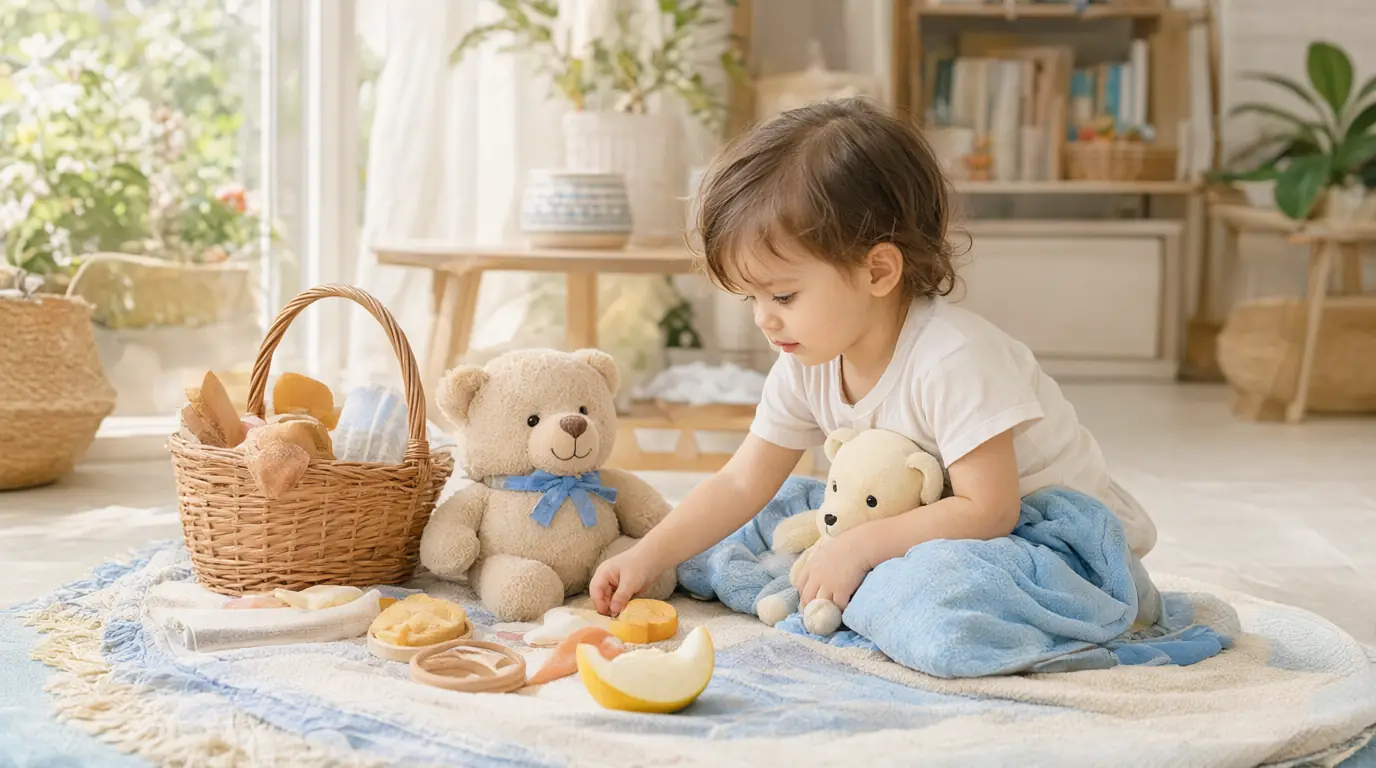
Make it your own: Two-year-olds can carry one item per trip. Older children can draw the job list and take a title. In a bigger group, add a second picnic spot so quieter children can work in a pair. There are more teamwork activities where every child has a useful role to borrow from.
Pass the question
A talking object gives everyone an equal share of the floor and makes passing a respectable choice. When the holder may answer or say pass, quieter children stay in the game instead of dropping out, and more talkative ones learn that the pause belongs to someone else. It also works as a gentle way to end a play session.
You’ll need
- A soft toy or small cushion to pass
- Floor cushions in a small circle
- Two or three simple questions ready
How to do it
- Sit in a small circle with a cushion for each person.
- Explain the two rights: the holder may answer, or say pass and hand it on.
- Ask an easy opening question, such as "What is your favourite colour today?"
- Answer it yourself first, so everyone hears the shape of a turn.
- Pass the toy round without skipping anyone, including anyone who passed.
- Keep to one round at first, then ask if anyone wants a second.

Make it your own: With toddlers, use a single question and let them hold the toy while they think. Older children can ask the next question themselves. A child who does not speak can answer by pointing at something in the room, and passing still counts as taking part.
Make it work for your family
Expect the first attempts to be messy. If a game collapses into a disagreement, describe what you see instead of who was right: "You both want the same block, and there is one of them." Then offer two options and let the children choose. A child who wanders off is not failing at the game; playing side by side is a real stage, and they often rejoin once the pressure lifts. Keep sessions short and finish while everyone still wants more.
End each game with a small closing routine — a question, a thank-you or a tidy-up job — so children learn that shared play has a beginning and an end. If the same child is always asked to give something up, change the materials rather than the child; duplicates solve more arguments than any script. Some children need a visible pause button, and these stop-and-go games give them one. If difficulties with joining, understanding or playing with others continue over several months, it is worth talking them through with a health visitor, teacher or other qualified professional.

Parents also ask
What are good social skills games for 3-year-olds?
For three-year-olds, keep it to two children and one clear idea: inviting a toy to play, passing a soft toy round a circle, or practising "May I borrow?". Duplicates of the same toy matter more than the game itself, because waiting is still hard at this age. Ten minutes is usually plenty — stop before anyone is tired.
How do I help a child who always wants to be in charge?
Give them an important job that is not the leading role: the checker, the counter, or the person who holds the plan. Then name what only they could do, such as noticing a missing plate. Add games with genuine turns, like pass-the-question, so the pause is shared. If the same struggle repeats with several children, mention it to their teacher.
Should I make children share their toys during these games?
No. Sharing a treasured object is the hardest thing to practise, so leave favourites out of the game and keep duplicates of everything else. Children can still work on asking, waiting and offering an alternative. Self-chosen sharing usually appears later, once a child trusts that a no is respected. If it worries you, ask their preschool how sharing is handled there.
Choose materials and activities that suit your child, supervise as needed and adapt the ideas to their interests and abilities. About our editorial approach