Weebou Editorial Team
 8 min read

 In this article
A little preparation
Pick a goal small enough to finish in 15 to 20 minutes, such as a road for two toy vehicles, and state it in one sentence: we are making a road so both cars can get home. Provide enough materials for every child to have a real part to play, as shortages are the most common cause of disputes. A large rug or a low table keeps things in one place, and putting the materials in a central basket makes sharing visible.
Stay nearby but do not run the game. Your job is to notice and name what children are doing, such as Sam is placing the bridge and Lily is lining up the cars, so each child hears that their job matters. Let children begin with the idea each of them has, and help them link the ideas rather than choosing between them. Tell everyone that it is fine to take a break or play beside the group, because joining at the edge is also a form of taking part.

What to know and try
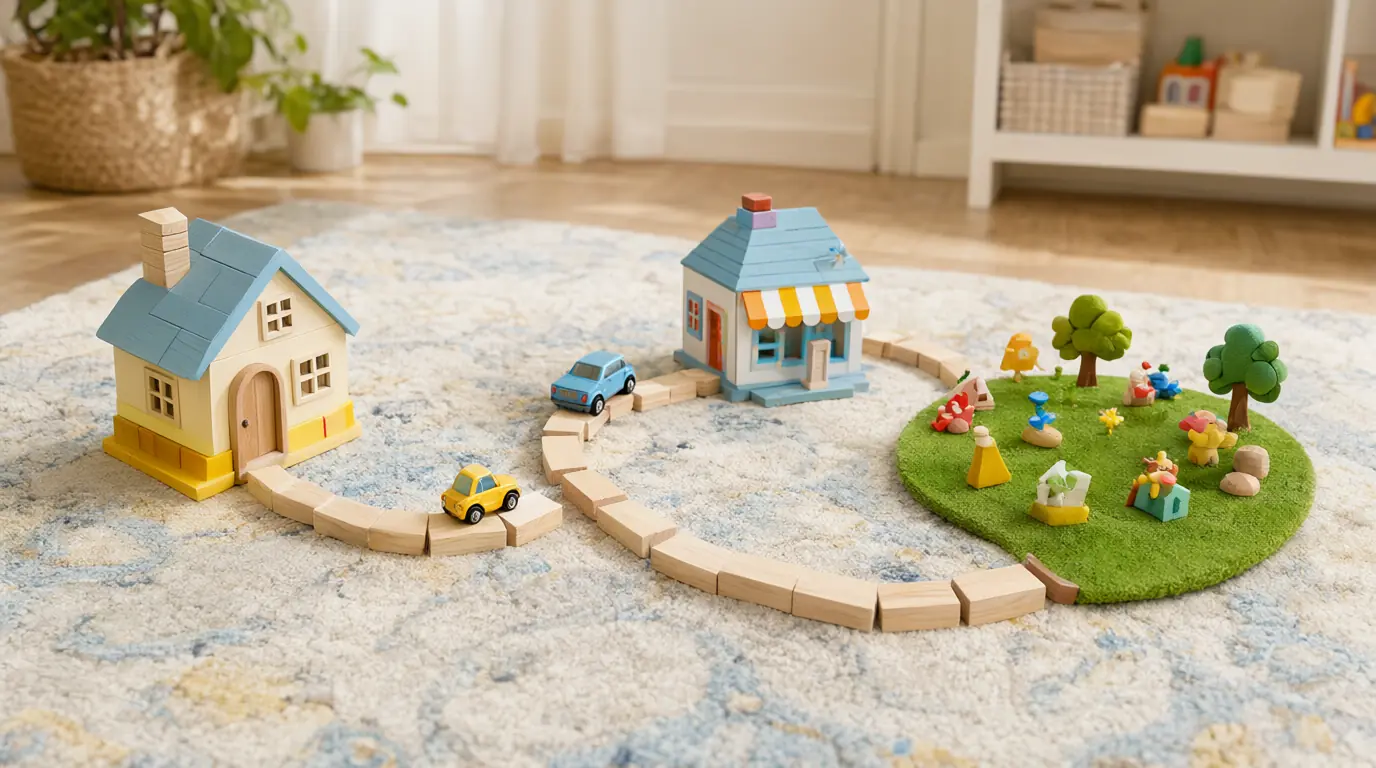
Build a road with two jobs
Two children, two jobs and one road make a natural reason to talk to each other. One child chooses where places go and the other builds the path that links them. Pausing to test whether the vehicles can reach every destination gives them a shared question rather than a competition.
 You’ll need
- 20 to 30 large wooden or cardboard blocks
- 2 toy vehicles
- 3 small toys as destinations, such as a house, a shop and a park
- A rug or large sheet of paper as the base
How to do it
- Tell the children you are going to build a road so that both vehicles can visit every place.
- Ask one child to choose where to put the house, the shop and the park.
- Ask the other child to build the road between them with the blocks.
- Drive the vehicles along the road together and notice where it needs fixing.
- Swap jobs or combine them if the children want to.
- Celebrate with a drive around the whole road and name each place they reach.
Make it your own: For younger children, use only one destination and a short straight road. For older children, add a river and a bridge, or ask them to plan the route on paper before building.
Make a shared story map
A big sheet of paper becomes an imaginary world that every child adds to. Because each place is welcome, different ideas live side by side, such as a castle next to a pond next to a rocket station. Connecting them with paths gives children a reason to talk about how a character could travel from one to another.
You’ll need
- A large sheet of paper taped to a low table or the floor
- Crayons or markers
- A small toy figure for each child
- Masking tape
How to do it
- Tape the paper down and place the toy figures at the edges.
- Invite each child to draw one place for the map, whatever they like.
- Admire every place and say its name aloud.
- Ask how a figure could get from one place to another and draw the path.
- Move the figures along the paths and tell a tiny story about the journey.
- Leave the map out so children can add to it later.
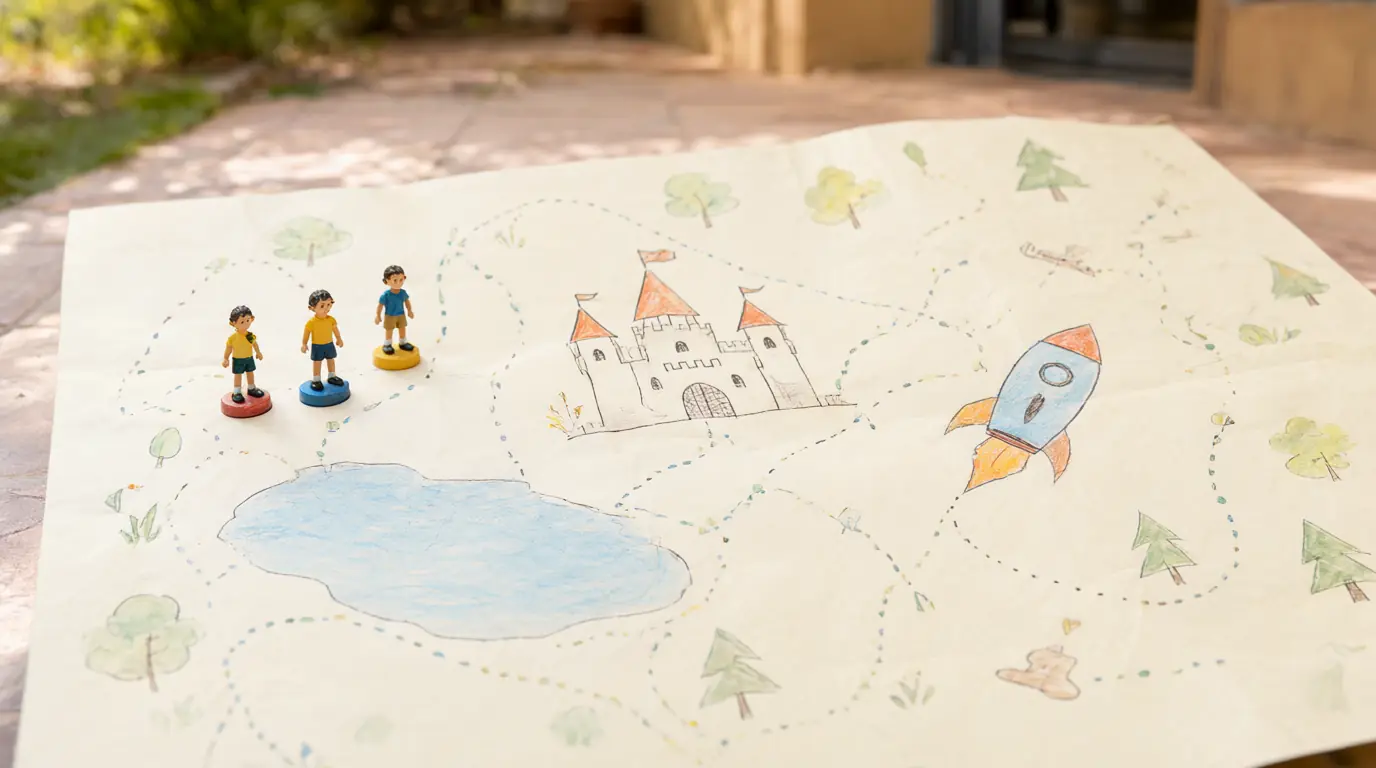
Make it your own: Younger children can add a scribble or a sticker to the map. Older children can plan a route that passes through three places and tell the others what happens on the way.
Run a pretend delivery team
A delivery team gives children different jobs, packing, carrying and receiving, and each job is needed for the game to work. A quieter child can take a less talkative role, such as checking the parcels, while a more active child carries. Everyone sees the result of working together when a parcel arrives.
You’ll need
- 6 to 8 large pretend parcels made from wrapped boxes
- A wheeled cart or a laundry basket
- 3 labelled spots with pictures, such as a house, a shop and a school
- Paper bags for tickets
How to do it
- Set up the three delivery spots around the room with a picture at each one.
- Ask the children to decide who will pack, who will carry and who will receive.
- Pack the parcels into the cart, with the packer choosing where each goes.
- Carry them to the correct picture and hand them to the receiver.
- Ask what the receiver needs, for example more parcels or fewer.
- Swap jobs and make a new delivery round.
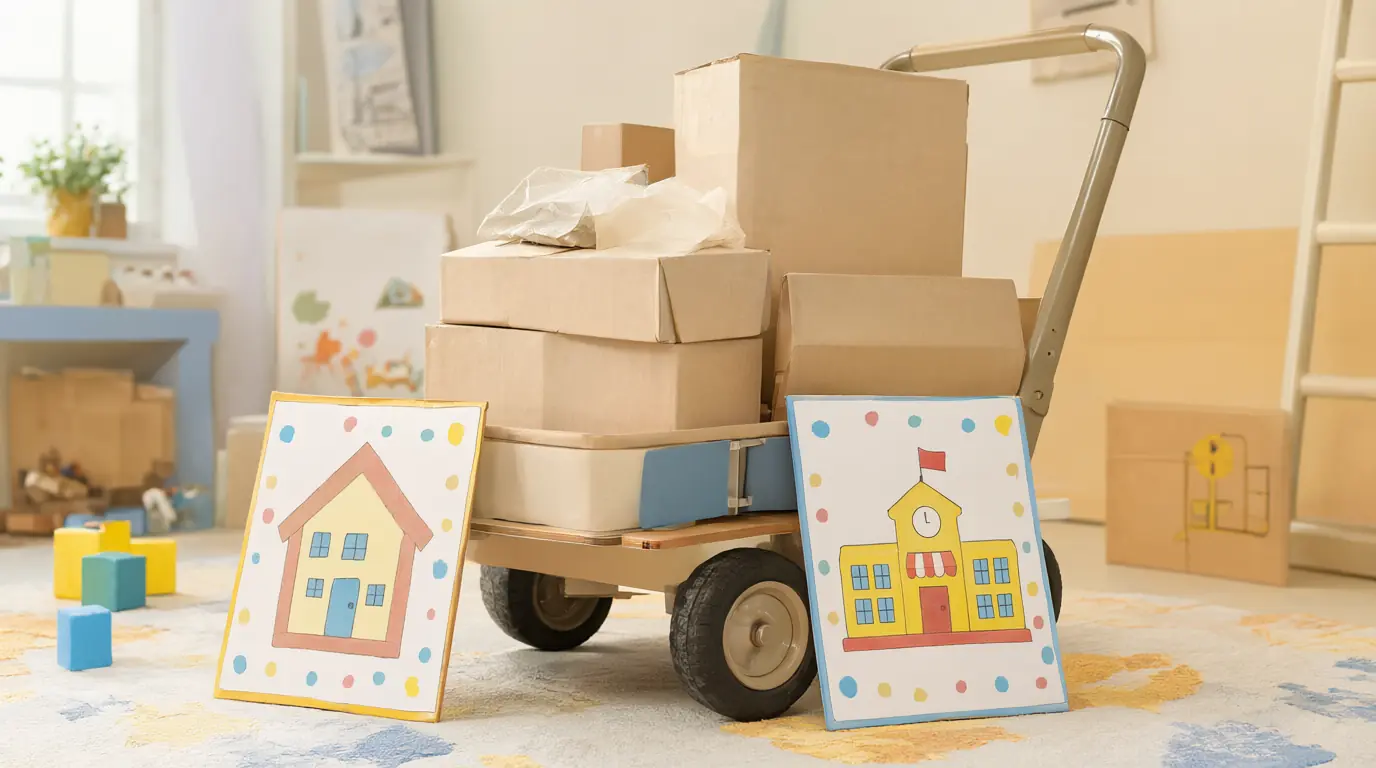
Make it your own: Younger children can do just one round with two parcels. Older children can make a delivery list with pictures, or keep a tally of how many parcels went to each place.
Draw a picture together in turns
Drawing on one sheet teaches children to make space for each other's marks. A broad theme such as a garden offers many ways to contribute, and children decide where something new could go. Having separate paper close by lets anyone who needs their own space step away without leaving the game.
You’ll need
- One large sheet of paper
- A basket of crayons
- Extra sheets of paper at the side
- A soft toy to show whose turn it is
How to do it
- Choose a theme together, such as a garden or a park.
- Pass the soft toy to the first child to start with one feature.
- Say what you notice and ask where the next feature could go.
- Pass the toy on and let the next child add something.
- Keep going around the group until the page feels complete.
- Ask each child to point to their favourite part of the whole picture.
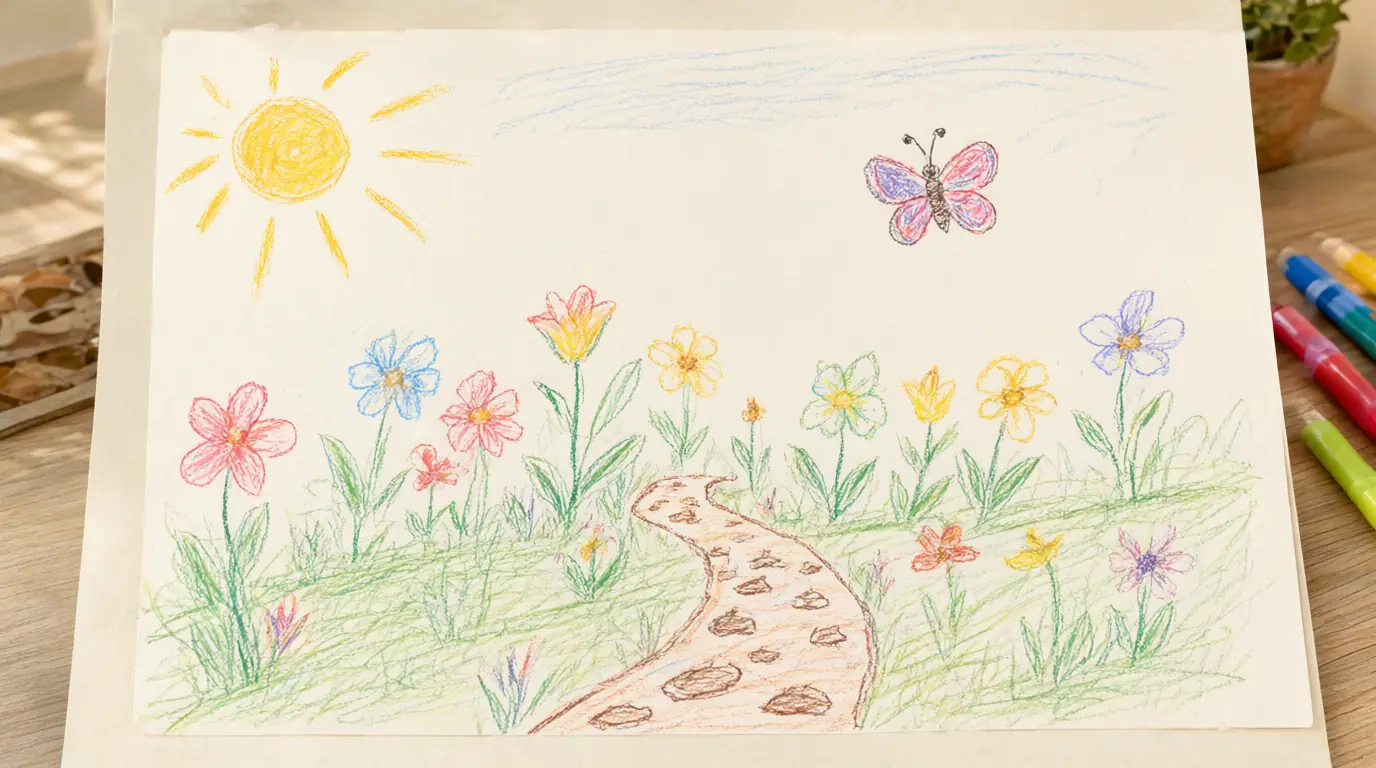
Make it your own: For younger children, make the turns very short, one mark each. Older children can plan what to add by whispering to a partner, or agree on a story to go with the picture.
Bridge challenge for two pairs of hands
Building a bridge that needs two people at once gives children a good reason to cooperate: one holds while the other places. The challenge is clear and testable, and if the bridge falls, they can try again together. It is a gentle introduction to problem-solving with another person.
You’ll need
- 2 stacks of books or two boxes as banks
- A sheet of stiff card to use as the bridge
- A few small blocks or toys to cross it
- A toy car or animal
How to do it
- Place the two books or boxes with a gap between them.
- Explain that the challenge is to build a bridge that a toy can cross.
- One child holds the card while the other places the blocks on top.
- Test the bridge by moving the toy across, one step at a time.
- If it falls, talk about what could help and try again.
- Make the gap a little wider once it works.
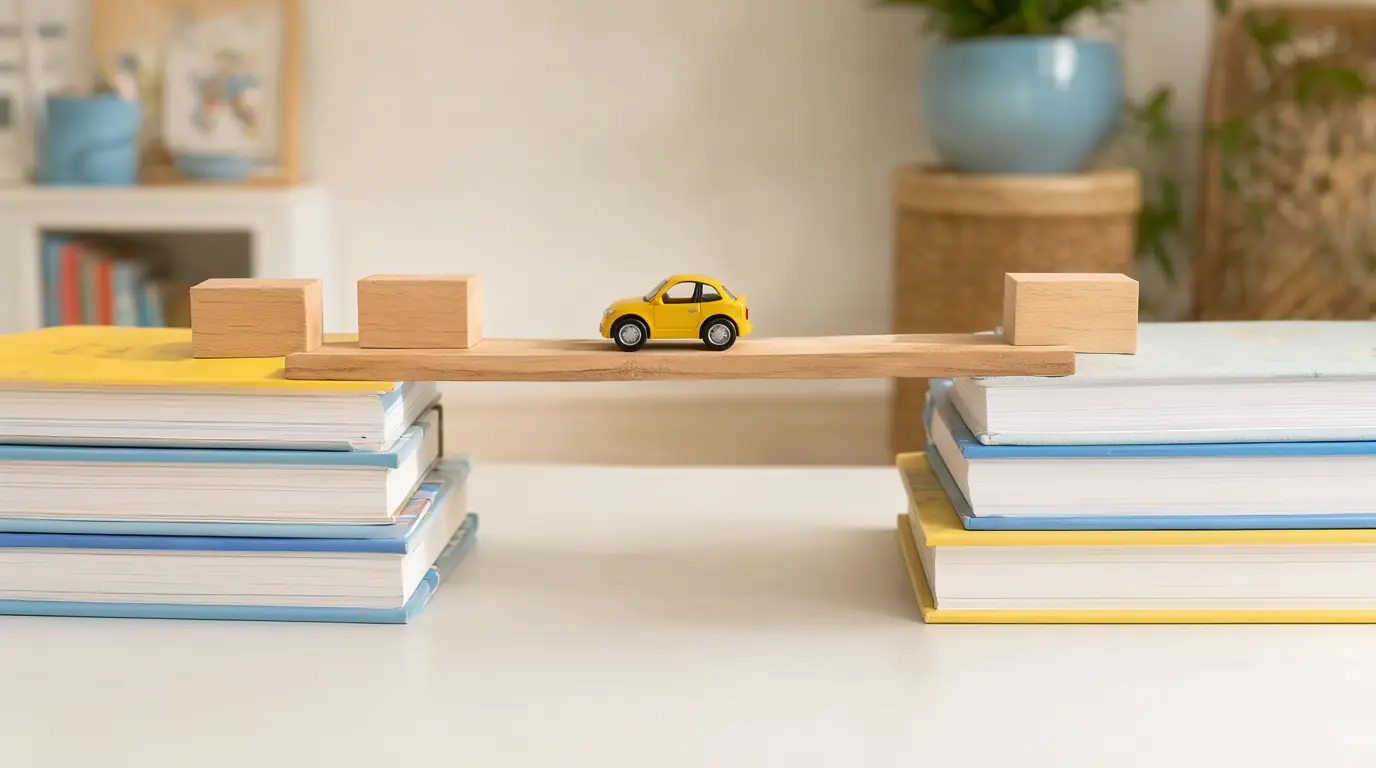
Make it your own: Younger children can use a narrow gap and a piece of thick card. Older children can build with a limited number of blocks and say in advance what they think will happen.
Make it work for your family
Playing alongside the group is a perfectly good way to join, and some children will move closer when they are ready. If a disagreement builds, slow the project down by stopping the game and listening to each child's idea in turn. Repeat what you heard, then ask what could make a place for both ideas. Sharing a task should not mean giving up the right to say no or to ask for space.
Avoid fixed roles such as the boss or the helper, and switch jobs if children want to. Do not reward the busiest child, and do not insist on a perfect result. If a younger child knocks something down, treat it as information about what is hard: perhaps they need a job of their own. For related guidance, see our notes on parallel play, plus teamwork activities and building games.

Parents also ask
At what age do children start cooperative play?
Many children begin to play with a shared goal around age 3 or 4, though this varies a lot. Younger children often play alongside others first. Offer plenty of materials and short tasks, and do not worry if your child prefers to join gradually.
What if my child does not want to share or cooperate?
Say what you see without judging, and make sure there are enough materials so sharing is not forced. Let your child have a space or an object that is theirs. Try a game where each child has a different job, which reduces the need to take turns with one thing.
How can I help children resolve a disagreement during play?
Pause the game, listen to each child, repeat what you heard and ask how the game could include both ideas. Offer a small choice if they are stuck. Stay calm, and step back as soon as they begin to agree.
Choose materials and activities that suit your child, supervise as needed and adapt the ideas to their interests and abilities. About our editorial approach