Weebou Editorial Team
 8 min read

 In this article
A little preparation
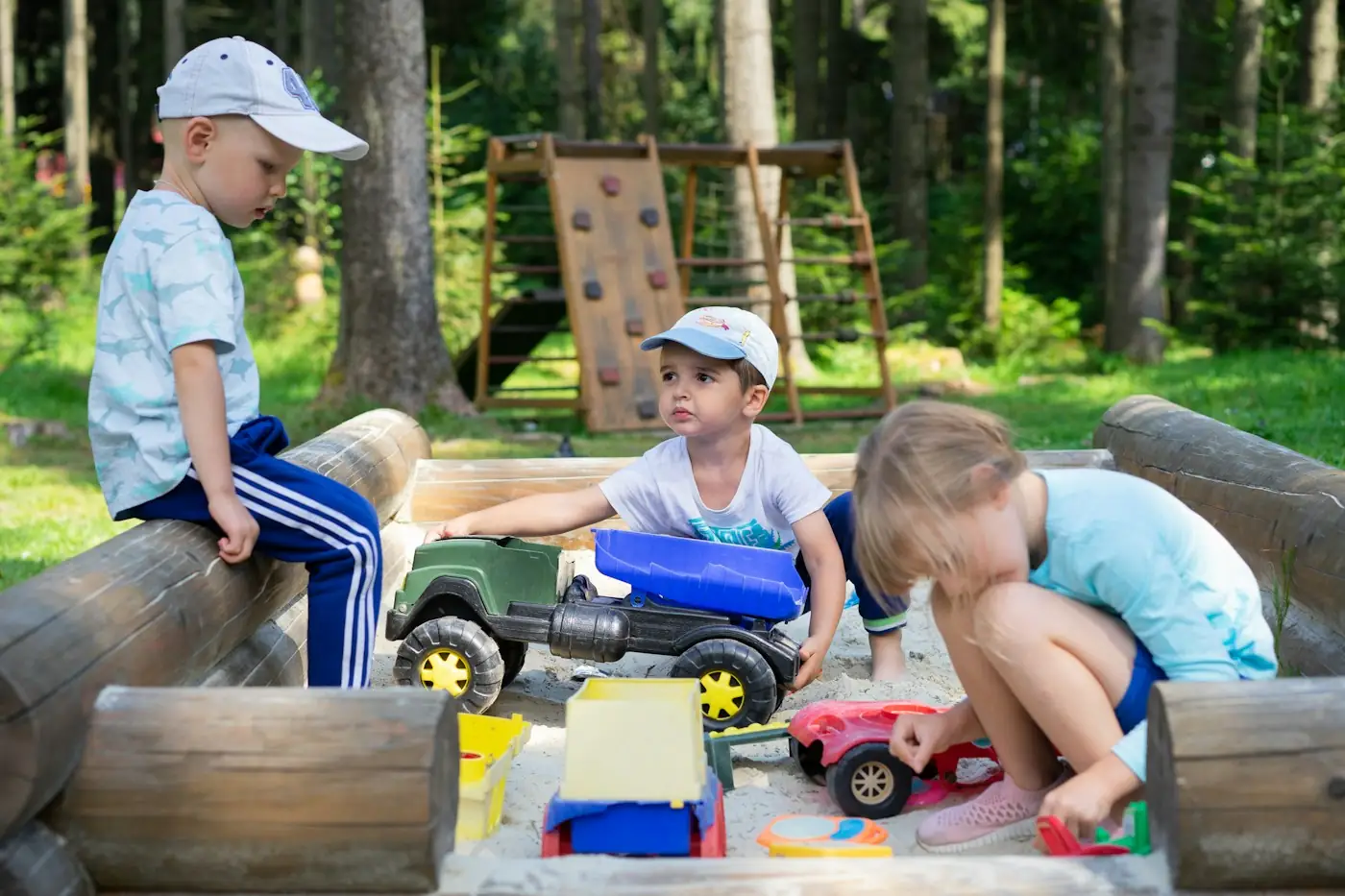
The aim is not to turn parallel play into shared play but to make it easy. Give each child their own patch of floor or tray, with enough of the same materials that nobody has to wait or negotiate. Two sets of blocks, two cars and two sheets of paper matter more than a clever activity. Sit nearby at the children's level so you can describe what you see without directing it.
Speak about what each child is doing rather than about what they should do together: 'You are lining up all the red blocks' or 'Ahmed is making a long road.' Resist the urge to say 'why don't you play together?' in the first minutes; watching is a legitimate way to join in. Allow 15 to 25 minutes, and be ready to step in only for safety, such as when a child is about to throw a heavy block. Keep a few extra items in a box for a child who wants a turn with something that belongs to someone else, so that a trade is possible without anyone being asked to give up a favourite.

What to know and try
Two neighbouring building spots
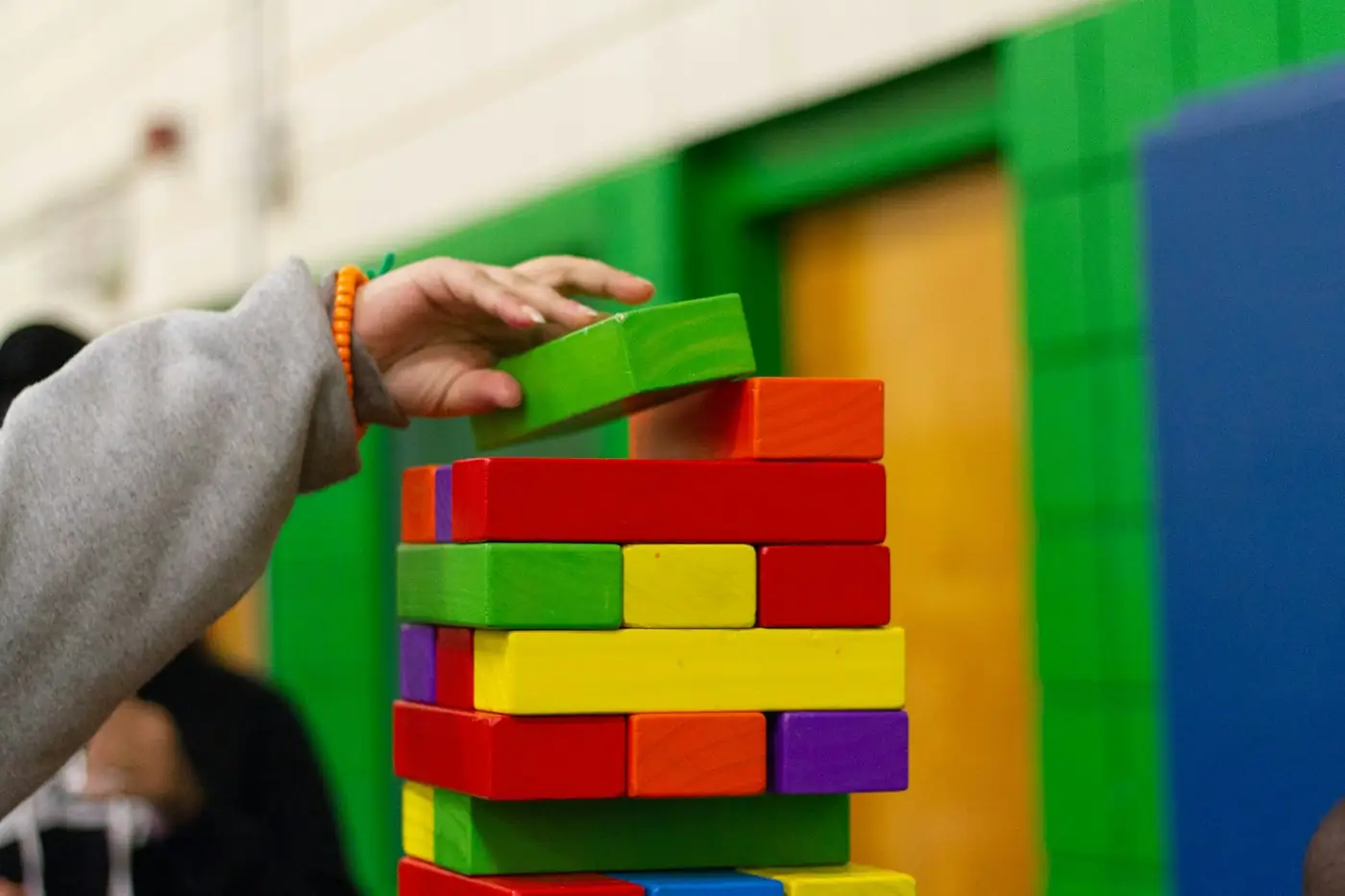
Two small piles of blocks placed a stride apart give each child a territory and a clear supply. They can see each other's towers and copy a good idea without anyone's work being knocked over. It is the simplest set-up to try first and the easiest to repeat.
 You’ll need
- 2 sets of 10 to 15 large blocks
- 2 play mats or tea towels
- A rug or soft floor
- A spare block for each child in a basket
How to do it
- Lay the two mats about a stride apart and divide the blocks equally.
- Describe what each child has: 'You have the long blocks, and you have the square ones.'
- Let each child build whatever they like for five to ten minutes.
- Comment on what you see: 'That tower is tall' or 'You made a bridge.'
- If one child wants a block from the other mat, ask the owner and offer a spare as a swap.
- Take a photograph of both builds side by side before tidying up.
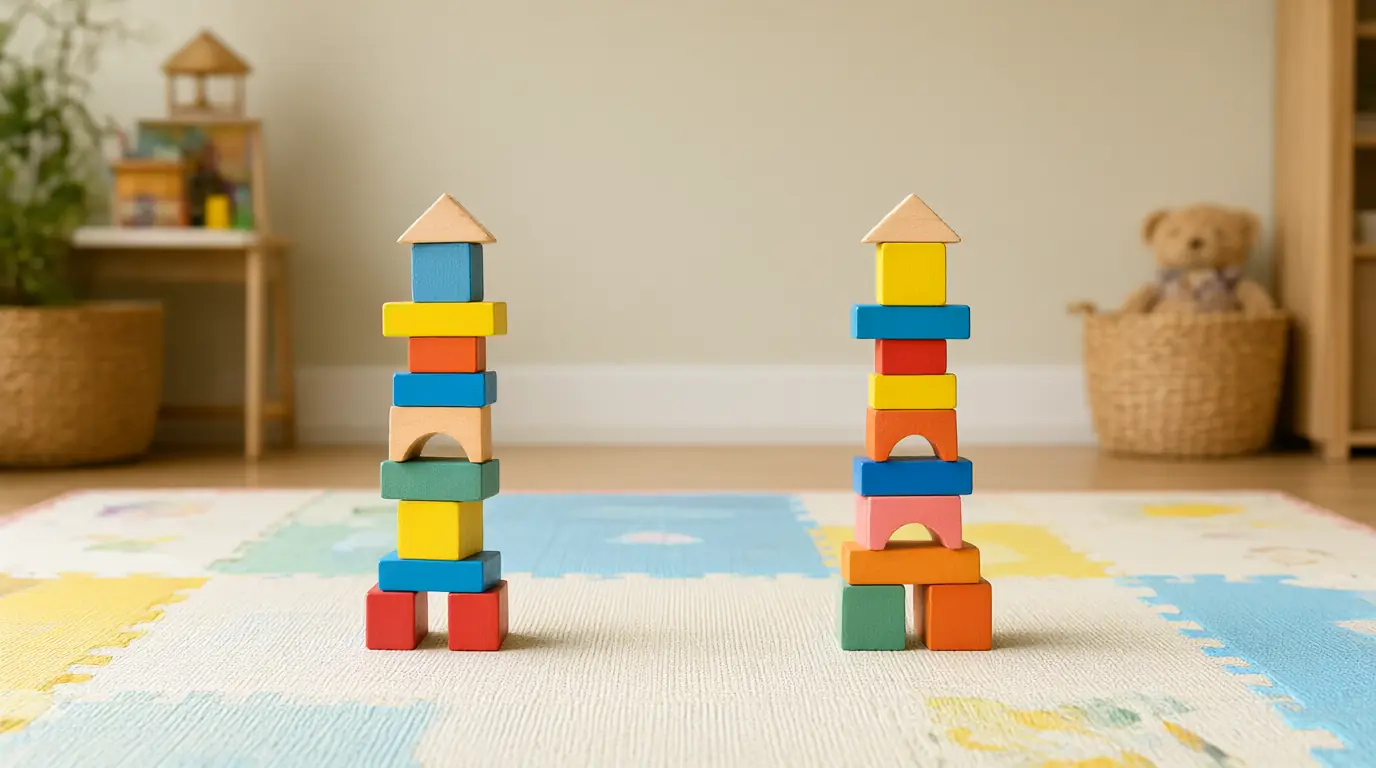
Make it your own: For very young toddlers use only four or five blocks each. For older preschoolers, ask whether they would like to join the two builds with a bridge, accepting a no.
Separate pages, shared crayons
Drawing side by side is a natural fit because children can work independently while noticing each other's marks. A shared tray of crayons in the middle makes small moments of asking and passing possible without forcing a joint picture. Each child keeps ownership of their own page.
You’ll need
- 2 sheets of paper, one per child
- A shared tray of 8 to 10 crayons
- 2 clipboards or taped corners
- A small table or a clear floor patch
How to do it
- Sit the children side by side and give each a sheet.
- Place the crayon tray where both can reach it.
- Let them draw whatever they wish and avoid asking what it is.
- Notice aloud when a child asks for a crayon or passes one.
- When they finish, ask each child if they want to tell you about their picture.
- Display the two pictures next to each other, not in competition.
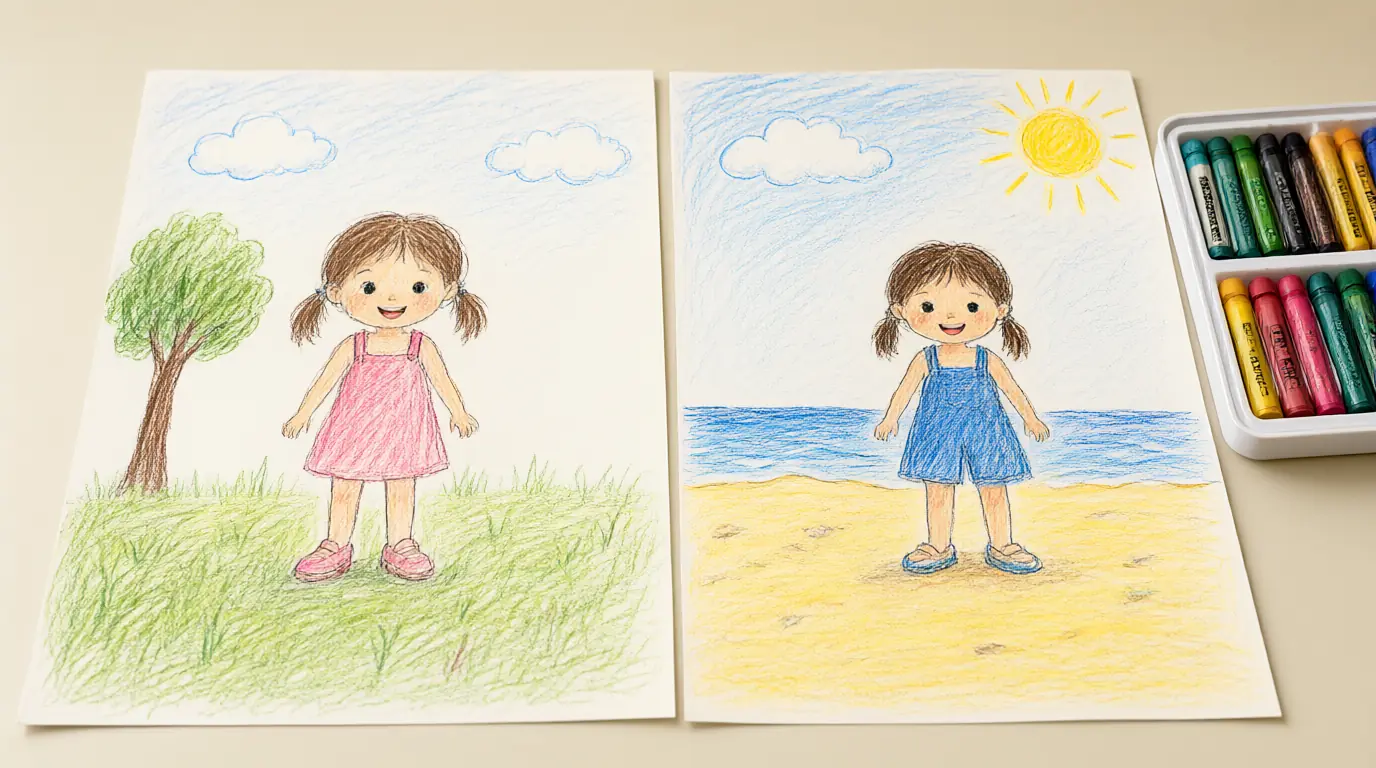
Make it your own: For younger children use chunky crayons and tape the page down. Older children can be asked if they want to draw on a shared long strip with a pencil line between their halves.
Similar toys, different stories
Two cars, two animals or two dolls let each child tell a story without negotiating who has the only one. You may hear two storylines at once, sometimes with a few borrowed words. Both are play. Your job is to listen and add a short comment.
You’ll need
- 2 identical or similar toy vehicles
- 2 small animals or figures
- 2 pieces of cloth or paper as roads
- A floor space of about two metres
How to do it
- Offer each child a vehicle and a figure.
- Lay a cloth road in front of each child.
- Watch the stories for a few minutes without correcting them.
- Comment on one detail for each child, such as 'your car stopped at the shop.'
- If the stories start to overlap, say what you notice: 'Your cars are driving near each other.'
- Let them keep the stories apart if they prefer.
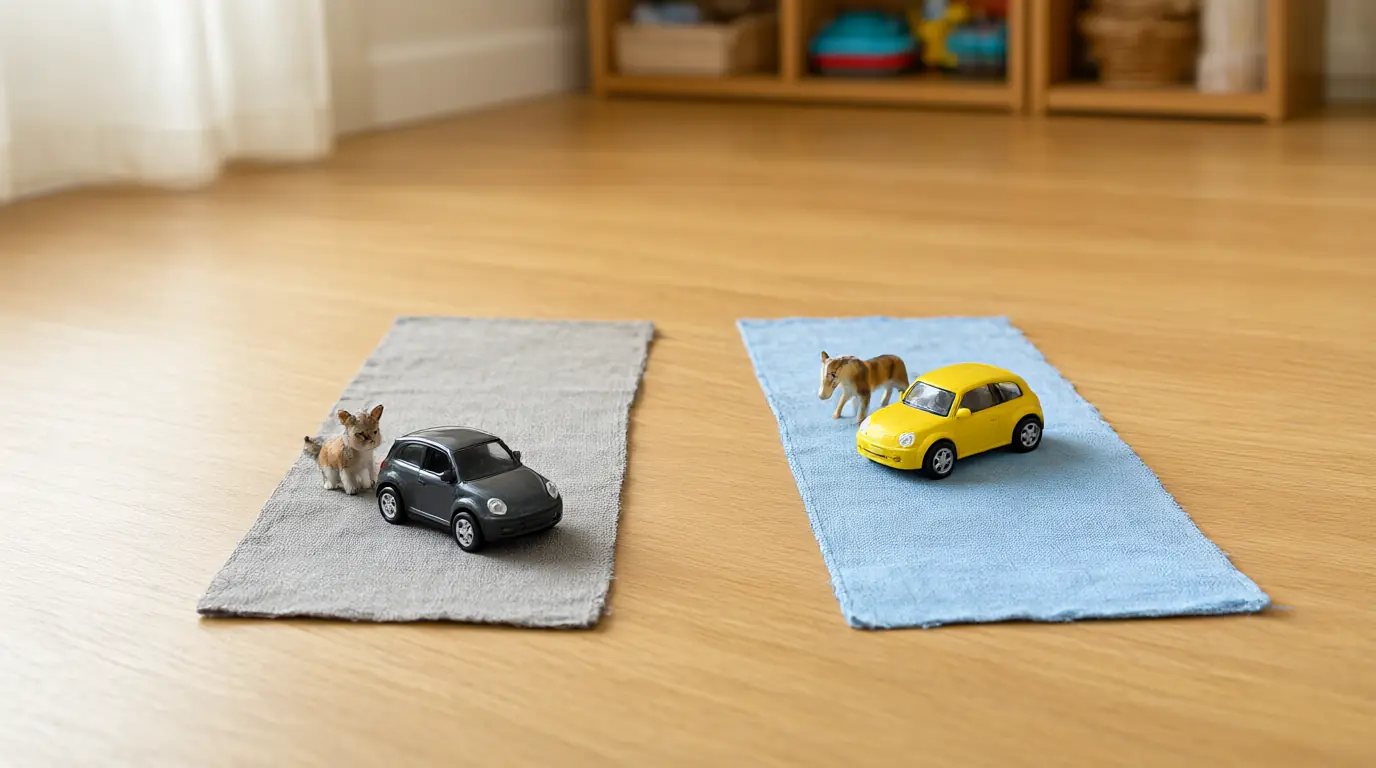
Make it your own: For younger children one toy each is plenty. For older children, ask if the stories might meet at a place, such as a garage, and accept a no politely.
Asking before joining
Adults can model respect by asking before they touch a child's creation. When you say 'may I add a block here?' and accept the answer, children see that someone else's work belongs to its maker. This lays the groundwork for asking friends in the same way.
You’ll need
- A small block set of your own
- A child's building or drawing
- A spare piece or two to offer
- A comfortable place to sit
How to do it
- Sit beside the child with your own few blocks and build something small.
- Ask: 'Can I put a block on your tower?' and wait for the answer.
- If they say yes, place it where they point, and if they say no, say 'that's fine' and go back to your own.
- Invite them to ask you the same question about yours.
- Notice when they do and thank them for asking.
- Mention the same idea next time a friend visits.
Make it your own: Younger toddlers may nod or move your hand. Older children can practise phrases such as 'Can I join?' and 'Not right now, thanks'.
A quiet watching table
Some children spend a long time watching before they play, and this is a real stage of joining in. A low table with a calm activity, such as a puzzle or playdough, gives them a place to be near others without being the focus. Watching is not the same as being left out.
You’ll need
- A small table or tray
- Playdough or a simple puzzle
- 2 chairs, one for the child and one for you
- A basket of extra pieces
How to do it
- Set the table next to where others are playing, close enough to see.
- Invite your child to sit with a puzzle or a lump of playdough.
- Sit with them and describe what the others are doing, without pressing them to join.
- Leave a free chair beside them.
- If another child comes over, make space and let them settle in silence.
- Follow your child's lead on when to leave.
Make it your own: For babies and young toddlers, sit them on your lap while you watch. For older preschoolers, offer a small job such as being the person who hands out blocks.
Make it work for your family
One afternoon of play tells you very little. Children play differently with different partners, in different rooms and at different times of day, and a child who plays side by side today may suddenly start sharing a story next week. You do not need to track it or label it. If you are worried about how your child interacts with others, speak with their paediatrician, health visitor or early-years teacher rather than relying on a single observation.
When children do begin to join their play, it is usually through small moves: passing a block, copying a sound, asking 'can I have that one?'. Welcome these quietly without making a fuss, and let a child step back again if they wish. For more ideas about children working on a joint idea, read about cooperative play, or try some building games that work well with two separate sets.

Parents also ask
What is parallel play in toddlers?
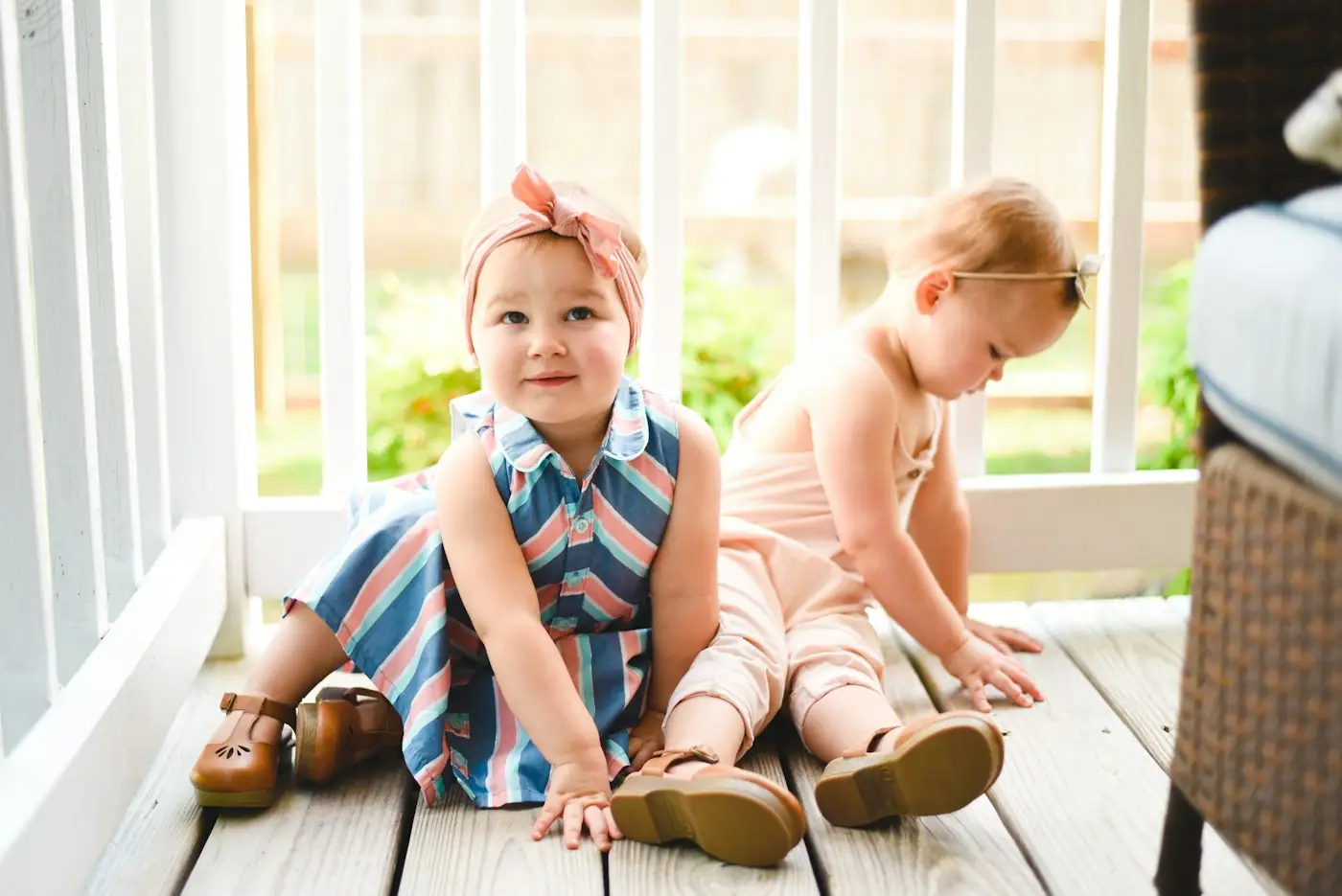
It is when two toddlers play near one another with similar toys but without trying to play one joint game. They may watch, copy or glance at each other. It is a common way for young children to be social and usually needs no correction.
Is parallel play a sign of a problem?
On its own, no. Children of many ages play side by side, and it is one way of enjoying company. If you are concerned about how your child interacts, speak with their paediatrician, health visitor or early-years teacher rather than relying on a single observation.
How can I encourage children to play together?
Provide enough duplicate materials, sit nearby, and describe what each child is doing. Avoid forcing them to share a game. Small invitations, such as a bridge between two towers, let them join up when they are ready.
Choose materials and activities that suit your child, supervise as needed and adapt the ideas to their interests and abilities. About our editorial approach