Weebou Editorial Team
 In this article
A little preparation
Pick a shaded spot first and check the ground before you set anything out: paving can be hot enough to hurt bare feet by mid-morning, and metal taps, railings and slides hold heat. A bucket filled to about two centimetres is enough for water play, and it should be emptied as soon as your toddler loses interest. Keep a towel and a change of clothes by the door, and put sun cream on before you go out rather than during the game. Twenty to thirty minutes is usually plenty; a toddler who is getting cross is often hot, tired or thirsty rather than bored.
Choose one idea rather than setting up all five. Anything small enough to fit inside a toilet roll tube stays out of reach, and water play happens within arm's reach of an adult the whole time, even in a shallow tub. If the day is very hot, move the play to early morning or after tea, or take it indoors with a towel on the floor. For more ideas at the same pace, see these activities for two-year-olds and this guide to water play with simple tools.

Ideas to try together
A soft-toy picnic in the shade
A picnic is a familiar routine in an unfamiliar place, which is why it holds a toddler's attention for longer than a new toy. Laying out cups, naming each guest and deciding who sits where gives your child real choices without any risk. The pretend food is beside the point; the work of carrying, pouring and serving is the play.
 You’ll need
- A blanket or large towel
- 2–3 large soft toys
- Two plastic cups and a small jug
- A basket or bag for the toys
How to do it
- Spread the blanket in the shade and sit down next to the basket.
- Take out two or three large soft toys one at a time and name each one.
- Give your toddler the cups and ask who should have the first drink.
- Pour pretend tea together, counting the cupfuls out loud.
- Ask your child to hand each toy a bowl and say what is inside it.
- Finish by packing everything into the basket and carrying it indoors together.
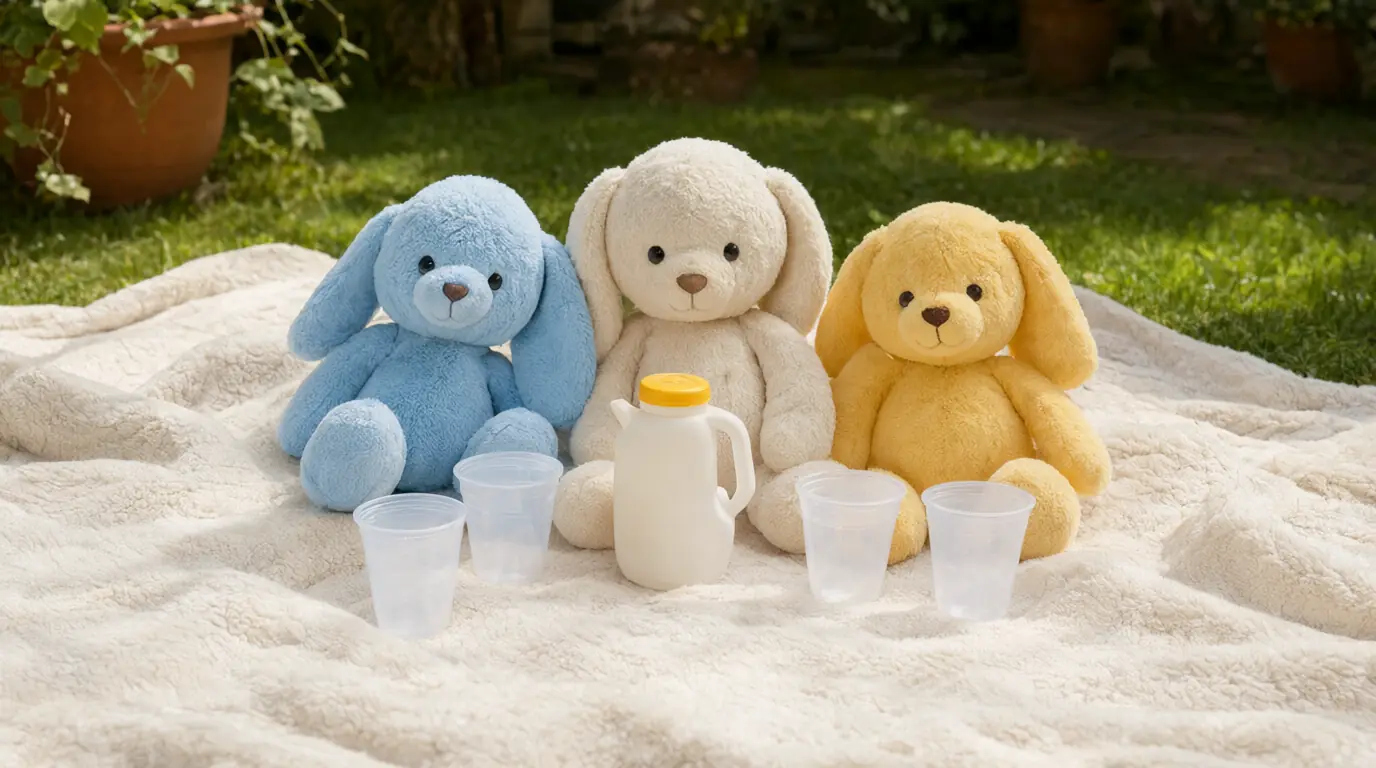
Make it your own: Younger toddlers can simply fill and empty the cups. Older ones can take orders, choose a seat for each guest and help wash the cups afterwards in a bowl of water.
Big water brush marks on a warm wall
Water and a wide brush give a toddler the feeling of painting with none of the clearing up. Marks show up clearly on warm paving or a fence and then fade, so your child can cover the same patch again and again. It also quietly builds the shoulder and wrist movement that later helps with writing.
You’ll need
- A clean wide paintbrush
- A shallow bucket with about 2 cm of water
- Warm paving slabs, a wall or a wooden fence
- An old T-shirt or apron
How to do it
- Fill the bucket to about two centimetres and stand it beside the wall or paving.
- Show your child how to dip the brush and press it flat against the surface.
- Let them make long strokes, circles and splashes, dipping again as the marks fade.
- Name what you see rather than what it should be: 'a long line', 'a round one'.
- Point out the marks drying in the sun and ask where they went.
- Empty the bucket together when interest fades and hang the brush up to dry.
Make it your own: A toddler who cannot yet hold a brush can use a sponge or a whole hand. Older children can paint a road for toy cars, watch it disappear and then start again somewhere new.
Basket deliveries between two places
Carrying something slightly awkward from one place to another is satisfying work for a toddler, and it can absorb twenty minutes without any adult direction. Two clear destinations make the route obvious. The repetition is the point: each trip practises balance, grip and the words for where things go.
You’ll need
- A basket with two handles
- 4–6 soft or light objects such as soft toys and cushions
- Two destinations, such as a doormat and a cushion
How to do it
- Put the basket at one end of the route and the mat or cushion at the other.
- Place one object in the basket and say where it is going: 'the bear is going to the mat'.
- Walk beside your toddler rather than ahead of them.
- Let them tip the object out and choose the next one themselves.
- Add a second object when they are ready to carry more than one at a time.
- Swap the direction and let your child tell you where the next delivery goes.
Make it your own: For a younger toddler, keep the two places only a few steps apart. Older children can sort objects into two piles on arrival, or carry a card message to a family member in another room.
Frozen toys in a block of ice
Freezing a few large toys in a tub turns into a slow, hands-on puzzle: the animals are visible but stuck, and warm water gradually frees them. It suits hot afternoons because the ice cools small hands. Your toddler is learning that a material changes, and that squeezing and waiting make a difference.
You’ll need
- A plastic tub or freezer box
- 4–6 large plastic toys with no small parts
- A sponge and a bowl of warm, not hot, water
- A towel or shallow tray
How to do it
- Put the toys in the tub, fill it with water and freeze it overnight.
- Tip the ice block out onto a towel or tray in the shade.
- Let your child touch it and say what they notice: cold, hard, slippery.
- Offer a sponge soaked in warm water and show how to squeeze it over the ice.
- Name each toy as it comes free and stand it on the towel.
- Tip the leftover water away together and dry the toys before putting them back.
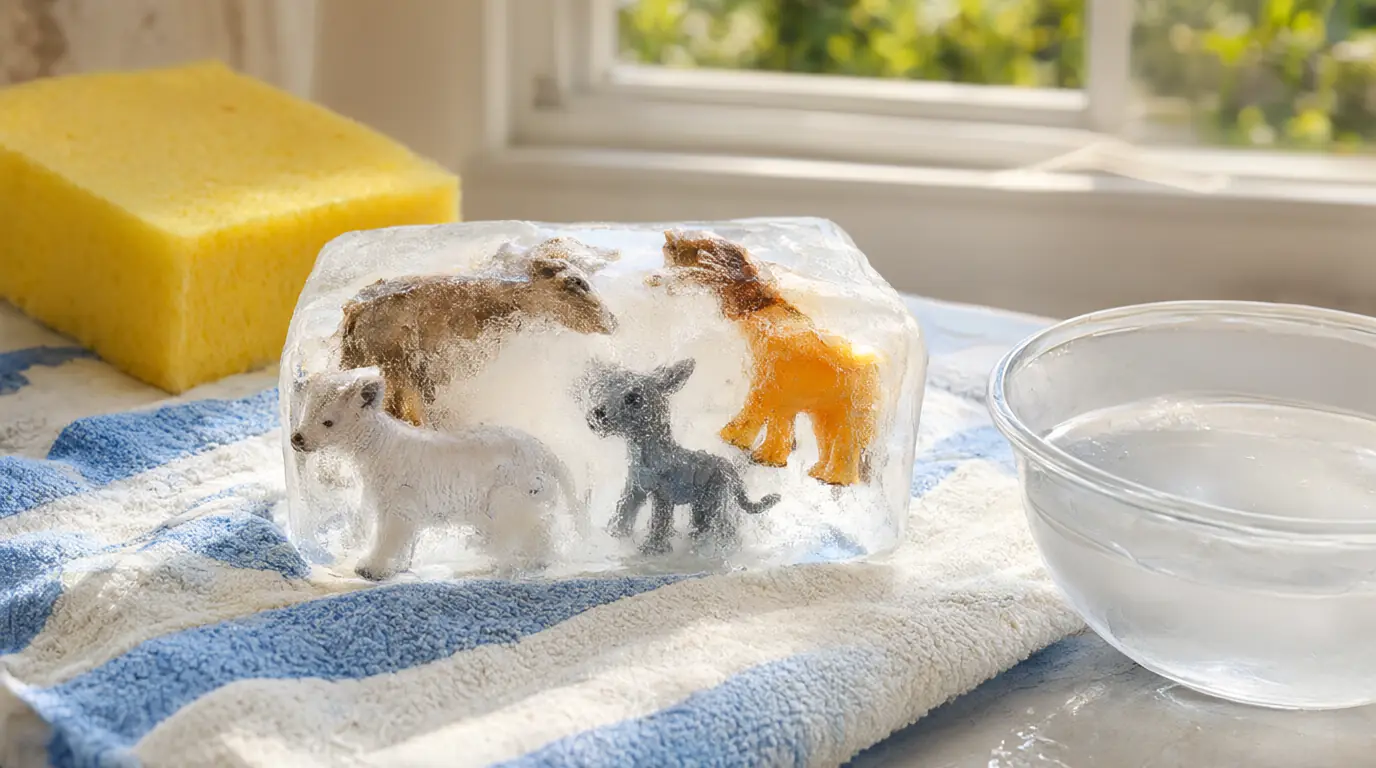
Make it your own: Only freeze toys too large to fit in your child's mouth, and never offer ice cubes or broken chips. Younger toddlers can squeeze the sponge while you handle the block; older children can try dripping water from a jug.
Shadow hello with pavement chalk
A sunny patch of paving is a free drawing surface and a way to notice how light works. Shadows are easier to draw around than solid objects, because your child can see the edge clearly. The game also slows everyone down, which is useful in the hottest part of the day.
You’ll need
- Chunky pavement chalk
- A sunny patch of paving or concrete
- A toy, a flower pot or a watering can to cast a shadow
How to do it
- Stand together in the sun and find your shadows on the ground.
- Wave and watch the shadow wave back.
- Place a toy or plant pot on the paving so it makes a clear shadow.
- Draw around the shadow with chalk, keeping the line loose rather than accurate.
- Ask your child to colour inside the shape or add dots around the edge.
- Come back an hour later and look at where the shadow has moved to.
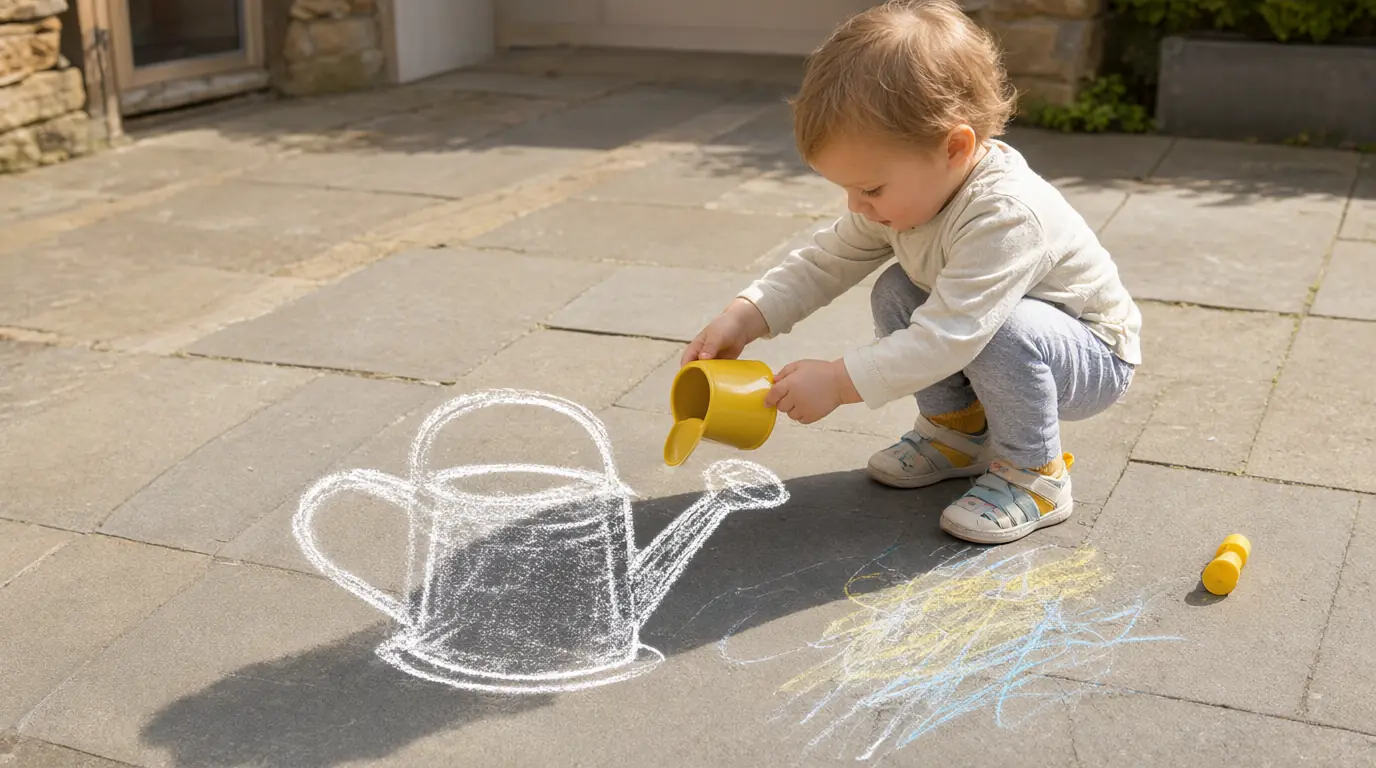
Make it your own: If direct sun is too bright, do the same with a lamp indoors on a large sheet of paper. Younger toddlers can make chalk marks near the shadow; older children can draw around a whole person and compare outlines.

Make it work for your family
If your toddler walks away after two minutes, that is not a failed activity. Leave the setup where it is and see whether they come back; many children return to a bucket three or four times in an afternoon. A child who hates wet hands can use a sponge on a long handle, and one who dislikes bright sun can play the same game under a parasol. Keep instructions to one sentence, such as 'the bear goes in the basket', and let your child change the plan.
End the game before it falls apart: pour the water away, tip the ice into the sink and let your toddler help carry the basket back. If the heat is making everyone irritable, choose a quieter indoor idea from these sensory play suggestions or set up a sand tray in the shade. Never leave a filled container of water where a toddler can reach it unsupervised, and check the forecast before planning anything outdoors.

Parents also ask
What can I do with a toddler on a hot day at home?
Shallow water in a bucket, a basket of soft toys to carry and a patch of shade will fill an hour. Move play to early morning or late afternoon, keep drinks close and set up one thing at a time. A paddling pool is not essential; a sponge, a wide brush and a towel cover most of the same play.
Is it safe for toddlers to play with ice?
Large ice blocks are fine to handle under supervision, but never offer ice cubes or small frozen pieces, because they are a choking risk. Freeze only big toys inside a large tub, use warm rather than hot water to melt it, and keep the ice away from your child's mouth. Put a towel down so the floor does not become slippery.
What summer play suits a toddler who puts everything in their mouth?
Water brush marks on a wall, carrying soft toys and shadow chalk games all have no small parts. Freeze only objects too big to swallow, or skip the ice idea until the mouthing stage passes. Check toys for loose wheels or eyes before every session and put anything questionable away.
Choose materials and activities that suit your child, supervise as needed and adapt the ideas to their interests and abilities. About our editorial approach