Weebou Editorial Team

 In this article
A little preparation
Choose the coolest part of the day and a spot with real shade, not just a sun hat. A paved area, a balcony or a strip of lawn all work if your child has room to move and you can sit close by. Gather everything before you start so nobody is left waiting in the sun, and set the activity on a low surface your child can reach. Allow twenty to forty minutes, with a drink and a rest built in. If the day is very hot, move the whole thing indoors rather than cancelling it.
Water needs the most care. Use a shallow tub filled only a few centimetres deep, stay within arm's reach the whole time, and empty it straight afterwards so it never stands unattended. Buckets, paddling pools and even a full washing-up bowl are a risk for this age group, so keep containers small and put them away when play finishes. Tape down loose cardboard before anyone walks over it, keep hot or sharp things out of reach, and check the ground for anything a barefoot child could step on. For a fuller picture of safe water play, see water play with simple tools.

Ideas to try together
A shallow water tub with pouring tools
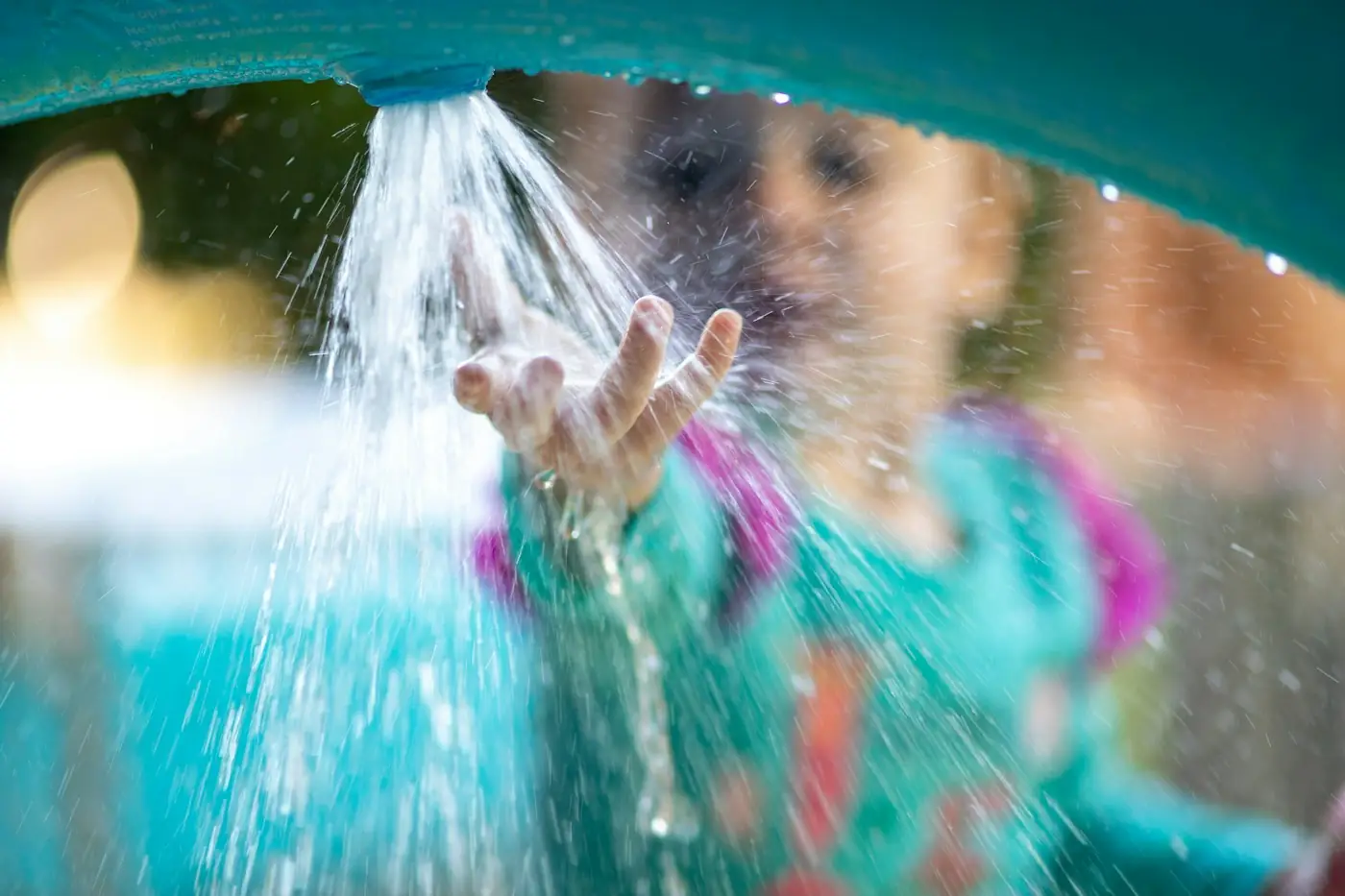
Water is the most reliable summer invitation, and it does not need a pool. Pouring, filling and emptying build hand control and give children a reason to compare amounts — full, nearly full, a splash. Keep it shallow, keep it in the shade, and stay beside your child the whole time.
 You’ll need
- A shallow plastic tub or washing-up bowl
- Small jugs, cups and a funnel
- Two or three floating toys
- A towel and a spare set of clothes
How to do it
- Half-fill the tub with cool water and set it on level ground in the shade.
- Put out one jug, one cup and the funnel rather than every tool at once.
- Show how to pour slowly from the jug into the cup, then let your child try.
- Ask which cup holds more, and test the guess by pouring it back and watching the level.
- Add a floating toy and invite your child to fill a cup until the toy rides high.
- Tip the water out together when interest fades and hang the toys to dry.
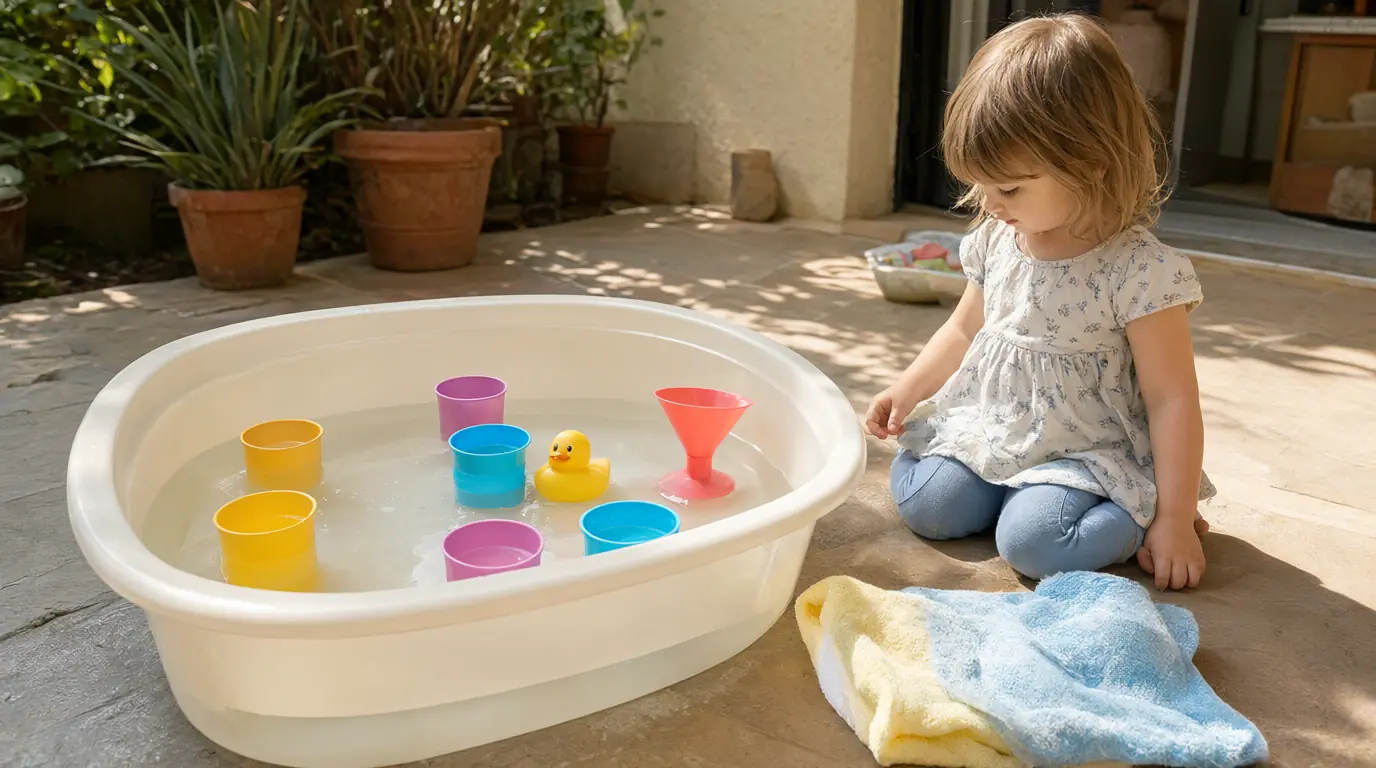
Make it your own: A two-year-old can splash and squeeze a sponge with no pouring lesson at all. An older child can measure two cups and tell you which holds more. If the ground is too hot, move the same tub to a shaded balcony or onto a bath mat indoors.
A toy travel agency
A pretend travel agency turns drawing into planning. Your child chooses a destination for a favourite toy, decides what it needs to pack and describes the journey. It suits children who like to talk as much as those who like to draw, and every answer is a good one.
You’ll need
- A favourite soft toy
- Two or three sheets of paper
- Thick crayons or felt-tip pens
- A small envelope or folded paper for the ticket
How to do it
- Ask your child where the toy would like to go and accept the first answer.
- Draw a simple route on one sheet: a line, a few landmarks and a circle for the destination.
- On a second sheet, draw what the toy will pack. A picture is enough.
- Make a small paper ticket and let your child choose a symbol for the journey, such as a sun or a boat.
- Put the toy at the start of the route and move it along as your child tells the story.
- Ask what the toy will see when it arrives and add that to the picture.
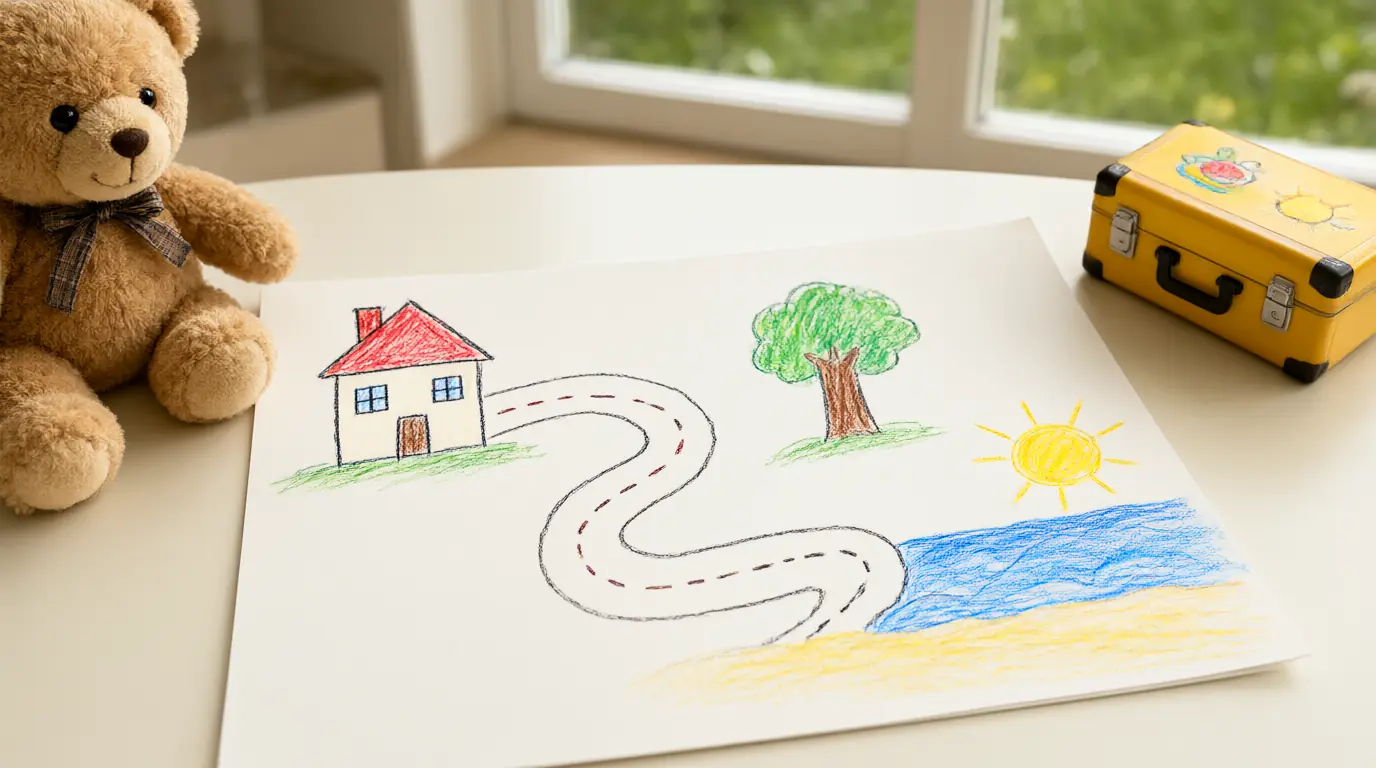
Make it your own: Younger children can draw one thing the toy will see instead of a whole route. Older ones can add a return journey, a delay or an extra passenger. If drawing does not appeal today, act the whole journey out with the toy and write nothing down.
A sorting cafe with a changing menu
A pretend cafe gives sorting a purpose. Clean play food or large safe kitchen items become a menu, and every rearrangement is a new question: which plates match, how many guests fit, what the cafe needs next. It links to everyday preschool maths without a single worksheet.
You’ll need
- Clean play food or large safe kitchen items
- A tray, mat or tea towel as the cafe counter
- Paper plates, cups and spoons
- Two or three soft toys as guests
How to do it
- Spread the items out and set four or five plates along the counter.
- Invite your child to sort the food one way, for example by colour or size, and name the groups together.
- Ask how many guests can sit at the cafe and count the places with your child.
- Give each guest a plate and let your child serve one item each, checking as they go.
- Change the rule: sort by shape, or by what is eaten at breakfast and what at dinner.
- Ask what the cafe still needs, such as a sign, a napkin or a second table, and add it.
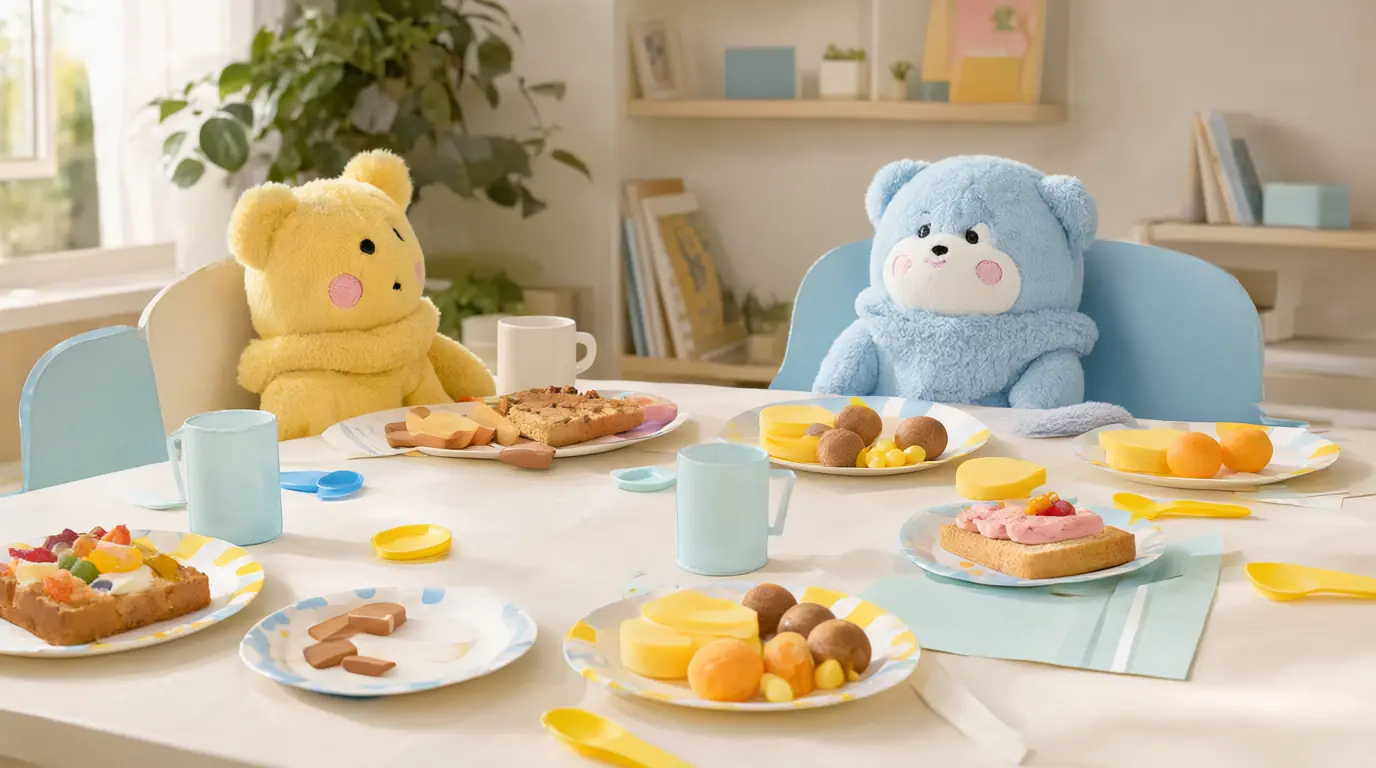
Make it your own: With younger children, use three items and a single sorting rule, and do the counting aloud for them. Older children can give everything a price in buttons or pebbles and work out two orders. If pretend food is scarce, socks, shells or blocks make a fine menu.
Garden colour drawing
Looking for colours first makes drawing easier. Instead of asking a child to draw a garden, you look together at what is actually there — the dark green under a leaf, the pale yellow of dry grass — and the drawing responds to something real. It works from a step, a balcony or a windowsill.
You’ll need
- A shaded seat or a mat
- Sturdy paper on a clipboard or a book
- Crayons in several green, yellow and brown shades
- A potted plant, a tree or a patch of grass to look at
How to do it
- Sit in the shade and look at one plant or tree together for a slow minute.
- Name two colours you can both see, such as light green on top and dark green underneath.
- Find the matching crayons and put them beside the paper.
- Invite your child to draw whatever they noticed: a leaf, a stripe of colours, or the whole patch.
- Add one colour from further away, such as a grey wall or a blue sky, if your child wants to.
- Ask which colour they used first and let them tell you the story of the drawing.
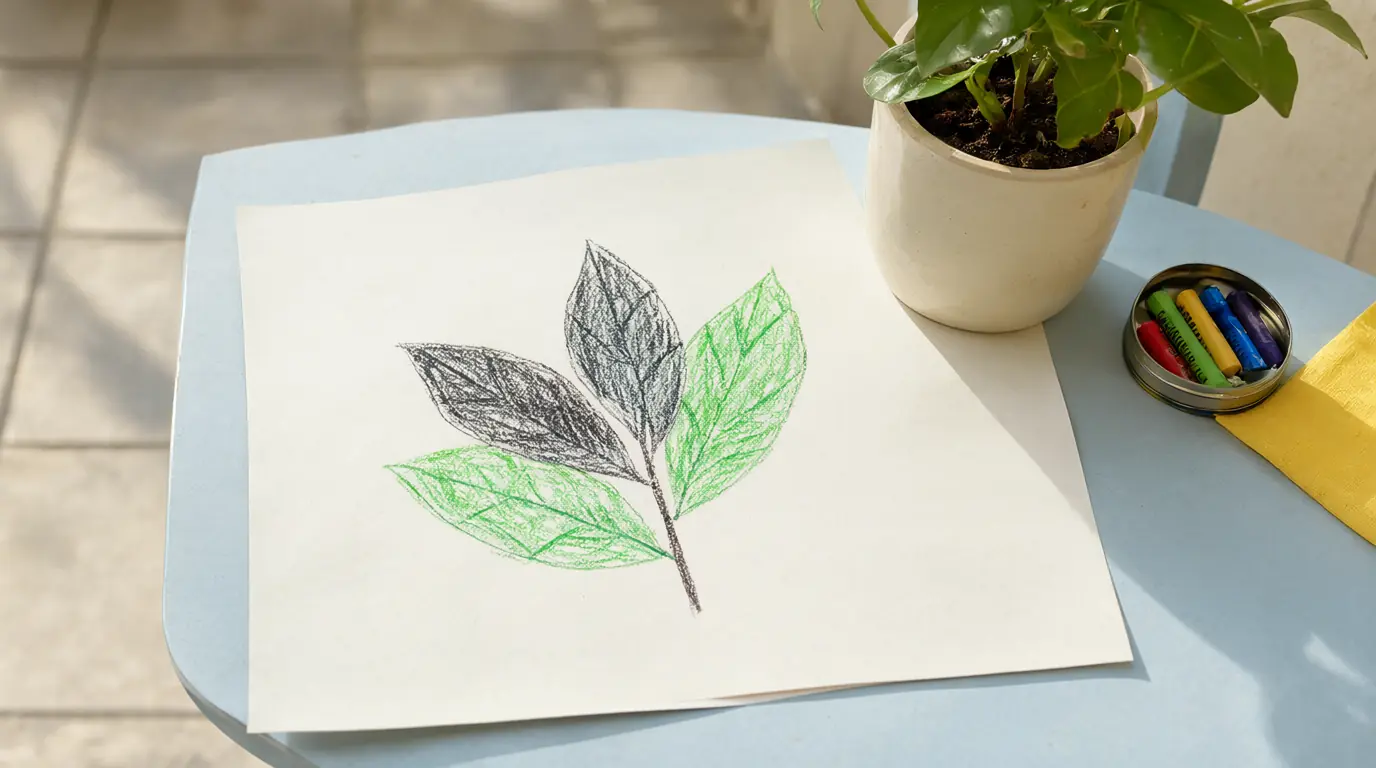
Make it your own: Younger children can simply match a crayon to a leaf and scribble over the colour. Older ones can draw the same plant twice, once in the morning and once later, and compare the light. On a rainy day, look at a windowsill plant instead.
A cardboard mini town
Boxes and wide paper roads turn a corner of a room or a yard into a small town. Children plan where things go, meet a problem when a road will not fit, and redesign it without an adult telling them the right answer. It is the longest of these activities and often the best value.
You’ll need
- Three or four cardboard boxes of different sizes
- Wide paper or an old sheet for roads
- Masking tape or painter's tape
- A few toy cars or small figures
How to do it
- Set out the boxes and let your child decide which is a house, a shop or a garage.
- Tape paper or fabric to the floor as a road and ask where it should lead.
- Lay the boxes along the road and see whether the gaps make sense.
- Add a second road and invite your child to work out where the two should meet.
- Test the town with a toy car. If a road is blocked, ask what could change.
- Ask what the town still needs — a bridge, a park or a car park — and make one from what you have.
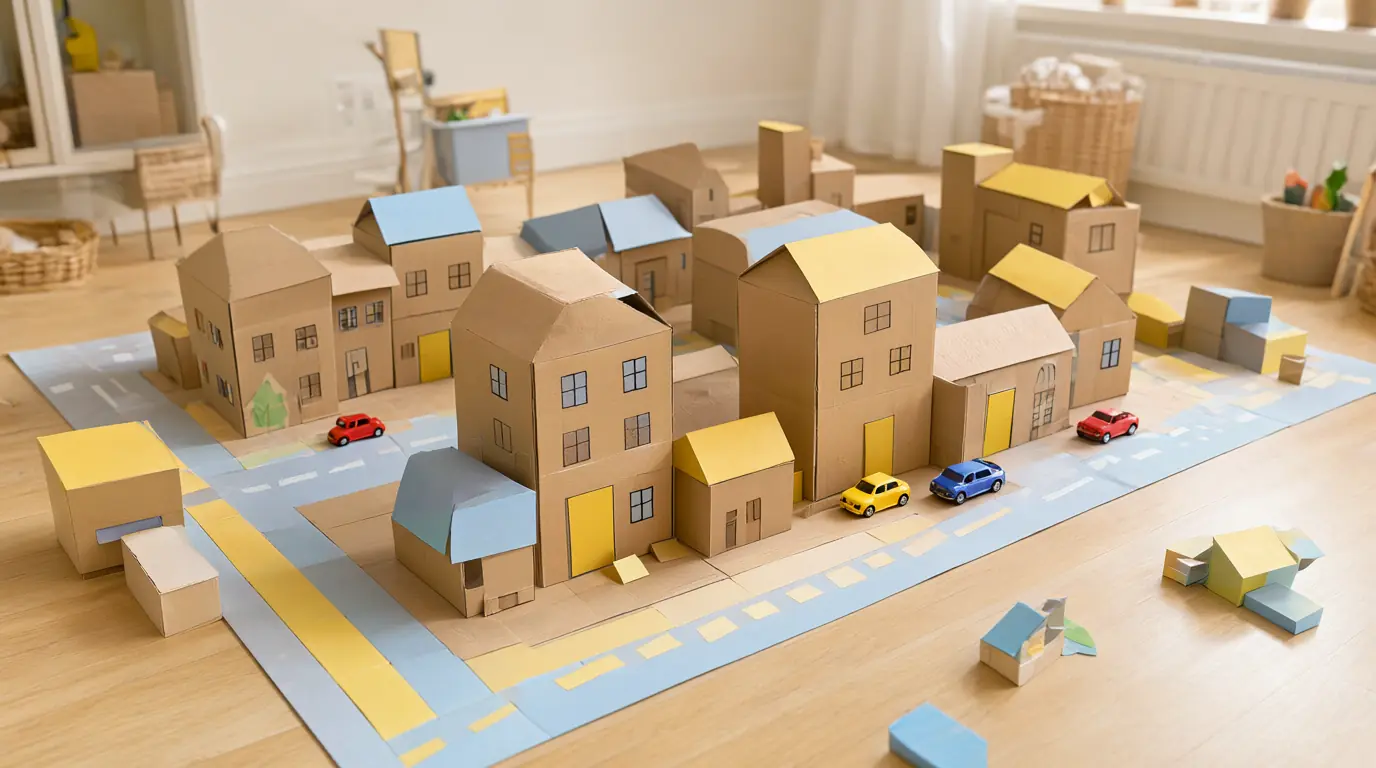
Make it your own: Toddlers can carry boxes and knock them down without any planning at all. Preschoolers can draw a map of their town before building it. If floor space is tight, build on a table or inside a shallow tray with smaller boxes.

Make it work for your family
Plan around the heat rather than against it. Early morning and late afternoon are usually the easiest times for outdoor play, and a patch of shade can be enough even on a hot day. Offer water to drink often, keep hats on, and follow the sun-protection guidance printed on the products you use. If your child goes quiet, flushed or reluctant, stop the activity and move indoors; heat affects young children quickly. A short session that ends while everyone is still happy works far better than a long one that ends in tears.
If interest fades after ten minutes, leave the setup out and come back to it later; most of these activities can be picked up again the next morning. Wobbly cardboard towns can be taped down, and a drawing can move indoors to the kitchen table. When the day is too hot or too wet to be outside, try a few summer crafts for preschoolers at the table, or gentler summer ideas for toddlers that need even less space.

Parents also ask
What can a 3-year-old do outside in summer?
Shallow water play with a jug and cup, carrying boxes, drawing in the shade and hunting for colours on a plant are all manageable at three. Keep sessions short, follow your child's lead, and stop as soon as they look hot or tired.
How do I keep water play safe for a preschooler?
Use a shallow tub filled only a few centimetres deep, stay within arm's reach and never leave it unattended, even briefly. Empty it as soon as play finishes, and keep buckets and paddling pools out of reach between uses.
How do you keep a preschooler busy on a hot summer day?
Rotate a few short activities rather than planning one long one: water play in the shade, a drawing on the step, then a cardboard town indoors during the hottest hours. Having materials ready in advance lets you switch when your child's energy changes.
Choose materials and activities that suit your child, supervise as needed and adapt the ideas to their interests and abilities. About our editorial approach