Weebou Editorial Team
 8 min read
 In this article
A little preparation
Choose a table or floor space where the child can sit comfortably, with a clear way to step away. Check every object for loose parts, sharp edges and allergens, and keep fabric pieces short, with no cords or ribbons, and away from mouths and necks. Test any sound yourself first so the volume is comfortable. Sessions of 10 to 15 minutes suit most children; stop sooner if they lose interest.
Offer two or three materials at most and let your child decide whether to look, touch, listen or pass. Say what is coming before you do it, for example "I am going to tap the spoon on the table", rather than surprising them. Avoid blindfolds, hidden-object guessing and anything pressed on the skin. If you are unsure whether your child's reactions to textures or sounds are typical, a health visitor, teacher or other qualified professional can advise; these games are play, not therapy. Older siblings can try nature activities alongside.

Ideas to try together
A fabric gallery to look at and touch
Laying out a few clean fabric pieces lets children compare how things look before deciding whether to touch them. Looking first gives children time to think, and describing words such as smooth, bumpy or soft grow naturally. It also respects children who prefer to watch.
 You’ll need
- 4 to 5 clean fabric squares about 20 cm wide (cotton, fleece, corduroy, felt, a knitted scrap)
- A tray or a table cloth
- Small cards for sorting, optional
How to do it
- Lay the fabrics on the tray with a little space between them.
- Say what you see before touching: "This one has little ridges. This one looks shiny."
- Invite your child to touch with a fingertip, a whole hand or the back of the hand, or to just point.
- Ask which one they would choose for a blanket, a scarf or a puppet's coat.
- Let them rearrange the fabrics in any order they like, such as softest to roughest.
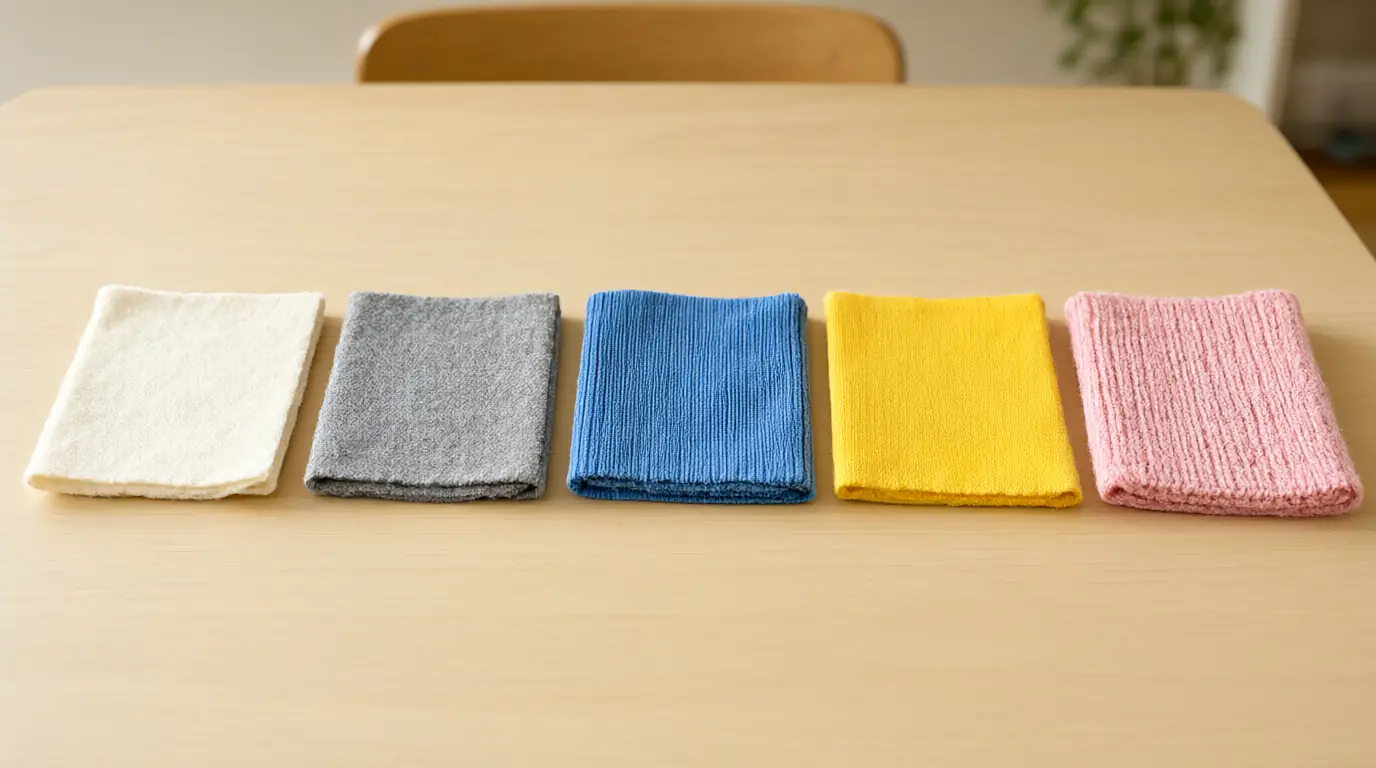
Make it your own: Younger children may only want to look at two fabrics at a time. Older children can sort the pieces into groups they invent, and explain the rule. Keep all pieces short so nothing wraps around a neck or can be pulled into the mouth.
Quiet sound match
Listening games work best when the sounds are low and predictable. Watching a familiar object make a sound lets children link what they see with what they hear, and comparing two gentle sounds builds attention without surprise.
You’ll need
- A wooden spoon and a metal spoon
- A cardboard box, a cushion and a table as surfaces
- A shoebox with a lid for storing the spoons
How to do it
- Tell your child you will make one gentle sound and then a second one.
- Tap the wooden spoon softly on the cardboard box while they watch.
- Tap it on the cushion and then on the table and talk about how each sounds.
- Let your child choose a surface and tap it themselves, softly or a little stronger.
- Finish with a minute of silence, listening for any sounds in the room.
Make it your own: For sensitive listeners, use soft tapping with a hand on the cushion only, and stop if any sound is unwelcome. For older children, ask them to close their eyes only if they want to and name which surface you tapped, with a clear "pass" option.
Texture drawing with crayons
Turning a texture into marks lets children express what they notice without needing to touch it. A rough cloth might become scribbles, a smooth one long lines. The drawing becomes a way to talk about feelings of the surface, and there is no wrong answer.
You’ll need
- Two fabric pieces or smooth and rough objects (a pebble, a leaf, a sponge)
- Paper
- Chunky crayons
How to do it
- Choose two objects with obviously different surfaces and put them in front of your child.
- Ask your child to look closely and decide what kind of marks each could make: dots, waves, zigzags or straight lines.
- Draw one patch for each object on the paper.
- Compare the patches: "Which marks feel bumpy?"
- Add a third patch for an object of their choice and invite them to name it.
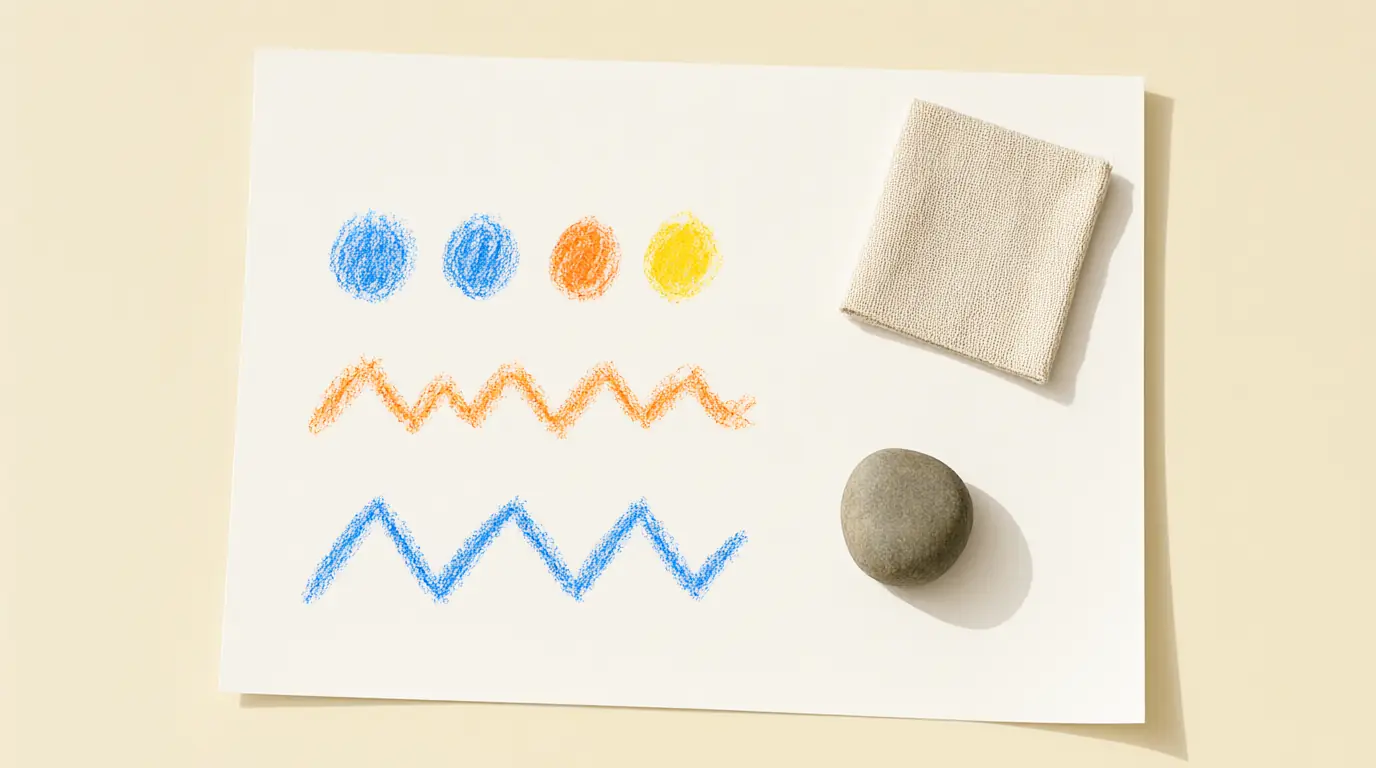
Make it your own: Younger children can make big scribbles while you describe the surface. Older children can place paper over a flat leaf or coin and rub with a crayon for a texture print, if they wish to touch it.
A two-choice tray
Offering exactly two objects removes the pressure of too many options and gives the child control. Choosing one and exploring it at their own pace helps them notice shape, weight and sound, and leaving the other available means they can change their mind.
You’ll need
- A tray with two compartments or two bowls
- Two large, unbreakable objects such as a wooden spoon and a silicone brush
- A small cloth to sit them on
How to do it
- Place two objects side by side on the tray and name them.
- Ask which one your child would like to look at first.
- Wait quietly while they explore it, turning it, holding it or tapping it.
- Describe what you notice without asking questions every time.
- Offer the second object after they have finished, or put the tray away if they have had enough.
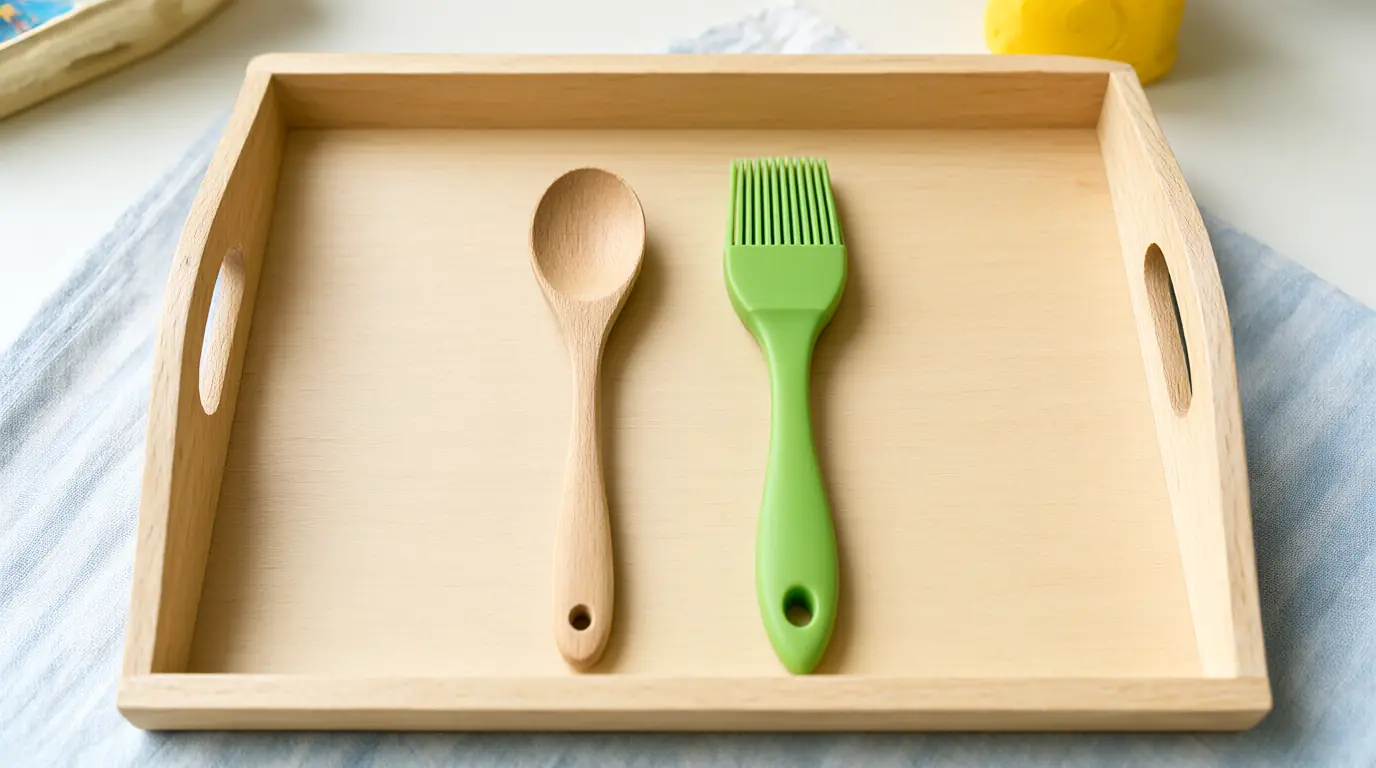
Make it your own: For younger children, keep objects large and familiar. For older children, add a third item and ask them to put the three in an order, such as lightest to heaviest. Do not require them to explain their choice.
A listening walk around the house
A short listening walk helps children tune into sounds they usually ignore: a fridge hum, a clock, a tap or footsteps. Doing it together, slowly, turns the home into a place to explore with ears, and it works at a volume most children find comfortable.
You’ll need
- A clipboard or a sheet of paper
- A pencil
- Comfortable socks or slippers
How to do it
- Tell your child you are going on a quiet listening walk around the house.
- Stand still in the first room for a count of ten and listen.
- Whisper what you hear, then let your child whisper theirs.
- Draw a simple mark for each sound on the paper, such as a wavy line for a hum.
- Visit two or three rooms and compare which room was the quietest and which the busiest.
Make it your own: For children who find quiet uncomfortable, hum softly or play gentle background music. Older children can add the sounds to a map of the house and compare how the soundscape changes later in the day.

Make it work for your family
A child who refuses a material is giving you information. Offer a tool instead of a hand, such as a spoon or tongs, or swap to a different material the next day without comment. Familiar favourites are not a step back; repeating a comfortable game lets children notice more each time.
Keep a small "calm corner" with a cushion, a blanket and a favourite book so there is always somewhere to rest. Introduce one change at a time rather than adding several new materials. If your child enjoys drawing what they notice, drawing games for kids make a natural follow-up, and a short mindfulness activity can help at the end of the session.

Parents also ask
What are sensory games for kids?
They are play activities that invite children to notice how things feel, sound, look or move, such as exploring fabrics or listening to different taps. They are not therapy, and children should always be free to look, try or say no.
What if my child does not like touching certain textures?
That is common and worth respecting. Offer a tool such as a spoon, let them look instead of touch, or choose a different material. If it affects daily life, speak to a health visitor, teacher or other qualified professional.
How often should we do sensory play?
There is no set amount. A short session a few times a week is plenty for most families. Following your child's interest matters more than a schedule, and repeating a favourite game is perfectly fine.
Choose materials and activities that suit your child, supervise as needed and adapt the ideas to their interests and abilities. About our editorial approach