9 min read
 In this article
A little preparation
Pick a spot where a table and a patch of floor sit close together, so your child can move between drawing and carrying without needing help. Clear away anything small enough to go in a mouth, and keep hot drinks, cables and pet bowls out of the route. Set out only the materials for one activity, in a shallow basket or tray your child can carry themselves. Two-year-olds often play for five or ten minutes and then come back later, so leave the basket where they can reach it again.
Timing matters more than duration. Offer an activity after a snack or a nap rather than at the end of a long day, and expect to join in rather than watch from a chair. Sit at your child's level, copy what they do and add one small idea at a time instead of a stream of instructions. Stay close during anything involving water, climbing or objects that go near the mouth, and put materials away once your child has clearly moved on. If your space is tight, these indoor toddler activities show how to make a small room work.

What to know and try
Two baskets and a sorting job
Sorting is one of the first jobs a two-year-old can genuinely finish, and finishing feels good. Keep the difference obvious at the start: blocks in one basket, soft toys in the other. Your child is practising hand control, useful words like 'in' and 'more', and the idea that things belong somewhere. If they invent a different rule halfway through, follow it and say what you notice rather than correcting the arrangement.
 You’ll need
- 2 shallow baskets or bowls
- 6–8 large blocks
- 3 soft toys
- A clear patch of floor
How to do it
- Put one basket on each side of your child, close enough to reach without stretching.
- Place a couple of blocks in one basket and a soft toy in the other as a visible clue.
- Hand your child a block and ask, 'Where does this one live?'
- Let them drop it in, then say the word back: 'In the block basket.'
- Offer a toy next and wait while they decide where it goes.
- If they start mixing the baskets, ask about their rule before changing anything.
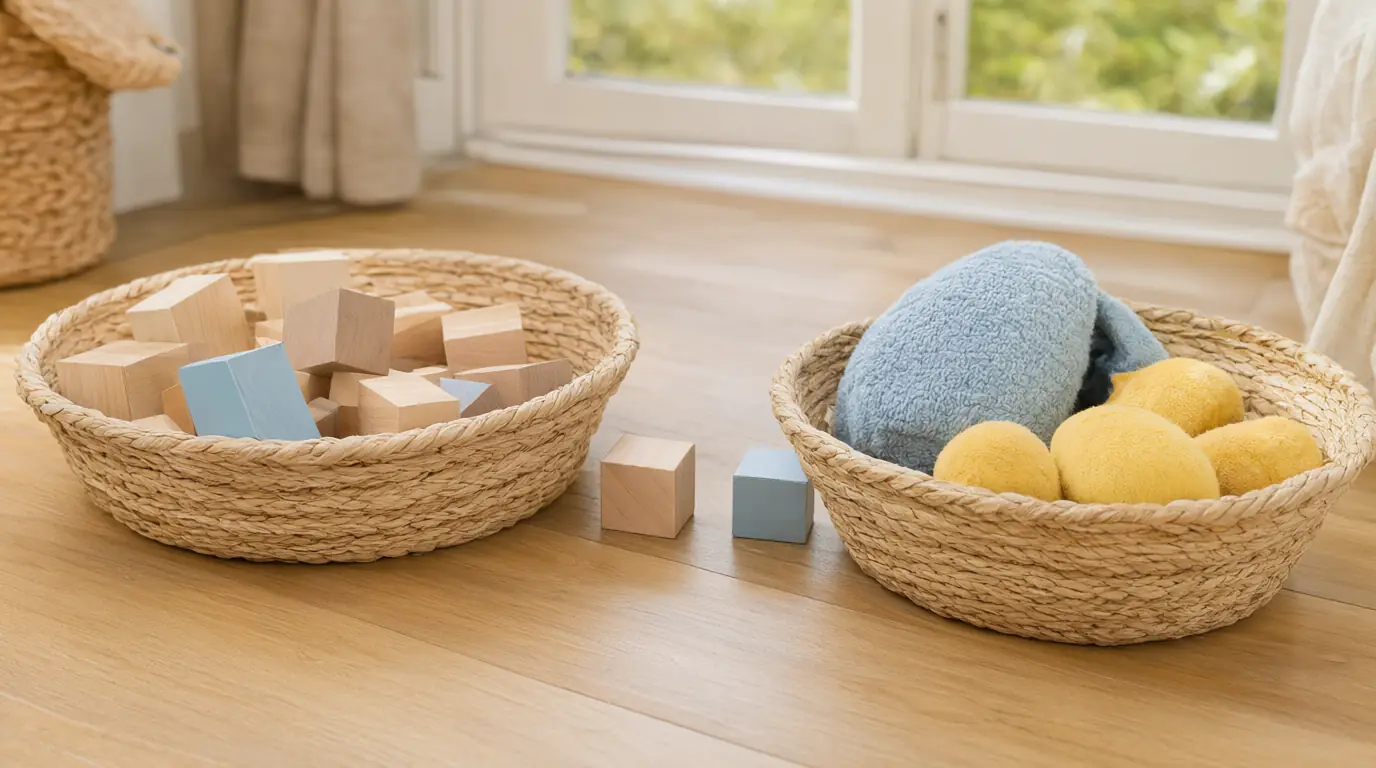
Make it your own: For a just-turned-two, use two very different kinds of object and only four items in total. For an older two-year-old, add a third basket of socks or lids, or ask them to find one more of the same. Skip any tidy-up race; sorting slowly is the point.
A road drawn for a toy
A wide road is easier to draw than a picture and gives a toy somewhere to go. Drawing first and playing second means the marks have a purpose, which suits children who lose interest in crayons on blank paper. Your child practises a grip, a direction and a running commentary, and you end up with a small map of their morning to drive along together.
You’ll need
- A large sheet of thick paper or an opened cardboard box
- 2–3 chunky washable crayons
- One small toy car or animal
- Tape to hold the paper down
How to do it
- Tape the paper to the table so it stays still while your child draws.
- Draw one wide road or a loop, then hand over a crayon.
- Invite your child to add more road, a puddle or a place to stop.
- Name what appears as they draw: 'That looks like a bridge.'
- Drive the toy along the lines together, stopping wherever they say.
- Leave the paper out to add to later, or tape it to the floor for a longer route.
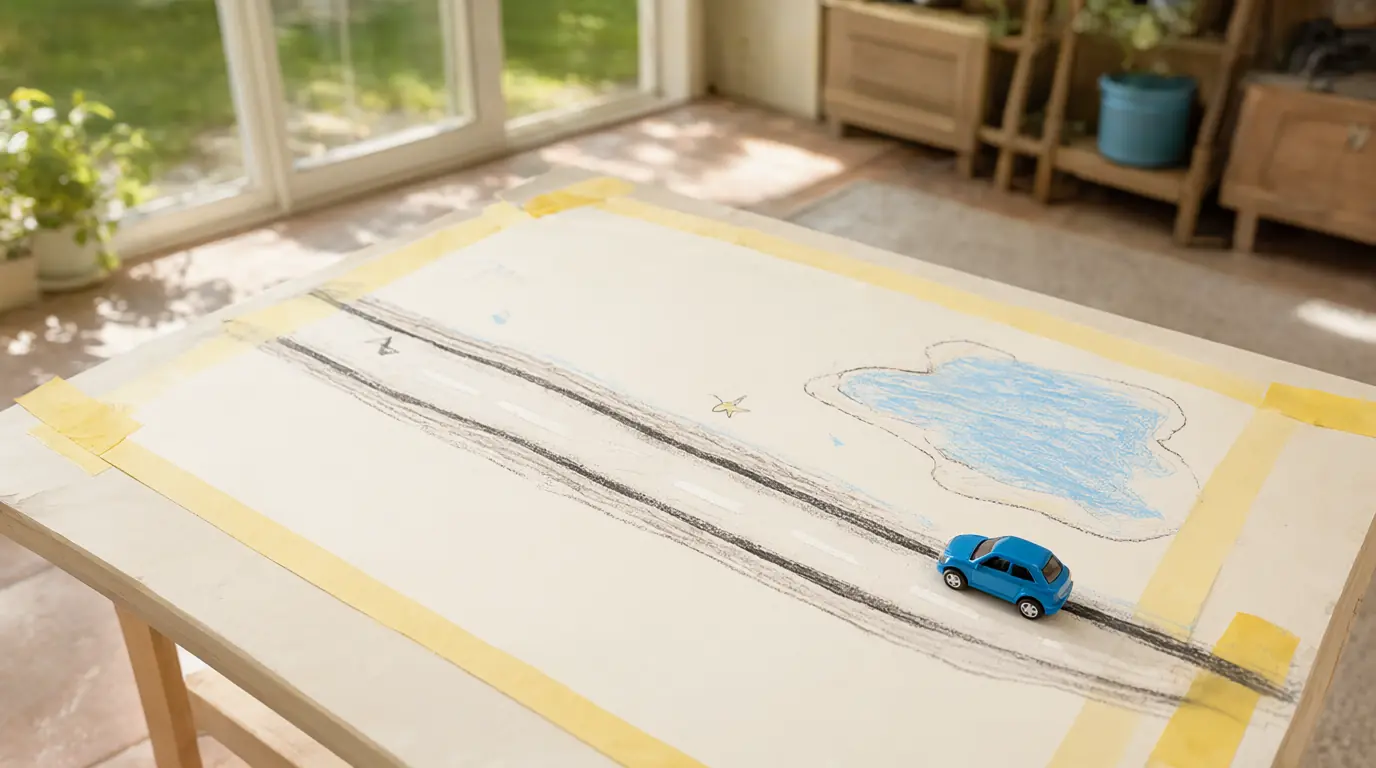
Make it your own: Younger children can scribble across the road while you move the toy. Older ones can plan two places, such as a shop and a home, and decide which comes first. On a low table, tape the paper down; on the floor, use a bigger sheet and join it with more tape.
A snack café for a soft toy
Serving a toy uses a routine your child already understands, which leaves room for them to make the decisions. They choose what the guest eats, whether it wants more and when it has finished. Pretend play like this builds sentences and turn-taking, and it is a gentle first step towards noticing what someone else might want, which is where empathy starts.
You’ll need
- A plate, a cup and a spoon
- 3–4 large pretend food pieces or empty food boxes
- One soft toy or doll
- A small cloth for the table
How to do it
- Lay the cloth and set the plate, cup and spoon in front of the toy.
- Ask what the guest would like, and repeat their answer back as a question.
- Let your child serve, then ask, 'Is it still hungry, or finished?'
- Take a turn as a second guest so your child has two customers to serve.
- Hand over the cloth when the guest 'spills' something.
- Finish with a goodbye and a thank you, using the same words each time.
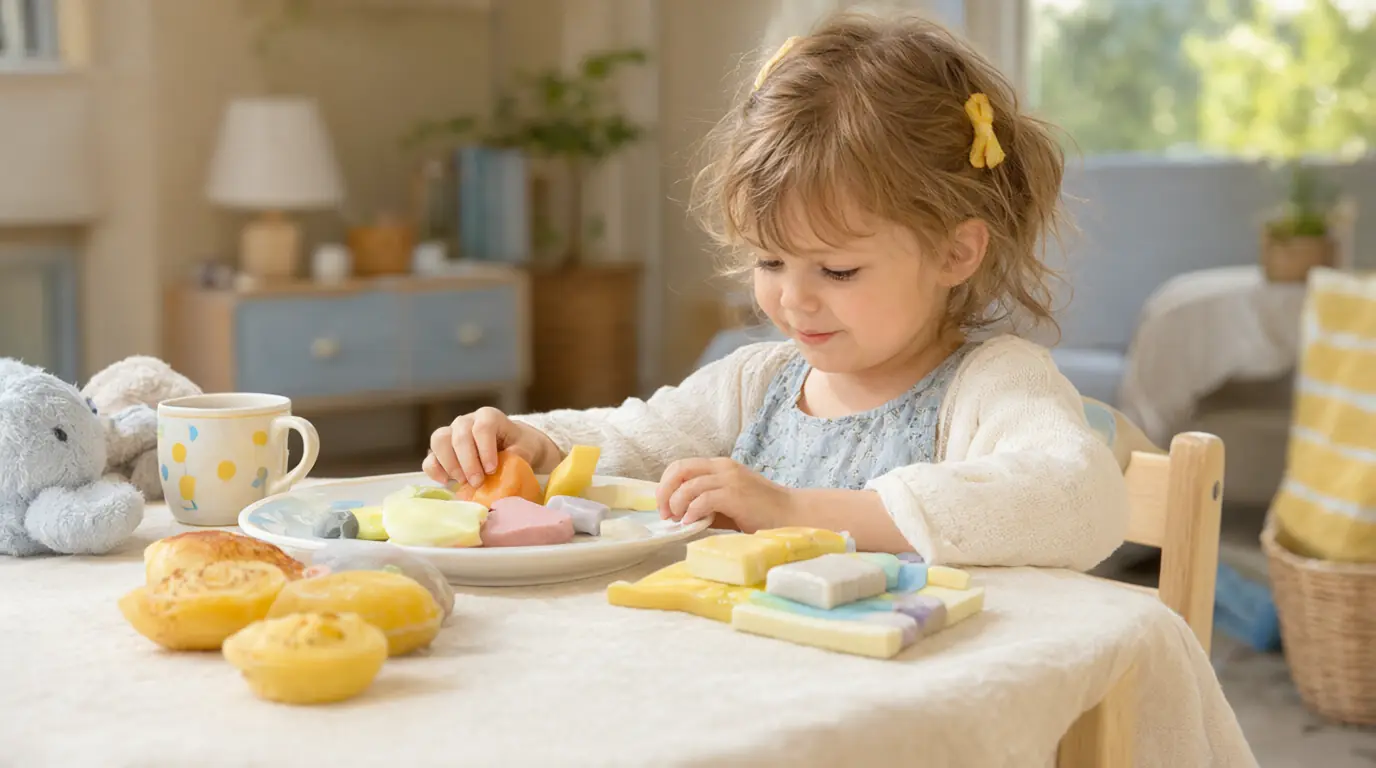
Make it your own: A younger child can simply fill and empty the cup. An older two-year-old can take an order, repeat it back and choose a price with a pretend coin. If your child prefers the real thing, use child-safe food such as a banana slice instead of plastic pieces.
Matching pairs from the laundry
Socks and mittens make a forgiving matching game because the pairs really do look different. Your child compares colour, size and pattern, which is early maths without any worksheet. Keeping every pair visible means they can check instead of guessing, and because the game comes from the laundry basket, it turns up again every week without you planning anything.
You’ll need
- 3–4 pairs of socks
- 2 pairs of mittens or gloves
- A laundry basket
How to do it
- Lay one sock from each pair in a row and put the rest in the basket.
- Hold up one sock and ask your child to find its friend.
- Let them place the pair together and check the pattern side by side.
- Add the mittens once the socks are matched, or mix everything at once.
- Give the finished pairs a job: fold them, return them to the basket or dress a toy.
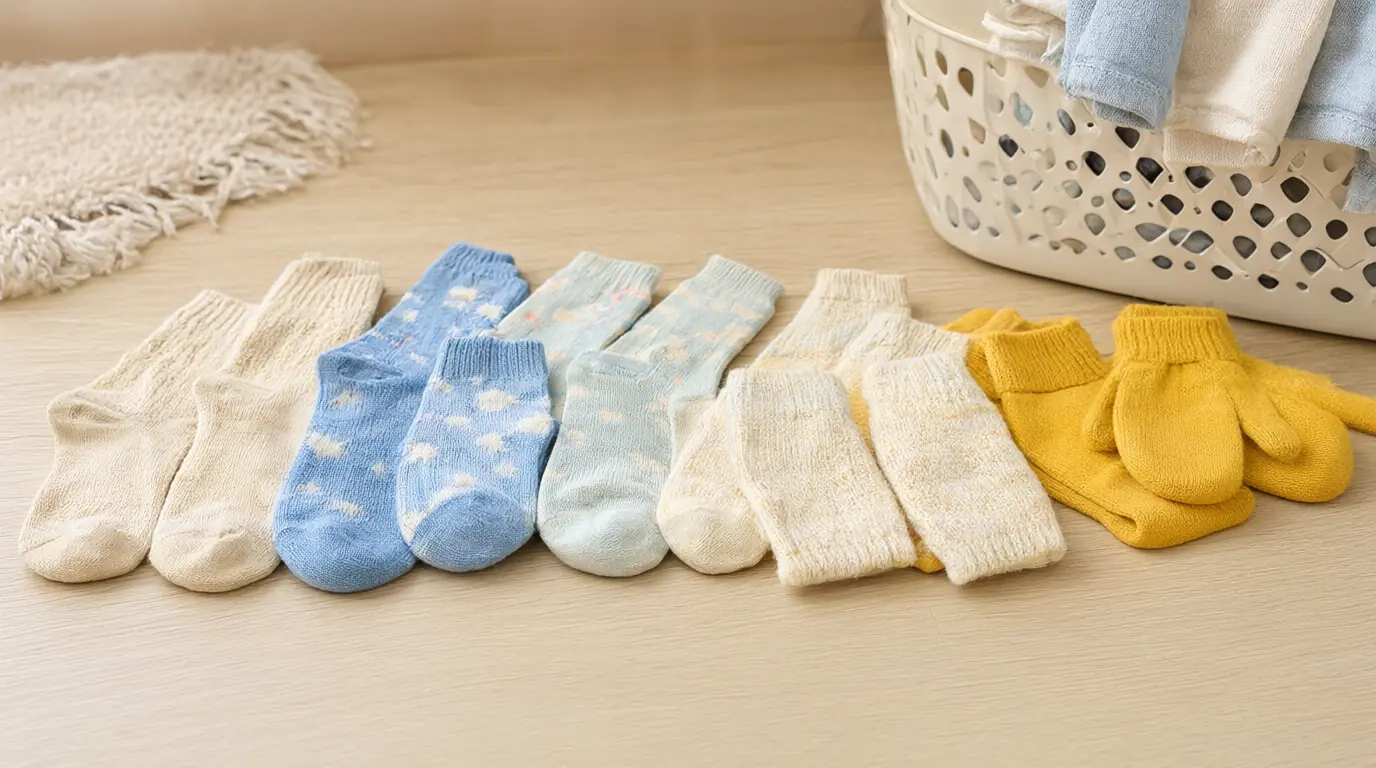
Make it your own: For younger children, use two pairs only and make the colours very different. For older ones, include two similar socks that are not a pair, such as two blues in different shades, and talk about what makes a pair and what does not.
A carrying route for a basket
Two-year-olds are often happiest when a job is real. Filling a basket, carrying it across the room and tipping it out gives the whole body something to do and can be repeated for as long as interest lasts. The lifting, steadying and turning also work the big muscles children use later for climbing stairs and sitting still at a table.
You’ll need
- One sturdy basket or small bag
- 4–6 soft or medium-weight objects
- Two cushions or tape marks for start and finish
How to do it
- Mark a start and a finish with cushions a few steps apart.
- Put the empty basket at the start with the objects beside it.
- Show how to load two things, carry the basket and tip it out at the finish.
- Walk beside your child and let them choose the route, even a longer one.
- Add a second trip only if they ask; stop while it is still enjoyable.
- Carry the basket back together and put it away as the last job.
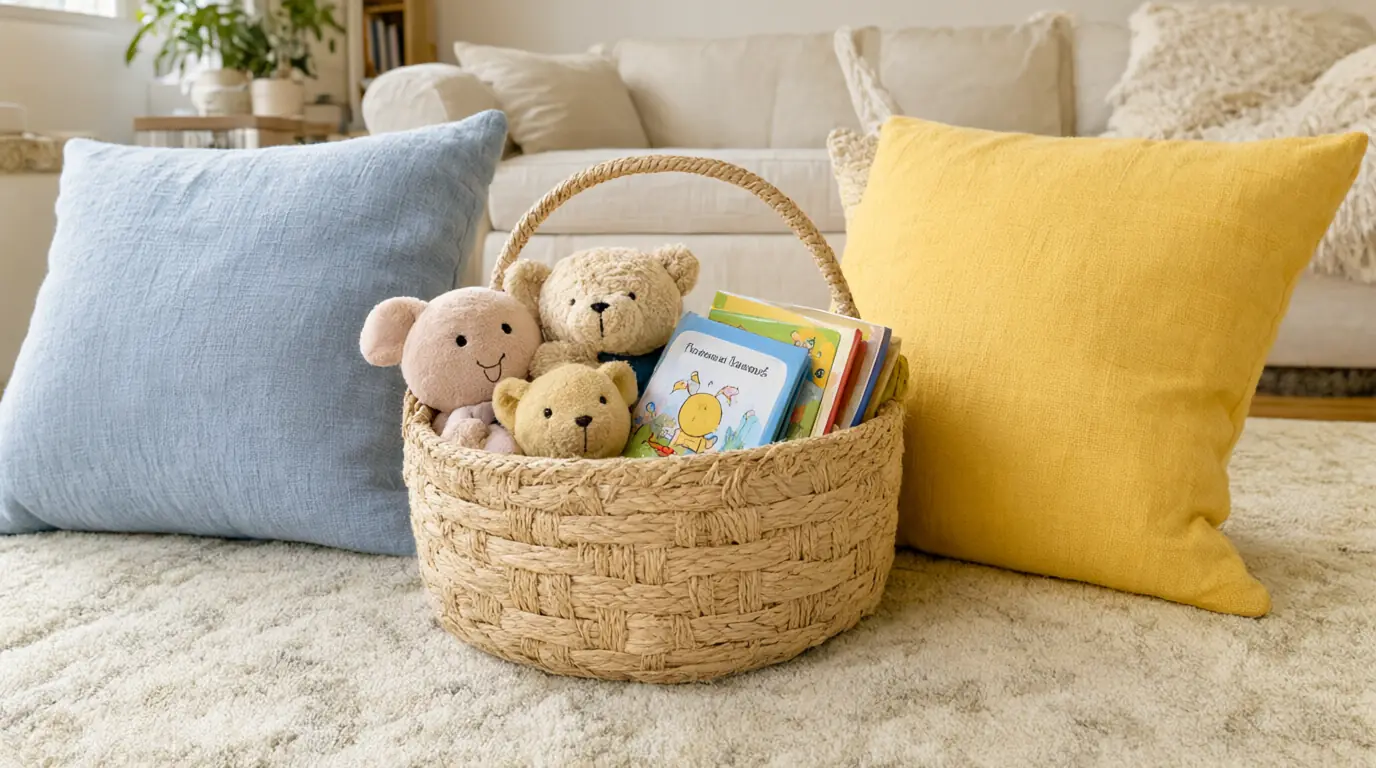
Make it your own: Younger children can push the basket along the floor instead of lifting it. Older ones can sort what arrives into two piles, or deliver one object at a time to different rooms. Keep loads light and never stack objects above shoulder height.

Make it work for your family
Expect repetition. A two-year-old may sort the same four blocks ten times, and that is the activity working rather than a sign they are stuck. If an idea falls flat, make it smaller: fewer objects, a shorter route, one crayon instead of three. Sitting down and doing the same thing beside them usually restarts play more reliably than a fresh suggestion, and giving a warning before tidy-up helps the ending go better.
Some days no invitation lands, and that is normal. Try again after a snack or some time outside. If your child is consistently frustrated, check the materials first: chunky crayons, wide paper and light baskets make more difference than extra encouragement. For more play that fits small rooms, try these games to play when kids are bored, and keep this set of activities for 3-year-olds for when your child wants a little more.

Parents also ask
What activities should I do with my 2-year-old at home?
Choose activities built on real jobs your child can finish: sorting objects into two baskets, carrying a light basket across a room, drawing a road for a toy or serving a soft toy a pretend snack. Simple materials, one clear invitation and a few minutes of your company work better than a planned programme.
How long should a 2-year-old stay with one activity?
Anywhere from five to fifteen minutes is common at this age, and returning to the same basket later counts as the same activity. Follow your child's interest rather than a timer. If they walk away, leave the materials out and let them come back without any pressure.
How do I keep a 2-year-old busy without screens?
Keep a small basket of everyday materials ready and offer one thing at a time. Jobs that mirror what you are doing, such as matching socks, wiping a table or loading a bag, hold attention well because they are real. Rotate a few simple activities rather than introducing something new every day.
Sources & further reading
Explore these primary sources for further context on this topic.
Choose materials and activities that suit your child, supervise as needed and adapt the ideas to their interests and abilities. About our editorial approach