Weebou Editorial Team
 11 min read

 In this article
A little preparation
Pick one spot and keep it: a corner of the rug, two cushions by the window, a bench outside. Sit in the same place yourself each time so your child knows where the meeting begins. Prepare three or four picture cards that stand for what is coming — breakfast, the park, a nap, a visitor — and keep them in a basket or clipped to a low hook where your child can reach them. Ten to fifteen minutes is plenty; if the day is rushed, do the hello and one picture card and leave the rest.
Nothing in the meeting should require a child to reveal a private worry or describe their mood in front of others. A quiet chat later with one adult is usually more useful, and a child who says nothing at all is still taking part. Keep inviting rather than insisting: passing is a real answer, not a failure. If you are in a group, agree beforehand with the other adults who will support a child who needs a break, so the meeting does not stall. For a wider look at how these gatherings fit a small group, see morning circle ideas for mixed ages.

What to know and try
A picture plan you build together
A picture plan turns the day into something a young child can see and point at. It works because it answers the question children actually ask — what is happening next — without a long explanation. Drawing it together also gives your child a reason to talk about the day in their own words, and the finished strip stays up as a reference you can return to at any point.
 You’ll need
- A strip of card or a sheet of thick paper
- Crayons or thick felt tips
- Four to six small cards or sticky notes
- Tape or a low hook
- A basket to keep the cards in
How to do it
- Lay the strip on the floor and ask your child what happens first in the morning; a bowl or a toothbrush picture is enough.
- Draw each of the next few things on a separate small card together, keeping the drawings rough and quick.
- Help your child place the cards along the strip in the order they happen, from left to right or top to bottom.
- Point to each card in turn and say the plan out loud in a simple sentence.
- Ask your child to move or turn over one card to show something that is different today, such as a visitor or no nursery.
- Fix the strip at your child's eye level and let them point to it whenever they ask what is next.
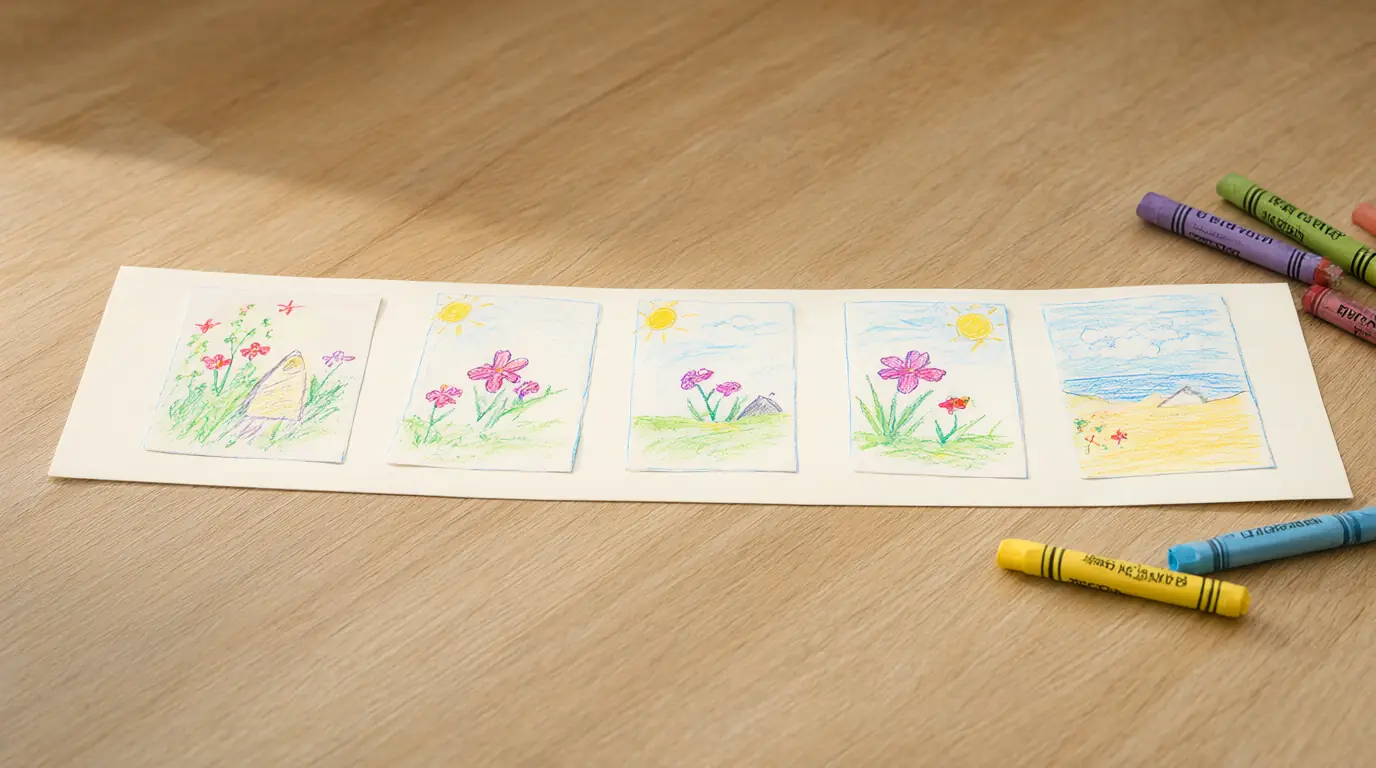
Make it your own: For a two-year-old, use three cards and photos of their own things instead of drawings. Older children can draw the cards themselves and add a small symbol for the time of day. Children who dislike drawing can sort pre-made picture cards or place real objects — a cup, a shoe, a book — along the strip instead.
A hello you can wave, say or nod
Offering a choice of greeting lets every child open the meeting on their own terms. The point is not the greeting itself but the message that joining in looks different for different people and that all of it counts. Once the same three options appear day after day, children start choosing confidently and often invent a fourth of their own, which is worth keeping.
You’ll need
- Three picture cards: a waving hand, a speech bubble, a smiling face
- A small basket
- A soft play cloth to sit on (optional)
How to do it
- Sit down in the usual meeting spot and put the three greeting cards out in a row.
- Demonstrate each one yourself: wave, say a name and hello, or simply smile and nod.
- Pass the basket round or point to the cards, and let each child choose one or say pass.
- Greet the child in the way they chose, using their name, and move on without comment if they pass.
- Once the round is done, ask whether anyone would like to add a new greeting for tomorrow.
- Keep the chosen greeting cards in the basket so the same options appear next time.
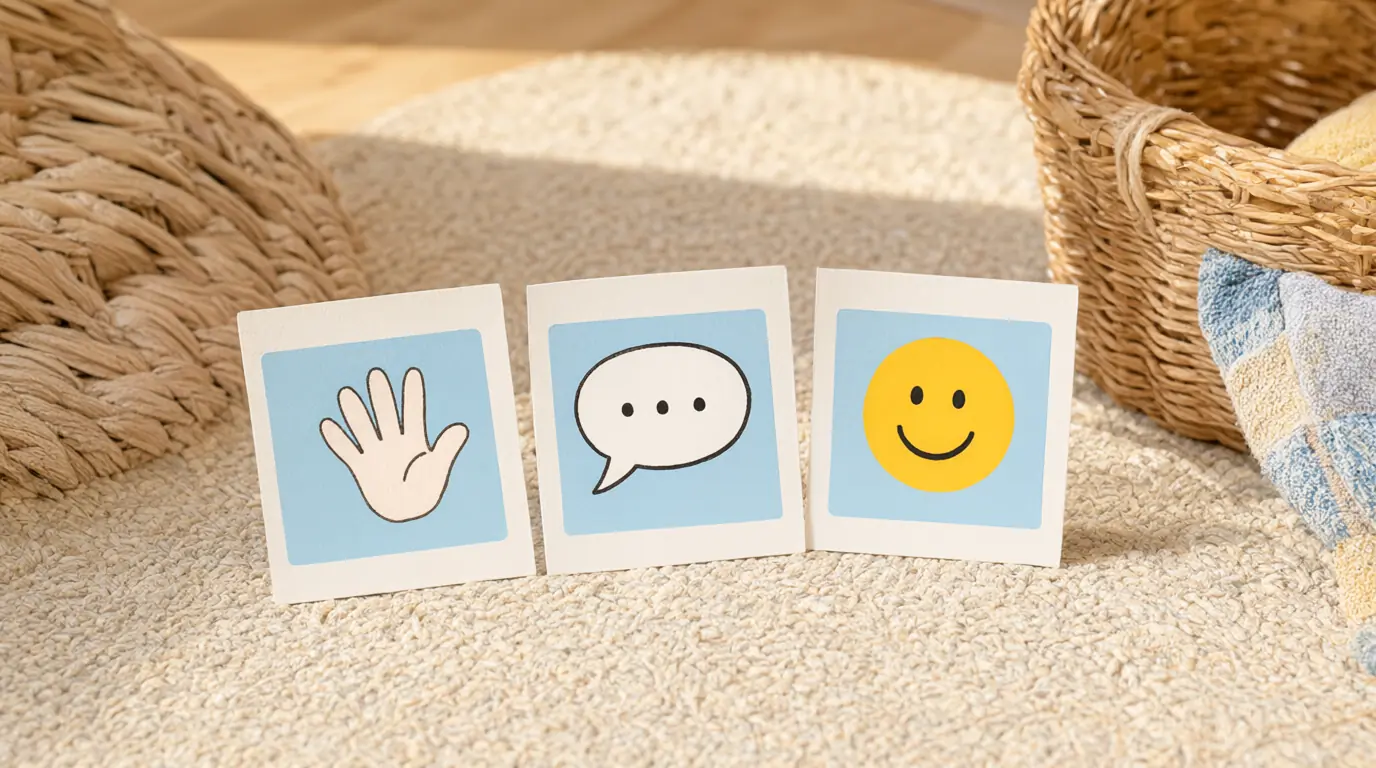
Make it your own: A very young child can choose by pointing, or you can offer a hand to hold as a greeting. Older children might try a greeting in another language the family uses. In a large group, greet in a circle but allow children to answer to the person beside them rather than to everyone at once.
One change worth pointing out
Most of the day should stay the same, but naming one real change helps children prepare for it rather than meet it unprepared. Keeping this short and practical — what happens before, what happens after — gives a child something concrete to hold on to. It also separates the practical question from the feelings around it, which can be talked about later in private.
You’ll need
- The picture plan from the first idea
- One extra card showing today's change
- A pencil to mark the spot
How to do it
- Show the usual plan and point along it as you say the ordinary order of the day.
- Place the extra card where the change happens and say what it shows in one sentence.
- Explain what comes just before it and just after it, using the cards as your guide.
- Invite practical questions only — who, where, how long — and answer them plainly.
- Ask your child to show you the change card again later in the day, so they can check it themselves.
- If a child seems worried rather than curious, offer a quiet conversation away from the group.
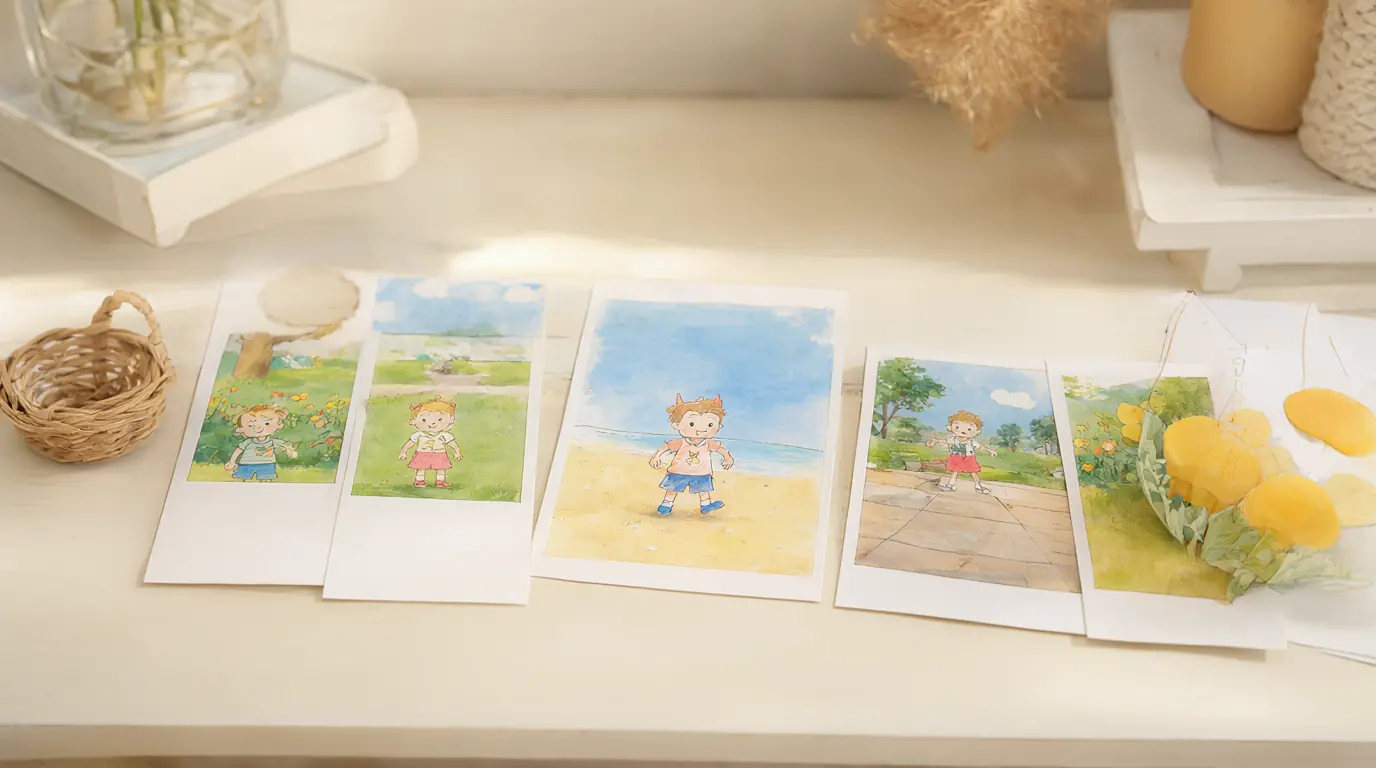
Make it your own: With a two-year-old, name the change in a single sentence and show the card again shortly before it happens. Older children can suggest what they might need — a bag, a snack, shoes by the door — and gather it themselves. In a group, repeat the change at the end of the meeting so children who were not listening the first time still hear it.
A noticing from the way in
Asking what a child noticed on the way to the meeting is easier to answer than asking how they feel, because there is a right sort of answer without being a test. A puddle, a delivery van or a new sign are all good. The adult's job is to connect one noticing to another — so two children who both saw the same van discover they share something — rather than to praise the best observation.
You’ll need
- Nothing needed beyond the meeting spot
- Optional: a small object brought from outside, such as a leaf
- A tray to rest found objects on
How to do it
- Start by offering your own noticing in one sentence: something you saw, heard or smelled on the way.
- Ask each child in turn whether they noticed anything, and accept no answer as an answer.
- Repeat back what each child says in their own words so it is clearly heard.
- Point out a link between two noticings if one is there, without ranking them.
- Put any brought object on the tray and let children look at it closely for a moment.
- Close the round by saying which noticing you will keep thinking about, and why.
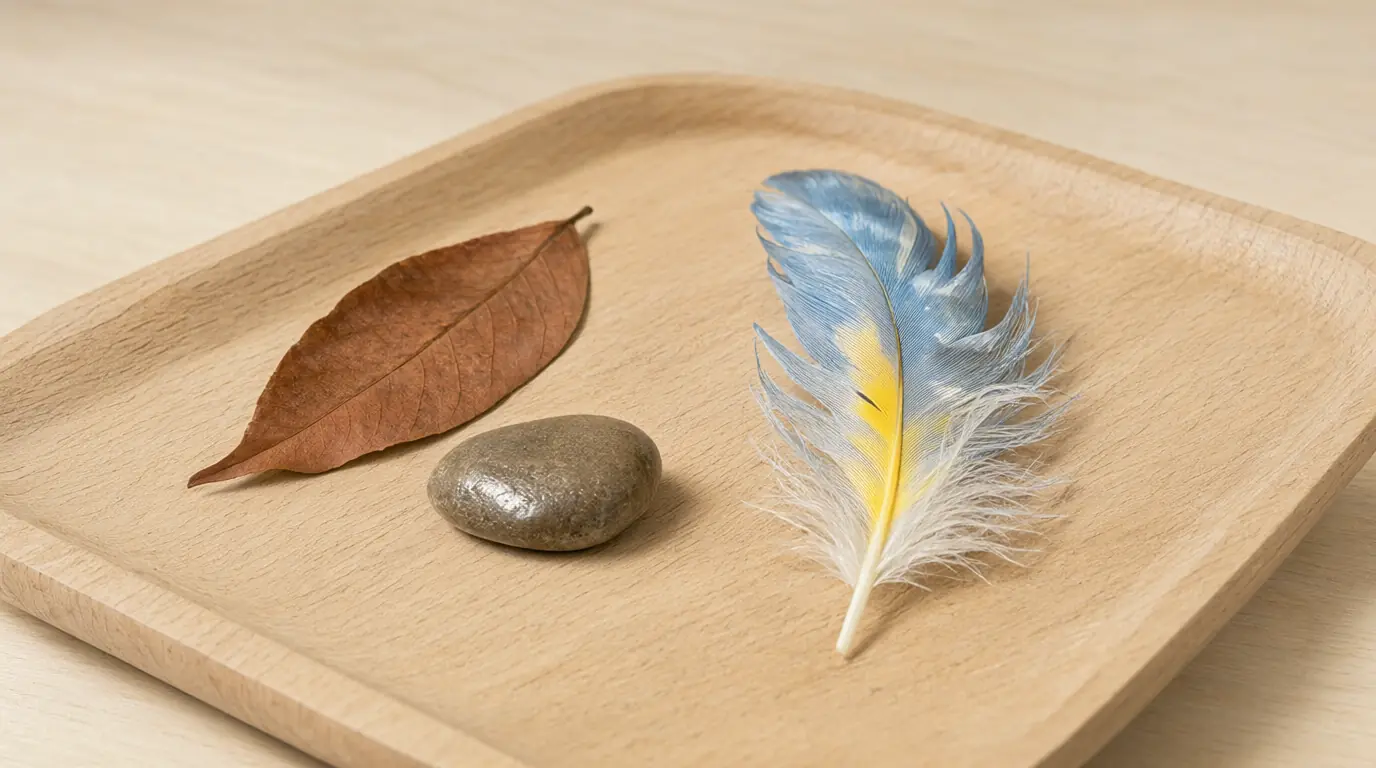
Make it your own: Younger children can point out of the window or answer with one word. Older children might describe a sound they heard or something that changed since yesterday. In a group where several children want to speak at once, hand round a small stone as a talking turn, and let anyone pass it on without speaking.
Two real jobs to choose between
Offering two useful jobs gives children a way to join the day that does not depend on talking about themselves. It also makes the meeting productive: something is actually done before it ends. Because both jobs are described in full, a child choosing the less popular one is not opting out of anything, and both get done eventually.
You’ll need
- Two picture cards showing the jobs
- The real materials for each job, ready nearby
- A basket or tray for each task
How to do it
- Describe both jobs in one sentence each, showing the card and the real materials.
- Make clear that both jobs will happen today, whichever one the group starts with.
- Let children choose by pointing, speaking or placing their card next to the job they want.
- Split the group or start with the majority choice and do the other job straight afterwards.
- Show briefly how the job is done — books upright, cushions stacked — then step back.
- Finish the meeting by looking at the done job together for a few seconds before moving on.
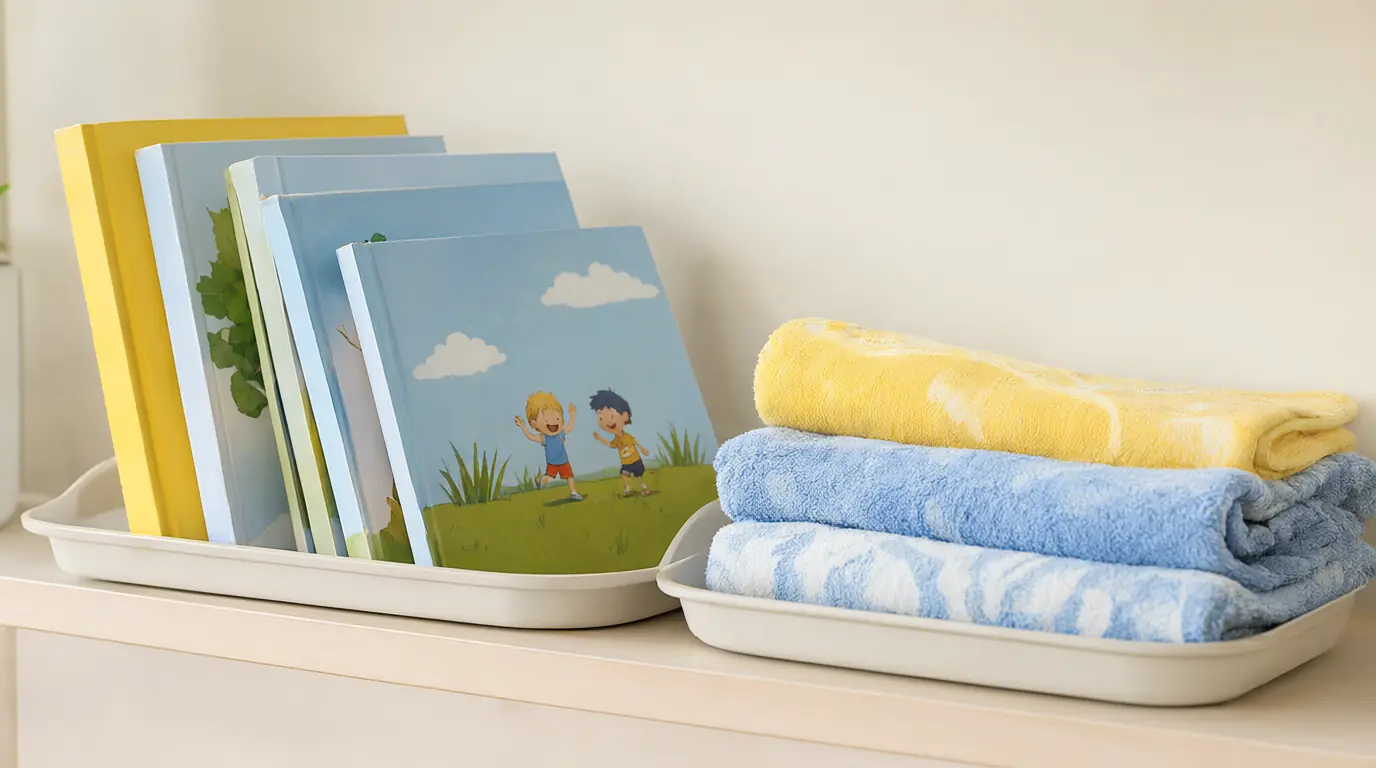
Make it your own: For a toddler, choose jobs with big movements, such as carrying a cushion to the sofa. Older children can plan the order and check the job is finished. If only one child is at home, let them pick a job for themselves and one for you, and swap halfway.
A weather window before you start
Looking out of the window together is the gentlest possible opening and needs no materials at all. It gives everyone something to look at rather than at each other, which helps children who find faces and questions difficult first thing. It also builds a habit of noticing that carries into walks, drawings and conversations later in the day.
You’ll need
- A window with a view
- Optional: a small weather card set with a sun, cloud, rain and wind picture
How to do it
- Sit or stand by the window together and look out for a slow count of ten.
- Ask one open question: what can you see that is moving?
- Let each child answer or simply point, and look where they point.
- Offer a weather card to hold up if your child prefers choosing to talking.
- Choose one thing to look for again later in the day, such as whether the puddle has gone.
- Return to the window at the end of the day to check, and say what you both found.
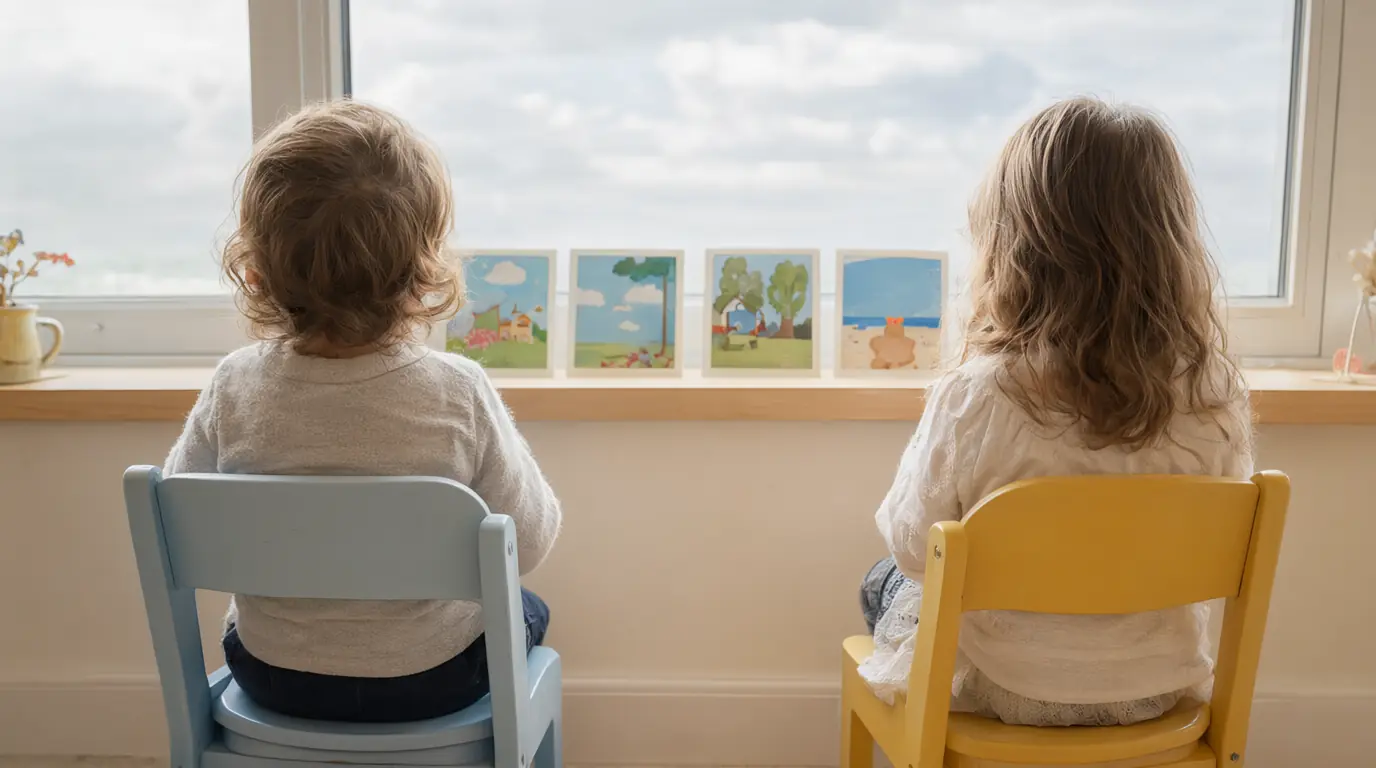
Make it your own: A two-year-old can point and copy a word. Older children can predict what the weather will do later and check whether they were right. On dark mornings, look at lamps, headlights and reflections instead, or use a photo of the view from yesterday to compare.
Make it work for your family
If your child wanders off, does not answer or starts rolling on the rug, the meeting is probably too long or asking too much talking. Shorten it to hello, one picture and one choice. Repetition is what makes it feel safe, so resist adding new steps just because the first few days went well.
For a child who finds group attention difficult, sit side by side rather than face to face, offer a job that involves holding something (the picture basket, a pointer stick) and let them contribute by pointing. Keep the meeting at the same time of day and give a two-minute warning before it starts. If a child becomes distressed, drop the meeting for that day without comment and try again tomorrow; it is a routine, not an obligation. A few gentle icebreaker ideas and a simple name game can also help when children are still getting used to each other.

Parents also ask
How long should a morning meeting last with a preschooler?
Five to fifteen minutes is usually enough. Start with a hello and one picture card, then add a noticing or a job only if your child stays engaged. A meeting that ends while everyone is still interested is easier to repeat tomorrow than one that runs until attention runs out.
What if my child refuses to join the morning meeting?
Let them watch from nearby without pressure, or give them a job like holding the picture basket. Passing and observing are real forms of participation. If refusal continues for more than a week or two, shorten the meeting and check whether it has become too long or too talkative.
Can you do a morning meeting with just one child at home?
Yes. Keep the same spot, the same order and the same picture plan, and let your child take a turn leading. With one child the meeting often becomes shorter and more conversational, which is fine — the predictable structure matters more than the number of people in it.
Choose materials and activities that suit your child, supervise as needed and adapt the ideas to their interests and abilities. About our editorial approach