7 min read

 In this article
A little preparation
Start from something your child has already noticed this week. Write the question on a sticky note or draw a quick picture of it, and put it somewhere you will both see it. Then offer two possible next steps, such as reading about it or building something, and let your child choose one. Use things you already have: library books, scrap paper, blocks, a window.
Plan on ten to twenty minutes at a time and leave the project out between sessions so it can develop over several days. Keep an eye on the balance: if your preparation is becoming bigger than your child's interest, simplify or pause. Following a question is different from teaching a topic, so there are no facts to remember and no right answer to reach. A question that fizzles out, or a child who changes subject, has not wasted the time. Choose topics that connect to your child's life, such as nature or science games, only if they pull your child in.

What to know and try
Turn an interest into a mini-library
Choosing two books on the same subject shows children that one topic can look quite different on the page. A photograph book and a story, for example, will answer different questions. Comparing them is a gentle first step towards using more than one source.
 You’ll need
- 2 library books on the same topic, one mostly pictures
- A shelf, basket or box for your mini-library
- Sticky notes for marking favourite pages
- Paper and a crayon
How to do it
- Ask your child what they would like to know more about, and borrow two books on that subject.
- Read or look through the first book together without rushing to finish.
- Look at the second book and ask what is the same and what is different about the pictures.
- Let your child stick a note on the page they liked best.
- Draw or tell one thing they want to find out next.
- Keep the basket in a visible place and see whether they return to it on another day.
Make it your own: For younger children, choose picture-only books and focus on pointing and naming. Older children can compare how each book explains the same thing and ask a question the books do not answer.
Make a model with a purpose
A model with a job to do is more interesting than a perfect copy. When a child decides that a bus needs a door or a seat, they are making a design decision and testing it, which is a first step into engineering rather than just building.
You’ll need
- A set of wooden or plastic blocks
- A few small toy figures
- Paper for a sign or ticket
- A flat surface or tray
How to do it
- Ask what your child is curious about, such as a bus, a house or a bridge.
- Invite them to name one useful part it must have, like a door, a seat or a ramp.
- Build that part first using the blocks.
- Test it with a toy figure: can the toy get in, sit down or cross?
- Change it if it does not work and ask what they would try next.
- Add a second useful part only if they want to.
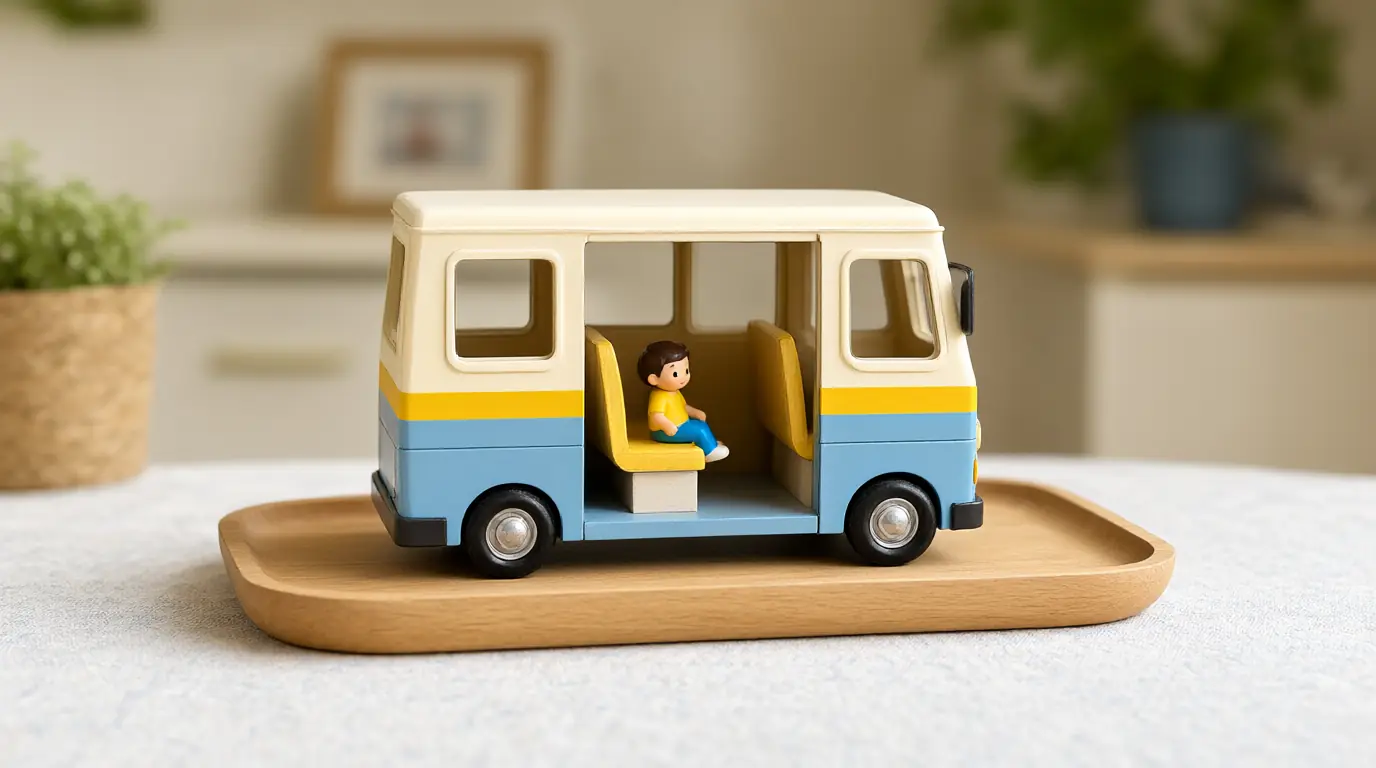
Make it your own: Younger children can build a single tower or tray and test one toy. Older children can sketch their plan first, then compare their model with it and explain what changed.
Record a changing observation
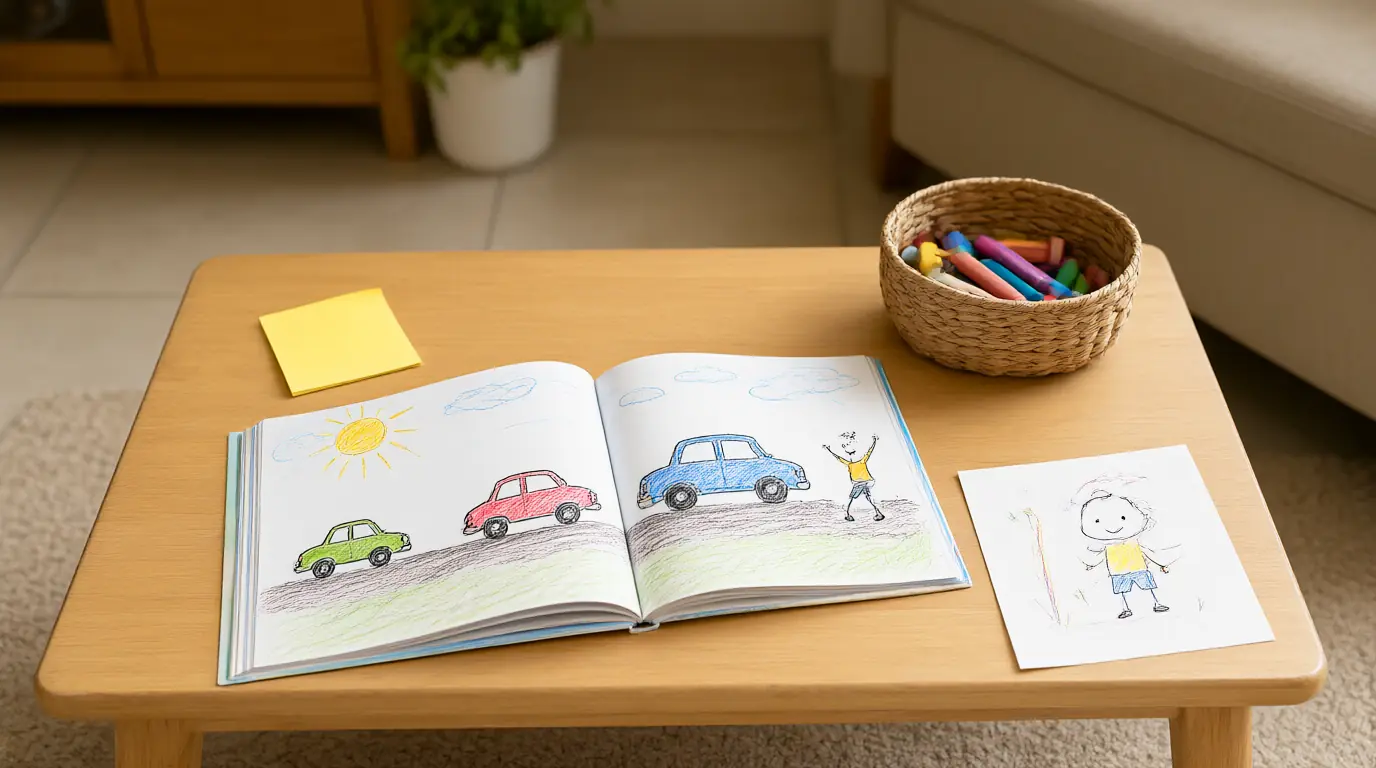
Drawing the same thing on two different days gives children a simple record to compare. They learn that looking again can reveal change, and that a drawing is a way of keeping information, not just a picture.
You’ll need
- Something easy to revisit: a puddle, a shadow spot or a plant on a windowsill
- 2 sheets of paper
- Crayons or pencils
- A clip or magnet to display both drawings together
How to do it
- Pick one subject you can see on two or three days, such as a plant by the window.
- Draw what you can see today, adding colours and shapes your child notices.
- Write the day on the back with your child's help.
- Visit again the next day or after a few days and draw it again on a new sheet.
- Lay the pictures side by side and ask what looks different.
- Talk about why it might have changed and agree on one thing to check next time.
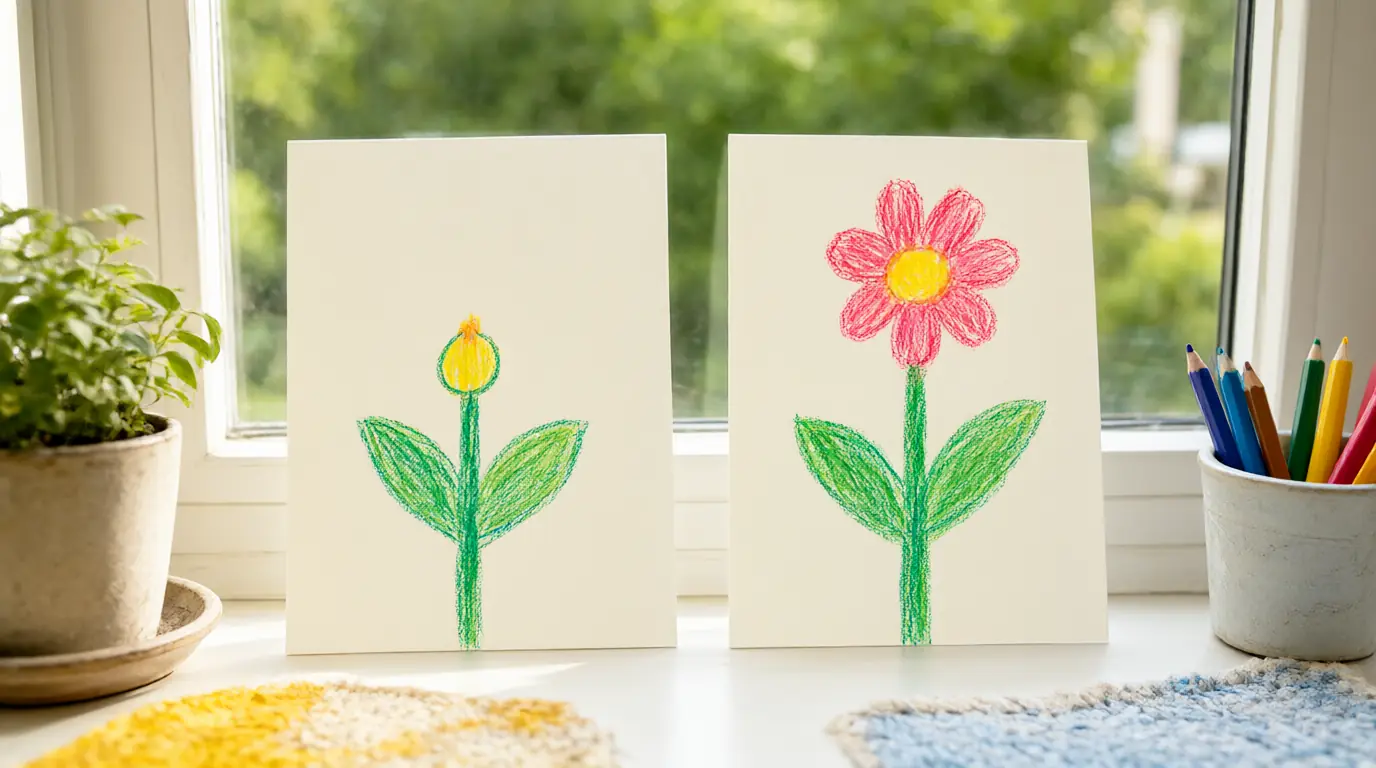
Make it your own: For younger children, take a photo instead of drawing and compare the two pictures. Older children can add a simple mark for the weather or the time of day to see whether it relates to the change.
Teach someone one discovery
Explaining a discovery to another person helps children organise what they noticed and decide what matters. It does not need to be a formal presentation: a drawing, a demonstration or a short story all count, and the listener's curiosity does the rest.
You’ll need
- A drawing, model or object from an earlier activity
- A willing listener, such as a grandparent or sibling
- A comfortable spot to sit
How to do it
- Ask your child what one thing they found out or made that they would like to show someone.
- Decide together who to show and when, and let them practise once with you.
- Invite the listener to ask one real question, not a quiz question.
- Let your child answer, point to the drawing or say they do not know yet.
- Write down any new question the listener raises.
- Thank the child for teaching you and ask whether they would like to find out more.
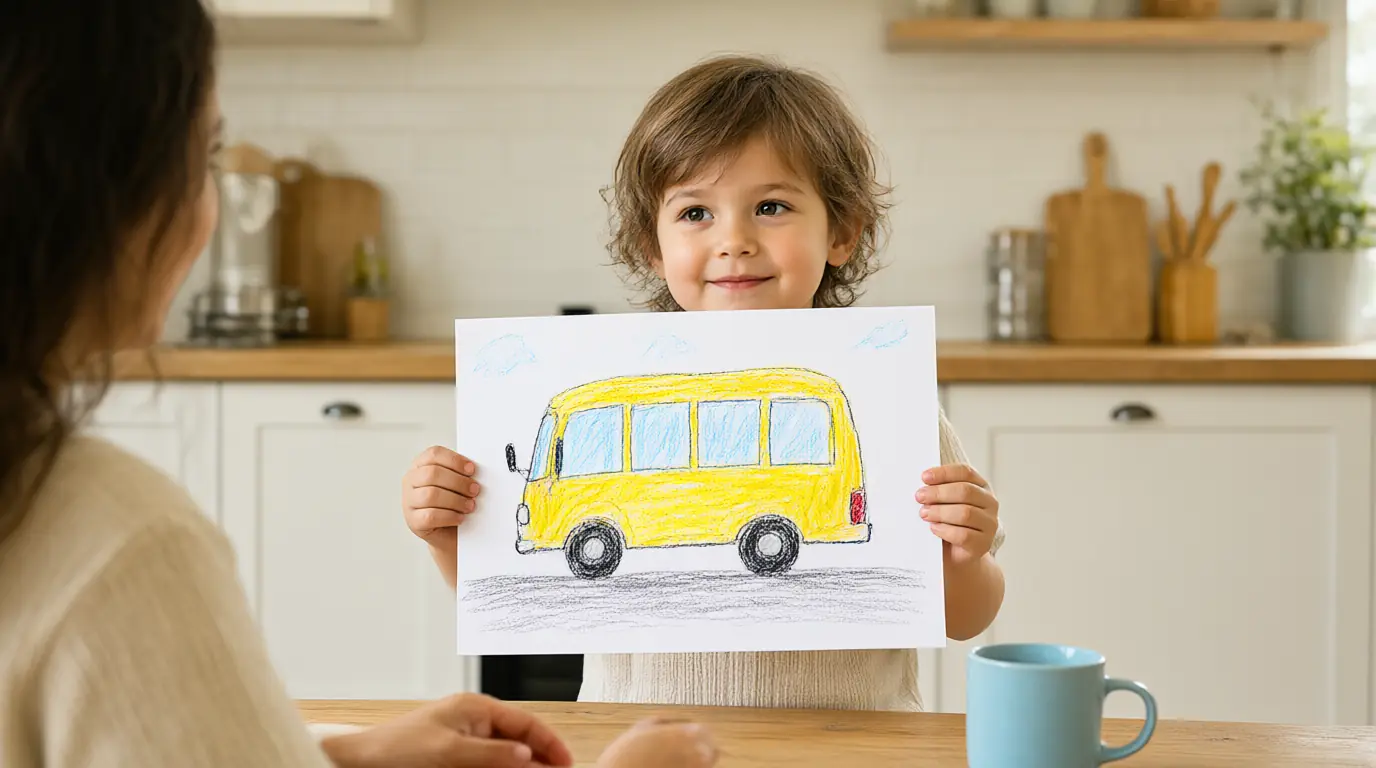
Make it your own: Shy children can show the drawing without speaking or record a short voice message. Older children can prepare two things to show and decide which to start with.

Make it work for your family
Watch whether the activity still belongs to your child. If they begin to say what you want to hear rather than what they think, or avoid the project, take a break and return when they raise it again. Keep a small box or folder where finished drawings and notes can wait, so the question can restart on a quiet afternoon.
You do not need to be the expert. Saying I do not know, shall we find out? models exactly the habit you are hoping for. If an answer from a book or website seems unclear, compare it with a second source or ask a librarian. For more ways to ask better questions, try these critical thinking activities or a few stem ideas for preschoolers.

Parents also ask
What counts as an enrichment activity for a young child?
Anything that lets a child explore an interest in more depth counts: reading about a topic, building a model, watching something change over days or showing a discovery to someone. It does not have to be a paid class or a structured lesson.
How do I find out what my child is interested in?
Listen to the questions they ask and the things they return to during play. Keep a short list on the fridge for a week or two. Patterns usually appear, such as vehicles, animals or cooking, and those are the best starting points.
Can a child have too many enrichment activities?
Yes. If a child seems tired, resists going or has no unscheduled time to play freely, it may be worth doing less. Free play is also valuable, and children often develop their own enrichment through it. Check in with your child about what they enjoy.
Sources & further reading
Explore these primary sources for further context on this topic.
Choose materials and activities that suit your child, supervise as needed and adapt the ideas to their interests and abilities. About our editorial approach