Weebou Editorial Team
 7 min read
 In this article
A little preparation
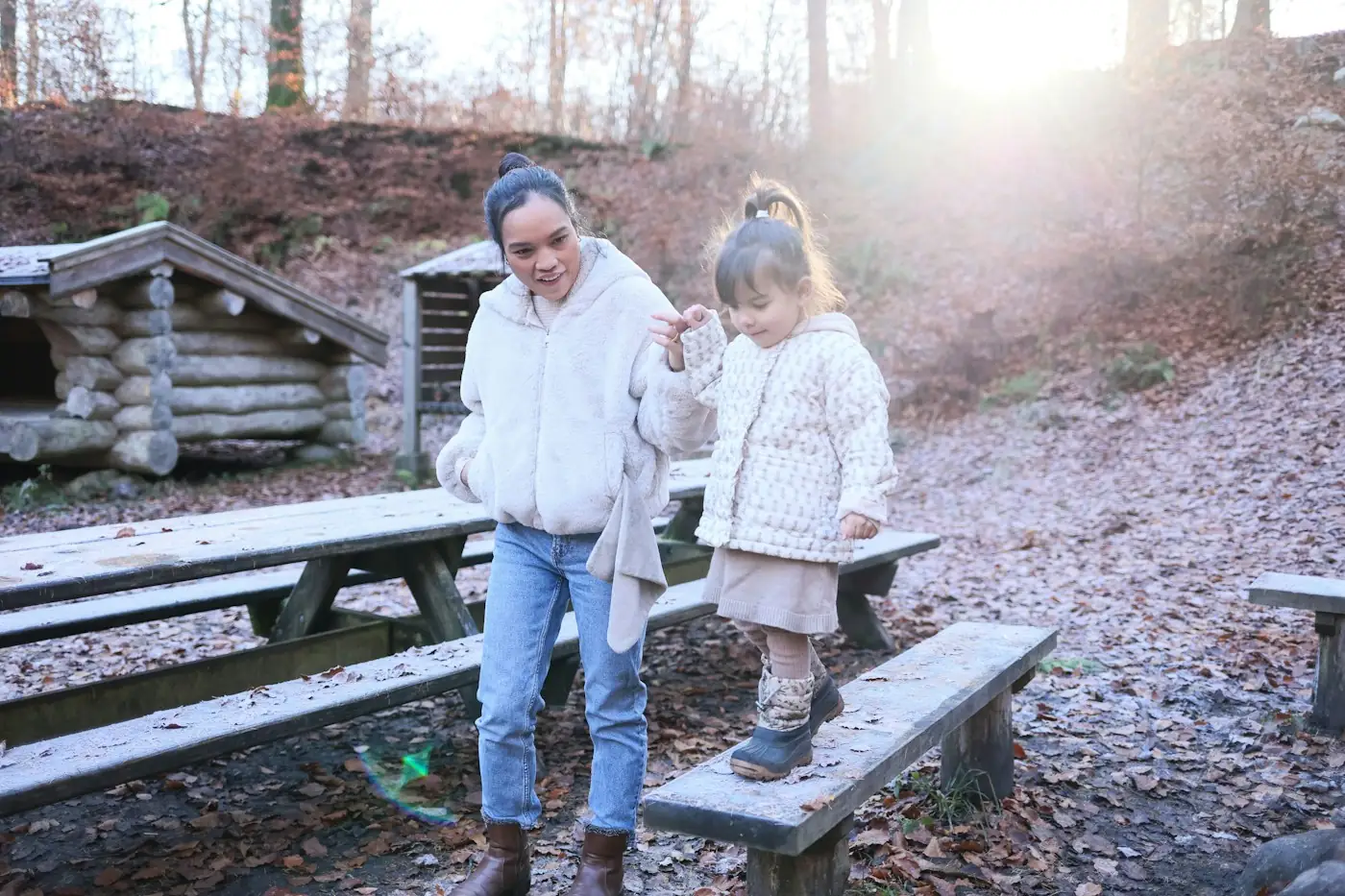
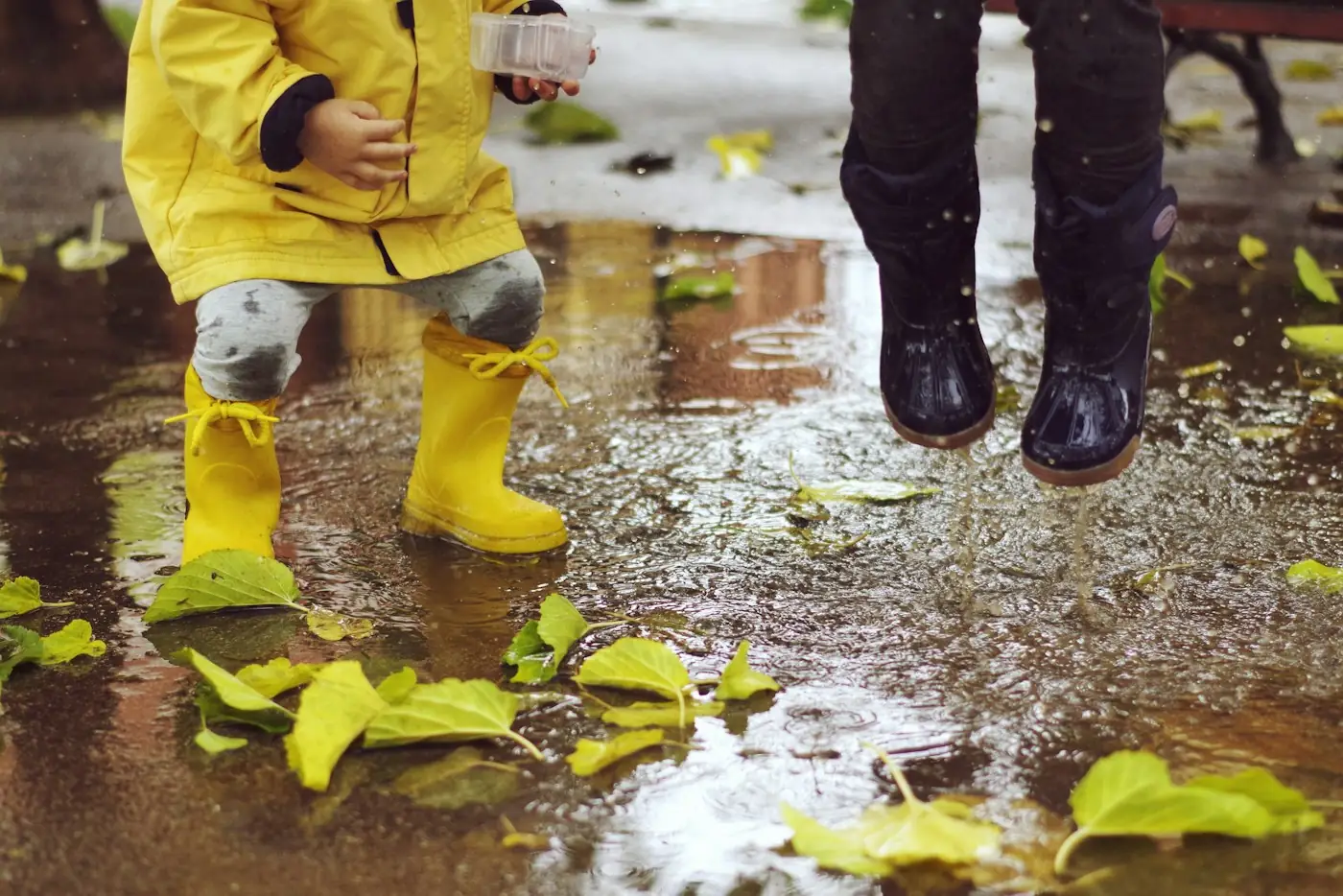
Choose a place you can reach on foot, then walk it first to check for traffic, water, broken glass, animal waste and plants you do not recognise. Agree on a boundary your child can see, such as the path and the big tree. Bring a small bag with a notebook, crayons, wipes and water, and dress for the weather, including shoes that can get muddy.
Set one simple rule: we look and touch gently, but we do not pick living plants or disturb animals. Anything on the ground can be examined only if an adult has checked it first, and hands are washed or wiped afterwards. Mushrooms, berries and unknown plants are for looking at, never for tasting. Allow 20 to 30 minutes, with a pause to sit and watch. If your child finds something interesting, stay with it for as long as they want, because noticing is the point.

Ideas to try together
Texture portraits
Touch is a way to notice that no two surfaces are alike. A child who has felt bark, a smooth stone and a leaf can describe them with words such as rough, cool and bumpy, and drawing the lines they felt turns the sensation into a picture. It builds vocabulary and attention together.
 You’ll need
- A sheet of paper on a clipboard
- Thick crayons with paper peeled off
- Three objects with different textures
- A wipe for hands
How to do it
- Find three surfaces: a tree trunk, a stone and a leaf still on a plant.
- Place the paper against the trunk and rub gently with the side of a crayon.
- Describe the pattern you see and the way it feels.
- Repeat with a stone and a leaf, using a different colour each time.
- Lay the three rubbings side by side and compare.
- Ask which surface was the roughest and which was the smoothest.
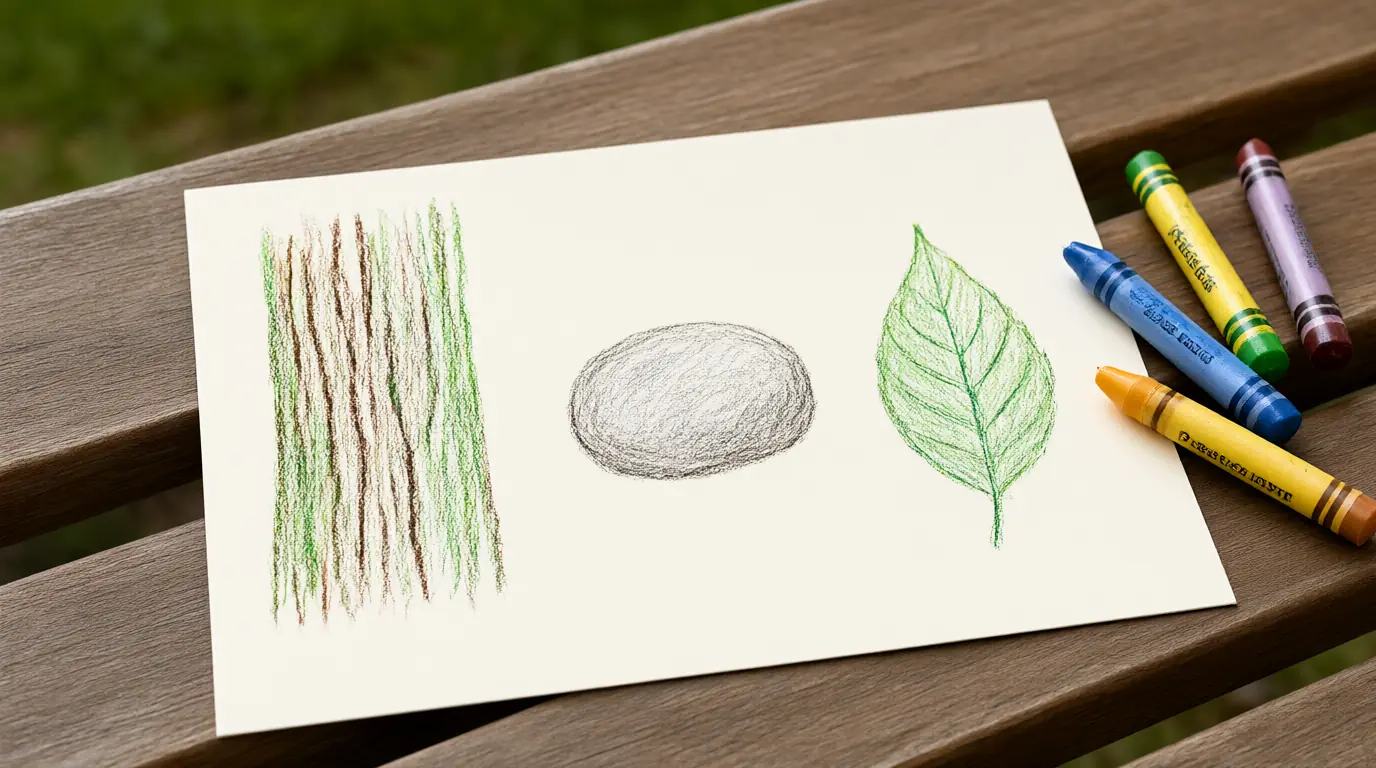
Make it your own: Younger children can rub one surface and describe it in a single word. Older children can try to match each rubbing to the object it came from with eyes closed.
Sound map
Sitting still and listening changes what children notice. A sound map turns listening into a drawing, with the child at the centre and each sound placed around them. It shows that people hear different things in the same place, and that quiet places are never really silent.
You’ll need
- A sheet of paper with a small circle in the middle
- A pencil or crayon
- A blanket or a mat to sit on
How to do it
- Sit on the blanket and draw yourself as a dot in the circle.
- Close your eyes and listen for one minute.
- Open them and mark each sound with a small shape, placed where it came from.
- Use a wiggly line for a bird and a bumpy one for a car.
- Compare maps and notice what you each heard.
- Listen again for a minute and add anything new.
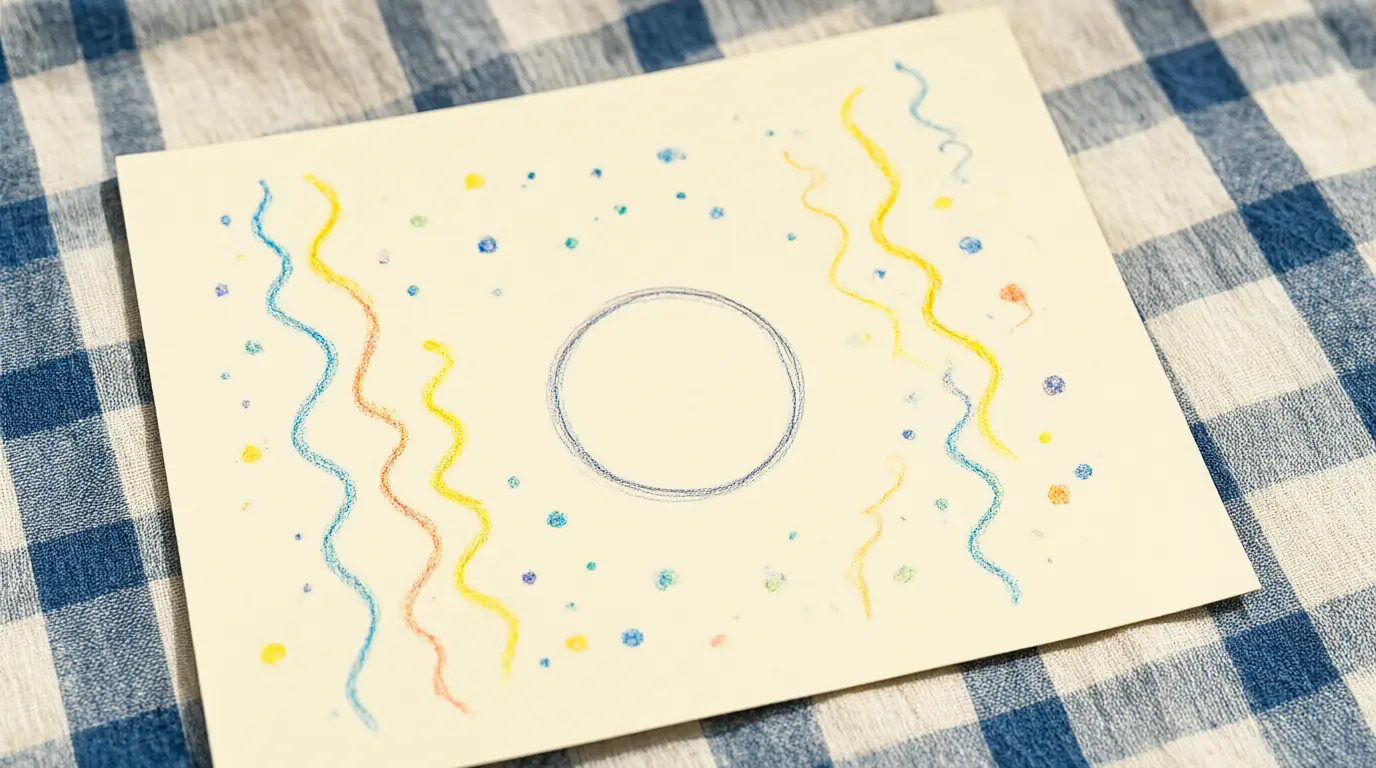
Make it your own: Younger children can tell you each sound while you draw. Older children can use arrows to show whether a sound moved, and rate how loud it was.
Fallen leaf gallery
A few fallen leaves on a tray become a small exhibition. Children sort, compare and draw, and discover that no two leaves are the same, even from one tree. It teaches careful looking without taking anything from the living plant.
You’ll need
- 5 or 6 fallen leaves, checked by an adult
- A tray or a baking sheet
- A magnifying glass
- Paper and a pencil
How to do it
- Collect a few fallen leaves from the ground only.
- Lay them on the tray in a row.
- Look at each with the magnifying glass and find the veins.
- Sort them by shape, size or colour and say how you decided.
- Choose one leaf and draw it slowly.
- Return the leaves to the ground or the compost bin when you finish.
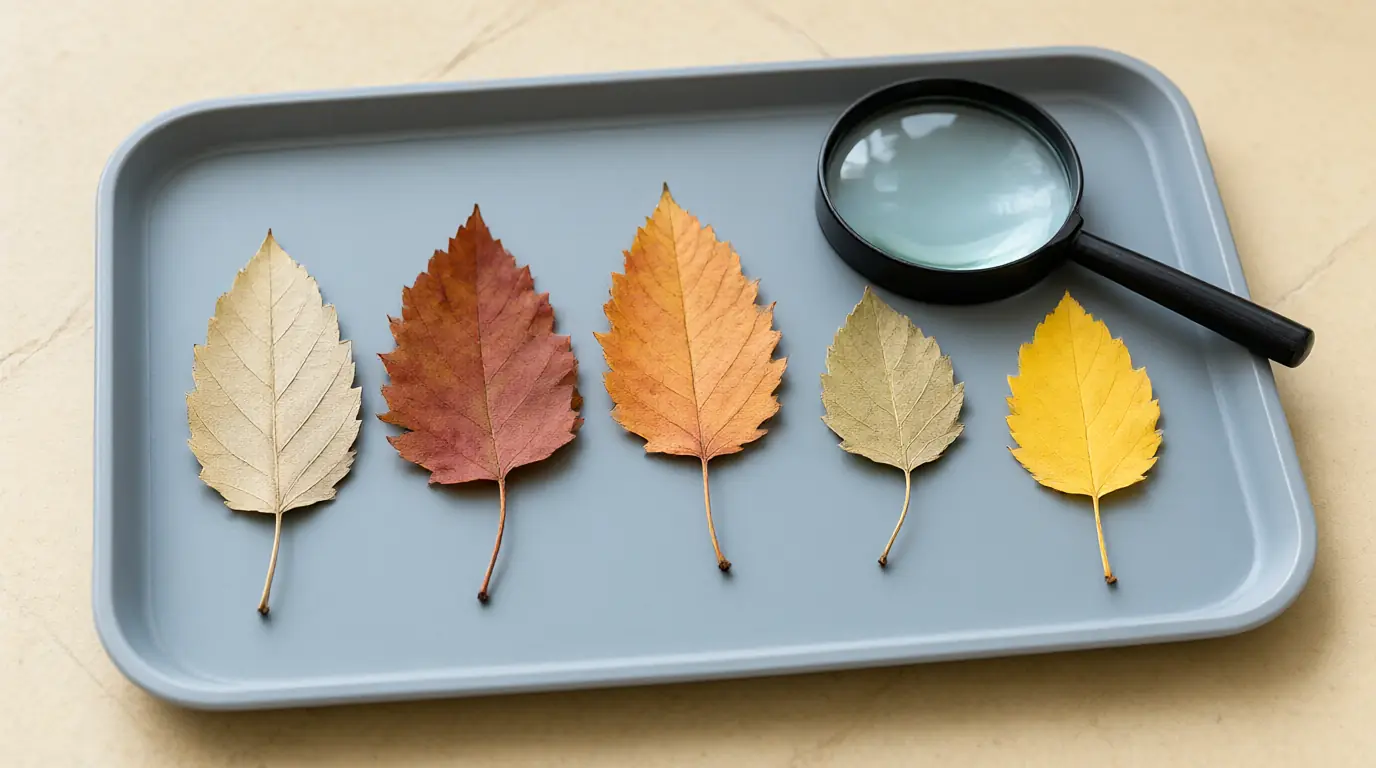
Make it your own: Younger children can sort into big and small. Older children can trace a leaf and count the points or lobes.
Same spot, different day
Coming back to the same tree, bush or corner of the garden shows children that nature changes. Comparing a drawing from last time with the real place now gives them a reason to look carefully, and to wonder why something looks different without needing an immediate answer.
You’ll need
- A notebook
- Crayons or pencils
- A small stool or a mat
- A camera (optional)
How to do it
- Choose a spot you can reach again, such as a tree by the path.
- Draw what you see, including the sky and the ground.
- Write or say the date and the weather.
- Return a few days or a week later and look at the old drawing.
- Spot one thing that has changed: a leaf, a puddle or a shadow.
- Draw the new picture beside the first.
Make it your own: Younger children can point and tell you what changed. Older children can make a small chart of the weather on each visit.
Egg-carton treasure hunt
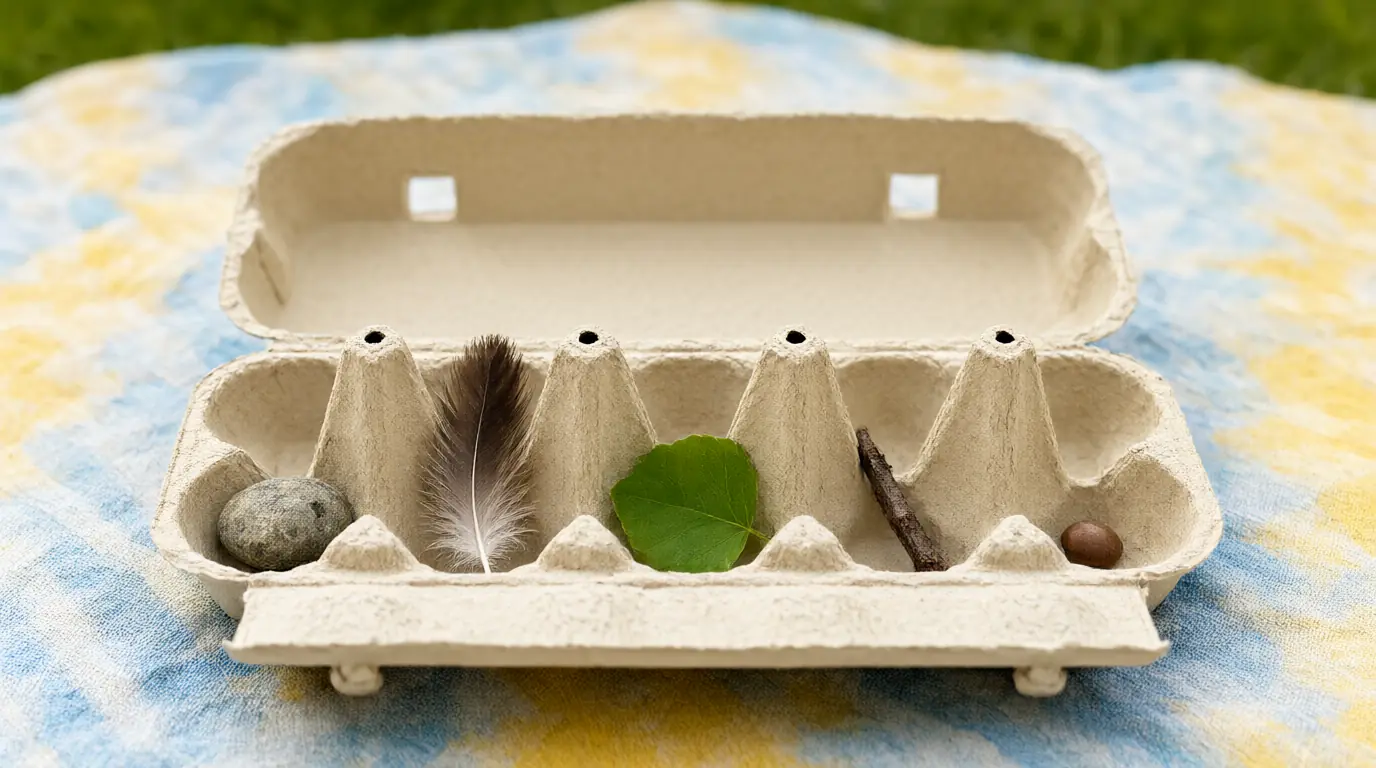
An empty egg carton gives each child a small collecting space with twelve pockets. Looking for twelve different things, a smooth thing, a green thing, a soft thing, encourages careful noticing and sorting. At the end, everything goes back where it came from.
You’ll need
- An empty 12-hole egg carton
- A pencil
- A small bag
- A wipe for hands
How to do it
- Decide on a few simple clues: something soft, something small, something green.
- Look for objects on the ground that fit each clue, such as fallen seeds, petals or pebbles.
- Place one in each section of the carton.
- Close the lid and open it again to look at your collection.
- Describe each item and where you found it.
- Put everything back in the same place at the end.
Make it your own: Younger children can fill only four holes. Older children can use a colour clue for each hole and compare their collection with a friend's.

Make it work for your family
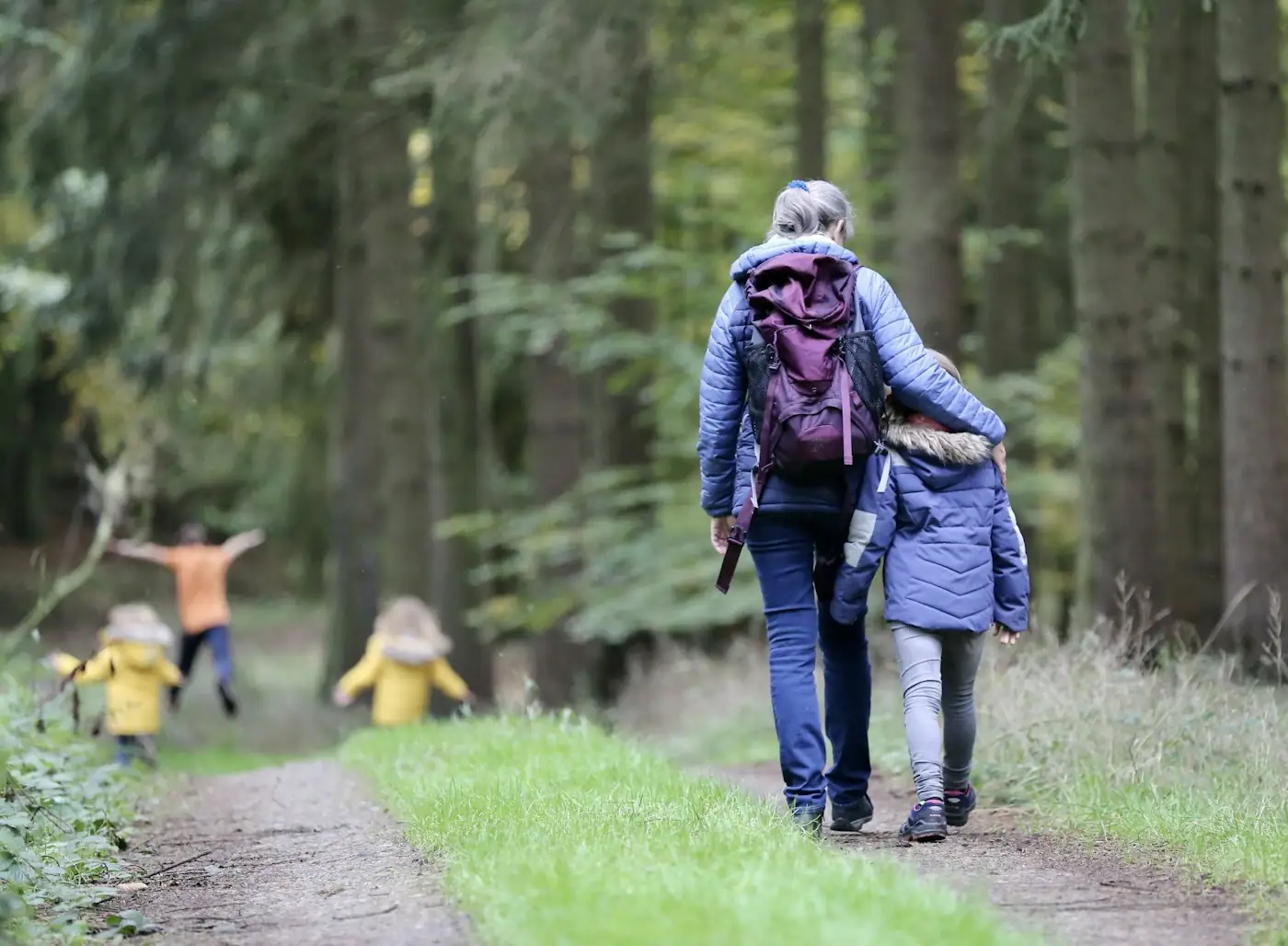
Pick one question for each outing rather than trying to identify everything: what shapes can we see, or what can we hear? When your child asks something you do not know, say so and photograph or draw the thing to look up later. That models real research. Do not rush to name plants and animals: describing a leaf as spiky, shiny or lopsided is just as useful at this age. Keep a small outdoor bag by the door with a notebook, crayons, a magnifying glass and wipes, so a short trip needs no preparation. Children who go out often, even for ten minutes, notice more each time because the place becomes familiar and they know what to look for.
Bring what you find back to the table with some easy painting ideas, or use your sketches as a starting point for a weather discovery later in the week.

Parents also ask
What are easy nature activities for preschoolers?
Texture rubbings, a sound map, a leaf sorting tray, a visit to the same tree on different days and a simple treasure hunt all work well. They need little equipment, can be done in a park or garden and keep living things in place.
How do I keep kids safe during nature play?
Check the site beforehand for traffic, water, sharp objects and unknown plants, agree on a boundary and stay within reach. Never let children taste plants, berries or mushrooms, and wash or wipe hands afterwards. Leave animals alone.
What if I do not know the names of plants and animals?
That is fine. Describe what you see, take a photo or draw it and look it up together later. Showing how to find answers matters more than knowing them already, and children enjoy the detective work.
Choose materials and activities that suit your child, supervise as needed and adapt the ideas to their interests and abilities. About our editorial approach