Weebou Editorial Team
 8 min read


 In this article
A little preparation
Choose a quiet, settled time, such as after a snack or before a bath, and never in the middle of an upset. Sit beside your child on the floor or sofa with a small stack of materials, and tell them what you are going to do in one sentence: ‘Let’s play a game about feelings.’ Offer one activity and put the rest away; two or three minutes is enough for a first try, and ten is plenty for an older child.
Share a small, real feeling of your own, such as ‘I felt grumpy when I could not find my keys’, and show how you handled it. Children copy what they see. Do not ask for a ‘right’ answer, and accept words, pictures, pointing or silence as ways to take part. Keep any water bottles sealed and check lids are tight before handing them over, and keep glitter, beads and other small parts away from children who still mouth objects. If your child often seems overwhelmed, hurts themselves or others, or you are worried about their mood or behaviour, talk to your health visitor, GP or nursery staff.

What to know and try
Make a feelings weather map
Weather is something every child knows, and it changes without anyone being to blame. Linking feelings to weather gives children a gentle picture for what is going on inside, and it shows that feelings pass, just like clouds. Two weather cards can belong to the same person, which tells children that mixed feelings are normal.
 You’ll need
- 5 or 6 cards cut from thick paper
- Crayons
- A tray or table to lay them on
How to do it
- Draw a sunny sky, a cloud, rain, wind, a storm and a rainbow, one on each card.
- Lay the cards out and ask each person to pick one that matches how they feel right now.
- Share yours first: ‘I picked the cloud because I was tired this morning.’
- Let your child say as much or as little as they like; pointing is enough.
- Ask if the weather has changed since breakfast, and move the card if it has.
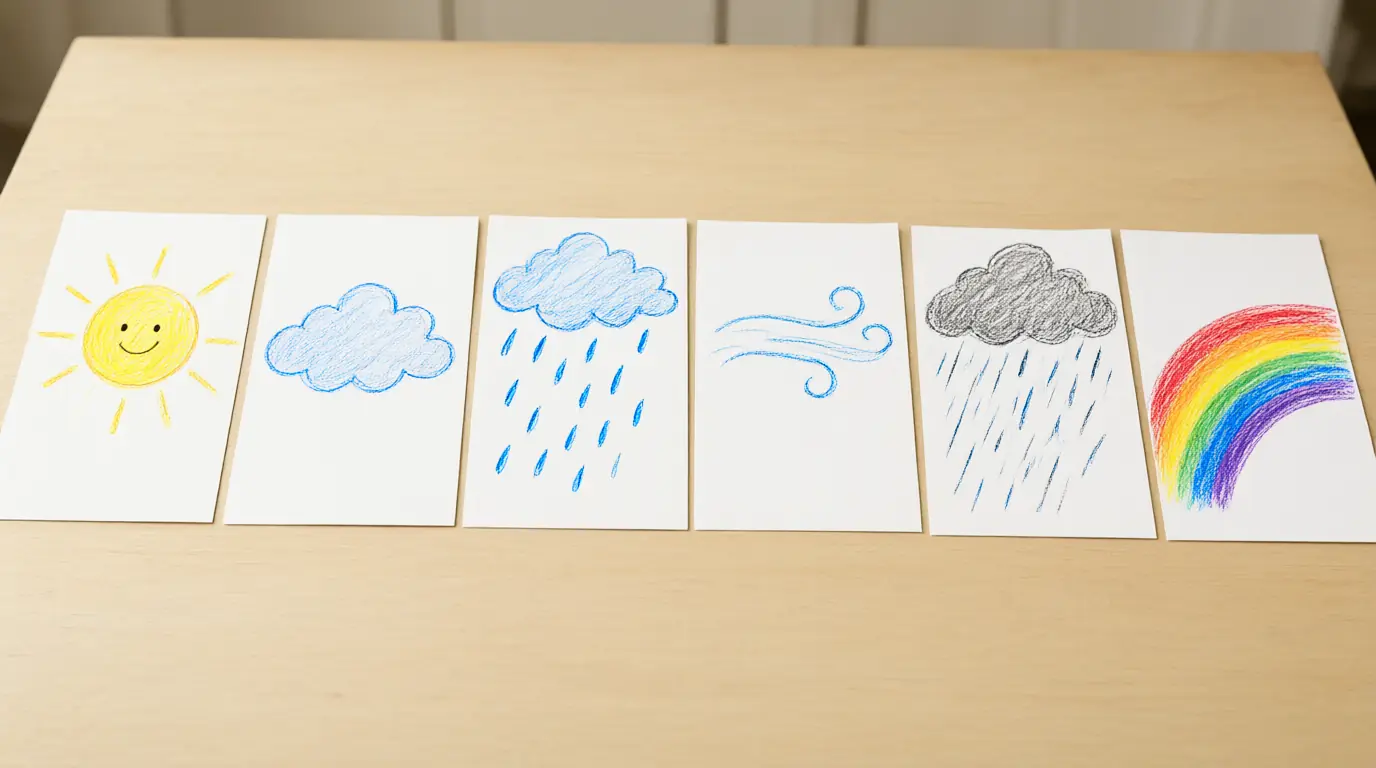
Make it your own: For younger children, use only three cards: sun, cloud and storm. Older children can add a second card for a feeling that is hiding underneath the first.
Give a soft toy a difficult moment
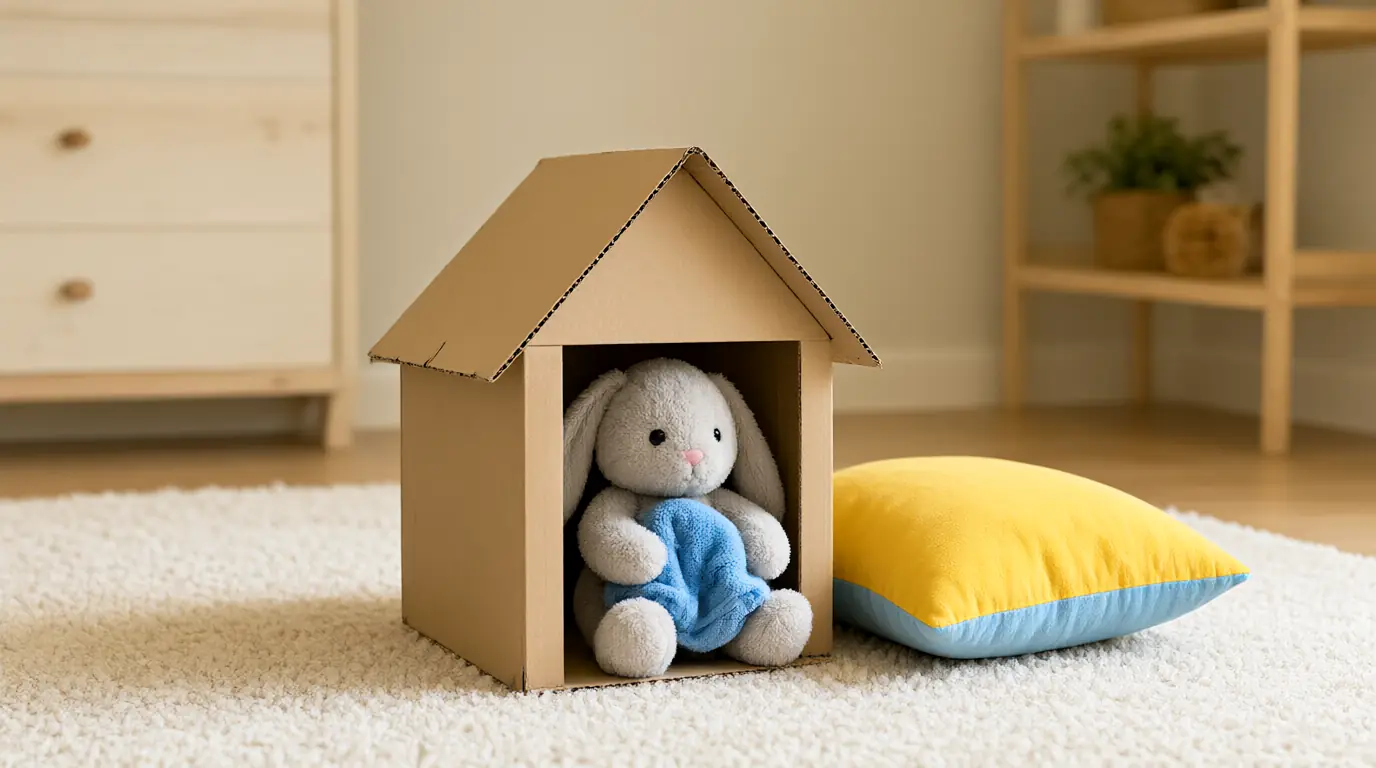
It is easier to talk about a feeling when it belongs to someone else. A soft toy who has lost something or been left out lets your child work out what might help, which rehearses the language and kindness they may later use for themselves. It also lets them show empathy without feeling put on the spot.
You’ll need
- 1 soft toy with a name
- A small blanket or scarf
- A box to be the toy’s ‘house’
How to do it
- Introduce the toy and say that it is having a hard time: its blanket has gone missing.
- Ask, ‘How do you think Rabbit feels?’ and accept any answer.
- Wonder together what might help: a hug, a search, a different blanket, some quiet time.
- Let your child try one idea with the toy, and watch how it reacts.
- Ask Rabbit if it feels different now, and let your child answer for it.
Make it your own: With younger children, keep the problem to one short sentence and offer two helping ideas. Older children can invent the problem and decide what the toy needs.
Practise belly breathing with a soft toy
Slow breathing is a skill that needs practice when it is calm, long before it is useful in a hard moment. Placing a soft toy on the stomach makes the breath visible, so children can see the toy rise and fall. It also feels playful, which keeps the activity from becoming a demand to ‘calm down’.
You’ll need
- 1 light soft toy
- A mat or folded blanket
- A quiet corner
How to do it
- Lie down next to your child on the mat and place the soft toy on your own tummy.
- Breathe in slowly through your nose and let the toy rise, saying, ‘up like a hill’.
- Breathe out slowly and let the toy sink back down, saying, ‘down like a slide’.
- Invite your child to place the toy on their tummy and try a few breaths.
- Stop after four or five breaths and ask what they noticed.

Make it your own: Younger children may only manage two breaths, and that is fine. Older children can count slowly to three on the way in and four on the way out, or lead the game for you.
Shake up a calm-down bottle
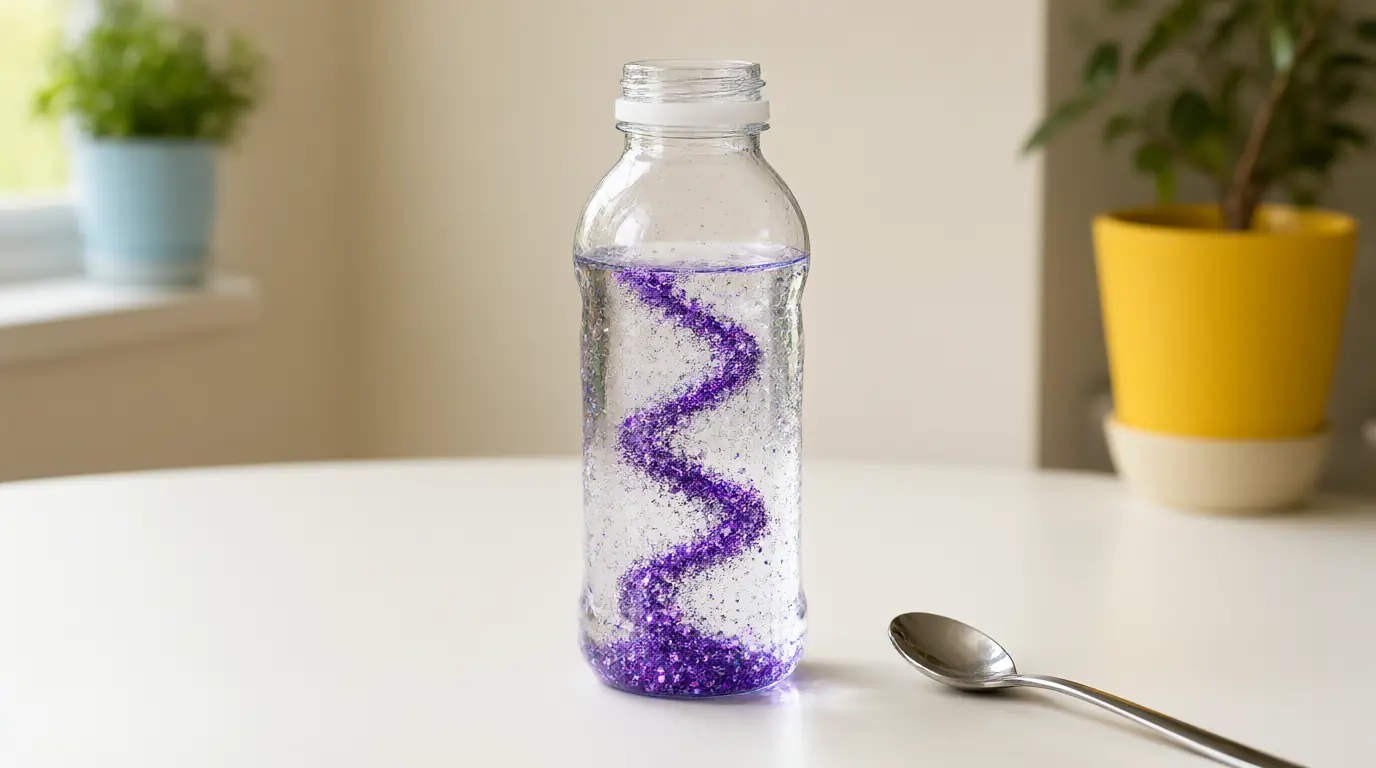
A sealed bottle of swirling glitter gives a restless child something calm to watch, and it shows that feelings settle if you wait. The bottle is a visual cue, not a punishment. Making it together lets your child decide what it looks like, and builds a connection with the tool before they need it.
You’ll need
- 1 clean, clear plastic bottle with a tight lid
- Warm water
- 2 tablespoons of clear glitter glue
- Fine glitter in one or two colours
- Strong tape or glue to fix the lid
How to do it
- Fill the bottle about three quarters full with warm water.
- Add the glitter glue and stir it in with a spoon until it dissolves.
- Let your child sprinkle in a little glitter and choose a colour.
- Fill to the top, close the lid, and an adult seals it with strong tape or glue.
- Shake it, then sit together and watch the glitter settle, breathing slowly.
Make it your own: Younger children can help pour and shake but should always be supervised, and the bottle should stay sealed and out of reach when not in use. Older children can time how long it takes to settle.
Practise a pause phrase
A short, repeated phrase gives a child something to say and do when feelings start to rise. ‘I need a moment’ is easy to remember, and saying it aloud tells others what is going on. Practising it in a game removes the shame some children feel about taking a break.
You’ll need
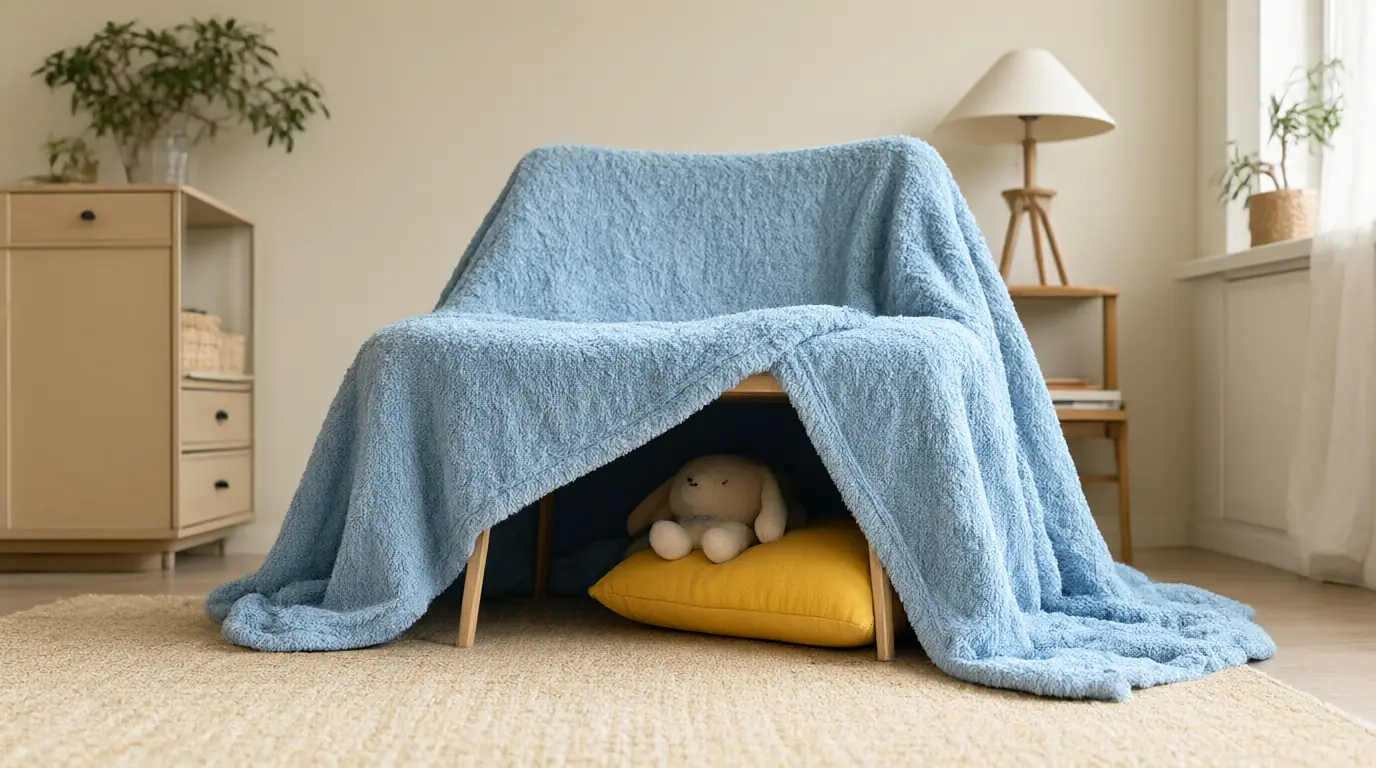
- A cushion or a small tent made from a blanket
- A soft toy or two
- A favourite game to pause
How to do it
- Start a simple game, such as rolling a ball back and forth.
- Say, ‘I need a moment’ and walk to the cushion for a few slow breaths.
- Come back and say, ‘I’m ready now’, then carry on with the game.
- Swap roles and let your child use the phrase when they want to pause.
- Let the soft toys try it as well, with your child as the teacher.
Make it your own: Younger children may prefer to hold your hand while they pause. Older children can choose their own phrase, or draw a picture of their calm place.
Make it work for your family
When a child is in the middle of a big feeling, the game is over: their body needs comfort and safety, not a lesson. Stay close, speak quietly, and use only a few words. Later, when things are calmer, you can borrow the activity, for example by pointing to the weather card or suggesting the breathing game, as an invitation and never as an order.
Children will use a strategy only if it feels like theirs. Let them choose the colour of the jar, the name of the pause phrase or the place in the room where they go to calm down. Don’t praise ‘good’ feelings and discourage ‘bad’ ones; all feelings are allowed, and only some actions need limits. You may also like these empathy activities for kids and these stop-and-go games for practising a pause.

Parents also ask
What is emotional regulation in children?
It is a child’s growing ability to notice a feeling and cope with it, often with help from an adult. Young children rely heavily on grown-ups to calm them, and they gradually learn strategies of their own through repeated, warm experiences.
How do I help my child calm down during a tantrum?
Stay close, keep your voice low and say a few simple words, such as ‘I’m here’. Make sure they are safe, and wait. Talk about what happened later, when they are calm. If tantrums are frequent or extreme, ask a health visitor or doctor.
At what age can children manage their feelings?
Children develop at different speeds, and even many school-age children need support. Between the ages of three and six, most are learning to name feelings and try simple strategies with an adult nearby. Look for small signs of progress, such as asking for a hug.
Choose materials and activities that suit your child, supervise as needed and adapt the ideas to their interests and abilities. About our editorial approach