7 min read
 In this article
A little preparation
Start from a routine you already do, such as tidying, cooking, getting ready to go out or putting laundry away, and look for one small step your child can really help with. Keep the invitation short and say why it matters: 'We need to know what to buy.' A job with a real purpose holds attention far longer than a pretend one set up for practice.
Plan for ten to twenty minutes, and have everything within reach before you call your child over. Keep sharp items, hot surfaces and small objects out of the way, and stay close for anything involving water, kitchen tools or food. Let your child take part in the way that suits them: drawing, sorting, carrying, pouring or telling you what to write. Do not worry about getting things exactly right, and avoid correcting mistakes unless safety is involved. If your child loses interest, put the materials on a low shelf where they can pick them up again, and move on to something else without comment.

What to know and try
Draw a real picture list
Before a snack or a trip, your child draws the things you need and you gather them together. The list is useful and so is the drawing: children discover that marks on paper carry a message long before they can spell the words. It is a first step towards writing a shopping list or instructions.
 You’ll need
- A small sheet of paper
- A thick pencil or crayon
- A basket or bag
- The things on the list, such as plates, cups and bananas
How to do it
- Ask your child what you need to get ready, such as for a snack.
- Let them draw a quick picture of each thing on the list.
- Read the list back by pointing to each picture.
- Collect the items together, adults handling food and anything sharp.
- Tick or draw a line through each picture once it is in the basket.
- Enjoy the snack that the list helped you prepare.
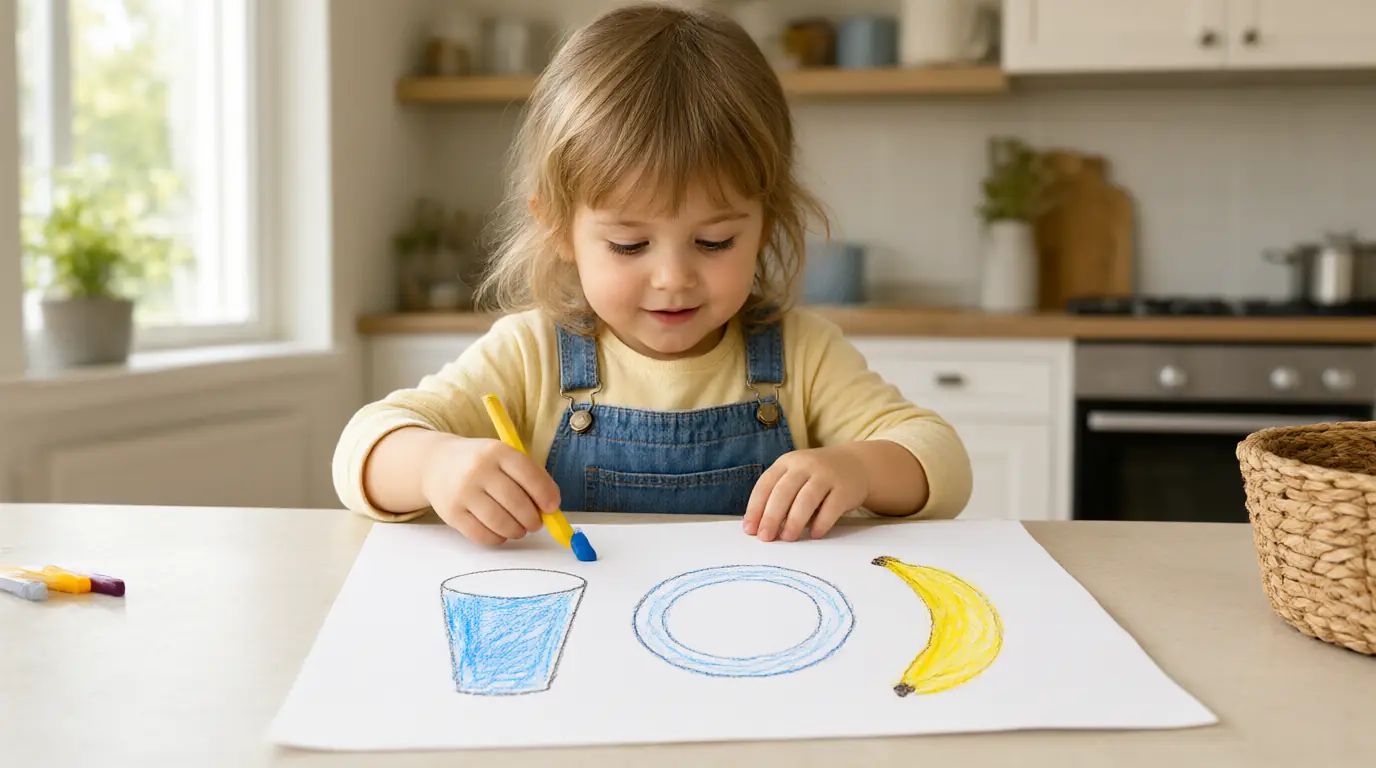
Make it your own: Younger children can draw a single item and carry it. Older children can write the first letter next to each picture or add how many of each you need.
Investigate the laundry pile
A pile of clean washing is a free sorting game. Children match socks, group clothes by owner or colour and notice that some things come in pairs. Counting has a real purpose here: does everyone have two socks?
You’ll need
- A basket of clean, dry laundry
- A clear floor space
- 3 smaller baskets or boxes
- Labels drawn on paper for each person
How to do it
- Tip a small handful of clean clothes onto the floor.
- Ask your child to find two things that go together.
- Place them in a basket and say why they match.
- Sort the rest by person, colour or type of clothing.
- Count how many items are in each basket.
- Carry the baskets to the right rooms together.
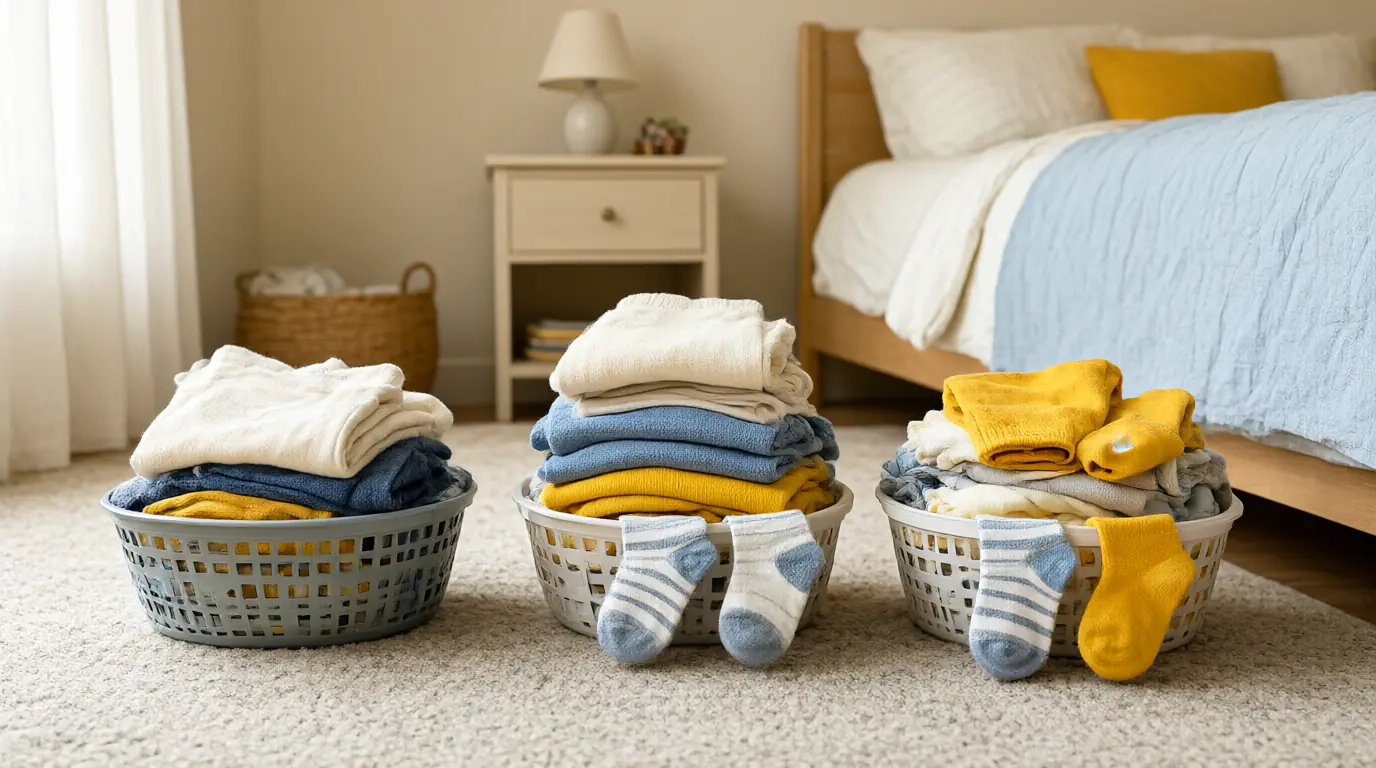
Make it your own: Younger children can match socks only. Older children can sort by two rules, such as red socks and blue socks, or count in twos.
Build beside a familiar book
After reading about a bridge, a house or a vehicle, children can build one feature from the book with blocks. They have to think about how it works and what it needs. It connects words and pictures with real construction problems.
You’ll need
- A picture book with a place or vehicle
- 10 to 20 blocks
- A toy character from the story or a similar one
- A flat floor area
How to do it
- Read the book and choose one feature your child liked.
- Look at the picture together and talk about what it is made of.
- Ask your child to build their own version with the blocks.
- Test it by moving the toy character through or over it.
- Ask what could be improved and let them change it.
- Leave it standing for a day so the story can continue.
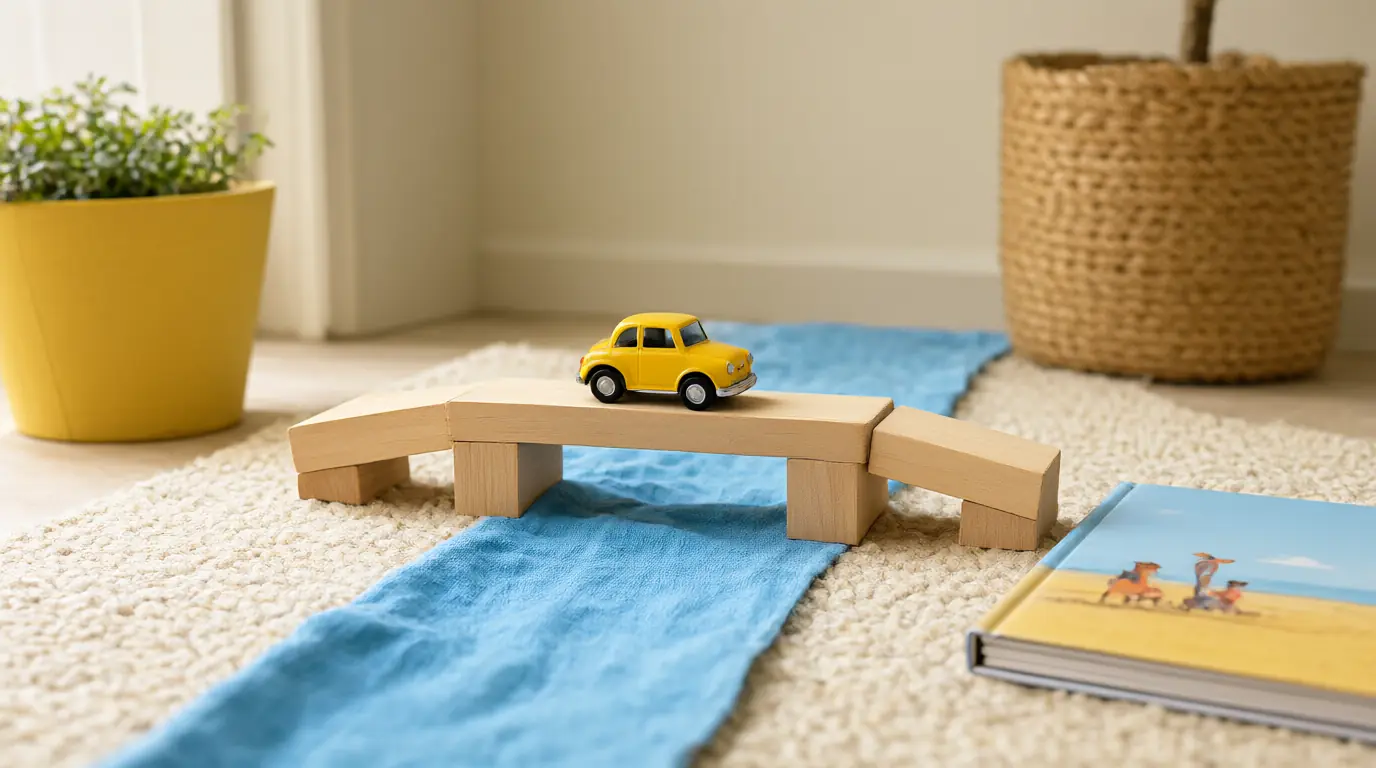
Make it your own: Younger children can stack a few blocks and call it a house. Older children can add a second feature or draw a plan of what they will build.
Be a kitchen helper
Preschoolers love real jobs. Washing vegetables, tearing lettuce or setting out cutlery all build hand control and a sense of responsibility. The language of cooking, such as 'stir', 'pour' and 'warm', also gives plenty of new words.
You’ll need
- A step stool or a sturdy chair
- A bowl of water and a soft vegetable brush
- 2 or 3 washed vegetables
- A small apron or tea towel
How to do it
- Wash hands together and tie on the apron.
- Give your child a firm vegetable to scrub gently in the water.
- Describe what you are doing: 'scrub, rinse, dry'.
- An adult cuts the vegetable and lets your child arrange the pieces on a plate.
- Ask them to count the pieces or sort them by size.
- Wipe the work surface together.
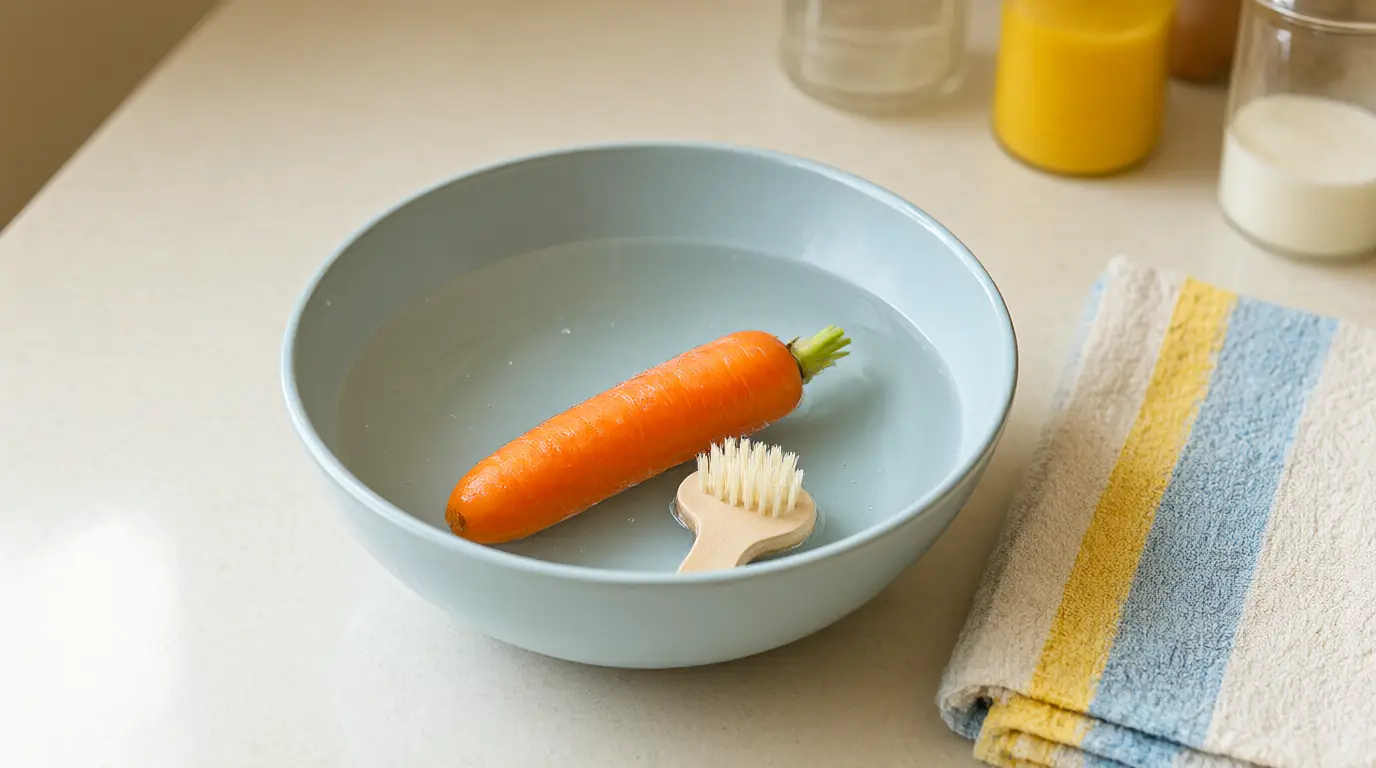
Make it your own: Younger children can wash a single carrot. Older children can help read a simple recipe or measure with a cup.
A tray for unfinished work
A small tray on a low shelf lets your child keep an unfinished drawing, a model or a play plan safe until they want to come back. Returning to it is a real skill in planning and persistence. It also tells your child that their work matters.
You’ll need
- A shallow tray or box lid
- A low shelf or table
- A piece of paper or a sticky note
- A pencil
How to do it
- When your child pauses, ask whether they want to finish it later.
- Place the work carefully on the tray together.
- Write a note or draw a symbol to say what it is.
- Put the tray on the shelf where it will not be tidied away by accident.
- Remind the rest of the family that it is waiting.
- Return to it the next day and ask what your child wants to do next.
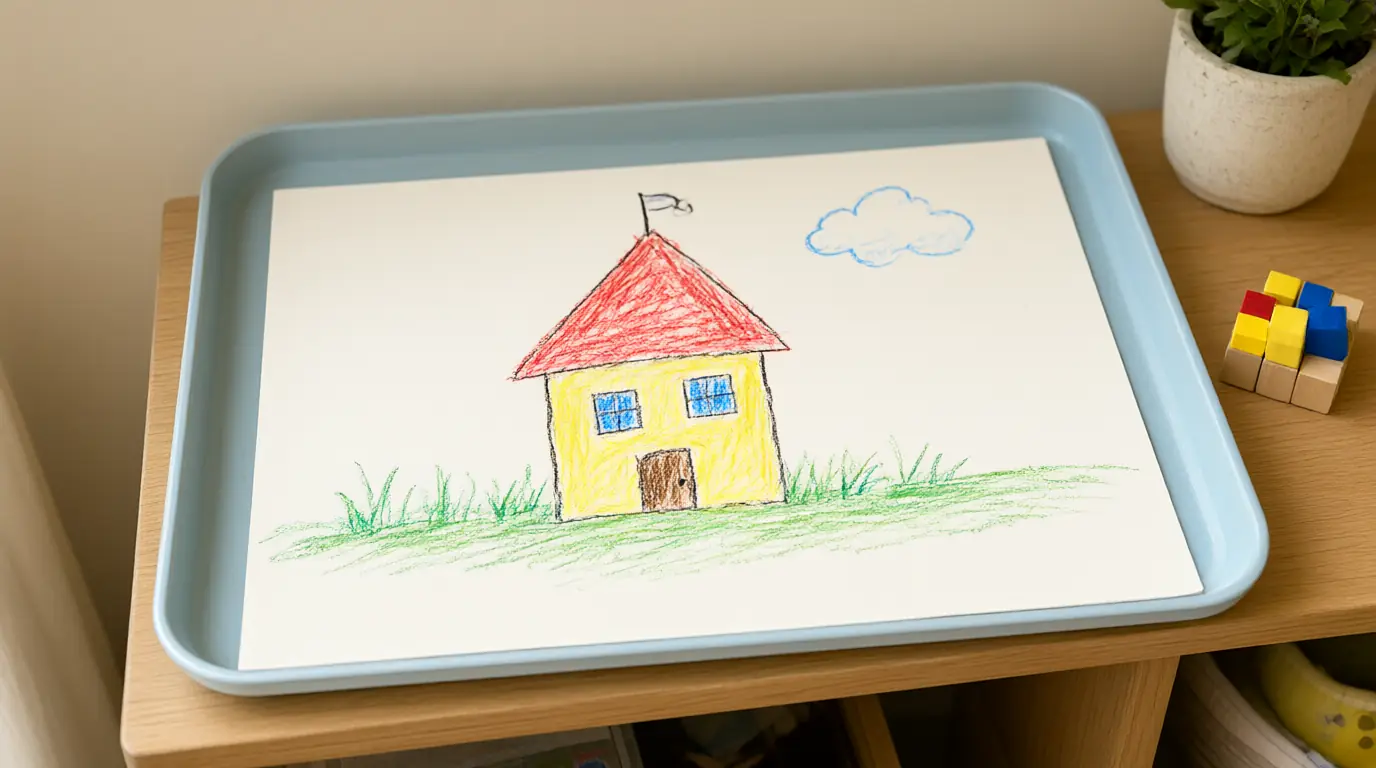
Make it your own: Younger children can save a single block build. Older children can write their own label and plan the next step.

Make it work for your family
Home is also a place to rest. If an invitation turns into a standoff, drop it, give a hug and go back to free play or a snack. Learning that is forced tends to be remembered as a chore, and preschoolers often learn more from a relaxed hour of play than from a tense ten minutes at a table.
If your child attends a preschool or nursery, ask the staff what interests them, so that you can follow up on what they enjoy rather than copying a classroom at home. A few follow-up ideas can come from the Weebou life-skills game, and you can find a wider range of age-matched ideas in preschool activities or kitchen-table math.

Parents also ask
How can I do preschool activities at home?
Start from things you already do, such as cooking, sorting laundry or reading, and invite your child to help in a small way. Keep activities short, offer simple choices and follow your child's ideas rather than a fixed plan.
Do I need a curriculum to teach my preschooler at home?
No. Most preschoolers learn well through play, conversation and real jobs. If your child goes to a preschool, ask the staff what they are working on so that you can build on it in a relaxed way.
How long should preschool activities at home last?
Around ten to twenty minutes is typical, but it depends on your child. Stop when interest fades and leave the materials out so they can come back later. Free play and rest matter just as much.
Sources & further reading
Explore these primary sources for further context on this topic.
Choose materials and activities that suit your child, supervise as needed and adapt the ideas to their interests and abilities. About our editorial approach