Weebou Editorial Team
 7 min read
 In this article
A little preparation
Choose one game and set it up on a clear table or floor with a tray to keep materials together. Use large, age-appropriate items that cannot be swallowed, and keep adults in charge of flashlight batteries and anything with a plug. Avoid tasting experiments, unknown substances or any activity that relies on a child following chemical safety instructions.
Before starting, ask your child what they think will happen, and write or draw the guess on a sticky note. Change only one thing at a time, so there is something clear to compare: the same toy, the same start line, a different ramp height. Record the result with a drawing or a few words, including surprises. If something does not go as expected, treat that as interesting rather than wrong. Sessions of 10 to 20 minutes are plenty, and you can return to the same game on another day with a new question.

Ideas to try together
Ramp runway
A toy vehicle on a ramp is a first experiment in cause and effect. Changing the height and seeing how far the car travels shows children that a small change can lead to a different result.
 You’ll need
- A stiff piece of cardboard about 40 cm long
- A pile of 2 to 3 large books or blocks
- A small toy car
- A strip of masking tape for a finish line
How to do it
- Prop one end of the cardboard on a block to make a gentle ramp.
- Mark the bottom of the ramp with tape.
- Release the car from the top without pushing and mark where it stops with a sticky note.
- Add another block to make the ramp steeper and release the car again.
- Compare the two stopping points and ask what changed.
- Try a different toy, such as a block, and see whether it rolls.
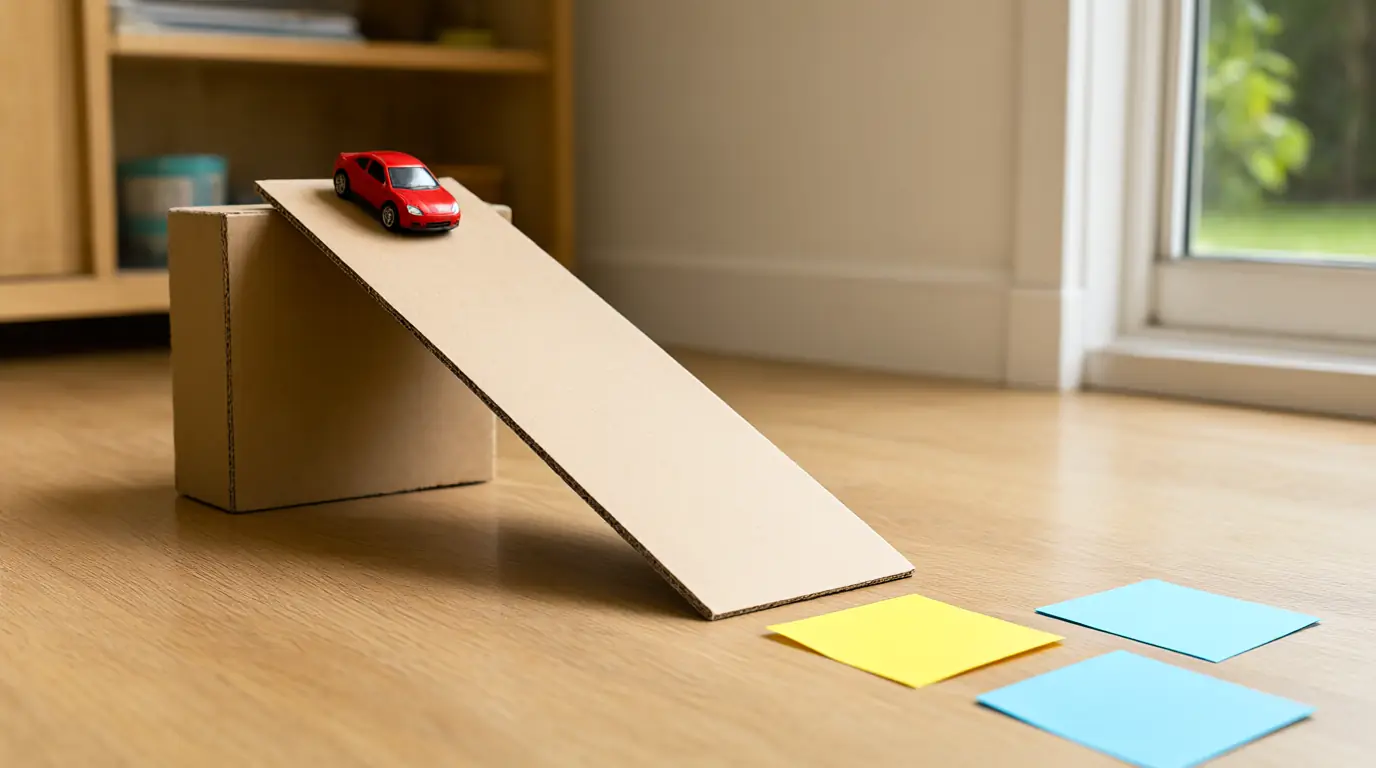
Make it your own: Younger children can just watch and describe how the car moves. Older children can predict where the car will stop and measure with their feet.
Paper bridge test
A flat strip of paper sags across a gap, while a folded one holds more. Children discover that the shape of a material matters as much as the material itself. It also introduces an engineering idea in a child-friendly way: a stronger structure often comes from changing its shape rather than using more material.
You’ll need
- 2 stacks of large blocks about 15 cm apart
- 2 identical strips of paper
- A few light toys such as plastic animals
- A pencil
How to do it
- Place one strip flat across the gap and ask whether it will hold a toy.
- Rest a single light toy on it and see what happens.
- Fold the second strip into a zigzag, like a fan.
- Lay it across the same gap and place the same toy on it.
- Compare how each strip bent and which carried the toy.
- Try adding a second toy to the folded one and watch what happens.
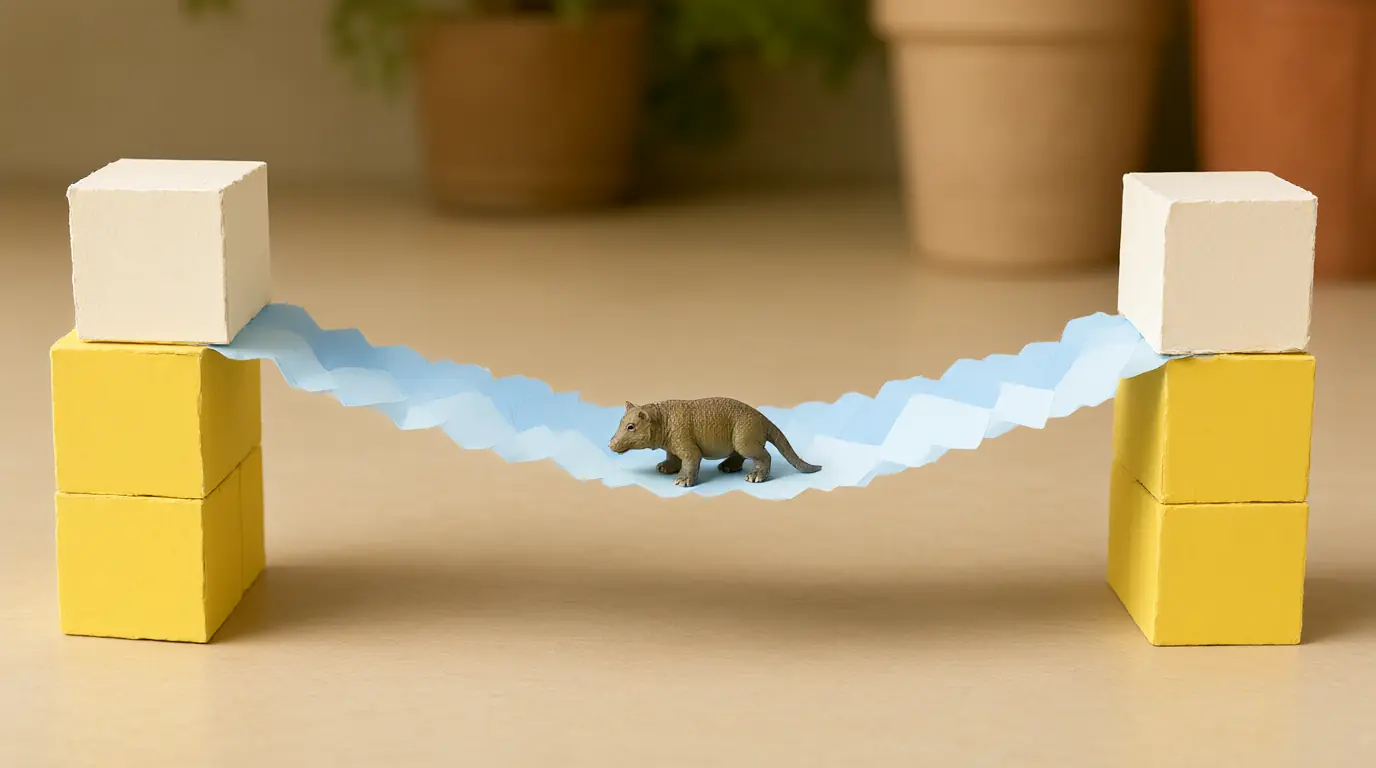
Make it your own: Younger children can try one strip and describe how it feels. Older children can test other shapes, such as a tube.
Shadow maker
Shadows change shape and size as a light moves, and a toy placed in a beam becomes a puzzle. Children see that light travels in straight lines and that where a light sits determines the shadow.
You’ll need
- A flashlight held by an adult
- A large toy animal
- A plain wall or a sheet of white paper
- A dimmed room
How to do it
- Dim the room and stand the toy in front of the wall.
- Switch on the flashlight and shine it on the toy from a short distance.
- Ask your child to describe the shadow on the wall.
- Move the light closer and then farther away while the toy stays still.
- Draw round the shadow with a pencil on the white paper each time.
- Compare the two outlines and say which is bigger.
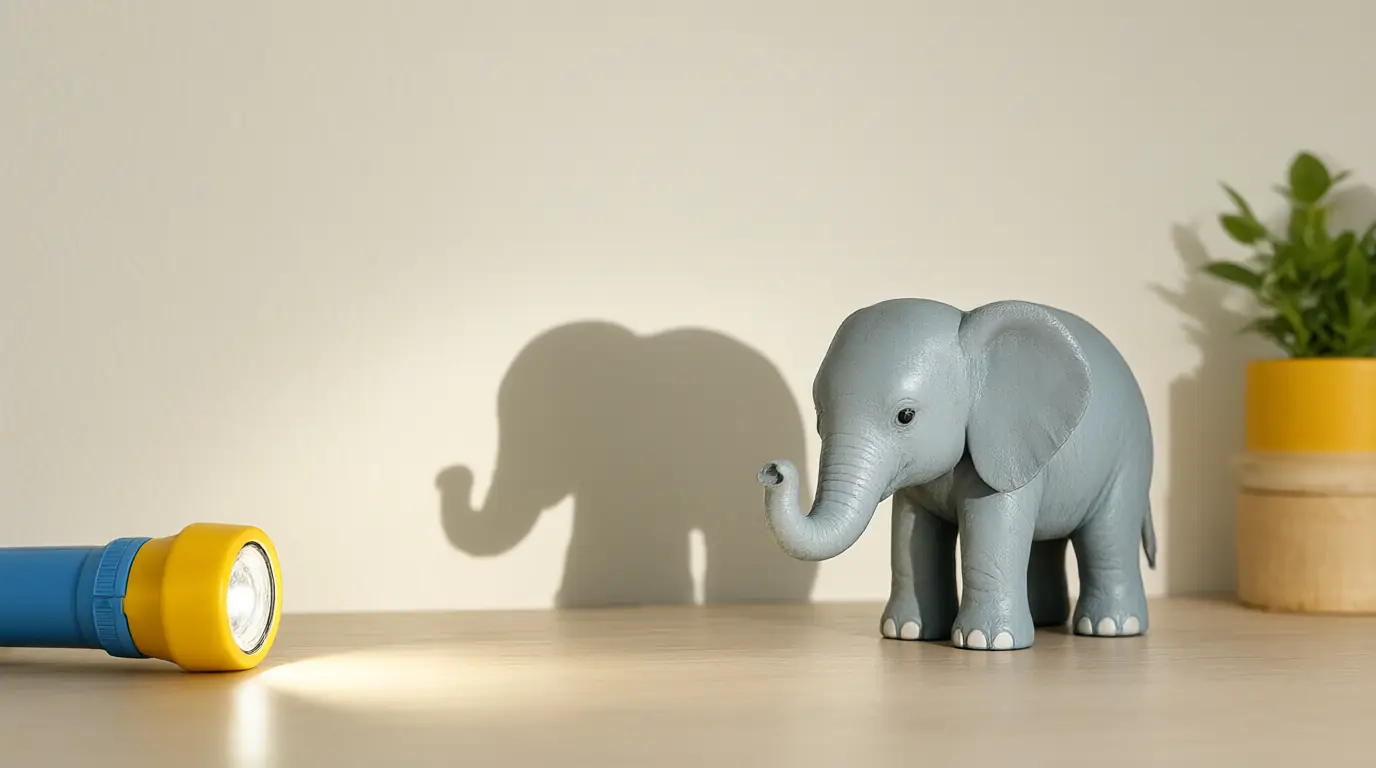
Make it your own: Younger children can make a hand shadow. Older children can predict whether the shadow will be bigger or smaller before moving the light.
Sink or float
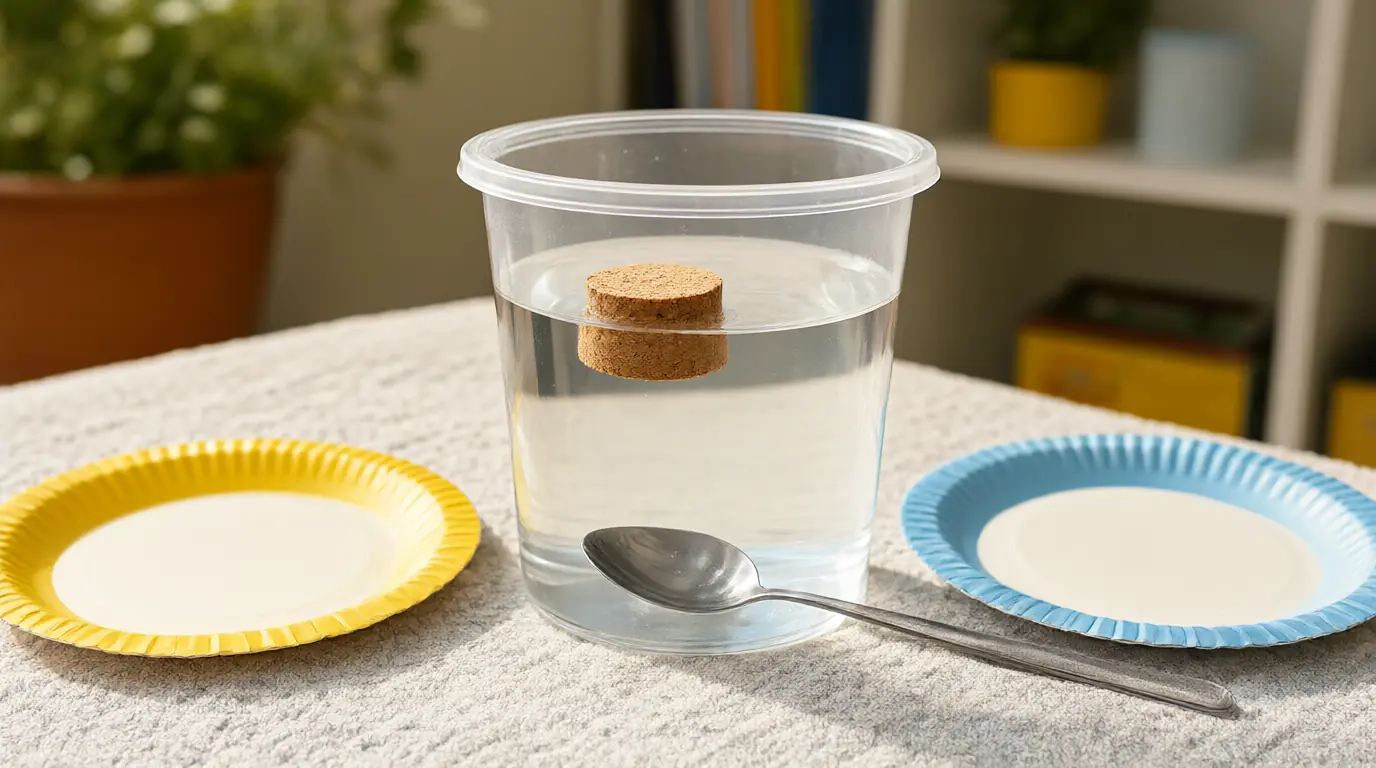
Dropping objects into water and seeing which sink is a classic first investigation. Predicting first and then checking helps children learn that a guess can be tested. Predicting first matters here, because being surprised by a result is often what makes a child curious enough to try another object.
You’ll need
- A clear tub or bowl of water
- A wooden spoon, a plastic lid, a coin-free metal spoon, a sponge and a cork
- A tray and a towel
- 2 paper plates for sorting
How to do it
- Place the objects on a tray and label two plates with pictures of a sinking stone and a floating leaf.
- Pick up one object and ask whether it will sink or float.
- Place your child's guess on the matching plate.
- Lower the object gently into the water and watch.
- Move it to the other plate if the guess was wrong, without comment.
- Squeeze the sponge and ask what happens when it fills with water.
Make it your own: Younger children can drop in two objects. Older children can try shaping a piece of foil into a boat and see how many counters it holds.
Look closely and draw
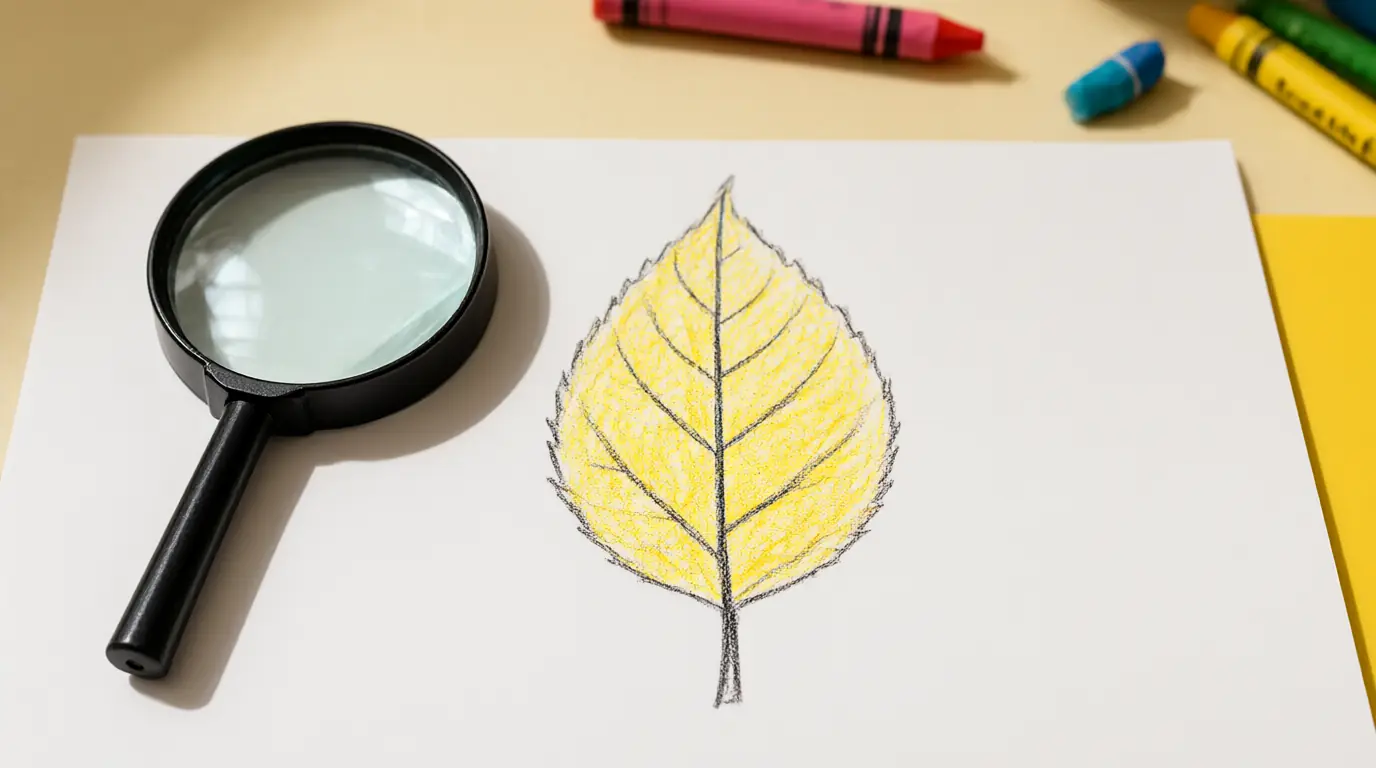
Drawing what you can really see is the heart of science. Looking at an ordinary object from several sides helps children separate what they observe from what they guess. This habit of careful looking underlies every kind of science, and it needs no equipment beyond your eyes, a page and a little patience.
You’ll need
- A wooden spoon or a leaf
- A magnifying glass
- Paper and crayons
- A sticky note for questions
How to do it
- Place the object on a plain sheet of paper and look at it for a full minute.
- Ask your child what they can see, feel and smell.
- Draw the object together, adding one detail at a time.
- Turn it over and draw what changes.
- Use the magnifying glass to find a tiny detail and add it to the picture.
- Write or draw one question on a sticky note, such as 'why is it bumpy?'
Make it your own: Younger children can feel and describe. Older children can compare two objects and draw both on the same page.

Make it work for your family
Keep one part of the set-up the same while changing another, so there is something useful to compare. Record a surprising result honestly and say when you do not know the answer; looking it up together is a science habit too. If a test does not work the way you expected, ask what you could change instead of rushing to fix it for your child.
For further investigations, try STEM activities for preschoolers or weather activities for kids, and the Weebou puzzles game offers a short thinking break afterwards.

Parents also ask
What are easy science games for 4-year-olds?
Ramps, sink-or-float tests and shadow play use everyday items and give quick results. Ask your child to guess first, try the test and then talk about what happened. Keep each game short and let your child decide what to try next.
How do I explain why something happened without confusing my child?
Describe what you both observed in simple words and say what you do not know. For example, 'The folded paper held the toy and the flat one did not.' You can look up the reason together if your child wants to know more.
Is it safe to do science games with water indoors?
Yes, with a shallow tub, a towel underneath and an adult close by at all times. Never leave a young child alone with water, and empty the tub when you finish. Keep electrical items well away from the play area.
Choose materials and activities that suit your child, supervise as needed and adapt the ideas to their interests and abilities. About our editorial approach