Weebou Editorial Team
 9 min read
 In this article
A little preparation
Clear a level stretch of floor about three paces wide and move anything with sharp corners or a glass top out of the throwing line. Mark two standing spots with tape, a cushion or a pair of socks, and put the basket or target against a wall so nobody has to chase a ball into a doorway. A soft foam ball about the size of a grapefruit, a balloon or a rolled pair of socks all work well; a beach ball is fun but drifts in the draught.
Set out one game at a time and expect ten to fifteen minutes before attention moves on. Keep every throw below shoulder height, stand outside the receiving line rather than in front of it, and agree on a stop word before the first throw so the ball can be frozen mid-game. Check the ball for splits, keep drinks away from the play area, and let a child who needs a break sit at the side and count or referee. If your child is still learning to judge a moving ball, these whole-body games for small spaces build the same control.

Ideas to try together
Towel delivery
Two people, one towel, one ball: this is the gentlest introduction to sending something across a space because nobody has to catch. Both players must watch the ball and match their lifting speed, which is real teamwork rather than turn-taking. It also gives a child who finds throwing unpredictable a way to move a ball using their whole body.
 You’ll need
- 1 soft foam ball or a rolled pair of socks
- 2 bath towels, or one large towel folded double
- A laundry basket or wide tub
- Floor tape for two standing spots
How to do it
- Lay the towel flat between the two players and rest the ball in the middle.
- Each player holds two corners, one in each hand, and stands at a marked spot.
- Count three together, then lift the towel slowly so the ball rolls towards one end.
- Walk sideways together towards the basket, keeping the towel level.
- Lower the towel over the basket and tip it gently until the ball drops in.
- Fetch the ball by hand and begin again, this time tipping towards the other player.
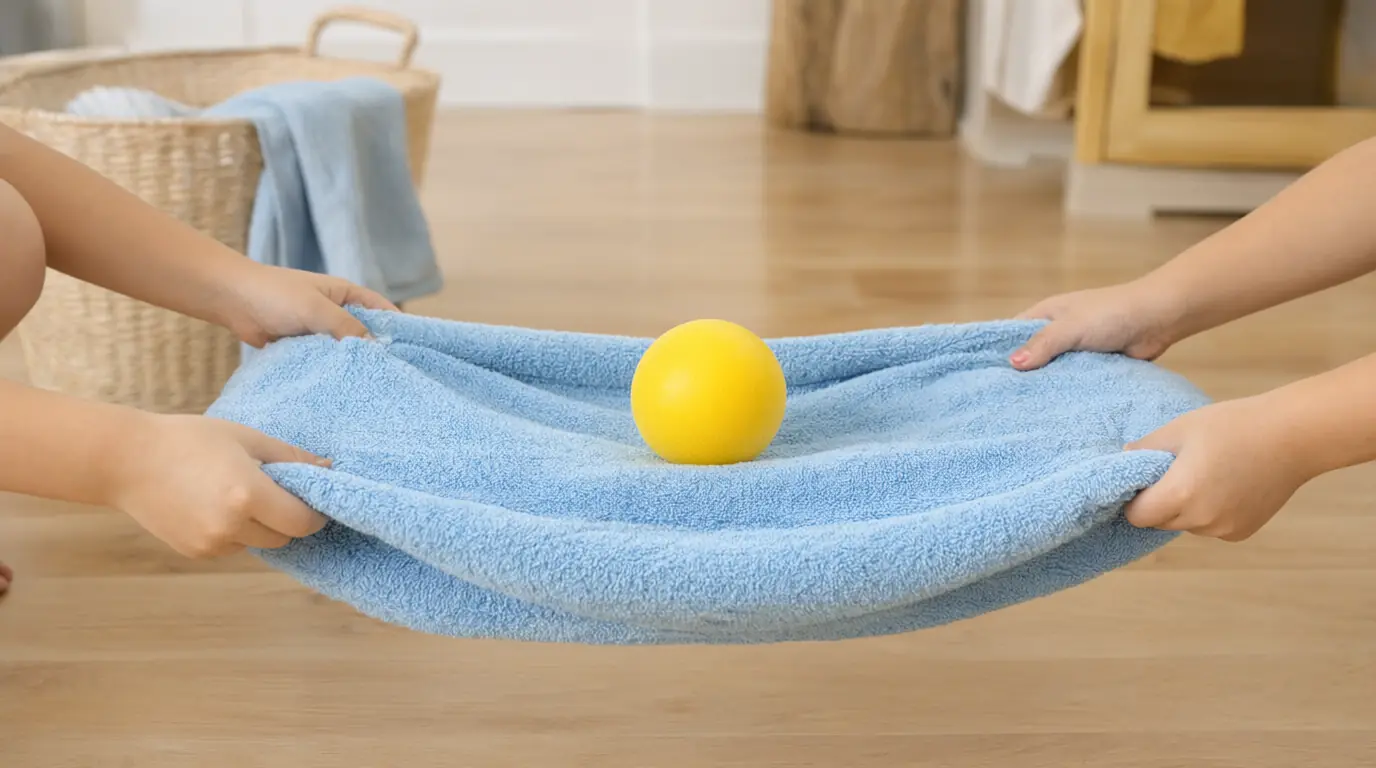
Make it your own: Younger children can carry the ball three steps and drop it onto a cushion instead of into a basket. Older children can try a smaller towel, walk around a chair on the way, or count how many deliveries succeed in a row.
Across the river
A tape river gives the throw a clear purpose and a visible distance to judge. Partners toss gently and catch before returning, so the ball never becomes a race. Because the river can be widened or narrowed, the same game suits a cautious three-year-old and a confident six-year-old in the same afternoon.
You’ll need
- 2 strips of floor tape, or two jumpers, for the river banks
- 1 soft foam ball or a balloon
- A cushion to mark each standing spot
How to do it
- Lay two tape strips about a stride apart to make a river, with a standing spot on each bank.
- Stand on opposite banks and take turns tossing underarm so the ball lands in the other player's hands.
- The catcher holds the ball until both players are looking at each other, then throws back.
- After five throws that reach the other bank, each player takes one step back.
- If a throw lands in the river, walk to the middle together and restart from there.
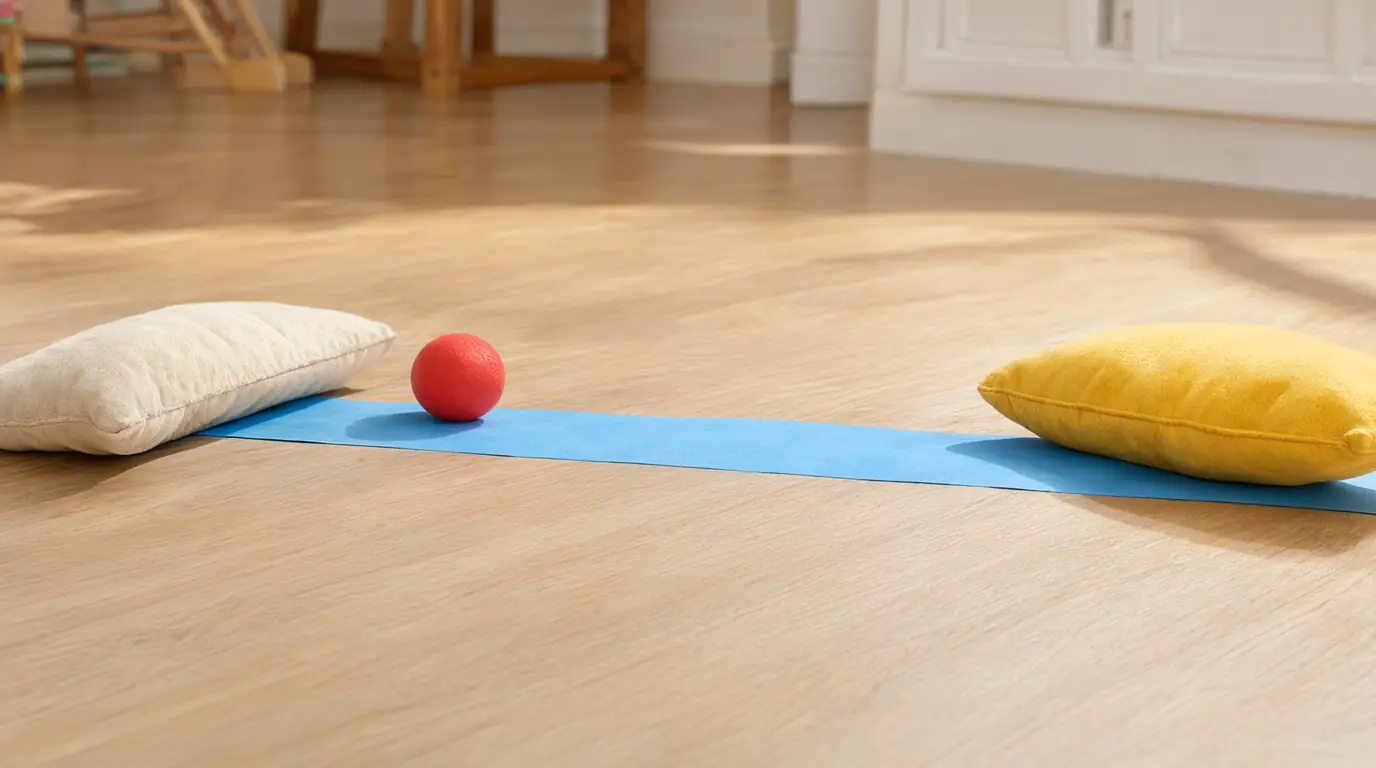
Make it your own: Make the river one shoe-length wide for a child still learning to catch, or use a balloon that floats slowly. Older children can add a bounce rule, or throw with the other hand for a whole round.
Bounce and send
Letting the ball bounce once gives a child extra time to see where it is going. It splits a fast exchange into small, readable parts: drop, bounce, catch, send. Saying the receiver's name out loud adds a listening job and helps everyone know when their turn is coming.
You’ll need
- 1 soft foam ball that bounces
- Floor tape or a cushion for two standing spots
How to do it
- Stand a few steps apart with both players facing each other.
- The adult drops the ball from waist height so it bounces once towards the child.
- The child catches it with two hands, or traps it gently against their chest.
- Before returning, the child says the adult's name out loud.
- The child sends the ball back underarm, and the adult lets it bounce before catching.
- Swap who drops and who catches after five turns.
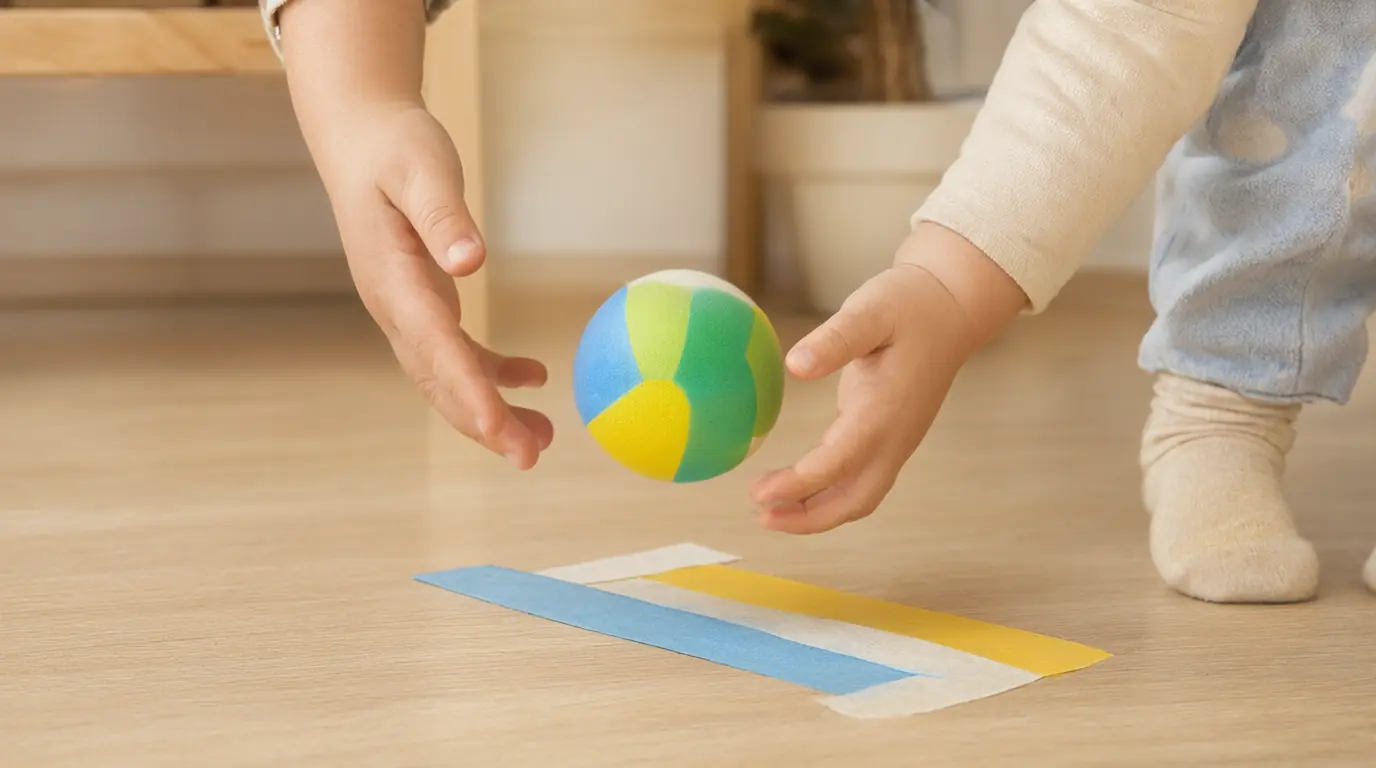
Make it your own: A child who cannot yet catch can trap the ball with both hands and roll it back along the floor. Older children can drop, clap once, then catch, or try to make the ball bounce exactly once on the other side.
Team basket target
A basket between two players turns throwing into a shared score rather than a competition. Alternating turns means each child watches carefully while waiting, and counting out loud gives a reason to keep going after a miss. Move the basket rather than the children when you want a fresh challenge.
You’ll need
- 1 wide laundry basket or cardboard box
- 3–4 soft foam balls or rolled socks
- Floor tape for a throwing line
- A cushion for a sitting player
How to do it
- Place the basket against a wall and mark a throwing line several steps away.
- Stand behind the line with the balls in a pile between you.
- Take turns throwing underarm into the basket, one ball each.
- Count the team total out loud after every throw, whether it goes in or not.
- Collect the balls together at the end of each round of four.
- Move the basket one step sideways or closer, play another round and compare the totals.
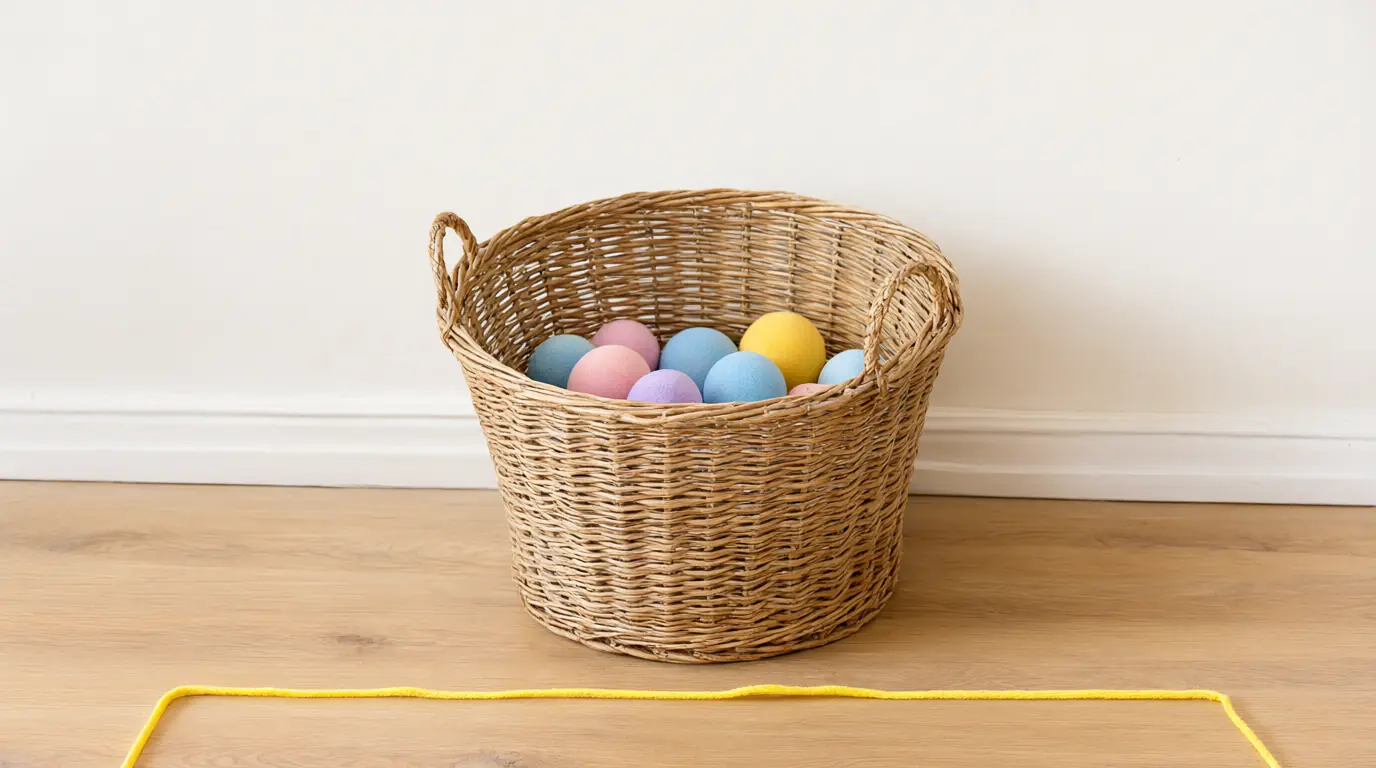
Make it your own: A sitting player can throw from a cushion much closer, or drop the ball into a basket held low. Older children can add a points rule, such as two points for a ball that stays in the basket.
Slow keep-up
Instead of a net, this game asks the pair to stop the ball from touching the floor. Two players pat a balloon or very light ball upwards and count each touch aloud together. There is no winner and no elimination, which keeps it calm, and the shared counting gives the effort a shape.
You’ll need
- 1 balloon or a very light foam ball
- A clear patch of floor
- Optional: two cushions to mark a boundary
How to do it
- Stand close together with the balloon or light ball.
- Pat it upwards with an open hand, keeping the movement slow.
- Count each touch out loud as a team: one, two, three.
- Take a small step apart each time you reach five touches together.
- Start again from one whenever it lands, with no penalty.
- Finish by trying to reach ten touches, then let the balloon rest.
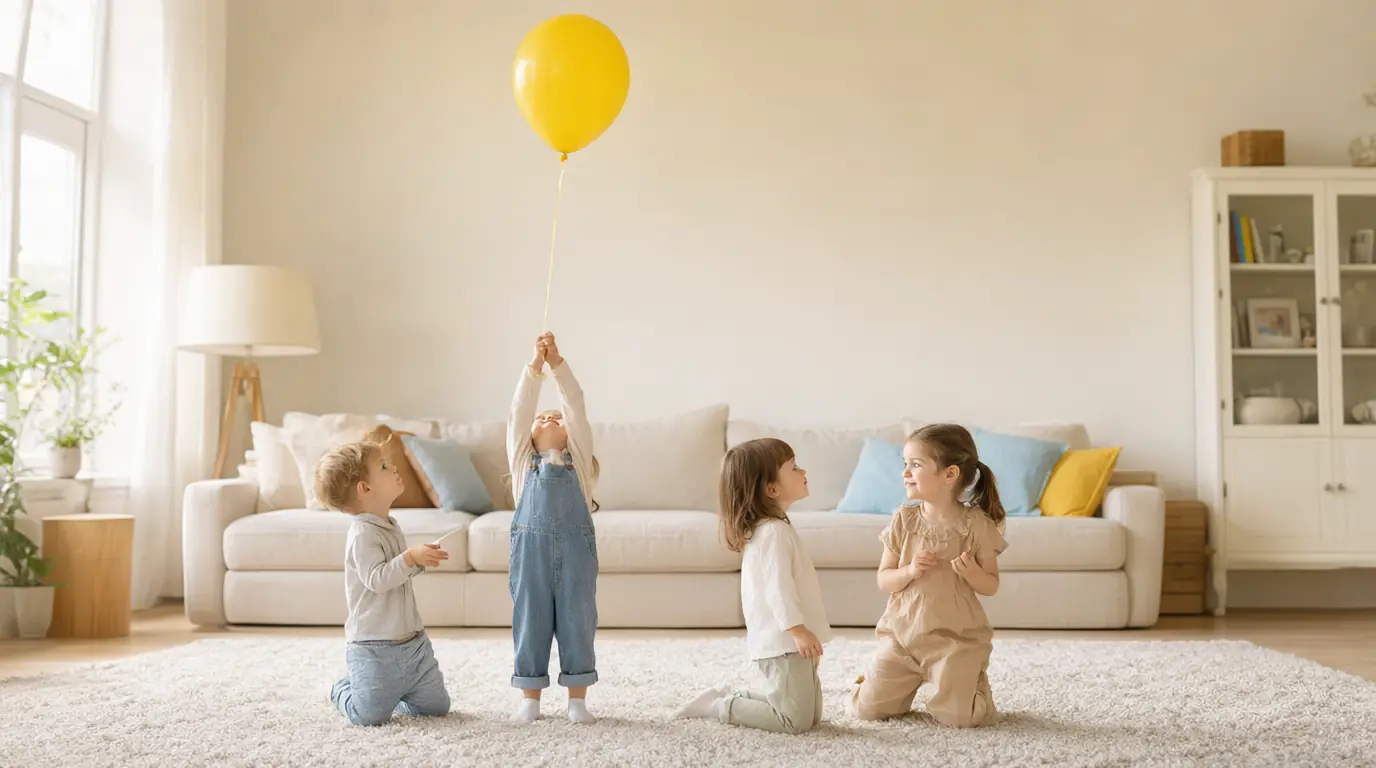
Make it your own: Younger children can sit on the floor and pat a balloon that floats down slowly. Older children can use only their fingertips, alternate hands, or try to keep two balloons up at once.

Make it work for your family
Most exchanges break down because the ball arrives too fast or too high, not because a child cannot catch. Move closer, use a lighter ball and slow the throw down before adding any new rule. If your child keeps looking away, say the moment the ball leaves your hand out loud so there is something to listen for. A child who misses repeatedly is usually tired or distracted rather than uncoordinated; stop while it is still fun and come back tomorrow.
Keep sessions short and finish with something easy. Balls that end up under furniture make the game feel like a chore, so clear a wall to throw against or play with a balloon indoors. When two children want different rules, let each choose one round. For a quieter version in a small room, try these balloon-style games with soft scarves, and when you want children to plan together, these teamwork activities give everyone a job.

Parents also ask
What age can children start playing volleyball?
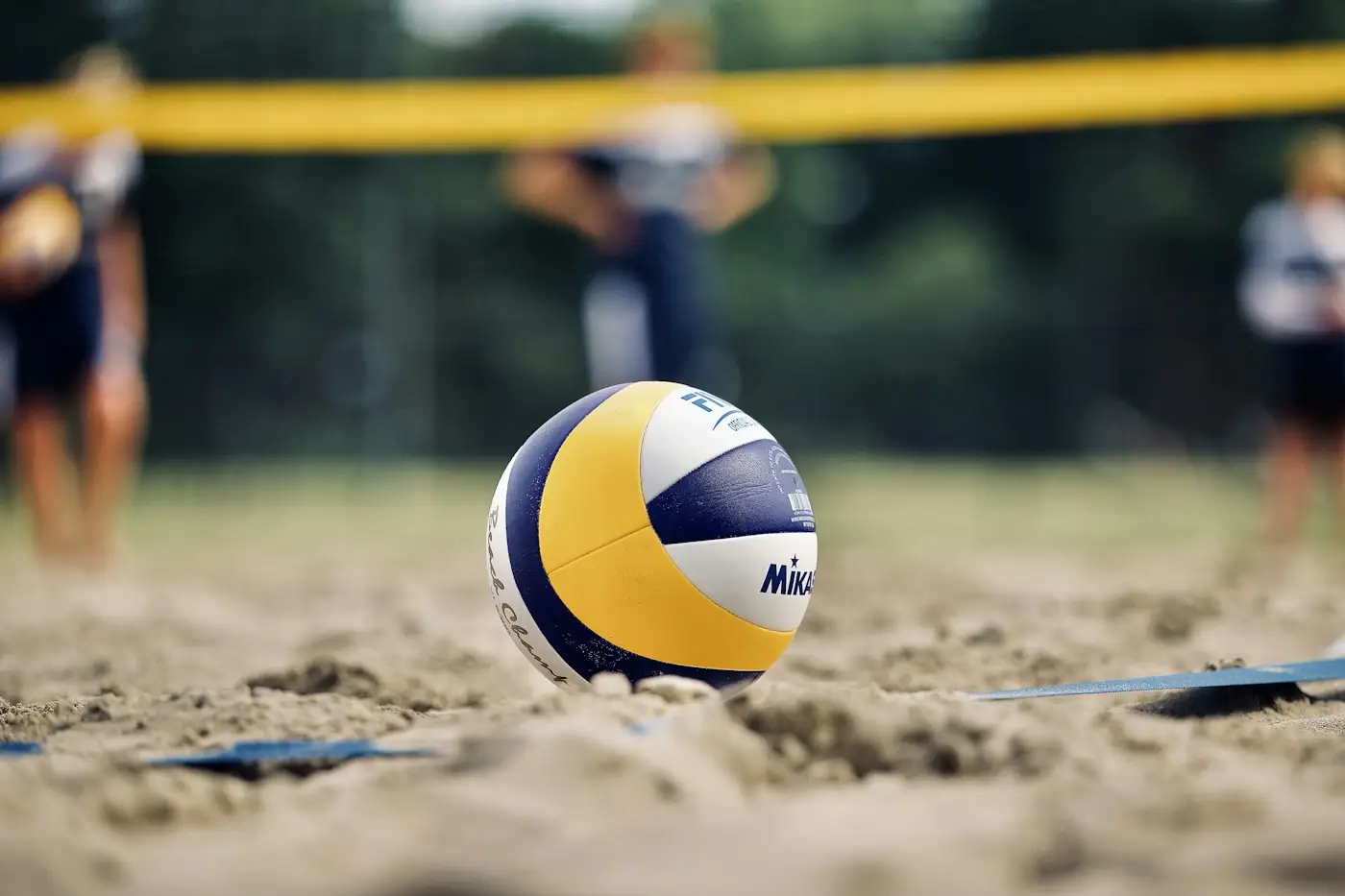
Most children are not ready for a real net and ball until around seven or eight, when they can judge a faster ball and use two hands above the head. Before that, floor-level games with a soft foam ball or balloon build the same skills: watching a ball travel, moving to meet it and sending it back to a partner.
What ball is best for young children learning volleyball?
A soft foam ball about the size of a grapefruit, or a balloon for the first tries. It should be light enough that a misjudged catch does not hurt and slow enough to track with the eyes. Check it for splits and replace any ball that has gone hard or lost its shape.
How do you teach a child to catch a ball?
Start with a large, light ball and a short distance. Hold your hands out ready and let the ball come to them rather than telling them to grab. Letting it bounce once gives extra time, and trapping the ball against the chest is a fair first step before catching with hands alone.
Choose materials and activities that suit your child, supervise as needed and adapt the ideas to their interests and abilities. About our editorial approach