Weebou Editorial Team
 8 min read
 In this article
A little preparation
Choose a soft ball about the size of a child's head, such as a foam or fabric-covered ball, which is easier to catch than a hard sports ball and will not hurt if it lands on a toe. Set a stable laundry basket on its side or on a low stool so it cannot tip. Clear the floor and put away glass, small toys and anything breakable within a few metres of the play area.
Mark spots with tape or paper plates rather than asking children to stand in a vague place; a visible spot tells them where to wait and where to play. Keep sessions short, about ten minutes, and always begin with rolling because it lets everyone succeed. Decide where waiting players sit, so nobody walks into the path of a ball. If children get frustrated, shorten the distance and change the target rather than the child.

Ideas to try together
Floor basket roll
Rolling a ball into a basket lying on its side is the gentlest way to introduce aiming. Children learn to look at the target, control their push and notice how direction changes the result. There is no throwing, so even very young players can succeed.
 You’ll need
- 1 large laundry basket on its side
- 1 or 2 soft balls
- A strip of floor tape as a start line
How to do it
- Lay the basket on its side with the opening facing the start line.
- Stand a few big steps away and let your child roll the ball with both hands.
- Retrieve the ball together and talk about whether it went left, right or straight.
- Move the start line slightly to one side so the route changes.
- Try rolling from the new spot and compare how the ball travels.
- Finish by letting the ball rest in the basket and pick it up together.
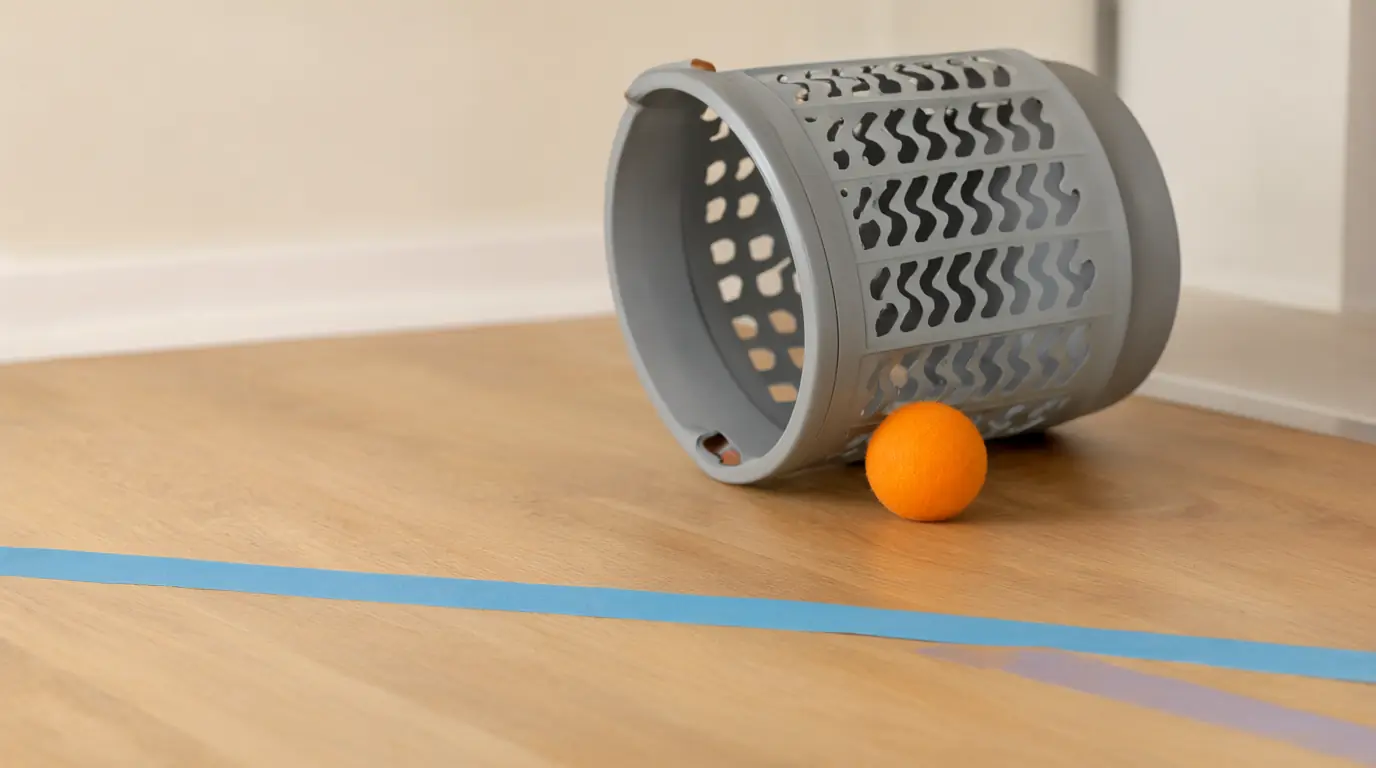
Make it your own: Younger children can start one step from the basket. Older children can try rolling with one hand, or rolling the ball so it stops inside rather than bouncing out.
Bounce and name
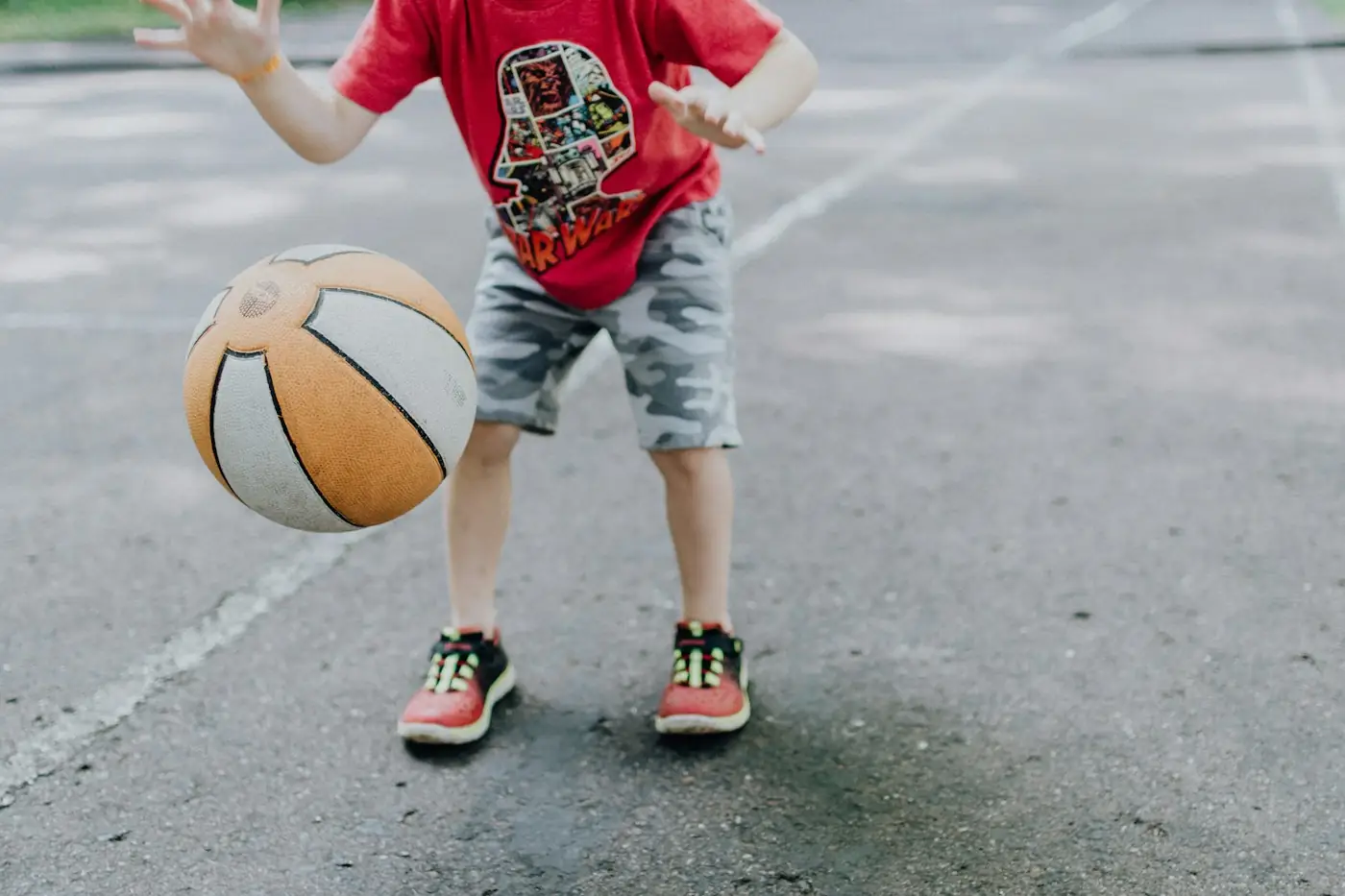
A gentle bounce between two people builds eye contact, timing and listening. When you say a child's name as you bounce, they know the ball is coming to them and can get ready, which helps them catch more often and feel included in the game.
You’ll need
- 1 soft ball with a gentle bounce
- A clear stretch of floor
- Floor spots or paper plates to mark where each player stands
How to do it
- Stand two or three steps apart, each on a floor spot.
- Say your child's name and bounce the ball once so it arrives at about waist height.
- Let them catch it or trap it against their tummy, then bounce it back with their own name for you.
- Add a third player and take turns saying each person's name before you bounce.
- Slowly increase the distance by one step when catching feels easy.
- Finish with three slow rolls back and forth.
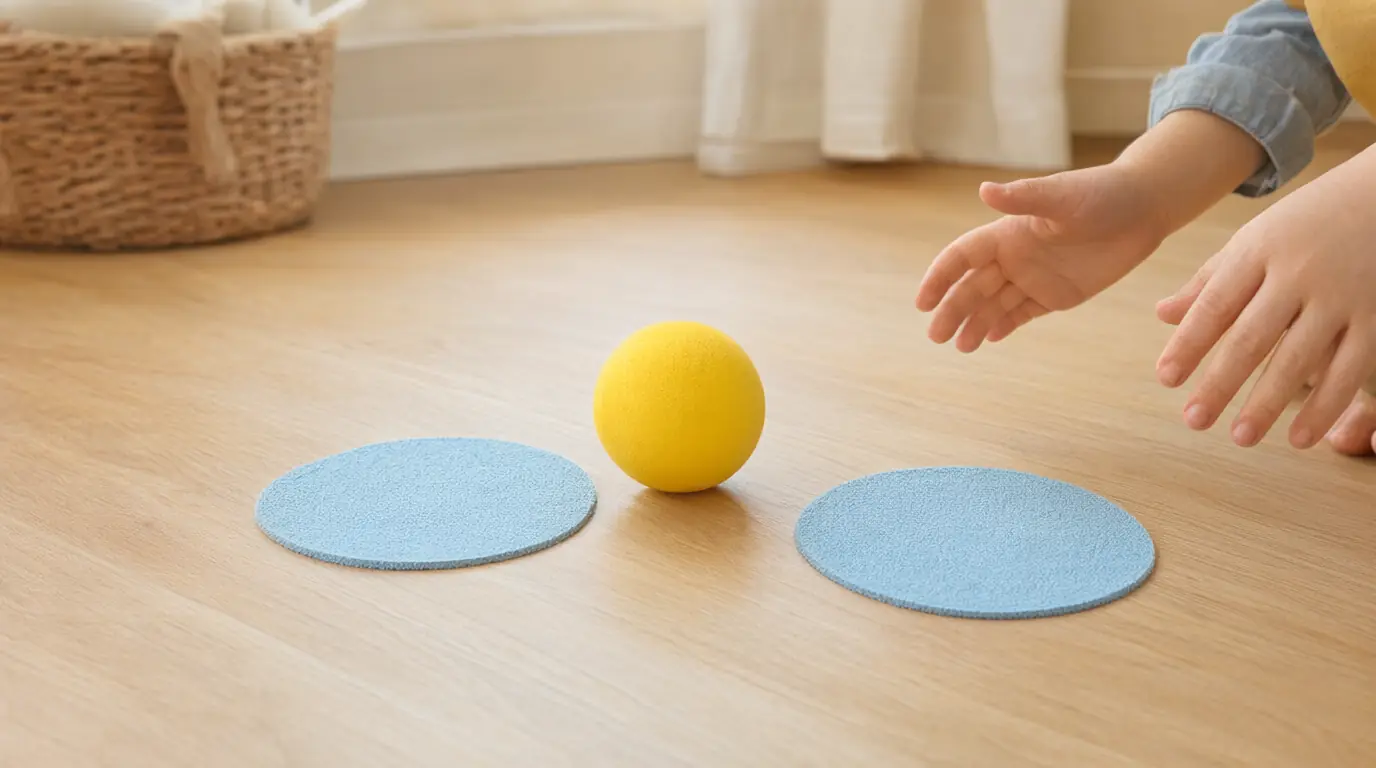
Make it your own: If bouncing is hard, roll the ball along the floor instead. Older children can try catching after two bounces, or bounce the ball to someone who is sitting down.
Colour spot shooting
Choosing where to stand before throwing teaches children that position changes the result. Using colour spots makes the choice visible and gives every child a way to join in, whether they throw, roll or place the ball. Talking about the best spot builds early reasoning without any pressure to win.
You’ll need
- 1 low basket on a stool or a cushion
- 3 paper plates in different colours
- 1 soft ball
- Floor tape
How to do it
- Place the basket on a stable low surface and tape it in position.
- Put three coloured plates at different distances in front of it.
- Let your child choose a plate and stand on it.
- Make one gentle two-handed throw, then fetch the ball together.
- Choose a different colour for the next turn and talk about which spot felt easiest.
- Finish by letting each person pick a favourite spot for a last turn.
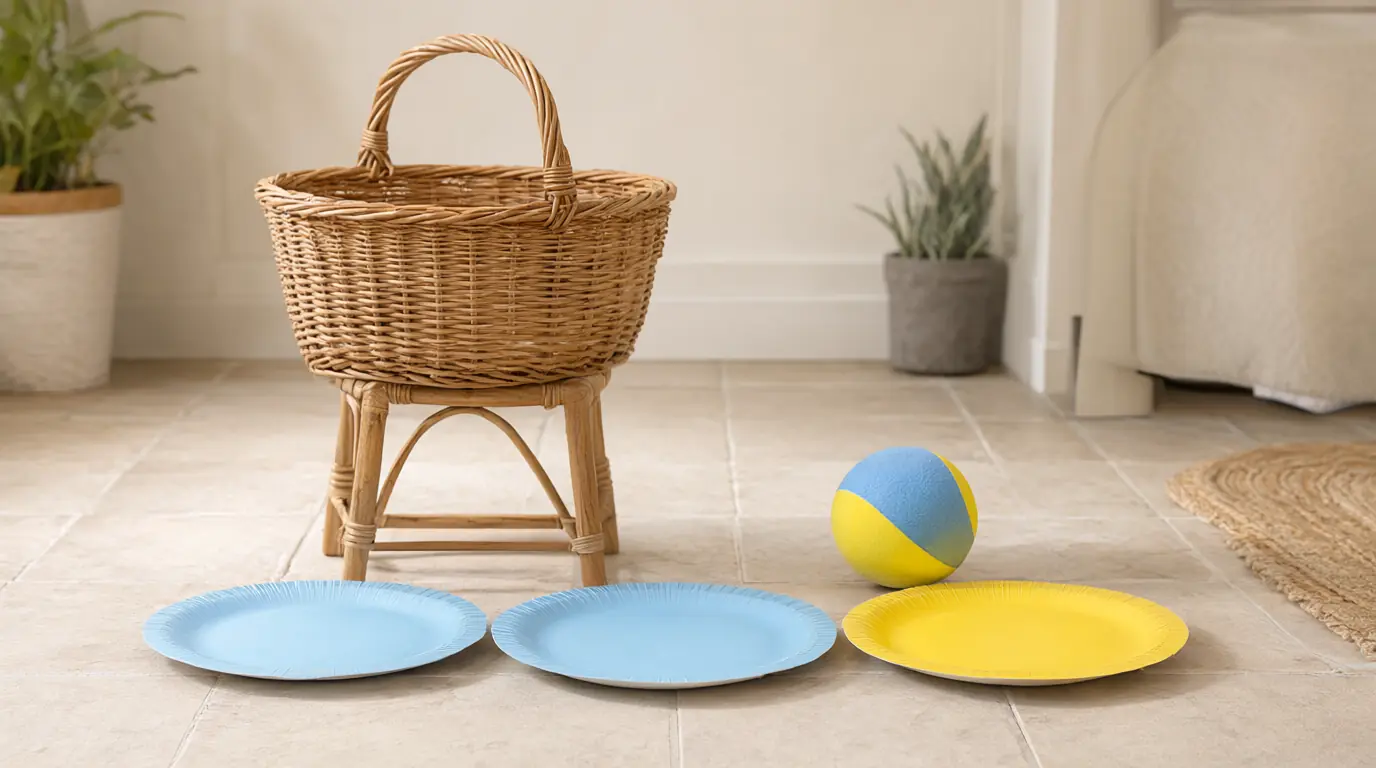
Make it your own: For younger children, put one plate very close and let them drop the ball in. Older children can try an underhand throw, or move the basket a bit further away.
Pass the story
A calm circle game turns passing into storytelling. Each child adds one word or sound before passing the ball, so the group practises waiting, listening and handing something over carefully. It is a good option when the energy in the room is already high.
You’ll need
- 1 soft ball
- A circle of 3 to 6 children sitting on the floor
- An optional picture card to start the story
How to do it
- Sit in a circle with knees crossed or legs out in front.
- Start a story with a single line, such as one day a dog found a hat.
- Hold the ball and add one word or sound, then roll it gently to the next person.
- Each person adds a word and passes on, so the story grows.
- Let anyone say pass and roll the ball on without adding anything.
- Finish by telling the whole story back together.
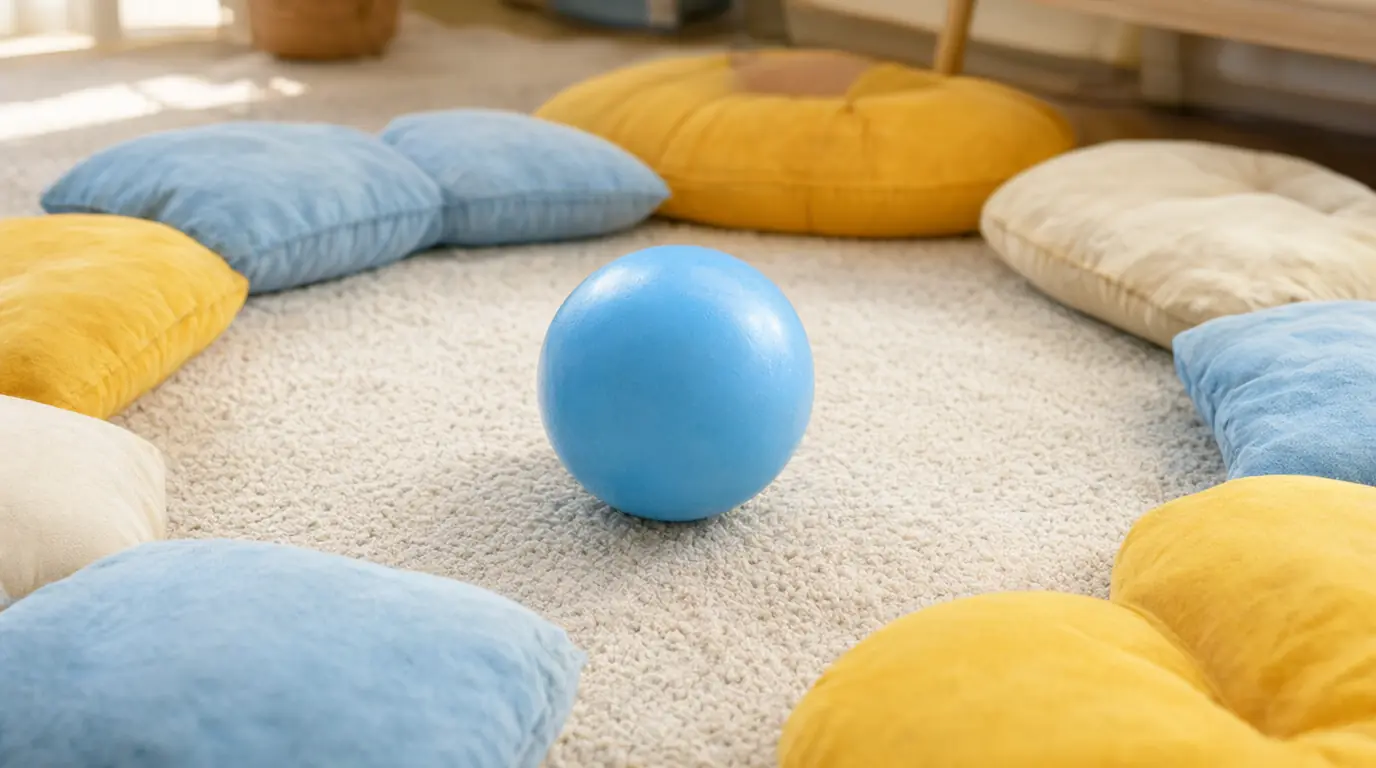
Make it your own: For younger children, use sounds or animal noises instead of words. Older children can add a full sentence, or try standing up and passing the ball with a soft underhand throw.
Team basket together
In this game the whole group works towards one total instead of competing. Players take turns to roll or throw, and the team counts how many balls end up in the basket. It is a gentle introduction to team sport where everyone's turn counts and nobody is out.
You’ll need
- 1 laundry basket
- 4 to 6 soft balls
- A paper plate for each child to stand on
- A second basket for collecting
How to do it
- Put the target basket in the middle of the room and place plates around it at different distances.
- Give each child a plate to stand on and a ball.
- On your signal, everyone rolls or throws their ball towards the basket.
- Collect the balls together and count how many are in the basket.
- Play again and see if the team total changes, without suggesting it should go up.
- Swap plates so everyone tries a new distance.
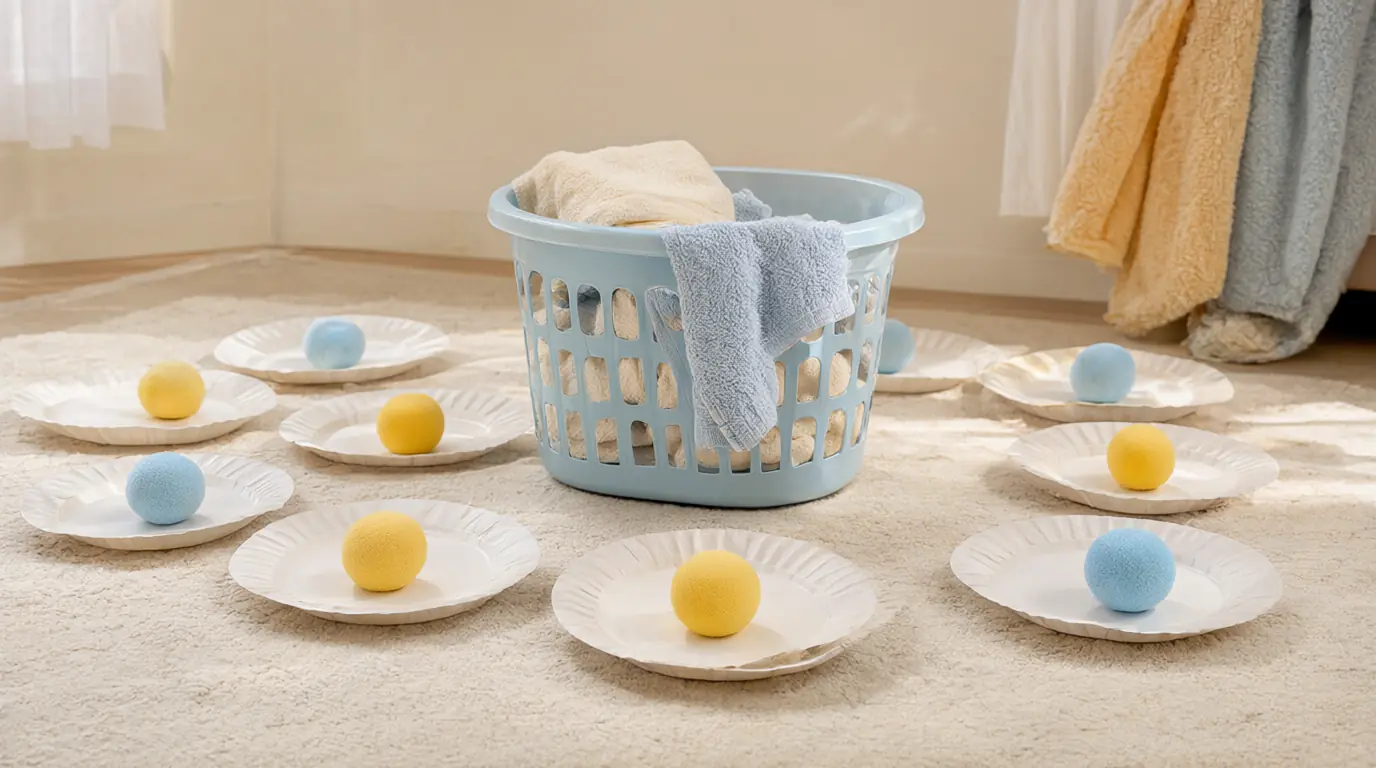
Make it your own: For younger children, shorten distances and allow dropping a ball in. Older children can try a bounce shot, or take a ball to a partner before aiming.

Make it work for your family
Children aged three to six vary enormously in coordination, so build every game so that a very young child and a confident older one can play it together. Move the target closer, allow two-handed throws and let anyone choose a roll instead of a bounce. If the ball keeps rolling away, play in a corner or between two sofas so it stops by itself.
Counting the scores can be fun for some children and stressful for others. Try counting together as a team, saying something like we have three in the basket so far, and then celebrating the group total. Once your child can reliably bounce and catch, you could try other ball games such as tennis-style play or a few bigger movement games for small spaces.

Parents also ask
What age can children start playing basketball games?
Children can enjoy basketball-style play from about three, using soft balls and low targets. At that age the goal is rolling, catching and aiming rather than following rules. Proper basketball hoops and rules usually suit older children, and a regular coach can advise when your child is ready.
Do kids need a real hoop for basketball games?
No. A laundry basket on its side or on a low stool works well and is much easier for small children to reach. It also keeps the ball low, which reduces the risk of it hitting someone in the face, and lets you move the target easily.
How do I keep basketball games from becoming too competitive?
Count one shared team total instead of individual scores, let everyone choose their own distance, and avoid elimination or timed turns. Praise effort and strategy, such as picking a new spot, rather than who gets the most baskets.
Choose materials and activities that suit your child, supervise as needed and adapt the ideas to their interests and abilities. About our editorial approach