Weebou Editorial Team
 8 min read
 In this article
A little preparation
Before any game starts, check that no balloons or balloon scraps are lying around, including decorations. Choose light fabric squares of about 40 centimetres (cotton napkins or thin scarves are ideal) with no tassels, loops or ribbons, because anything long can wrap round a neck. Foam balls should be larger than a child's fist and clearly soft. Clear the floor, move any sharp-cornered furniture and mark a start line with tape.
Space matters more than equipment: you need roughly two metres of clear floor for each child. Keep games to five or six minutes, then swap to a calmer one so nobody gets overexcited. Stay close, show each game once before anyone plays, and gather every scarf at the end of each round so nothing ends up in a mouth or underfoot. A child who would rather watch for a while is still taking part.

Ideas to try together
Scarf float and catch
A light fabric square drifts down far more slowly than a ball, which gives children time to move underneath it and watch it fall. This is a gentle way to practise tracking an object with the eyes and judging where something will land, without the speed that frustrates younger players.
 You’ll need
- 1 light fabric square per child
- Clear floor space
- A basket or tray to collect scarves
How to do it
- Give each child one scarf and stand a good arm's length apart.
- Show how to scrunch the middle and throw it gently upwards, letting the corners open out.
- Watch it fall together and try to catch it with both open hands before it lands.
- Name its colour each time it floats down, then swap scarves with a friend.
- Add a challenge: catch it with a clap, or let it land on a knee.
- Gather all the scarves into the basket before the next game.
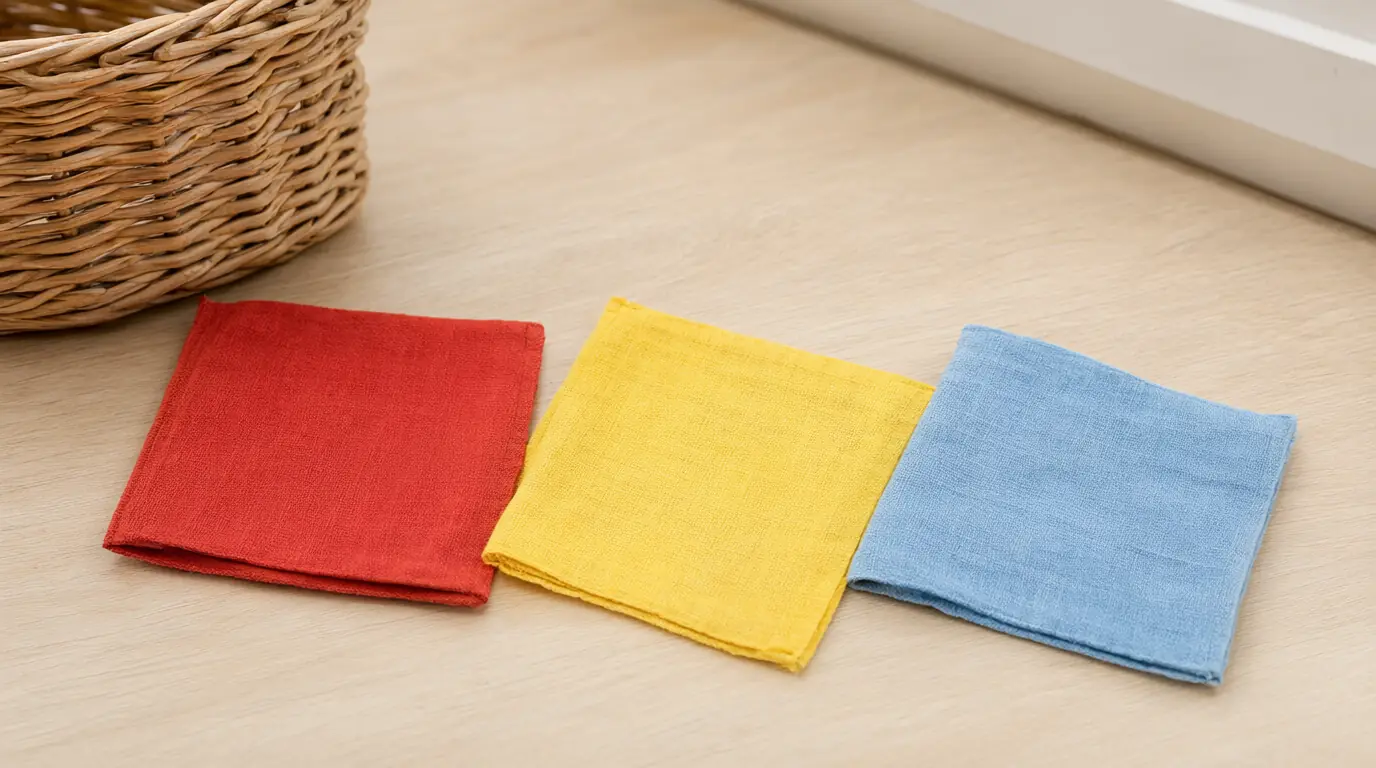
Make it your own: For younger children, throw the scarf just above head height and let them step towards it. Older children can count how many claps they can fit in before it lands, or try tossing it with the other hand.
Bedsheet bounce
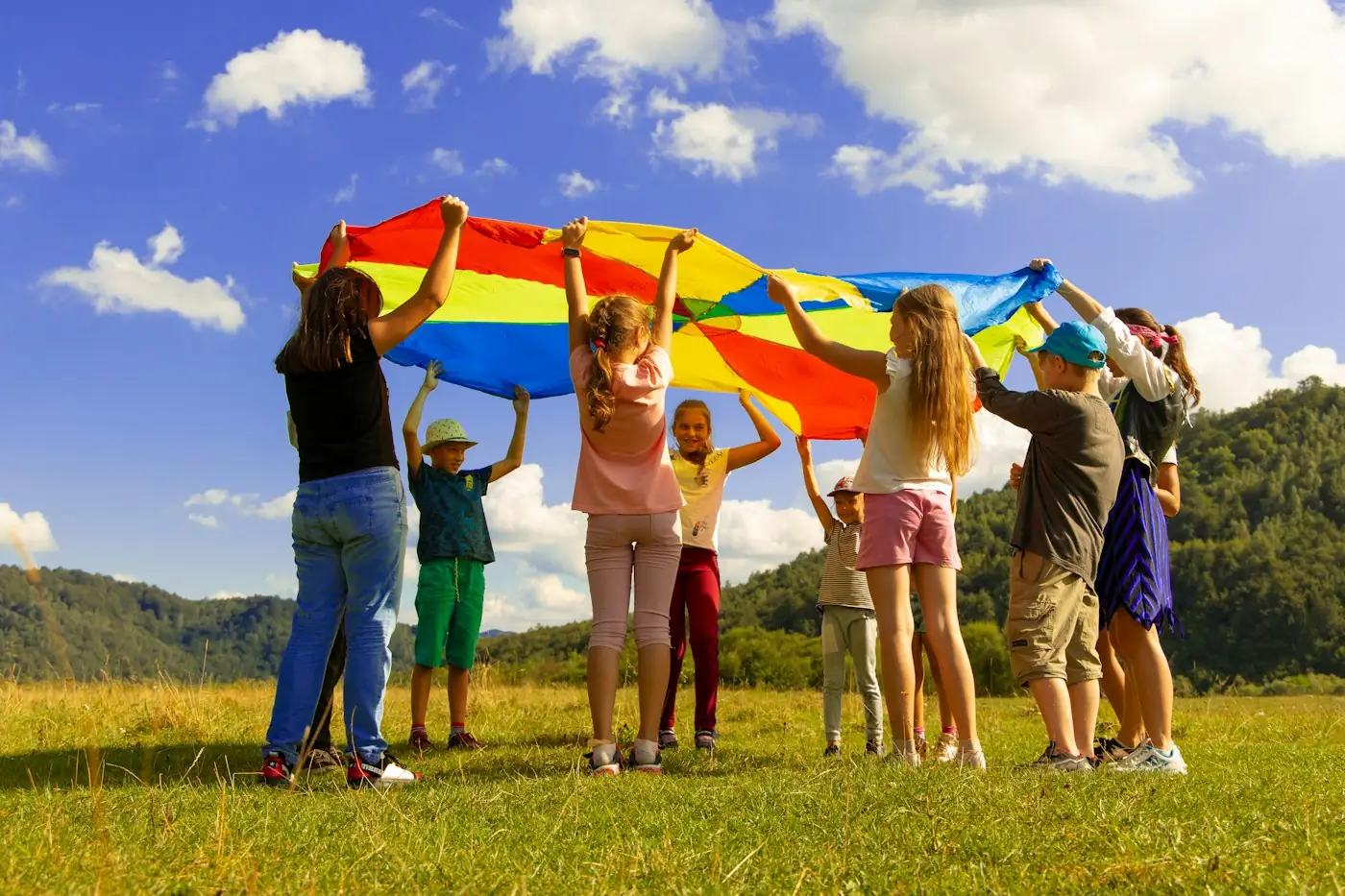
Holding the edge of a sheet together shows children how a group can move one object. A soft foam ball bobs around in the middle as the sheet ripples, and the whole group learns to move gently or quickly together. It is as close to a bouncing balloon as you can safely get.
You’ll need
- 1 old bedsheet or lightweight blanket
- 2 or 3 soft foam balls
- 4 to 8 children and adults standing round the edge
How to do it
- Spread the sheet on the floor and let everyone take a handful of the edge.
- Lift it to waist height together and place one foam ball in the middle.
- Make small ripples so the ball rolls slowly, then bigger ones so it hops.
- Try to keep the ball on the sheet while walking one step clockwise.
- Add a second ball and talk about how the movement changes.
- Lower the sheet and let the balls roll out to finish.
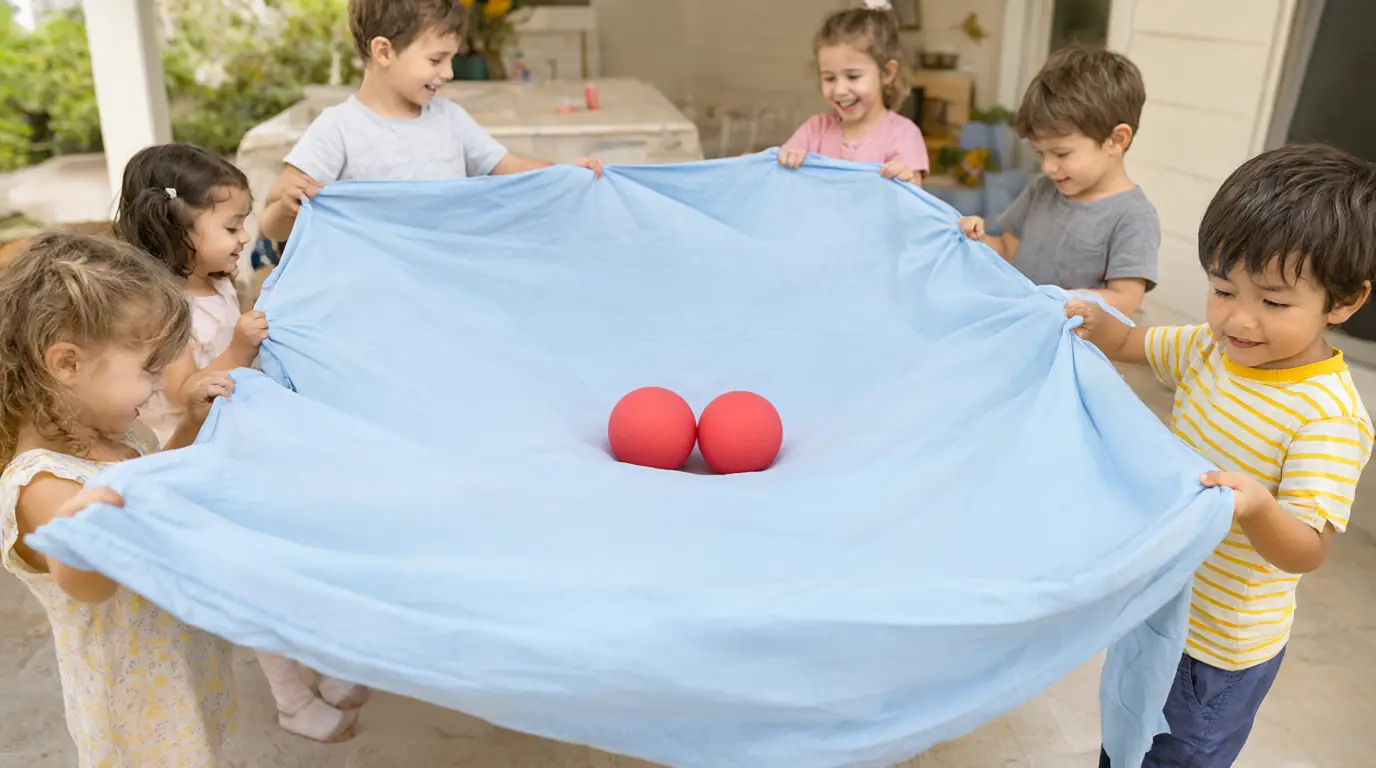
Make it your own: Younger children can stay seated and only make tiny ripples. Older children can aim for a target such as a basket beside the sheet, or call out the colour of the ball that should bounce next.
Floor-basket rolling race
A basket on its side turns rolling into aiming, with no throwing required. Children choose where to stand and compare which position makes it easiest to reach the target. It keeps the focus on judgement rather than speed.
You’ll need
- 1 sturdy laundry basket
- 3 soft foam balls
- Floor tape for a start line
- A second basket for the balls to be collected
How to do it
- Lay the basket on its side with the opening facing the start line.
- Place a tape line one big step from the basket.
- Let your child roll a ball with both hands towards the opening.
- After each turn, move the tape line one step back if they want a challenge.
- Take turns collecting the balls into the second basket.
- Finish by counting how many balls ended up in the basket together.
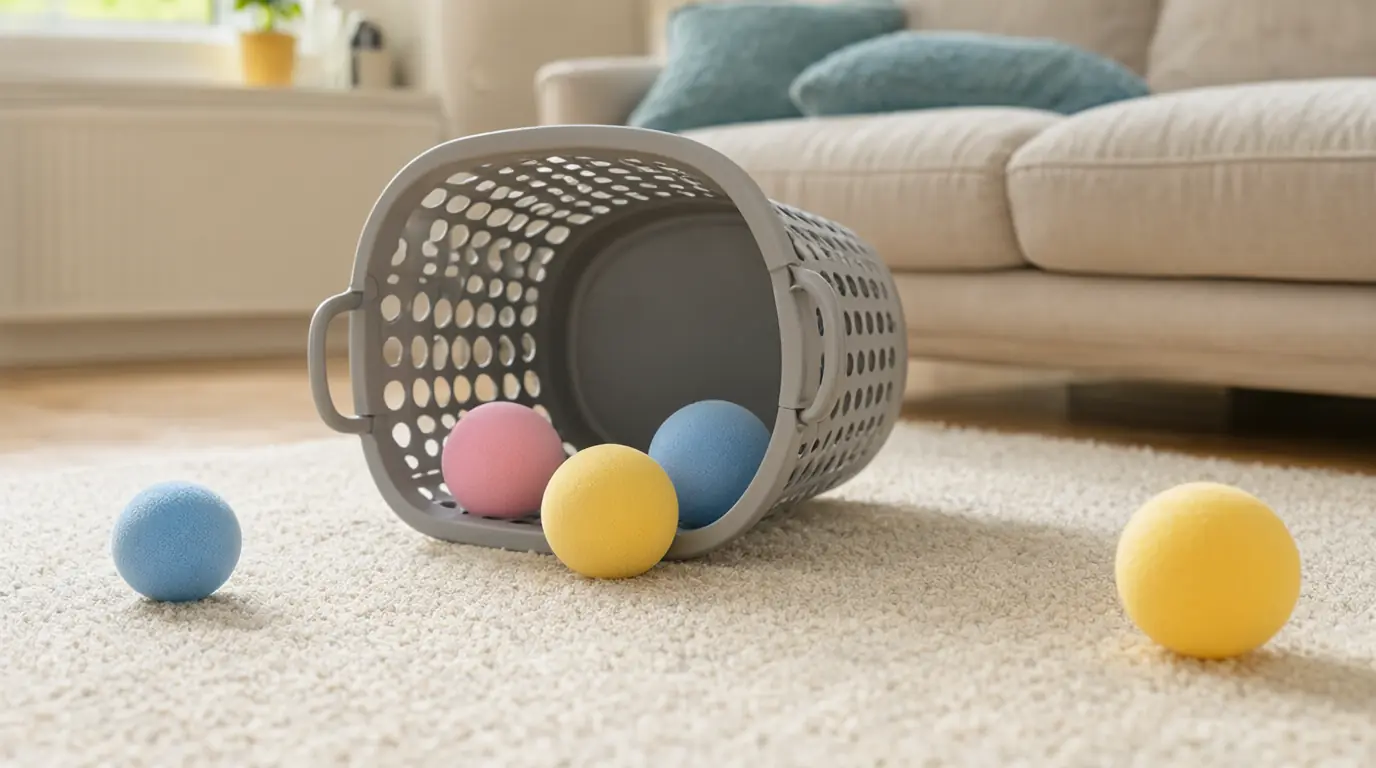
Make it your own: For a younger child, put the line closer and widen the opening by propping the basket on a cushion. Older children can try rolling with their non-dominant hand or aiming for a smaller box.
Music and scarf landing
A short piece of music gives scarf play a beginning and an end, which helps children listen as well as move. Waving the scarf slowly to quiet music and quickly to livelier music is a joyful way to practise controlling movement, and the pause-and-land step builds a habit of tidying up.
You’ll need
- 1 scarf per child
- A music player with a short playlist
- Paper plates or floor spots as landing places
How to do it
- Place a paper plate on the floor for each child as a landing spot.
- Play music and let children wave their scarves in slow circles.
- Change to faster music and encourage bigger, quicker waves.
- Pause the music and call stop; everyone floats their scarf down onto their plate.
- Wait until all scarves have landed before restarting the music.
- Swap places so each child lands on a different colour plate.
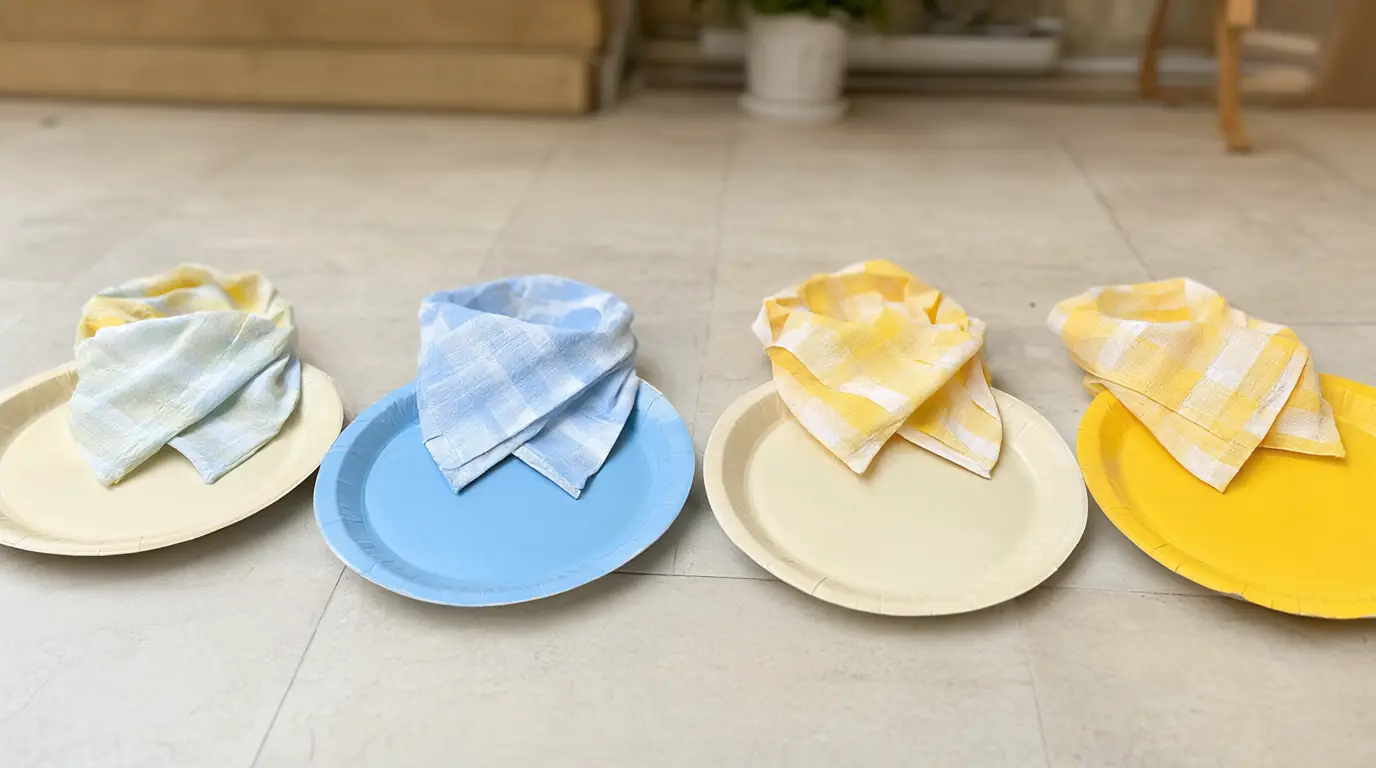
Make it your own: Younger children can skip the plates and simply stop and hold the scarf still. Older children can follow a rule such as waving only the left hand, or make a shape with the scarf before it lands.
Partner parcel walk
Two children carry a soft ball between them on a small scarf, which makes cooperation visible: if one of them rushes, the ball rolls off. The goal is shared, so there is nothing to win or lose, only a ball to deliver.
You’ll need
- 1 large fabric square per pair
- 1 soft foam ball per pair
- 1 basket as the drop-off point
- A tape line as the route
How to do it
- Pair up the children and give each pair a fabric square and a ball.
- Each partner holds two corners; place the ball in the middle.
- Walk slowly along the tape line towards the basket.
- If the ball falls, stop, put it back and start again from where you were.
- When you reach the basket, tip the ball in together.
- Walk back and change partners for the next round.
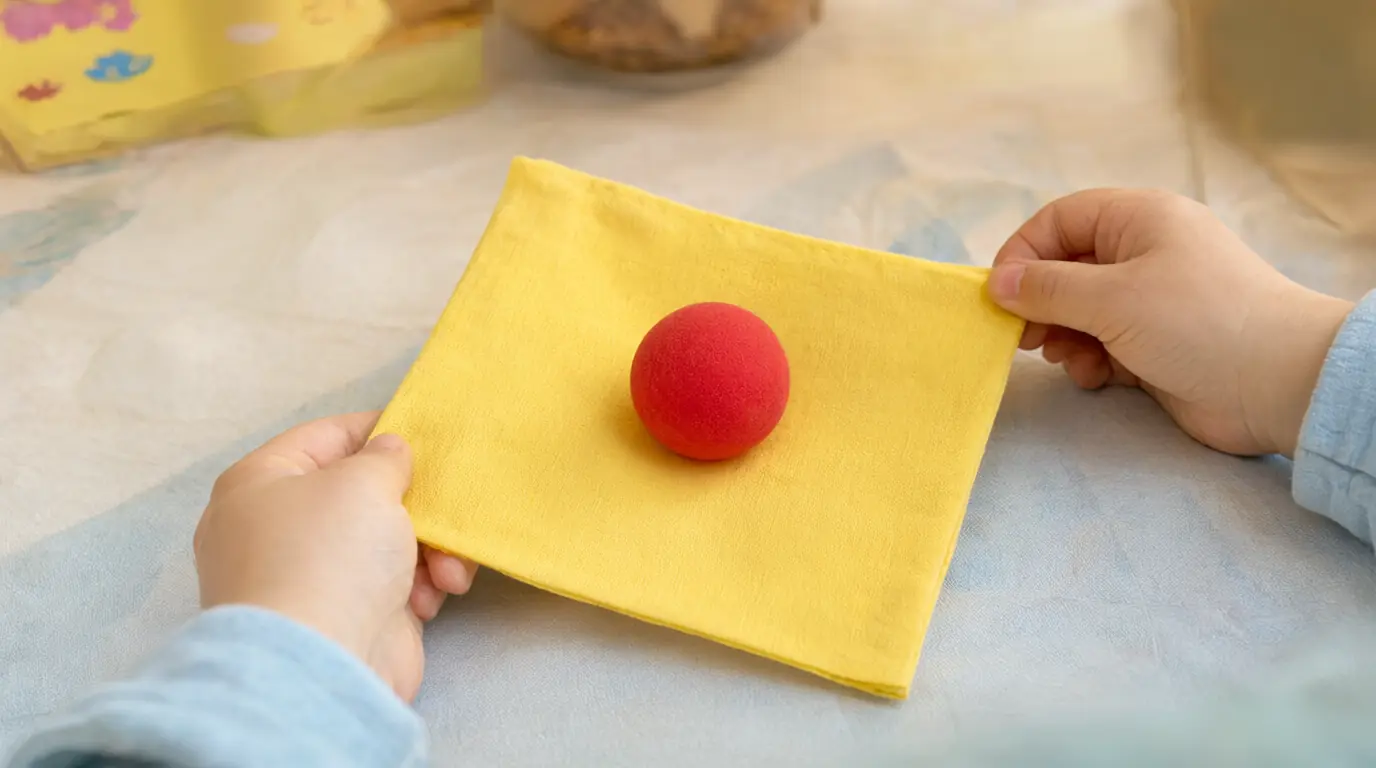
Make it your own: Younger children can walk just two or three steps. Older pairs can weave round a cushion, or try carrying the ball with a slower, quieter walk.

Make it work for your family
Floaty games work best when children practise with one object before adding partners or targets. If a scarf keeps landing on someone's head, nothing has gone wrong: laugh, hand it back and let them try again. Rotate the roles of thrower, catcher and collector so nobody spends the whole game waiting, and stop a game while it is still enjoyable rather than waiting for the energy to drop.
For a bigger group, set up two or three stations and let children drift between them, which avoids queues and arguments. Calmer children often prefer the sheet games, while energetic ones tend to head for the foam ball. If your child enjoys the counting in these games, you could follow them with some counting and sorting math play, or try other soft ball games at home once the scarves are packed away.

Parents also ask
Are balloons safe for toddlers and preschoolers?
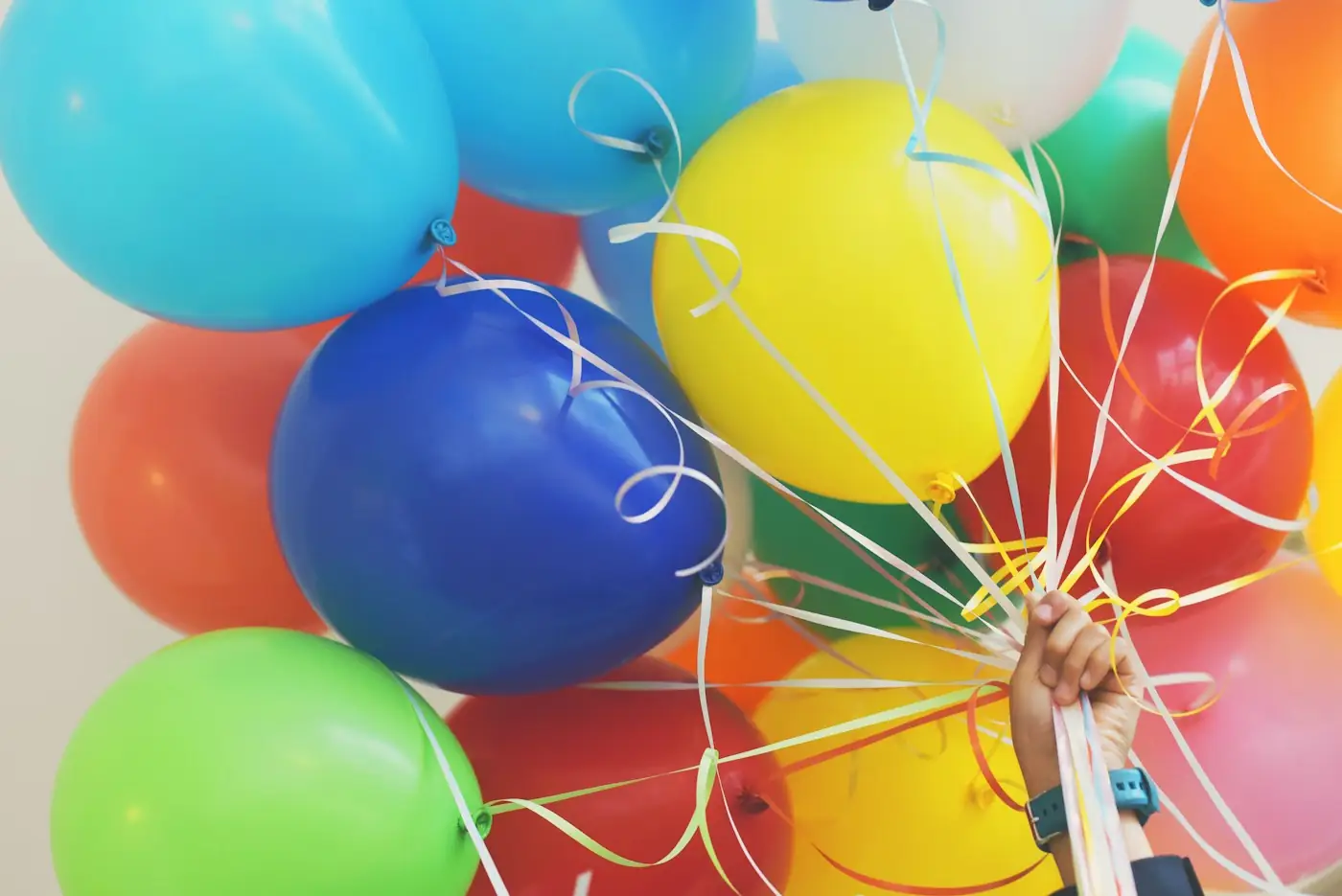
Balloons are not recommended for children who still put things in their mouths, because a popped balloon leaves soft scraps that can block the airway. Fabric squares and soft foam balls give the same floating, catching and tapping play without that hazard. Always supervise closely and keep decorations out of reach.
What can children play with instead of balloons?
Light scarves, napkins, soft foam balls, beanbags and a bedsheet all work well. Scarves float down slowly like balloons, foam balls can be rolled or tapped, and a sheet lets a group keep an object in the air together without anyone chasing it.
How can I run balloon-style games at a birthday party?
Set up two or three short stations, such as scarf catching, bedsheet bounce and basket rolling, and let guests move between them. Keep rounds to a few minutes, avoid elimination, and have a quiet option for children who need a break from the noise.
Sources & further reading
Explore these primary sources for further context on this topic.
Choose materials and activities that suit your child, supervise as needed and adapt the ideas to their interests and abilities. About our editorial approach