Weebou Editorial Team
 9 min read
 In this article
A little preparation
Choose a room with a clear stretch of non-slip floor and move anything breakable, sharp-edged or easy to knock over out of the route. Painter's tape lifts cleanly from most floors and leaves no residue, so test a short strip first. Set out only the materials for one station at a time; four half-built stations in a small room quickly become a trip hazard.
Walk through each station yourself before your child arrives, pressing down tape and cushions and checking that nothing wobbles. Bare feet or grip socks work better than smooth socks on a wooden floor. Keep everything low: nothing here needs climbing, standing on furniture or lifting anything heavy, and an adult stays in the room throughout. Ten to fifteen minutes is plenty for a first try, and a child who flops down or wanders off is telling you the session is finished. Offer a drink and a quiet sit-down afterwards.

Ideas to try together
A tape line to walk, jump and balance
A single line of painter's tape becomes a road, a river and a beam, and your child decides which it is. Walking heel to toe, jumping over short gaps and hopping from side to side all practise balance and coordination in a way that is easy to reset. Because the line is flat, there is nothing to trip over, and a wobble is a normal part of the game.
 You’ll need
- A roll of painter's tape
- A clear stretch of non-slip floor
- Two small markers, such as socks or blocks
How to do it
- Lay a straight line about two metres long, pressing the tape flat to the floor.
- Walk it together once, heel touching toe, then let your child try at their own speed.
- Make three short gaps by lifting sections of tape away.
- Invite jumps over the gaps, then hops on one foot beside the line.
- Turn it into a curve or a zigzag and walk it again in the other direction.
- Ask your child where the next bend should go, then rebuild it together.
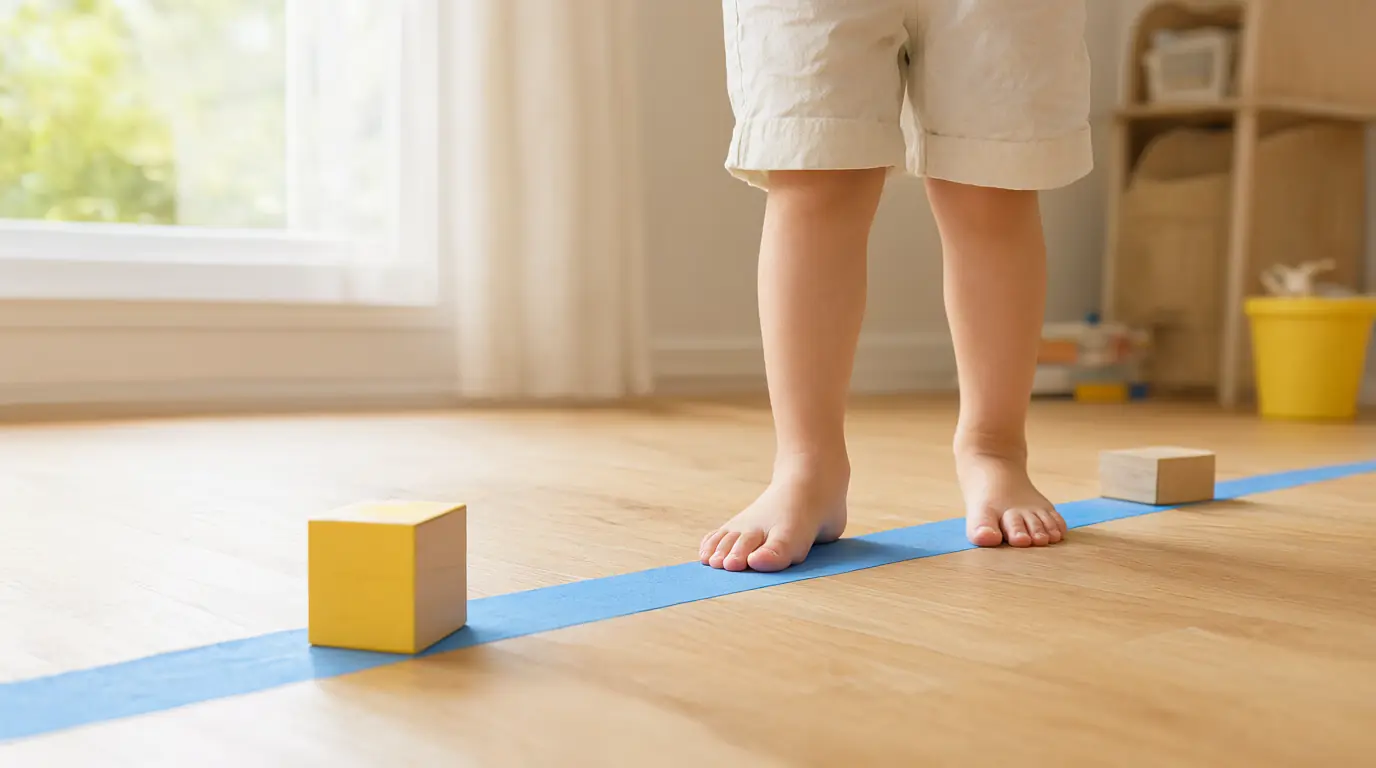
Make it your own: Younger children can walk beside the line and step over it rather than balancing on it. Older children can carry a small beanbag on an open palm, walk backwards along a straight section, or hop a pattern of two jumps then one. Children who find balancing uncomfortable can push a chair along the line instead.
Parcel run with light empty boxes
Carrying something manageable gives children a job with a visible finish, and it works the whole body without needing space to run. Light empty boxes are easy to see over, and a delivery spot at the other end turns repetition into a game. Children often do far more bending, lifting and turning than they would in a chase game, and they can stop whenever they choose.
You’ll need
- Four to six empty cardboard boxes, small enough to see over
- Painter's tape for a start line and a delivery square
- A laundry basket or a taped square on the floor
How to do it
- Mark a start line and a delivery square about three steps apart.
- Put the empty boxes beside the start line.
- Show how to lift a box with two hands and hold it against the chest.
- Carry one box at a time to the square and stack it flat on the floor.
- Walk back empty-handed, then choose the next box.
- When everything is delivered, carry the boxes back one by one or push the stack gently along the floor.
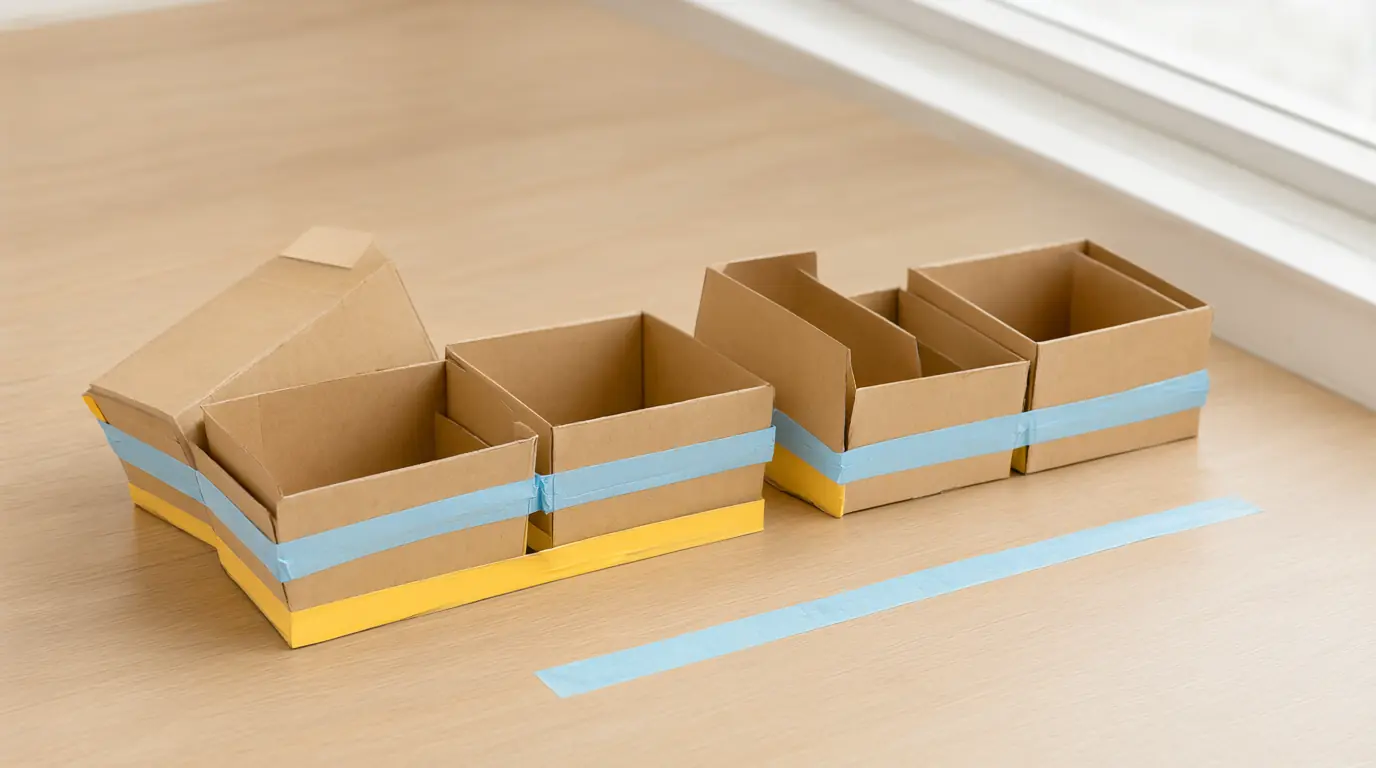
Make it your own: Toddlers can push a single box along the floor instead of lifting it. Older children can add a gentle curve, carry two small boxes at once, or sort deliveries into two squares by size. Keep every box light enough that your child can still see where they are going.
Reach and match on the wall
Taping large paper shapes at different heights invites stretching up, bending down and turning around, all without climbing. Matching a shape on the wall to its partner on a low table adds a thinking job to the movement, so children pause, look and plan before they reach. It suits a narrow hallway or the back of a door, where floor space is short.
You’ll need
- Six large paper shapes in three matching pairs
- Painter's tape
- A low table for the matching set
How to do it
- Cut or draw six large paper shapes in three matching pairs.
- Tape one of each pair to the wall: one high, one at shoulder height, one low.
- Lay the matching shapes on a low table across the room.
- Pick one shape from the table, walk to the wall and find its partner.
- Reach up, bend down or point to touch it, then return the shape to the table.
- Swap the wall shapes around and play again.
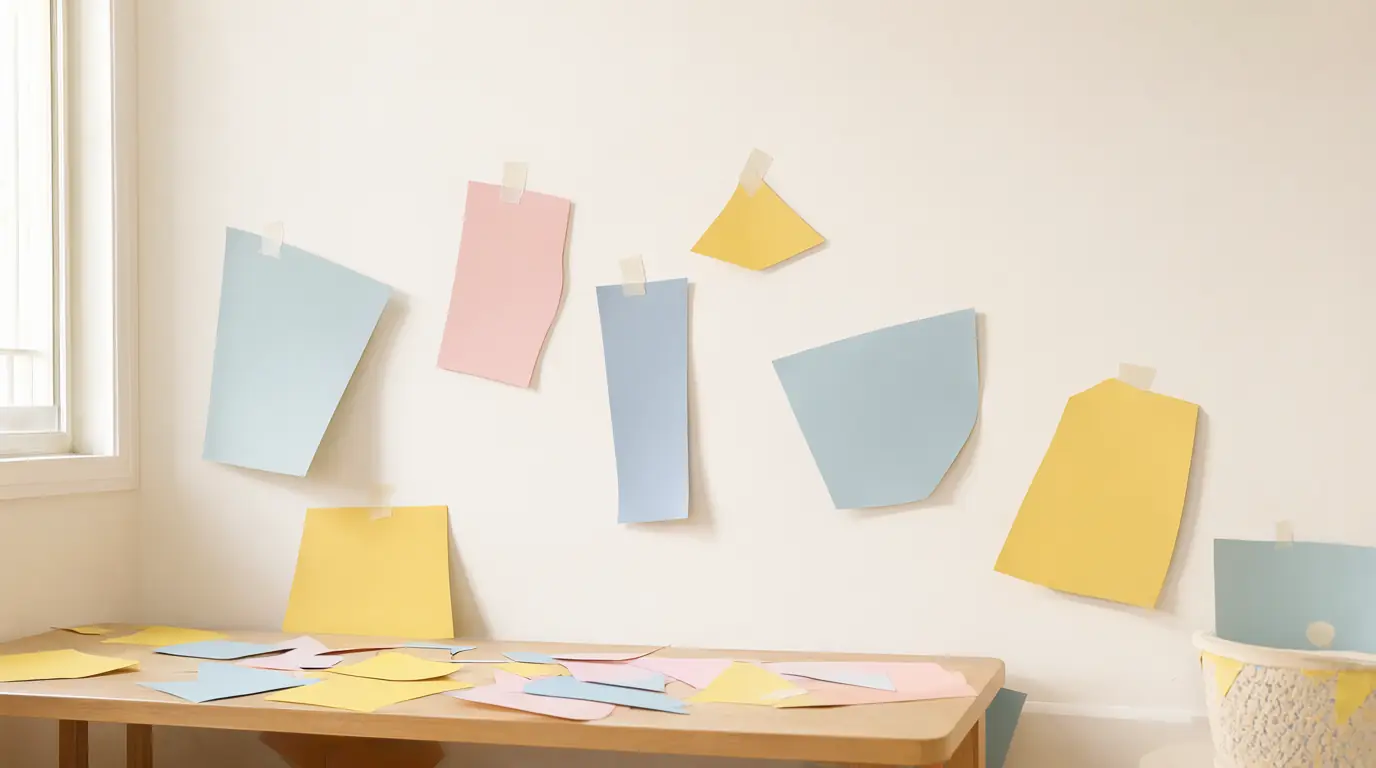
Make it your own: Younger children can match two pairs only, all within easy reach. Older children can name the shape or count its sides before reaching. If reaching overhead is uncomfortable, keep every shape between knee and shoulder height, and tape paper to a cupboard door if the walls are not suitable.
Cushion crossing with a clear side route
A short row of firm cushions gives children a chance to step up, step over and change direction, and a clear route beside it means nobody has to take the bumpy way. Choosing between the two routes keeps the game comfortable for children who are unsure about uneven ground. The whole thing packs away in under a minute.
You’ll need
- Four firm sofa cushions
- A non-slip rug or mat underneath
- Painter's tape for the side route
How to do it
- Lay a non-slip mat on the floor and place four firm cushions in a short row with small gaps.
- Tape a clear side route beside the cushions.
- Walk the cushion row yourself, pressing each one down to check that it does not slide.
- Invite your child to step over the cushions, step onto them, or take the side route.
- Change the gaps between cushions and let your child choose a new pattern.
- Stop and rebuild if any cushion slides, folds or bunches up.
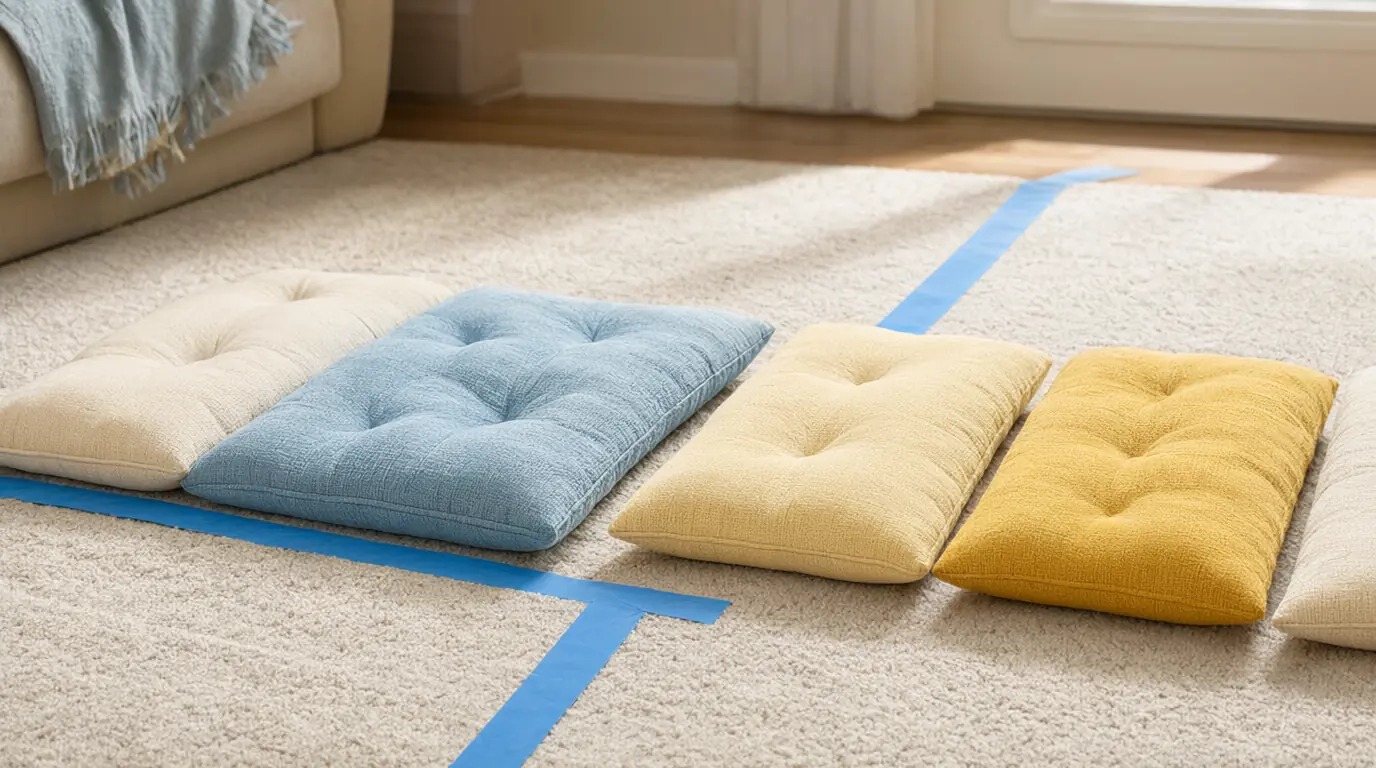
Make it your own: Younger children can hold your hand and step over just one cushion. Older children can carry a soft toy across, step from cushion to cushion without touching the floor, or count their steps. Children who dislike uneven surfaces can stay on the taped route and direct the layout instead.
Roll, toss and basket
Throwing is a whole-body action that starts at the floor and finishes at the fingertips, and a soft ball takes the fear out of it. Rolling along a taped line adds aim without force, while tossing into a low basket practises releasing at the right moment. Both are easy to repeat, which is exactly what young children need.
You’ll need
- One soft ball or a rolled-up pair of socks
- A laundry basket or a large cardboard box
- Painter's tape for a throwing line
How to do it
- Set the basket against a wall or a sofa so it cannot slide.
- Tape a throwing line two or three steps away.
- Start by rolling the ball along the floor into the basket.
- Move to underarm tosses from the line, one ball at a time.
- Change the distance after three turns, closer or further, and let your child choose.
- Finish by tossing soft socks back into the box together.
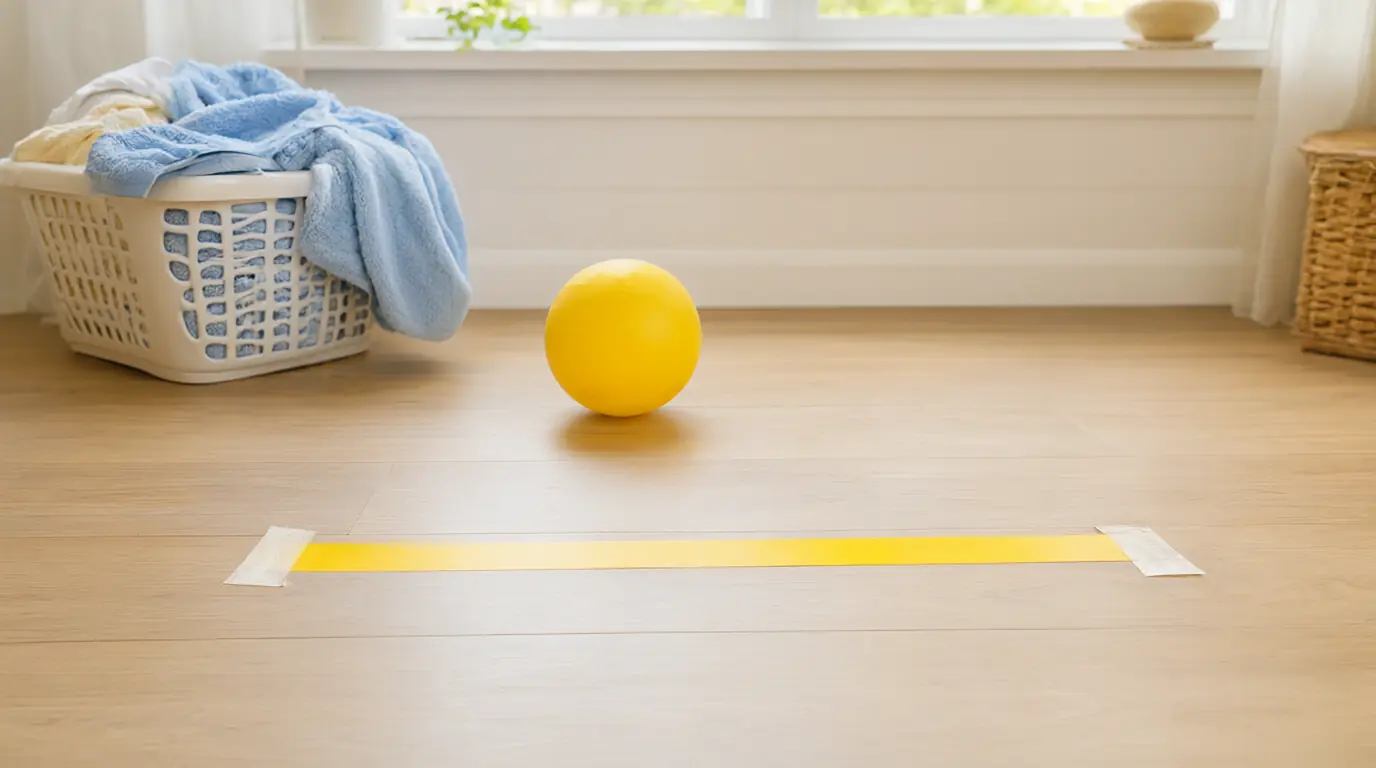
Make it your own: Younger children can stand close and drop the ball into a wide box. Older children can aim at two baskets at different distances and keep score in tallies. If your child throws hard, move the basket further away rather than asking for softer throws, and keep the ball soft indoors.

Make it work for your family
If a station stops working, change one thing rather than adding a new rule: shorten the distance, remove a turn, or swap the cushion for a flatter mat. Children often repeat the same route many times, and that repetition is the point, so resist the urge to make it harder. Watch for sliding cushions, bunched tape and anything your child is carrying above eye level, and rebuild as soon as you notice.
Some children need a slower start, and a few minutes of balance games or heavy work play can be a gentler way in. Keep the set-up small enough to pack away in a minute, and store the tape and cushions in the same place each time so your child can help build it. For more ideas when the weather keeps you indoors, try these indoor toddler activities.

Parents also ask
What counts as a gross motor activity for a preschooler?
Gross motor activities use the large muscles: walking, jumping, climbing, throwing, carrying and balancing. Everyday actions such as carrying shopping, pushing a laundry basket or stepping over cushions all count. You do not need special equipment, just a clear floor, a few safe objects and a few minutes.
How much movement does a preschooler need each day?
Guidance varies between countries, but most suggest young children are active for around three hours spread across the day, including ordinary playing, walking and outdoor time. Short bursts count towards that total. If you are worried about your child's stamina, coordination or movement, speak to your health visitor or doctor.
What can we do if we only have one small room?
Use short routes and vertical space: tape a line down a hallway, stick paper shapes to a door, roll a ball into a box, or carry light boxes between two marked spots. Clear a path about a metre wide, keep everything low and stable, and pack it away afterwards so the room goes back to normal.
Choose materials and activities that suit your child, supervise as needed and adapt the ideas to their interests and abilities. About our editorial approach