Weebou Editorial Team
 9 min read
 In this article
A little preparation
Choose five to eight objects your child handles often: a spoon, a soft ball, a sock, a brush, a cup, a scarf and a sponge. Keep them in a basket and add one unusual item, such as a whisk or a peg, to stretch the conversation. Clear a table or sit on the floor with the basket between you. Ten to fifteen minutes is plenty; stop while the game still feels easy and repeat it on another day rather than pushing through a long session.
Check that every object is clean, has no sharp edges and is too large to swallow if your child still mouths things. Remove loose parts, batteries and anything fragile before you begin. Sit at your child's level so you can hear quiet answers and see what they are looking at. For a child who finds open questions hard, offer two choices at a time. These speech and language games use the same gentle, back-and-forth style, and our word games give you a screen-free follow-up.
Ideas to try together
The bag of hidden clues
Hiding an object turns a description into a real puzzle. Your child has to hold the object's shape, texture and purpose in mind while choosing words that do not give the name away. The adult can model a clue first, then swap roles so the child does the describing. Guessing keeps attention because the answer is genuinely unknown.
 You’ll need
- A cloth bag or pillowcase
- 5–8 familiar objects
- A tray
How to do it
- Put five familiar objects on a tray and name them together.
- Let your child close their eyes or turn around while you slide one object into the bag.
- Give three clues: one about what it is made of, one about what it does and one about its shape.
- Let your child feel the outside of the bag before guessing, if they want to.
- Reveal the object and ask which clue helped most.
- Swap roles and let your child hide an object for you, offering a word if they get stuck.
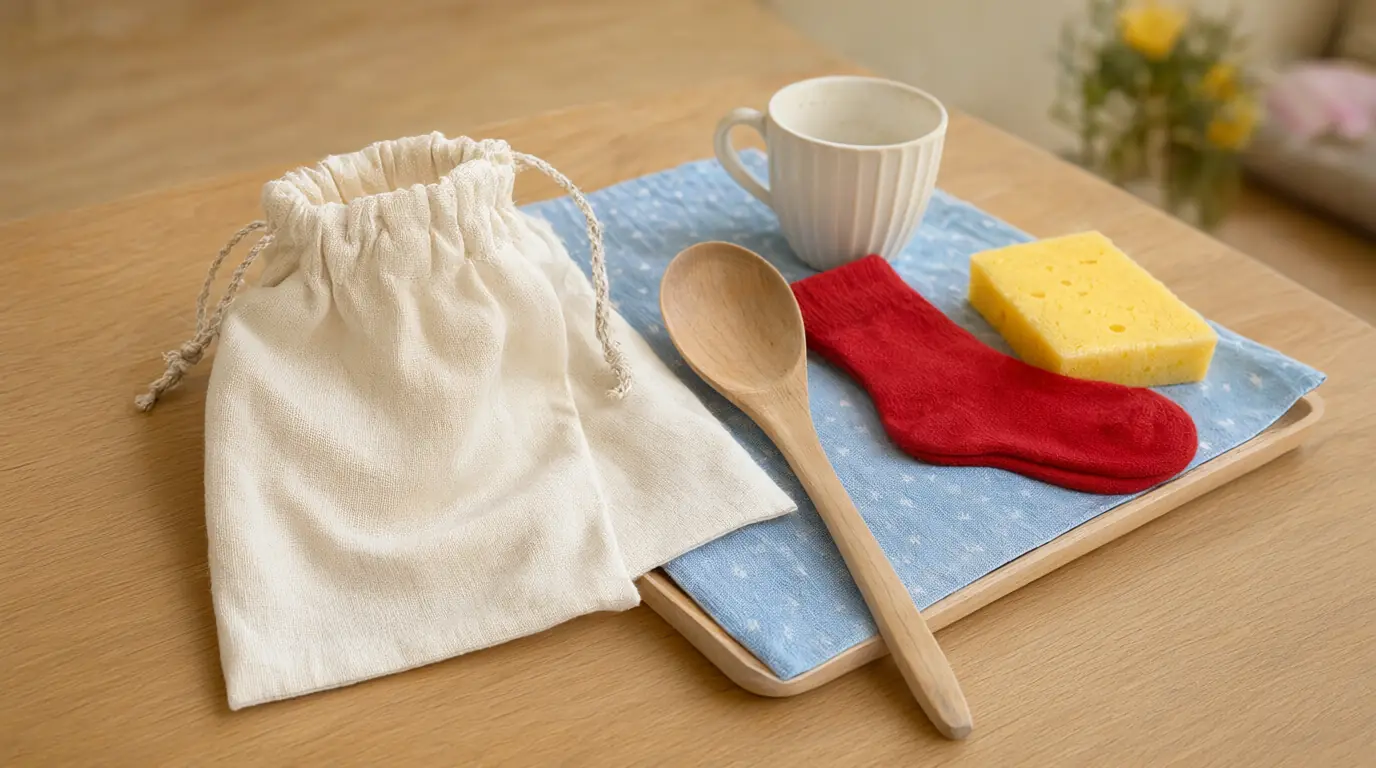
Make it your own: Younger children can choose from two objects placed in view and answer yes or no questions. Older children can give clues without mentioning colour or use, or describe an object that is not in the room. A child with limited speech can point to the object or use a picture card instead of saying the word.
Word-family sorting trays
Sorting by category helps children see that words belong together and that some fit more than one group. A raincoat is clothing, but it is also something for wet weather, which gives you a natural way to talk about flexible thinking. Keep the groups broad and let your child add or reject items.
You’ll need
- A tray or large sheet of paper
- 6–10 familiar objects
- 3 paper labels with simple drawings
- A thick marker
How to do it
- Draw a simple picture on each label: a jumper for clothes, a cup for things we drink from and a ball for toys.
- Lay the labels along the top of a tray and put the mixed objects in the middle.
- Name one object together and ask where it belongs; place it under a label.
- Choose a less obvious object, such as a raincoat or a scarf, and talk through two possible groups.
- Let your child move any object they disagree with and explain why.
- Leave one object without a label and ask what new group it could start.
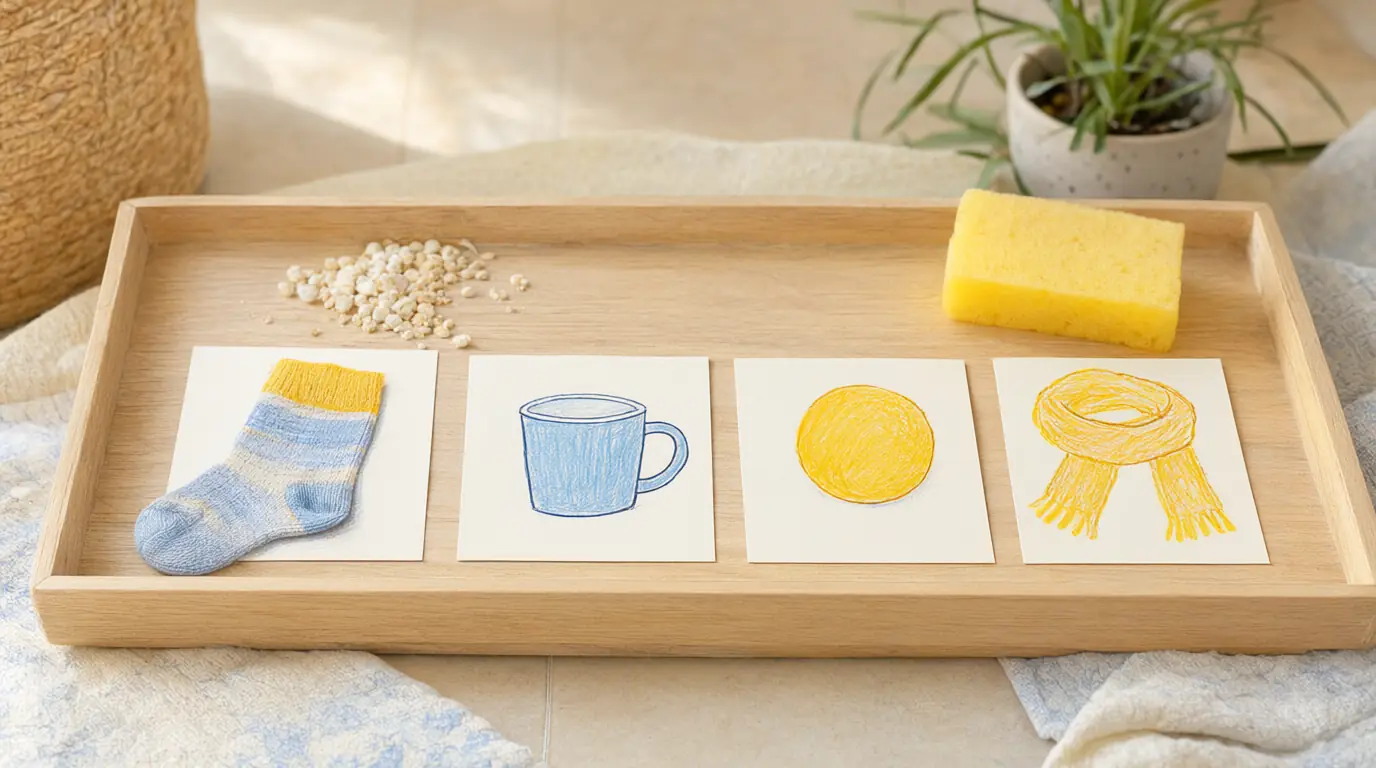
Make it your own: Younger children can sort just three objects into two clear groups. Older children can write or draw their own labels and look for an object that fits two groups at once. If your child prefers moving to talking, ask them to place the object first and explain afterwards.
Two objects, one difference
Putting two similar objects together gives children a reason to use precise words such as smooth, rough, heavier, wider or bendy. The aim is not a correct list but a closer look. Model one observation, then wait; children often notice details adults miss. Comparing also gives you a gentle way to introduce a word your child has not chosen yet.
You’ll need
- 2 similar objects, such as two spoons or two cups
- A cloth
- Paper and crayons (optional)
How to do it
- Place two similar objects on a cloth and cover them with your hand.
- Reveal both and ask what is the same.
- Ask what is different; accept any real difference, including colour, size or sound.
- Offer one precise word, such as wider or heavier, and use it in a sentence.
- Let your child choose another pair from the room and repeat.
- Draw one object on paper and add the new word as a label.
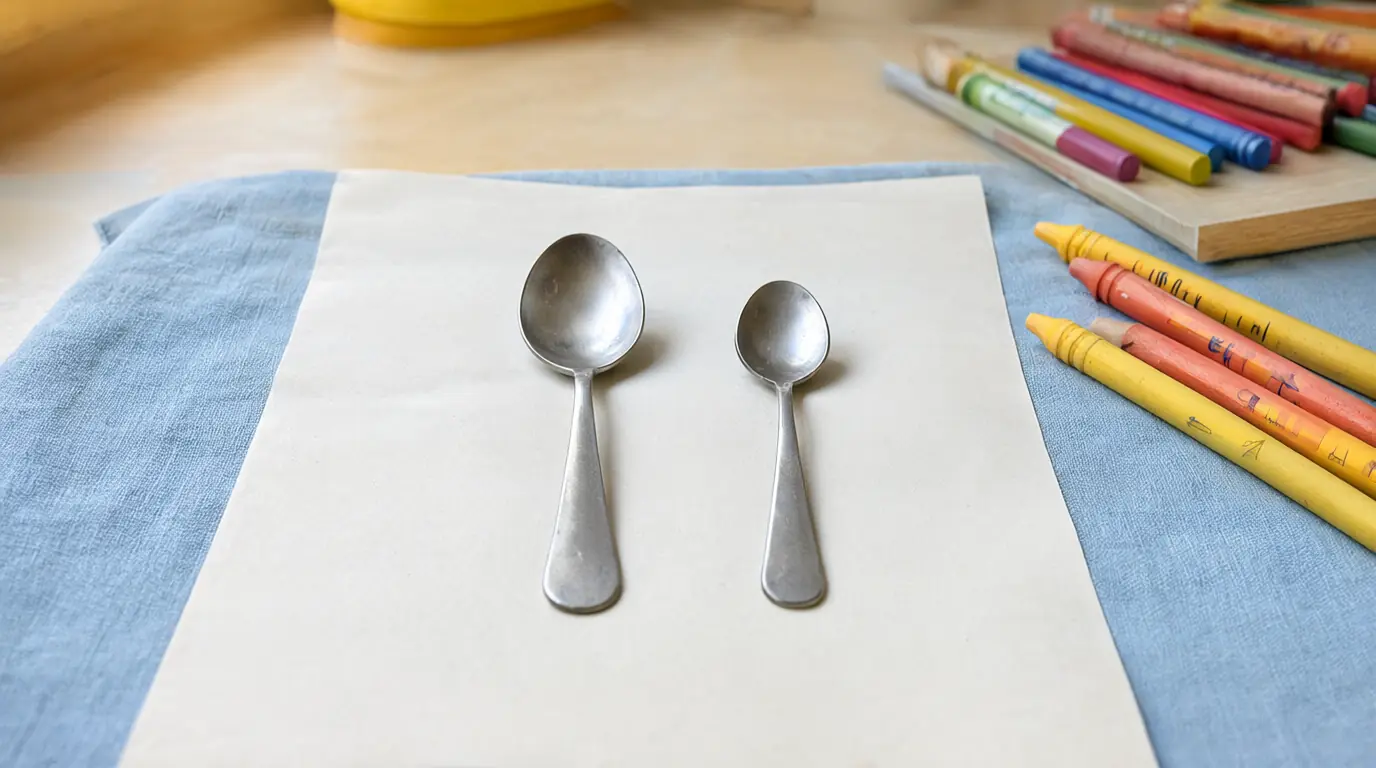
Make it your own: Younger children can compare a big spoon and a small spoon and use just two words: big and little. Older children can compare three objects and order them from lightest to heaviest. If your child is blind or has low vision, choose objects with clear textures and sounds and describe them together.
Act the verb, then say it
Some words are easier to learn with the whole body. Acting out verbs such as stir, squeeze, stretch, tiptoe and balance gives children a physical memory to attach to the word. The action also slows the conversation down, which helps a child who needs extra time to find the right word.
You’ll need
- A clear space
- A scarf or tea towel
- A wooden spoon and a plastic bowl
How to do it
- Choose three action words your child knows, such as jump, stir and stretch.
- Say one word and act it out together, exaggerating the movement.
- Add a new word, such as squeeze, and show it with a sponge or scarf.
- Let your child choose a word for you to act out.
- Ask your child to use the word in a sentence about their own day.
- Finish with a slow, quiet action such as tiptoe, then sit down together.
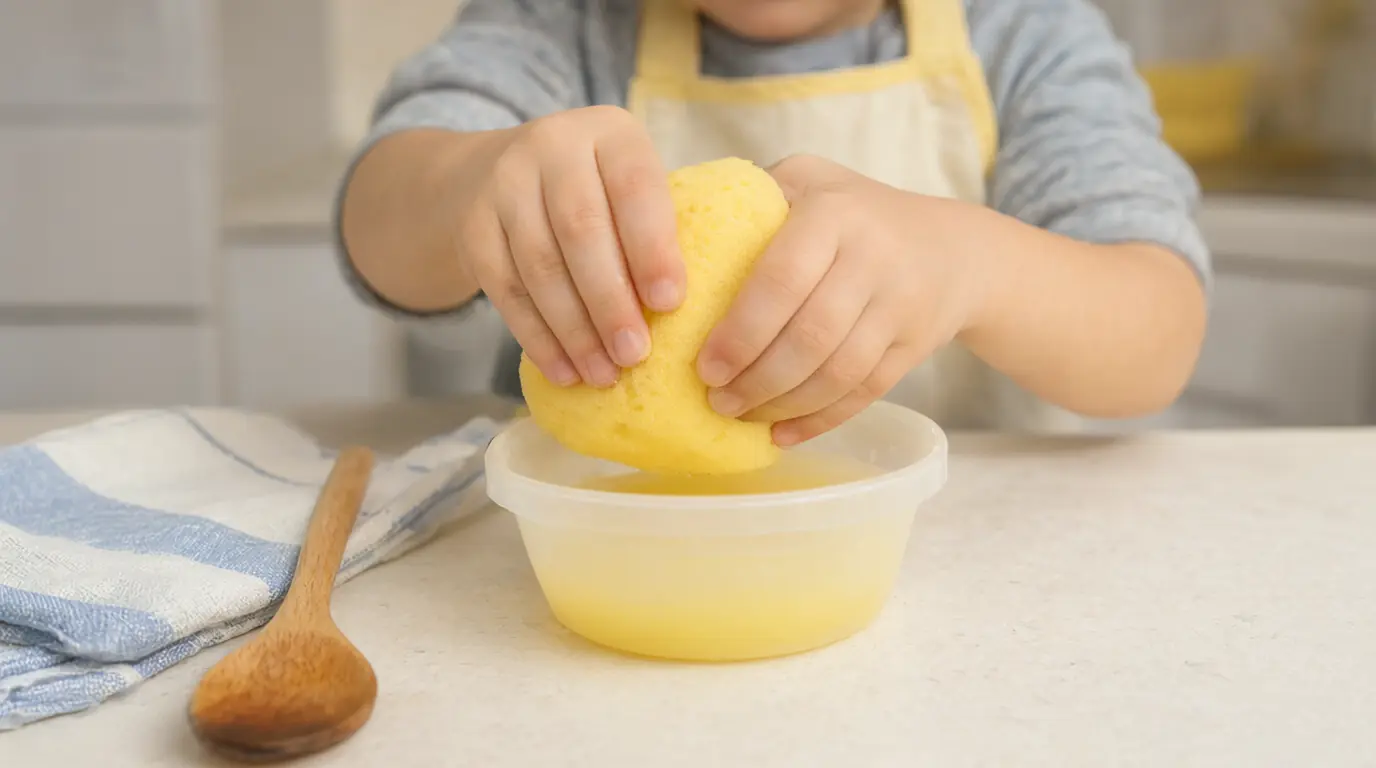
Make it your own: Younger children can act out two familiar actions with no new words. Older children can combine two verbs, such as stretch and balance, or explain a word to someone else. A child with limited mobility can act out words with hands, face or voice while you copy.
A new word in real routines
A new word sticks when it turns up in several real moments, not just one game. Choose an everyday word such as slippery, damp, sturdy or snug and use it while dressing, washing or carrying. Each time the word fits, your child hears it in a slightly different sentence, which builds a fuller meaning.
You’ll need
- A small card and crayons (optional)
How to do it
- Choose one word that fits your week, such as slippery, damp, sturdy or snug.
- Say it naturally when the moment arrives: This step is slippery after the rain.
- Pause and let your child repeat it or finish the sentence if they want to.
- Ask a question that needs the word: Which shoes are best for a slippery path?
- Invite your child to use the word with a different person or in a drawing.
- Retire the word after a few days and choose another; there is no test at the end.
Make it your own: Younger children may simply hear the word and point to an example. Older children can collect three examples and explain what they have in common. If your family speaks more than one language, use the new word alongside the word your child already knows at home.

Make it work for your family
If your child gives one-word answers, offer a choice instead of another open question: Is the sponge rough or smooth? If they guess the object immediately, ask for a second clue about how it feels. Stop when attention drifts and return another day; short, repeated games teach more than one long session. Avoid correcting a wrong word in the moment. Repeat their idea back with the accurate word, then carry on.
Some children need to hold the object while they talk, and others need to move before they can listen. Build either into the game rather than treating it as a distraction. Keep the same small basket for a week so the vocabulary has time to settle. For more talking games, try these preschool activities or simple activities for three-year-olds.

Parents also ask
What are good vocabulary games for kids?
Games that ask a child to describe, sort, compare or act out a word work well because they use the word for a real purpose. Try a hidden-object guessing bag, a word-family tray, two-object comparisons or acting out action words. Keep sessions short and use objects your child already knows.
How many new words should a child learn at a time?
One or two useful words at a time is usually enough for young children. Choose words that come up naturally in your day, such as slippery, damp, sturdy or snug, and repeat them in different sentences. A child needs to hear and use a word many times before it feels familiar, so depth matters more than a long list.
How do I help a child who cannot think of a describing word?
Give a choice rather than an open prompt: Is it rough or smooth? Offer a word and use it in a short sentence, then ask your child to repeat it only if they want to. You can also point to the feature and describe it yourself. Waiting a few seconds often helps more than adding another question.
Sources & further reading
Explore these primary sources for further context on this topic.
Choose materials and activities that suit your child, supervise as needed and adapt the ideas to their interests and abilities. About our editorial approach