7 min read
 In this article
A little preparation
Pick a spot where your child can spread out and where you can sit beside them, such as a clear piece of floor or a low table. Gather the materials for one activity only, and place them in a basket or tray so the choices are visible without being overwhelming. Check that there are no small parts that could be a choking hazard, and keep anything fragile out of reach.
Explain the first step in a sentence, then watch what your child does. A three-year-old will often change the rules, and that is part of learning, so be ready to follow the new version. Keep sessions short, ten to fifteen minutes, and stop when your child's interest drifts. You can always return to the activity later in the day or the next day. Offer help when they ask for it rather than before, and describe what you see instead of asking a stream of questions. Water and food activities are better placed on a towel or tray near a sink, with an adult close by.

What to know and try
A toy-animal journey
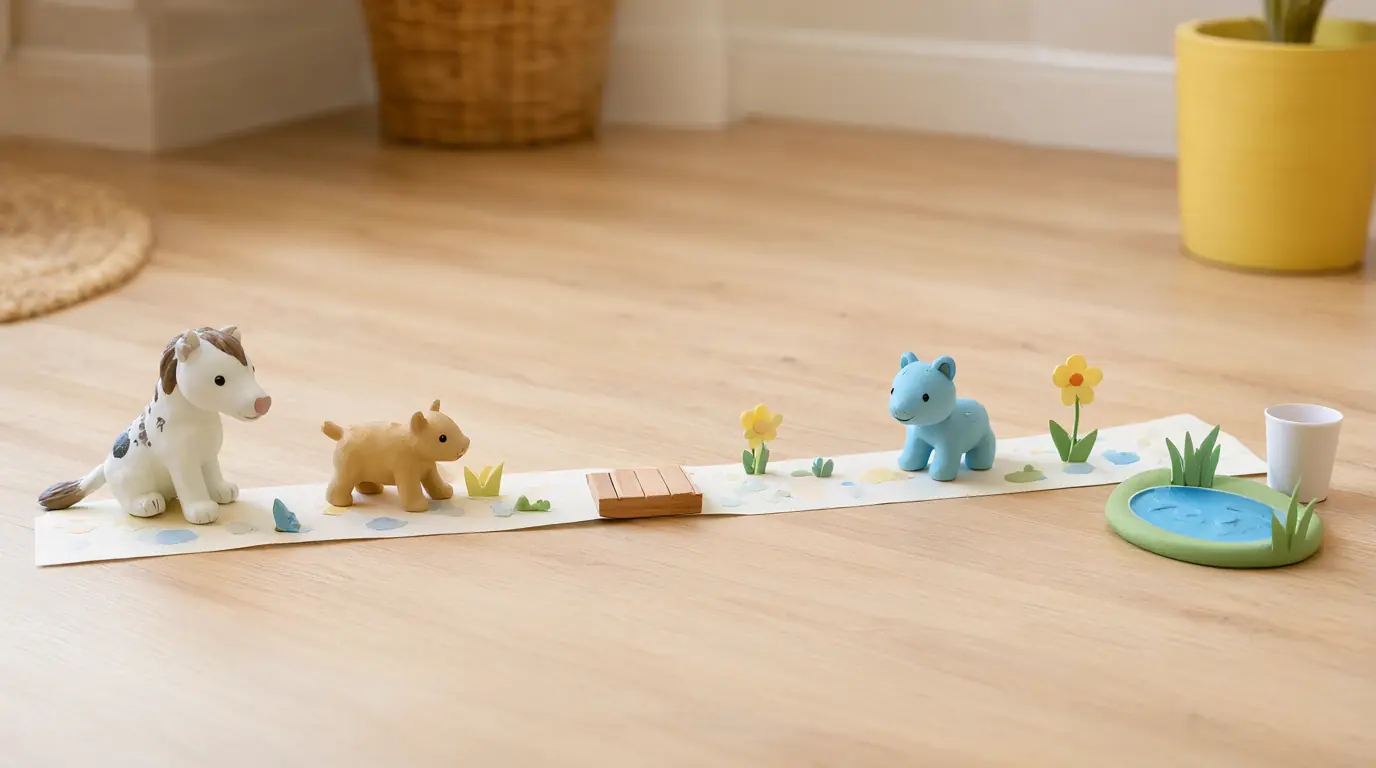
A strip of paper becomes a path, and two large toy animals set off on a trip. Children invent where the animals are going and what they need on the way. It encourages storytelling and planning and works well with whatever animals you have to hand.
 You’ll need
- A long strip of paper or a scarf as a path
- 2 large toy animals
- 3 or 4 blocks for a bridge or house
- A small cup or bowl for a pond
How to do it
- Lay the path on the floor and put the two animals at the start.
- Ask your child where they are going.
- Build a stopping place with the blocks, such as a house or a bridge.
- Move the animals along the path, letting your child narrate.
- Add a problem, such as a pond to cross, and ask what the animals could do.
- Let your child change the story however they like.
Make it your own: Younger children can simply walk the animal along the path. Older children can add a third animal, a map or a destination chosen by drawing.
Set a table for three
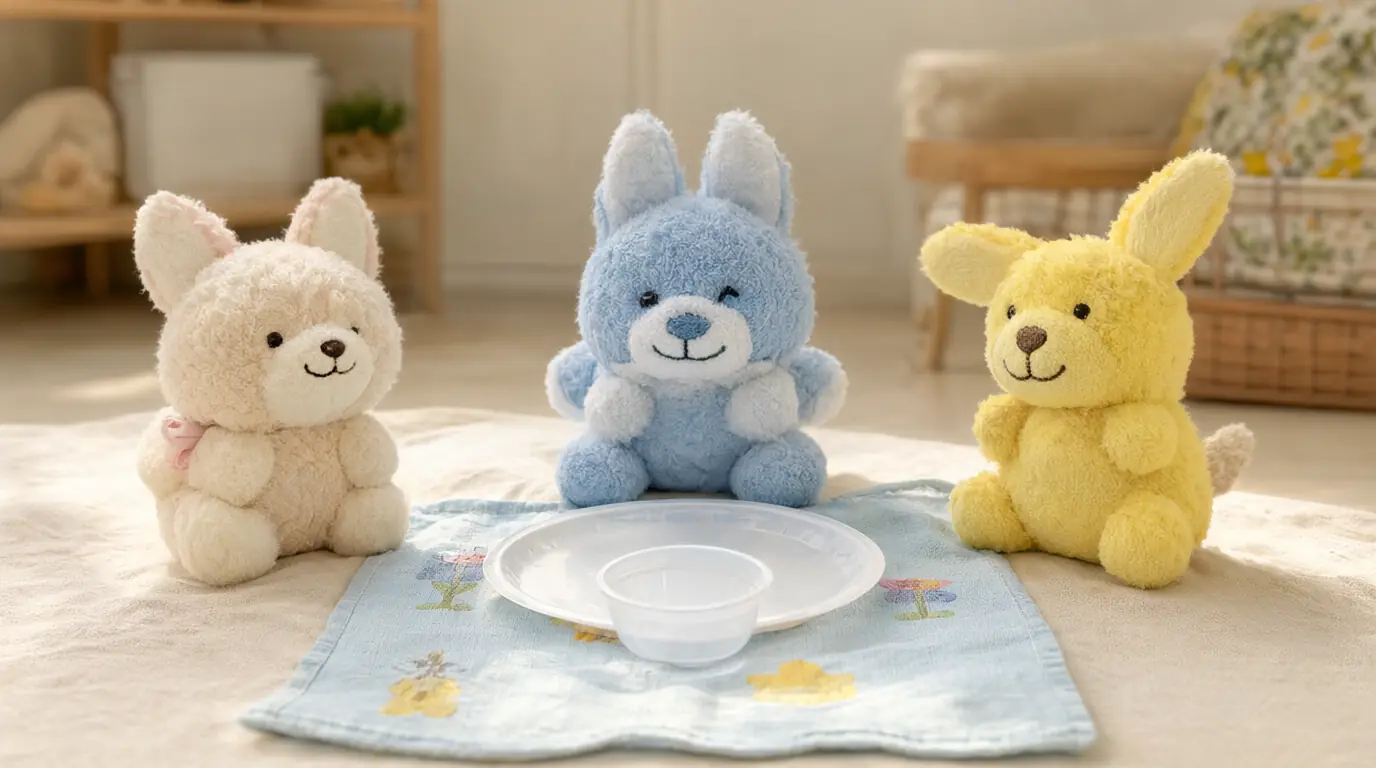
Setting a small table for three soft-toy guests puts counting to work. Each guest needs one plate and one cup, which gives a real reason to match one to one. It also introduces words like 'missing' and 'enough' in a context that feels like play.
You’ll need
- 3 soft toys or dolls
- 3 plastic plates and 3 cups
- A small cloth for a table
- A basket to carry the items
How to do it
- Seat the three soft toys around the cloth.
- Ask your child to put out one plate for each guest.
- Count aloud while touching each plate and each guest.
- Place a cup by each plate and ask if anyone is missing something.
- Take away one cup and ask what has changed.
- Serve pretend tea and say thank you.
Make it your own: Younger children can set out just two places. Older children can add a spoon or napkin for each guest or set the table for a number you choose.
A picture shopping list
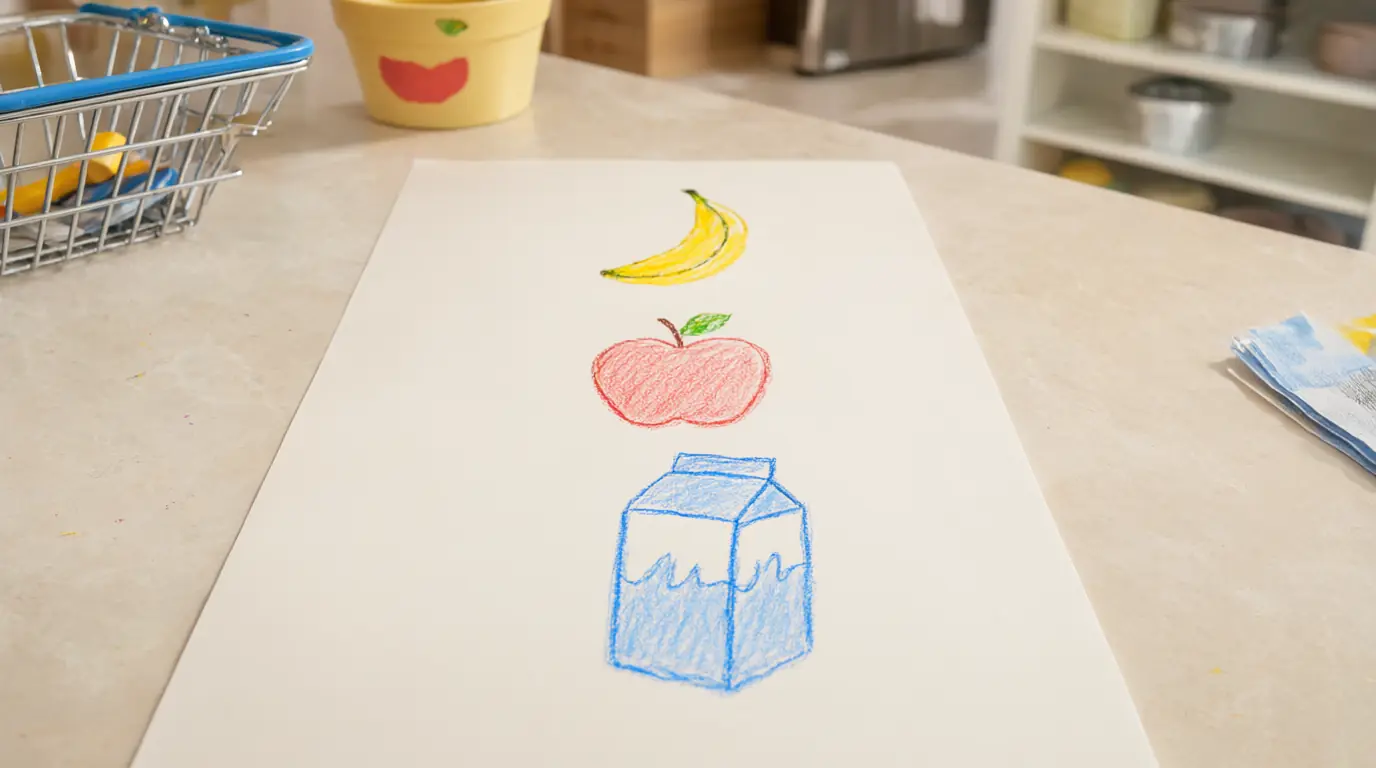
Drawing a list gives early marks a purpose. Your child draws three things to collect, then you carry the list around the room and find each one. It shows that pictures can carry a message and gives a gentle first taste of what writing is for.
You’ll need
- A small piece of paper or a notebook
- Crayons or a thick pencil
- A bag or basket
- 3 items around the house, such as a sock, a book and a spoon
How to do it
- Choose three things to find around the room.
- Ask your child to draw or choose a picture for each one.
- Read the list together by pointing to each picture.
- Carry the list and basket around the room to find each item.
- Tick or scribble over each picture as the item goes in the basket.
- Unload the basket and name each item.
Make it your own: Younger children can draw one scribble per item. Older children can try writing the first letter of each word or add a number beside each picture.
Change one part of a story
After reading a book your child knows well, wonder what might happen if one thing were different. Acting out the change with toys encourages imagination, cause and effect and early storytelling. Any answer your child gives is welcome, so try to follow it rather than correct it.
You’ll need
- A familiar picture book
- 2 or 3 toys that match the story
- A blanket for a setting
- A cushion to sit on
How to do it
- Read the book together and choose a favourite moment.
- Ask 'what if' something changed, such as the character finding a different object.
- Pick toys to act it out on the blanket.
- Follow your child's version of what happens next.
- Add one short comment to help the story along.
- End by returning to the book for the real ending.
Make it your own: Younger children can just choose a toy to do something new. Older children can invent an ending and draw a picture of it.
Pour, scoop and fill tray
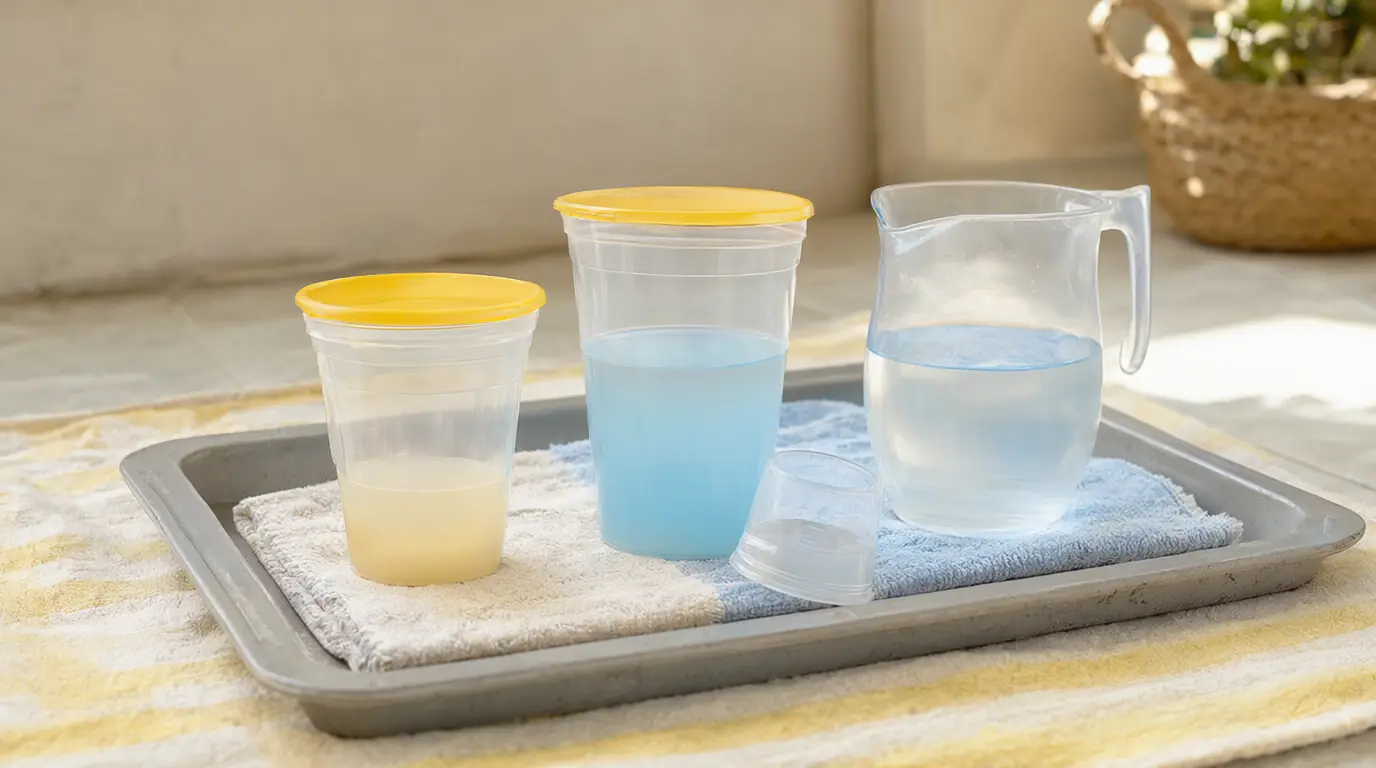
A tray of water or dry rice with cups and spoons is a small laboratory for three-year-olds. Pouring and scooping practise hand control, and filling a cup to the top helps children feel how much a container holds. It is calm and repeatable.
You’ll need
- A baking tray with a raised edge
- 2 or 3 plastic cups of different sizes
- A small jug
- A towel and a little water or dry rice
How to do it
- Put the tray on a towel on the floor or low table.
- Add a little water or rice to the tray and a jug of more.
- Show how to pour from the jug into a cup.
- Let your child try each cup and notice which holds more.
- Ask what will happen if you pour the big cup into the small cup.
- Wipe up together when done.
Make it your own: Younger children can use a scoop and a single bowl. Older children can predict whether a cup will overflow before pouring.

Make it work for your family
Expect a three-year-old to want to do it themselves, to refuse and then say yes ten minutes later. If a game stalls, change one thing such as the toy, the place or your own role in it, rather than pushing harder. Children at this age often play best when they feel in charge, so give a small choice: 'Would you like the bear or the rabbit to go first?'
Avoid turning every activity into a quiz. Instead of asking 'how many?' count aloud together while touching each item. Repeating the same game several days in a row is normal and valuable, because each time your child adds a new detail. For more age-matched ideas, see activities for 2-year-olds and activities for 4-year-olds, or try the Weebou matching game on a screen when you want a short, calm change of pace.

Parents also ask
What are good activities for a 3-year-old at home?
Pretend play with toys, setting a table, pouring water, simple drawing and looking at picture books all suit this age. Keep them short, use ordinary household items and let your child lead the details.
How long can a 3-year-old focus on one activity?
It varies a lot, but ten to fifteen minutes is common for an activity they enjoy. Some children do much less and some much more. Follow your child's interest, and return to the same idea later in the day or on another day.
What should a 3-year-old be learning?
Children of this age are usually practising talking in short sentences, pretend play, counting a few objects and using their hands more skilfully. Each child develops at their own pace, so speak with your health visitor or early-years teacher if you have worries.
Sources & further reading
Explore these primary sources for further context on this topic.
Choose materials and activities that suit your child, supervise as needed and adapt the ideas to their interests and abilities. About our editorial approach