Weebou Editorial Team
 7 min read
 In this article
A little preparation
Offer one invitation at a time and keep the choice of materials small: a dozen blocks, a few figures and a sheet of paper are enough. Lay them out on a table or floor where your child can reach them without asking, and say in one sentence what the idea is. Then step back, sit nearby and watch before you join in.
Make room for different ways of taking part. A child who prefers to talk, draw, point, build or act should all be able to contribute, and any of them counts. Aim for around fifteen to twenty minutes but let your child decide when they are finished. Put the project on a shelf or a tray rather than clearing it away, so that it can be revisited the next day with new details. Keep an eye out for what your child returns to, since that is a good clue to what to offer next. Outdoor time, rest and unplanned play are just as important as any planned activity.
What to know and try
Open a pretend market
A table with a few pretend goods and picture labels becomes a market. Your child can be the shopper, the seller or the organiser, and may change roles as often as they wish. Counting items and writing signs have a real purpose here, and speaking and listening come naturally.
 You’ll need
- 6 to 8 large pretend items, such as toy fruit or cloth bags
- Small cards for price signs
- A basket and a toy purse
- Pennies or paper tokens
How to do it
- Arrange the items on the table and name them together.
- Make a picture label for each one and place it by the item.
- Decide on a price in tokens, such as one token each.
- Take turns being the shopper and the seller.
- Count the items in the basket and the tokens in the purse.
- Close the market with a tidy-up and a 'sold out' sign.
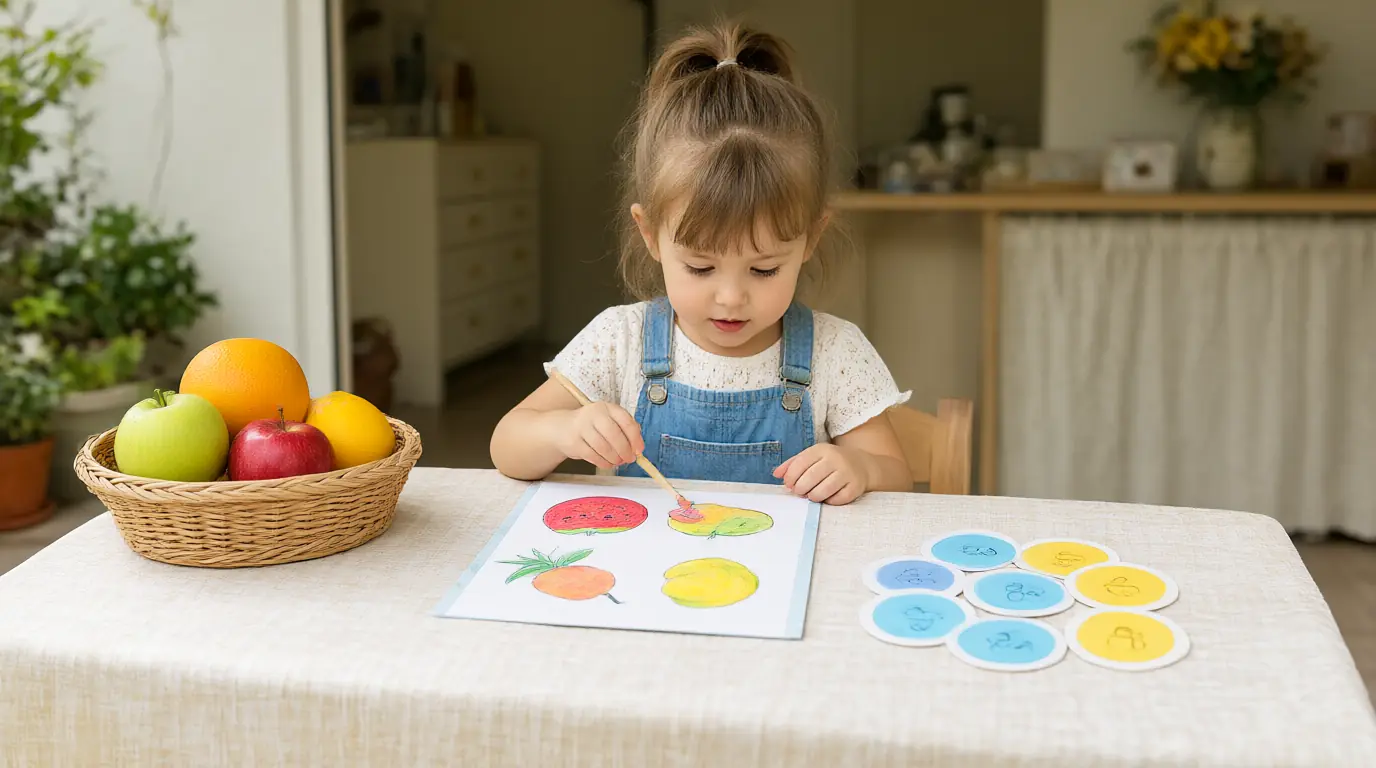
Make it your own: Younger children can simply put items in a basket and name them. Older children can write a letter or number on each sign or work out how many tokens they need for two items.
Solve a block-space problem
Building a doorway that a toy cannot fit through poses a real problem. Your child can test the toy against the gap, compare widths and heights and decide what needs to change. Both a bigger door and a different route are good answers.
You’ll need
- 10 to 15 wooden blocks
- A toy figure or vehicle
- A strip of paper to use as a measure
- A flat floor area
How to do it
- Build a simple wall with a door gap that is too small for the toy.
- Ask your child to try the toy through the door and see what happens.
- Wonder aloud what could change: the door, the toy or the route.
- Let your child test an idea, such as removing a block.
- Check again by pushing the toy through.
- Talk about what worked and why.
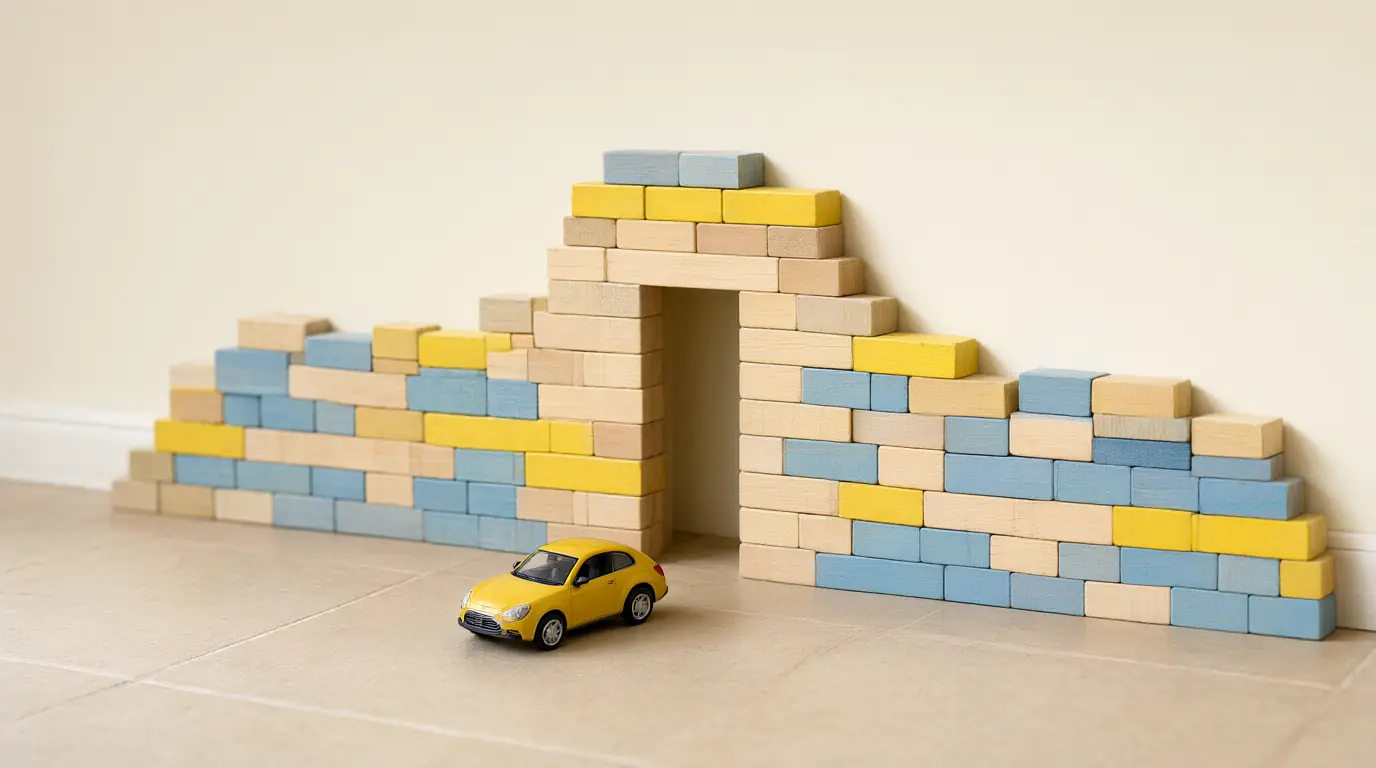
Make it your own: Younger children can fit the toy through a larger gap and enjoy the knock-over. Older children can measure the toy and the gap with a paper strip.
Make a story basket
Three or four everyday objects in a basket can start a story. Your child picks them out one by one and weaves them in, which stretches memory and imagination. Adults can model by starting with a sentence and then pausing.
You’ll need
- A basket or bag
- 3 or 4 large objects such as a toy dog, a key, a shell and a small cup
- A picture book to link the ideas, optional
How to do it
- Show your child the basket and let them pick out one object.
- Start a story with one sentence, such as 'Once there was a small dog who found a key.'
- Pause and let your child continue.
- Add another object and see how it fits.
- Take turns until the story reaches an ending.
- Put the objects back in the basket for next time.
Make it your own: Younger children can just name each object and act out one thing it does. Older children can draw a picture of the story afterwards or tell it to a different listener.
Create a useful picture plan
Planning a toy picnic by drawing the things you need teaches that pictures can carry a message. Your child sees how a plan helps, checks it off and adds items they forgot. This is the first step towards lists, instructions and early writing.
You’ll need
- A sheet of paper
- Crayons or a pencil
- A basket for the picnic
- A small blanket and toys
How to do it
- Decide that the toys are going on a picnic.
- Ask what they will need and draw each item as a small picture.
- Read the plan together by pointing at each picture.
- Gather the items from around the room.
- Check each picture against what is in the basket.
- Spread the blanket and have the picnic.
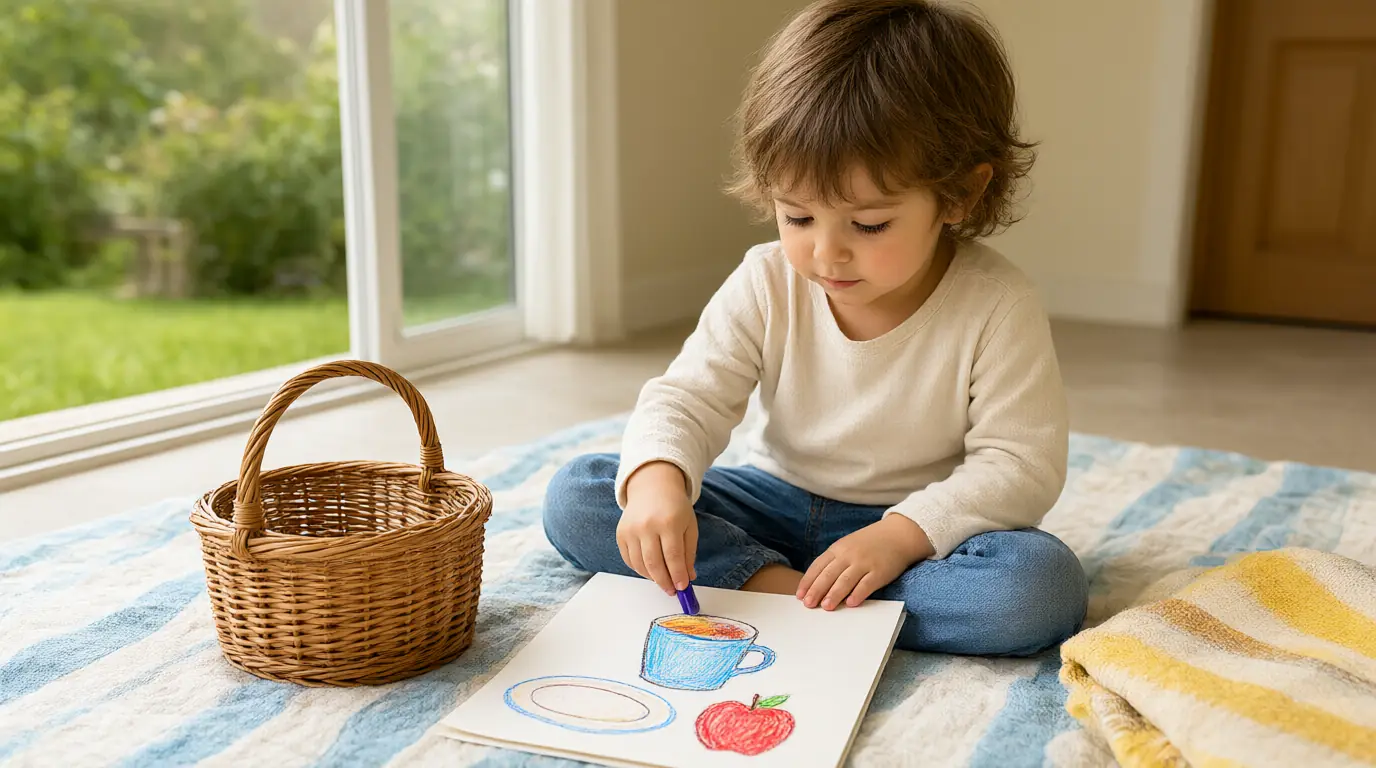
Make it your own: Younger children can draw two items. Older children can number the pictures or add a first letter for each.
A colour-mixing table
Mixing two primary colours is a small surprise every time. Children make their own greens, oranges and purples and notice how much of each colour changes the result. It brings together looking, comparing and describing in a simple, repeatable way.
You’ll need
- 3 colours of washable paint in small pots
- A paper palette or an old tray
- Thick brushes or sponges
- Paper and an apron
How to do it
- Put a small amount of two colours on the palette, side by side.
- Let your child stir them together with a brush.
- Ask what colour appeared and what they would call it.
- Try a different amount of each colour and compare.
- Paint a stripe on the paper with each new colour.
- Leave to dry and talk about the favourite mix.
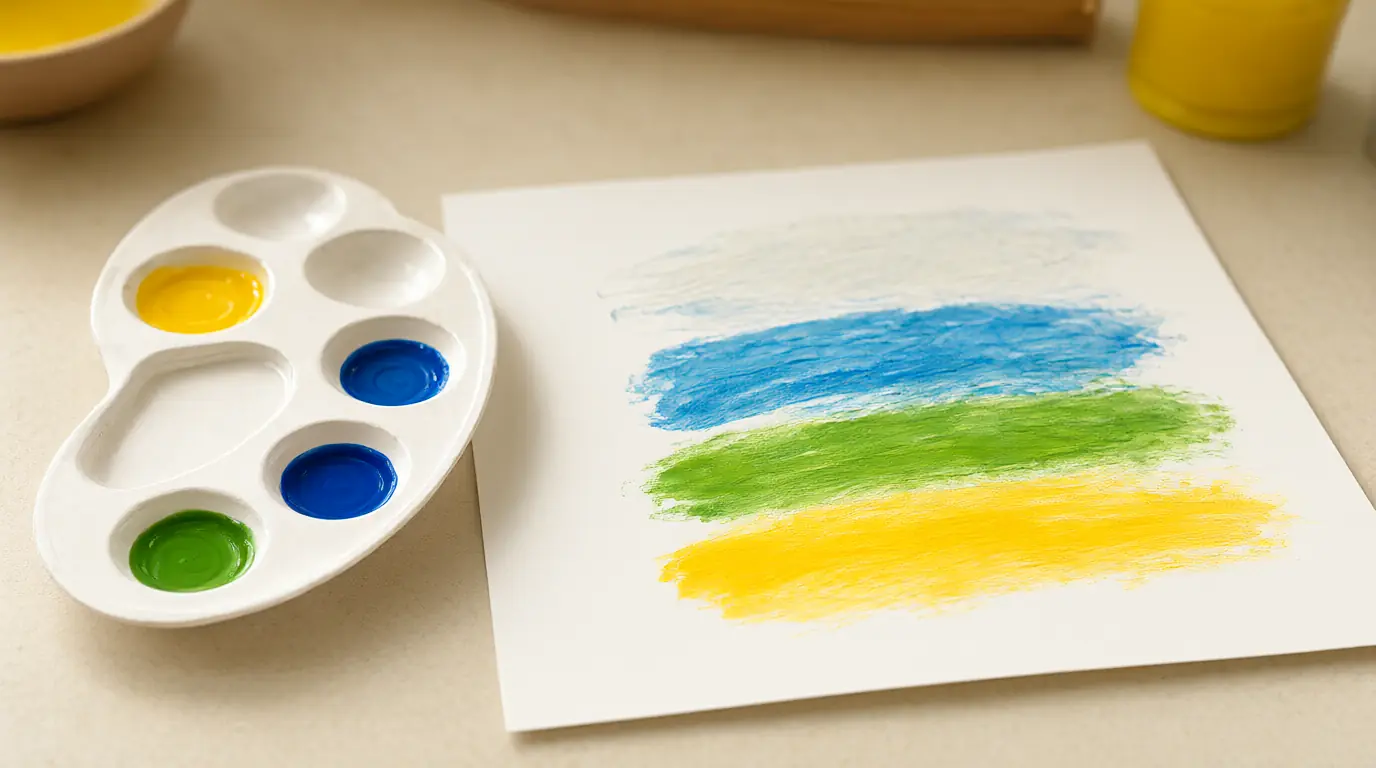
Make it your own: Younger children can use a single mix and a large brush. Older children can predict which colour they will make before mixing.

Make it work for your family
Resist the urge to add more as soon as your child pauses. Children often come back to the same idea with a fresh detail after a break, and a slowly rotating set of materials does more than a new activity every hour. If your child asks a question, such as 'why does it fall?', treat it as the next activity.
Talk to your child's preschool or nursery about what they are doing so that you can build on it rather than repeat it. Some children enjoy a lot of structured play and others need more time to roam, and both are fine. Look at what a child should learn in preschool for a broader picture, or see preschool activities at home for ideas built around daily routines.

Parents also ask
What are the best preschool activities for 3-year-olds?
Pretend play, building, drawing, simple stories and sensory play such as pouring water all work well. Keep them short, use familiar materials and let your child lead the details.
How many activities should a preschooler do in a day?
There is no set number. Plenty of free play, outdoor time, meals and rest matter as much as planned activities. One or two invitations a day, each as long as your child enjoys it, is often enough.
Do preschoolers need worksheets?
Not at this age. Children learn through hands-on play, talking, drawing and movement. If your child enjoys tracing or drawing letters, that is fine, but it does not need to replace play or be a daily task.
Sources & further reading
Explore these primary sources for further context on this topic.
Choose materials and activities that suit your child, supervise as needed and adapt the ideas to their interests and abilities. About our editorial approach