Weebou Editorial Team
 7 min read
 In this article
A little preparation
Use a clear, level, non-slip floor with plenty of space between players. A carpet, a grass lawn or a gym mat works well; avoid tiled floors in socks. Remove furniture, toys and anything a child could trip over, and check the area before each game. Show a movement first, such as a small two-foot hop or a big step, then let children choose how big to make it. Keep jumps low and have a stop signal that everyone knows, such as a bell or the word "freeze".
Offer alternatives within every game: stepping, reaching, rolling or seated arm movements. Do not time children, race them or ask for higher jumps. A short session of ten minutes is enough, with a rest every few minutes. If you are interested in more movement ideas for small spaces, see small jumping games with easy stepping options and balance games close to the ground.

Ideas to try together
Puddle steps
Paper puddles turn stepping and small hops into a story. Children choose whether to step, hop or tiptoe, so the game suits different abilities and moods. Spacing the puddles apart gives each child room to stop and reset, and the splash-and-step rhythm gives the springy feeling that many children look for.
 You’ll need
- 6 to 8 large blue paper circles
- Masking tape to hold them down
- A clear floor
- Soft music (optional)
How to do it
- Tape the paper puddles to the floor with enough room between them to step.
- Show a wide step from one puddle to the next.
- Invite children to choose a movement: step, tiptoe or a small two-foot hop.
- Add a rain sound by tapping fingers on a table.
- Change the rule: stay still when the rain stops.
- Gather the puddles and fold them for next time.
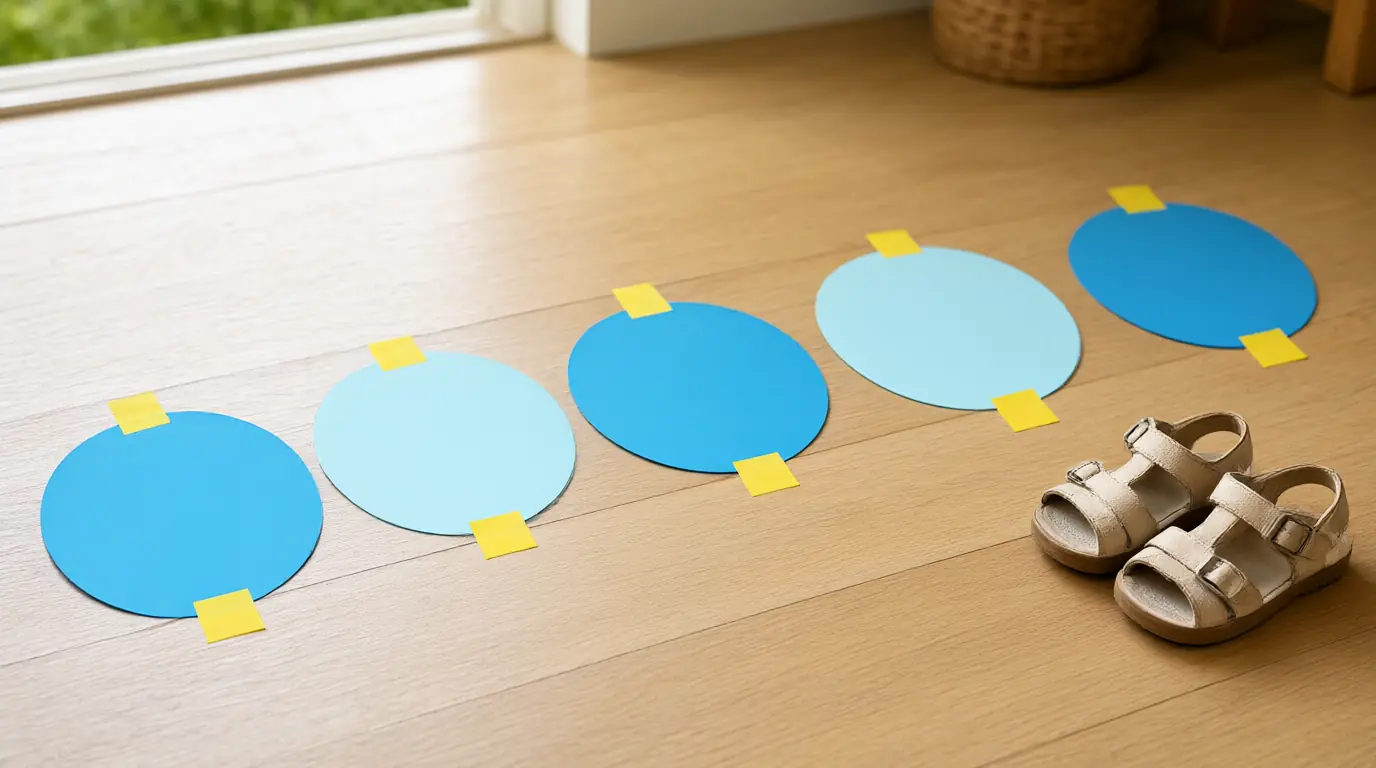
Make it your own: Younger children can step over one puddle at a time. Older children can follow a pattern such as big, small, big or count their steps between puddles.
Reach for the rainbow
Stretching toward coloured pictures gives a full-body, bouncy feeling without leaving the ground. The wall display can be moved up or down, so the height suits each child. Naming colours adds a gentle thinking task, and the seated version keeps everyone involved.
You’ll need
- Paper strips in six rainbow colours
- Tape for the wall
- A cushion mat
- A chair for the seated version
How to do it
- Tape the strips to the wall at different heights, within comfortable reach.
- Call a colour and invite children to stretch one arm toward it.
- Keep both feet flat on the floor and breathe out.
- Swap arms and try a second colour.
- Move the strips for a new game rather than asking for higher stretches.
- Finish by shaking out hands and arms.
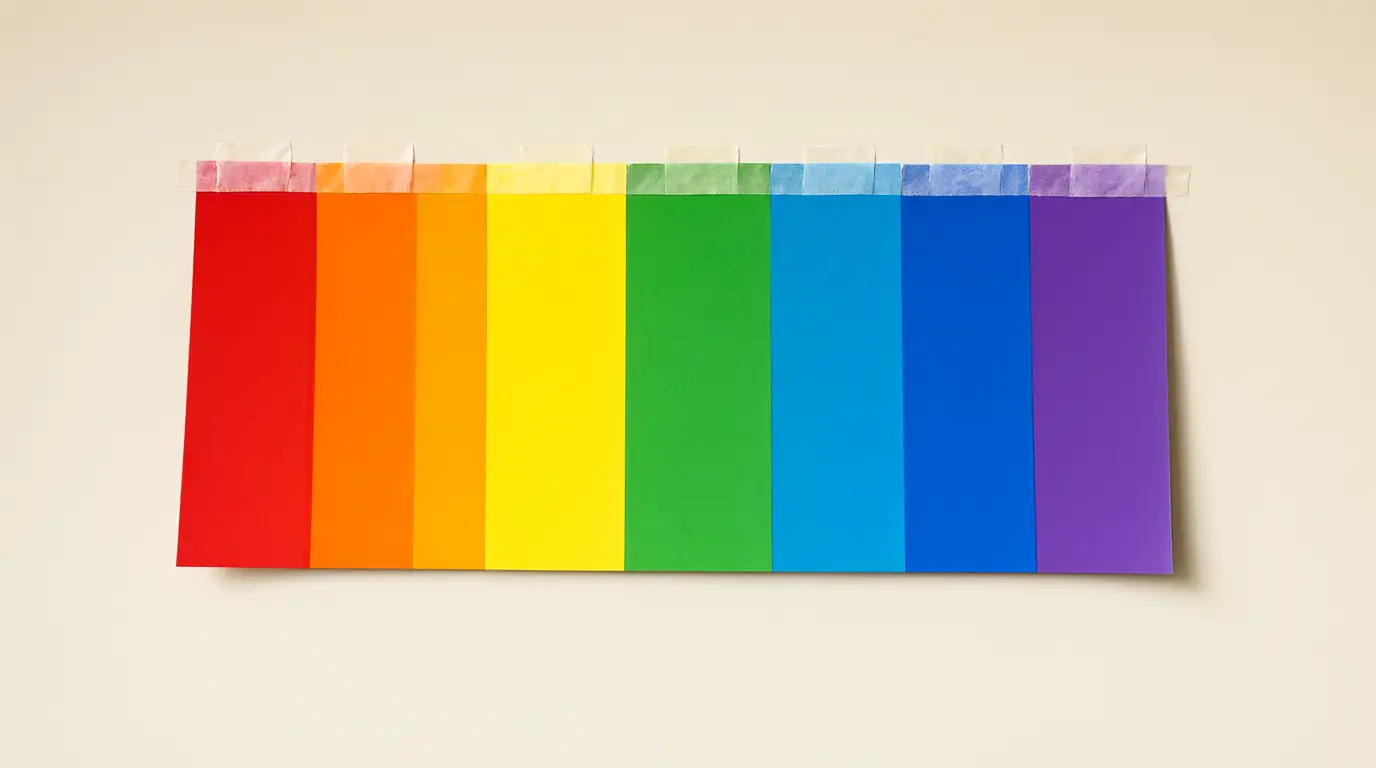
Make it your own: Younger children can stretch toward one colour at a time and sit down between. Older children can follow a two-colour sequence or choose a colour for a friend.
Ball bounce, with feet on the ground
Here the ball does the bouncing, so the child gets the springy action without leaving the floor. A soft ball bounced once and caught builds hand-eye coordination and gives a clear rhythm. Partners can take turns, and the game can be played sitting down.
You’ll need
- One large soft ball
- A taped square on the floor
- A partner
- A basket (optional)
How to do it
- Stand inside the taped square and hold the ball in two hands.
- Bounce it once on the floor and catch it.
- Try it with a clap before catching.
- Pass it to a partner who bounces it back.
- Add a rhythm: bounce, bounce, catch.
- Place the ball in the basket when you are done.
Make it your own: Younger children can roll the ball and chase it slowly. Older children can bounce and turn a full circle or throw to a target on the floor.
Animal footpath
A path of animal pictures lets children invent their own grounded versions of bouncing: slow bear steps, penguin waddles, hopping frog taps. The pictures make it easy to change the movement, and there is no need to compare who is fastest. It is also good for children who like pretend play.
You’ll need
- Six animal pictures printed or drawn on paper
- Tape
- A long floor space
- Soft music (optional)
How to do it
- Tape the animal pictures along a short path, leaving space between them.
- Stop at the first picture and ask how that animal might move.
- Try a slow, grounded version together.
- Move to the next picture and choose a new movement.
- Let the children pick the last animal and lead the group.
- Finish with a seated stretch like a sleepy cat.
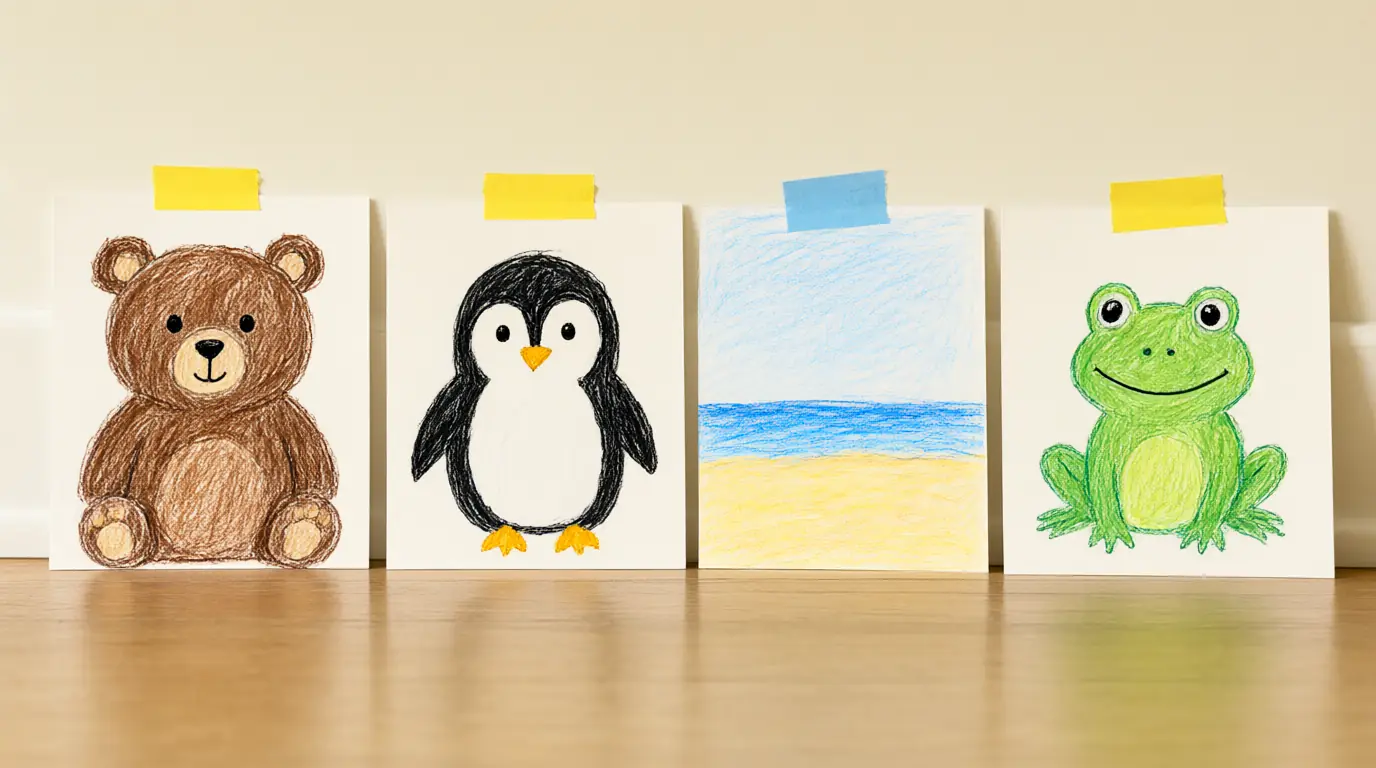
Make it your own: Younger children can pick one animal and repeat it. Older children can design their own picture cards or make up an animal that does not exist.
Slow-motion springs
Slow movement gives children the feel of bouncing without the impact. They bend knees, push gently through the feet and rise onto tiptoes, all while staying in one place. This builds balance and leg strength, and slowing down turns the game into a calm cool-down after more active play.
You’ll need
- A soft rug or mat
- A scarf to follow
- A small bell
- A clear spot for each child
How to do it
- Stand on the mat with feet apart and arms loose.
- Bend your knees slowly as if pressing a spring.
- Rise slowly onto your toes as the spring lifts.
- Repeat three times and follow a scarf moving up and down.
- Ring the bell and freeze like a statue.
- Finish with a slow breath and shake out your arms.
Make it your own: Younger children can hold a chair for balance. Older children can try a one-leg version with an adult's hand nearby or count the springs in silence.

Make it work for your family
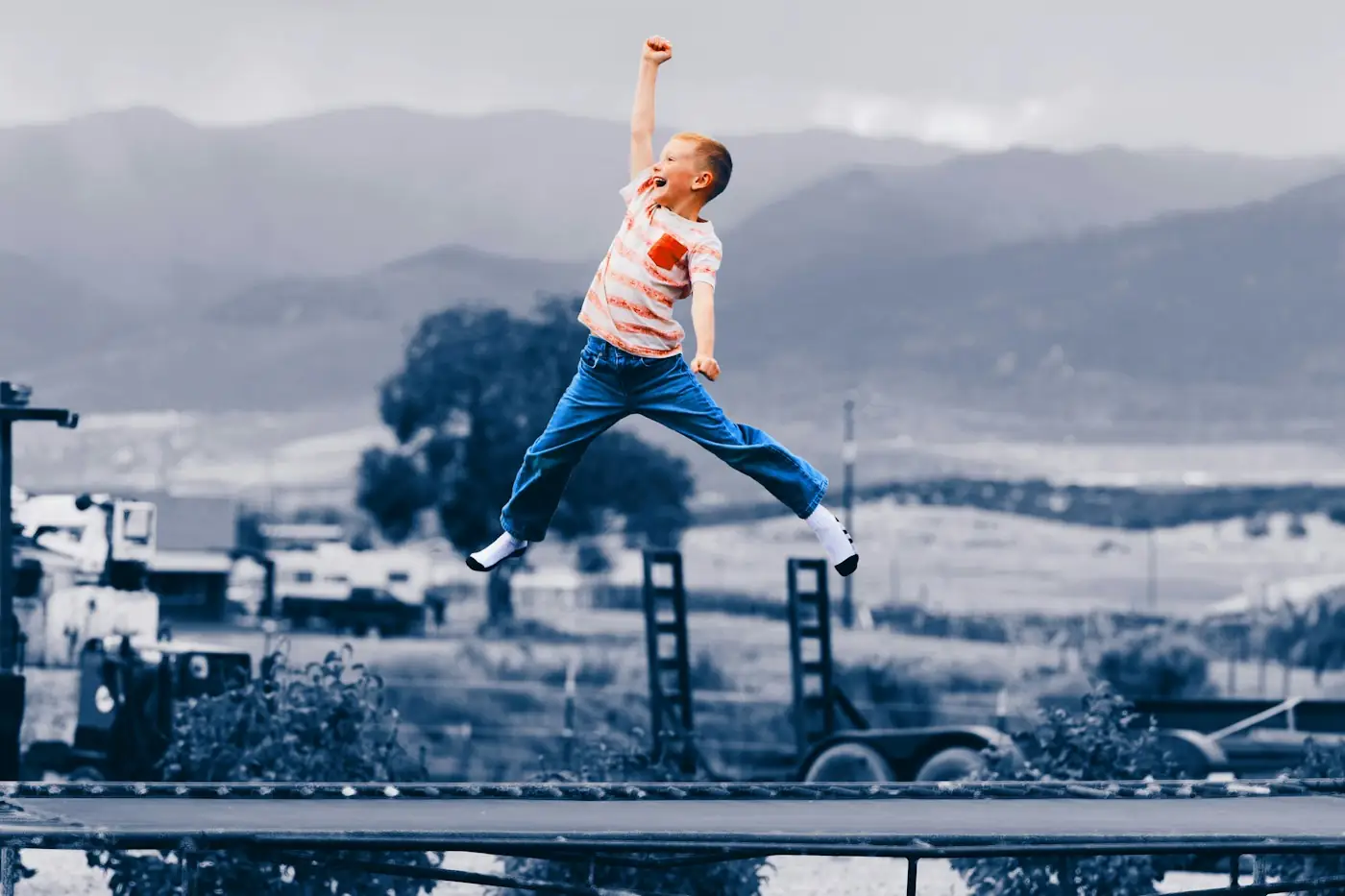
Treat these as ordinary movement invitations, not practice for trampoline tricks. There is no need to bounce higher or land farther away; the aim is to notice your body and the space around it. If a child asks to use a home trampoline or a park, talk about why you choose ground games: the rules are there to protect them, and these games are just as good for a wiggly afternoon.
Watch for tired legs, flushed cheeks or silliness turning to bumping, and switch to a slower game before anyone falls. A soft ball, a scarf and a rug are enough to keep older children busy, and younger ones are happy with big steps and clapping. For more energetic outdoor play, try yard games for an ordinary afternoon or a rainy-day game when you are stuck inside.

Parents also ask
Are trampolines safe for young children?
The American Academy of Pediatrics advises against recreational trampolines, and children under 6 are at particular risk of injury. Ground-based games give a similar springy feeling with much lower risk. If you are unsure, ask your paediatrician or doctor for guidance.
What can I do instead of a trampoline for energetic kids?
Try puddle steps, ball bounces, animal movements and slow-motion springs on a clear floor or lawn. Short bursts of active play followed by a rest suit most young children. Outdoor games like running and kicking a soft ball also help children use up energy.
How do I explain to my child why we do not use a trampoline?
Keep it simple and positive: say that young bodies can get hurt on trampolines, so you are choosing games that keep them safe. Then offer a fun alternative straight away. Children usually accept a rule more easily when there is an exciting game ready to play.
Sources & further reading
Explore these primary sources for further context on this topic.
Choose materials and activities that suit your child, supervise as needed and adapt the ideas to their interests and abilities. About our editorial approach