9 min read
 In this article
A little preparation
Walk the space before you invite your child out. Check that gates are latched, and that tools, hoses, plant food and any standing water are out of reach. Keep play well away from a road, a drive or a pond. Look at the ground too: long wet grass hides toys and a slope changes how a ball rolls. If weather or ground is against you, move to a small patch of paving or play indoors. Ten to twenty minutes is plenty for one game, and younger children often manage less.
Set one clear boundary and mark it so your child can see where the game lives. For more ideas that suit the space you actually have, see these outdoor games for kids. Put out only the materials for the game you have chosen and keep the rest in the basket. An adult stays outside and close enough to reach a child quickly, especially near water or a gate. Offer water, a hat in warm weather and a seat for yourself, then let your child make the first move instead of explaining every rule.

Ideas to try together
A pretend neighbourhood in the yard
Landmarks turn a plain patch of grass into a route with a beginning and an end, and the story gives your child a reason to remember the way. Naming places builds vocabulary, and carrying the toy between them practises a short sequence of steps. Because the route is imaginary, a small yard works as well as a large one.
 You’ll need
- Two or three soft toys, cushions or smooth stones as landmarks
- One soft toy passenger
- Chalk to draw a simple sign, if allowed
- A clear, flat route you have already walked
How to do it
- Walk the route first and name two or three places: the library, the bus stop, the cafe.
- Set one landmark at each place so your child can see the route.
- Hand over the toy passenger and ask where it wants to go first.
- Travel together, stopping at each landmark to say who lives there or what happens next.
- Let your child add a new place, then walk the whole route again in order.
- Finish by carrying the passenger home to the door.
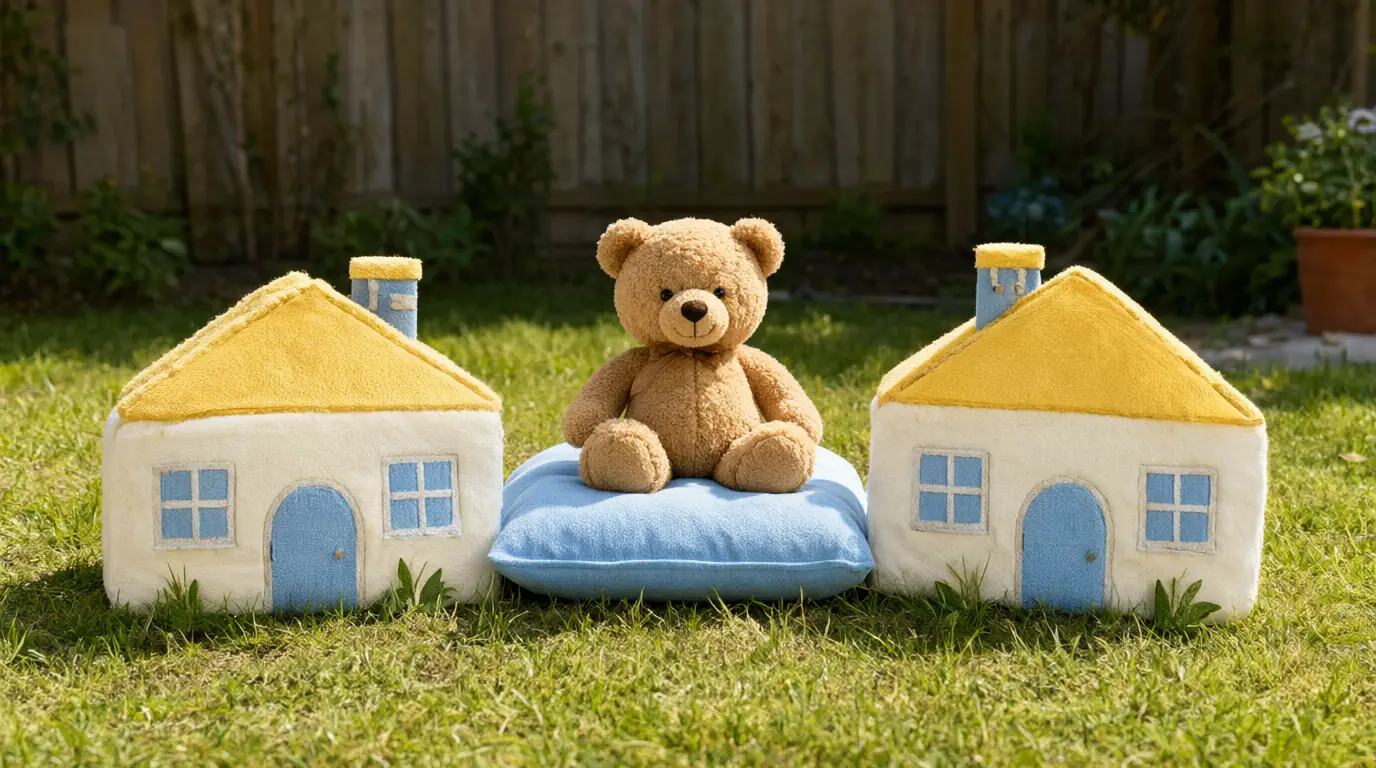
Make it your own: Younger children can visit just one place and return. Older ones can add signs, a ticket and a timetable, or swap the toy for a character they invent. On paving, use cushions as landmarks instead of digging anything into the ground.
Chalk circles to roll, throw and deliver into
Broad circles give a soft ball somewhere obvious to go, which makes aiming feel clear without turning it into a contest. Rolling is easier to control than throwing, so most children can join in straight away. Adding a matching picture to each circle turns the game into a sorting task as well.
You’ll need
- Chalk, or hoops and rope circles on grass
- A soft ball or a pair of rolled socks
- Four to six picture cards
- A clear paved or short-grass patch
How to do it
- Draw four wide circles in a row, spaced far enough to walk between.
- Draw a simple picture in each one: a sun, a leaf, a ball, a house.
- Lay the matching cards in a pile beside you.
- Ask your child to pick a card, find its circle and roll the ball into it.
- Take turns, and move the circles closer rather than throwing harder.
- Retrieve the ball together after each turn, then swap who chooses the card.
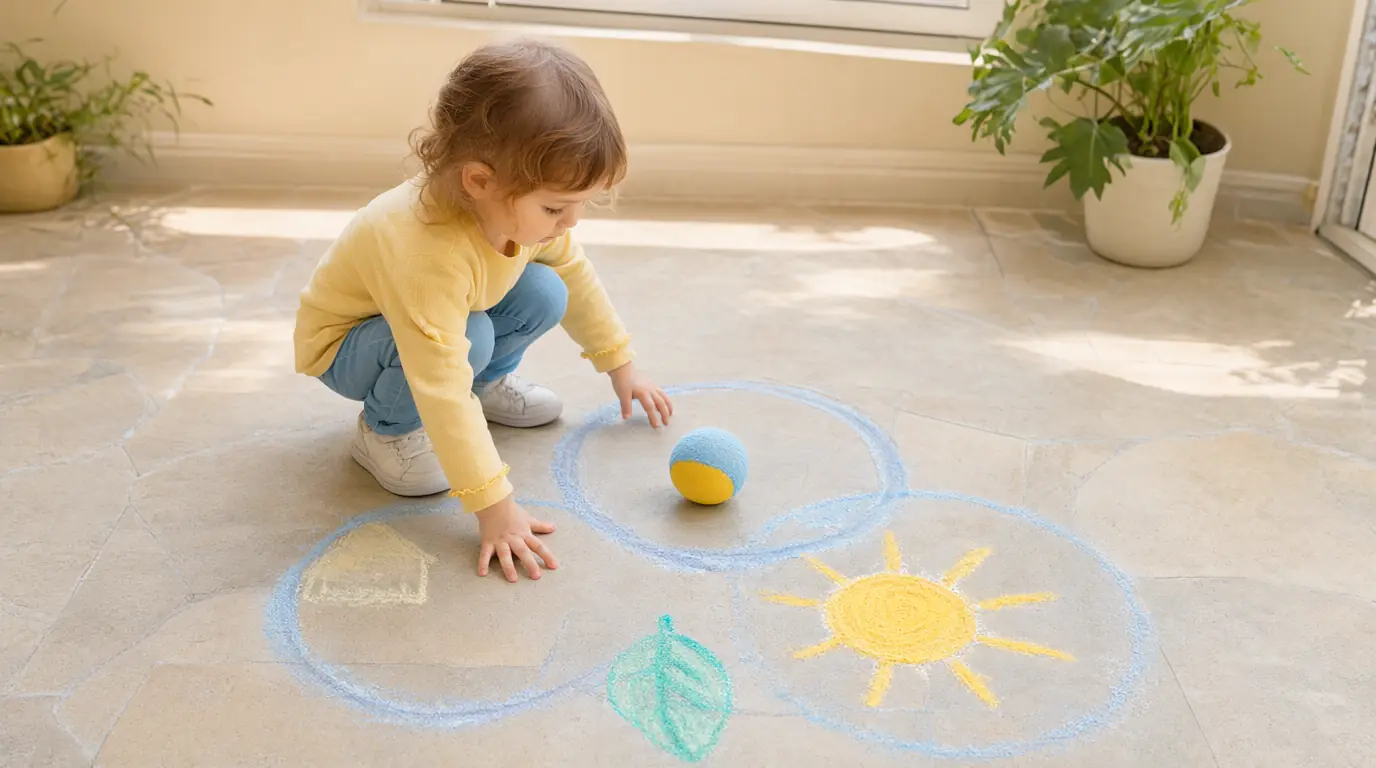
Make it your own: Toddlers can drop the ball into the nearest circle from close range, or simply carry the card to its picture. Older children can roll from a chalk line, keep score in tally marks, or invent a fifth circle and its card.
A stepping path across the grass
Laying out a path is a building job and a movement game at once. Deciding where each step goes asks your child to plan, and stepping along it practises balance and control at almost no height. Because the path can be rearranged, the same materials keep working on a new afternoon.
You’ll need
- Chalk, or six to eight paper plates, flat stones or cushions
- A small gap between each step
- Bare feet or shoes with grip
How to do it
- Ask your child to place six to eight steps in a line, leaving a small gap between each.
- Walk the path together once, naming what is on each side.
- Invite a turn with hands out for balance.
- Let your child move one step to make the path curvier.
- Add a simple challenge: pause on the middle step and count to three.
- Walk the path in the other direction to finish.
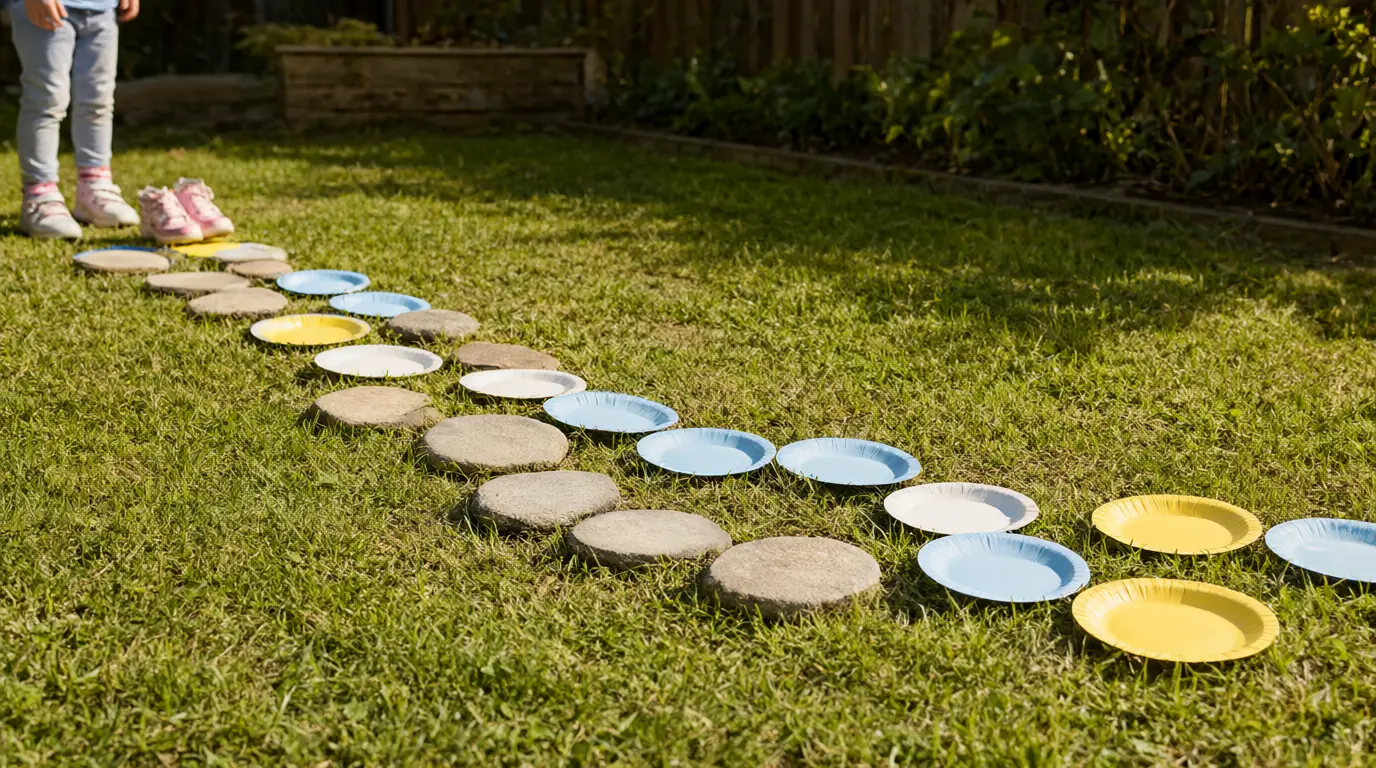
Make it your own: Place the steps touching each other for the youngest children, or draw one wide line to walk along. Older children can space steps further apart, add a turn, or carry a soft toy along the path without dropping it.
A listening stop with drawn marks
Stopping to listen is a different kind of yard game: nothing moves except attention. Your child chooses one sound, then finds a way to record it as a mark, a shape or a picture. Comparing the sheets afterwards gives you a short conversation about what each of you noticed, with no right answer.
You’ll need
- One sheet of paper and a thick crayon per person
- A dry, comfortable spot to sit
- A clipboard or a book to lean on
How to do it
- Sit together in a safe spot and stay quiet for about a minute.
- Ask each person to choose one sound: a bird, a gate, a distant car, leaves.
- Draw a mark or a picture for that sound on your sheet.
- Share what you drew and what made the sound.
- Listen again and add a second sound to the same sheet.
- Choose one sound your child wants to listen for tomorrow.
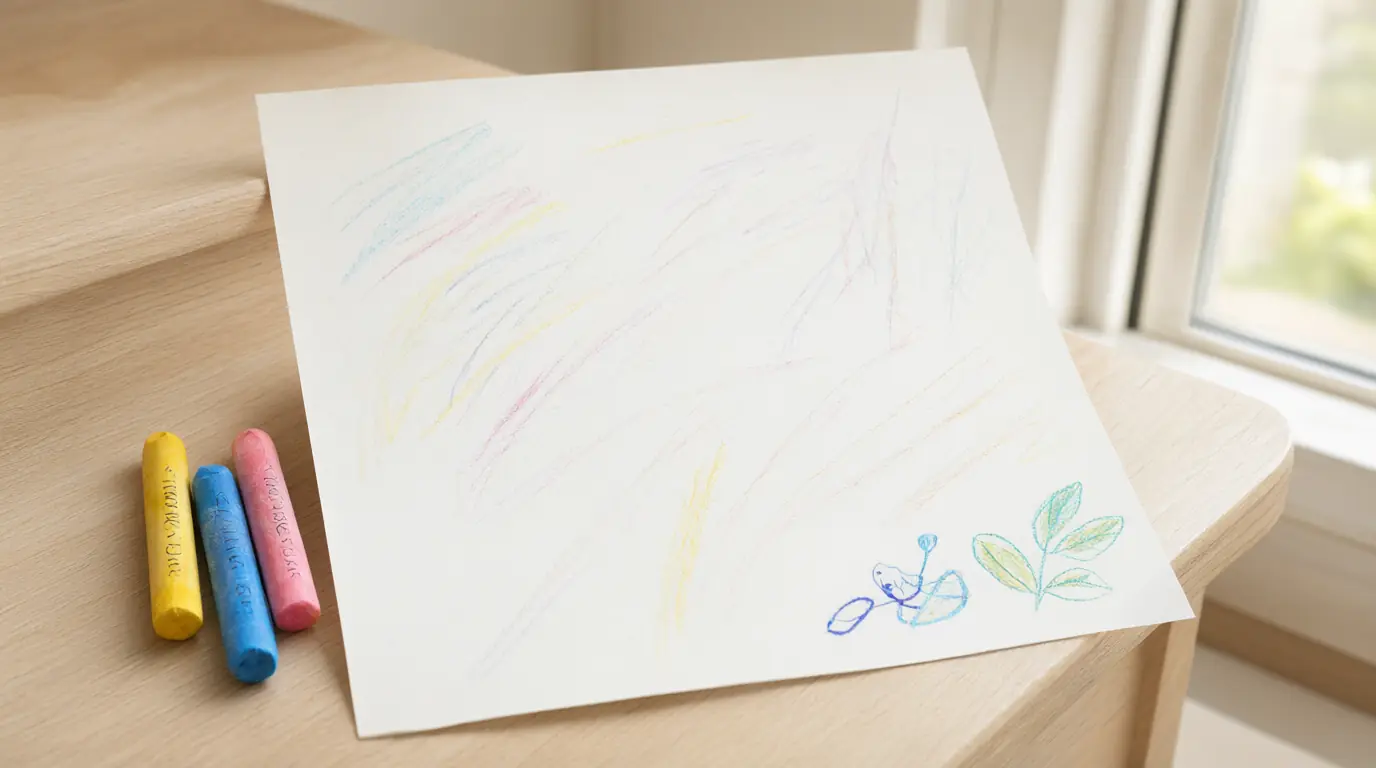
Make it your own: Younger children can point at a sound or copy a mark you make, and the minute can be much shorter. Older ones can draw a small map of where each sound came from, or guess a sound with eyes closed and check afterwards.
A pack-away mission with picture labels
Ending play with a mission gives the tidying a clear purpose and puts your child in charge of the decisions. Matching an object to its label practises sorting, and carrying one thing at a time keeps the load sensible. The basket is then ready for the next ordinary afternoon.
You’ll need
- A basket or box for play things
- Sticky notes or card with simple drawings
- The play objects from today
How to do it
- Draw a simple picture on a note for each kind of object: a ball, chalk, a card, a soft toy.
- Stick the notes on the basket or beside the storage shelf.
- Ask your child to choose one object and find its picture.
- Carry it to the right place together, one item at a time.
- Count how many objects are left and predict which finishes first.
- Put the basket by the door so it is ready next time.
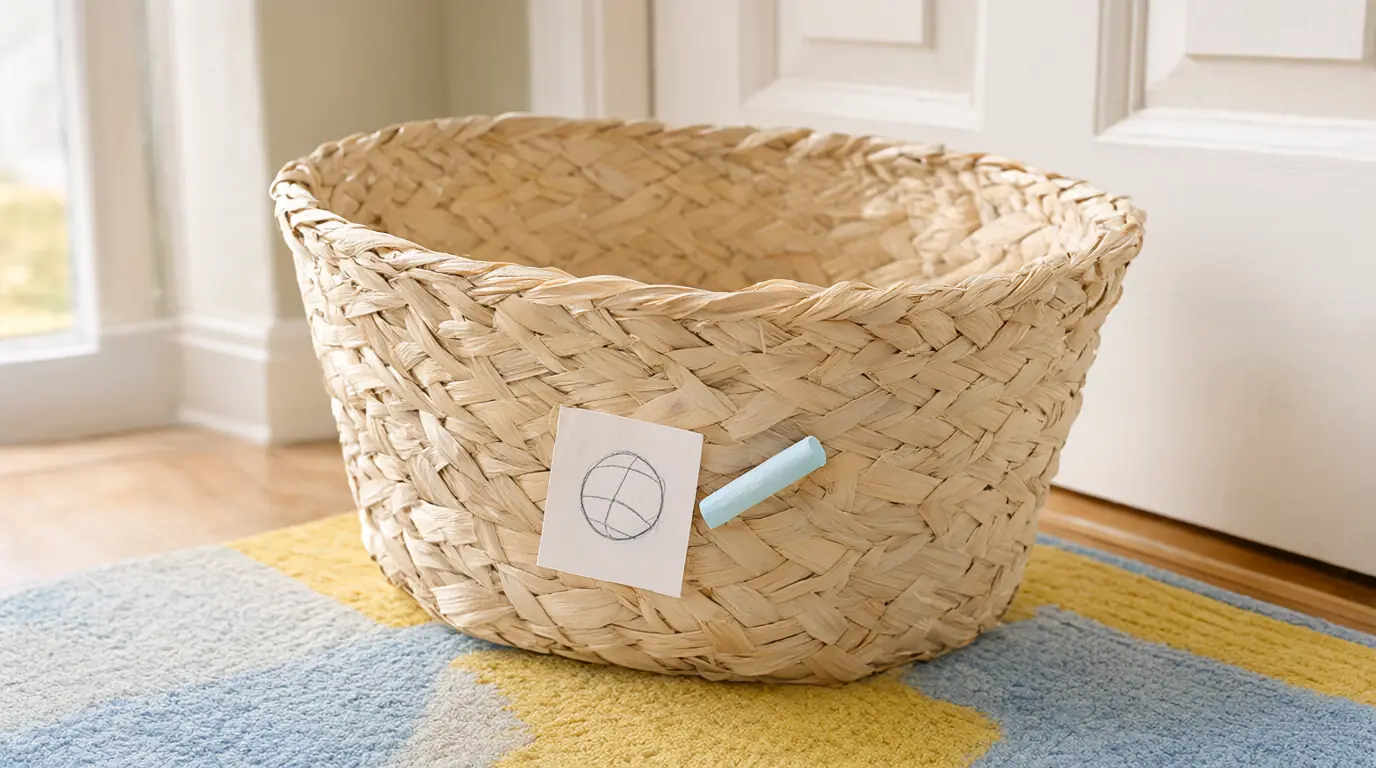
Make it your own: With toddlers, use two labels only and carry the heavier things yourself. Older children can write the words beside the pictures, time the mission, or make a label for a new object they want to keep outside.

Make it work for your family
If your child loses interest halfway, stop the game and leave the materials out rather than finishing your list. A child who wants to repeat the same throw twenty times is learning something; add a second circle only when they ask. When two children want different games, give each one a small area and let the games run side by side, and look at these games to play when kids are bored for a ready-made alternative.
Wind, wet ground and tired legs change a game quickly, so have a quiet option ready: sit on the step and play a picture-and-name game with the same cards. Objects that disappear into grass are the main frustration, so count the pieces you started with before you tidy up, and keep small parts away from children who still put things in their mouths. Finish while everyone is still happy, tidy the last few things together and leave the chalk for another day.

Parents also ask
What yard games can you play with only chalk and a ball?
Draw four wide circles, add a simple picture to each, and roll a soft ball or a pair of rolled socks into the one your child chooses. Chalk circles also work as stepping stones to walk along, or as targets to carry picture cards to.
How do I keep outdoor play safe with a toddler in the yard?
Check gates, tools, standing water and any slope, then stay within arm's reach and set one visible boundary. Choose rolling and carrying games rather than throwing, keep small objects away from children who mouth things, and finish before tiredness turns into frustration.
What can we play in a very small yard or shared courtyard?
Landmark stories and listening stops need no room at all, and a chalk circle or a pair of cushions makes a short rolling target. Keep the boundary small, use soft materials so a stray ball is harmless, and swap to a sitting picture game when space or neighbours make movement awkward.
Choose materials and activities that suit your child, supervise as needed and adapt the ideas to their interests and abilities. About our editorial approach