Weebou Editorial Team
 7 min read
 In this article
A little preparation
Choose a level, non-slip surface such as a carpeted room or a mat, and clear away anything that could be tripped on or bumped into. Bare feet or grippy socks usually work better than slippery socks. Keep a chair, a sofa arm or your hand within reach as support, and show your child where it is before you start. Demonstrate each action slowly, and let them watch before deciding whether to join in.
Keep sessions to about 10 minutes and play on a day when your child is rested. Balance feels different when someone is tired, excited or wearing different shoes, so there is no need to compare one day to another. Use words about feelings of steadiness rather than success: 'Does that feel wobbly or steady?' Adults should stay within arm's reach and never ask a child to lean or stretch past a comfortable point. These games are ordinary play, not therapy; if you have concerns about your child's coordination, talk to a qualified professional. Let your child choose the music, or play in silence, whichever feels more comfortable.

Ideas to try together
Wide road walk
A broad tape road gives a clear path without a narrow line to wobble off. Children travel at their own pace, stop whenever they like and see where their feet go. A curve added later brings a new challenge only when the straight road feels familiar, and a clear return path alongside keeps the game relaxed.
 You’ll need
- Masking tape or painter's tape
- A flat, non-slip floor space of about 3 metres
- A small toy car or animal to place at the end of the road
- A chair or sofa arm for support
How to do it
- Lay two parallel strips of tape about 30 centimetres apart to make a road.
- Place the toy at the end and tell your child it needs a visitor.
- Invite your child to walk along the road at any speed and stop whenever they like.
- Ask how their feet feel and what helps them go slowly.
- Walk back along the side of the road, then try a second time.
- Add one gentle curve with tape once the straight road feels familiar.
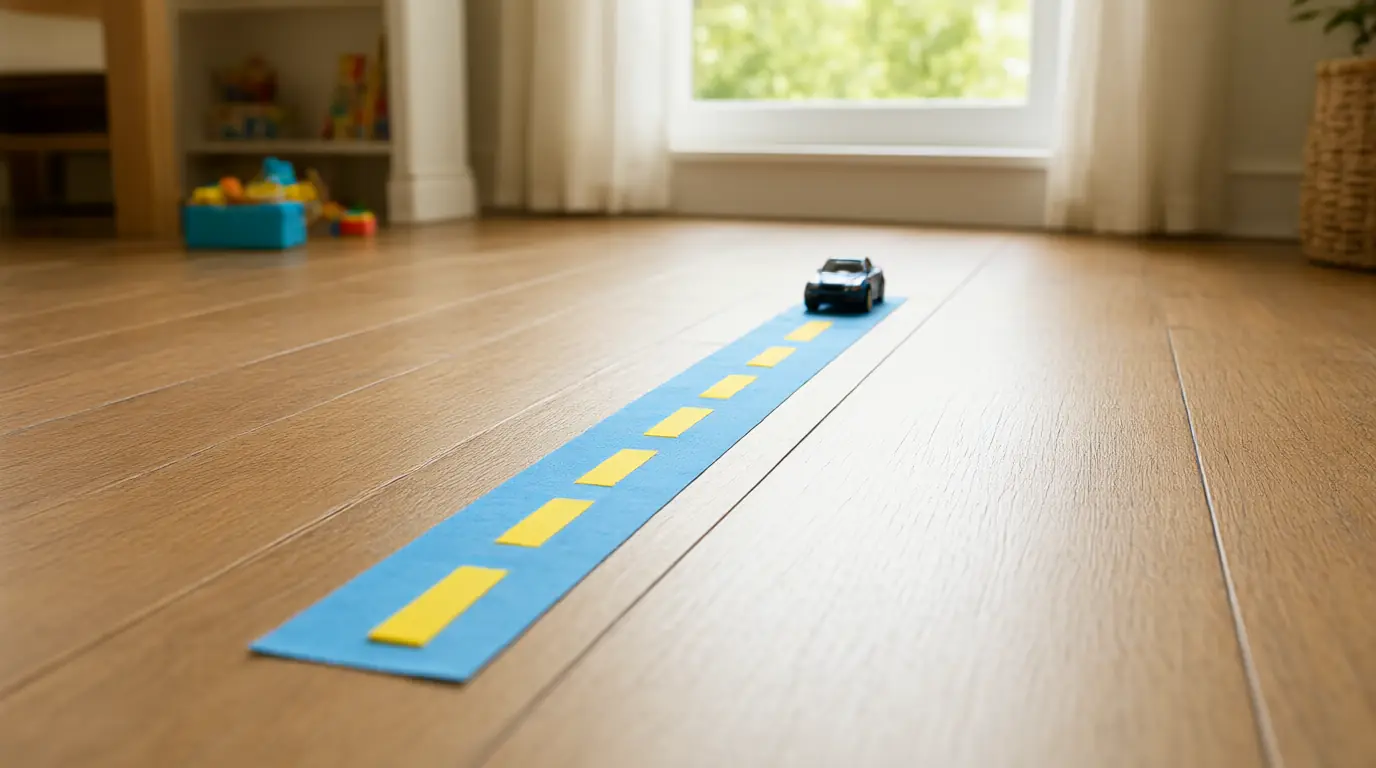
Make it your own: Younger children can walk beside the road with a hand held, or crawl along it. Older children can try walking on the tape edge or carrying a soft toy in both hands.
Toy delivery tray
Carrying a soft toy on a sturdy tray asks children to hold their body steady and watch what they are carrying. If the toy slips, the game pauses until it is replaced. Children discover which hand positions and walking speeds feel steadier, learning about balance through their own experiments.
You’ll need
- 1 sturdy tray with a low rim
- 1 lightweight soft toy
- 2 cushions as pretend stops
- A chair for seated play
How to do it
- Place the toy on the tray and show your child how to hold it with both hands.
- Walk slowly to the first cushion and set the tray down.
- Talk about how it felt and which hand positions helped.
- Carry the tray to the second cushion and deliver the toy.
- If the toy slips, stop and place it back on the tray before moving on.
- Pass the tray to a partner or a seated friend for the next delivery.
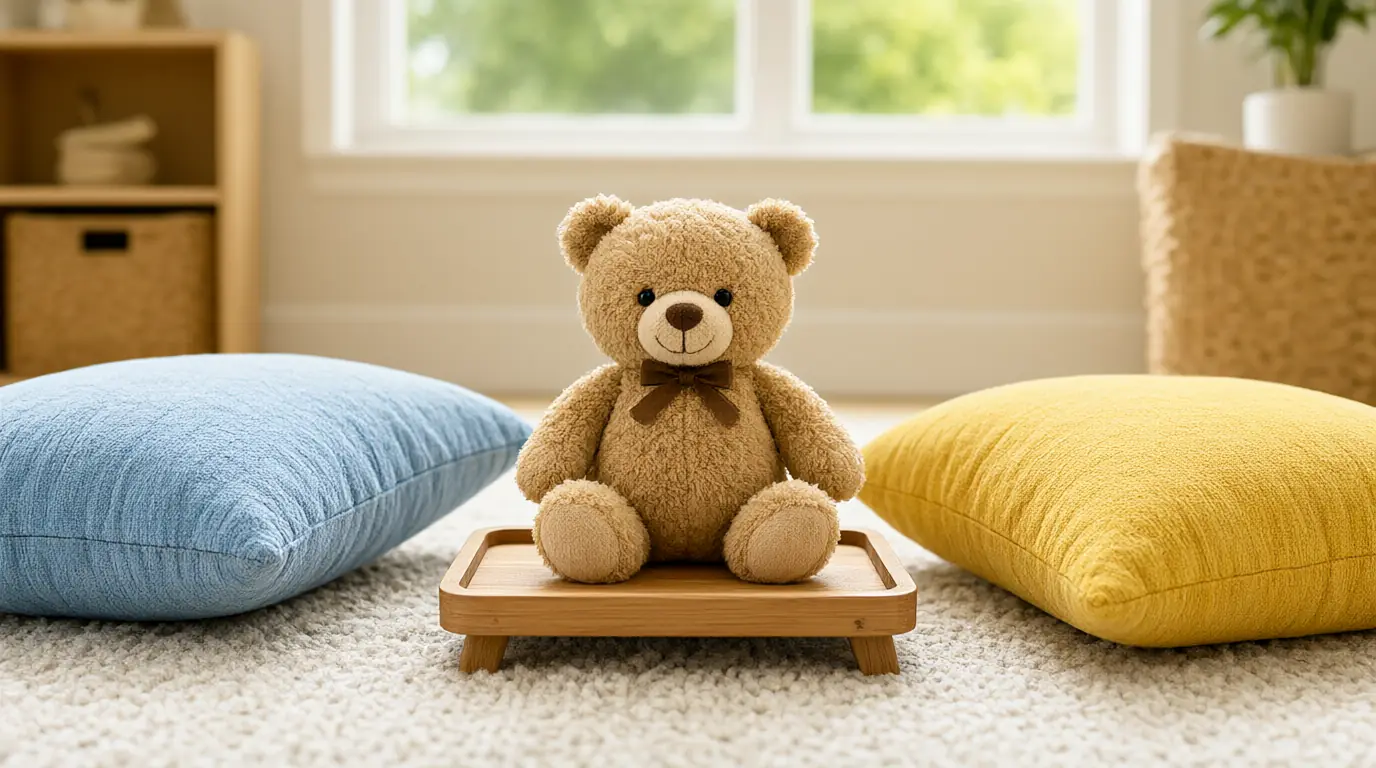
Make it your own: Younger children can carry the toy on a plate with a lip or stay seated and pass the tray. Older children can carry two toys or follow a gently curved route.
Reach for the picture
A large picture placed within easy reach invites children to stretch and shift their weight, without leaning past what feels safe. The adult moves the picture rather than asking the child to reach further. Pointing to parts of the picture adds a second reason to reach and a chance to talk.
You’ll need
- 1 large picture card or drawing
- Masking tape or a clip to hold the picture
- A chair or low stool for sitting
- A soft toy as a helper
How to do it
- Seat your child or have them stand with feet comfortably apart.
- Hold the picture at a comfortable arm's length in front of them.
- Ask them to touch or point to a feature, such as the sun or a tree.
- Move the picture slightly to one side and invite another reach.
- Ask whether it feels steady or wobbly, and move the picture closer if needed.
- Swap places so your child holds the picture for you.
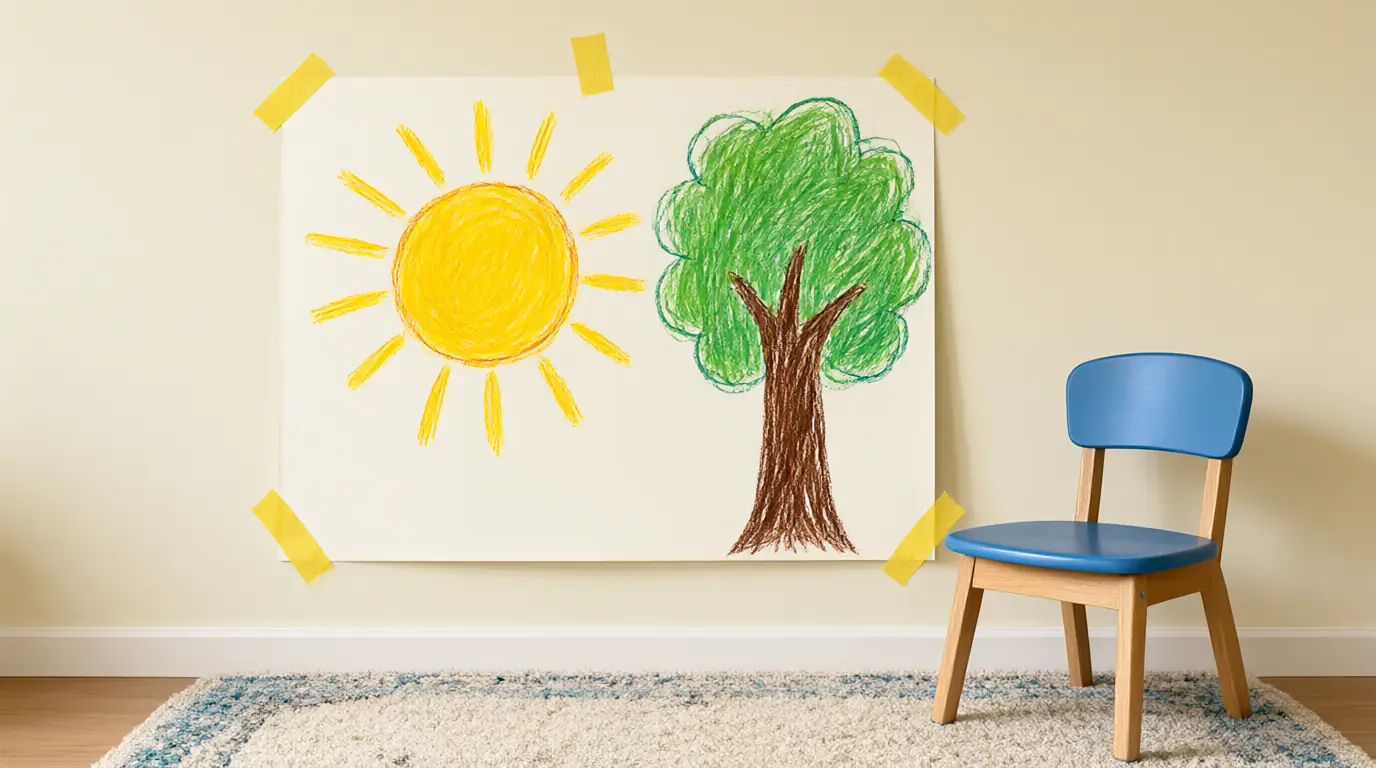
Make it your own: Younger children can reach while seated on the floor. Older children can stand and reach with one hand while holding a chair with the other.
Slow turn parade
Turning is often harder than walking straight, so a slow parade with a leader toy gives children time to practise. Pausing and changing direction at a floor marker feels like part of the story, not a test. A partner can carry the toy if your child wants to concentrate on their feet.
You’ll need
- 1 animal toy as the parade leader
- 1 floor marker, such as a cushion or a mat
- Optional soft music at a gentle pace
How to do it
- Place the marker in the middle of the floor and put the toy at the start.
- Walk slowly around the marker with your child, following the toy.
- Stop at a chosen point and pause for a moment.
- Turn together in the opposite direction and walk back.
- Let your child decide how fast the parade goes and when it should stop.
- Finish by placing the toy back on the marker and saying goodbye.
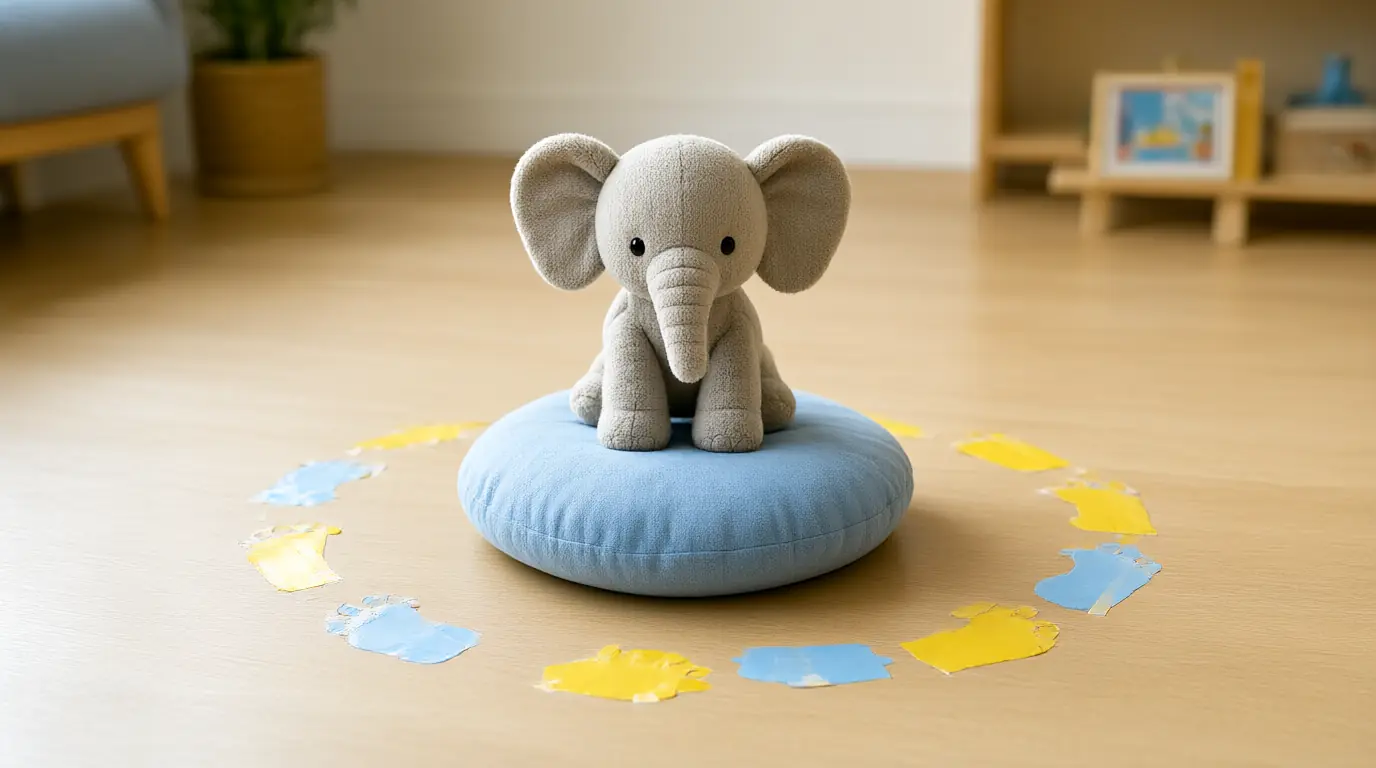
Make it your own: Younger children can hold your hand and take only a few steps. Older children can carry the toy themselves or add a second turn around another marker.

Make it work for your family
Shorten the route or widen the path before adding any extra task. Holding an adult hand, sitting, using a chair for support or using a child's usual mobility aids are all valid ways to join the same game, and no version is better than another. If your child wobbles, stop, breathe and start again from a comfortable position.
After a few sessions, you might extend the play with heavy work activities such as pushing and carrying, or build leg strength with small jumping games. For more general movement ideas that do not need much space, take a look at whole-body play for preschoolers. Finish with a calm minute of sitting and breathing, so your child ends feeling steady.

Parents also ask
What are good balance activities for preschoolers?
Slow, low-level movements work well: walking on a wide tape road, carrying a toy on a tray or reaching for a picture. Keep support nearby and let your child choose the pace. Short sessions of about 10 minutes are plenty.
How can I make balance games easier for a child who feels unsteady?
Widen the path, shorten the route, sit down or hold an adult hand. Children can also use their usual mobility supports. Praise their choices, not the result, and stop the moment they seem tired.
When should I talk to a professional about my child's balance?
If your child falls much more than other children their age, avoids movement, or you notice changes in how they walk, speak to a doctor or a qualified professional. Balance games are for fun, not a diagnosis.
Choose materials and activities that suit your child, supervise as needed and adapt the ideas to their interests and abilities. About our editorial approach