7 min read

 In this article
A little preparation
Choose one corner of the house as the play zone and clear it of anything fragile or sharp. Roll up a rug if the floor is slippery in socks. Decide in advance where running is allowed, and offer a quieter table option nearby so a child who wants to draw or watch can do so without missing out on the same game.
Gather materials before you tell your child about the plan: a few cardboard boxes, a roll of masking tape, a handful of markers, scrap paper and the toys they already love. Allow about 30 minutes, and expect your child to wander away and return, which is perfectly normal. Keep stairs, hallways with hard corners and rooms with hot or sharp items out of any route-based games. Bring the activity to the window for a few minutes at the start, so rain becomes part of the game instead of an interruption.

Ideas to try together
Cardboard travel station
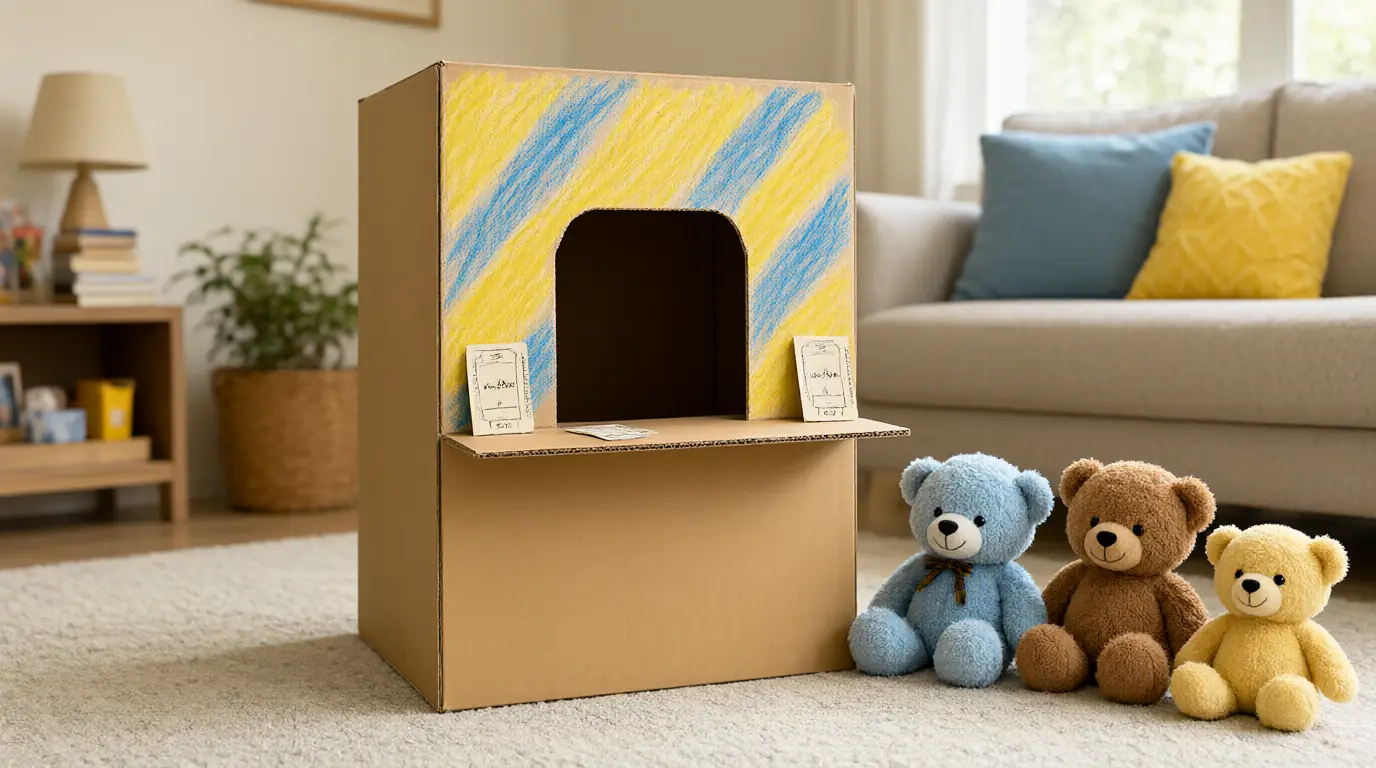
A box with a slot cut for tickets becomes a counter where soft toys book journeys to anywhere. Your child decides the destinations, draws the tickets and plans how everyone will travel despite the weather. It combines pretend play, early writing marks and a simple sense of order, because tickets need to be handed out one at a time.
 You’ll need
- 1 medium cardboard box
- Scrap paper cut into ticket-sized strips
- Crayons or markers
- 3 to 5 soft toys as passengers
- A large sheet of paper for a route map
How to do it
- Turn the box on its side and decorate the front with marker stripes or paper shapes to make a counter.
- Ask your child where the soft toys would like to go: the beach, the moon, grandma's house.
- Let your child draw a ticket for each toy, using marks or pictures of the destination.
- Take turns being the ticket seller and the traveller, asking 'Where would you like to go today?'
- Draw a simple route on the big sheet with a stop at each destination.
- Walk the toys along the map, narrating the journey and noticing what the rain is doing outside.
Make it your own: Younger children can hand over plain paper as tickets and focus on the pretend conversation. Older children can add a timetable with simple numbers or a price list using buttons as coins.
Rain sound marks
Listening to rain and turning it into marks on paper is a quiet, absorbing game. Children notice that the sound changes: soft tapping, quick drumming, long pauses. They then choose a line, dot or squiggle to stand for each, which is a first step toward understanding that marks can represent something invisible, as music notation does.
You’ll need
- 1 long strip of paper or a sheet taped to the table
- 2 or 3 crayons in different colours
- A safe spot beside a window or door
- A cup of water and a metal tray for testing sounds (optional)
How to do it
- Sit together by the window and listen quietly for about 20 seconds.
- Ask, 'What does the rain sound like right now?' and accept any answer.
- Choose a mark for the soft sound, such as small dots, and another for the loud sound, such as long scribbles.
- Draw along the strip from left to right as the sound changes, letting your child lead.
- Compare your strip with the sound of a few drops tapped onto a tray if you want a second sound to test.
- Hang the finished strip somewhere visible and listen again later to see whether the marks still fit.
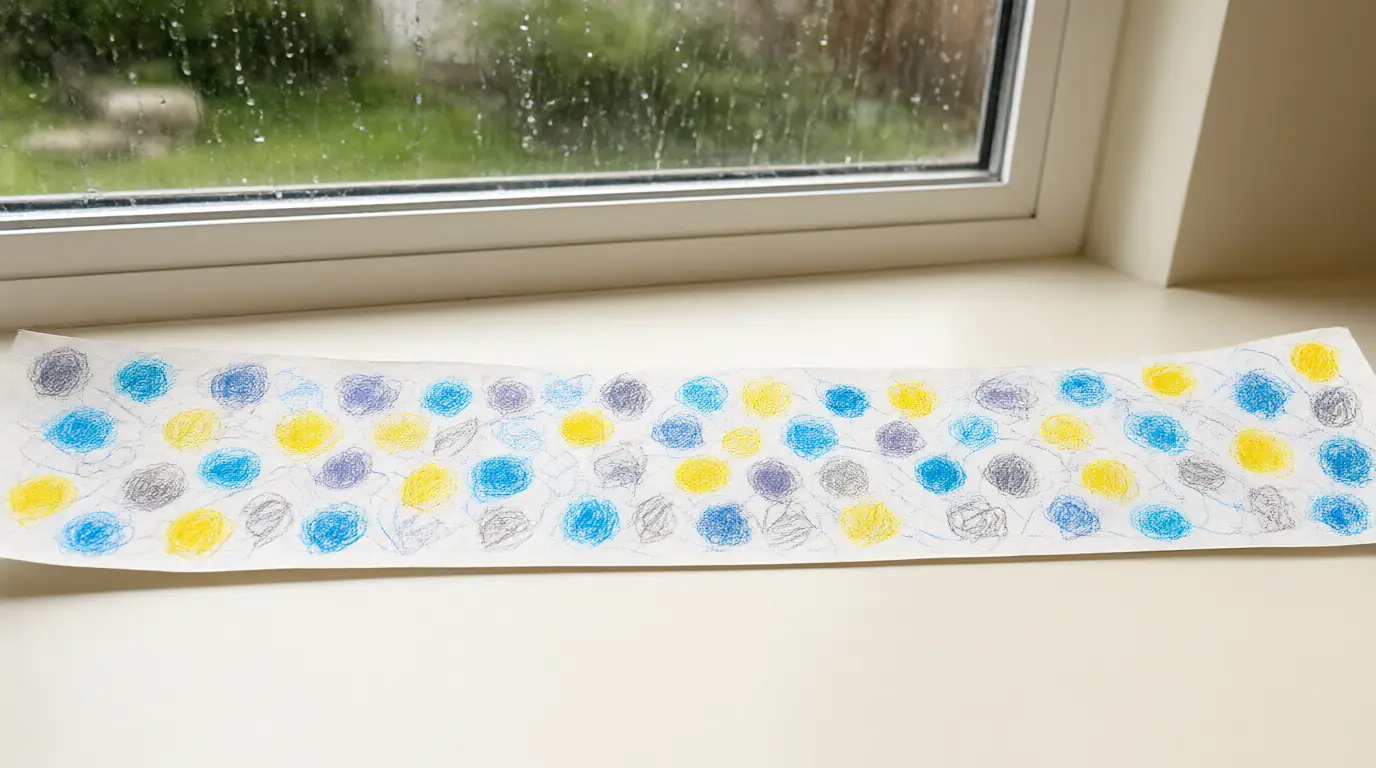
Make it your own: Younger children may simply scribble while listening. Older children can plan a pattern in advance, such as three dots then one line, and read it back like a code.
Soft-toy rescue plan
Give a soft toy a small problem and ask your child to design a way out of it. The toy has lost its bed, or it is too tall for its house, or it needs a bridge to cross a river made from a blue towel. Children enjoy being the expert, and they practise explaining how something would work before they try it.
You’ll need
- 1 soft toy
- Cardboard, paper and tape
- A blue towel or scarf for a river
- Building blocks or books for support
- Scissors for adult use
How to do it
- Introduce a problem in a worried toy voice: 'I can't reach my bed. It's on the other side of the river.'
- Ask your child what the toy might use to cross, and offer them the materials.
- Let them build a bridge, ramp or boat, testing it with the toy.
- If it fails, ask what the toy noticed and what could change.
- Try the improved version and celebrate when the toy arrives safely.
- Choose a new problem together, such as keeping the toy dry while it waits.
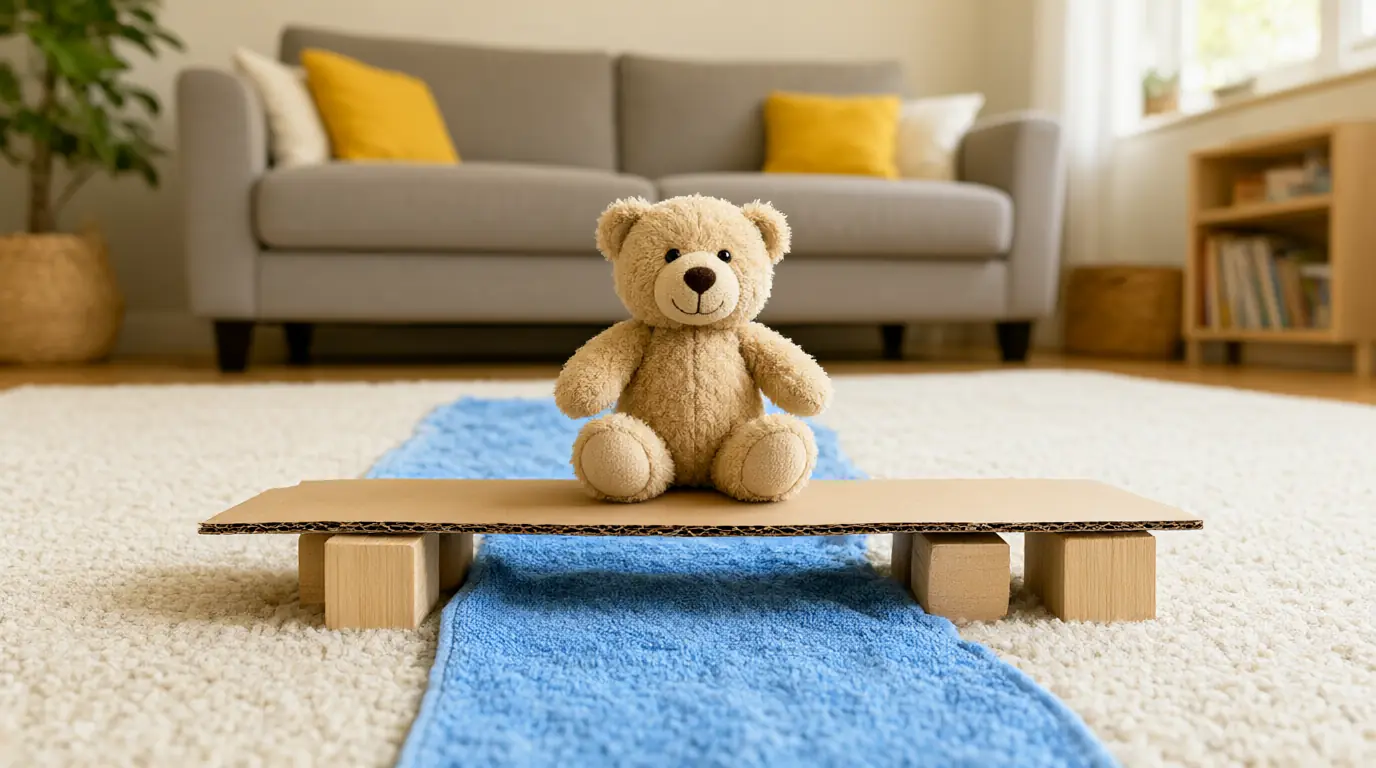
Make it your own: Younger children can place the toy on a pre-made cardboard ramp and simply decorate it. Older children can draw a plan before building, or give the toy a second challenge afterwards.
Indoor picture trail
A trail of big picture clues leads your child from room to room, ending at a shared drawing or story. It moves the body without running, and it gives children practice in following a sequence. The trail also works when you are at home with a baby asleep, because it stays quiet and calm.
You’ll need
- 5 to 7 sheets of paper
- Thick markers
- Masking tape
- A small prize or storybook at the end of the trail
How to do it
- Plan the route yourself, keeping to flat floors and rooms your child already uses. Skip stairs and cupboards.
- Draw one large clue on each sheet, such as a spoon, a sock or a chair, matching an object at the next stop.
- Tape the first clue where your child will see it and place the others along the route.
- Let your child find clue one, say what it shows and walk to the matching object.
- Continue until the final clue shows a picture of the prize or the story.
- Swap roles so that your child draws the clues for you.
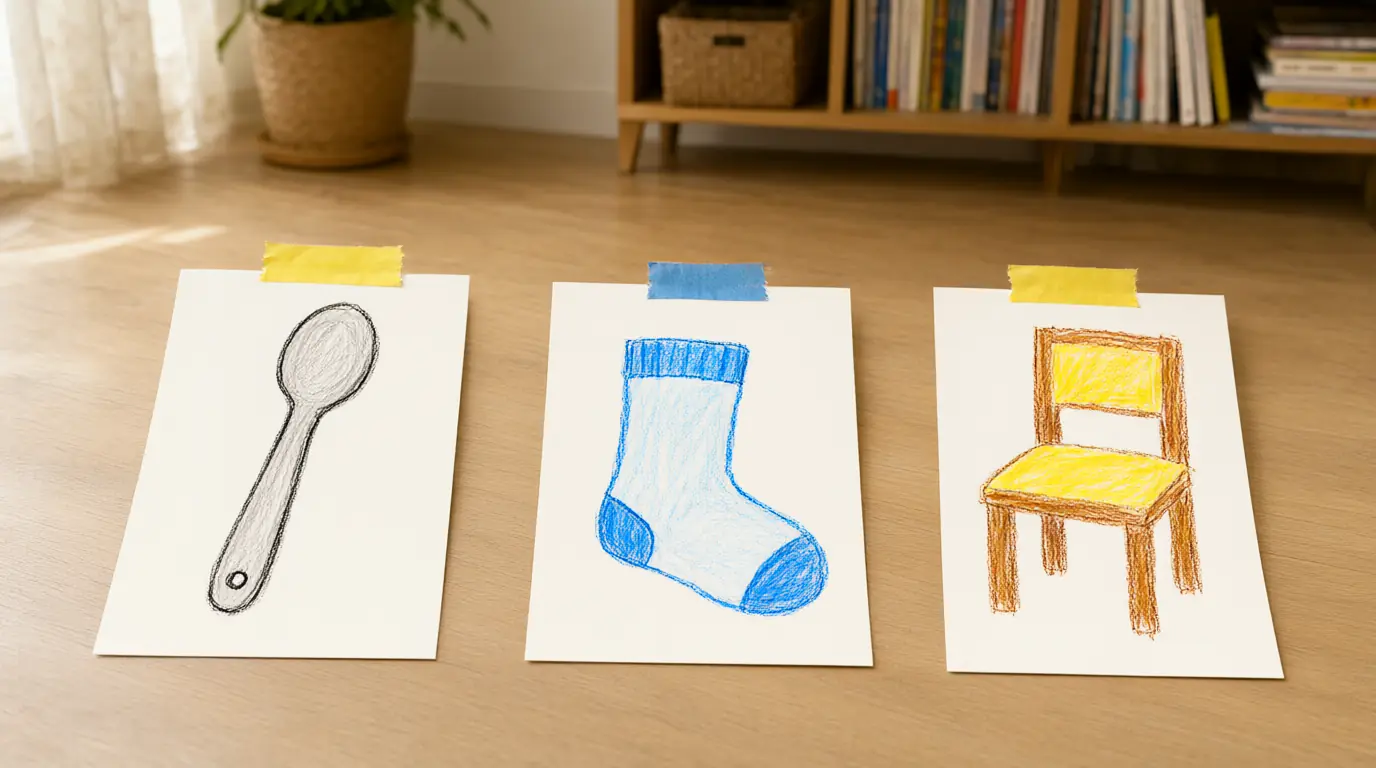
Make it your own: Younger children can follow just three clues and only find pictures of familiar toys. Older children can write a simple word on each clue or add a riddle in place of a picture.

Make it work for your family
If energy is running high, begin with a short movement game on the carpet, such as soft-toy hopping between paper stepping stones, and then move to the table. If your child resists a structured game, offer one box and one roll of tape and wait. Children often invent their own game within a minute or two, and that version is usually better than the one you had planned.
When a game ends, take a photo and leave the cardboard set standing for the next day. The same station can become a bakery or a post office tomorrow. For more rainy-afternoon ideas that need very little preparation, try these indoor toddler activities or a few games to play when kids are bored.

Parents also ask
What can kids do on a rainy day with no toys?
Cardboard boxes, paper and tape are enough: build a ticket counter, draw rain sounds or lay a picture trail. Household items such as towels, spoons and socks work as props. Ask your child for the idea and let them lead.
How do I stop rainy-day play turning chaotic?
Choose one play zone, say where running is allowed and bring out materials for one game at a time. A quiet drawing option nearby helps children who need a break from active play. Tidy together as part of the game.
How long should a rainy-day activity last?
Around 20 to 30 minutes is typical for children aged 3 to 7, though many will drift in and out. Let them leave and return, and keep the set standing so they can restart the game later without your help.
Choose materials and activities that suit your child, supervise as needed and adapt the ideas to their interests and abilities. About our editorial approach