Weebou Editorial Team
 In this article
A little preparation
Set aside a wipe-clean table and one shallow tray for paint, then choose two or three projects rather than all five at once. Thick paper, chunky crayons, a glue stick and a roll of craft paper cover most of the ideas; add family photos only if everyone is comfortable sharing them. If relatives are visiting, make the cards and place cards a day ahead so the work can dry and your child does not feel rushed. Keep paint and glue away from food, and put away small photo corners or beads for children who still mouth objects.
Talk about the person or memory before drawing, because a preschooler's idea often arrives through conversation rather than a blank page. Ask who helped them recently, what that person did and what colour or shape might show it. An adult can write the words your child dictates, checking the spelling of names. Allow about 15 to 30 minutes, and have a second simple activity ready for a child who finishes quickly. For more seasonal making, try these fall crafts for kids.

Ideas to try together
A thank-you card for one real action
A specific thank-you is easier to draw than a general one. Before folding the paper, ask your child to name one thing a person did: carried a heavy bag, read the same book again, or saved the last slice of cake. That single action gives the drawing a subject and the message a clear beginning. The card can be short, and the adult can write exactly what the child says.
 You’ll need
- One sheet of thick A5 paper or card
- Chunky crayons or washable markers
- A glue stick and a few paper scraps
- An envelope or a folded paper cover
How to do it
- Fold the card in half with the short edges meeting and press along the fold.
- Ask your child to name one helpful action and who did it.
- Invite a drawing of that action, with stick figures and simple shapes welcome.
- Write the child's exact words inside, then read them back together.
- Add a paper scrap, sticker or colour border if your child wants one.
- Leave the card flat to dry before putting it in an envelope.
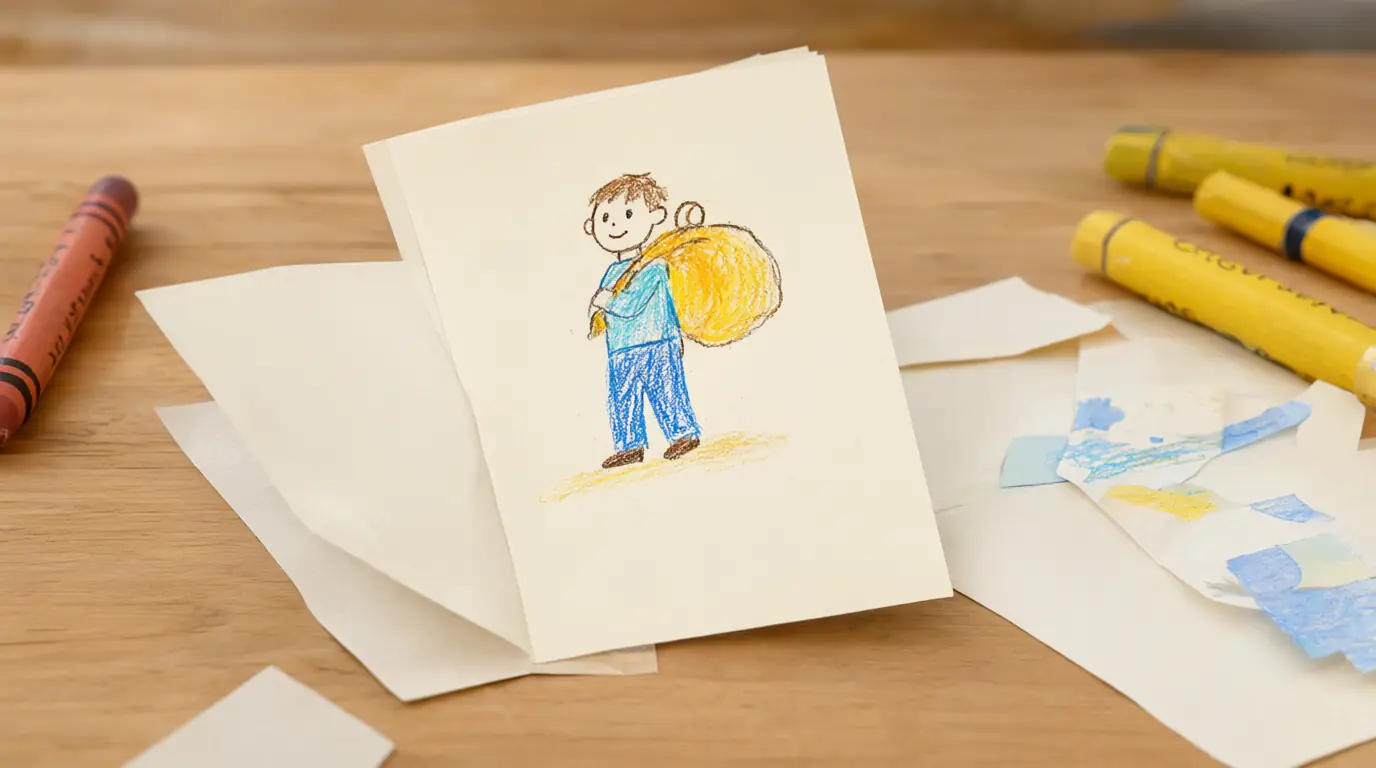
Make it your own: Younger children can draw on a single unfolded sheet and skip the message. Older children can add a question for the recipient or write their own name. A child who prefers talking can record a short voice note instead.
Place cards with a picture clue
A place card helps a child think about a guest before the meal, and a small drawing gives the table a personal touch. Instead of copying a name, the child chooses a clue the guest will recognise: a blue teacup, a dog, a bicycle or a favourite flower. The adult writes the name clearly underneath, and the child checks that the spelling is right.
You’ll need
- Thick paper cut into cards about 10 by 15 cm
- Chunky crayons or washable markers
- Tape or a card stand
- Optional: small paper shapes and a glue stick
How to do it
- Fold each card in half so it can stand on the table.
- Ask your child to choose one clue for each guest.
- Draw the clue on the front in large, simple shapes.
- Write the guest's name clearly below the drawing.
- Read the name back and let your child check the letters.
- Stand the card at the right place, or tape it to a glass if the table is crowded.
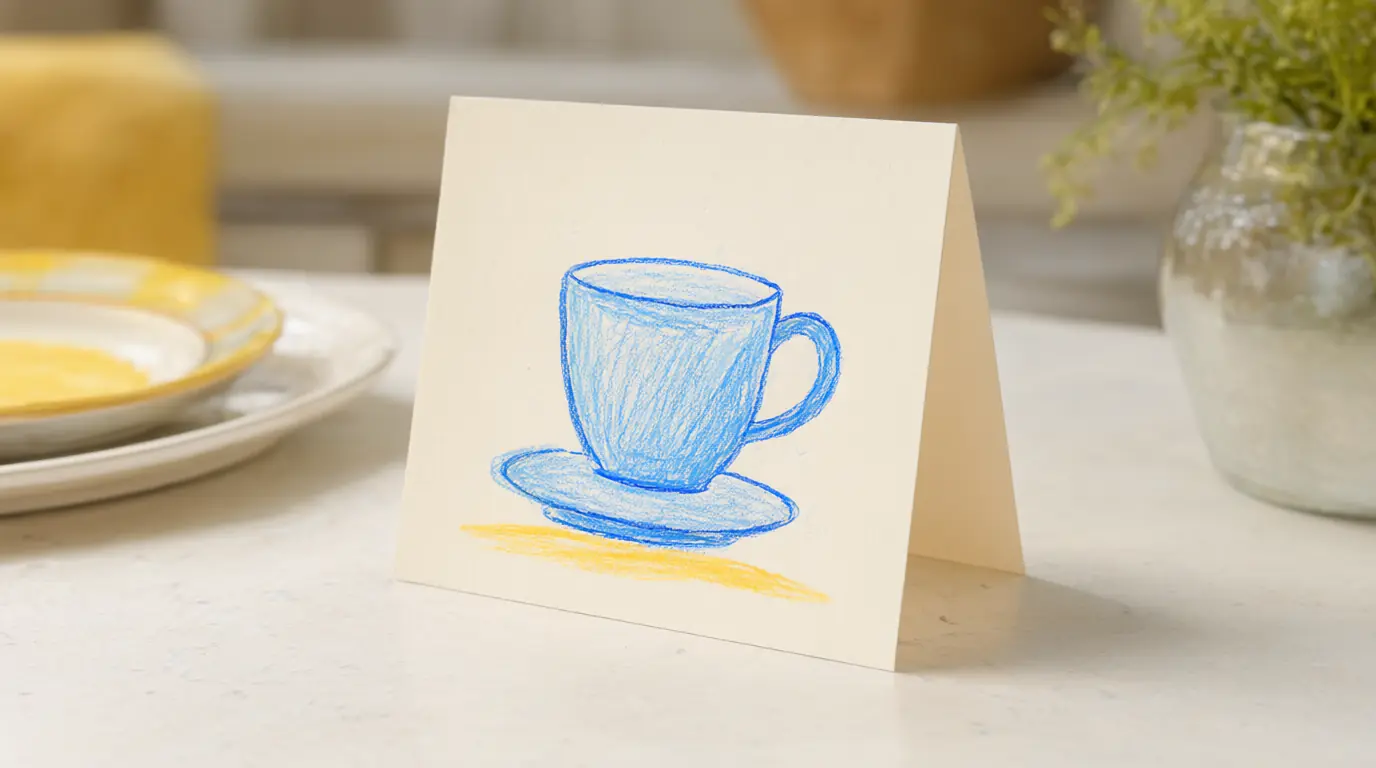
Make it your own: Younger children can make one card for a favourite person. Older children can add a tiny question inside, such as 'Do you like peas?', or make a card for every guest. A child who does not know a guest can choose a general picture instead.
A family memory collage of paper squares
A collage lets several small moments sit together without turning into a timeline. Each square can hold a drawing, a photo, a receipt or a scrap of wrapping paper from a family day. Children choose what to include, and they can explain only the squares they want to talk about. The shared page becomes a conversation piece rather than a test of memory.
You’ll need
- A large sheet of thick paper or card
- Paper squares about 8 cm wide
- Family photos, tickets or wrapping paper scraps (optional)
- A glue stick and crayons
How to do it
- Lay the large sheet flat and arrange the squares without gluing.
- Ask your child to choose a few family moments, without requiring a story for each one.
- Let them place the squares, overlap them or leave gaps.
- Glue a few pieces at a time, pressing them flat.
- Add drawings or labels in the gaps.
- Leave the collage under a book for a few minutes if the paper curls.
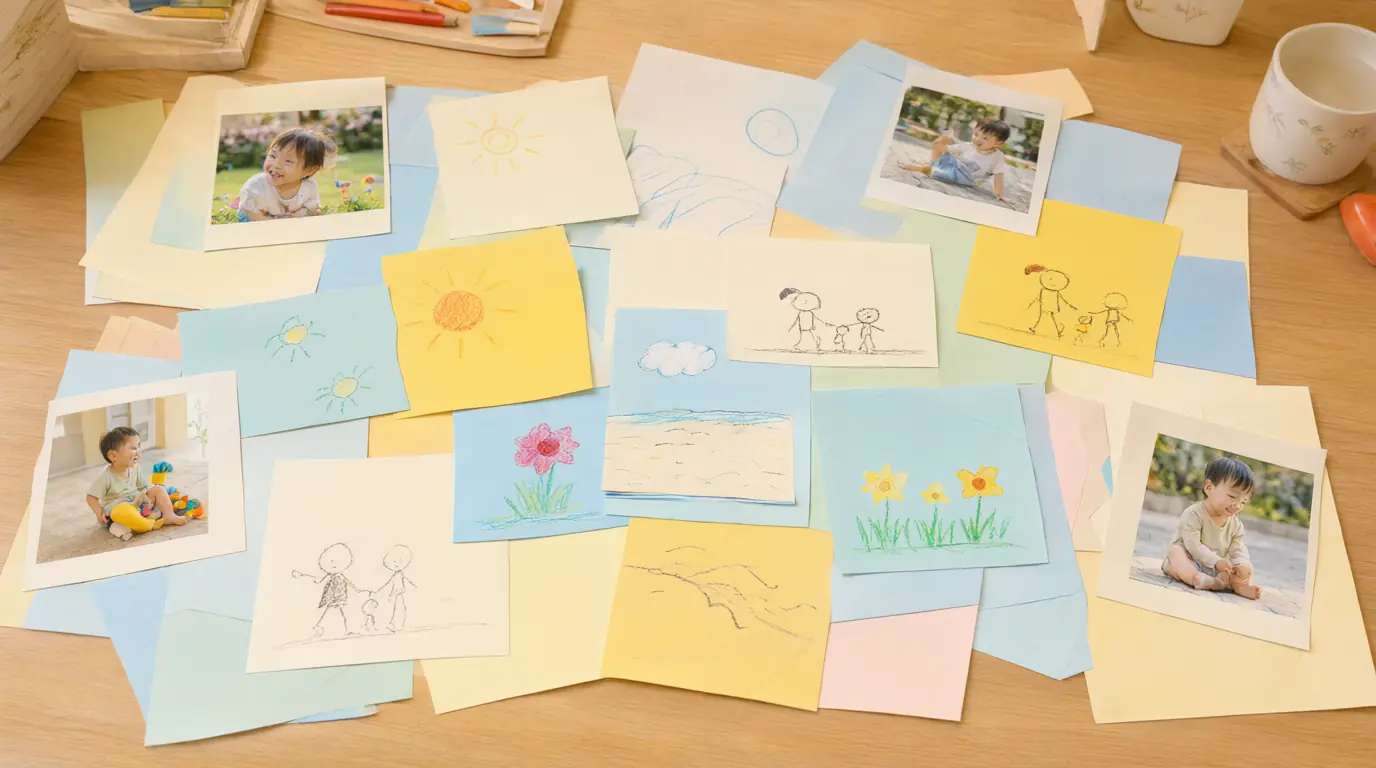
Make it your own: Younger children can use three or four large squares and no photos. Older children can sort squares by season or add a short caption. If a photo feels private, cover the face with a drawn shape or leave it out.
A choose-a-job kindness strip
Thanksgiving jobs feel different when a child can choose one. A long strip of paper holds four or five drawings of useful tasks: putting napkins on the table, carrying spoons, greeting a guest or feeding a pet. The child picks a job when the moment comes, which gives a real contribution without turning the day into a list of instructions.
You’ll need
- A long strip of thick paper, about 10 cm wide
- Crayons or washable markers
- Tape or reusable putty
- Optional: small stickers for each job
How to do it
- Cut or fold a long strip of paper; an adult handles the scissors.
- Ask your child to name two or three ways they could help during the gathering.
- Draw one simple picture for each job.
- Add a mark, sticker or colour dot beside each picture.
- Tape the strip at your child's height, near the table or kitchen.
- Let your child choose one job when the meal is being prepared.
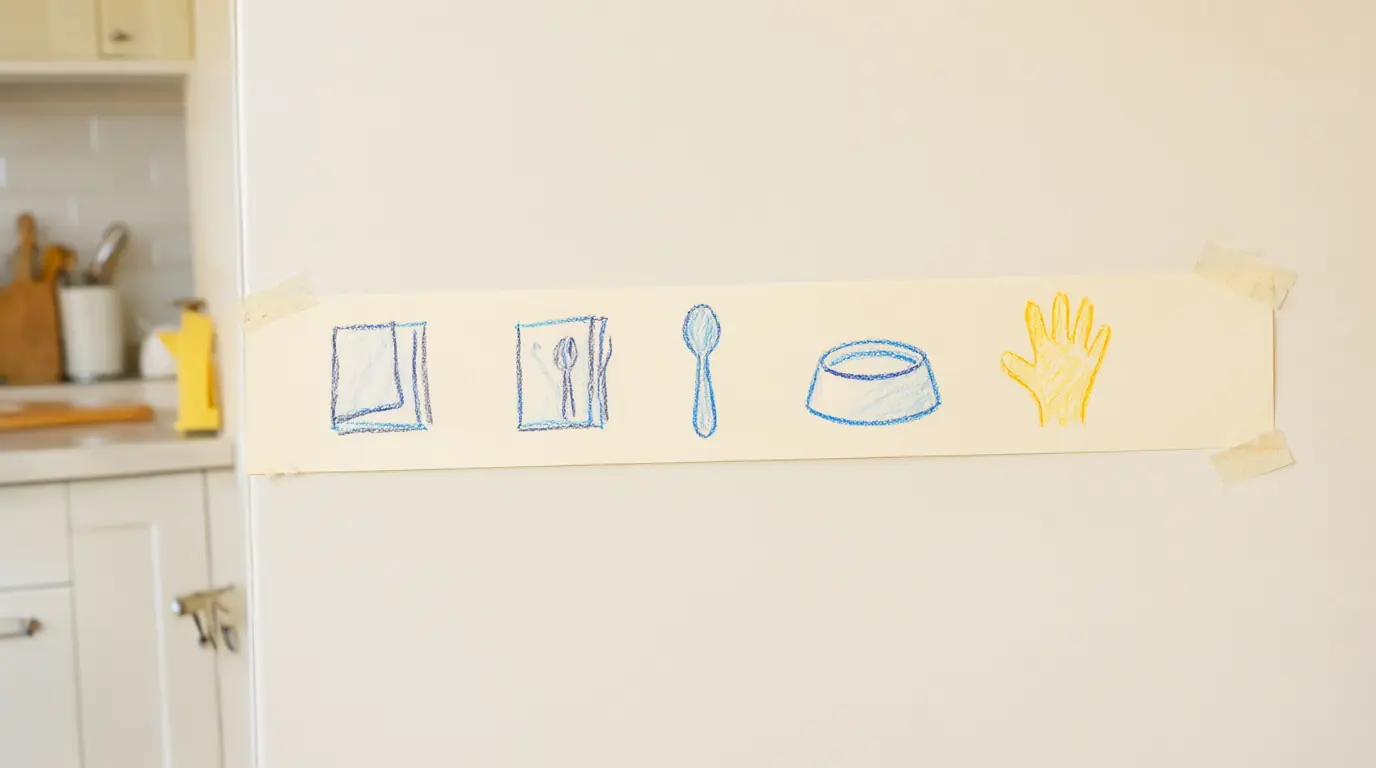
Make it your own: Younger children can choose from two pictures. Older children can add a second strip for clearing up or draw a job for a younger guest. If the strip becomes a demand, put it away and offer one job in the moment instead.
A drawn table runner for the shared meal
A paper runner turns the table into a group canvas before the food arrives. Children can draw leaves, pumpkins, plates, family faces or abstract patterns along the whole length, and guests can add a small mark if they want to. Because the paper is long, several children can work at once without crowding one drawing.
You’ll need
- A roll of plain craft paper or two long sheets taped together
- Crayons or washable markers
- Tape for the ends
- Optional: leaf shapes, paper scraps and a glue stick
How to do it
- Roll the paper down the middle of the table and tape the ends underneath.
- Check that plates and glasses will sit safely on top without wobbling.
- Invite each child to choose a section and draw whatever the day makes them think of.
- Leave a few gaps so guests can add a small drawing or their name.
- Lift the runner before serving hot dishes, or use it under a cloth if the table needs protection.
- Roll it up after the meal and keep it as a record of the day.
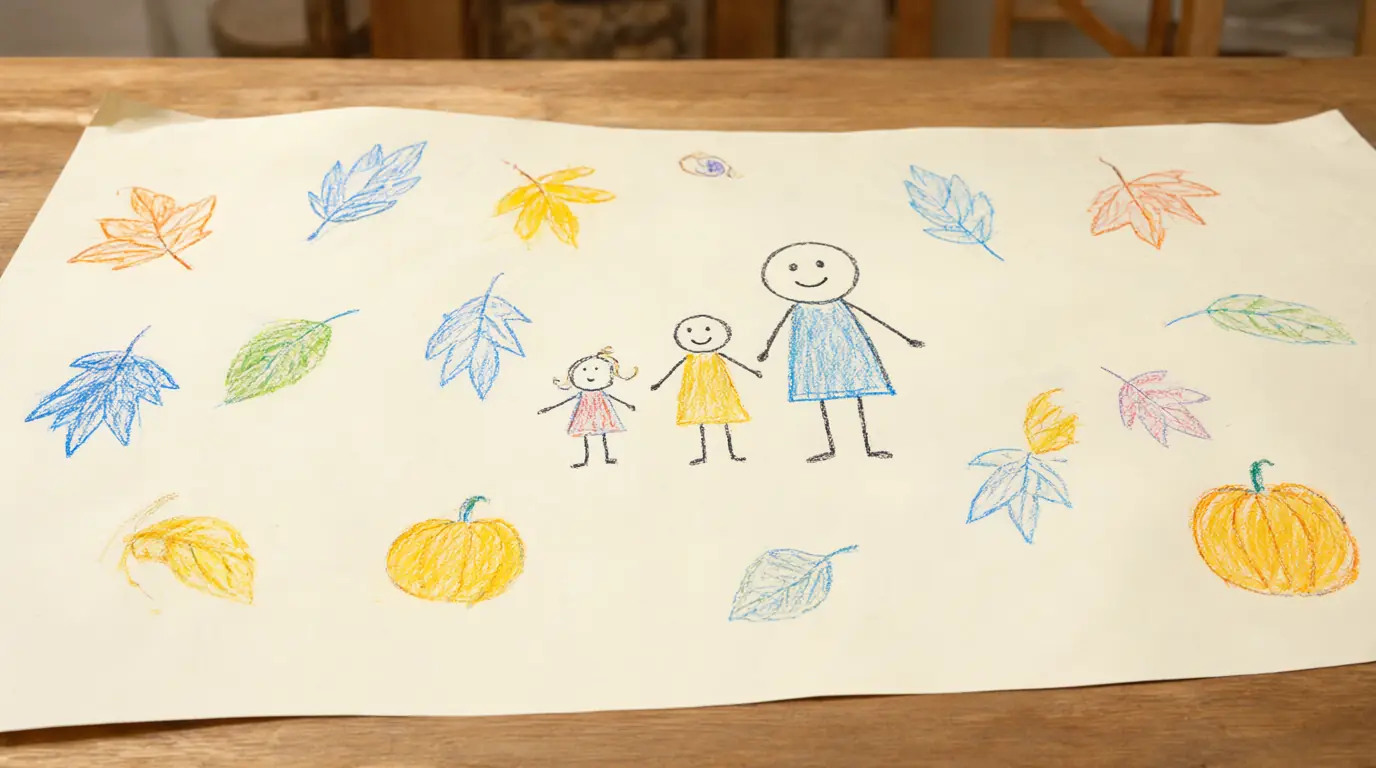
Make it your own: Younger children can draw on a short piece of paper at their own place. Older children can plan a border or a repeating pattern along the whole runner. If the table is small, make individual place mats instead.

Make it work for your family
Children who cannot yet write can dictate, draw or point to a picture while you add the words. If a child freezes at a blank page, offer a choice of two starting marks or draw a simple outline and let them fill it. Keep the focus on one person or one memory instead of a general 'I am thankful for everything', which is hard for a preschooler to picture. Stop while the work is still enjoyable; a half-finished card can be completed later without losing its meaning.
If a card feels too personal to give away, suggest a version that stays at home or a drawing for a pet. Children who dislike glue can use tape or arrange pieces without sticking them down. When relatives ask what it means, let your child explain as much or as little as they wish. For more ways to talk about thankfulness, try these gratitude activities or simple Thanksgiving activities for kids.

Parents also ask
What are easy Thanksgiving crafts for a 3-year-old?
A folded thank-you card, a large place card or a short kindness strip are all manageable for a three-year-old. Choose one surface, use chunky crayons and let an adult handle folding or cutting. The child can draw one clear picture, and you can write their words underneath. Stop while the activity still feels like play.
How do you explain Thanksgiving to a preschooler?
Keep it simple and concrete: families and friends gather for a meal, share food and say thank you. Mention that people mark the day in different ways and that some families also talk about the history of the holiday. Follow your child's questions rather than giving a long lecture, and be ready to say that some stories are complicated.
What can children make for the Thanksgiving table?
Place cards, a paper table runner and a job strip are all useful at the table. Place cards help children think about each guest, the runner gives everyone a shared drawing space, and the job strip lets a child choose a real way to help. All three use paper and crayons and can be made a day ahead.
Sources & further reading
Explore these primary sources for further context on this topic.
Choose materials and activities that suit your child, supervise as needed and adapt the ideas to their interests and abilities. About our editorial approach