Weebou Editorial Team
 8 min read

 In this article
A little preparation
Choose one ritual and a relaxed time to try it: after a walk, at a quiet snack or while sitting on the bed before a story. Adults go first, with a specific example, including what someone did and how it helped: "The bus driver waited while we ran, so we were not late." That tells a child more than a general "I am thankful for my family". Keep sessions to five or ten minutes, and let a child decline or change the subject.
Have simple materials to hand: scrap paper, crayons, an envelope, tape. If your child wants to draw rather than speak, write their words underneath only if they agree. Avoid using gratitude to hurry past disappointment, to compare families or to push a child into saying thank you on cue. A child can feel thankful for a helper and still dislike what happened. If you want ideas for kind actions alongside these rituals, see kindness activities children can help choose.

What to know and try
Send one specific thank-you note
A note that names a real action feels more personal than a rehearsed sentence, and a child can see why it mattered. Drawing the moment gives younger children a way in, and delivering the note turns a feeling into a small act. It works for a relative, a teacher, a neighbour or a shop worker.
 You’ll need
- A sheet of paper folded in half
- Crayons or markers
- An envelope
- A sticker for sealing
How to do it
- Ask your child to remember one time someone helped, such as finding a mitten or reading a story.
- Draw that moment on the front of the card.
- Write their own words inside, adding a name if they want to.
- Fold the card and place it in the envelope together.
- Decide how to deliver it: in person, in the post or at the school gate.
- Talk about how the person might feel when they open it.
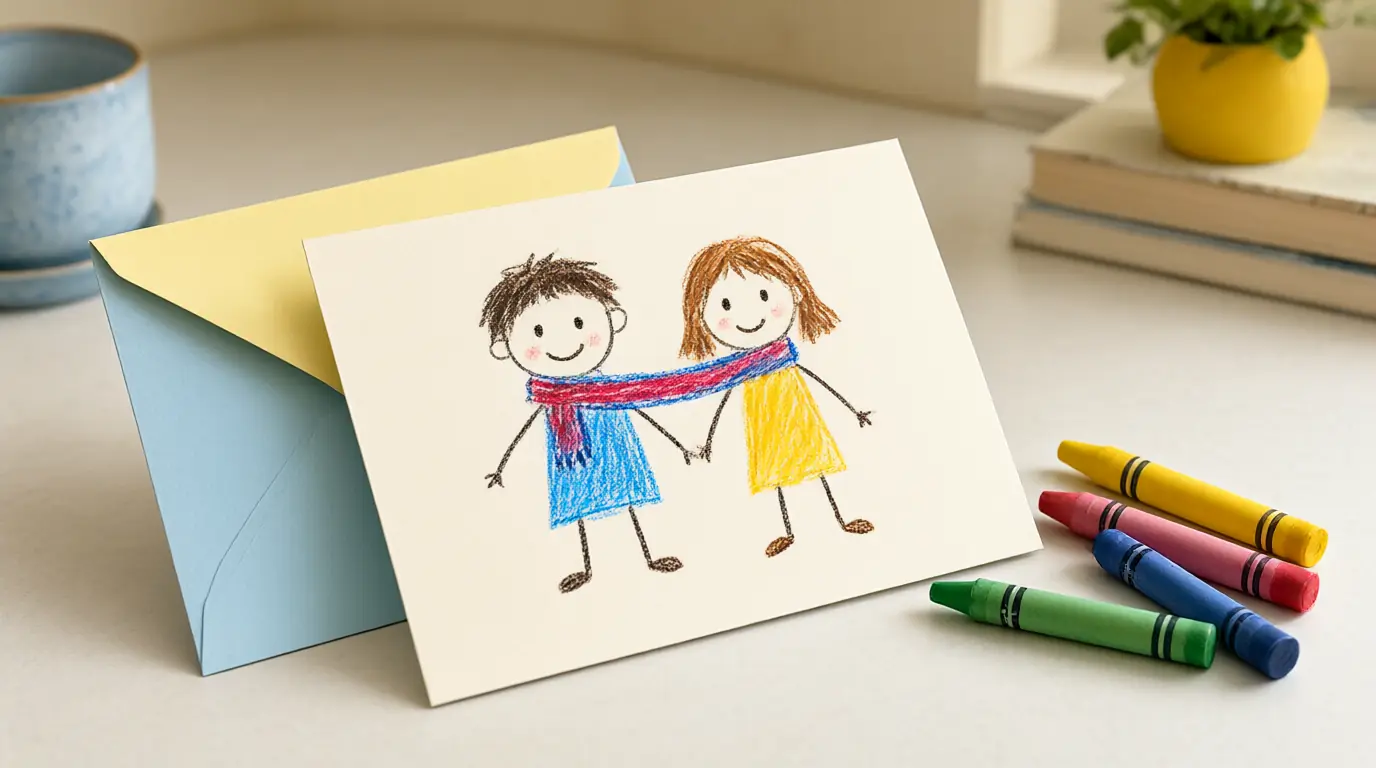
Make it your own: Younger children can draw a colour and add a handprint. Older children can write their own name or a short word, and make a second card for someone else.
Notice a place that helps
Places can be easier for young children to thank than people. A bench in the shade, a shelf of books or a warm bath all make something possible. Walking through home or a park with this question helps children see that everyday things have jobs and that someone often cared for them.
You’ll need
- A short walk or a tour of the house
- A clipboard or paper
- Crayons
- A camera or phone for an adult to take one photo
How to do it
- Walk slowly and ask, "What here helps us?"
- Stop at one place your child chooses and talk about what it makes possible.
- Draw a small sign showing why that place matters to them.
- Take one photo for a family memory book.
- Decide on a small way to look after it, such as picking up litter or tidying books.
- Return another day and see if anything has changed.
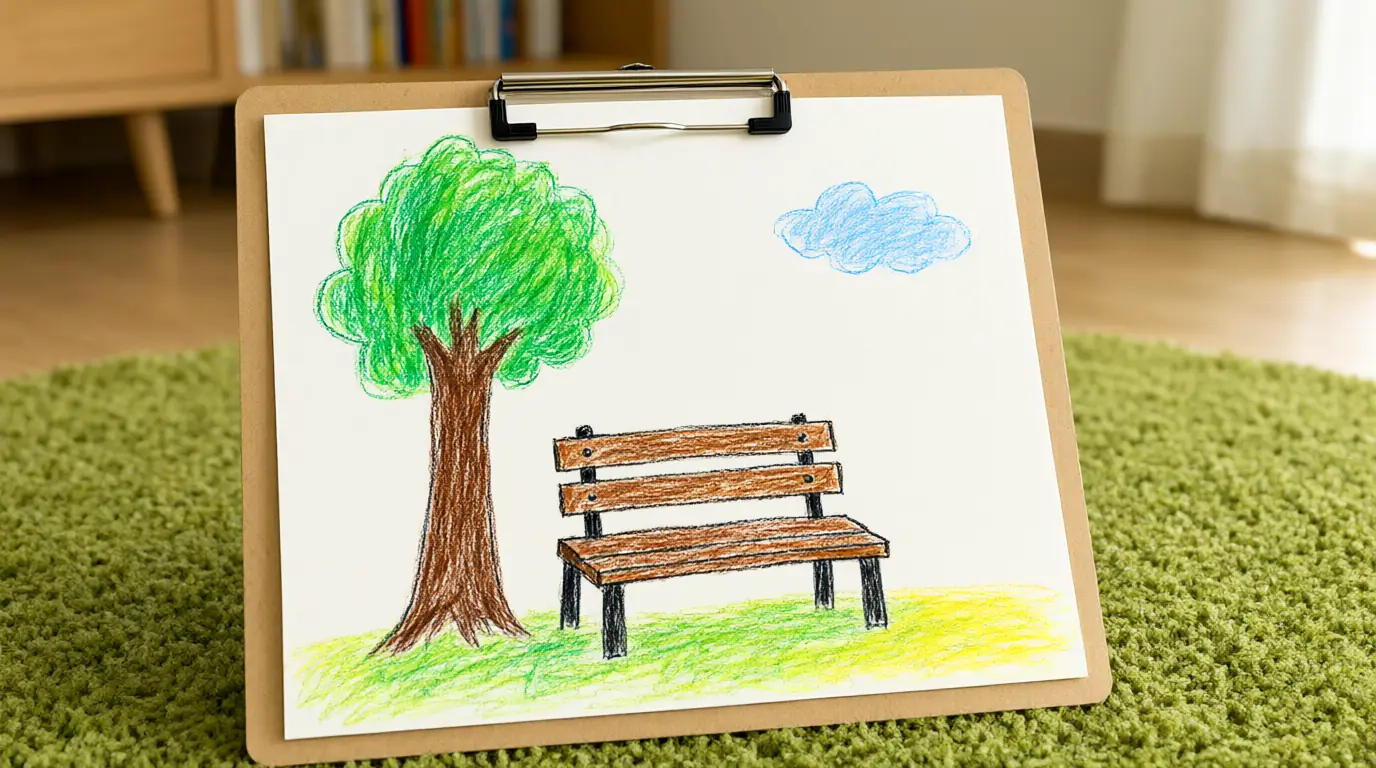
Make it your own: Younger children can point at their favourite place and say a word. Older children can interview a family member about why a place matters to them.
Keep a memory envelope
A memory envelope collects small drawings of moments the family wants to remember. It needs no daily entry; add one when something stands out, and open a few together when you feel like it. Children see that good moments can be kept, and quiet children can contribute without speaking.
You’ll need
- A large envelope or a small box
- Scrap paper cut into cards
- Crayons
- Tape or a clip to hold it shut
How to do it
- Decorate the envelope together and choose a place to keep it.
- When a nice moment happens, draw it on a card and slip it in.
- Date the card or add a small symbol that stands for the day.
- Once in a while, open the envelope and pull out two or three cards.
- Let the person who drew each card decide how much to share.
- Put the cards back or display one on the fridge.
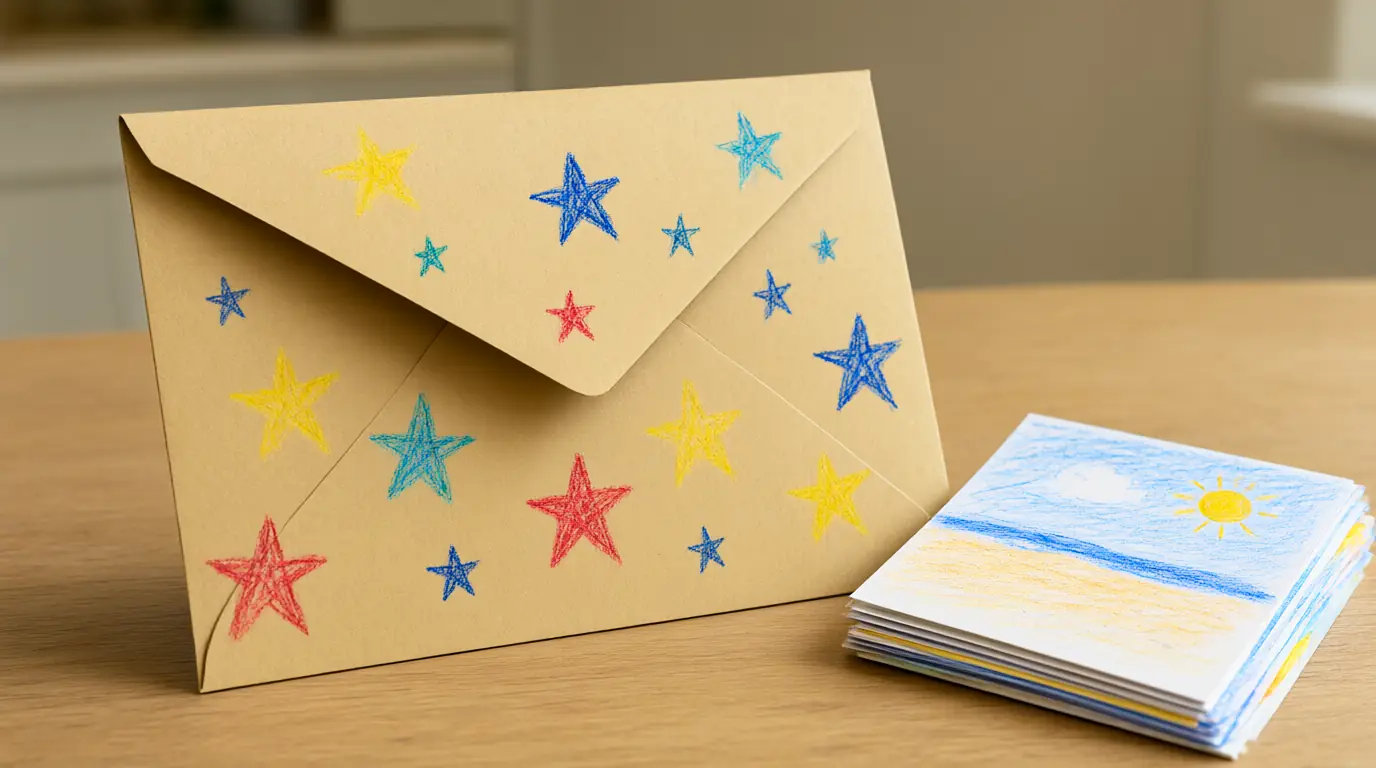
Make it your own: Younger children can add a leaf, a ticket or a sticker instead of a drawing. Older children can add a short caption written by an adult from their dictation.
Trace a chain of helpers
Everything a child uses has a chain of people behind it. Following one object backwards helps a child see how many people, near and far, make ordinary things possible. Keeping the chain short and concrete stops it from becoming a lecture, and picking one person you really know gives the idea a next step.
You’ll need
- An everyday object such as a library book or a loaf of bread
- Paper strips
- Crayons
- Tape
How to do it
- Choose one object and hold it up so everyone can see it.
- Ask who might have helped it get to your house.
- Draw one helper on each paper strip: baker, driver, shop worker.
- Tape the strips into a short paper chain.
- Pick one helper you actually meet and decide how to say thank you.
- Hang the chain where you can see it for a few days.
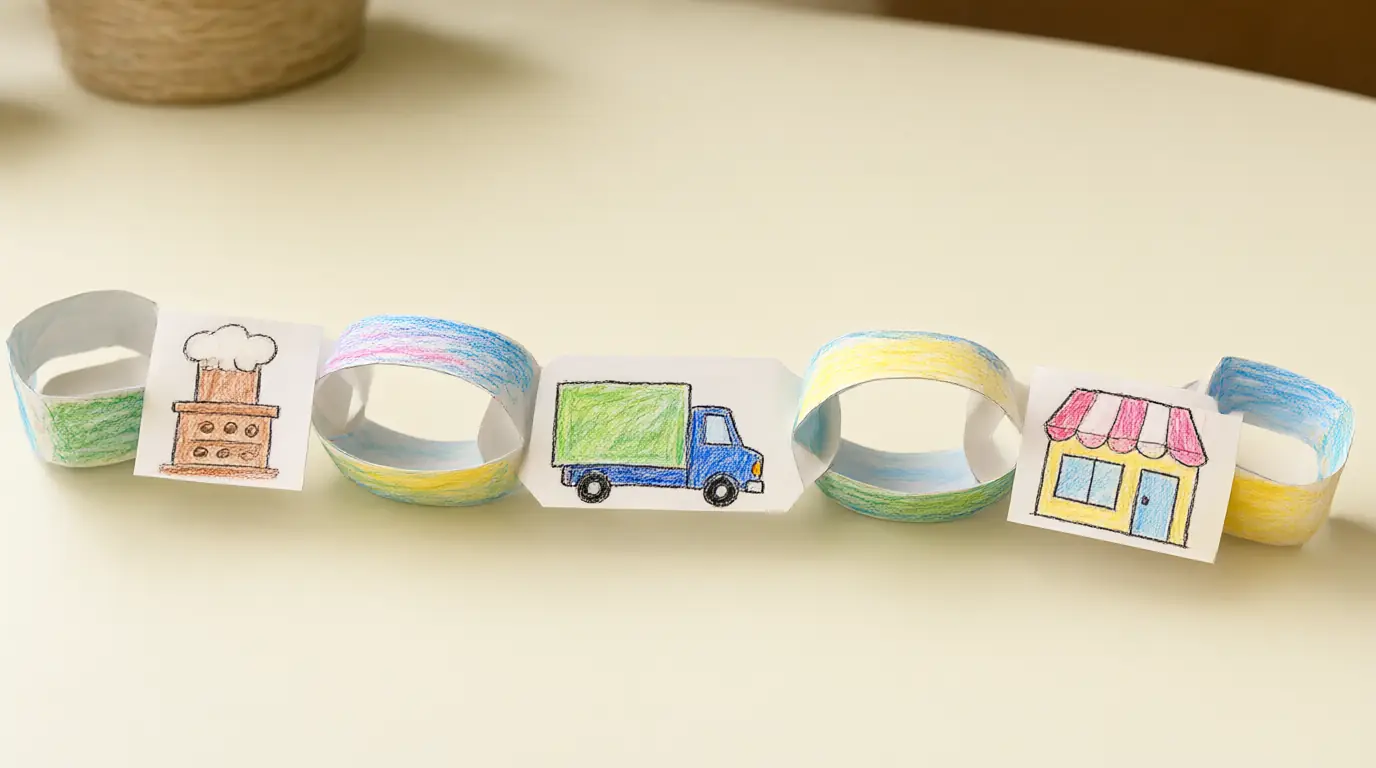
Make it your own: Younger children can use two links and say who they think made the object. Older children can make a longer chain or interview the person who gave them the object.
Create a thank-you jar for little things
A thank-you jar collects tiny acts of kindness that otherwise pass unnoticed: a sibling sharing a pencil, a grandparent waiting at the door. Dropping in a small token each time makes the habit visible without a daily quota. It gives families a pool of real examples to draw on when they want to talk about gratitude.
You’ll need
- A clear jar
- Paper slips or large buttons
- A pen
- A ribbon for decoration
How to do it
- Decorate the jar together and agree where it will sit.
- When someone does something kind, say so and drop a slip into the jar.
- Write or draw the act on the slip in a few words.
- Choose a day each week to open the jar and read two or three slips.
- Notice patterns: who helps, and where.
- Empty and start again whenever you like.
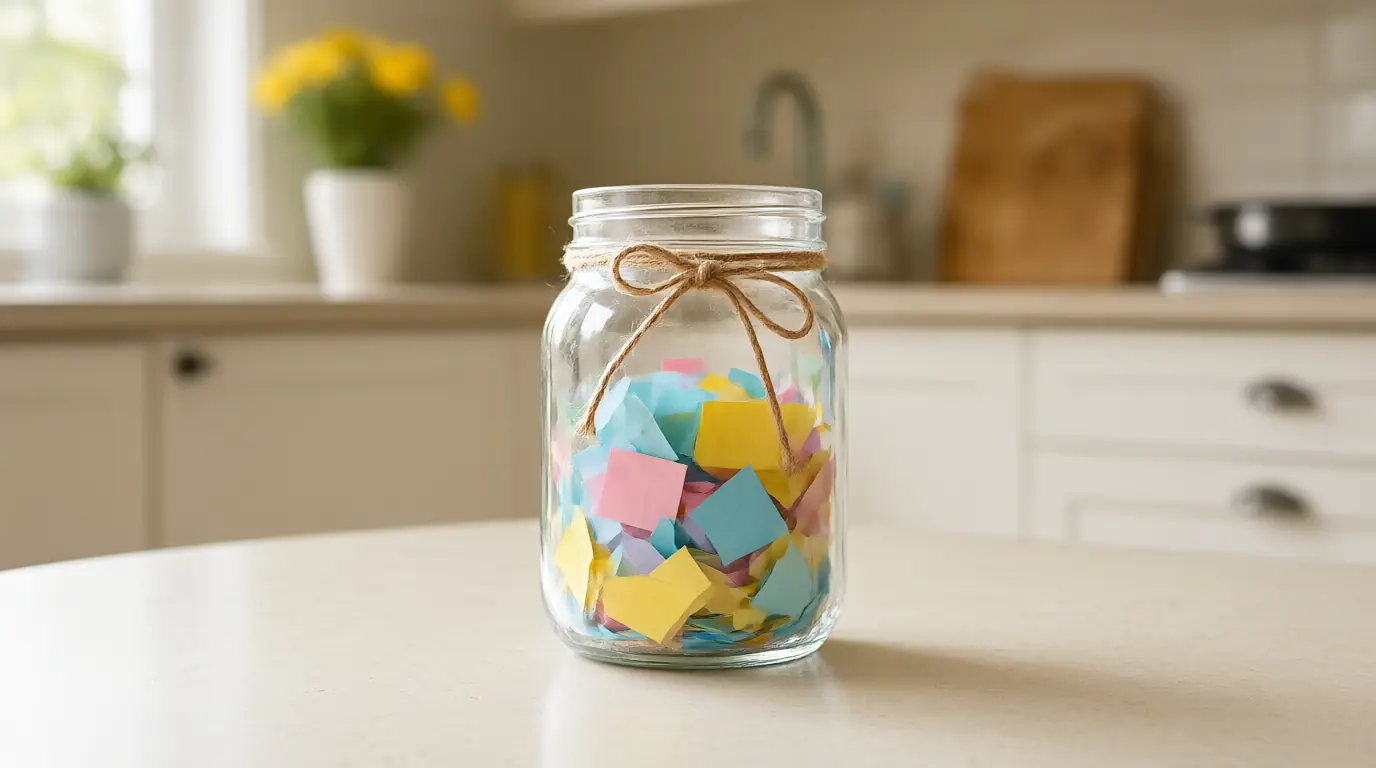
Make it your own: Younger children can drop in a button for each kind act. Older children can write the slips themselves or choose the favourite from the week.
Make it work for your family
Notice when a ritual starts to feel forced. If a child repeats the same answer each time, that may mean they have found something they truly value, or that it has become a script. Change the format: swap talking for drawing, or ask about a place or a smell instead of a person. Gratitude grows through real examples and consistent warmth, not through a quota.
Be cautious about turning gratitude into a rule for complaints. When your child says they are sad or cross, listen first, and add the thank-you later, or not at all. In families with different circumstances, avoid comparing what children have; keep the focus on what happened today. For seasonal ideas, you might connect these rituals to Thanksgiving activities, or to ordinary evenings with simple family activities at home.

Parents also ask
At what age can children understand gratitude?
Young children can notice kindness and say thank you from a very early age, but a fuller understanding of why someone helped usually develops over time. Between 3 and 6, children can link a specific action to a feeling, especially when an adult models it with simple examples.
Should I make my child say thank you?
Modelling it is usually more effective than demanding it. Say thank you yourself, explain what you appreciated and give your child a chance to join in. Pressure can turn the words into a script. If your child feels shy, a wave or a drawing can be a kind alternative.
How often should we do gratitude activities?
There is no set rule. A few minutes once or twice a week, or whenever something nice happens, is enough for most families. If a ritual feels forced or starts to make your child resist, take a break and try a different format later.
Choose materials and activities that suit your child, supervise as needed and adapt the ideas to their interests and abilities. About our editorial approach