Weebou Editorial Team
 7 min read
 In this article
A little preparation
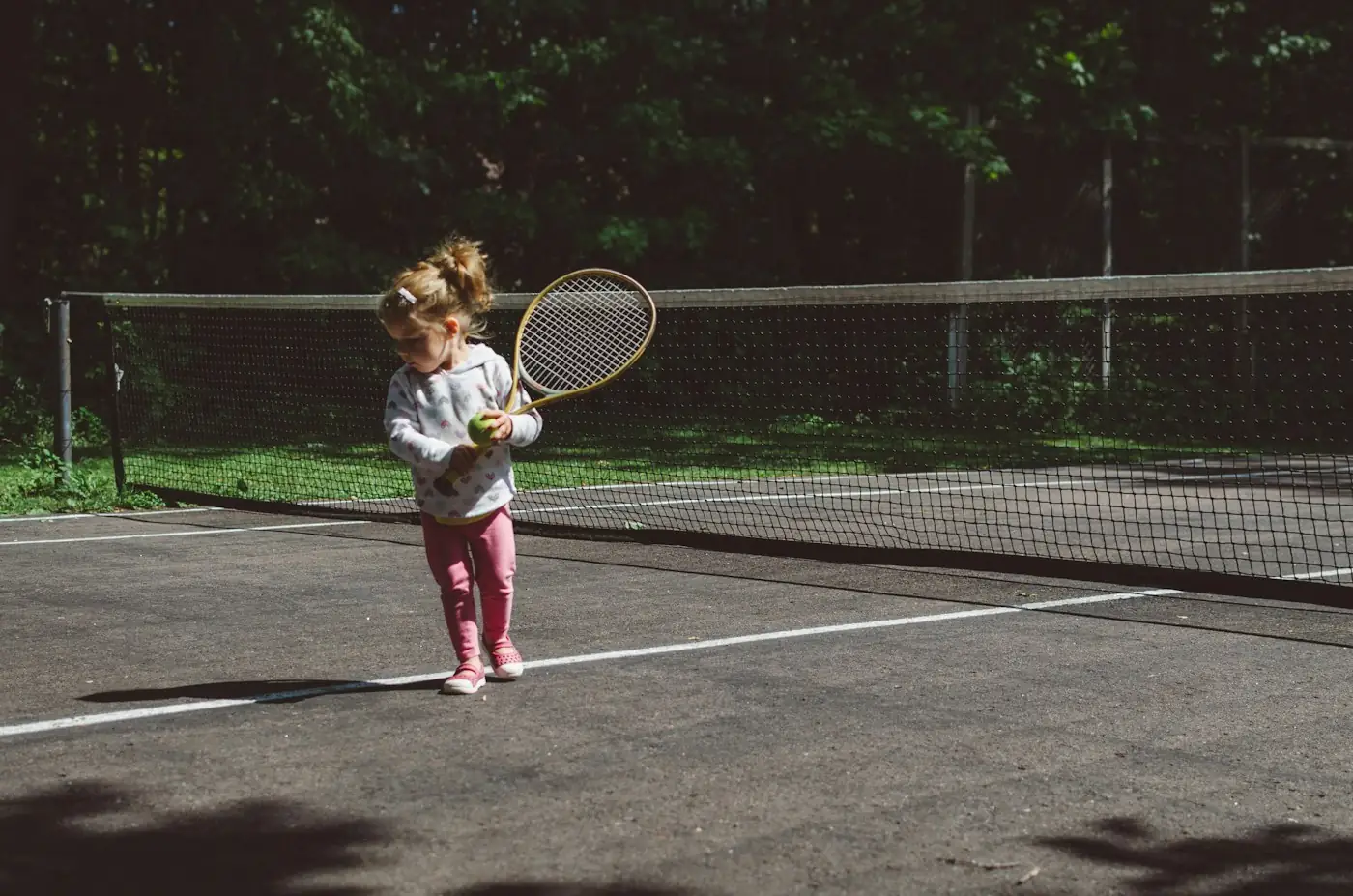
Choose a flat, clear area away from windows, pets and passers-by. A hallway or a patch of lawn about 3 metres long is enough. Use a soft foam or low-bounce ball and a lightweight child-sized racket or a paddle cut from sturdy cardboard with the edges taped smooth. Keep other children behind the player and agree that the paddle always points at the floor when nobody is hitting.
Show your child how to hold the paddle by shaking hands with its handle, with the face tilted slightly toward the floor or target. Demonstrate one slow tap, then let them try. Plan on short sessions of 10 to 15 minutes, with a drink and rest between games. Mark a 'ready spot' on the floor with a piece of tape so your child always knows where to stand, and keep a basket nearby so balls are collected rather than chased across the room.

Ideas to try together
Roll through the gate
This is the gentlest start: no ball leaves the ground, so your child can concentrate on how the paddle moves and where the ball goes. Pushing a ball through a gap teaches aiming and control, and widening or narrowing the gate lets children set their own level of challenge.
 You’ll need
- 1 foam ball
- 1 short paddle or racket
- 2 cones, cups or soft toys as gate posts
- A basket for balls
How to do it
- Place the two markers about 50 centimetres apart on a flat surface.
- Put the ball on the floor about one metre from the gate and show your child how to push it with the flat face of the paddle.
- Ask your child to aim the ball between the markers and push gently.
- Walk together to collect the ball and put it back on the starting spot.
- Let your child choose a wider or narrower gate and try again.
- Add a second gate a little further away so the ball can roll through both.
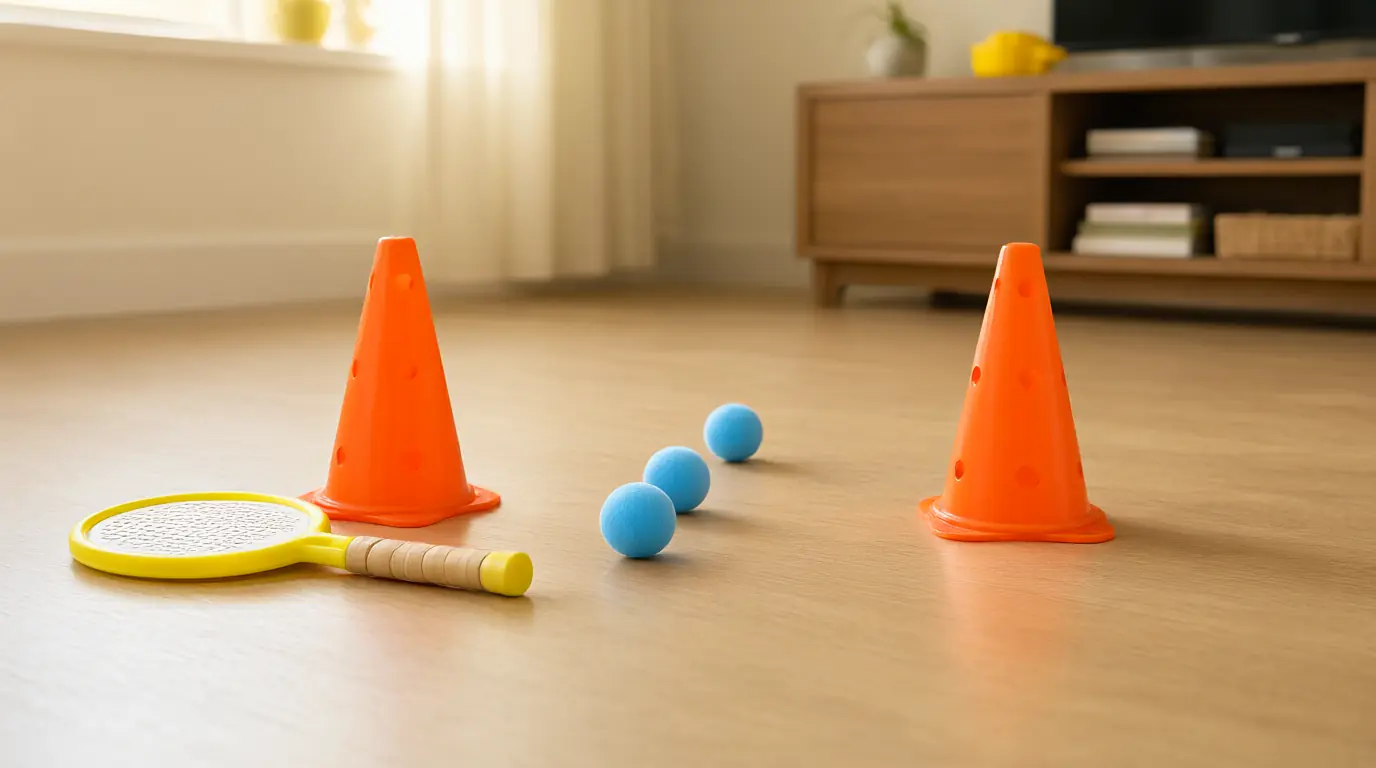
Make it your own: Younger children can use a wide gate and push the ball with a hand before moving to the paddle. Older children can try rolling the ball along a curved path or between three gates in a row.
Paddle picnic
Balancing a ball on a paddle while walking builds grip, wrist control and patience. Turning it into a picnic delivery keeps the pressure low: if the ball falls, the food has simply dropped, and nobody is out.
You’ll need
- 1 foam ball and 1 paddle
- A picnic blanket or towel
- 3 or 4 soft toys as guests
- Floor tape for a start and finish line
How to do it
- Lay the blanket about 4 metres away and seat the toys on it.
- Place the ball in the centre of the paddle and show your child how to hold the paddle flat in front of them.
- Walk slowly together to the picnic, keeping the ball on the paddle.
- If the ball falls, stop, pick it up and start again from where you are.
- Serve the ball to the first toy by gently tipping it onto the blanket.
- Walk back and deliver a second ball to the next guest.
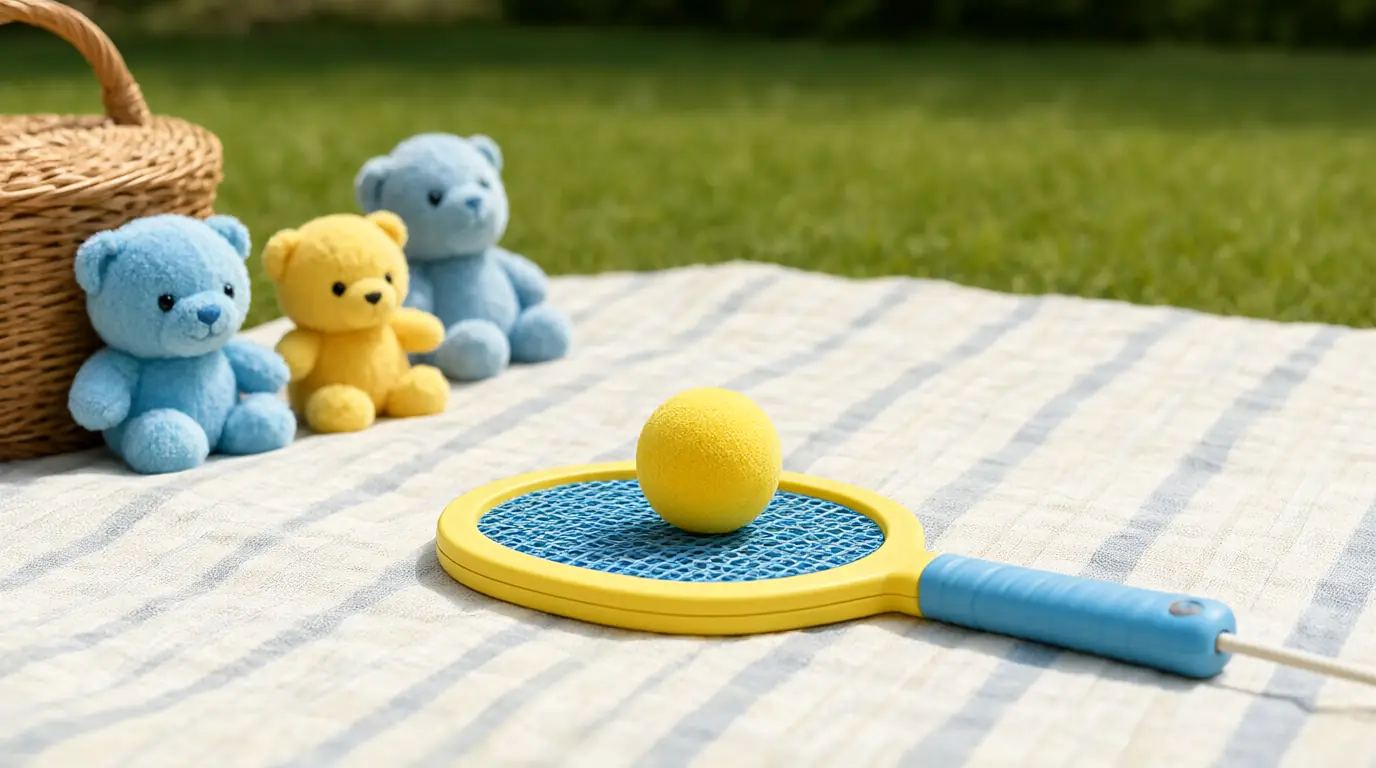
Make it your own: Younger children can hold the paddle with both hands or take only five steps. Older children can weave around a cone or try holding the paddle in their other hand.
One-bounce welcome
In this game an adult gently drops a ball close to the child, who taps it after a single bounce. It practises timing and tracking, the core of tennis, without asking for a rally. The child is in charge of the pace and can ask for slower drops or a pause at any time.
You’ll need
- 1 low-bounce foam ball
- 1 short racket or paddle
- A floor marker for the child's ready spot
- A large soft target, such as a laundry basket on its side
How to do it
- Mark a ready spot for your child about 2 metres from the target.
- Stand a short distance to the side with the ball held out at hip height.
- Say 'Ready?' and wait for a nod, then drop the ball so it bounces once near your child's racket.
- Let your child tap the ball in any direction, then laugh and fetch it together.
- Pause after three or four drops to let your child choose: another round, a different target or a break.
- Gradually ask for a tap toward the target but never insist on accuracy.
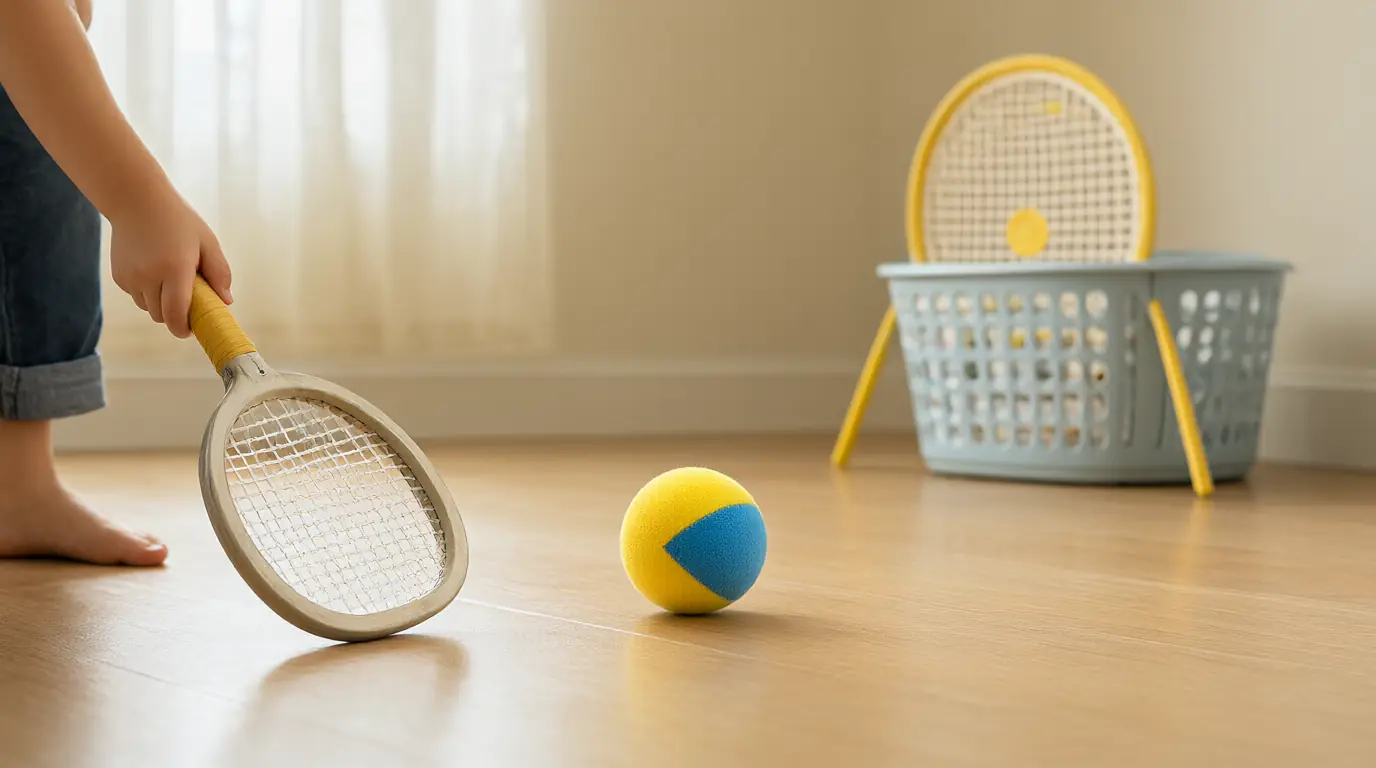
Make it your own: For younger or more cautious children, drop the ball from lower down and let it roll rather than bounce. Older children can try a two-step approach: tap, then catch it with the other hand.
Colour court
Two large coloured targets on the floor let children practise choosing a direction before they hit. Naming the colour aloud links planning to action, and swapping the caller and player roles keeps both children involved. The game involves no net and no score, only a clear question: can the ball go where I said?
You’ll need
- 2 large sheets of coloured paper or floor markers (for example blue and yellow)
- 1 foam ball
- 1 paddle
- Masking tape to hold the paper down
How to do it
- Tape the two coloured sheets to the floor about 1 metre apart and 2 metres from the player.
- Ask your child to name a colour before they tap the ball.
- Roll or drop the ball for them to tap toward the chosen colour.
- Cheer for the choice rather than the landing spot, and talk about what the ball did.
- Swap roles so your child calls a colour for you to aim at.
- Add a third colour or move the targets further apart when the first version feels easy.
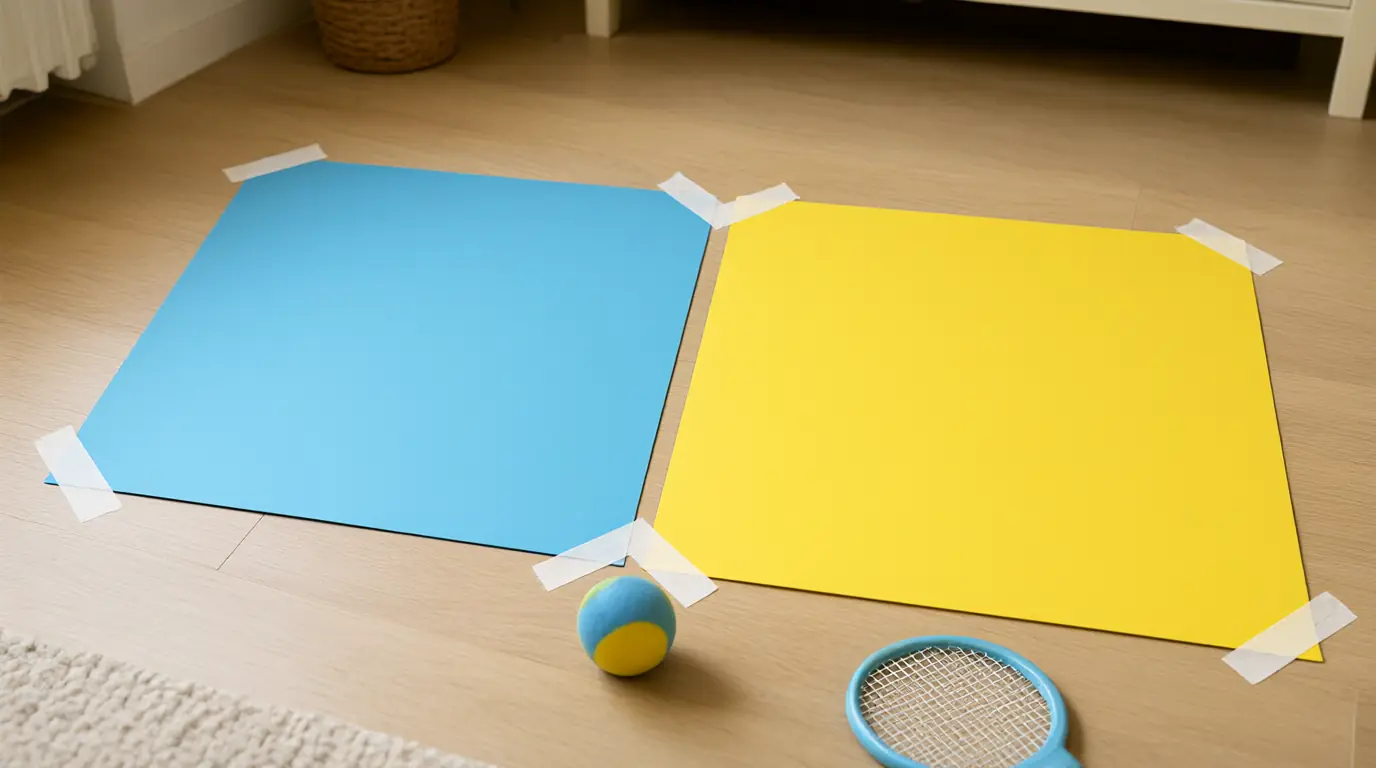
Make it your own: Younger children can use one big target and simply push the ball toward it. Older children can try to send the ball to the colour you name from a different starting position.

Make it work for your family
If your child finds hitting a moving ball tricky, go back to rolling. Pushing a ball along the floor with a paddle teaches contact, direction and force without anything leaving the ground. A bigger target and a shorter distance help, and a child who is nervous about balls near the face can stand beside the ball instead of in front of it.
Celebrate decisions rather than outcomes: 'You chose to aim at the blue spot.' When your child is ready for more, try these ground-based alternatives to trampoline games for building leg strength, or the running games for kids to practise changing direction.

Parents also ask
What age can kids start playing tennis?
Many children can start simple tennis-style games around age 4, using a foam ball and a short paddle. Focus on tracking, aiming and fun rather than technique, and let your child decide how long to play.
What equipment do kids need for first tennis games?
A soft foam or low-bounce ball, a short child-sized racket or a cardboard paddle with smooth edges, and floor markers are enough. You do not need a court or net. A clear, flat space of about 3 metres is plenty.
How do I teach a child to hit a ball?
Start by rolling the ball and pushing it with the paddle, then try a gentle drop and tap after one bounce. Keep distances short and targets large. Praise the aim and the effort, and stop before your child gets tired or frustrated.
Choose materials and activities that suit your child, supervise as needed and adapt the ideas to their interests and abilities. About our editorial approach