Weebou Editorial Team
 8 min read
 In this article
A little preparation
Walk the route together before playing, looking for holes, slippery patches, kerbs and anything that could trip a runner. Choose a flat, open space well away from roads and mark the boundary with cones, chalk lines or even a skipping rope laid on the ground. Where possible, make routes one-way with a separate path back to the start, so runners are not heading towards one another.
Bring water and set out a shaded resting spot with a blanket, where children can sit without leaving the game. Check that shoes are fastened and suitable, and that no child is running in socks on a smooth floor. Keep rounds short, around one to two minutes, and stop before tiredness shows as pushing or tumbles. Explain one signal for 'stop' that is easy to hear and see, such as a raised red card. If a child prefers to walk, carry a message or hold the cards, give that role real value so they feel part of the game rather than apart from it.

Ideas to try together
The post office route
Carrying a letter to the right postbox gives running a purpose and adds matching to the mix. Because each child has their own errand, there is no race and no loser, and the return path keeps runners from colliding.
 You’ll need
- 6 to 8 picture cards in a basket
- 3 postboxes made from cones or boxes, each with a matching picture
- Chalk for the return path
- A cloth bag for the postperson
How to do it
- Lay out the postboxes in a line about ten steps away, each with a picture such as a sun, a fish or a tree.
- Mark a one-way return route with chalk arrows on the ground.
- Each child takes a card from the basket and says what it shows.
- They run, jog or walk to the matching postbox and drop the card in.
- Return along the chalk path and take a new card.
- When the basket is empty, shuffle the cards and swap roles so a different child holds the basket.
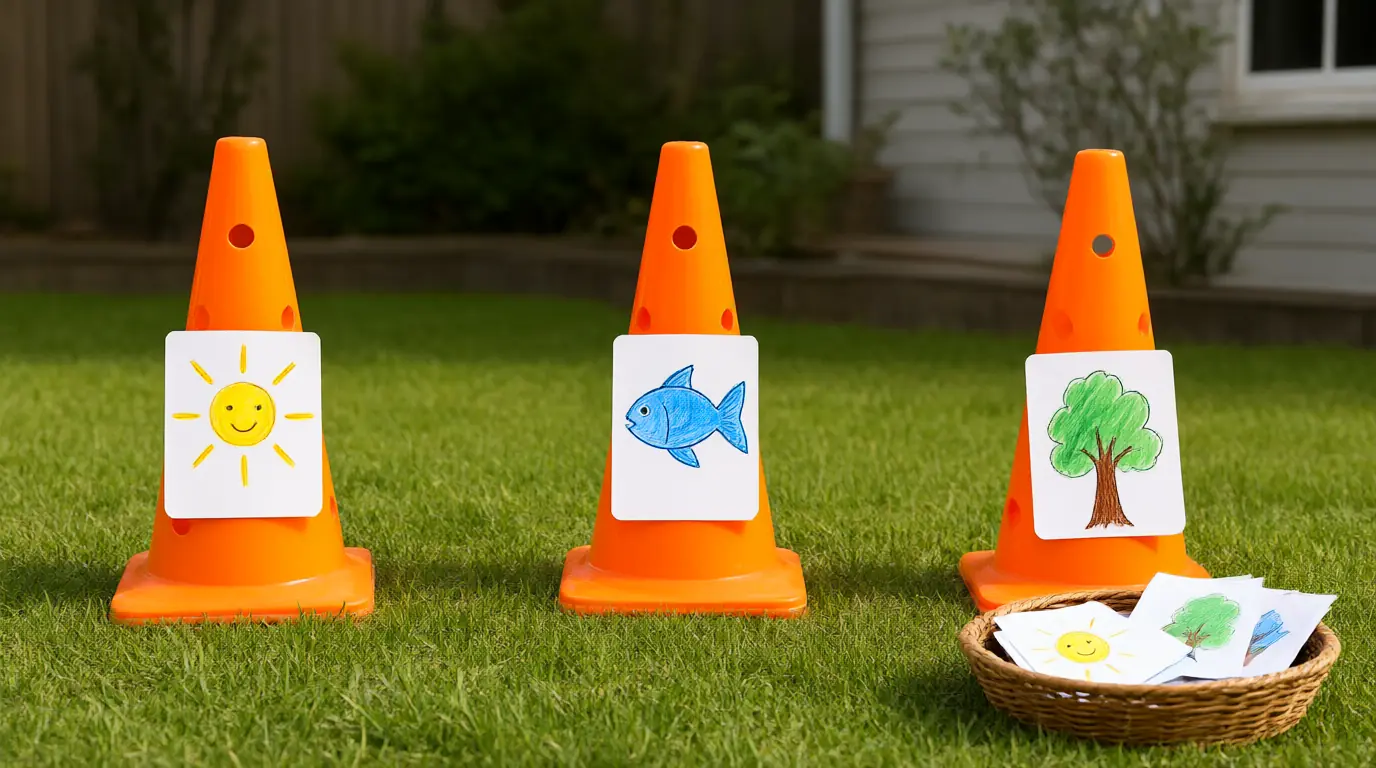
Make it your own: For younger children, use two postboxes close together. For older children, add a third step, such as hopping the last few steps before posting.
Traffic light stop and go
Stopping on a signal is a skill in itself. This game practises listening and watching, helping children control how fast they move and how close they get to others. It also gives children a safe way to practise a skill they will need near real roads: stopping the moment a signal appears, even when they are excited.
You’ll need
- A green card and a red card, or two paper plates
- A clear space about 10 metres long
- A cone to mark the start
- A helper to hold the cards
How to do it
- Line children along the starting cone and show both cards.
- Explain that green means go and red means freeze, practising each on the spot.
- Start with walking: hold up green and let everyone walk forward.
- Raise red and say 'freeze' loudly so everyone stops.
- Once stopping is easy, move to jogging and then running, always leaving generous space.
- Let a child take the helper's turn and hold the cards.
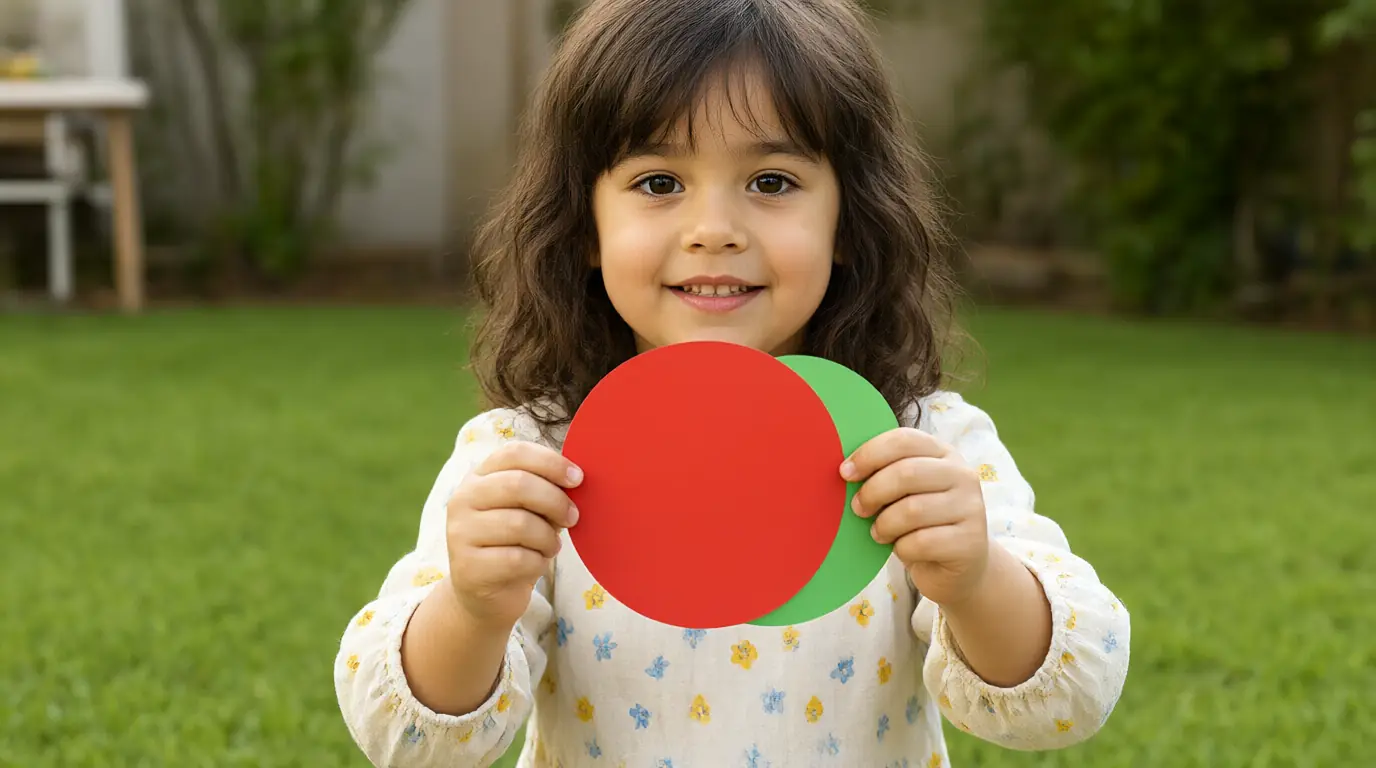
Make it your own: Young children can practise freezing like statues. Older children can add an amber card for 'slow motion'.
Animal station visits
Moving between animal stations gives children a reason to travel and a movement to try when they arrive. They choose their next stop, which builds decision-making and keeps the group spread out. Variety keeps the group dispersed, so children are rarely heading for the same spot, and the imaginative movements give tired legs a different job.
You’ll need
- 4 to 5 animal pictures taped to cones or posts
- A basket for spare pictures
- A bell or whistle for the end of a round
- A wide, clear space
How to do it
- Place the animal pictures well apart so that routes seldom cross.
- Show each picture and decide on a movement: a bear stomp, a frog hop, a bird flap.
- Children pick a station, travel there at their own speed and do the movement for five seconds.
- They choose another station and move on.
- After two minutes, ring the bell and gather at the resting spot.
- Ask each child which animal was their favourite and why.
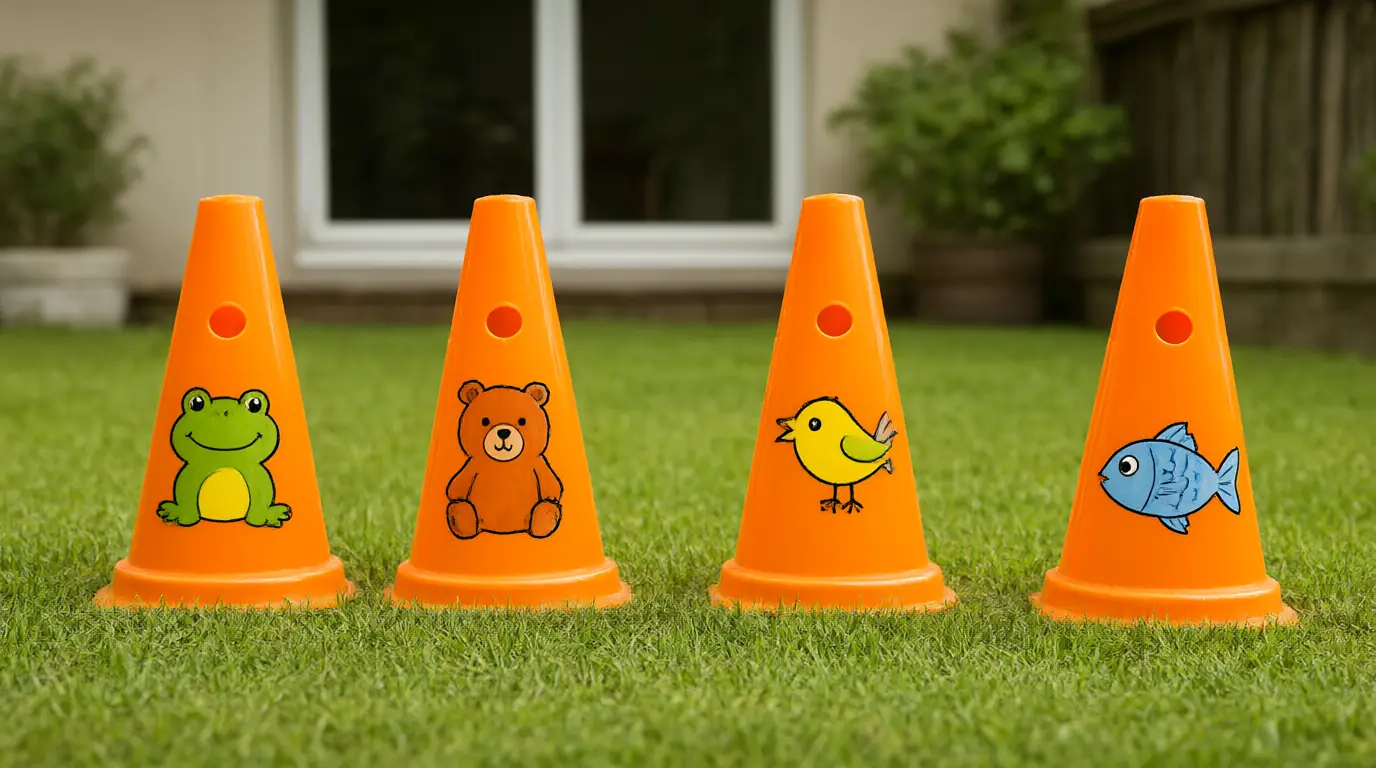
Make it your own: For children who prefer to stay still, offer seated animal gestures. Older children can invent a new animal station and its movement.
Collect the colours
Running to find a named colour adds listening and colour recognition to the activity. Because each child fetches their own colour, there is no race, and repeated trips build stamina without anyone noticing. The calling of colours also quietly builds listening skills, since children must hold a word in mind while they travel to fetch it.
You’ll need
- Large coloured markers, hoops or paper sheets in 4 colours
- A start line made from a rope
- A bag of soft bean bags or scarves in the same colours
- A clear space about 8 metres long
How to do it
- Spread the colour markers at the far end, well apart.
- Call out a colour and let children run, jog or walk to a marker of that colour.
- Each child picks up a bean bag in the same colour and brings it back to the start.
- Place the bean bag in a basket and wait for the next colour.
- Repeat for each colour, changing the order.
- Count the bean bags at the end and sort them by colour together.
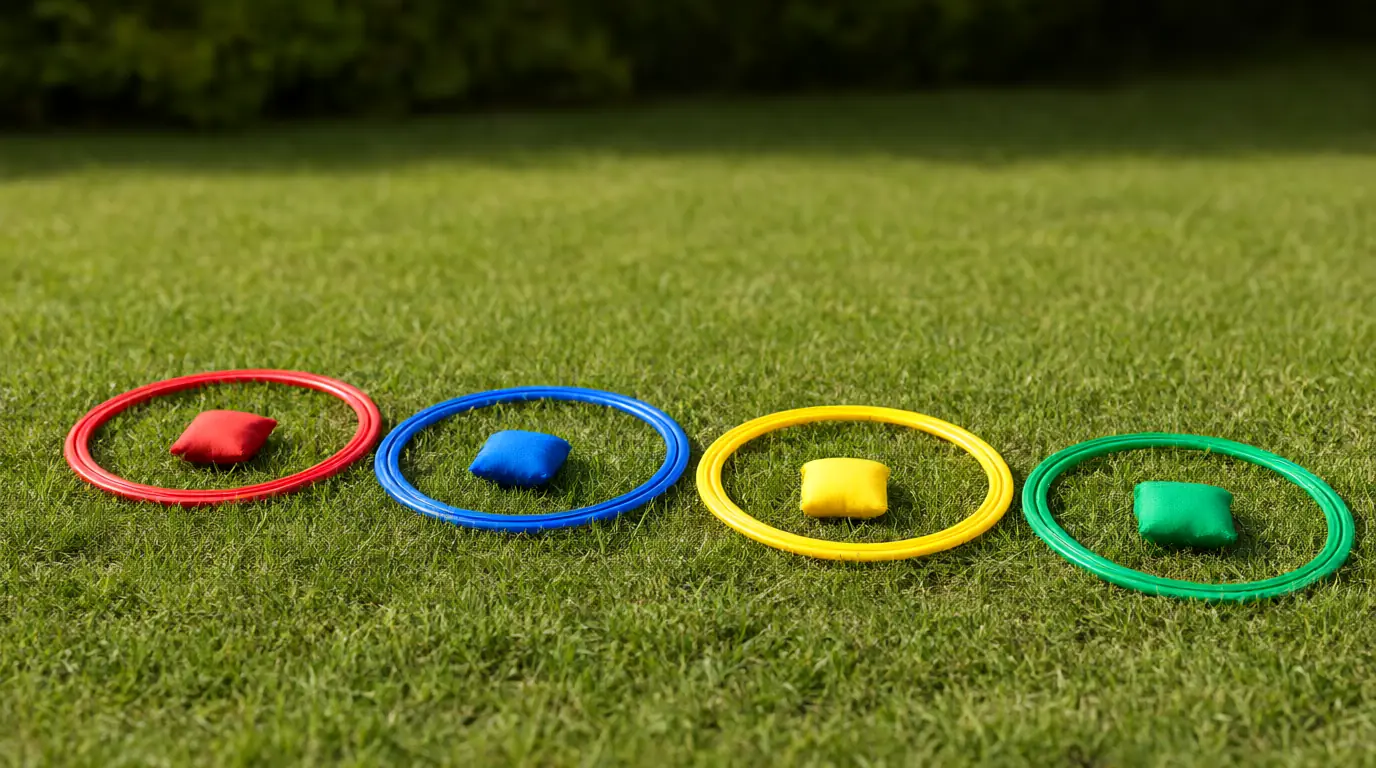
Make it your own: For younger children, call out only two colours. Older children can take turns being the caller and choose a colour for the group.
Follow the chalk path
Chalk lines show children where to go without crowding. Wiggly, straight and zigzag routes invite different kinds of running and keep the group moving in different directions at once. Because the paths are drawn on the ground, children can see where to run without being told, and the shapes themselves become part of the fun.
You’ll need
- Thick chalk
- A paved or hard-surface area
- A small cone at the end of each path
- A bucket of water and a sponge for cleaning up
How to do it
- Draw three paths side by side: one straight, one wavy and one zigzag.
- Mark a start and finish on each, with a cone at the end.
- Show the children how to follow a path by jogging or walking with their feet on the line.
- Let each child choose a path and run it, then return along the side.
- Swap paths after each turn so they try all three.
- Wash the chalk away together with a sponge.
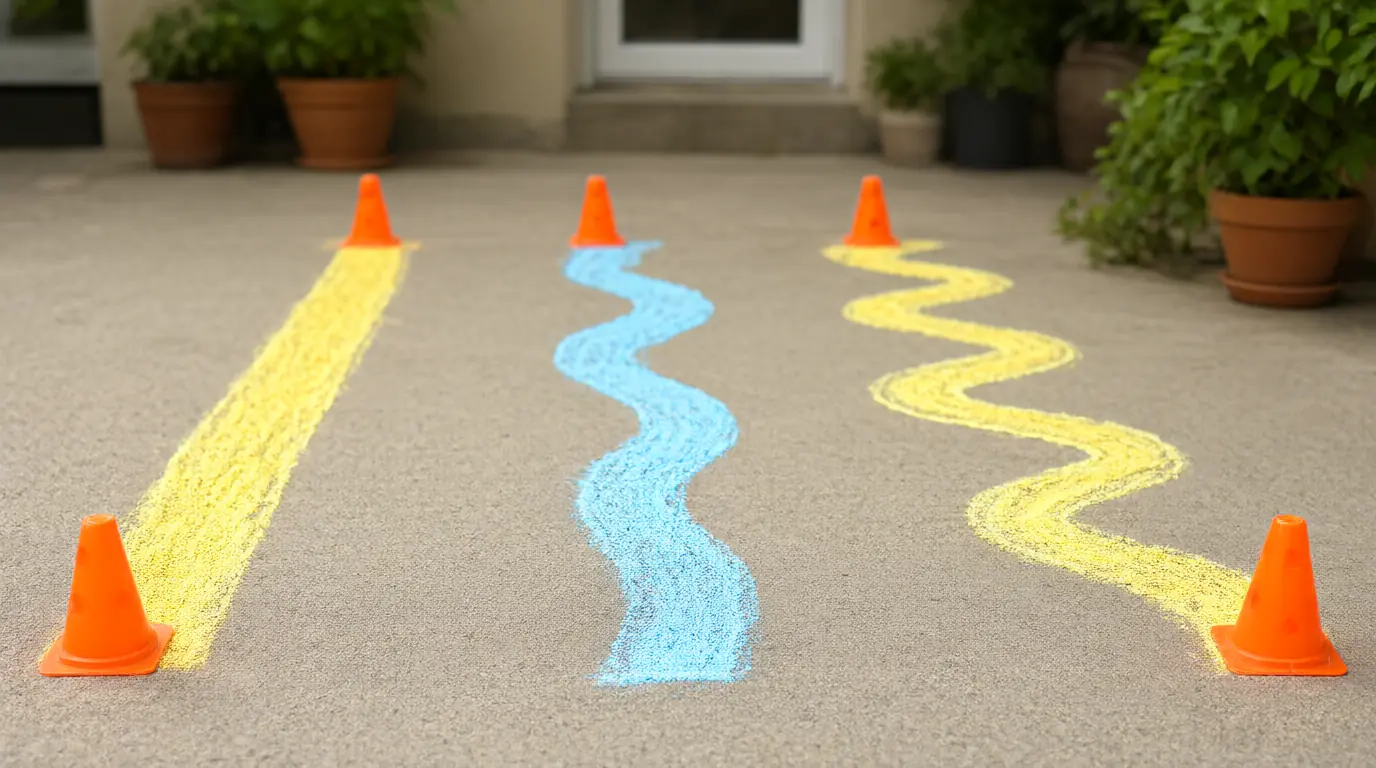
Make it your own: Younger children can walk along thicker lines. Older children can draw their own path and invent a rule for how to follow it.

Make it work for your family
Offer a walking, wheeling or stationary role so that every child can take part, whether they are tired, shy or have a different mobility need. End each round before tiredness turns into collisions, and let children rest without losing their place in the game. Watch for signs such as red faces, slowing down or arguing, which suggest it is time for a drink and a pause.
In hot weather, play in the morning or evening and keep rounds even shorter. For more movement ideas, see outdoor games that fit the space you have or gross motor activities for preschoolers, and try the Weebou memory game for a calm pause afterwards.

Parents also ask
What are good running games for preschoolers?
Simple, structured games such as stop-and-go, delivering picture cards or visiting animal stations work well. They have a clear purpose, short rounds and no elimination, so children can run at their own pace and rest when they need.
How do I stop children colliding when they run?
Use a marked boundary, one-way routes with a separate return path, and generous spacing between stations. Practise stopping on a signal at walking speed first, and keep groups small if the space is limited.
How long should a running game last for young children?
Rounds of one to two minutes with a short rest and a drink between them suit most young children. Stop earlier if you see tiredness, arguing or slowing down, and let anyone who wants a break take it.
Choose materials and activities that suit your child, supervise as needed and adapt the ideas to their interests and abilities. About our editorial approach