Weebou Editorial Team
 10 min read

 In this article
A little preparation
Before you set out a single toy, ask the child and the people who know them best what they enjoy, how they communicate and what they would rather avoid. Sensations matter: a room can be too bright, a floor too cold, a song too loud. Set up in a space the child already knows, with materials they have met before, and keep the layout the same for a few sessions so the only new thing is your attention. Our guide to sensory play with real choices has more on reading those preferences.
Timing helps more than props. Try a short session of ten to fifteen minutes at a point in the day when the child is usually settled, and finish while things are still going well rather than waiting for a wobbly moment. Agree a way to say stop that does not depend on speech: a card, a sign, a tap on the table, or simply standing up, which you accept the first time it happens. Participation might look like playing, watching from the doorway, holding one piece, or commenting from across the room, and all of these count. Offer your own play quietly and let the child decide how close to be.

What to know and try
Offer two clear possibilities, then wait
A choice between two visible activities is easier to answer than an open question, and it hands the child real control over the session. Waiting is the important part: many children need several seconds to process the options, and filling that silence with more words makes the decision harder. Accepting neither is also a valid answer and tells you something useful.
 You’ll need
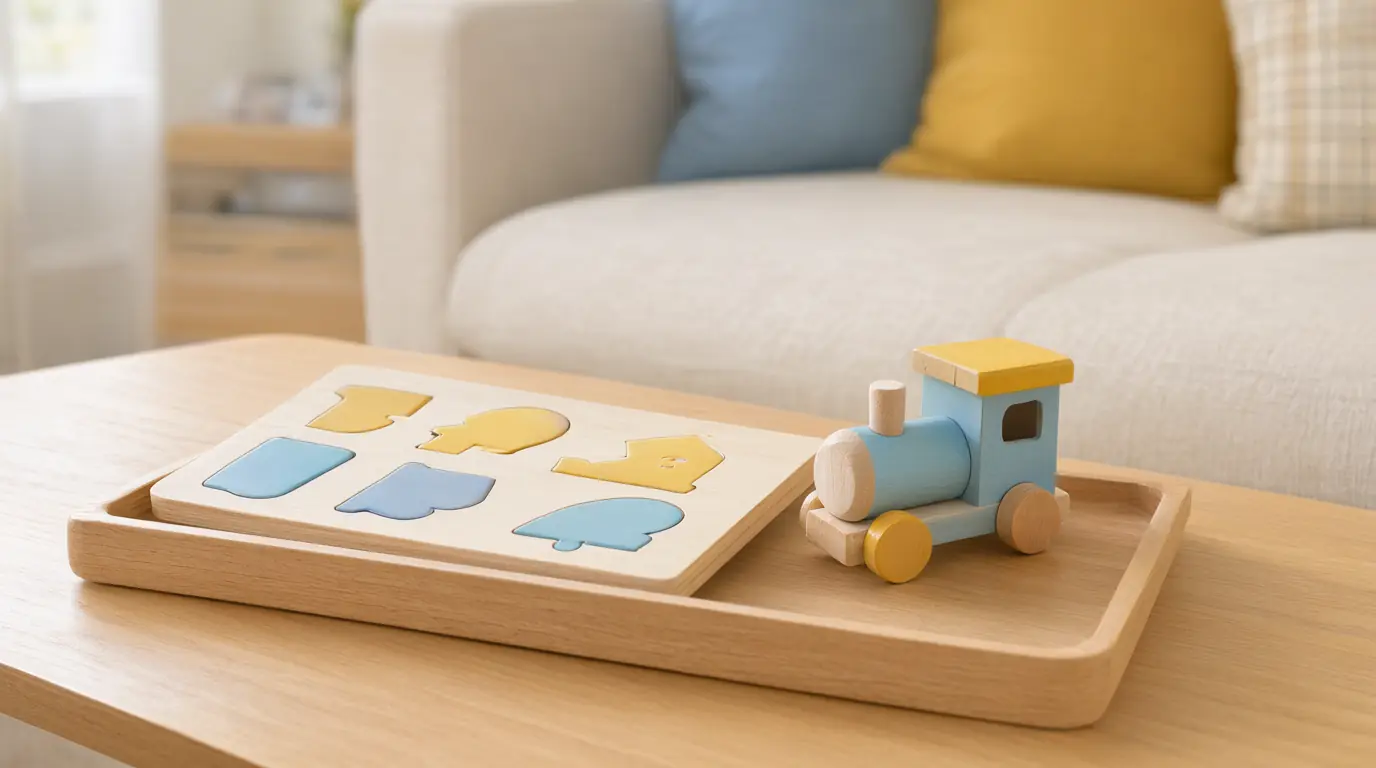
- Two familiar activities, such as a inset puzzle and a set of trains
- A low tray or shelf where both are visible
- The child's usual way of communicating (words, signs, pictures, a device)
How to do it
- Place both activities side by side at the child's eye level, with nothing else competing for attention.
- Name each one once in a few words: 'Puzzle or trains?'
- Wait quietly for at least ten seconds without repeating the question.
- Follow whatever the child indicates, including reaching, looking, signing or pressing a button.
- If they push both away, say 'Neither, that's fine' and leave the tray where it is for a minute or two.
- Keep the chosen activity out for as long as the child wants it rather than swapping it for something harder.
Make it your own: Younger children often choose faster with real objects than with pictures. Older children can handle three options or a simple 'first this, then that' card. If a child always picks the same item, that is a preference, not a problem.
Join the interest without taking it over
The quickest way into shared play is to notice what the child is already doing and do something similar nearby. Copying the action, rather than improving it, shows you are paying attention without asking for a response. This is the same idea that makes parallel play comfortable for many young children: company without a demand.
You’ll need
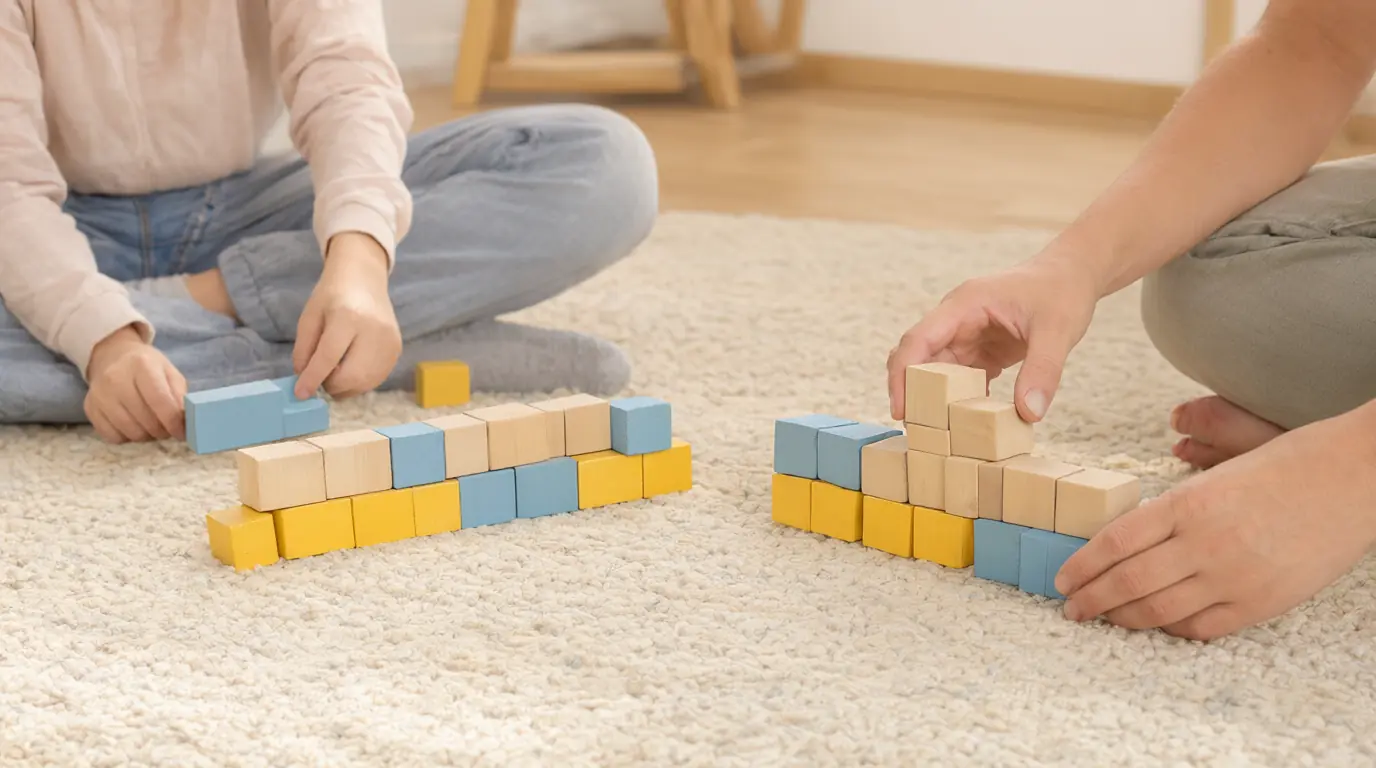
- A second set of the same material, or one very similar piece
- The child's current activity, left exactly as they arranged it
How to do it
- Sit at the edge of the child's play space rather than directly opposite them.
- Watch for a minute and notice the pattern: lining up, spinning, stacking, opening and closing.
- Take your own piece and do the same thing beside them, at the same pace.
- Add one small variation of your own, such as a different colour in the same row, and say nothing about it.
- Comment briefly on what you are doing, not on what the child should do: 'Mine is going next to yours.'
- Stay for as long as it is comfortable, then move back slightly before the child asks you to.
Make it your own: Children who find close presence difficult may prefer you to join from the other end of the table. Older children can be invited to give you an instruction for your piece, which keeps them in charge of the game.
A picture sequence for what happens next
Many children cope better when they can see the shape of an activity before it starts. Four photo cards showing the real materials, in the real room, do more than a written list. The sequence is a support you can change at any point, not a rule that overrides distress, and the break card belongs at every stage rather than only at the end.
You’ll need
- Four photos of the actual toys and shelf in your home
- Sticky putty or tape
- A break card with a simple symbol
- A strip of card to hold the sequence
How to do it
- Photograph each step with the real objects: choose, play, tidy, finished.
- Stick the photos in a row at the child's height, with the break card beside the strip.
- Walk through the strip once before starting, pointing rather than talking much.
- During play, point to the current card when you move on, and move a peg or clothes clip along the strip.
- Offer the break card without comment if the child looks uncomfortable, and honour it straight away.
- Take one card away if four feels like too much, or add a fifth for a snack.
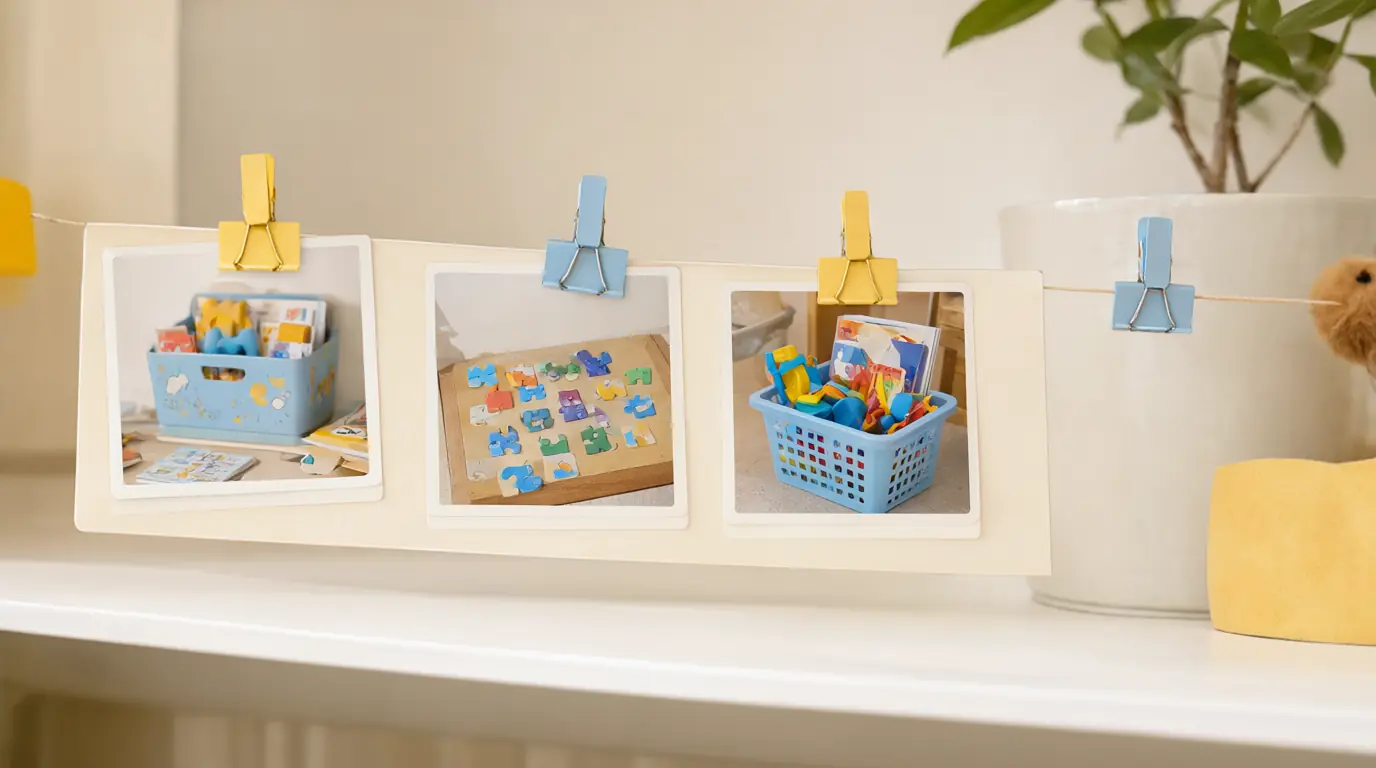
Make it your own: Two cards are plenty for a two- or three-year-old. Older children can help choose the photos and decide the order. If the child ignores the strip, leave it visible and stop pointing; some children use it privately later.
Change one sensory feature at a time
When something feels wrong, changing everything at once makes it impossible to tell what helped. Adjust a single feature, watch, and keep the change only if the child settles into play. The goal is easier access to something enjoyable, not gradual exposure to a sensation they dislike. Ask when you can, and read comfort from the body as well as from words.
You’ll need
- Earmuffs or a quiet corner
- A soft blanket or cushion
- A lamp to replace overhead light
- An alternative material, such as dry sand instead of wet
How to do it
- Notice the moment play stops: a sound, a texture, a smell, a light, or someone standing too close.
- Pick one thing to change, such as switching off the overhead light and using a lamp.
- Say what you are doing in a short sentence: 'The big light is off.'
- Wait and watch whether the child returns to the activity in their own time.
- Keep the change for the rest of the session, then ask later whether they want it again.
- Write down what helped so other adults can offer the same thing.
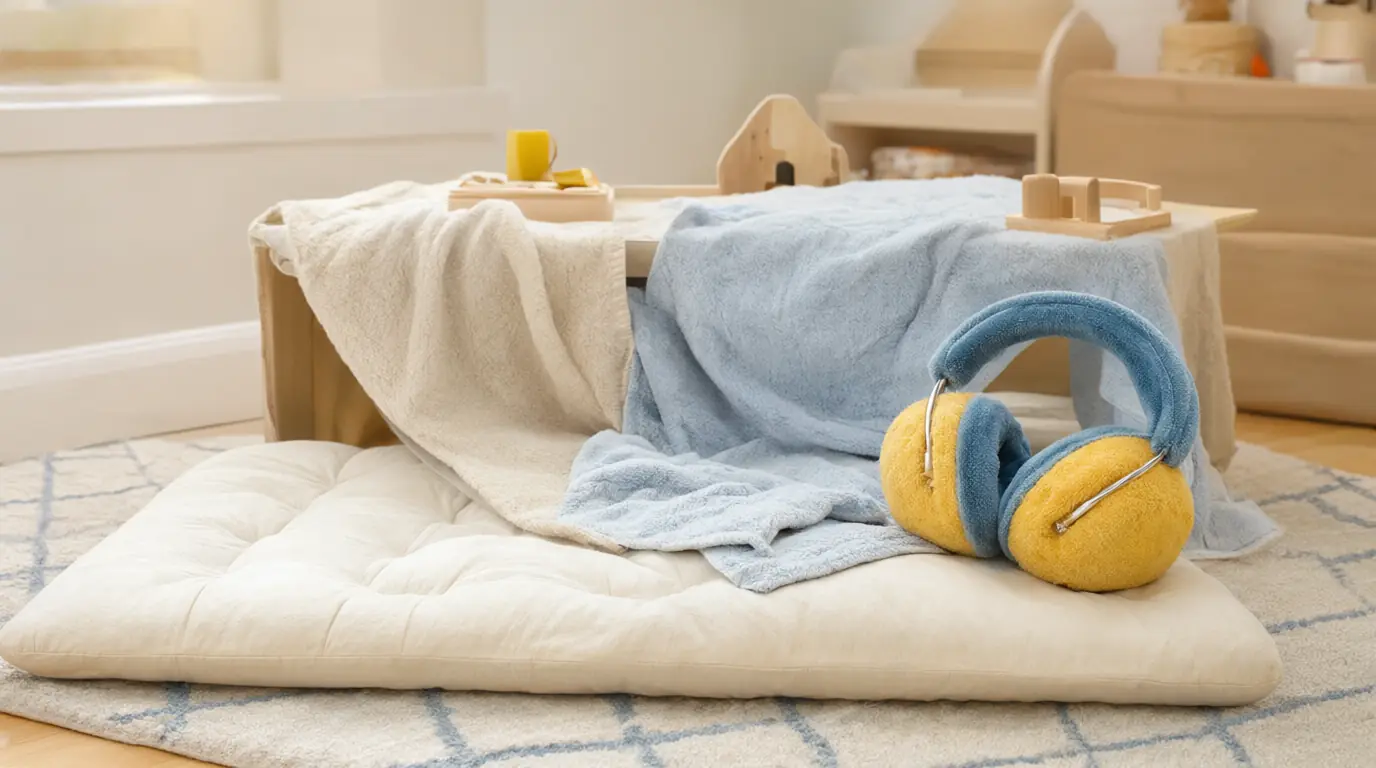
Make it your own: Toddlers may show preference by leaning towards or away from a material rather than saying. Older children can help build a short list of what helps them, which is useful at nursery or school too.
Share a turn without needing speech
Turn-taking can be practised with objects instead of conversation. A soft ball rolled back and forth, or one piece placed in a shared box, gives a clear structure that does not depend on words. Children who find spoken turn-taking hard often manage this version easily, and it creates the same back-and-forth rhythm in a quieter form.
You’ll need
- A soft ball or a small beanbag
- A 'my turn' and 'your turn' card, or two coloured discs
- A clear floor space between you
How to do it
- Sit on the floor facing each other, a short distance apart.
- Roll the ball to the child once without saying anything.
- When it comes back, place the green disc in front of yourself and roll again.
- Put the other disc in front of the child on their turn, so the pattern is visible as well as spoken.
- Continue for as long as the child stays interested, then let the ball rest and say the game is finished.
- Try a silent round later, using only the discs, to see whether the child keeps the rhythm.
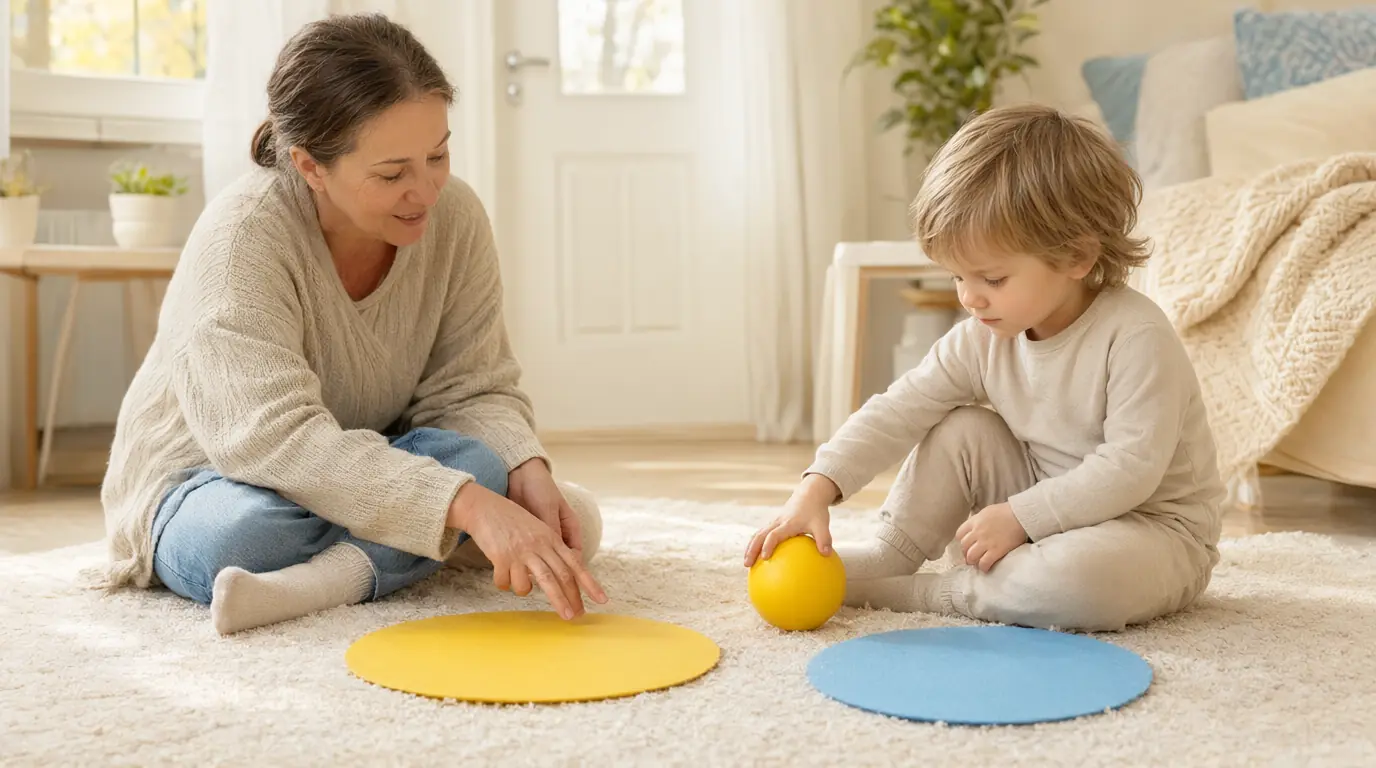
Make it your own: A child who prefers not to catch can push the ball back with a foot or a cardboard tube. Older children can add a rule, such as naming a colour before rolling, or invent a short rhyme for each turn.
Plan the ending before you begin
Endings are often harder than beginnings, and a child who is absorbed in play has good reason to resist stopping. A visible warning and a familiar finishing routine make the change more predictable without pretending the activity is over before it is. This is practical support for a real difficulty, not a reward system for compliance.
You’ll need
- A visual timer or a two-song warning
- A finishing basket or box
- A familiar next activity, such as a drink or a favourite book
How to do it
- Choose the warning you will use before play starts, such as a timer set to two minutes or one song.
- Show it at the beginning: 'When this goes, we tidy.'
- Give the warning once, at the agreed point, without adding extra conditions.
- Use the same finishing routine each time: pieces into the basket, basket onto the shelf.
- Move to the next activity straight away so the ending leads somewhere, rather than to nothing.
- If the child needs longer, offer one more short block of time and then follow through.
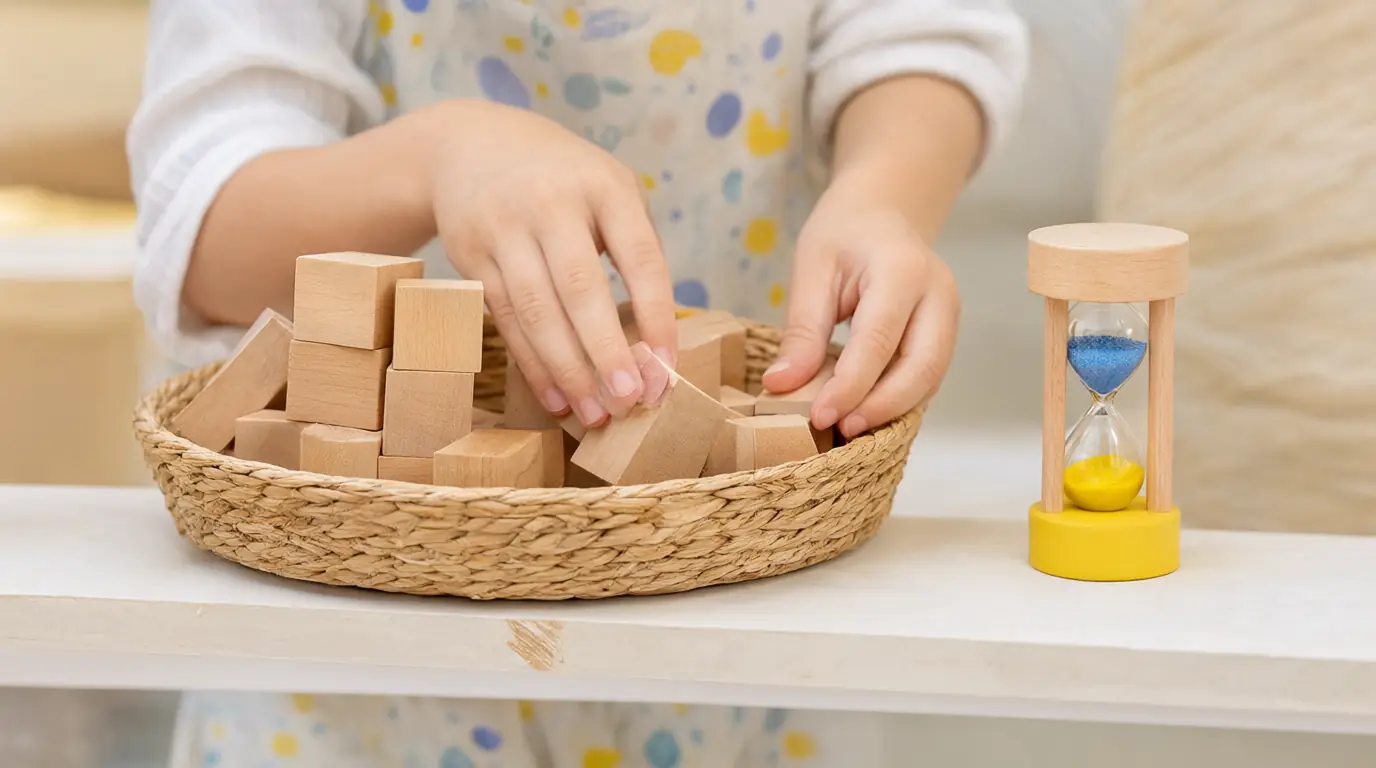
Make it your own: Younger children may need the warning repeated visually, with the timer placed where they can see it. Older children can set the timer themselves, which makes the ending feel like their decision.
Make it work for your family
If a session goes badly, look at the conditions before the child. Hunger, a noisy room, an unexpected visitor or a change in routine will all make shared play harder, and none of it is a sign that the child cannot manage play. Keep sessions short and predictable for a while, and return to what worked rather than introducing something new to fix the day.
Repetition is usually a strength rather than a problem: a child who plays the same game daily often knows it deeply and may add small variations when they are ready. Note what you see, particularly changes in sleep, eating, distress or communication, and share those observations with the child's support team or clinician rather than drawing conclusions from play alone. For more everyday routines, try these life-skills games or a few gentle turn-taking ideas.

Parents also ask
How do I play with an autistic child who does not like being touched?
Play side by side rather than face to face, and keep a comfortable gap between you. Offer objects rather than your hand, and let the child come closer when they choose. A shared activity such as rolling a ball or building separate towers gives connection without contact.
Should I expect eye contact during play?
No. Many autistic children listen and engage better when they are looking at an object rather than at a face. Asking for eye contact can take attention away from the game. Watch for other signs of interest, such as bringing a toy over, glancing up, or repeating your action.
What if my child only wants to play the same game every day?
Repetition is common and often comforting, and it gives a child a chance to master an idea. Keep the familiar game available and add one small variation beside it rather than replacing it. If it becomes the only activity for weeks, mention it to the child's support team along with anything else you have noticed.
Sources & further reading
Explore these primary sources for further context on this topic.
Choose materials and activities that suit your child, supervise as needed and adapt the ideas to their interests and abilities. About our editorial approach