Weebou Editorial Team

 In this article
A little preparation
Start by reading the story or lesson yourself and picking out two or three clear moments you can retell in a sentence each. Gather everything before the children arrive: a soft toy, four or five large picture cards, a roll of tape and a pad of thick paper. Clear a floor space big enough for a seated circle and push chairs and bags to the edges. Give yourself five minutes for the welcome and ten to fifteen for the main game, with the mural left open for anyone who finishes early.
Check the wording and the themes with the group's leader before you teach, since families understand a story in different ways. Never ask a child to speak for everyone's beliefs, and keep the closing question open rather than looking for one right answer. Sit at the children's eye level, keep the group small enough to see every face, and put the toy or cards down when you speak so hands are free. If a story includes anything frightening, say so plainly and let children pass. You can borrow the turn-taking rules from these circle games and the name-opening from these name games.

Ideas to try together
A welcome circle with a soft toy
A soft toy passed hand to hand gives every child a turn without forcing a speech. Children who are shy can squeeze the toy, nod or pass it straight on, and nobody has to explain why. Hearing their own name said kindly at the start helps a new child settle, and the same routine each week means they know exactly what is coming next.
 You’ll need
- A soft toy or beanbag
- A small floor cushion for each child
- A written list of names for the adult
How to do it
- Sit in a circle at the children's height and hold the toy where everyone can see it.
- Say your own name and one thing you are glad about, then pass the toy to the child beside you.
- Offer three choices: say your name, wave, or pass the toy straight on.
- Let the toy travel all the way round before you add anything else.
- Finish by saying each child's name back into the circle together.
- Keep the same order next time so the routine feels familiar.
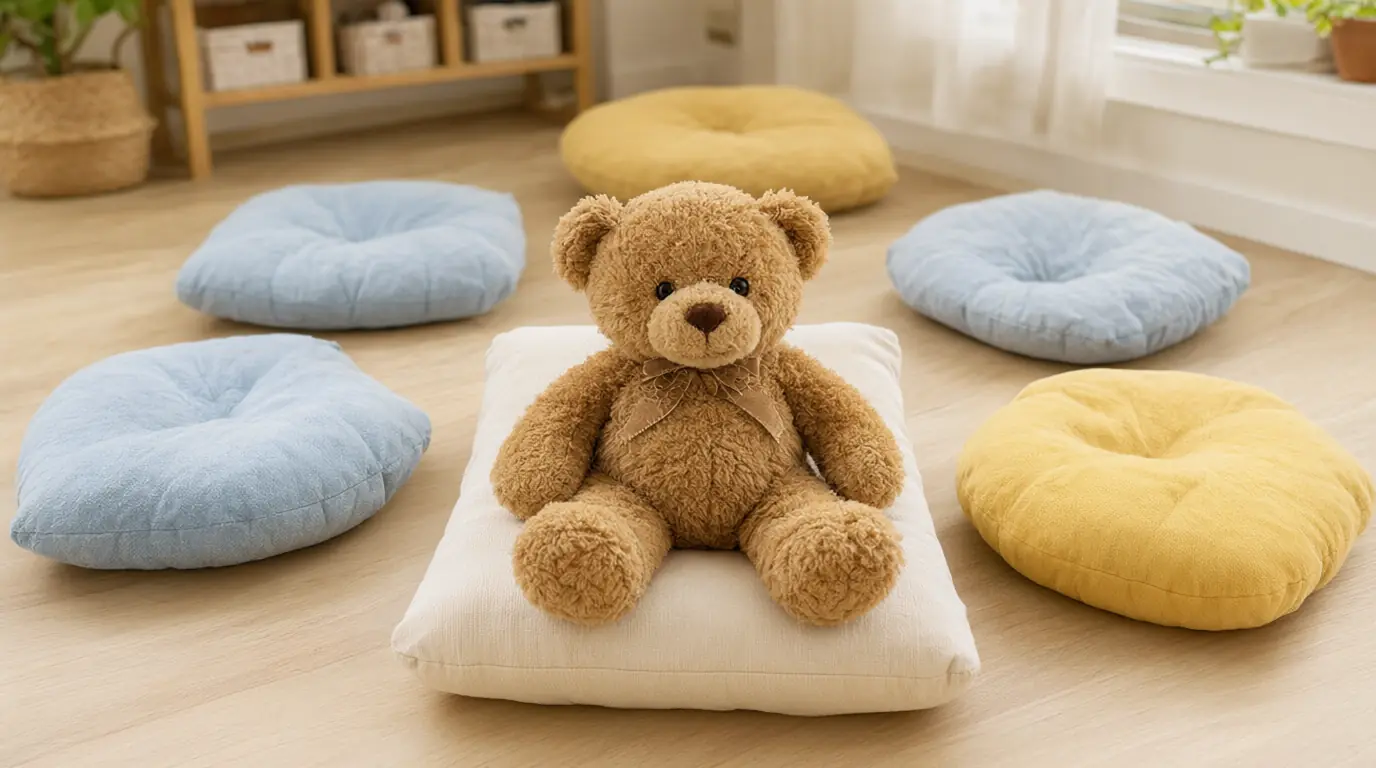
Make it your own: Toddlers can simply hold the toy while you say their name. Older children can add a greeting in another language or a wish for the week. If the group is large, split into two circles so no one waits too long.
Three pictures in the right order
Retelling a story through pictures lets children show what they understood without finding the words. Three cards are enough: a beginning, a middle and an end. Putting them in order is a puzzle, and swapping two cards to see what changes keeps the thinking playful rather than a test of memory.
You’ll need
- Four or five large story picture cards
- A clear floor or table space
- A soft cloth to lay them on
How to do it
- Lay two or three cards face up and name what you can see on each one.
- Ask which picture comes first and let your child place it on the left.
- Build the rest of the row one card at a time, checking each choice as you go.
- Swap two neighbouring cards and ask what changes about the story.
- Retell the whole scene together in your own words, using the row as a reminder.
- Let your child choose which card to talk about and which to stay quiet about.
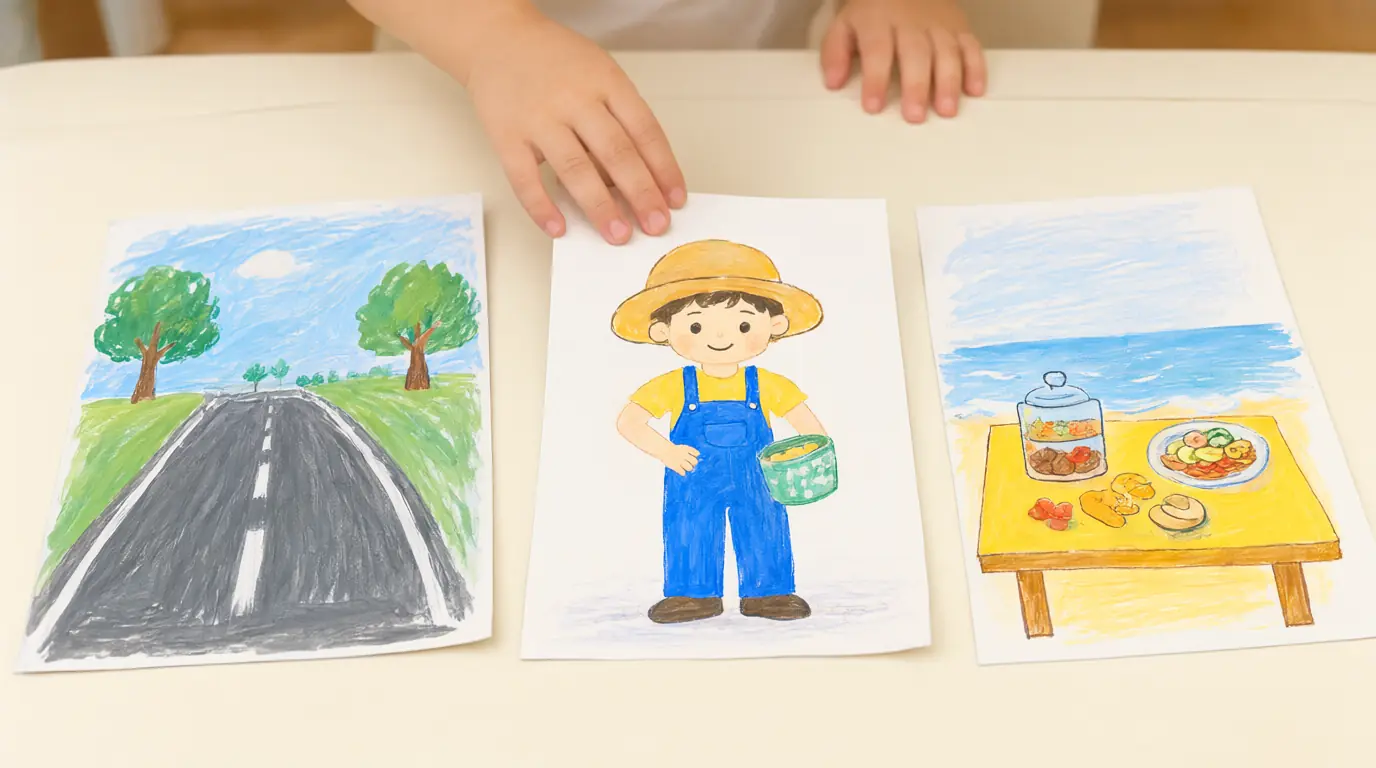
Make it your own: For younger children use just two pictures and one spoken sentence. Older ones can add a fourth card that shows a character's choice, then act the row out in order while you narrate.
Helpful-action charades
Acting out a kind action uses the whole body and needs no speaking at all. Children copy small, familiar jobs such as carrying a bag, opening a door or saving a seat, and the others guess what is happening. It links a story about kindness to something a four-year-old can actually do on a Sunday morning.
You’ll need
- A basket, a bag and a chair as props
- A scarf for wrapping something
- A soft bell or shaker for the end of a turn
How to do it
- Show one action yourself first so the group knows what a turn looks like.
- Whisper or show a job card to the child who is acting.
- Let them mime it slowly while the others watch and guess.
- Give two guesses from the group, then let the actor reveal the answer in their own way.
- Pass the turn to whoever guessed, or to the next child if the guesser would rather not.
- Finish by trying the real action together, such as carrying a bag across the room.
Make it your own: Two-year-olds can copy your mime while you name it out loud. Older children can act two steps in a row or add a spoken line for a character in the story.
A shared thank-you mural
One large sheet of paper gives the group somewhere to add drawings side by side without anyone comparing them. Each child chooses what to draw, so a child who would rather not share private family news can still take part. Seeing the pieces joined together shows that everyone's contribution belongs on the same wall.
You’ll need
- A wide roll of lining paper or two large sheets taped together
- Thick crayons or washable markers
- Low tape for fixing it to the wall or floor
- A tray of small stickers as a finishing touch
How to do it
- Tape the paper low on the wall or flat on the floor where everyone can reach.
- Draw a small house, garden or open hand in one corner to start the picture.
- Invite each child to add whatever they are thankful for, in any size.
- Let children work in any order; nobody has to wait for a turn.
- Fill the gaps between drawings together with dots, swirly lines or a shared path.
- Hang the finished mural where the whole group can see it next week.
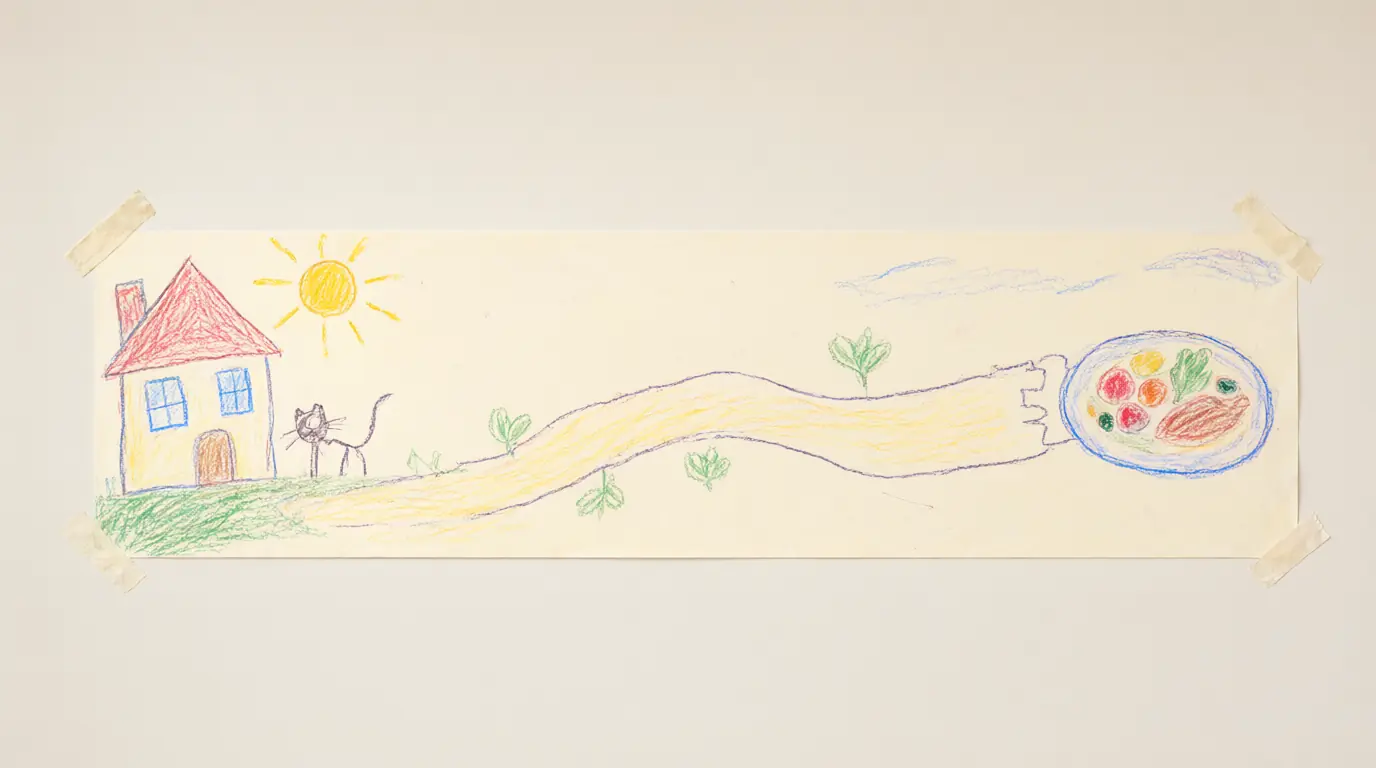
Make it your own: Toddlers can add a single sticker or crayon line. Older children can write one word beside their drawing or add a label for a neighbour's picture, helping each other without correcting.
Roles for children who would rather not speak
Some children join best through a job rather than a microphone. Before the game starts, offer quiet roles you can name out loud: page-turner, card-holder, bell-ringer, door-opener or picture-finder. The work is real, it keeps hands busy, and it means a child who stays silent all session is still part of what the group is doing.
How to do it
- Write four or five job names on a card and let children choose one before the game starts.
- Describe the job in one sentence so the child knows exactly what to hold or move.
- Say the child's name with the job out loud, for example "Amir is our bell-ringer today".
- Check in quietly during the game rather than asking them to perform for the group.
- Rotate the jobs each week so the same child is not always the helper.
- Notice out loud what the job made possible, such as "we could hear the story because the cards were ready".
Make it your own: Toddlers can hold one object for the whole session. Older children can run two jobs, or invent a new one and explain it to the group next week.

Make it work for your family
If a child refuses a turn, move on without comment and offer the same choice a few minutes later. Some children need to watch a game twice before joining, and that watching is part of playing. When the group gets restless, stop while it is still fun and finish with a song or one last round; a short game that ends well is worth more than a long one that falls apart. Keep the closing question open and accept "I don't know" as an answer.
Keep the language your own rather than borrowed, and check the wording with the group's leader so it fits the community. If you want more story-based ideas, these Bible story games explore characters and choices, and kindness activities turn a lesson into something children can do on Monday. Store the cards, toy and mural roll together in one box so the next session takes minutes to set up.

Parents also ask
What games can you play in Sunday school with young children?
Name circles, picture sequencing, action charades and a shared drawing mural all work well for ages 2 to 6. They need only a soft toy, a few large cards, paper and crayons, and each one lets a shy child take part through a job rather than a spoken answer.
How do you include a shy child in a group game?
Give them a real job instead of a speaking part, such as holding the cards, ringing a bell or opening the door. Say the job out loud so the group hears their name, and offer the same choice again next week without any pressure to perform.
How long should a Sunday school game last?
Ten to fifteen minutes is usually plenty for children under six, with the welcome circle kept to about five minutes. Stop while the group is still interested and finish with a song or one calm round rather than pushing to the end.
Choose materials and activities that suit your child, supervise as needed and adapt the ideas to their interests and abilities. About our editorial approach