Weebou Editorial Team
 7 min read


 In this article
A little preparation
Pick a situation your child already knows, such as who sits where at craft time or what happens when Grandad comes home. Describe the need in one sentence, then offer two possible ways to help and allow a third idea if they have one. Keep the actions small enough to finish in ten minutes and let your child decide whether to join in. Giving or sharing should always be voluntary.
Before you start, say that helping works best when we find out what the other person would like, and that it is fine to say no thank you. Prepare a tray or a basket so materials are easy to carry and a place for the child to put the finished things. Look for chances in everyday routines rather than inventing special projects, and see whether your child notices the effect on the other person. If you want more ideas about noticing feelings, these empathy activities and a few teamwork activities are a good follow-up.

What to know and try
Prepare a welcoming place
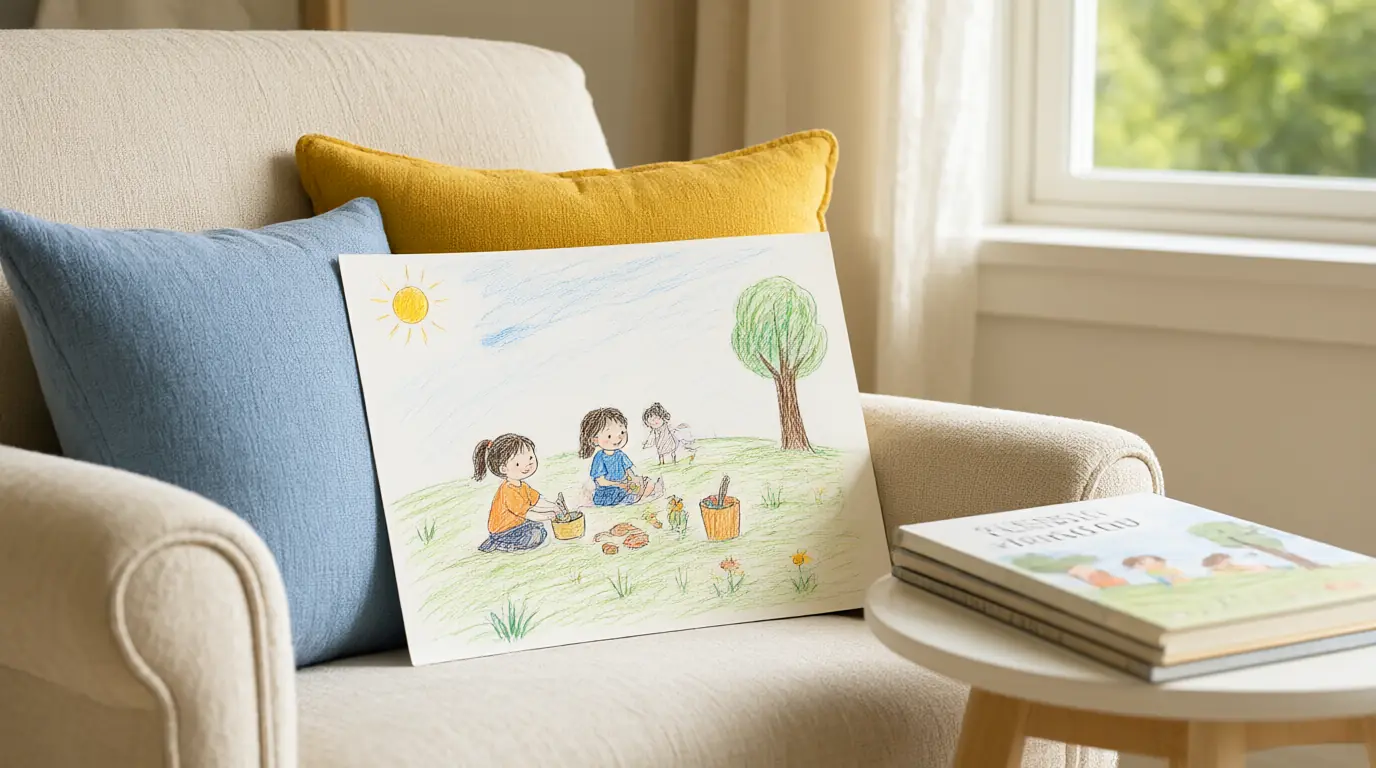
Setting up a spot for someone who is coming home or visiting lets children think about another person's comfort. The best part is the question at the end: asking what that person would prefer teaches that kindness depends on listening.
 You’ll need
- A chair or a corner of the sofa
- A cushion or blanket
- A favourite book or a drawing from your child
- A small note card and a crayon
How to do it
- Decide with your child who is coming and what they might need after a long day.
- Place the chair and a cushion near the door or window.
- Let your child choose one thing to put there: a drawing, a book or a toy to look at.
- Draw or write a short welcome note together.
- When the person arrives, ask whether they would like a quiet welcome or a chat.
- Notice their answer and talk afterwards about what you learned.
Make it your own: Younger children can place a single toy on the chair. Older children can make a small menu of two choices, such as quiet reading or a game, and offer both.
Make shared materials easy to reach
Noticing who cannot reach the crayons or paper is a small but real act of fairness. Children learn that changing the arrangement of a table can help everyone, and they see the effect straight away.
You’ll need
- A tray or shallow box
- A pot of crayons
- Paper and a pencil
- A table big enough for two or more people
How to do it
- Set up a craft activity for two or three people and place the crayons at one end of the table.
- Ask your child who might find it hard to reach what they need.
- Invite them to move the crayons to the middle of the table or onto a tray in reach.
- Check together whether everyone can now reach what they need.
- Try another arrangement if not, such as a second pot.
- Draw a picture all together using the new set-up and ask if it feels better.
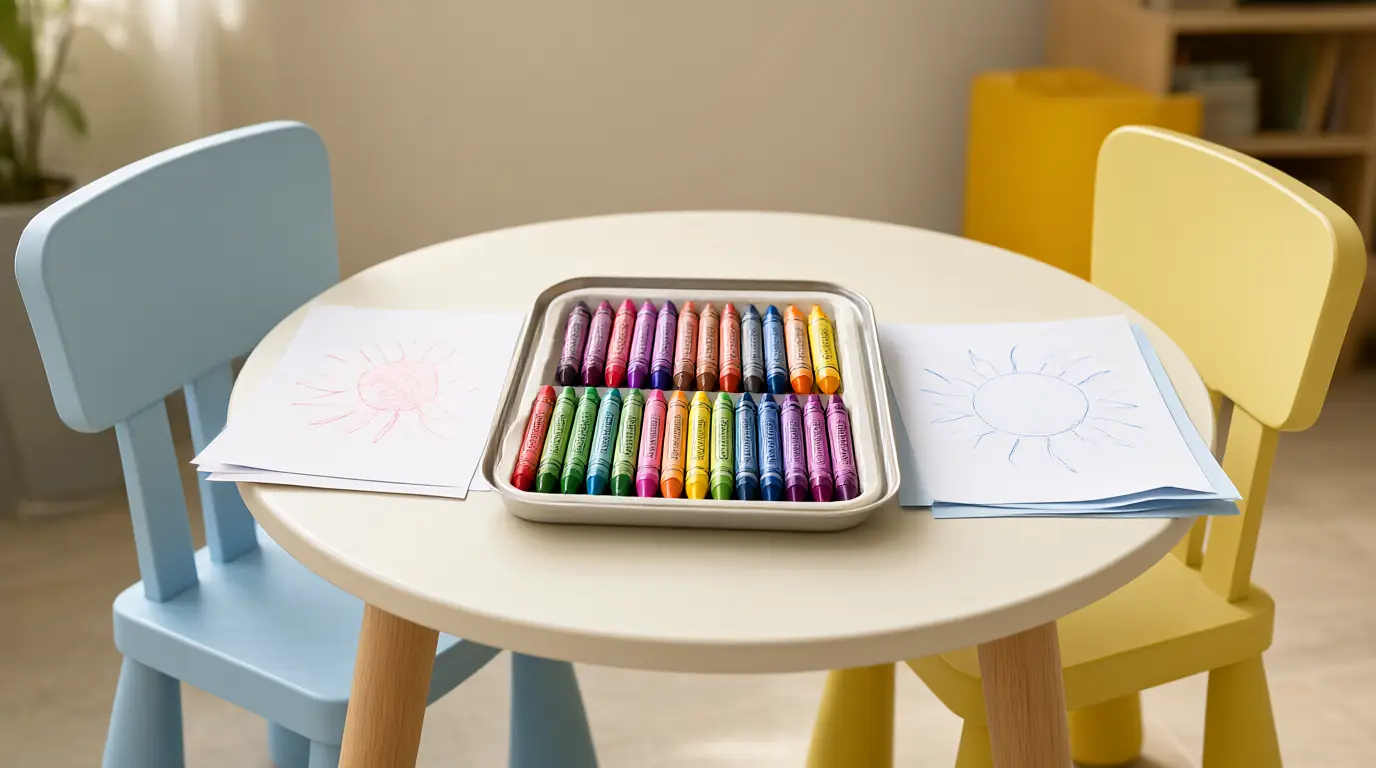
Make it your own: Younger children can simply pass the crayon pot to the next person. Older children can plan a layout, drawing the table from above and marking where each pot should go.
Clear a small inconvenience
When a toy has been left across the walkway, moving it is a caring act for the people who share the space. Giving the child a useful role, such as finding the right basket, makes it a practical job rather than a telling-off.
You’ll need
- A toy left on the floor
- A basket or box for storing toys
- A paper sign with a picture of a toy
- A tidy path through the room
How to do it
- Notice together that a toy is in the way and ask who might need that path.
- Name the people who walk there, such as Dad carrying shopping or a baby crawling.
- Give your child a job, for example find the basket or carry the toy.
- Put the toy where it belongs, then look at the clear path together.
- Walk along the path as if you were each of those people.
- Make a picture sign to remind everyone where toys go.
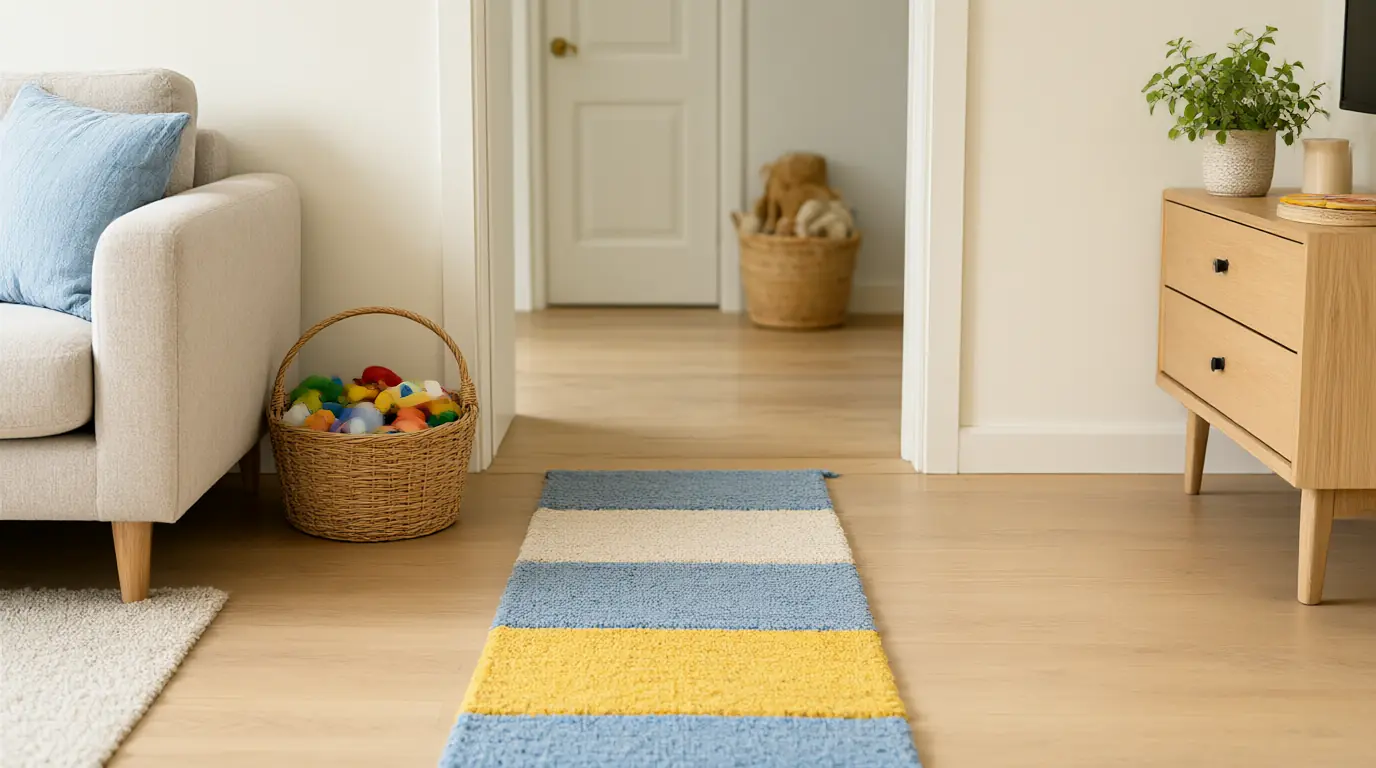
Make it your own: Younger children can place one toy in a basket with a hand to guide them. Older children can walk around the room and look for other trip hazards, then decide how to fix them.
Offer a choice of company
Someone who is upset may not want a hug or a joke. A card with two pictures, playing together or resting quietly, teaches children to offer company and respect whichever answer comes back, rather than insisting that cheering up is required.
You’ll need
- 2 small cards or paper squares
- Crayons
- 2 soft toys as characters
- A cushion for resting
How to do it
- Draw a picture of two children playing on one card and one child resting on the other.
- Set up two soft toys and say that one of them has had a hard day.
- Show your child how to hold up both cards and ask which one the toy would like.
- Let the toy choose and carry out that choice, whether it is play or quiet.
- Talk about how the toy might feel afterwards.
- Swap roles and let your child choose a card while you offer.
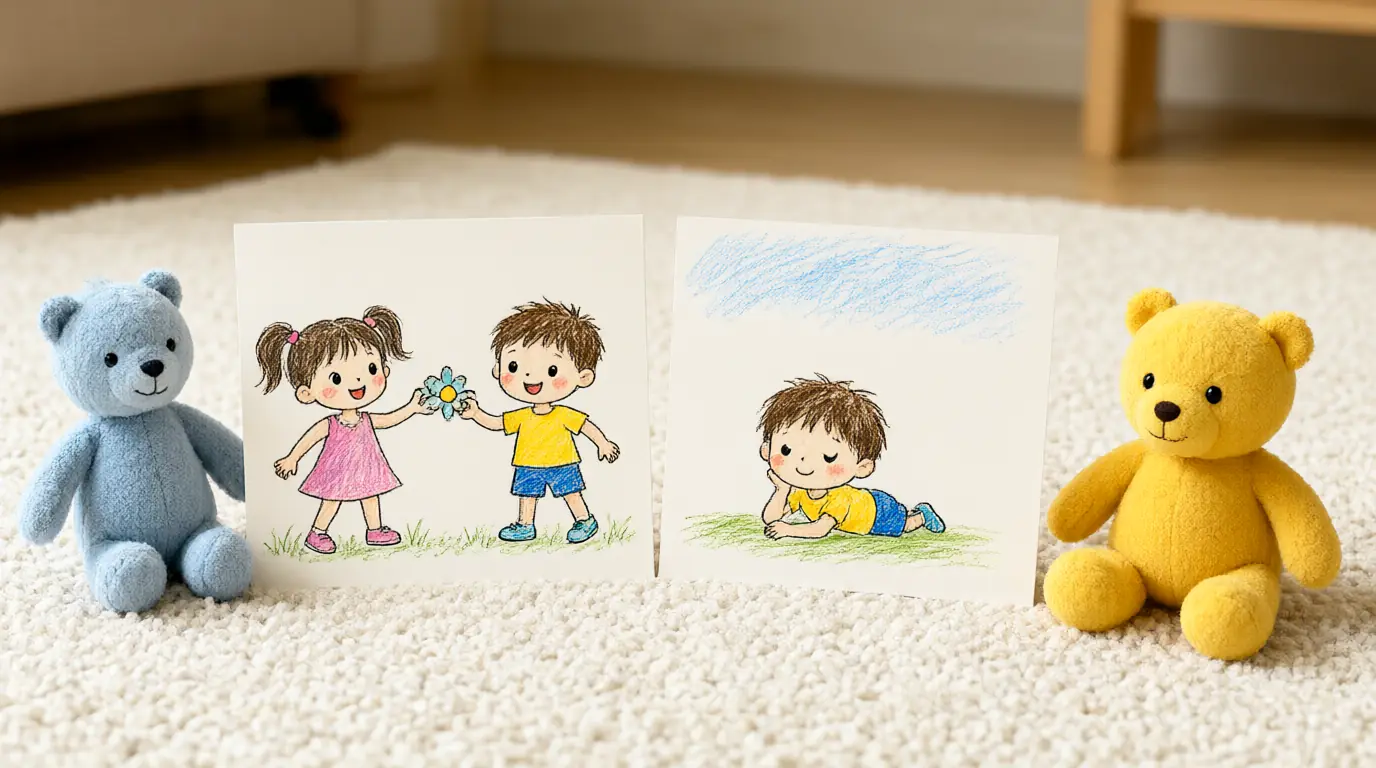
Make it your own: Younger children can point at the pictures and use fewer words. Older children can add a third card, such as a snack or a drawing, and talk about when to offer each.
Make it work for your family
Kindness includes boundaries. A child may decline a hug, keep a treasured toy or ask an adult to help with a situation that feels too big, and all of those can be kind and sensible choices. Model considerate language, such as would you like some help, without insisting that a child ignore their own needs or comfort.
Avoid praising the child for being a good boy or girl, and describe the effect instead: you moved the toy, and now Nana can walk through. If an action goes wrong, for example the person does not want a card, talk about it calmly and ask what you could try next time. Over weeks, notice what your child chooses to do without prompting. For more ideas of this kind, try these gratitude rituals at home.

Parents also ask
How do you teach a young child to be kind?
Show kindness in your own daily actions, point out kind acts when you notice them and let your child take part in real, small ways of helping. Describing the effect, such as you helped Grandad carry that, works better than telling a child they are good.
Should I reward my child for being kind?
It is usually better to talk about how the other person felt than to give stickers or sweets. Rewards can make children focus on the prize instead of the person. A simple thank you or a smile is often enough.
What if my child does not want to share?
Respect that some things are special and may be kept. Offer choices, such as sharing a different toy or taking turns after a timer, and avoid forcing it. Children learn sharing more easily when they feel their own needs are respected too.
Choose materials and activities that suit your child, supervise as needed and adapt the ideas to their interests and abilities. About our editorial approach