Weebou Editorial Team
 8 min read
 In this article
A little preparation
Pick one mathematical idea per game and keep the rest of the scene plain. If you are working on patterns, use only two colours of cups; if you are comparing lengths, use blocks that all look the same. Too many choices can hide the idea you want your child to notice. Place the objects on a mat or tray so they do not roll away, and sit beside your child rather than opposite, so you are both looking at the same thing.
Use big, safe objects. Anything small enough to fit in a toilet-roll tube should stay away from children who still put things in their mouths, and cups should be paper or plastic, not glass. Let your child touch, move and rearrange everything, because moving objects is how young children think about quantity. Say the maths words while you do the actions (‘more’, ‘fewer’, ‘the same’, ‘longer’, ‘next’), and ask questions that invite an explanation instead of a quick right answer. If your child counts a different way, watch before correcting: they may be doing something sensible you have not noticed yet.

Ideas to try together
Sock sorting station
Sorting is the basis of data and algebra later on, and a pile of clean socks gives it a reason. Your child decides which feature to sort by, which means they must notice colour, size or pattern and keep to one rule. Changing the rule halfway shows that the same things can be grouped in more than one way.
 You’ll need
- 8 to 12 clean, rolled-up socks of different colours and sizes
- 2 or 3 shallow baskets or trays
- A sheet of paper for each group
How to do it
- Tip the socks into the middle of the mat and let your child look at them for a moment.
- Ask, ‘How could we put these into groups?’ and follow their idea, such as colour.
- Put the groups into the baskets and count how many are in each.
- Say, ‘Can you find a different way to sort them?’ and try size or stripes.
- Compare: ‘Which basket has more now? Which has fewer?’
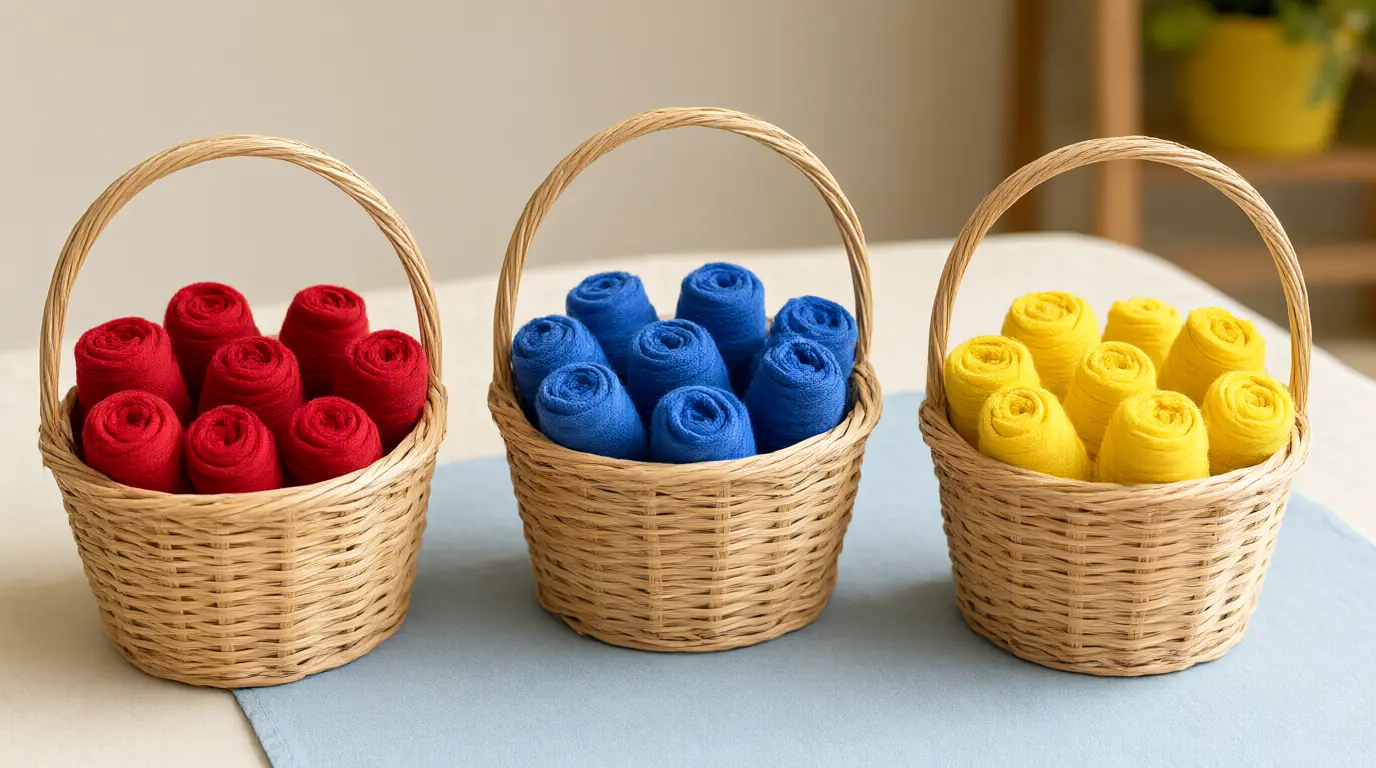
Make it your own: Younger children can sort into just two baskets, such as ‘big’ and ‘small’. Older ones can sort by two rules at the same time, for example striped socks that are also small.
Cup pattern picnic
A pattern is a rule that repeats, and spotting a rule is the heart of mathematical thinking. Coloured cups are easy to line up, move and swap, so your child can change their mind. Predicting what comes next lets them test an idea about the world, without any worksheet.
You’ll need
- 6 paper cups in one colour and 6 in another
- A tray or long strip of paper
- A small toy for the ‘picnic guest’
How to do it
- Line up four cups in a row: red, blue, red, blue.
- Say the pattern aloud with a beat and ask, ‘What comes next?’
- Let your child add the next cup and say the whole line again.
- Swap roles: your child makes a pattern and you continue it, perhaps getting it wrong on purpose.
- Try a new rule, such as red, red, blue, red, red, blue, and see whether they can describe it.
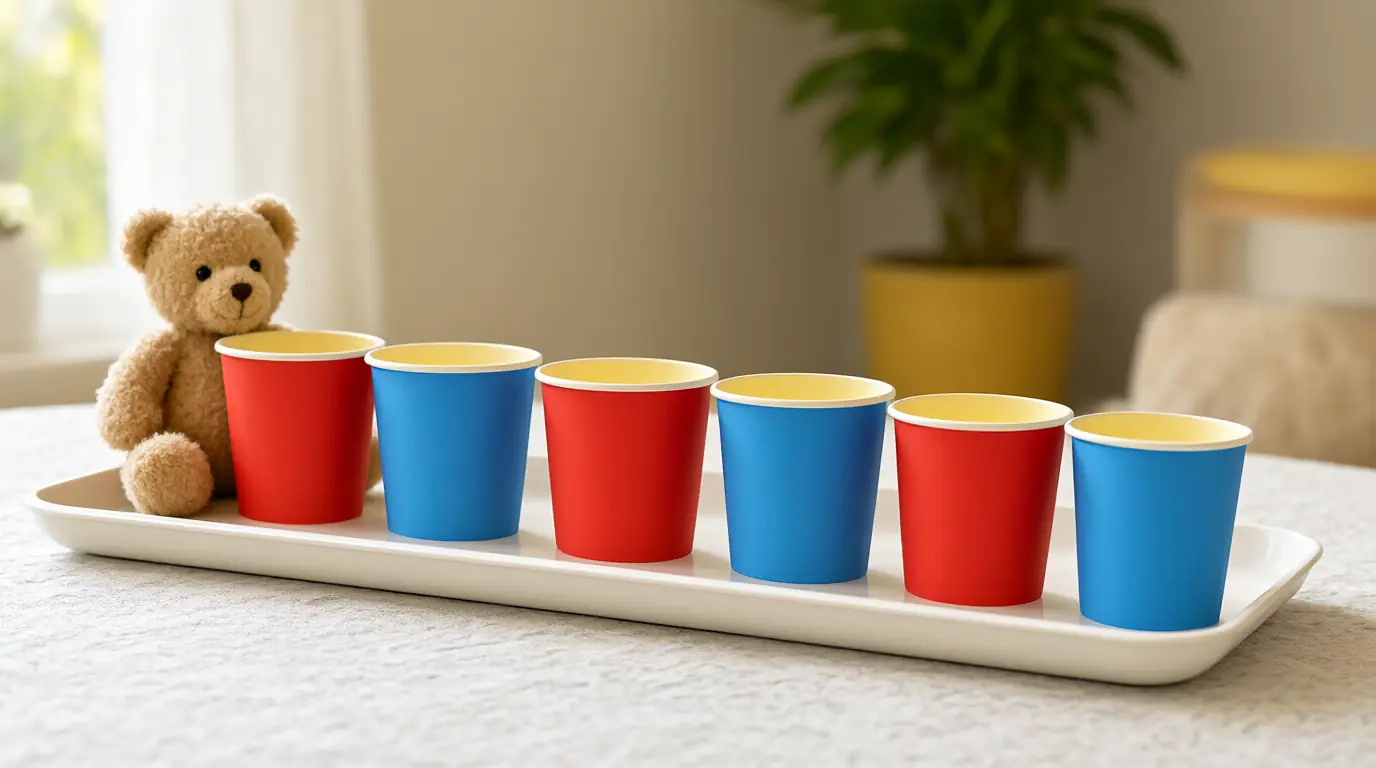
Make it your own: Begin with a single pair of colours and a pattern two cups long. Older children can try three colours, or make a pattern with sounds, such as clap, stomp, clap, stomp.
Block road comparison
Comparing length is easier when two things start at the same line. Building roads from blocks lets your child see which is longer, then check by counting. It also introduces a useful idea: that a longer road needs more blocks if the blocks are the same size.
You’ll need
- 15 to 20 similar wooden blocks
- 2 toy cars
- A strip of masking tape on the floor as a starting line
How to do it
- Place the tape on the floor and tell your child that both roads start here.
- Ask them to build one road with the blocks, and make a second one yourself.
- Stand back and ask, ‘Which road looks longer?’ before counting anything.
- Count the blocks in each road, touching each one as you say the number.
- Add or remove a block to make the roads match, and race the cars to see.
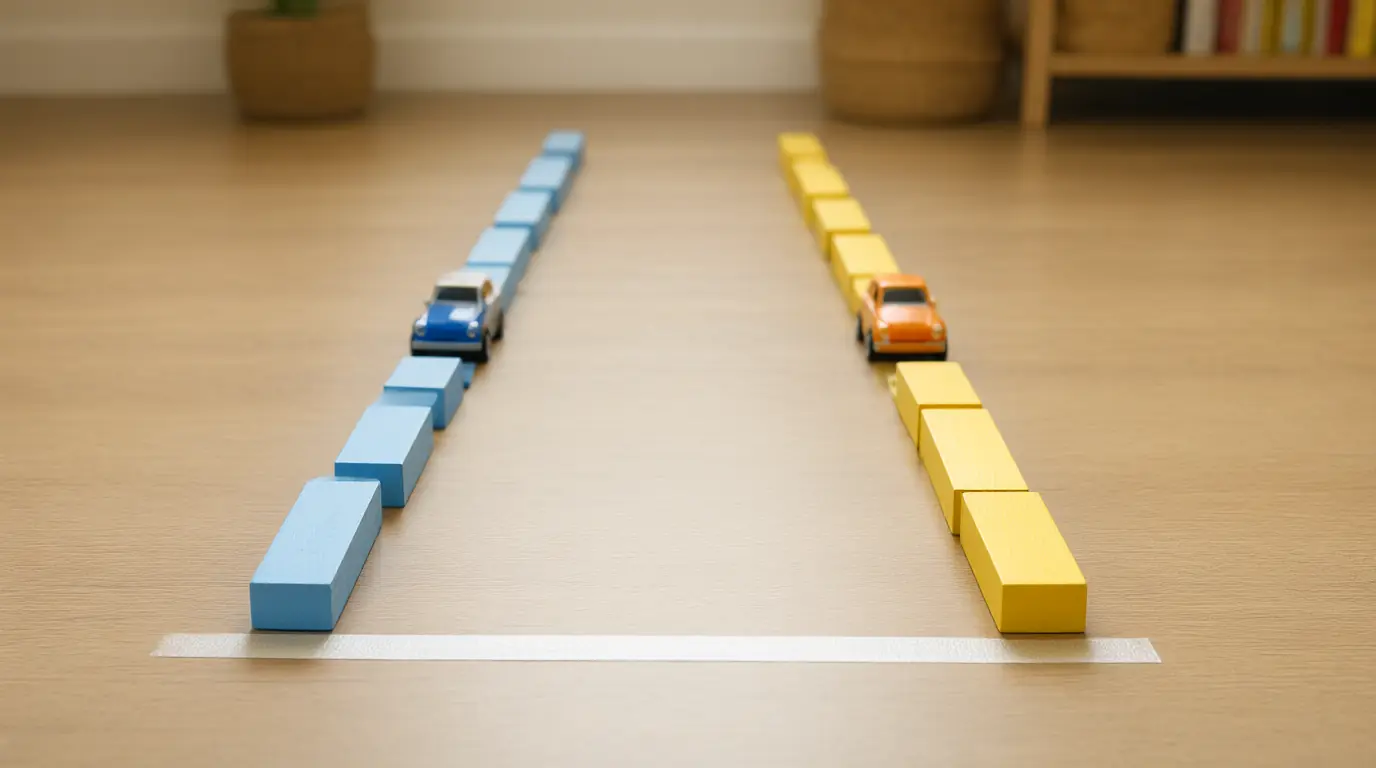
Make it your own: With younger children, make one obviously longer road and one obviously shorter one. Older children can estimate how many blocks will fit across the room and test their guess.
Snack helper count
Setting the table is an authentic way to practise one-to-one matching: one plate for each person, one napkin for each plate. The job matters to your child, which keeps them engaged, and the answer can be checked by looking. Mistakes show up naturally, because someone has no napkin.
You’ll need
- Paper napkins, enough for each person at the table
- One cup or plate per person
- A small basket for carrying
How to do it
- Say, ‘We are having snack. Can you bring a napkin for everyone?’
- Let your child decide how many to take, then walk to the table.
- Ask them to put one napkin at each place, touching each seat in turn.
- Check together: ‘Does everyone have one? Are there any left over?’
- If you need more or fewer, ask, ‘How many more do we need?’
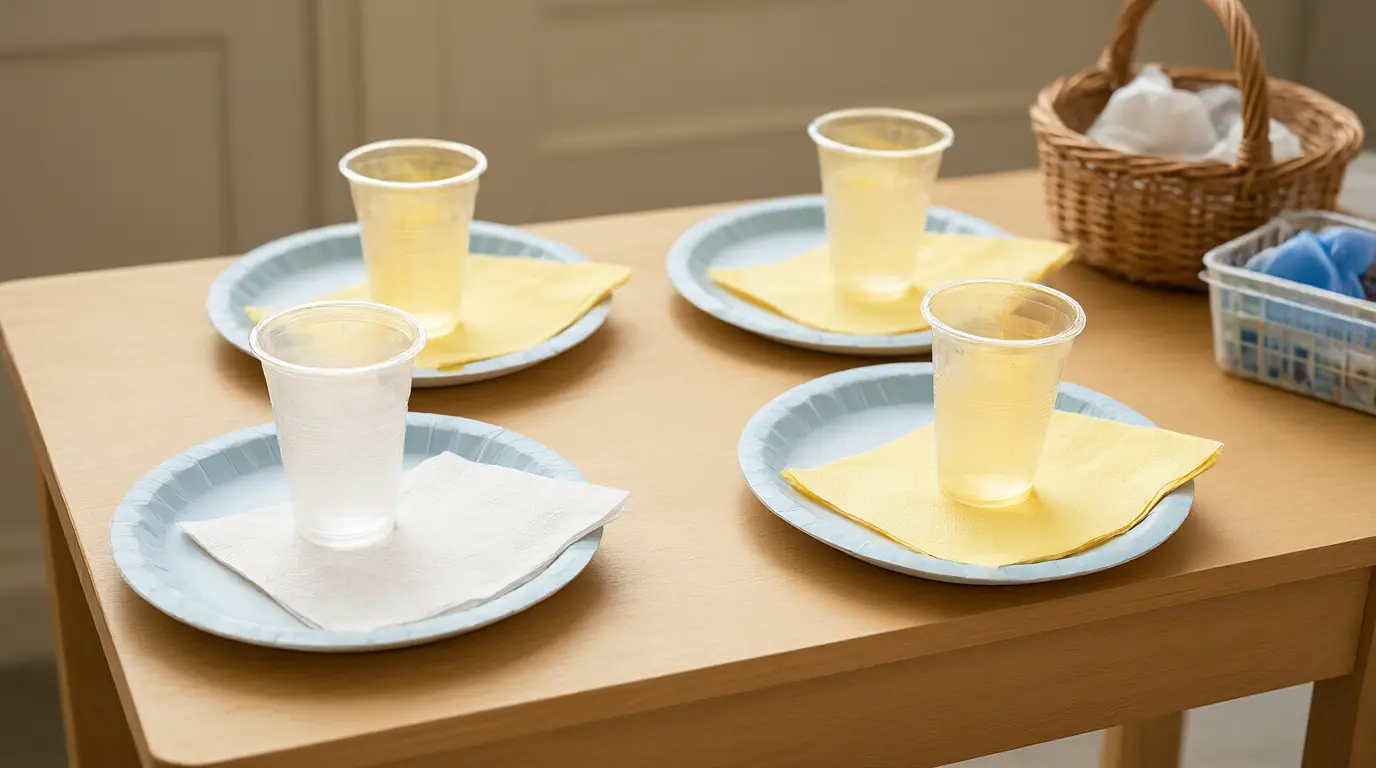
Make it your own: For younger children, set only two places. For older ones, add a sibling or a toy guest and ask them to work out how many napkins are needed before they collect them.
Fair share with toy animals
Sharing out objects fairly teaches the idea of equal groups, which later becomes division. Children also have strong feelings about fairness, so the activity feels important. Giving one item at a time makes the process slow enough to see and talk about.
You’ll need
- 2 or 3 toy animals or soft toys
- 6 or 8 large pretend snacks, such as wooden or felt fruit
- A plate for each animal
How to do it
- Seat the animals in a row and give each a plate.
- Place all the snacks in the middle and say, ‘Everyone is hungry. Let’s share fairly.’
- Ask your child to hand out one snack at a time to each animal, in turn.
- Stop when the snacks run out and look: ‘Does everyone have the same?’
- If one is left, ask what to do with it: ‘Cut it in half, or keep it for tomorrow?’
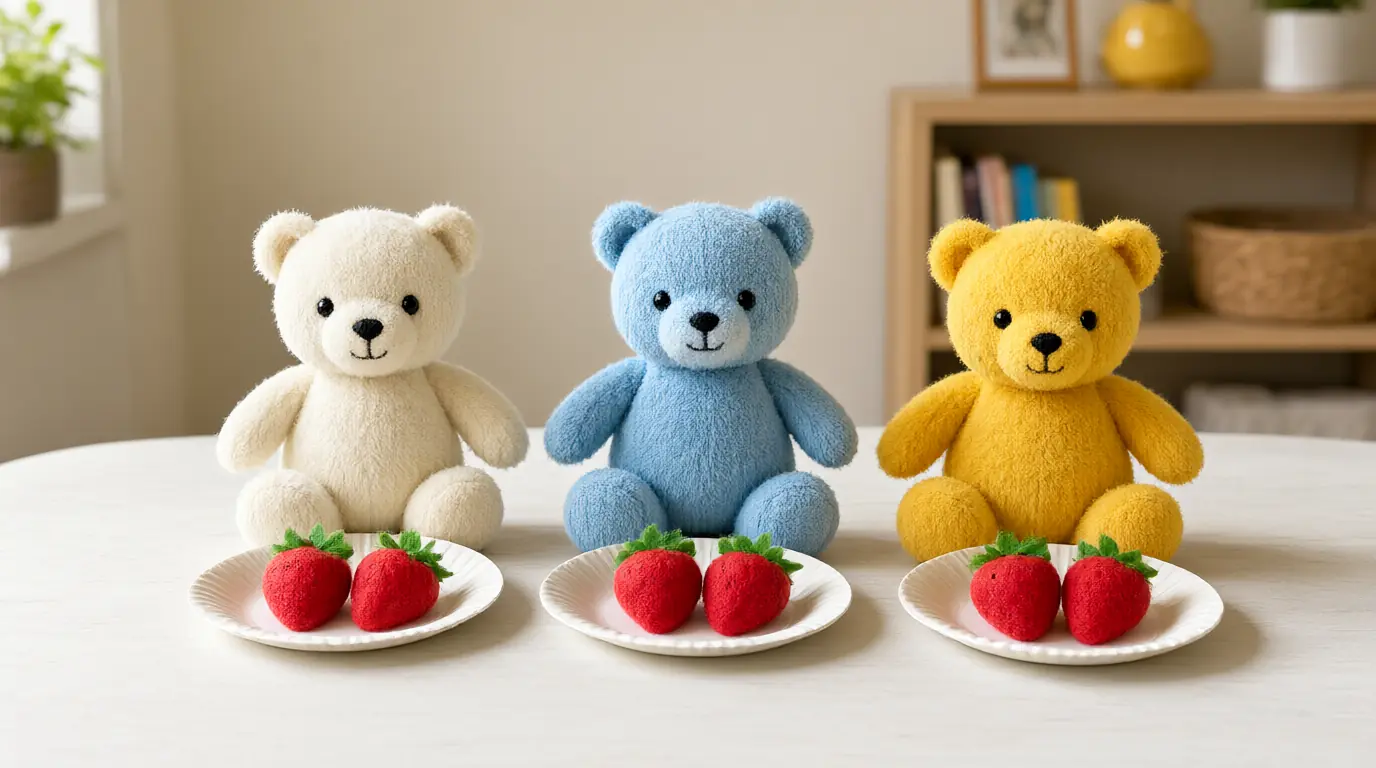
Make it your own: Start with two animals and four snacks so the answer is neat. Older children can try three animals and seven snacks and discuss what happens to the one left over.

Make it work for your family
When your child gets an answer wrong, resist the urge to say ‘no’. Say, ‘Let’s check’, and count or compare again together while touching each object. Most preschoolers learn more from checking than from being told. If a game is too hard, reduce the number of objects; if it is too easy, add one thing, such as a third colour or a bigger number.
Short, frequent sessions beat one long one, and the best moments are usually unplanned: counting the steps to the door, sharing grapes between two plates, noticing a stripe pattern on a jumper. You will find more number-focused ideas in these everyday ways of learning numbers and the kindergarten math games with counters and cups. For screen-free practice that feels like play, try the Weebou math games too.
Parents also ask
What maths should a preschooler know?
Preschoolers typically explore counting small groups, matching one object to one person, comparing sizes, sorting and noticing patterns. They develop at different speeds, so use these as things to try, not a checklist. If you are worried, speak to your child’s nursery or a health professional.
How do I teach my child to count past ten?
Count real things you move one at a time, such as stairs or grapes on a plate. Say the numbers rhythmically, point to each object, and pause for your child to fill in the next number. Counting forwards from a different starting number can help too.
Do I need worksheets for preschool maths?
No. Real objects and everyday jobs, such as sorting socks or setting a table, teach the same ideas more naturally. Worksheets can come later at school. At this age, touching, moving and explaining matter more than writing numbers on paper.
Sources & further reading
Explore these primary sources for further context on this topic.
Choose materials and activities that suit your child, supervise as needed and adapt the ideas to their interests and abilities. About our editorial approach