Weebou Editorial Team
 6 min read
 In this article
A little preparation
Choose a short game with a clear ending and demonstrate one possible turn before you begin. Keep the rules visible through pictures or objects on the table, and offer an open practice round in which nothing counts. Planning is easier to explore when everything is visible and when remembering instructions is not the hard part.
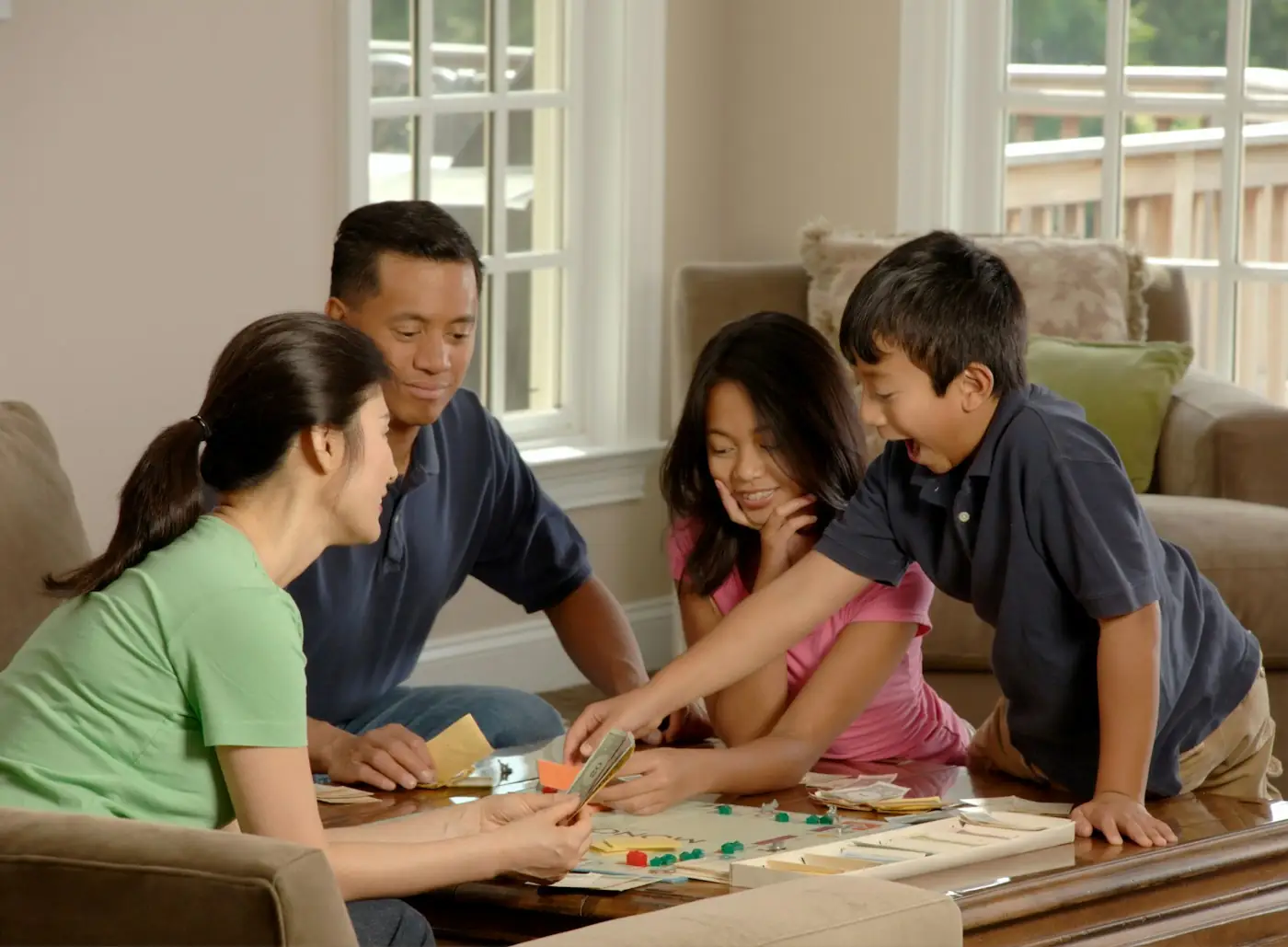
Play at a table where you can both see everything and agree before starting what counts as winning, or whether you simply want to reach the goal together. Many young children enjoy cooperative versions where both players work against a challenge. Allow ten to fifteen minutes, and stop when interest fades. Strategy games are enjoyable thinking opportunities; they do not measure intelligence or guarantee school success. For more choices, these board games for kids and a few thinking games are useful guides.

What to know and try
Choose a route around obstacles
Moving a toy along a path toward a goal and putting a block in its way is a simple planning game. Children must look ahead, compare two routes and change their mind when an obstacle appears.
 You’ll need
- A sheet of paper with two paths drawn to the same goal
- 2 toy figures
- A few blocks as obstacles
- A paper flag for the goal
How to do it
- Draw two short paths from a start to a goal on the paper and place the flag at the end.
- Agree how far a toy may move on each turn, for example two steps.
- Take turns moving your toy along one of the paths.
- Put a block on one path and ask how the plan changes.
- Let your child place a block for you to consider.
- Play until both toys have reached the goal and talk about which routes worked.
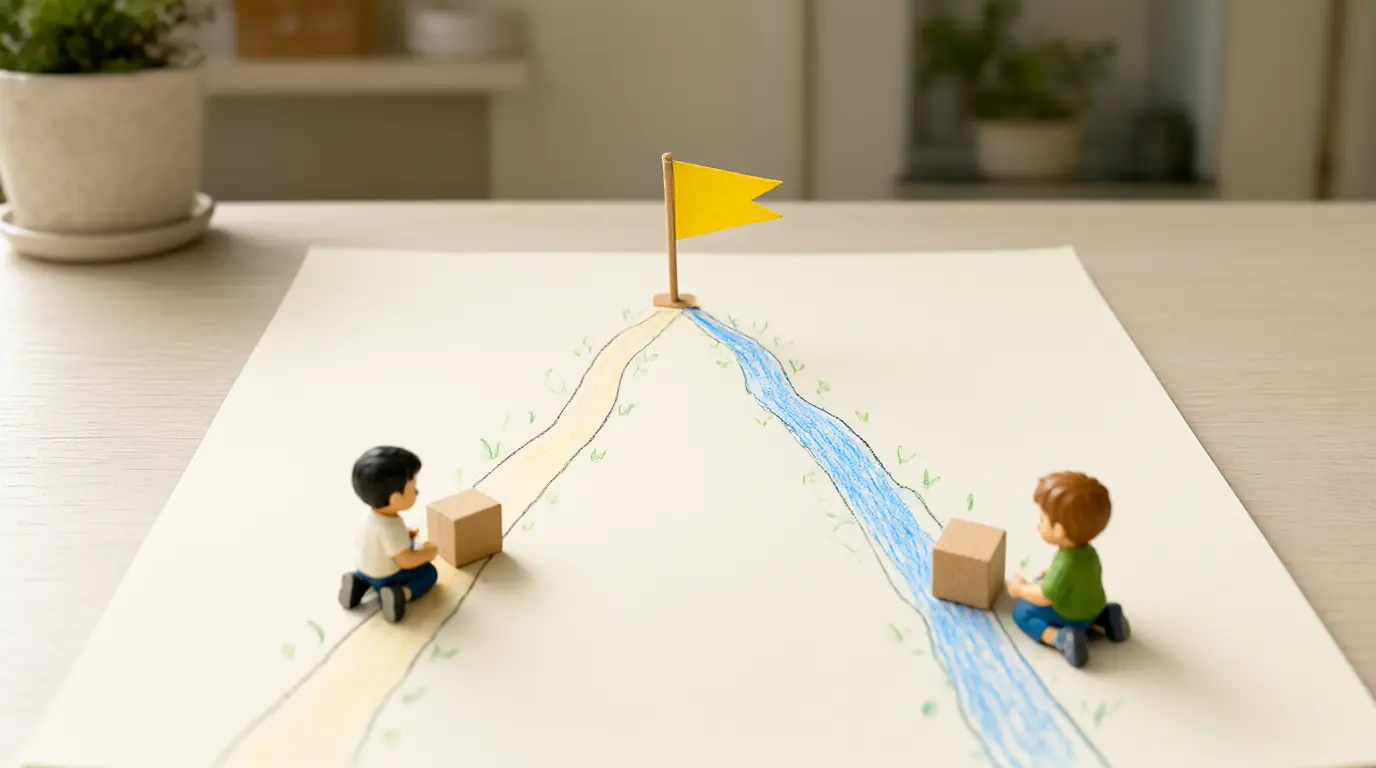
Make it your own: Younger children can use a single path and one obstacle. Older children can draw their own map with more paths and plan the whole route before moving.
Plan a build with limited pieces
Deciding how many blocks each home needs before building is a first step in sharing limited resources. Children make a guess, test it as they build and notice what remains. If one plan uses every block, they discover that they must change their idea to meet both needs, which is exactly the kind of flexible thinking strategy games invite.
You’ll need
- 10 to 12 blocks
- 2 or 3 toy animals or figures
- A paper strip for each home as a base
- A pencil
How to do it
- Say the goal: make two homes for the toy animals using only these blocks.
- Ask your child how many blocks each home will need and note the guess.
- Build the first home and count how many were used.
- Check how many blocks remain and whether the second home can be built.
- Change the first home if there are not enough blocks for the second.
- Compare the finished homes and talk about what you changed.
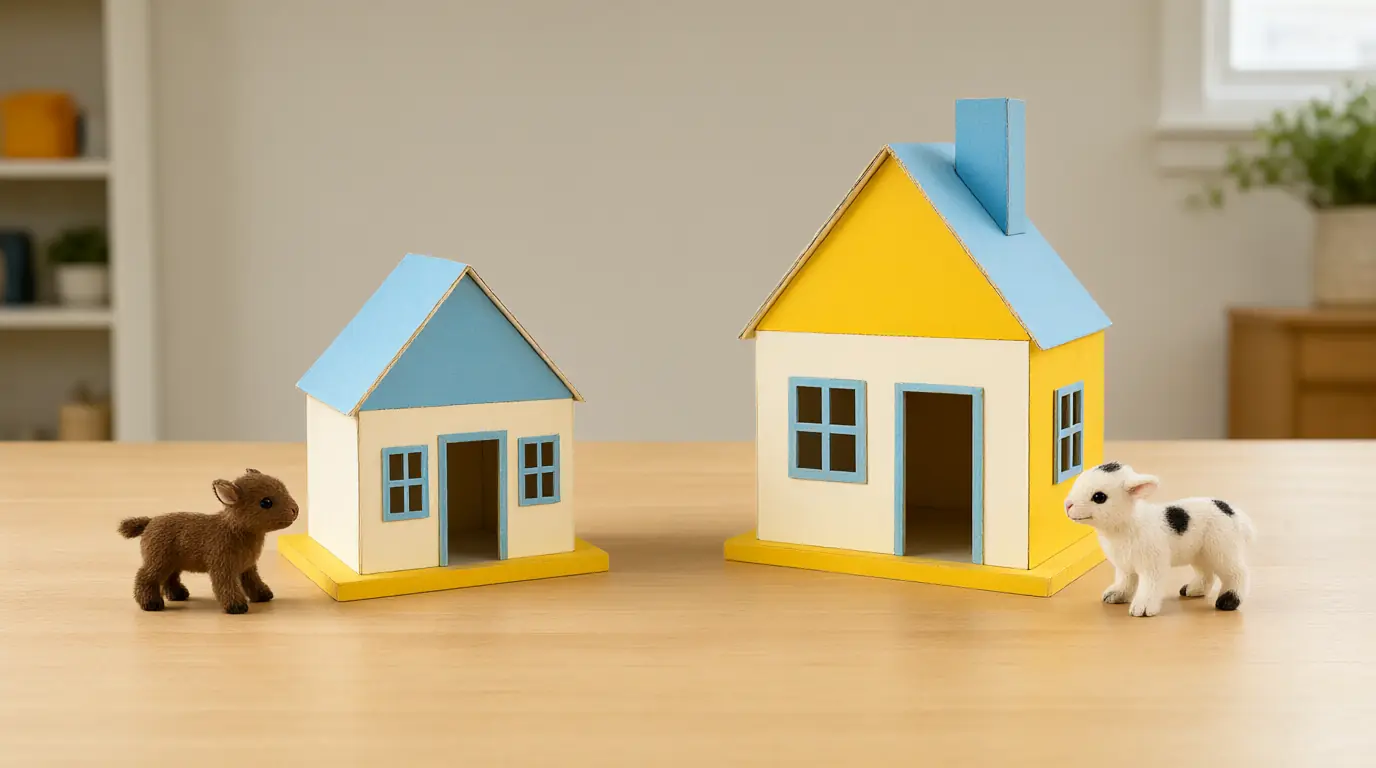
Make it your own: Younger children can build one home with a limit of six blocks. Older children can add a rule, such as each home needs a door, and plan the shape before building.
Open-information matching game
Laying picture pairs face up removes the memory challenge and leaves room for real choices. Taking turns to remove a pair, while explaining an optional rule if they wish, gives children a first taste of looking ahead: choosing a pair changes what is left for the next player, and everything stays visible so nobody has to rely on remembering.
You’ll need
- 8 to 10 large picture cards, in pairs
- A table
- A scoring sheet or tray for collected pairs
- A marker
How to do it
- Lay all the picture cards face up on the table.
- Take turns choosing a pair and placing it on your tray.
- Add an optional rule, such as collecting pairs from different categories.
- Explain why you chose a pair if you like.
- Notice which pairs are left and how your choice changes what the other player can pick.
- Count the pairs when all are gone and see who has which kinds.
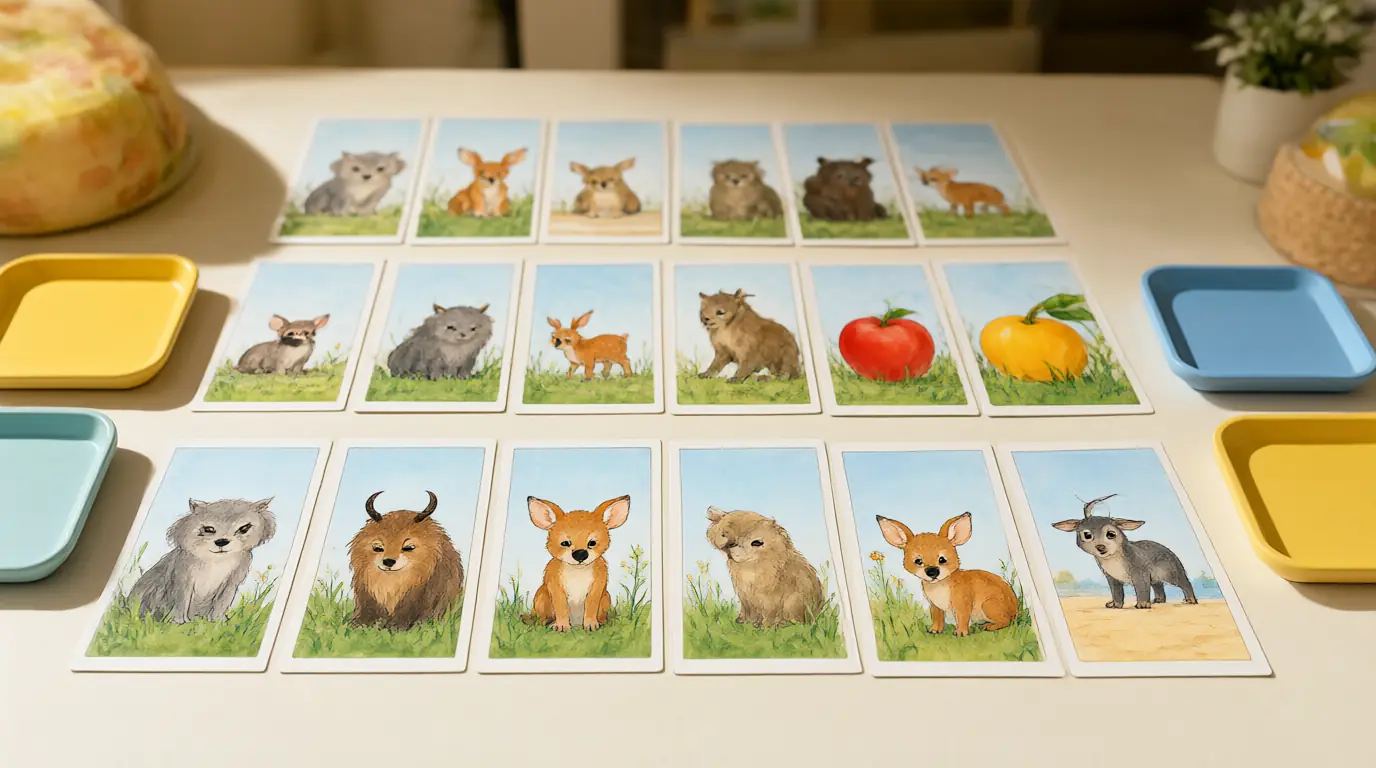
Make it your own: Younger children can play without any extra rule. Older children can add a goal, such as collecting one pair of each colour, and plan which to take first.
Replay a move without blame
Going back to one moment in a finished game and trying a different move helps children see that choices have consequences without feeling judged. Counters make it easy to recreate the position and test another idea.
You’ll need
- The game pieces from your last game
- A few counters to mark positions
- Paper and a pencil
- A calm moment after the game
How to do it
- After a short game, pick one moment where the plan changed.
- Recreate that position with the pieces and counters.
- Ask what other move could have been made and try it together.
- See what would have happened and describe the difference.
- Say that you are exploring, not deciding who was right.
- Pick your favourite move and try it in the next game.
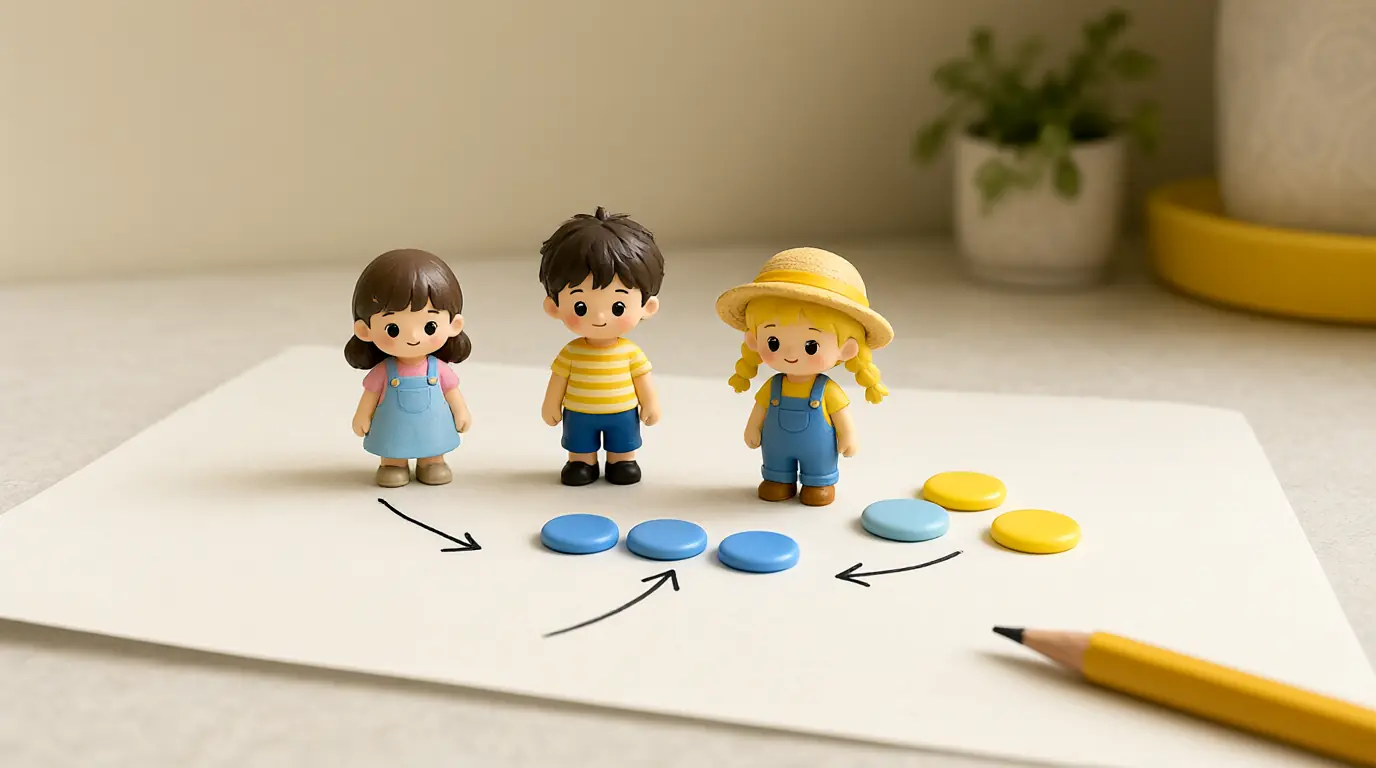
Make it your own: Younger children can describe the moment with their toys instead of the pieces. Older children can draw two possible moves and say what might happen after each.

Make it work for your family
Invite your child to describe a move if they want to, but do not ask for constant explanations while playing. Ask about one interesting moment afterwards, for example what happened when the block went there. Let your child win sometimes by playing honestly rather than by throwing the game, and show how you change your own plan when something unexpected happens.
If a game ends in tears, shorten the next one or switch to a cooperative version. Notice small improvements in planning, such as choosing a route before moving. Rules can change between games, as long as everyone agrees first. For similar games, try memory games or some problem-solving activities.
Parents also ask
At what age can children start playing strategy games?
Many four-year-olds enjoy simple games where they choose between two routes or build with a limit. Start with short, open games and a cooperative goal, and move to competitive versions only when your child is comfortable losing and winning.
Do strategy games make children smarter?
They give children enjoyable practice in planning, looking ahead and changing their minds, but they are not a measure of intelligence or a guarantee of school success. Treat them as play and follow your child's interest.
What should I do if my child hates losing?
Try cooperative versions where everyone works toward the same goal, keep games short and talk about what was interesting rather than who won. Let your child see you lose calmly and name how you feel.
Sources & further reading
Explore these primary sources for further context on this topic.
Choose materials and activities that suit your child, supervise as needed and adapt the ideas to their interests and abilities. About our editorial approach