Weebou Editorial Team
 9 min read
 In this article
A little preparation
Pick a flat surface at your child's height and clear it of everything except the pieces for one game. Four or five objects are plenty; a bigger set makes the challenge about tidying rather than thinking. Ten to fifteen minutes is usually long enough, and the games work best when your child is rested and fed rather than at the end of a long day. Keep the pieces in a small basket between games so the next one is quick to set up.
Introduce one rule at a time and show a turn before you ask your child to play. Say the goal in a single sentence: "Look carefully, then tell me what moved." Let your child lead as soon as they understand, including choosing which object to hide or which rule to sort by. If they change the rule halfway through, follow the new rule; that is part of the thinking. Keep small pieces away from children who still mouth objects, and stop when interest fades. For a gentler start, try these memory games before adding comparison.

What to know and try
Swap one object and spot the change
This is the classic what-changed game, and it works because your child has to hold a picture in their mind and compare it with what they see now. Four or five objects are enough. Swapping roles matters: when your child moves something for you, they practise planning a change and checking whether it is noticeable.
 You’ll need
- Four familiar objects
- A tray or plain tea towel
- A cloth to cover the tray if needed
How to do it
- Set four familiar objects on a tray and name each one together.
- Give your child ten seconds to look, then ask them to close their eyes or turn around.
- Move one object to a new spot, or take one away once the game feels easy.
- Let them look and describe what is different. Ask "What is in a new place?" rather than "What is wrong?"
- Swap roles so your child moves an object while you guess out loud.
- Talk about how you remembered: the order, the colour or where it sat on the tray.
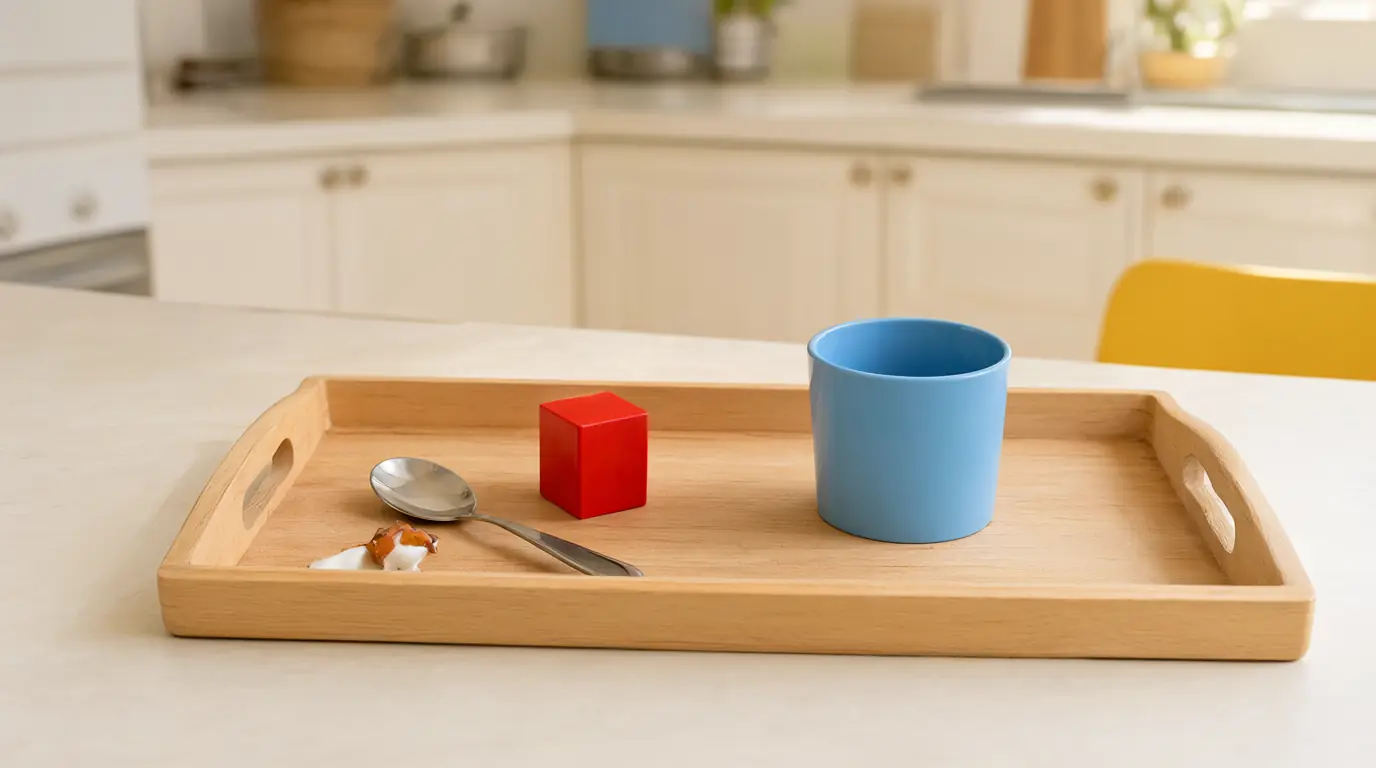
Make it your own: For a three-year-old, use three objects and move one to an obvious place. For a five- or six-year-old, move two objects or turn one upside down. If your child finds it hard, leave everything visible and ask them to describe the arrangement before anything changes.
Sort the same pieces two different ways
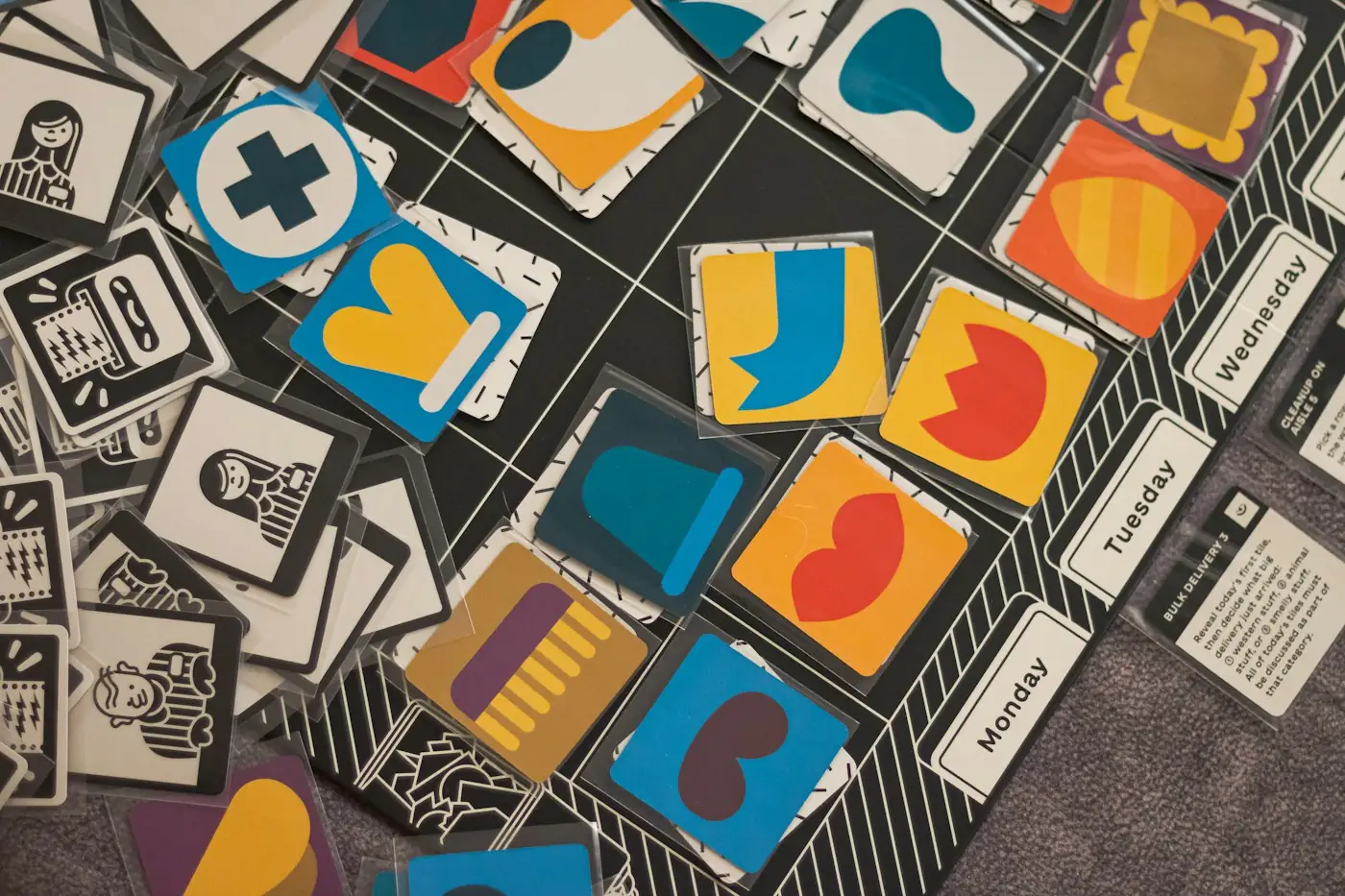
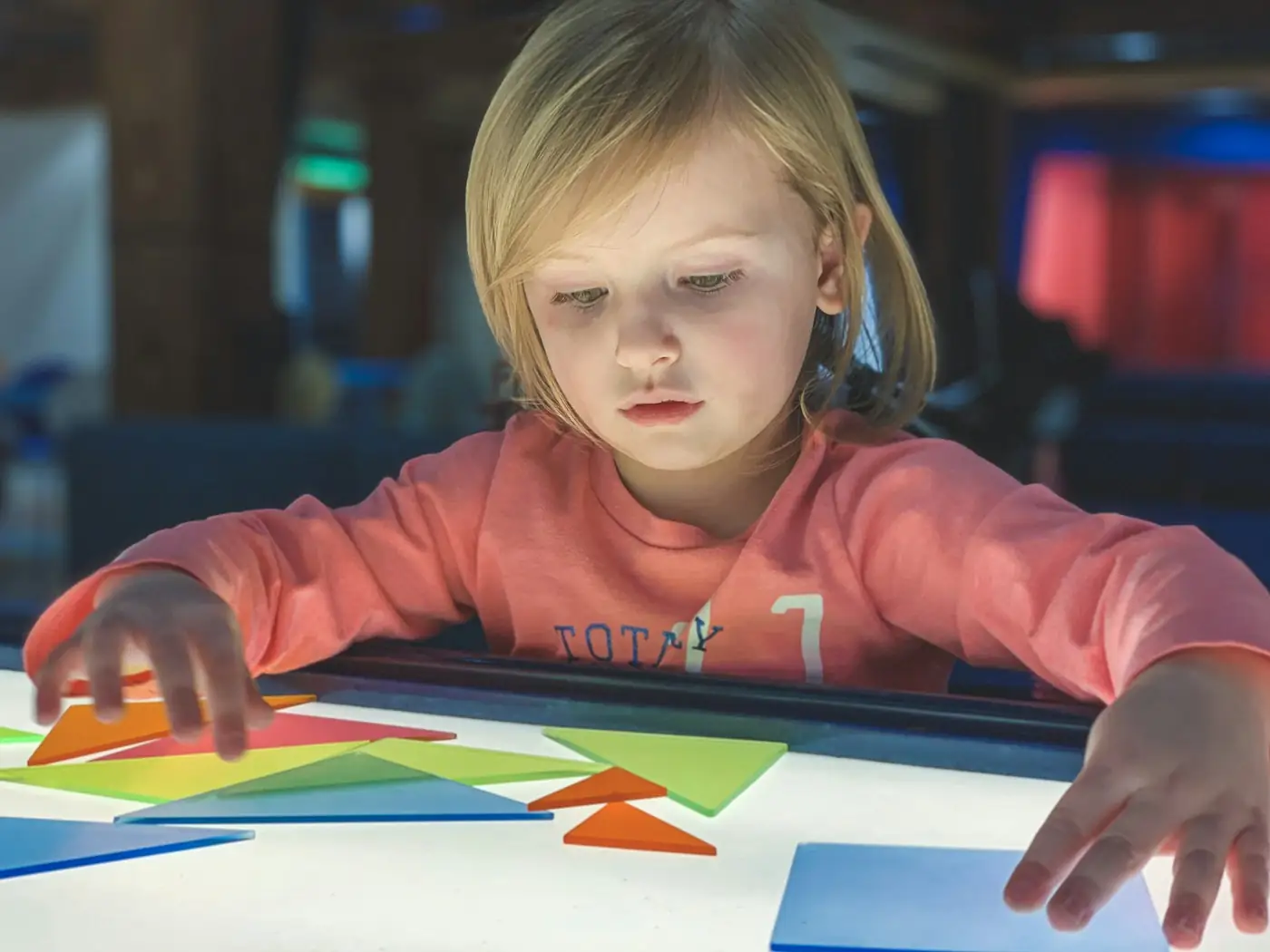
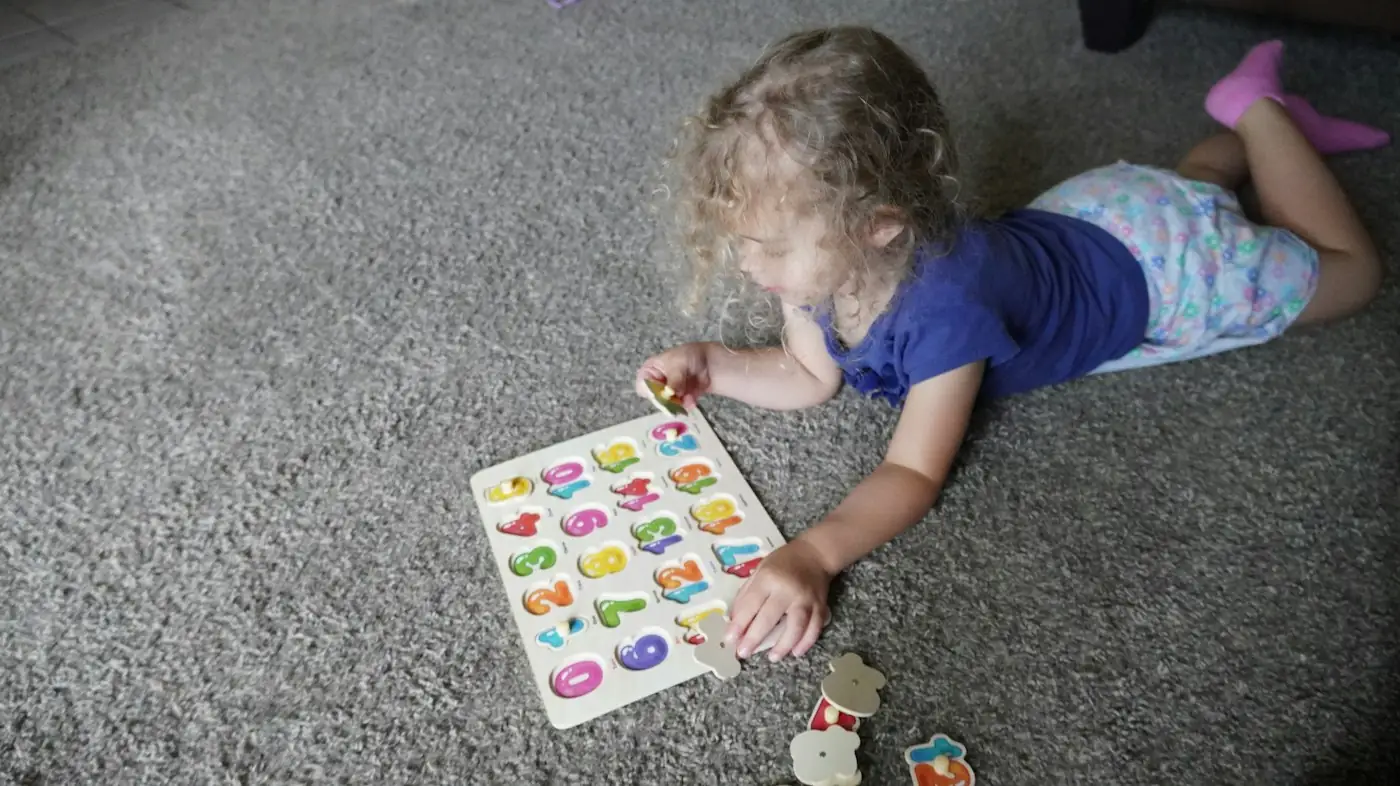
Sorting is where comparison becomes visible. A mixed pile of buttons, blocks or plastic lids can be grouped by colour, then by size, then by something your child invents. The second sort is the interesting part, because it shows that one collection can be organised in more than one way and that both answers can be right.
You’ll need
- 15–20 mixed buttons, blocks or lids
- Two shallow bowls or two hoops
- A tea towel to stop pieces rolling
How to do it
- Tip the collection into a shallow tray and let your child handle a few pieces first.
- Ask for a first grouping: "Could you put the ones that belong together in these two bowls?" Let them choose the feature.
- When the bowls are full, ask them to explain their rule in their own words.
- Tip everything back and ask for a different grouping: by size, by shape or by how many holes.
- Try a grouping that cuts across the first one, such as all the big ones, then all the round ones, and notice which pieces move.
- Let your child set a grouping rule for you and check whether you follow it.
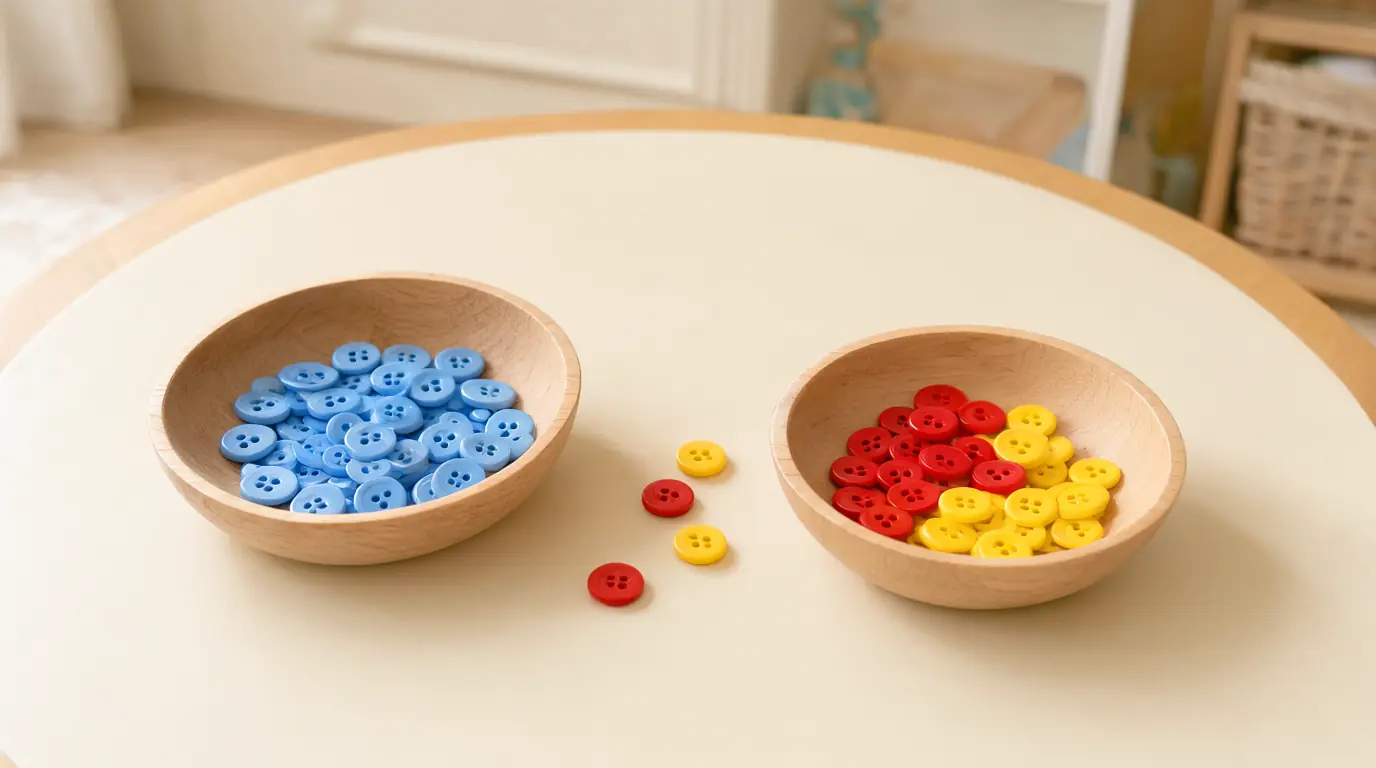
Make it your own: Younger children can sort into two piles on the floor using one obvious feature. Older children can sort the same pieces three ways and draw a simple chart of the groups. Children who dislike loose pieces can sort pictures cut from a magazine instead.
A delivery list for a toy courier
Remembering a short list is easier when you have a plan. Instead of repeating "spoon, sock, car" over and over, your child can point, count on their fingers or draw a quick reminder. The game is not about perfect recall; it is about finding a strategy that helps and noticing that it helped.
You’ll need
- Three to five small toys
- A basket or bag
- Paper and thick crayons for reminders
How to do it
- Lay the toys out on the floor and name them together.
- Give the delivery list: "The bear needs the cup and the red car." Start with two items.
- Ask your child to repeat the list, then choose a way to remember it: saying it, counting the items or drawing each one.
- Send them to collect the items from the basket across the room.
- Check the collection together and ask which trick helped.
- Add one more item when two feel easy, or let your child write your list instead.
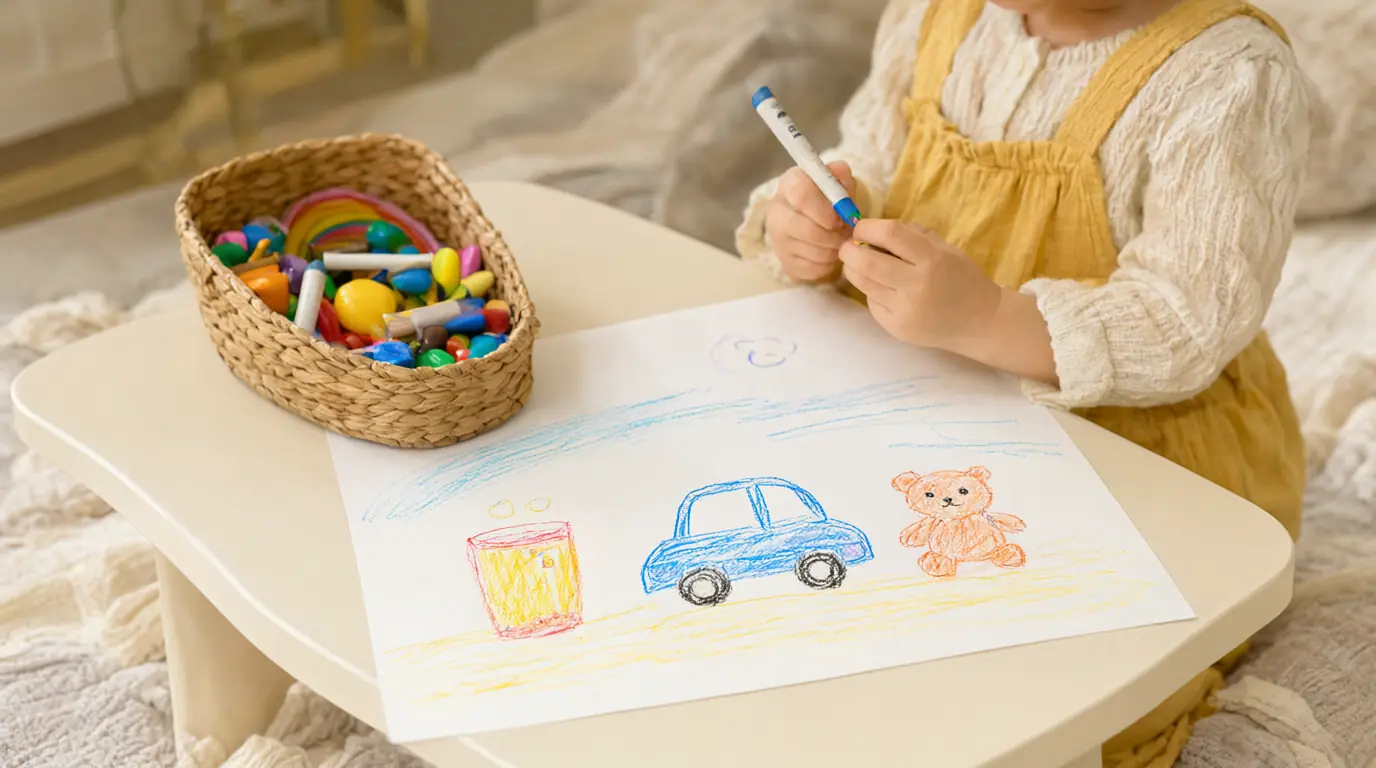
Make it your own: Three-year-olds may need the items in sight and only one thing to fetch. Five- and six-year-olds can hold three or four items and invent a rhyme. If drawing is frustrating, let them place a sticker for each item as a reminder.
Continue the pattern, then invent a rule
Patterns give children a rule they can test. A simple alternating line of two colours is easy to read, and continuing it means holding the rule in mind while choosing the next block. Inventing a new rule is the bigger step: it asks your child to describe what they decided so someone else can follow it. These first strategy games build on the same habit of making a plan and changing it.
You’ll need
- 10–12 blocks in two colours
- A clear stretch of floor or table
- A tray for spare blocks
How to do it
- Build a short line together: red, blue, red, blue, red.
- Ask your child to add the next two blocks and say the rule aloud.
- Let them build a line with a different rule, such as two reds then one blue.
- Try to continue their pattern yourself and ask them to check whether you are right.
- Offer a deliberate mistake, such as a green block in a red-blue line, only if your child enjoys spotting errors.
- Take a photo or draw the pattern so it can be rebuilt another day.
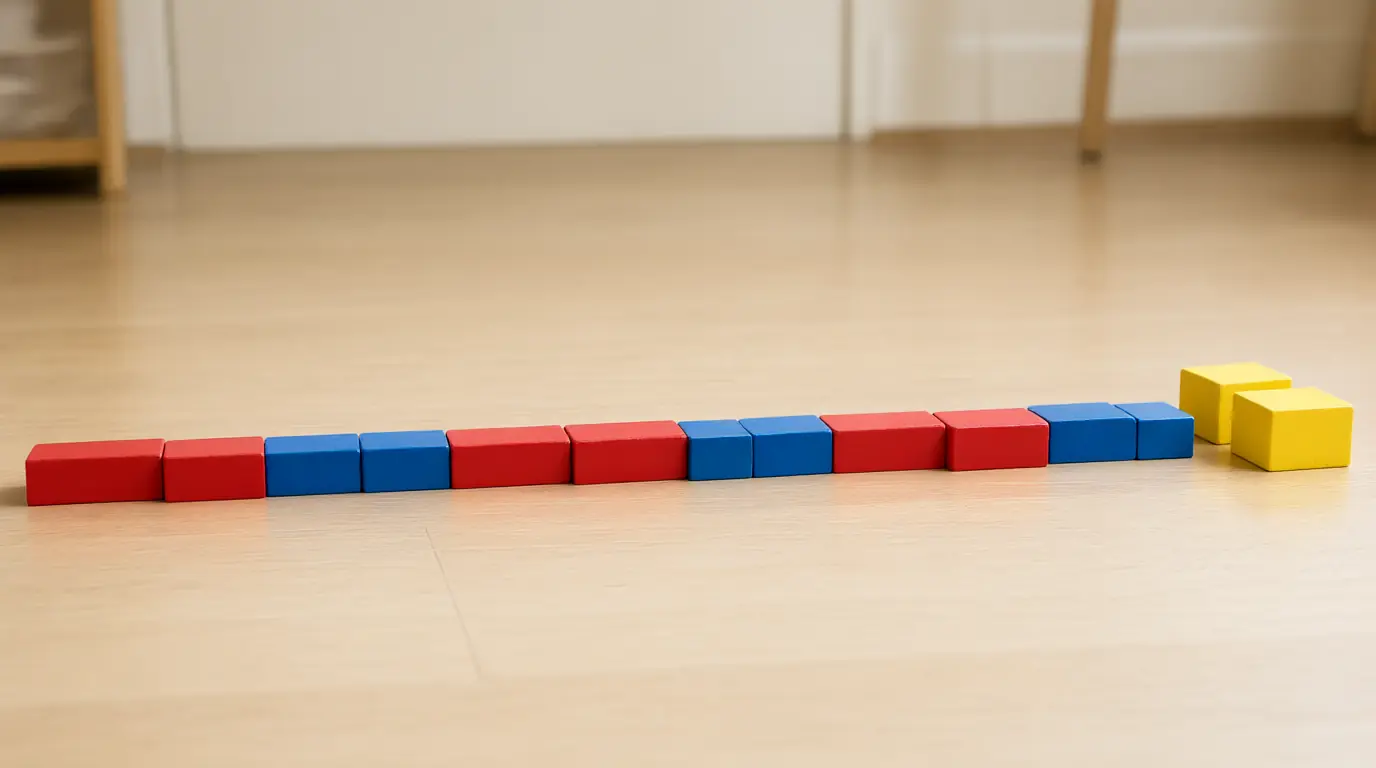
Make it your own: Younger children can copy your line block by block rather than continuing it. Older children can build a pattern that repeats every three or four blocks and describe it to you without pointing. If blocks are limited, use spoons and forks or coloured socks.
Yes-or-no questions to find the hidden object
Guessing games turn thinking into questions. Hide one object from a small set and let your child ask yes-or-no questions to narrow it down. The skill is not knowing the answer; it is choosing a question that removes several possibilities at once, such as "Is it something we eat?" rather than "Is it the spoon?"
You’ll need
- Four or five familiar objects
- A cloth or small bag
- A sheet of paper for simple picture clues
How to do it
- Lay the objects out and name them together.
- Hide one under the cloth while your child closes their eyes.
- Explain that they can ask questions with a yes or no answer, and model one: "Is it something we use in the kitchen?"
- Answer honestly and let them turn over or cross off the objects that are ruled out.
- Count how many questions it took, then swap roles and let them hide an object for you.
- Afterwards, ask which question helped most and why.
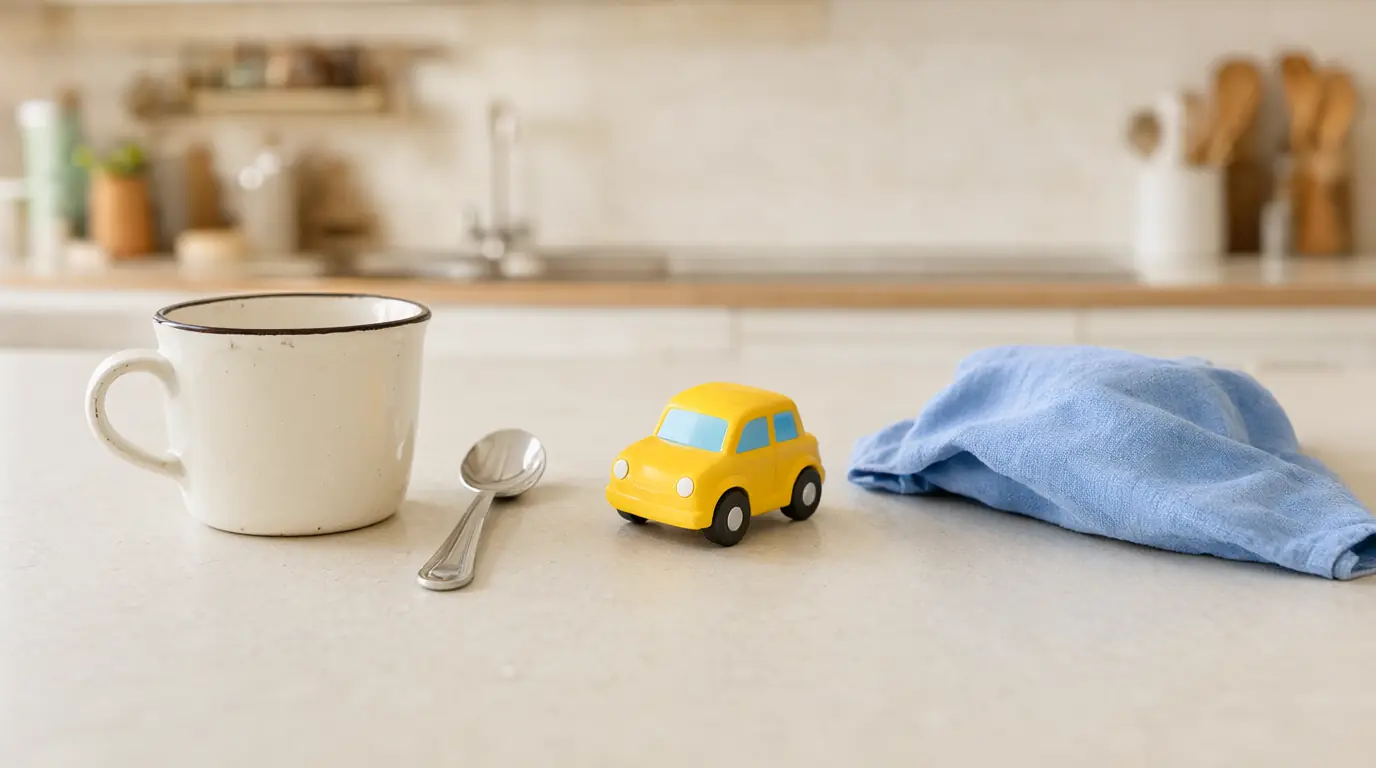
Make it your own: Three-year-olds do better with three objects and questions you help them form. Older children can play with a whole room of objects or a picture page. If questions stall, offer two choices: "Would you like to ask about colour or about where it is kept?"

Make it work for your family
If your child guesses randomly, shrink the set rather than repeating the instructions. Two objects and one change are easier to hold in mind than five. A child who says "I don't know" may need the objects left in view and a spoken reminder of the rule. Offer a choice of two strategies, such as saying the list aloud or drawing it, rather than telling them the trick.
When a game feels too easy, change one feature: add an item, hide two things or ask your child to explain their rule to someone else. Explaining is often harder than doing, so keep it short and friendly. Stop while the game is still enjoyable and leave the pieces out for a repeat later. These attention games and a few picture puzzles make good follow-ups.
Parents also ask
What are thinking games for kids?
They are short games that ask a child to remember, compare, sort or reason about something visible. Examples include spotting what moved on a tray, grouping buttons two ways, following a pattern rule or asking yes-or-no questions to find a hidden toy. They need only everyday objects and a few minutes.
At what age can children start memory and sorting games?
Many three-year-olds can sort by one obvious feature and notice one change among three objects. Four- and five-year-olds often manage two changes, longer lists and simple pattern rules. Six-year-olds may enjoy explaining their rule or asking questions to narrow down possibilities.
How do I make a thinking game harder without frustrating my child?
Change one thing at a time: add a single object, hide one more item or introduce a second sorting feature. Watch whether your child still explains their choice. If they stop talking about the pieces or start guessing, go back to the easier version and try again another day.
Sources & further reading
Explore these primary sources for further context on this topic.
Choose materials and activities that suit your child, supervise as needed and adapt the ideas to their interests and abilities. About our editorial approach