Weebou Editorial Team
 7 min read

 In this article
A little preparation
Start with familiar images such as animals, fruits or household objects, and keep the set small: four pairs for a three-year-old and up to eight for an older child. You can draw simple pictures on cards, cut pairs from old magazines or use matching items from around the home. Show every card openly before you try any hidden version, so children can see what they are meant to remember.
Play on a table or the floor where everyone can see, and use a tray for object games so nothing rolls away. Check that objects are safe and not small enough to swallow. Keep games to ten minutes and stop on a good round. Remember that children's recall varies with tiredness, interest and the day; a child who struggled yesterday may find it easy today. Let everyone take part in checking, and treat a wrong guess as information rather than a failure.

What to know and try
Face-up pair finder
Seeing all the cards at once gives a child the chance to look, compare and match without relying on recall. It builds the habit of looking closely at details, which is the first step of remembering. Naming something interesting about each picture makes the card easier to recognise later.
 You’ll need
- 4 to 6 pairs of picture cards
- A flat table
- A small bowl for matched pairs
How to do it
- Spread all the cards face up in rows.
- Choose one card and say what you see in it, such as 'a spotted dog with a red collar'.
- Ask your child to find its twin and place it next to it.
- Check together that every detail matches, including colours.
- Put the matched pair in the bowl.
- Continue until all pairs are found, then take turns choosing the first card.
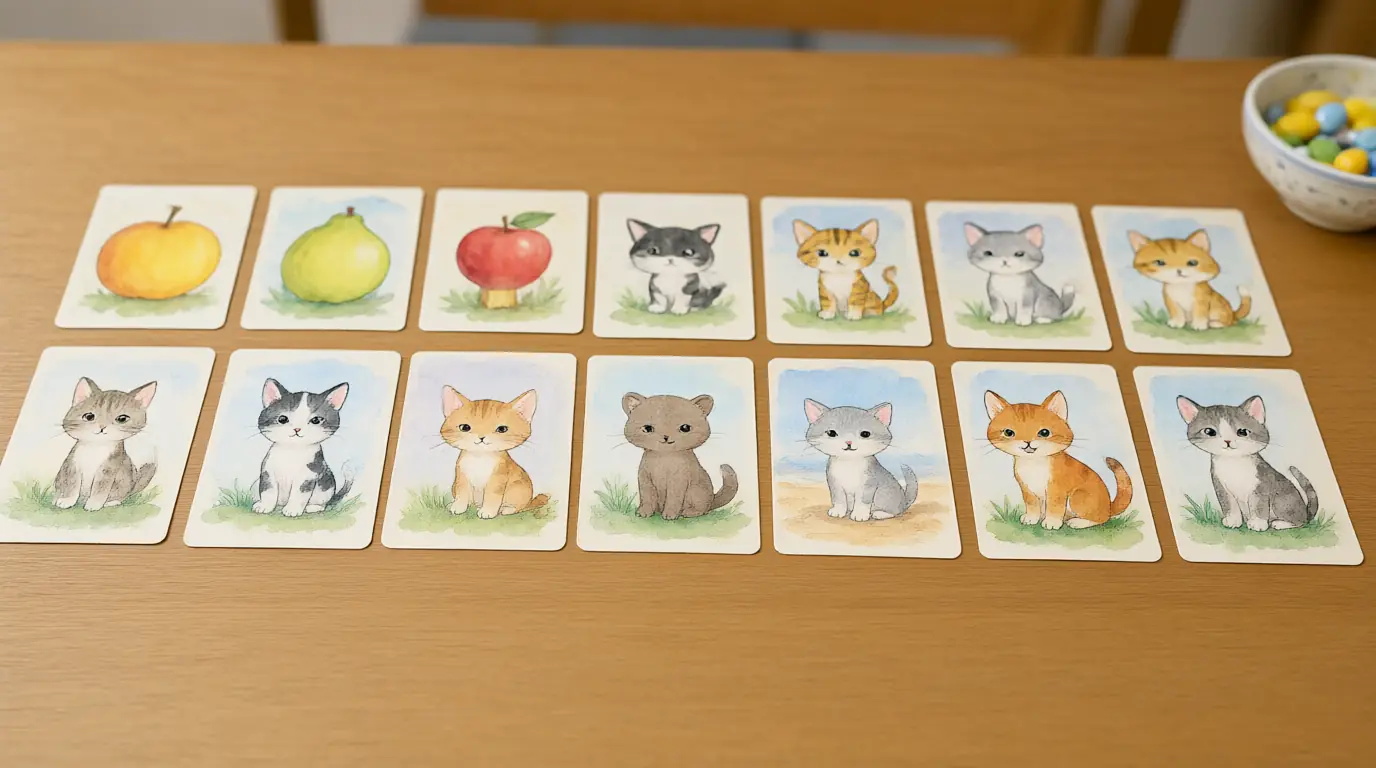
Make it your own: Use only three pairs for a very young child, and make them very different. Older children can try pairs that are almost the same, such as two blue cups with a different pattern.
Turn-and-check pairs
The classic memory game turns recall into a team effort. When cards are face down, children have to remember where each picture is, and playing cooperatively means everyone helps to remember. Removing the pressure to win keeps the focus on thinking and listening.
You’ll need
- 4 to 6 pairs of picture cards
- A flat table
- A cloth to keep the table quiet
How to do it
- Shuffle the cards and lay them face down in a grid.
- Turn over two cards and say what they show.
- If they match, keep them face up; if not, turn them back and say where they were, for example 'top left'.
- Take turns, and let the other player help by saying what they remember.
- Keep going until all the pairs have been found.
- Ask what helped you remember: a colour, a place or a sound.
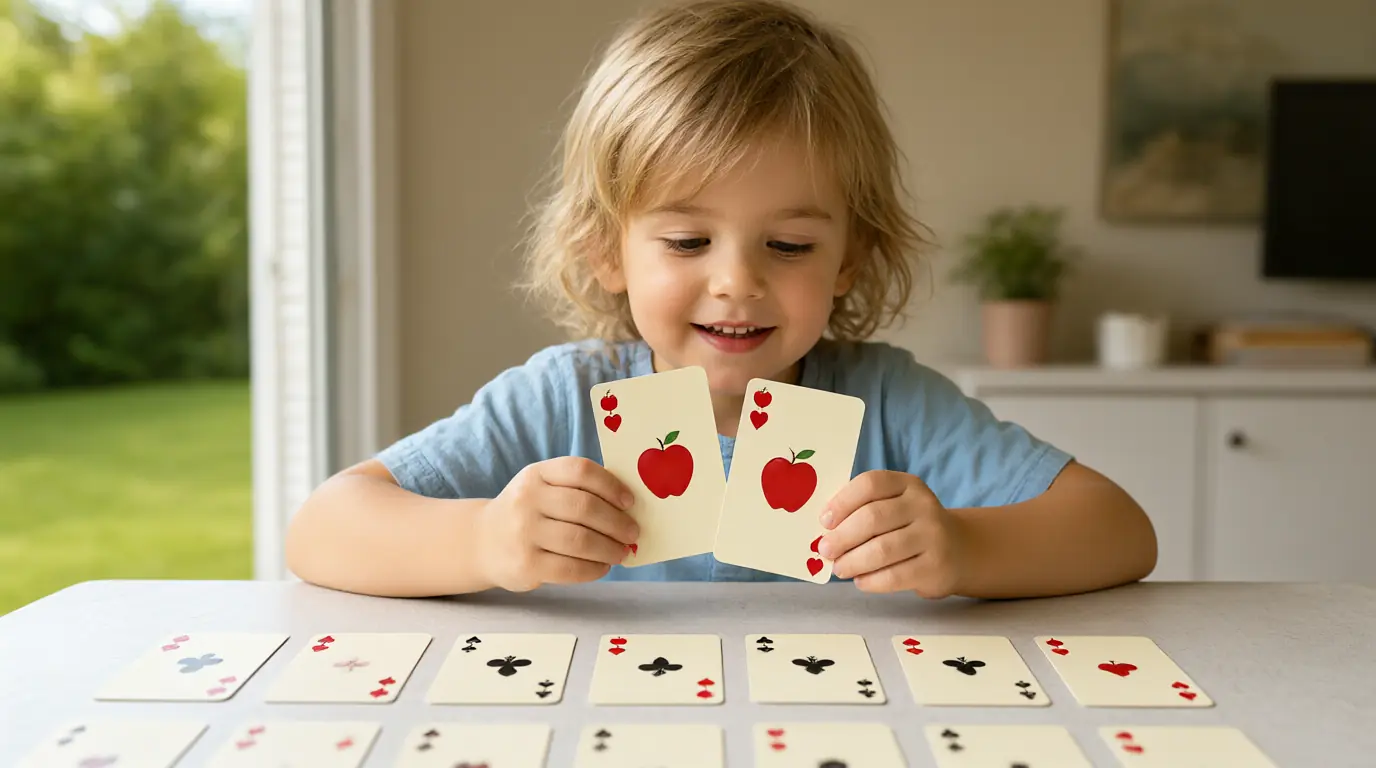
Make it your own: Start with three pairs and keep one card face up as a clue for a younger child. Older children can use ten pairs or find pairs by sound.
What has changed?
Noticing what has changed uses working memory and attention, and children love the surprise of spotting the difference. With real objects they can touch and move, it suits children who find picture cards tricky, and it quietly teaches them to look at the whole tray before deciding.
You’ll need
- A tray
- 5 safe household objects such as a spoon, a sock, a cup, a toy car and a small book
- A tea towel
How to do it
- Put the objects on the tray and name each one together.
- Let your child look for ten seconds.
- Cover the tray with the towel and, out of sight, remove or swap one object.
- Uncover the tray and ask, 'What has changed?'
- Ask how they knew, and bring back the original to check.
- Swap roles so your child changes the tray for you.
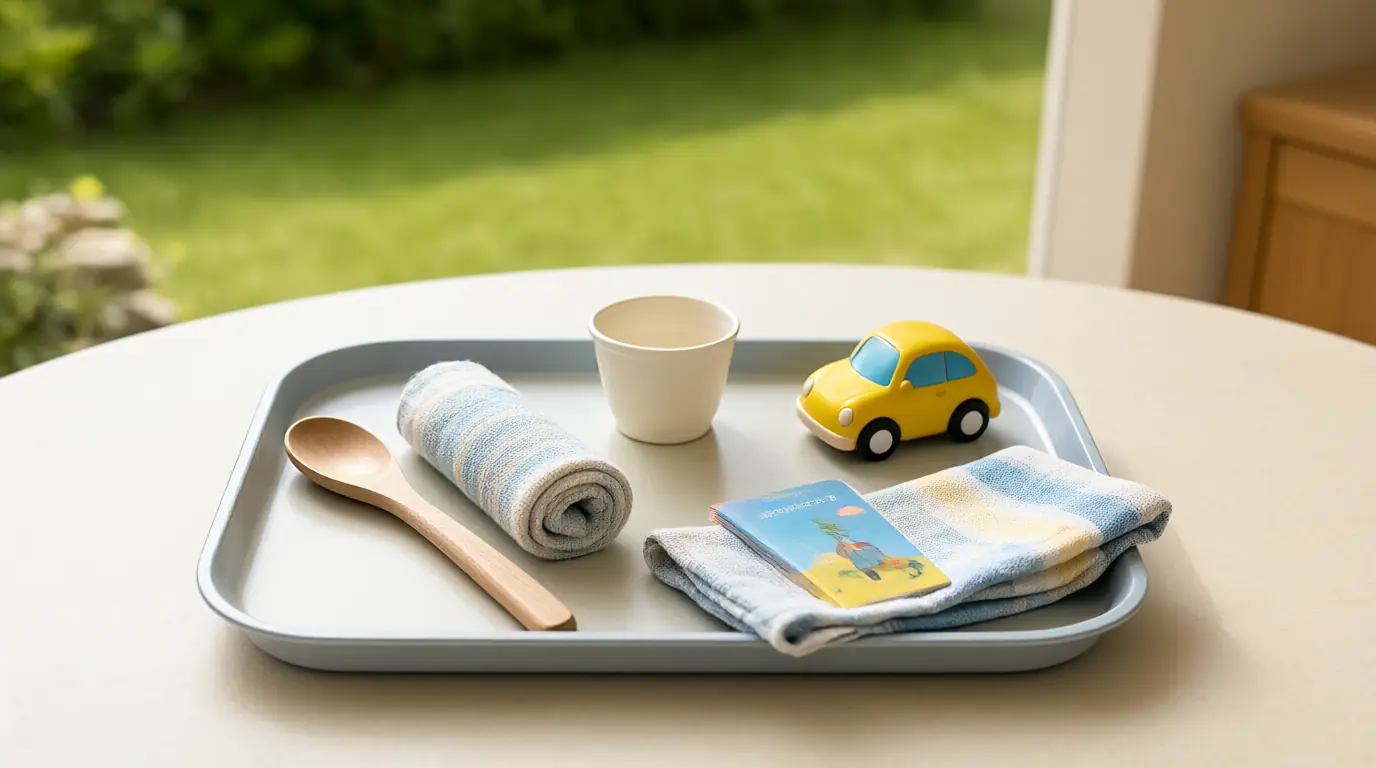
Make it your own: Use only three objects and take one away for a younger child. For older children, move an object to a new place instead of removing it, or use eight items.
A story chain of three pictures
Linking pictures in a story is one of the oldest memory tricks, and children discover it easily. A silly, vivid link such as a cat on a banana makes a card memorable. They also practise narrative and imagination at the same time.
You’ll need
- 3 picture cards chosen at random
- Paper and crayons
- A small bag
How to do it
- Draw three cards from the bag, such as a cat, a banana and a boat.
- Say a short story that uses all three in order: 'The cat slipped on a banana and sailed away in a boat.'
- Let your child add a funny detail to the story.
- Put the cards away and ask your child to say the story again.
- Check which pictures they remembered and show the cards.
- Draw the story together on a sheet of paper.
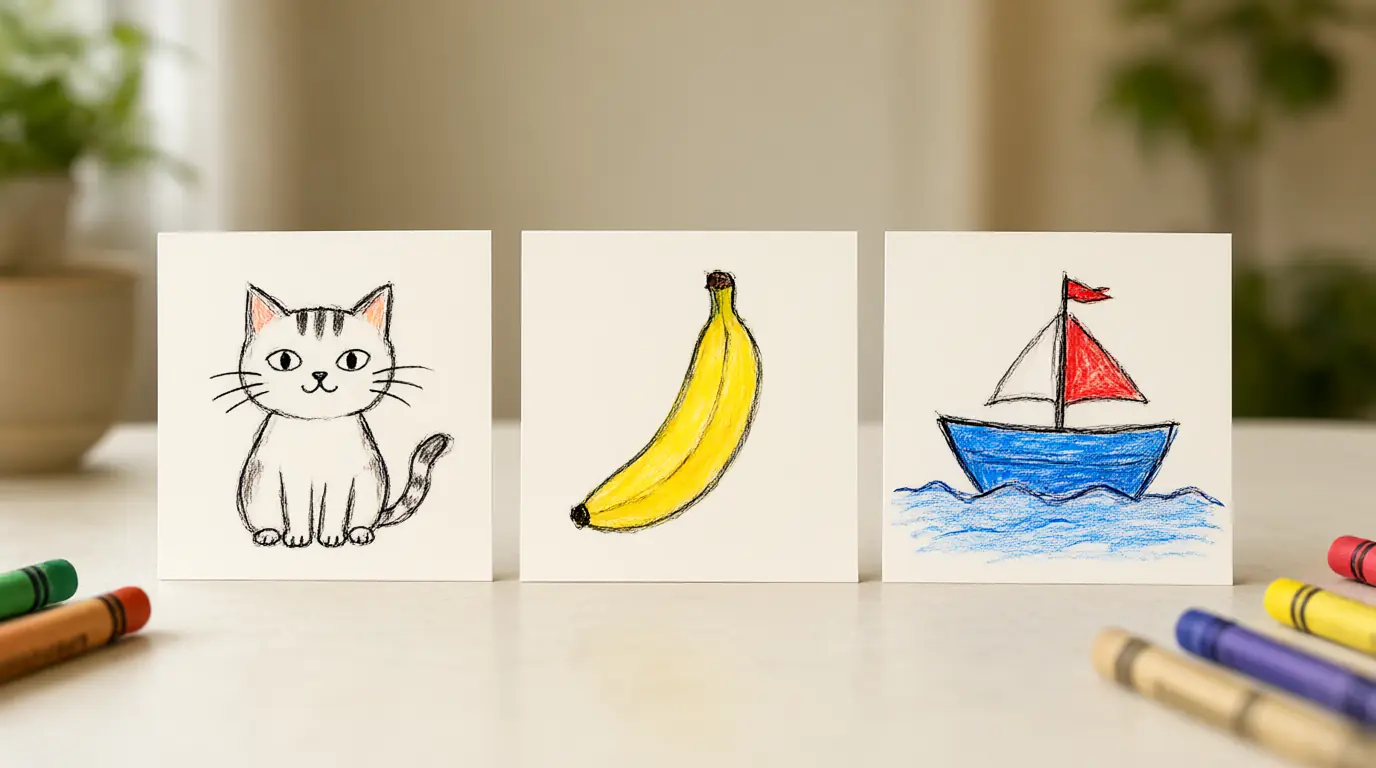
Make it your own: Use only two pictures for younger children and tell the story together. Older children can add a fourth card or put the cards in a new order and change the story.
The pretend shopping list
Remembering a short list is a real-life memory skill. By pretending to shop, children practise holding two or three things in mind and have a reason to repeat them, which is a useful memory strategy. The basket makes the game feel real.
You’ll need
- A basket
- 6 items such as a toy apple, a play banana, a cup, a spoon, a sock and a book
- A table as the shop
- A paper bag
How to do it
- Set the items on the table as the shop and give your child the basket.
- Say, 'Please buy a banana and a cup.'
- Ask your child to repeat the list out loud before going.
- Let them collect the items and check them against your list.
- Swap roles so you do the shopping from your child's list.
- Increase the list to three things after a few rounds.
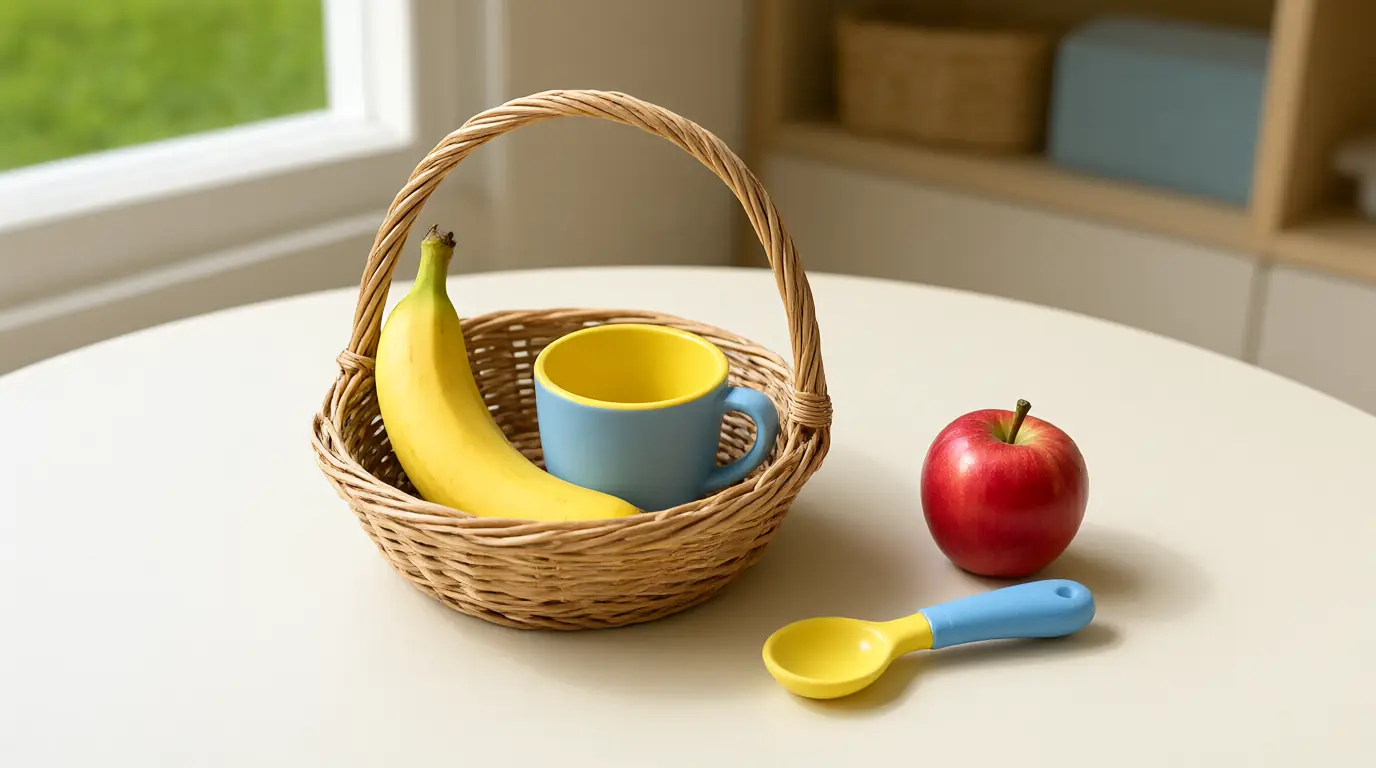
Make it your own: Ask for one item for a younger child, and show a picture of it. Older children can try a list of four and give directions, such as 'first the cup, then the book'.

Make it work for your family
Avoid saying that a child has a good or bad memory; skills vary with attention, interest and the day, and labels can stick. Instead, talk about strategies: looking carefully, saying the name out loud, or making a picture in your head. If a game ends in tears, simplify it by turning cards face up or using fewer cards. Notice progress privately and keep the mood light.
Memory games fit easily into everyday moments, such as remembering the order of a routine or what is in a lunchbox. For more ideas, see the concentration games for kids, the thinking games for kids or play the Weebou memory game.
Parents also ask
What age can children start playing memory games?
Many children enjoy simple matching games from about three, using a few large pictures. By five or six they can manage more pairs and face-down versions. Children vary a lot, so choose the number of cards your child finds enjoyable.
Do memory games improve memory?
Games give children practice in noticing, naming and recalling, and they can teach strategies such as repeating a word or linking pictures. They are a fun way to practise, but they are not a treatment for memory problems. Speak to your doctor if you have concerns.
How many cards should I use for a preschooler?
Start with three or four pairs and add one or two when your child finds them easy. Fewer cards keep the game short and successful; too many can become frustrating. Let your child choose when to add more.
Sources & further reading
Explore these primary sources for further context on this topic.
Choose materials and activities that suit your child, supervise as needed and adapt the ideas to their interests and abilities. About our editorial approach