9 min read

 In this article
A little preparation
Before opening a game with children, open it yourself. Check for small pieces that younger siblings could put in their mouths, count how many separate things a player has to do on a turn, and look at how long a full game is likely to take. For three and four-year-olds, a game that lasts more than 10 to 15 minutes usually needs a shorter board or a clear stopping point agreed in advance.
Play a practice round with the pieces laid out where everyone can see them, and let your child touch and sort the cards or counters first. Decide where the game will be played: a low table or the floor suits most children, and a tray or a tea towel underneath keeps pieces from sliding or rolling away. Explain the rules in the order players will need them, rather than reading the whole rulebook aloud, and be ready to say out loud that you are going to change a rule so that the game works better for everyone.

What to know and try
Test one turn before you play
A single turn tells you more about a game than the age label on the box. If you can describe what happens on a turn in one or two short sentences, and your child can do it with a little help, the game is probably a good match. If it takes a paragraph, set it aside for now or play a simplified version.
 You’ll need
- The game box and its rule sheet
- A small table or tray
- Two or three of the game's pieces
- A sticky note for your simplified rule
How to do it
- Read the rules yourself first and find the shortest possible turn.
- Put just the pieces needed for that turn on the table.
- Show your child one turn slowly, naming each action aloud.
- Let them take a turn while you stay close and answer questions.
- Ask what they think comes next, and notice whether they can predict it.
- Write a simplified rule on a sticky note if you decided to change something.
Make it your own: Younger children might only learn to roll and move or to flip a card, and that is enough for a first game. Older children can try adding the second rule, such as drawing a bonus card, once the first feels automatic.
Try a shared goal
Many young children enjoy a game more when everyone is trying to reach the same finish. Turn almost any race game into a team game by agreeing that all the players need to get home before the sun sets, which you track with a yellow disc at the edge of the board. Turn-taking, counting and a bit of planning come naturally.
You’ll need
- A simple race-style board game or path
- One counter per player
- A yellow button or disc to act as the sun
- A basket or small box as a home
How to do it
- Agree before starting that the goal is for every player to reach home before the sun finishes moving.
- Place the sun disc at one end of the board.
- Take turns to roll and move your own counter.
- After each round, move the sun one step along its own track.
- Cheer for every counter that arrives, and help the last player if needed.
- Count how many steps of the sun were left when everyone arrived.
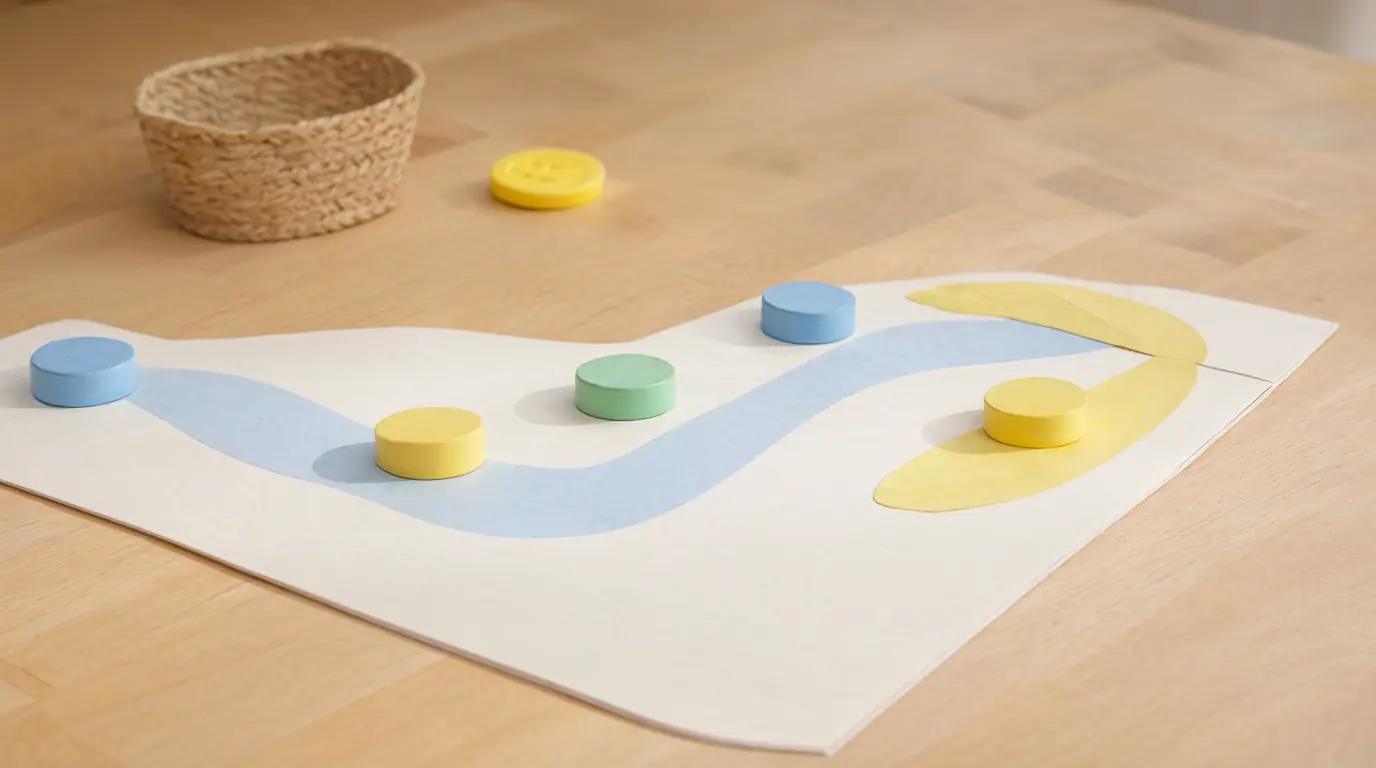
Make it your own: For a child who is new to games, skip the sun and simply count how many rounds it takes everyone to get home. Older children can have the group decide together whether to move two counters at once or to give a spare move to someone behind.
Make a shorter route
A long path can feel endless to a three-year-old, and a short one lets a game end while interest is still high. Shorten a favourite board by folding the track in half, using a smaller number of spaces or setting a finish line closer to the start. Increase the length only when your child counts steps confidently.
You’ll need
- A board game track or a long strip of paper
- A pencil and a ruler
- Coloured sticky dots
- A die and counters
How to do it
- Count the squares on the original track and choose a number about half as big.
- Place a sticky dot on the new final square so that everyone can see where the game ends.
- Roll the die and move your counter exactly the number shown.
- Practise counting out loud as each counter moves from space to space.
- At the finish, ask whether the track felt too short or too long.
- Adjust the finish dot for the next game.
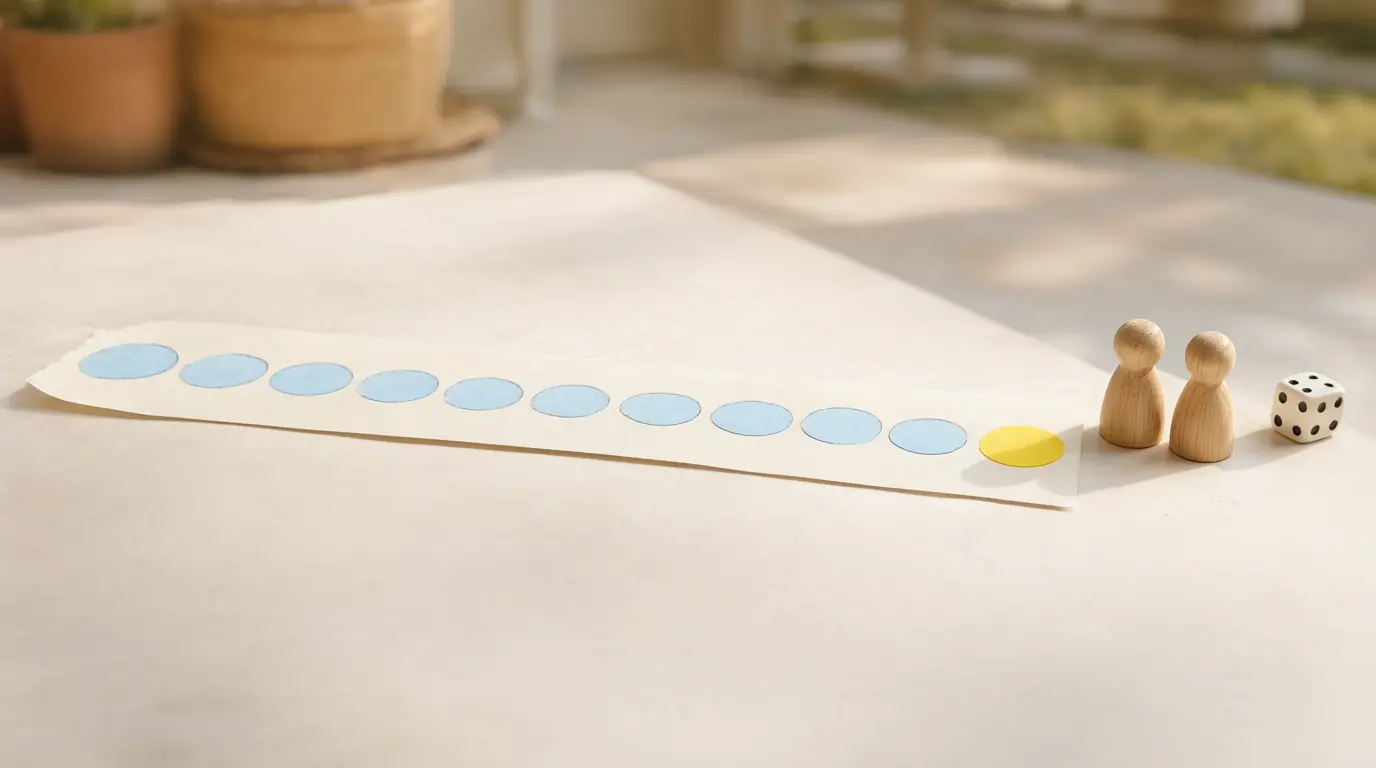
Make it your own: If counting past five is difficult, use a die with dots only up to three, or a coin where heads means one step and tails means two. Older children can roll two dice and add them once they are comfortable.
Build a path game from paper
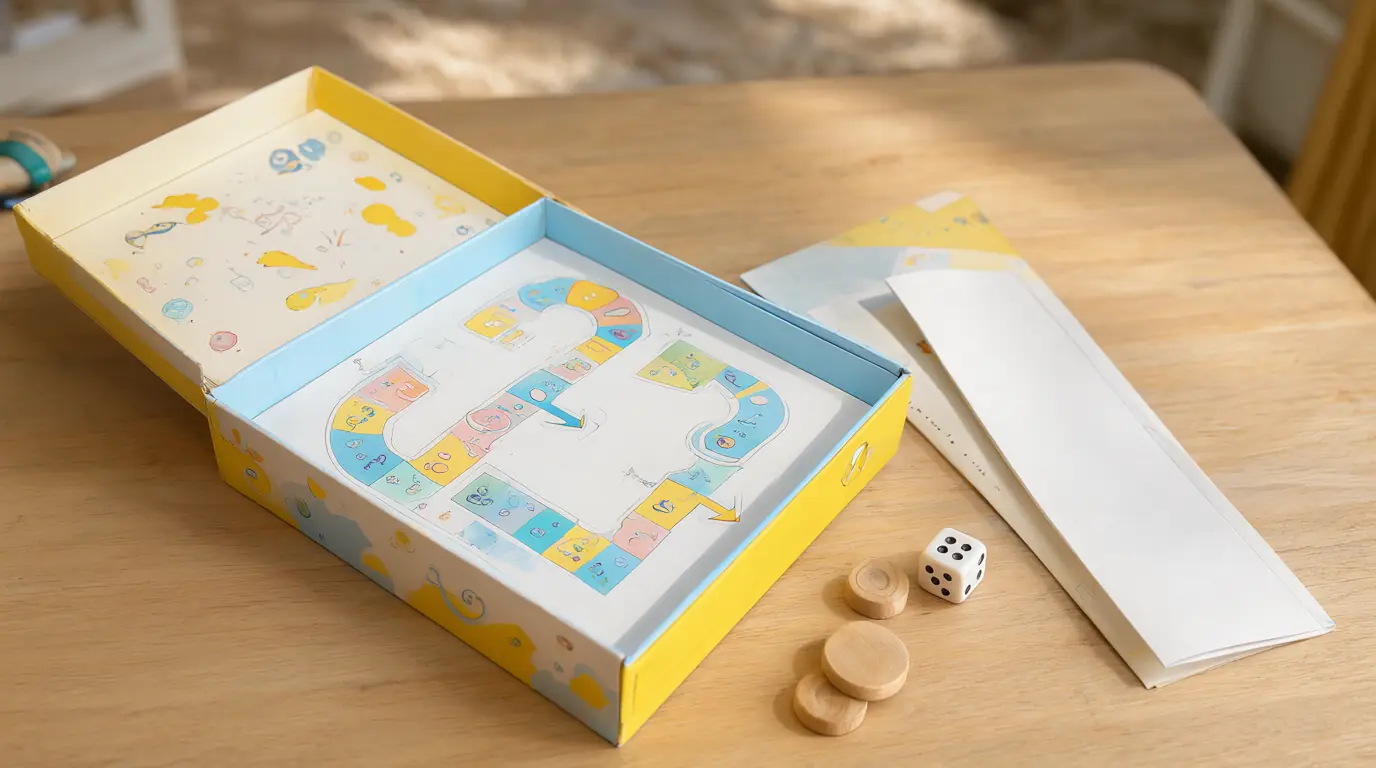
Designing a game gives children a chance to think about rules from the inside, and it works for any theme. A path game made from paper has everything needed for turn-taking, counting and following simple instructions, and your child's drawings supply the story, whether it is a rabbit's journey to the garden or a rocket's trip to the Moon.
You’ll need
- A large sheet of paper or card
- Crayons or markers
- A die and two counters or buttons
- Small toys as playing pieces
How to do it
- Draw a winding path of about 20 spaces with a start and a finish.
- Ask your child to colour some spaces and draw a picture on three or four of them.
- Decide together what the pictures mean, for example a flower means move forward one space.
- Check that the rules are simple enough to remember and write them as little drawings in a corner.
- Take turns rolling and moving, and follow each picture's rule.
- Change one picture or rule after the first game and play again.
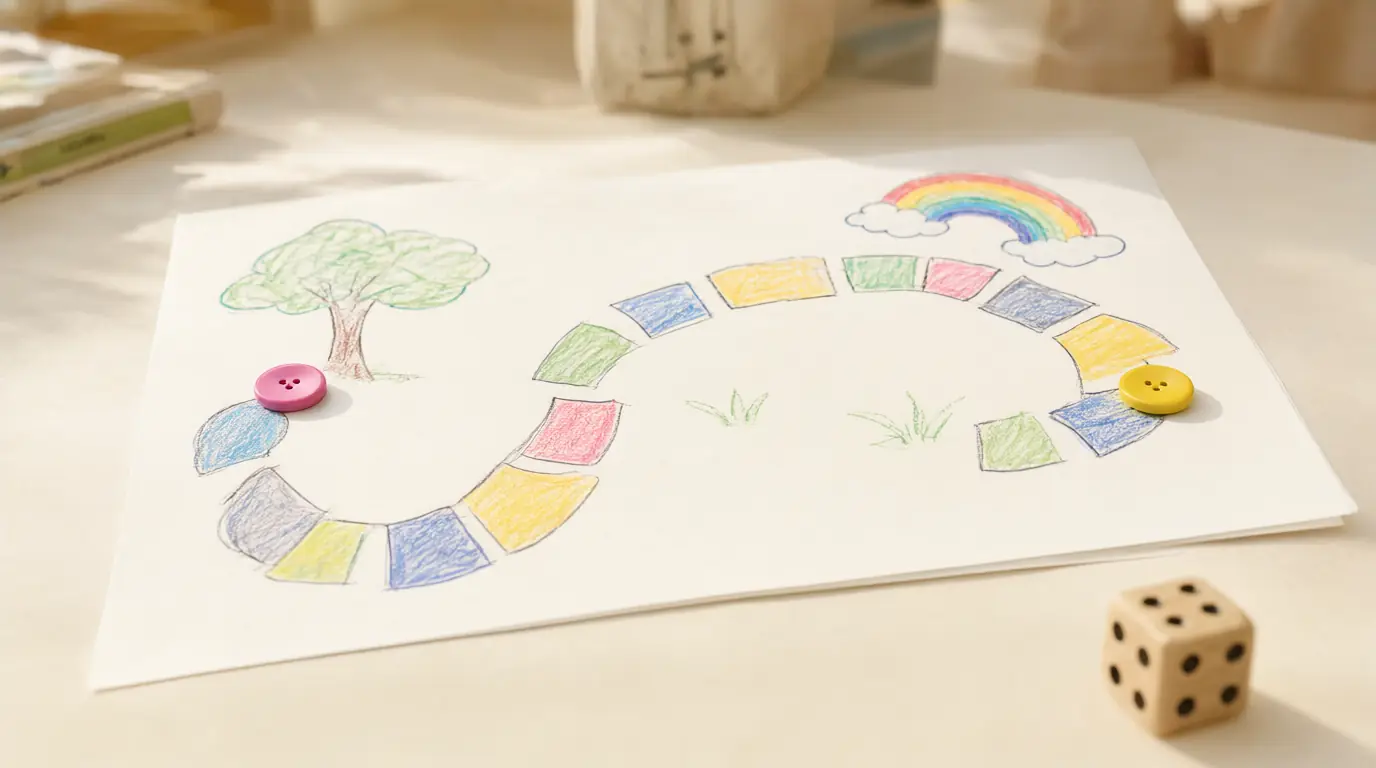
Make it your own: Younger children can colour a path and decide where their toy rests, with you adding the rules. Older children might add a picture that sends a player back a space and discuss whether that feels fair.
Talk about the game afterwards
What children say after a game is often more useful than what happens during it. A short chat about what worked helps them describe their feelings and ideas, and gives you clear information about which games to try next. The question is about the game, not about whether your child is good at games.
You’ll need
- The game you have just played
- A sheet of paper
- A pen for you
- Two coloured pencils for your child
How to do it
- Put the game pieces away together, saying one thing you liked about the game as you do.
- Ask your child which part was the most fun and which was a little confusing.
- Write their answers as two short lists on the paper.
- Ask if they would change a rule, and write down any ideas without judging them.
- Choose one small change for the next time you play.
- Keep the paper near the game box as a reminder.
Make it your own: Children who prefer not to talk can point to one of two faces you draw, a smile or a frown. Older children can score each rule with one to three stars, then compare lists across several games.

Make it work for your family
Children usually find rules easier when they are attached to actions rather than words, so show a turn once, then let them do it while you describe what they are doing. If a game stalls because a rule is confusing, pause, say what you notice and simplify instead of pushing on. It is fine to remove a rule, play with open cards, use a timer-free version or let players help one another.
Losing can be hard at this age, so consider cooperative games where the group wins or loses together, and name the part of the game that went well whatever the result. Notice also when a game ends: stopping while your child is still enjoying it makes them more likely to ask to play again. If you enjoy making your own, our guide to first strategy games and the dice game ideas give plenty of starting points.

Parents also ask
What age can children start playing board games?
Many children enjoy very simple games with large pieces from around age 3, such as matching or roll-and-move games. A box age is only a guide: look at the number of rules, the length of a turn and whether there are small parts before choosing.
How do you teach a child to lose a board game?
Start with cooperative games where everyone wins or loses together, and praise a specific move or choice rather than only the result. Keep games short, say out loud that you sometimes lose too, and finish with a shared activity such as counting the pieces.
Is it okay to change the rules of a board game?
Yes. Shortening a track, removing a rule, playing with open cards or working as a team are all sensible adaptations for young children. Explain the change before you begin so that everyone knows the same version, and try the full rules later if the children are interested.
Choose materials and activities that suit your child, supervise as needed and adapt the ideas to their interests and abilities. About our editorial approach