Weebou Editorial Team
 8 min read
 In this article
A little preparation
Clear a low work surface or a patch of floor and gather sturdy, everyday materials: wooden blocks, a cereal box cut flat, masking tape, a soft ball and a toy animal. Describe the problem in one sentence, such as 'This tiger needs to cross the gap without getting wet', then show how the materials can be handled, but do not build an answer. Children learn most from a first attempt that fails.
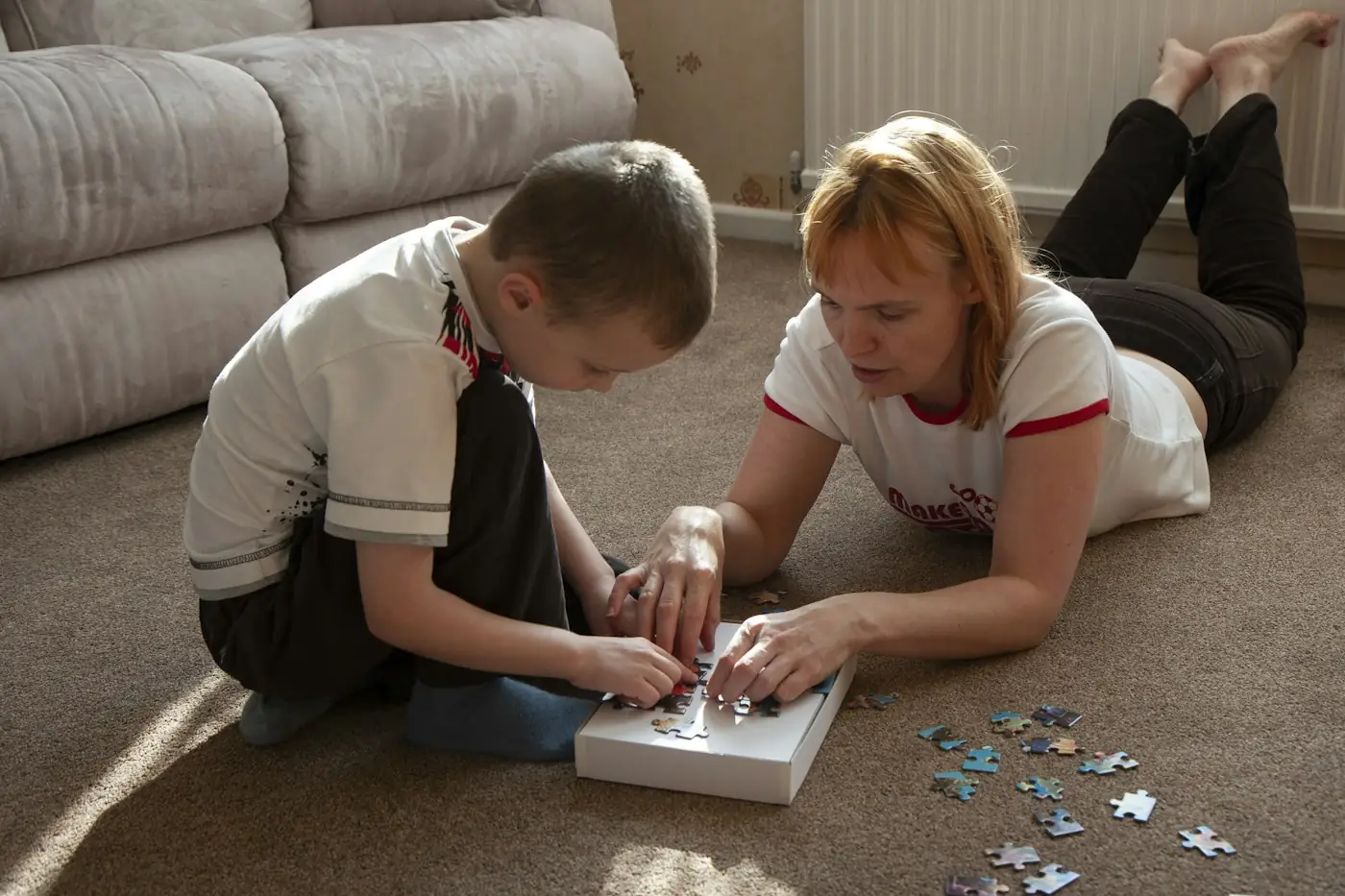
Plan about fifteen to twenty minutes and keep a second, smaller challenge ready for children who finish quickly. Stay seated beside your child and offer one open question at a time. If your child gets stuck, change one detail of the problem rather than the solution: shorten the gap, widen a block or hold a piece steady. Keep sharp card edges folded and taped, and use tall structures only where a toppling piece cannot land on anyone.

What to know and try
Build a bridge for a toy tiger
Two blocks with a gap between them make an instant problem with a clear test: the toy either crosses or it does not. Children discover that a thin strip bends, that a wide strip holds, and that a support in the middle changes everything. They decide what to adjust each time.
 You’ll need
- 2 tall wooden blocks
- A strip of stiff card or cereal-box cardboard
- 4 small blocks for supports
- A toy animal
- Masking tape
How to do it
- Stand the two tall blocks about a hand-span apart and place the toy on one side.
- Say, 'The tiger needs to get to the other side. What could help?'
- Let your child lay the card across and walk the toy over, noticing whether it bends.
- Ask what happened, then offer to try one change, such as folding the card into a flat tube or adding a support under the middle.
- Move the blocks further apart and try again.
- Finish by comparing the strongest bridge with the first attempt.
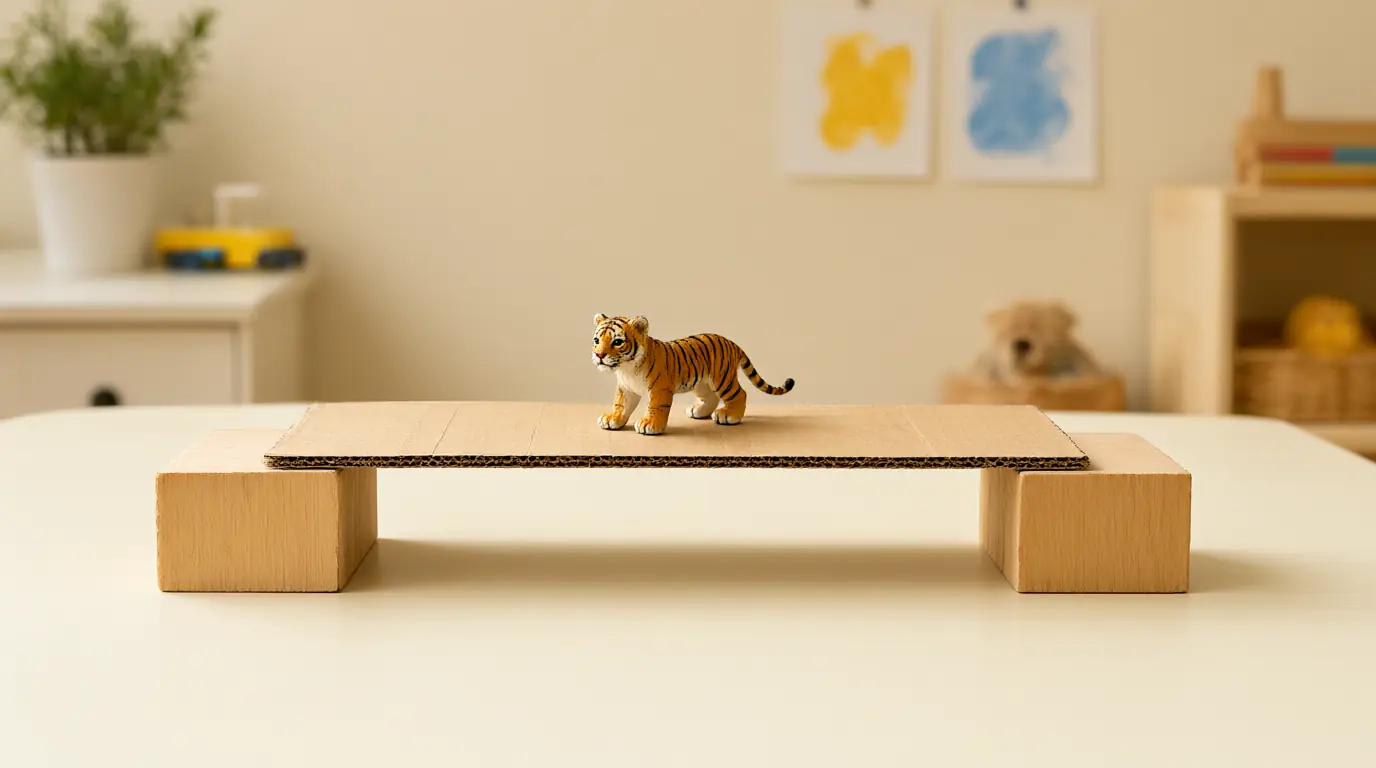
Make it your own: Make the gap smaller for a three-year-old. For older children, add a rule such as 'use only two supports' or ask them to predict whether a heavier animal will cross.
Cross the tape river without getting wet
A floor made into a river gives children a whole-body problem. They need to plan a route before stepping, and the materials will not all do the same job. It practises planning, estimating distance and testing whether something supports a weight.
You’ll need
- Two long strips of blue or masking tape
- 4 flat cushions or sheets of cardboard
- A paper message folded small
- A lightweight tray
How to do it
- Lay the two tape lines about 80 centimetres apart to make a river on the floor.
- Put a folded paper message on one bank and tell your child it must reach the other side without anyone touching the river.
- Offer the cushions, the tray and the cardboard, and let your child choose what to try first.
- If the first idea works, ask for a second one. If not, ask what was too short or too slippery.
- Try crossing with the message in a different way, such as sliding it on the tray.
- Move the tape lines further apart to make a bigger river.
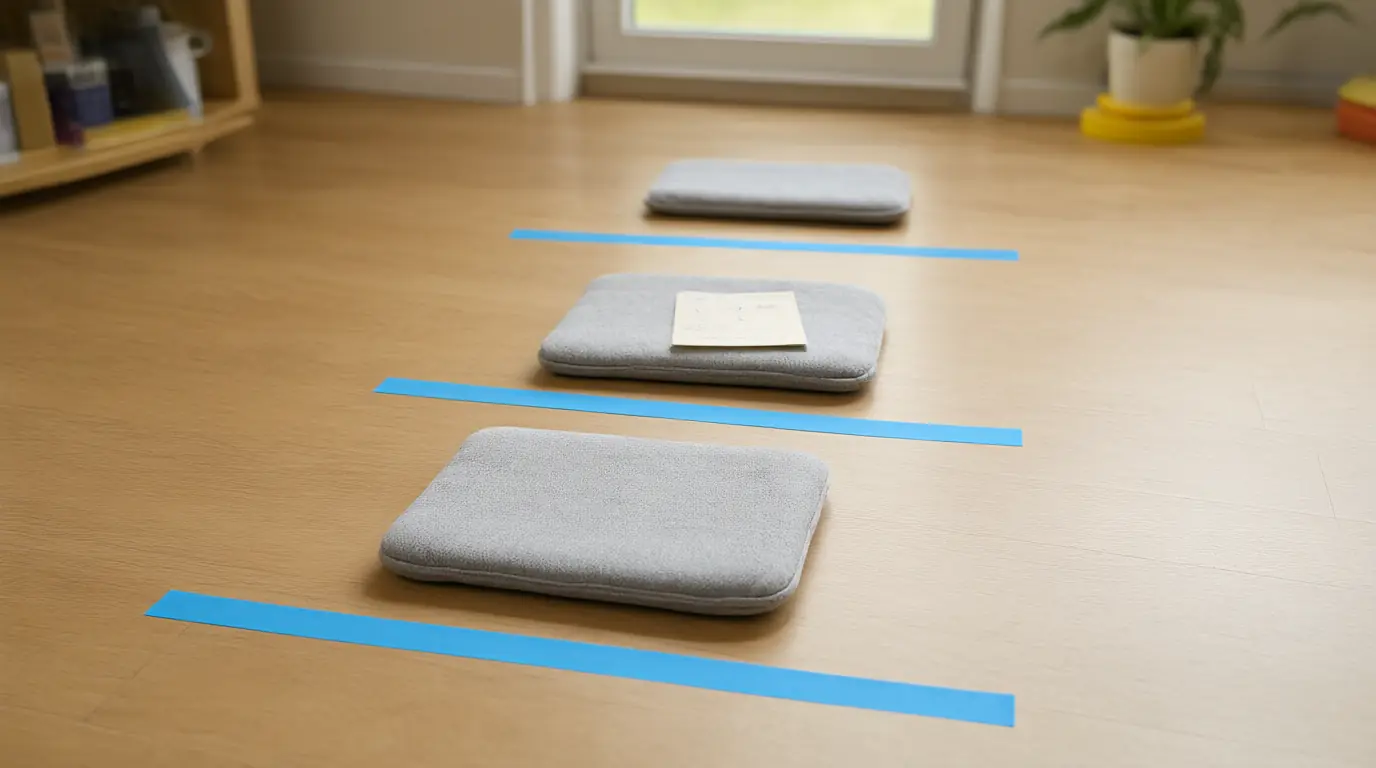
Make it your own: Use a narrower river for younger children and let them step across. Older children can limit themselves to three pieces of cardboard or work in pairs, with one person only allowed to place pieces.
Catch the rolling ball
A ball that rolls off a slope gives the problem a natural speed and direction. Children must think about where the ball stops, what could slow it down and what could change its path. Each design can be tested straight away, which makes the cause and effect easy to see.
You’ll need
- A large cardboard sheet or tray as a slope
- A soft ball larger than a fist
- 3 or 4 wide blocks
- A shallow box
- Masking tape
How to do it
- Lean the cardboard on a cushion to make a gentle slope and mark where the ball usually stops with a tape line.
- Let your child release the ball once and watch where it goes.
- Say, 'Can you build something that stops the ball at the tape?' and offer the blocks and box.
- Test each attempt twice; a design that works only once may be luck.
- Compare a wall of blocks with a box on its side and notice which catches better.
- Change the slope height and see whether the catcher still works.
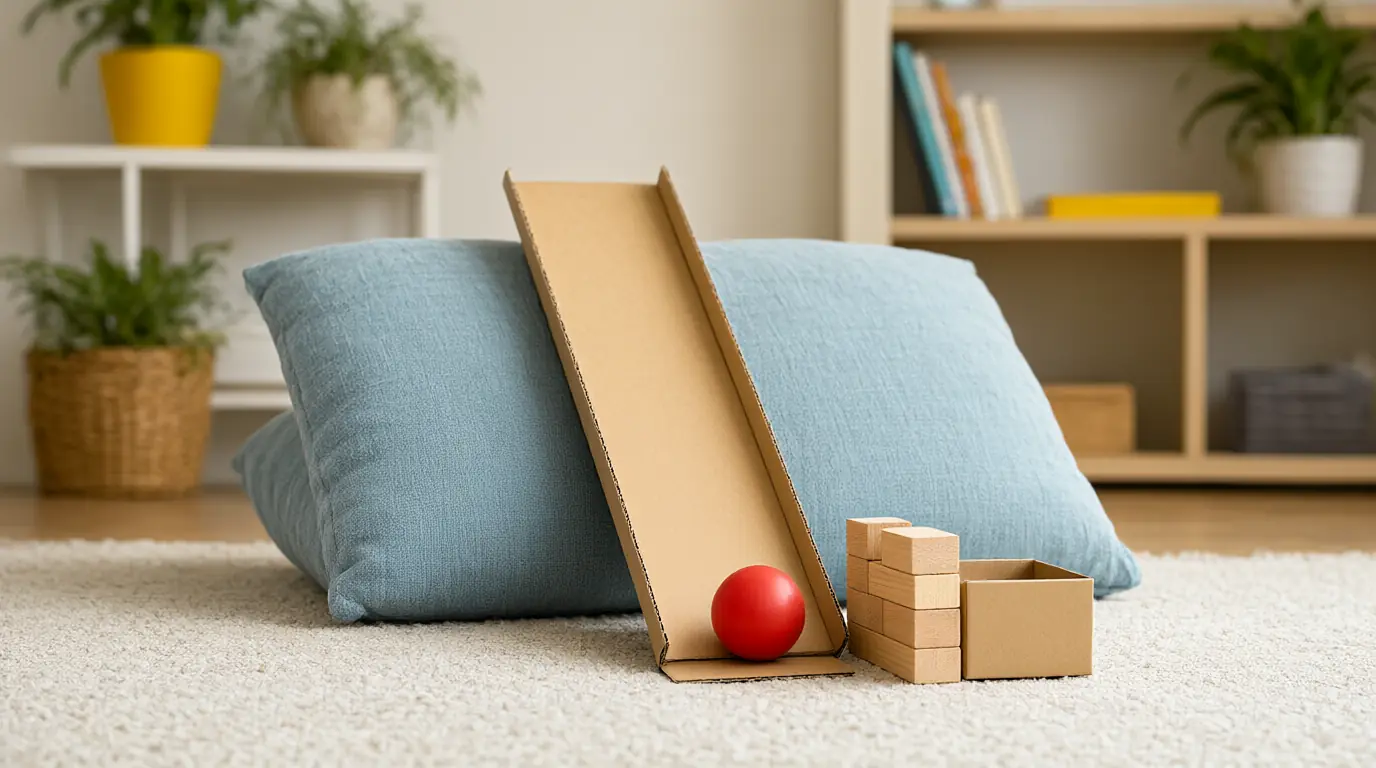
Make it your own: Start with a very gentle slope so a young child has time to react. For older ones, ask them to use only three blocks or build something that also guides the ball into a basket.
Pack an awkward parcel
Fitting odd shapes into a small box is a problem with a clear limit: the box does not change, so the packer has to. Children turn pieces, change the order, and sometimes decide the box is too small. Recognising a limit is as valuable as finding a solution.
You’ll need
- A small cardboard box with the lid removed
- 3 awkward items such as a toy car, a wooden spoon and a soft sock
- A scarf or tea towel
- A pencil and paper for a plan
How to do it
- Show your child the box and the three items and say that everything needs to travel in one parcel.
- Ask them to guess whether everything will fit, then try it.
- If something sticks out, talk about which piece is the troublemaker and how it could turn or move.
- Try a new order, with the soft item last to fill gaps.
- If nothing works, ask whether a bigger box or a different item would help.
- Draw a quick picture of the packing that worked.
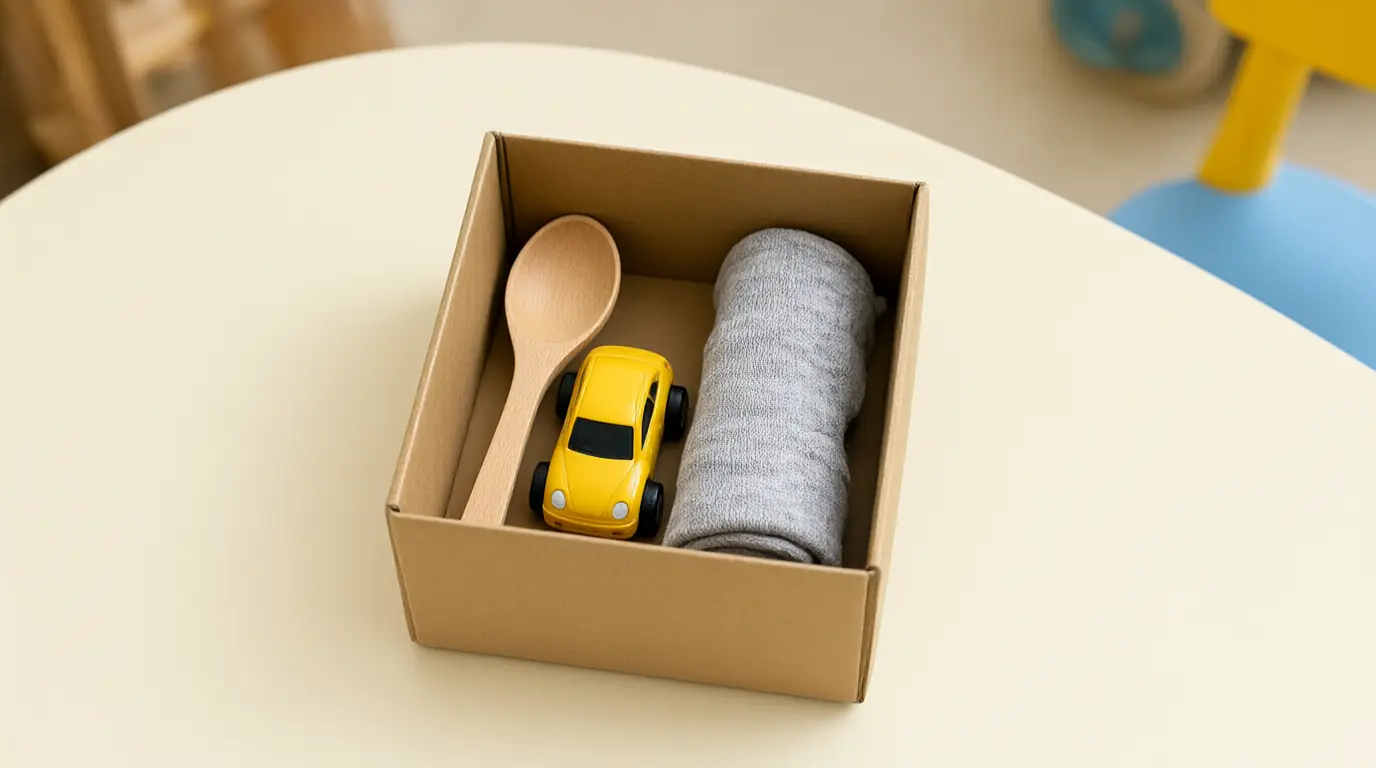
Make it your own: Offer only two items for younger children. Older children can pack in a way that keeps something fragile, such as a plastic egg cup, away from heavier things, and explain why.
The tower that must stand in a breeze
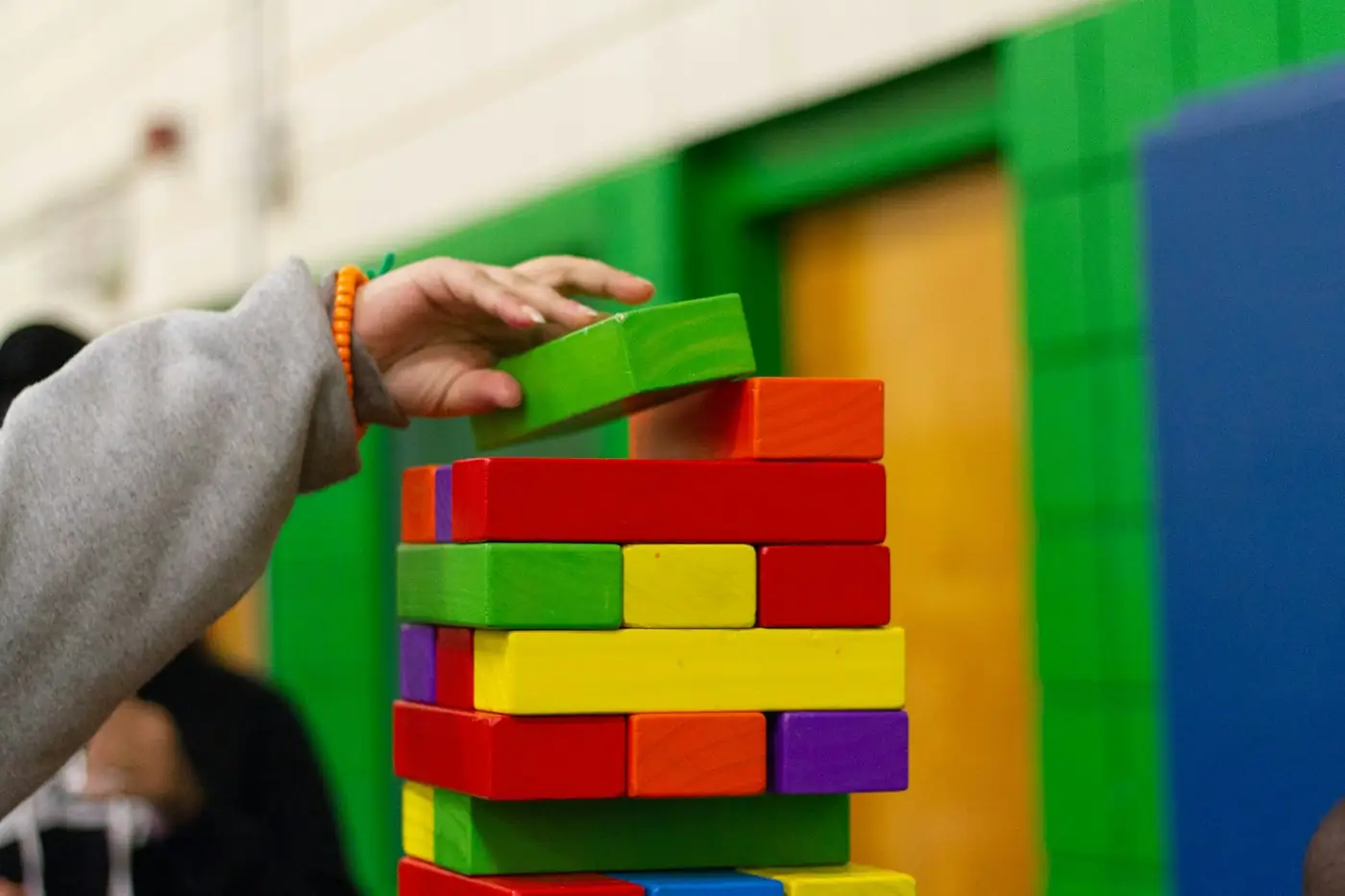
Building tall is easy; building tall and steady is a problem. A hand fan or a rolled newspaper gives a safe, repeatable breeze, so each design can be tested against the same challenge. Children notice that wide bases and low centres resist the push.
You’ll need
- 10 wooden blocks or paper cups
- A sheet of stiff paper as a fan
- A flat tray
- A ruler or strip of card to measure height
How to do it
- Ask your child to build the tallest tower they can on the tray and measure it with the card strip.
- Fan gently from about an arm's length away and watch what happens.
- Ask, 'What could make it stronger?' and let them rebuild one thing at a time.
- Test again with the same fanning, counting how many gentle waves it survives.
- Compare a tall thin tower with a shorter wide one.
- Decide together which design is best for tall and steady.
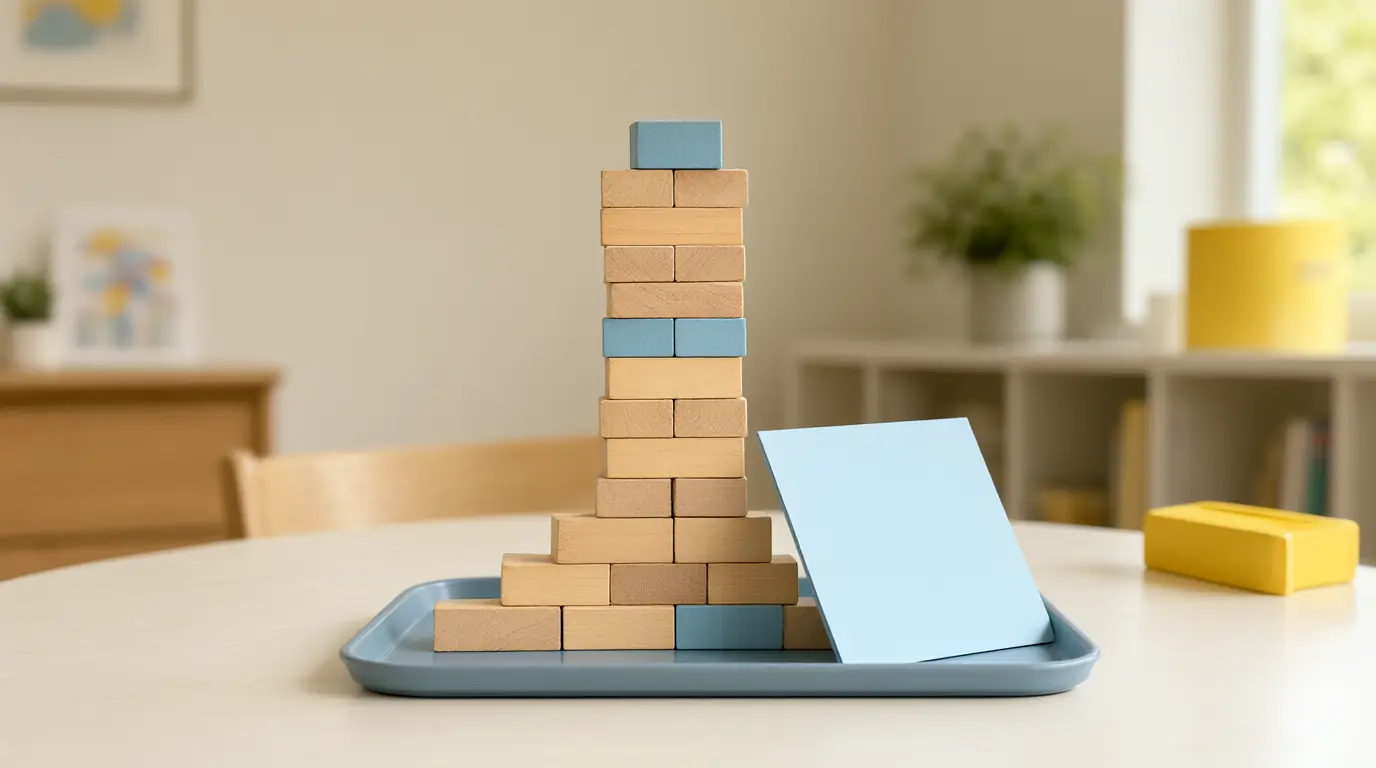
Make it your own: For younger children, test with a gentle puff of breath. Older children can record the height and number of fans on a simple chart and look for a pattern.

Make it work for your family
When a child says 'I can't', try an observation before a suggestion: 'The block fell when it was tall. What was different when it stood?' That keeps the thinking with them. If frustration climbs, remove one obstacle rather than giving the answer, for instance by moving the gap closer or steadying a piece with your hand. Let a failed attempt stay on the table for a moment and ask what it showed.
Good challenges can be repeated on a different day with different materials. Keep a small box of cardboard, tape and blocks within reach. For more ways to build and test ideas, see these building games for kids and the engineering invitations, or practise reasoning with critical thinking activities.
Parents also ask
How do I help my child with problem-solving without giving the answer?
Ask what they notice, what they have already tried and what they could change. If they are stuck, make the problem a little easier, such as shortening the gap, and let them try again. Praise the trying and the idea rather than only the result.
What age can children start problem-solving activities?
Toddlers solve small problems already, such as fitting a block through a hole. By three, most children enjoy simple challenges like a bridge or ball catcher, and by five or six they can plan, predict and compare designs. Adjust the difficulty to the child, not the number.
What if my child gets frustrated or gives up?
Take a short break, then reduce one difficulty: a wider block, a smaller gap, fewer items. Sit beside them and try an idea together. Some children prefer to watch first. It is fine to stop and return to the challenge another day.
Sources & further reading
Explore these primary sources for further context on this topic.
Choose materials and activities that suit your child, supervise as needed and adapt the ideas to their interests and abilities. About our editorial approach