Weebou Editorial Team
 7 min read


 In this article
A little preparation
Pick a calm time when nothing is rushing you, such as a weekend morning, and tell your child you are going to do something together rather than test them. Sit at the same level and keep your phone out of reach. These activities work through your attention, so ten unhurried minutes matter more than an hour of half-listening.
Be ready to follow the child's lead, including when they say no. A child who says "I don't want to" can still watch, and a refused task can be tried again another day. Keep comments specific and true: "You carried the bowl with both hands" is more useful than "Good girl" or "You're the best". If your child often says things like "I can't do anything" or seems persistently sad, mention it to your child's doctor or teacher; this article is not a substitute for that advice. For more on naming feelings, see gentle games for big feelings.

What to know and try
A choice board with two real options
Children gain a sense of being capable when their decisions are taken seriously. A board with two pictures gives a young child a simple, bounded choice and shows that their preference changes what happens next. Keep the options acceptable to you, because every choice you offer must be honoured.
 You’ll need
- A sheet of card folded in half
- Crayons
- Pictures cut from old magazines or drawn by hand
- Sticky tape or a glue stick
How to do it
- Decide on a daily choice that you are happy with either way, such as which cup to use or whether to walk or hop to the door.
- Draw or stick one picture on each half of the card, leaving the middle clear.
- Show your child the two pictures and say what each one means.
- Ask them to point to or place a small object on the one they choose, and follow the choice straight away.
- Notice aloud what they did: "You picked the blue cup and carried it to the table."
- Swap the pictures each day or week so the board stays interesting.
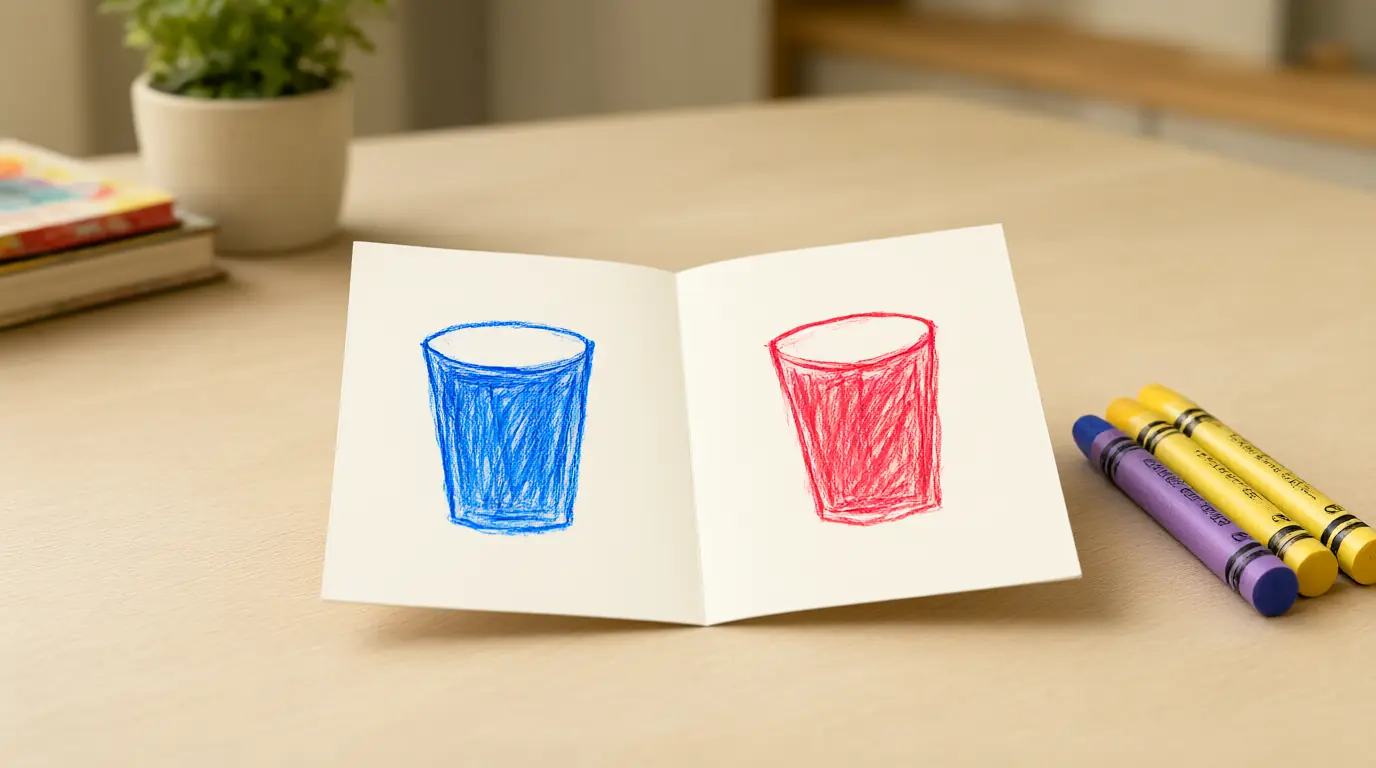
Make it your own: For younger children, use real objects instead of pictures. Older children can draw the options themselves and add a third choice, or decide which two choices appear on the board for a sibling.
A helper job that really matters
A child who is trusted with a useful task learns that they belong and can contribute. The job must be real, not invented to give them praise, and small enough to finish. Because the family relies on it, completing it feels different from finishing a game.
You’ll need
- A small watering can or a tray with plastic cups
- A picture list of three jobs
- A sticker, a tick or a drawing for each completed job
- A low table or step they can reach safely
How to do it
- Choose one job your child can do safely, such as putting out spoons for dinner or watering a plant.
- Show them once, slowly, saying each action as you do it.
- Let them try while you stand back and only help if they ask.
- When it is done, thank them for what it did: "Now everyone has a spoon."
- Mark the job with a tick on the picture list, if they like, and leave it unmarked if they do not.
- Repeat at the same time for a week before adding a second job.
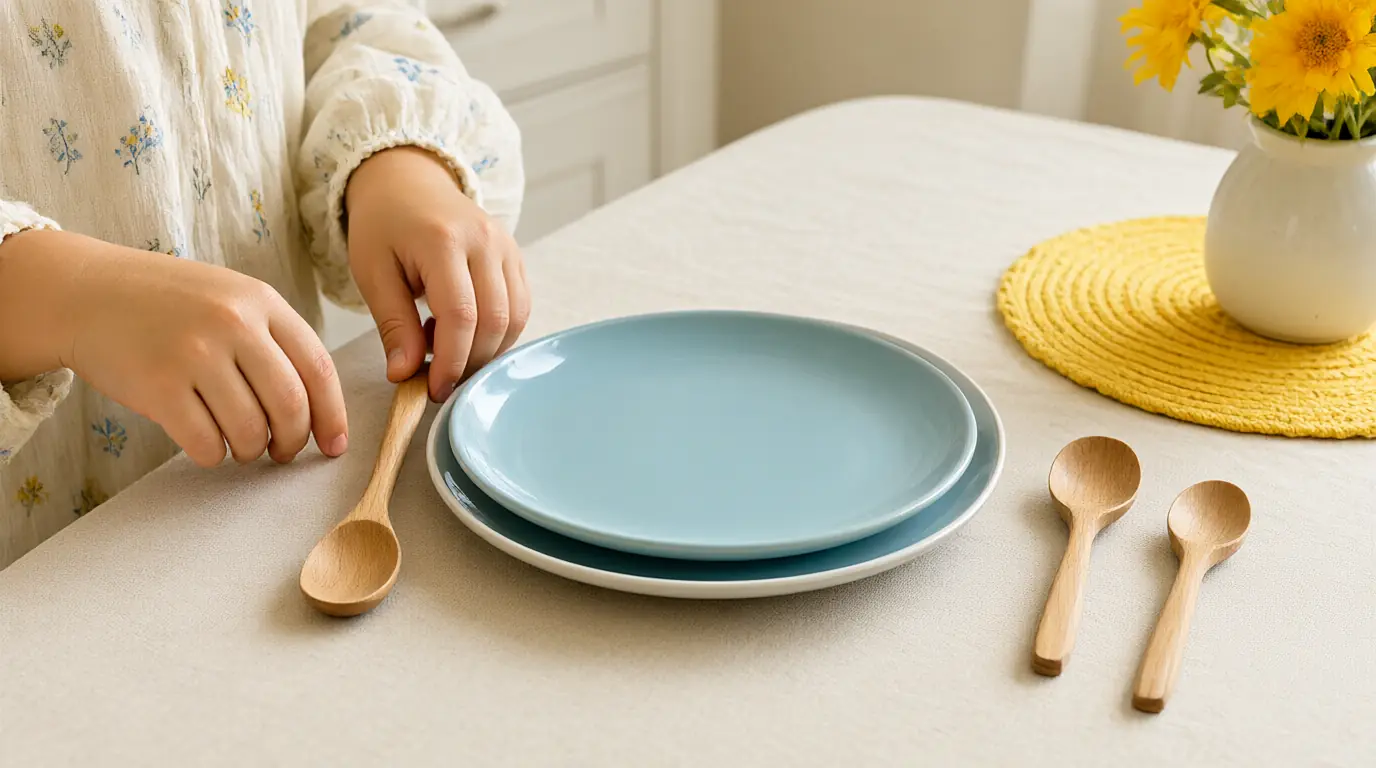
Make it your own: For two- and three-year-olds, choose a one-step job such as carrying napkins. Older children can swap jobs with a sibling, teach the job to someone else or add a step.
A try-again wall for mistakes
Many children decide early that they are 'not good at' something after a single failure. A try-again wall shows that first attempts are expected to be messy and that improvement is visible. It teaches that a mistake is information, not a verdict, and it gives you a way to talk about it.
You’ll need
- A wall, door or large piece of card
- Tape
- Paper and pencils
- A small clip or peg for each page
How to do it
- Choose something your child is trying, such as drawing a cat or building a tall tower, and ask them to do a first attempt.
- Date the page on the back and tape or clip it to the wall without comment on how it looks.
- A day or two later, ask whether they would like to try again, and stick the new version next to the old one.
- Look at both and ask what is different: a longer tail, a wider base, a new colour.
- Let your child decide whether to keep both, or which one to keep.
- Add your own attempt at something new, with a wobbly first try, to show that adults need more than one go.
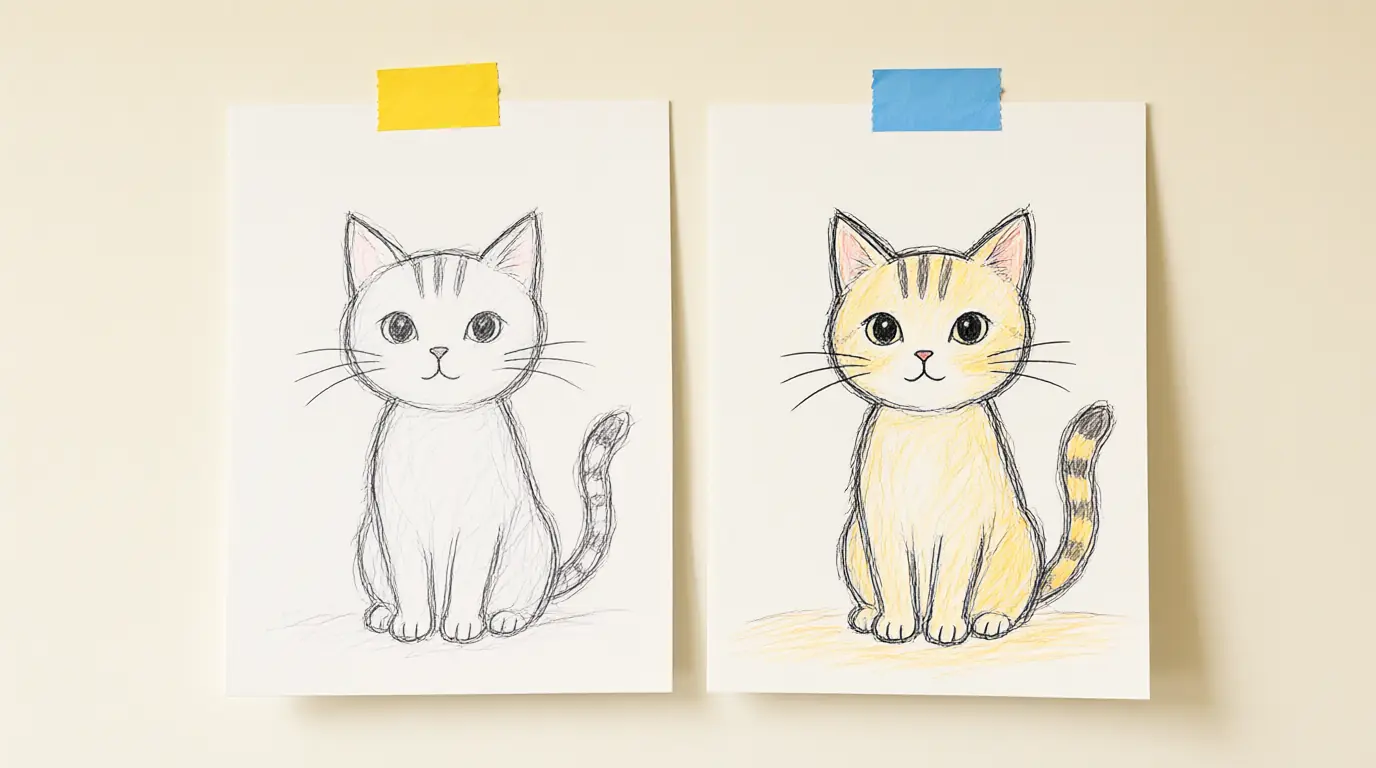
Make it your own: Younger children can take photographs of towers instead of drawing. Older children may enjoy adding a short note about what they changed, dictated to you if writing is tiring.
An effort book of things I tried
A small book that records what your child tried, not just what went well, gives them evidence that they can keep going. It turns vague reassurance into something to look at. Because they choose the entries, it also shows what matters to them rather than what matters to you.
You’ll need
- A small notebook or folded paper stapled by an adult
- A pencil or crayons
- A glue stick
- A few photographs or drawings
How to do it
- Once a week, ask your child to choose something they worked on or tried.
- Invite them to draw it or stick in a photograph on one page.
- Write one sentence from what they say about it, using their words: "I tried to put on my boots."
- Add a second line about what they did to keep going, if they can say it: "I asked Dad to hold the other one."
- Read the book back together every few weeks and notice what has become easier.
- Keep it somewhere they can reach, and let them decide who sees it.
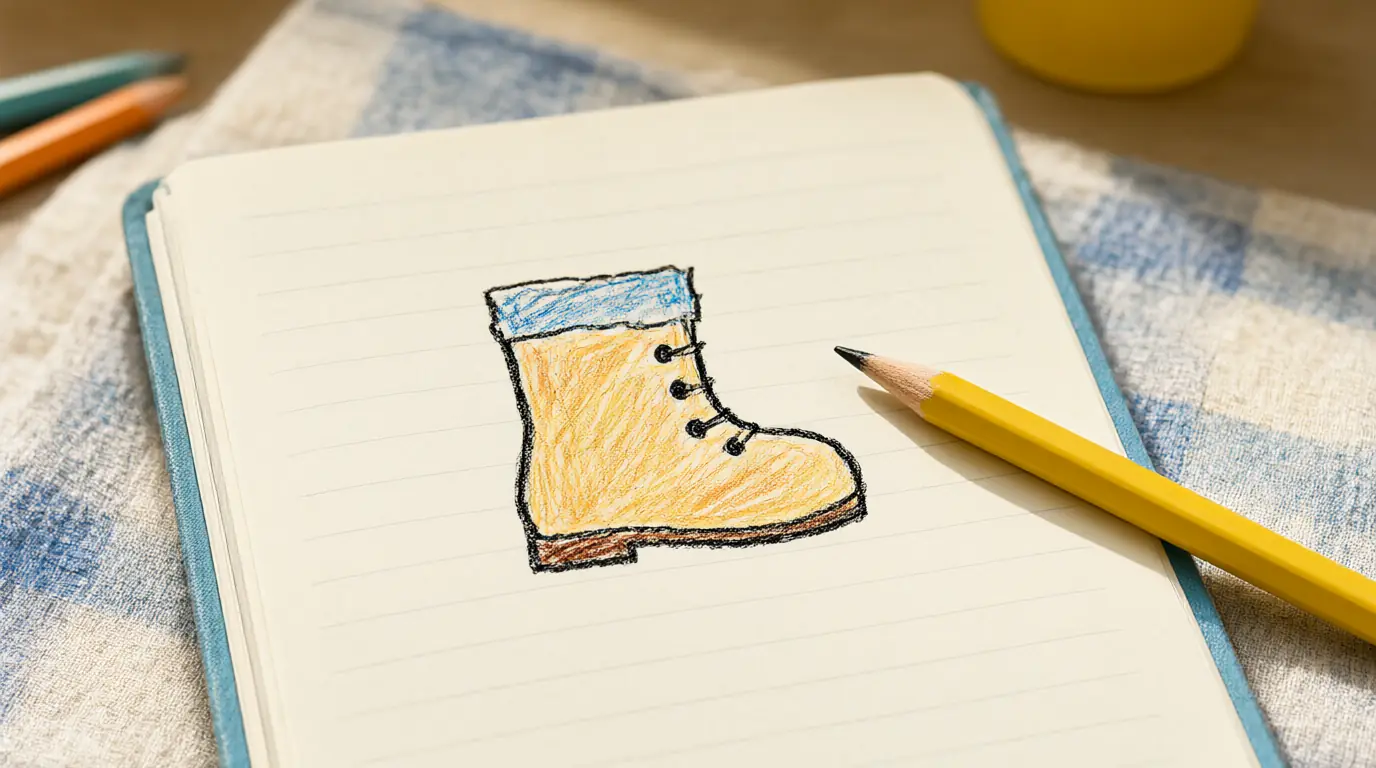
Make it your own: Children who do not enjoy drawing can record a short audio note or arrange small objects as the page. Older children can add a star beside something that was hard and a heart beside something they enjoyed.
Make it work for your family
If your child reacts to praise by saying "No, it's bad", do not argue. Say what you can see instead: "There are three red lines and one blue circle." Description is harder to dismiss than a compliment and shows you looked closely. Avoid comparing with siblings or friends, even favourably, because it teaches that worth depends on someone else's result.
Let children finish a job even when it is not done the way you would do it. Redoing it in front of them sends a message that their help was not good enough; if something must be corrected, do it later when they are not watching. For more ways to share jobs, try kindness ideas children can help choose and these teamwork activities where every child has a role.

Parents also ask
How can I build my child's self-esteem without too much praise?
Describe what you see, ask about their choices and give real responsibilities. Specific comments such as "You kept trying with the zip" show that you noticed effort. Praise that is general or constant can make a child depend on approval.
What should I say when my child says they are bad at something?
Acknowledge the feeling first: "That felt hard." Then add the word 'yet' or point to something they have already learned. Avoid insisting that they are wrong, and offer a small next step or to try it together.
When should I seek advice about my child's confidence?
Talk to your child's doctor, teacher or another qualified professional if low mood, worry or avoidance lasts for weeks, affects sleep or school, or if you are unsure. Everyday games like these support a child but do not replace professional help.
Choose materials and activities that suit your child, supervise as needed and adapt the ideas to their interests and abilities. About our editorial approach