Weebou Editorial Team
 7 min read
 In this article
A little preparation
Begin with two strongly different colours, such as red and blue, and large objects that are easy to hold. Choose items from around the house: building blocks, socks, lids or soft toys. Keep the task about colour alone, without adding counting or shapes at the same time, and place everything on a tray so it stays together.
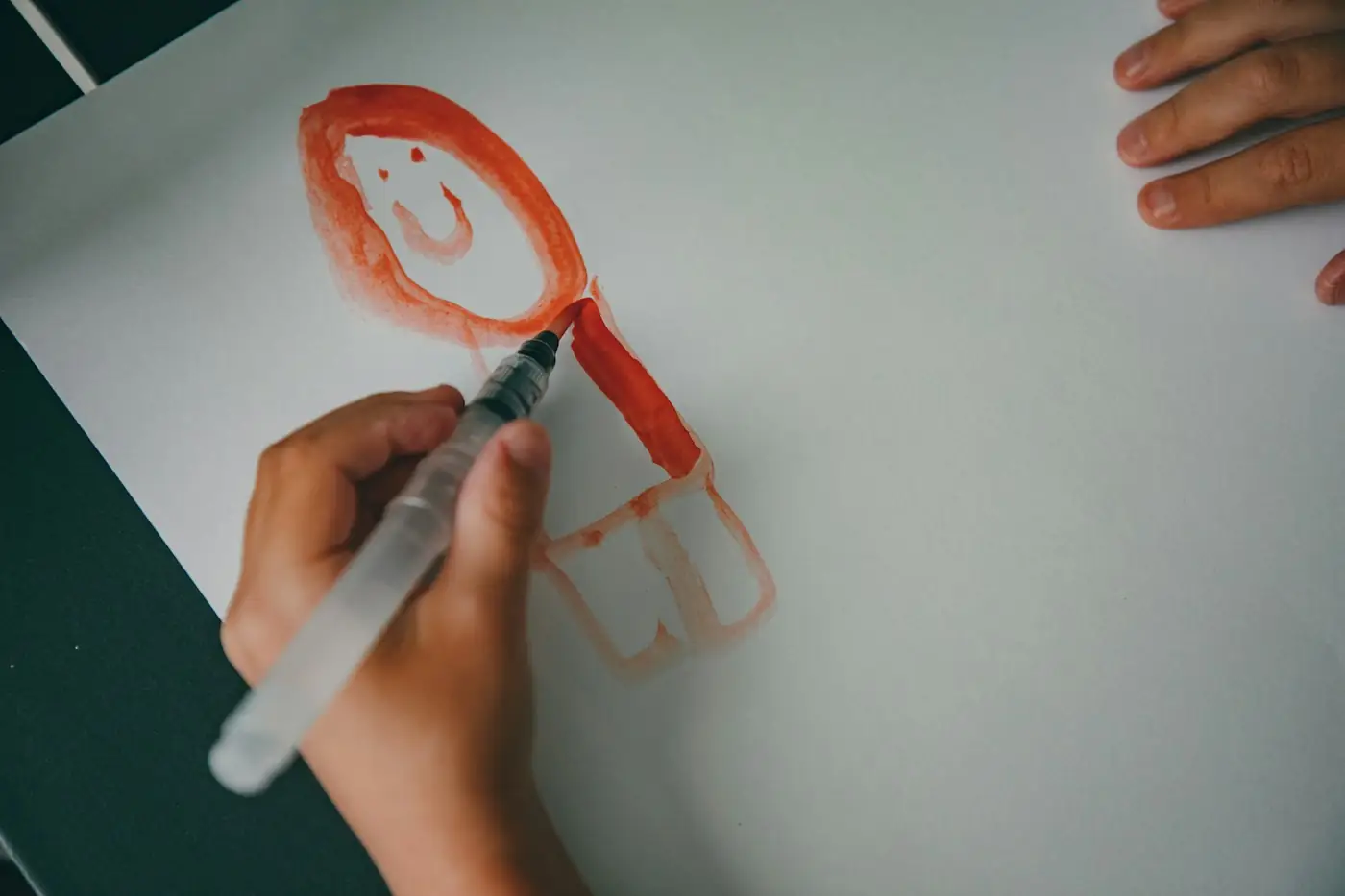
Sit at your child's level and say colour words naturally as you handle the objects: 'Here is a red sock.' Do not quiz at every turn; let them listen, point or match before they speak. If your child seems to confuse colours, it is worth mentioning it to the doctor or teacher at a routine check, as colour vision difficulties can be checked simply. For washable paint, use an apron and an easy-clean surface. For more colour play, see easy painting ideas for exploring colour and colouring games for children who want to make their own choices.
Ideas to try together
A two-colour sorting tray
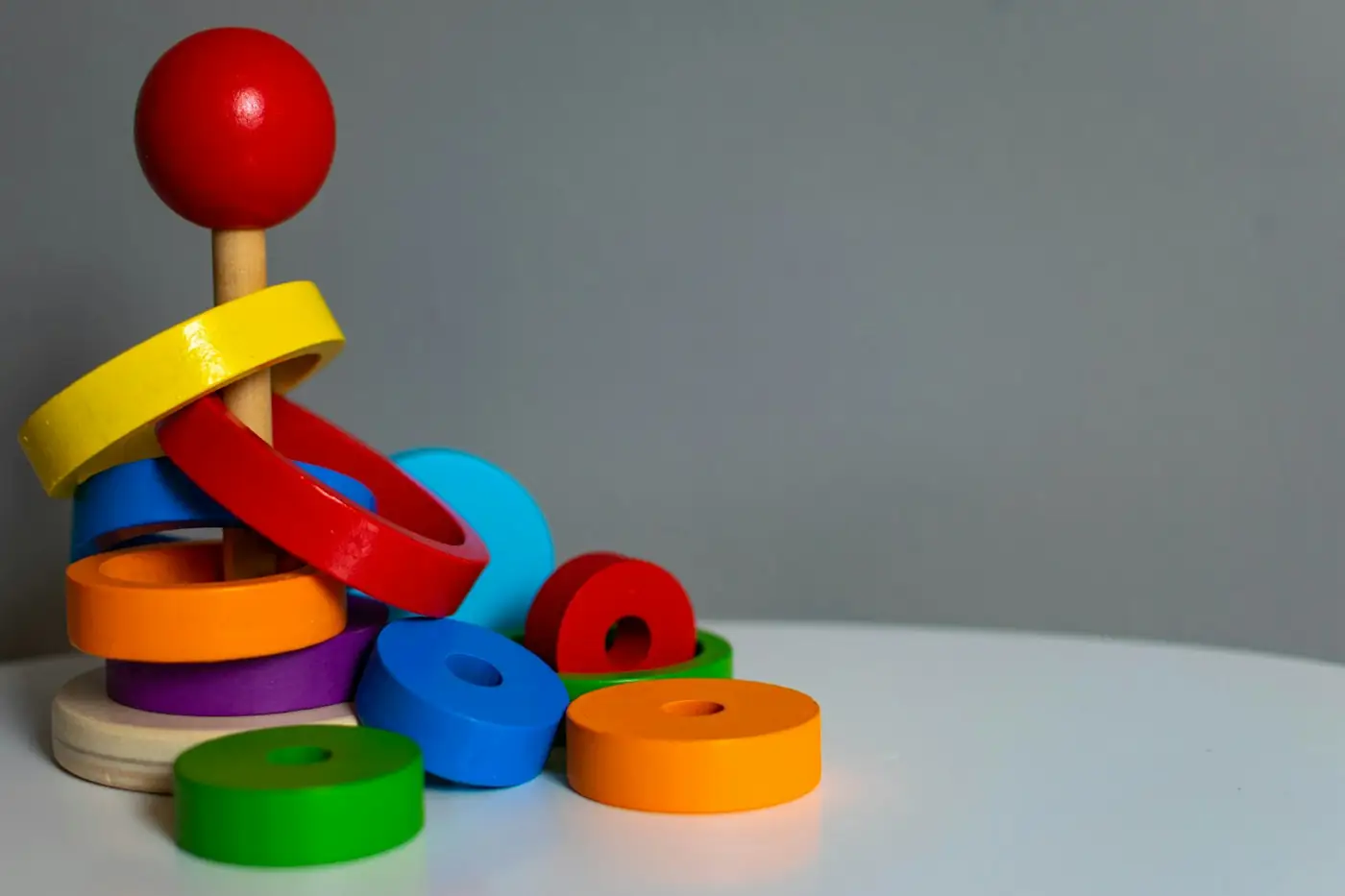
Sorting is a hands-on way to notice similarity and difference. With only two colours and big objects, children can focus on one feature at a time. Hearing you name the colours while they work gives words to what they already see.
 You’ll need
- A muffin tin or two paper plates
- Six to eight objects in two colours, such as red and blue blocks, socks and lids
- Two sheets of coloured paper to match
- A basket
How to do it
- Put the two sheets of paper on the table and place the basket of objects in the middle.
- Pick up one item and say its colour: 'This is red', then place it on the red sheet.
- Hand your child an object and let them decide which sheet it belongs on.
- Say the colour as each object lands, but do not insist that your child repeats it.
- When all the objects are sorted, look at each group and say how many there are.
- Mix them up again and let your child be the one to say 'Red' or 'Blue' as you sort.
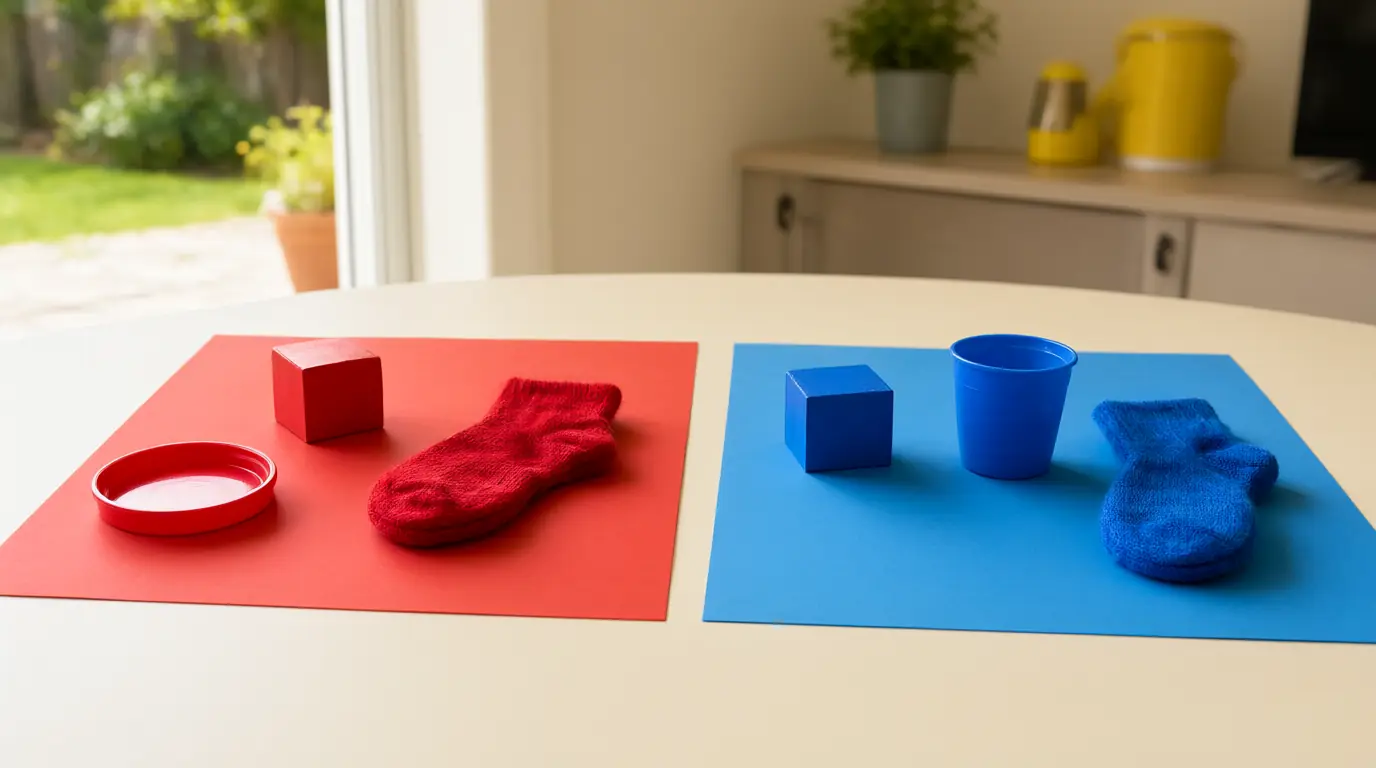
Make it your own: Younger children can sort just three objects and match them by placing them on top of the same colour. Older children can add a third colour or sort by lighter and darker shades.
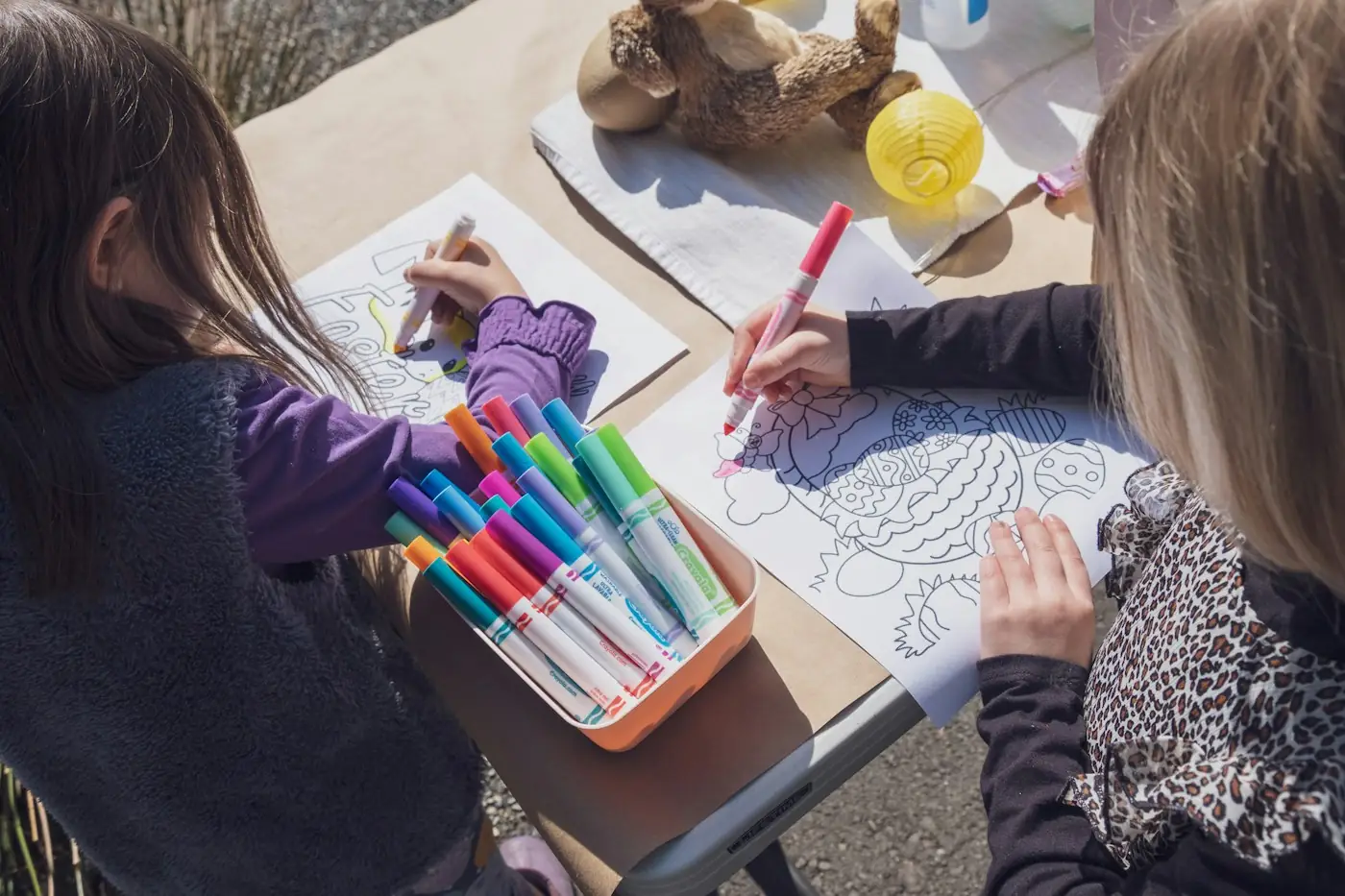
Dress a paper character in colours
Choosing a colour for each item lets children use colour words in a creative way. A simple paper figure becomes a character with a story, and the child decides what it wears. You can describe the finished outfit and see which colour words the child picks up.
You’ll need
- A sheet of paper with a drawn outline of a person
- Two or three crayons in different colours
- A few scraps of coloured paper
- A glue stick
How to do it
- Draw a simple person on the paper, with a hat, a shirt, trousers and shoes marked as shapes.
- Offer two crayons and ask which colour the hat should be.
- Let your child colour it in, and say the colour as they work: 'A green hat!'
- Choose a colour for the next item, and give a second choice only if the first is easy.
- Describe the finished outfit aloud: 'Green hat, red shirt, blue shoes'.
- Ask what the character is going to do today, and let your child answer.
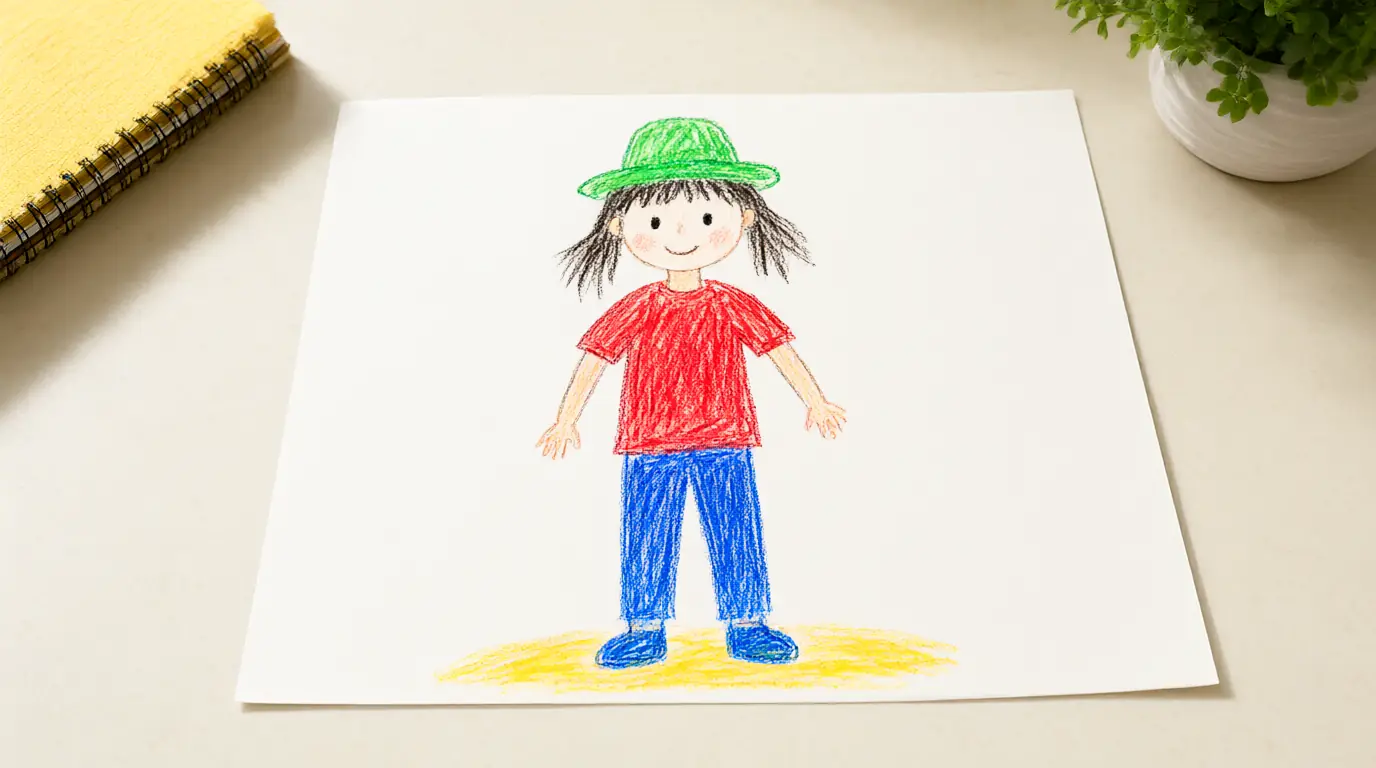
Make it your own: Younger children can scribble over one item and name the colour with your help. Older children can design outfits for a family of characters or mix two colours on one item.
Hunt for shades of one colour outdoors
Looking for many versions of one colour shows that a name covers a family of shades. A walk outside gives plenty of examples in different light, and children enjoy being detectives. The activity trains close observation without picking plants or collecting anything.
You’ll need
- A cardboard frame or a paper roll to look through
- A paper strip with one colour swatch coloured by your child
- A small bag for safe items
- A camera or a notebook (optional)
How to do it
- Choose a colour, such as green, and colour a short strip of paper with a crayon to carry.
- Walk around the garden or park and look for things that match the colour.
- Hold the strip up beside each find and ask whether it is the same, lighter or darker.
- Photograph or draw the greens you find, without picking anything unknown.
- Pick up one fallen leaf or a pebble to take home if it is safe.
- At home, line up the pictures or objects from lightest to darkest.
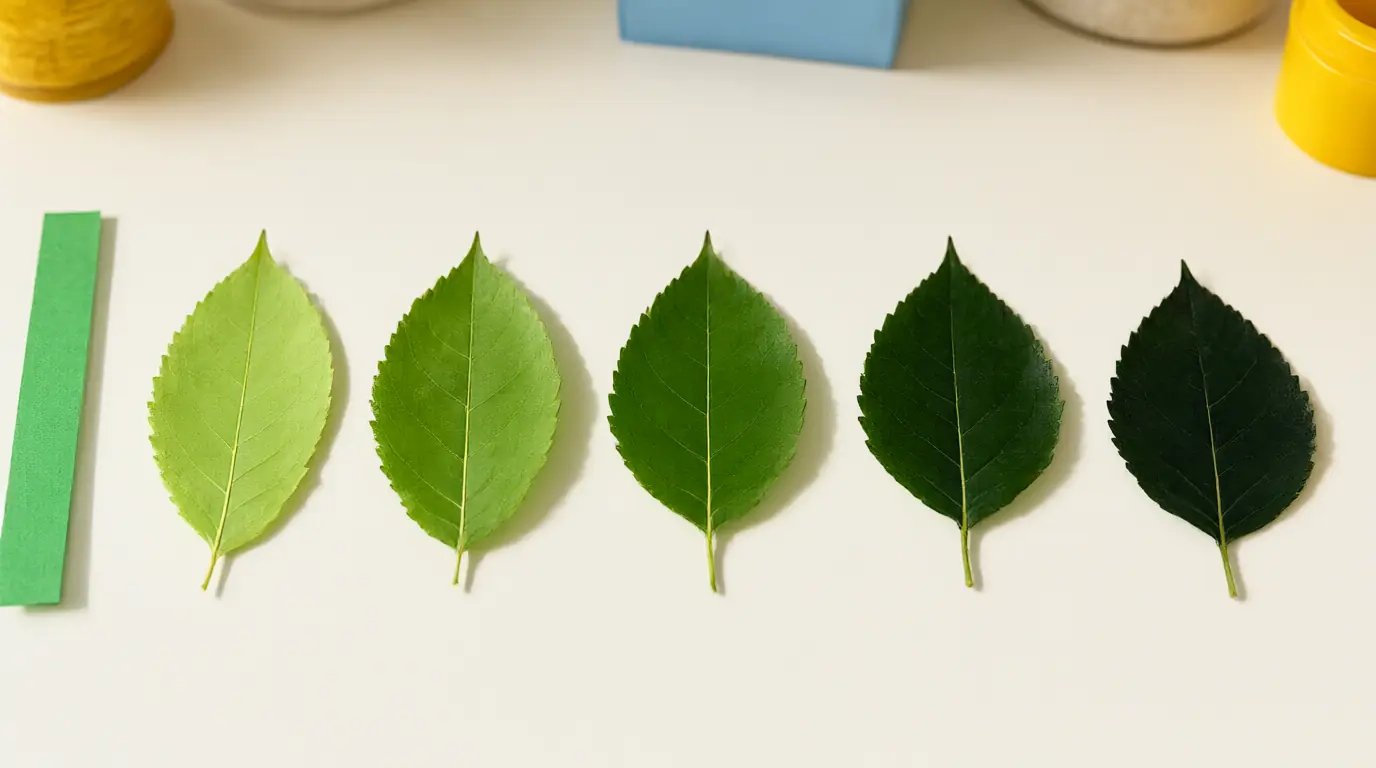
Make it your own: Younger children can point out any green thing and say 'Green!' with you. Older children can hunt for a second colour or find three different shades of the same colour.
Mix a colour and test the prediction
Mixing two colours turns colour learning into a small experiment: what do we think will happen, and what actually does? Children see that colours can change and begin to describe results with their own words. Keep the amounts tiny so that mess is limited.
You’ll need
- Washable paint in yellow, blue and red
- A paper plate or muffin tin as a palette
- A thick brush or a craft stick
- White paper and an apron
How to do it
- Put a small blob of yellow and a small blob of blue on separate parts of the plate.
- Ask your child what they think will happen if you mix them, and take a guess yourself.
- Use the craft stick to drag a little yellow into the blue and watch the colour change.
- Paint a patch of the new colour on the paper and name it together: green.
- Try another pair, such as red and yellow, and compare the result with a prediction.
- Leave the paper to dry and look at the patches side by side.
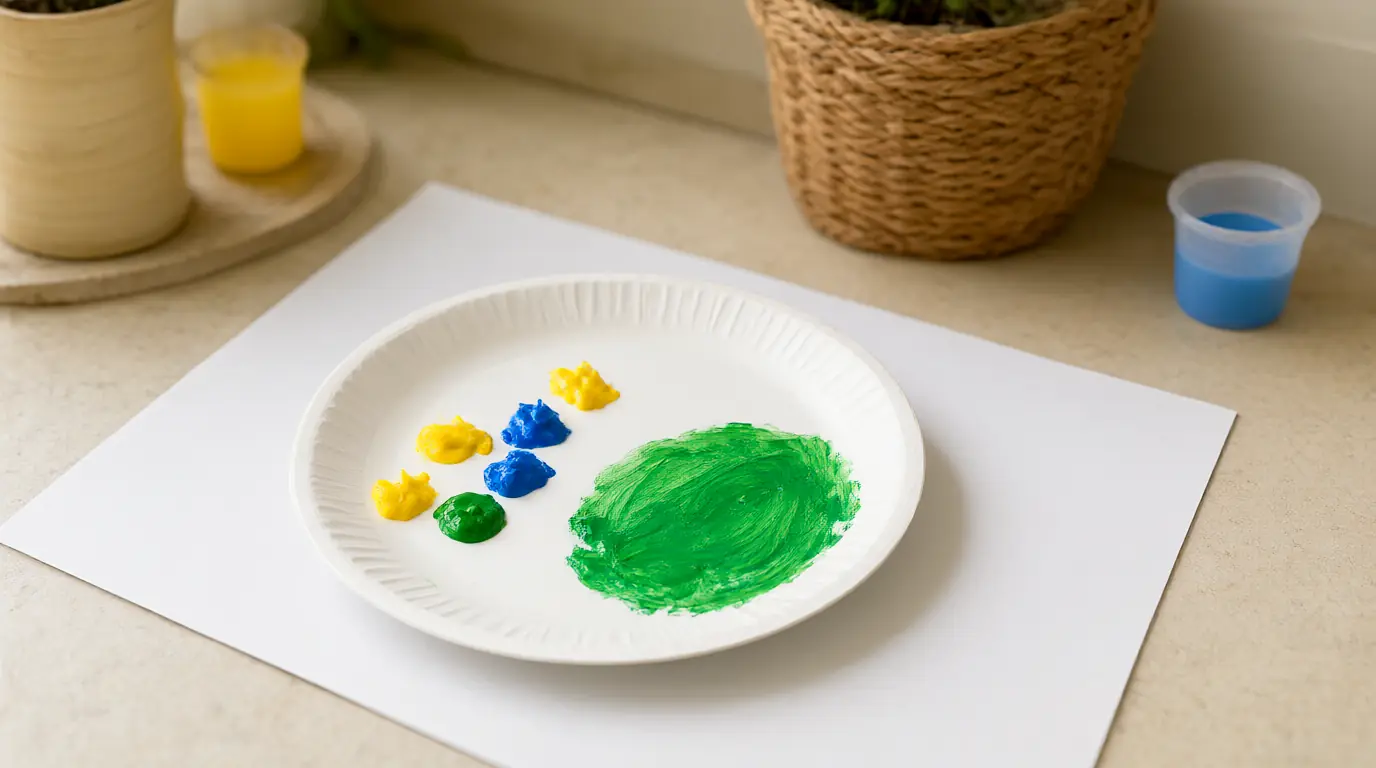
Make it your own: Younger children can mix with their hands in a zip bag containing blobs of paint, with the bag sealed. Older children can add a little white to make lighter shades or record their predictions with drawings.

Make it work for your family
Light, shadow and different shades can make a match uncertain, and that is a chance to talk about lighter, darker or almost the same. If your child names a colour wrongly, simply say the right word back: 'Yes, it is a green leaf.' Avoid correcting every time, and keep sessions short enough that they end while interest is high.
Bring in colour words at different moments: a yellow banana at snack time, a blue coat at the door. Add new colours slowly, one at a time, once two colours are familiar. If you want to link colours with other early skills, try a matching game or look for objects in picture vocabulary games.

Parents also ask
When do children learn their colours?
Many children start to match and point to colours around two or three and name them with more accuracy by four or five, but the age varies widely. Matching comes before naming, so use games that let your child show what they know without speaking.
Which colours should I teach first?
Start with two clearly different colours, such as red and blue or yellow and blue, and add more after they are familiar. Many children also learn colours linked to favourite things first. Follow your child's interest, and use the same names consistently.
What if my child mixes up colours?
Mixing up colours is common at first. Say the correct name calmly and keep playing, without repeated testing. If confusion continues past school age or you notice they often confuse particular reds and greens, mention it to your doctor or optometrist.
Choose materials and activities that suit your child, supervise as needed and adapt the ideas to their interests and abilities. About our editorial approach