Weebou Editorial Team
 8 min read
 In this article
A little preparation
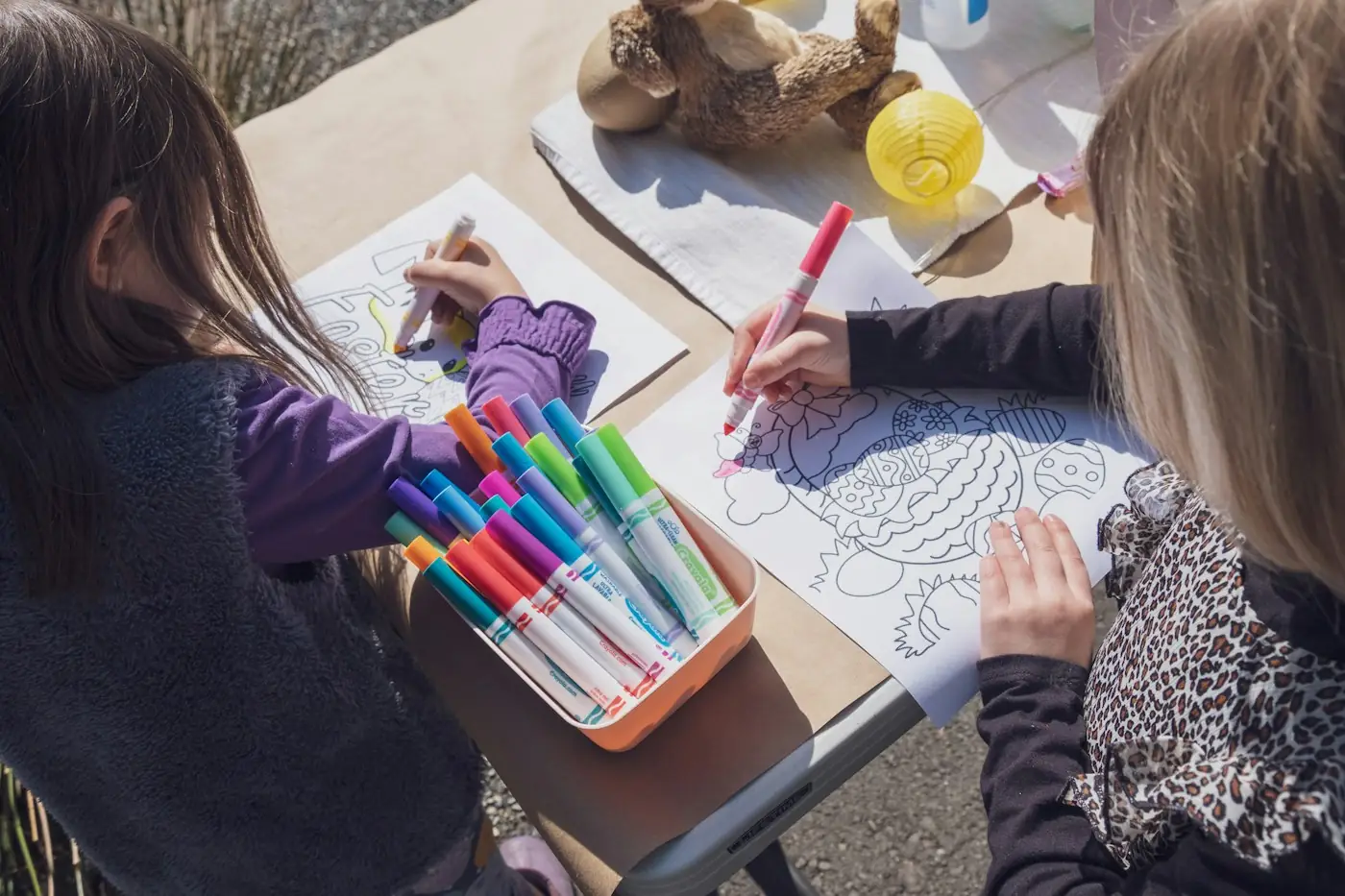
Offer a large sheet of paper, at least A4 and ideally bigger, and fat, easy-to-hold crayons. Younger children press harder and move their whole arm, so a clipboard or a tray stops the paper from sliding. Put the crayons in a shallow tin sorted loosely by colour, and do not hide any away: access to the whole box invites choice. Cover the table if you are worried about marks, and keep washable materials only.
Start with blank paper or a simple outline, whichever your child prefers, and treat both as equally valid. Sit beside them and colour your own sheet, describing what you notice rather than giving instructions: I can see you pressed hard on the blue. A game should last as long as your child is interested; five minutes is fine. Keep the finished pictures where your child can see them, perhaps on a string with pegs, and ask permission before pinning one up.

Ideas to try together
The two-colour challenge
Choosing only two crayons turns a big box of options into a manageable puzzle. Children discover how many different marks they can make with the same pair, and how placing the colours next to each other changes what they see. It is a calm, short game that works well at the start of a colouring session.
You’ll need
- A sheet of paper per player
- Two crayons chosen by your child
- A second pair for you
- A tray to keep crayons in place
How to do it
- Ask your child to pick two crayons from the box.
- Sit side by side and decide to use only those two for the whole picture.
- Make as many different marks as you can: lines, dots, circles, zigzags and filled-in areas.
- When the paper is full, swap pictures and say what you notice about the two colours together.
- Ask whether the colours look different next to each other than apart.
- Choose a new pair and try again if your child wants.
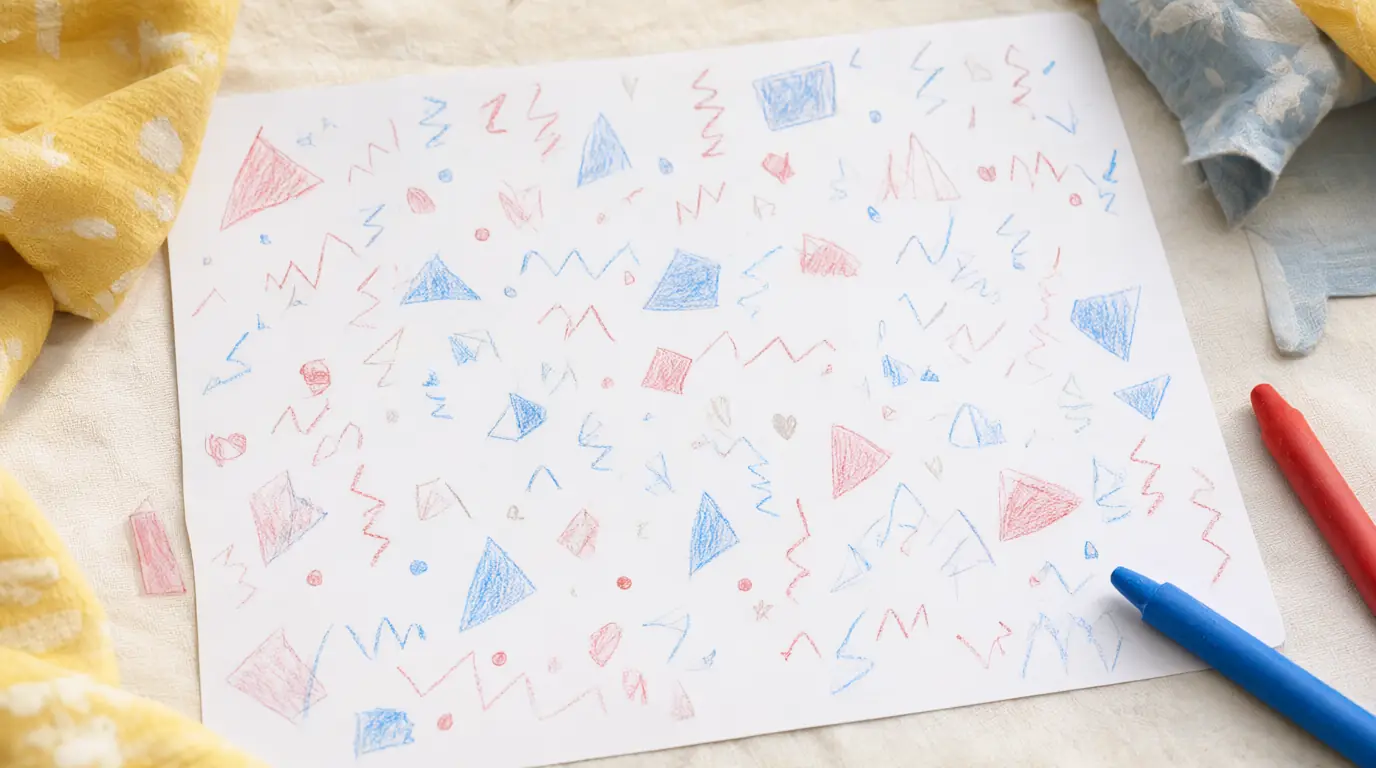
Make it your own: Younger children can start with one crayon and a big sheet, then add the second one later. Older children can choose a pair that is hard to tell apart, such as two blues, and describe how to make the difference visible.
Pass a colour message
Colours often carry a feeling or a place for children, and this game lets them show it without needing words. One person makes a few marks in a colour that matches a mood, and the other adds something and explains what they see. It is a gentle way to talk about feelings and ideas.
You’ll need
- One large sheet of paper
- A tub of crayons or markers
- A small bell or a soft toy to mark the turn
How to do it
- Choose a colour for how you feel today, such as green for calm or orange for busy.
- Make a few marks in that colour on one side of the paper.
- Pass the paper to your child and ask them to add marks in any colour they like.
- Ask what they were thinking and share what you see in the picture.
- Take turns adding marks until the paper feels finished.
- Name the picture together by choosing three colour words.
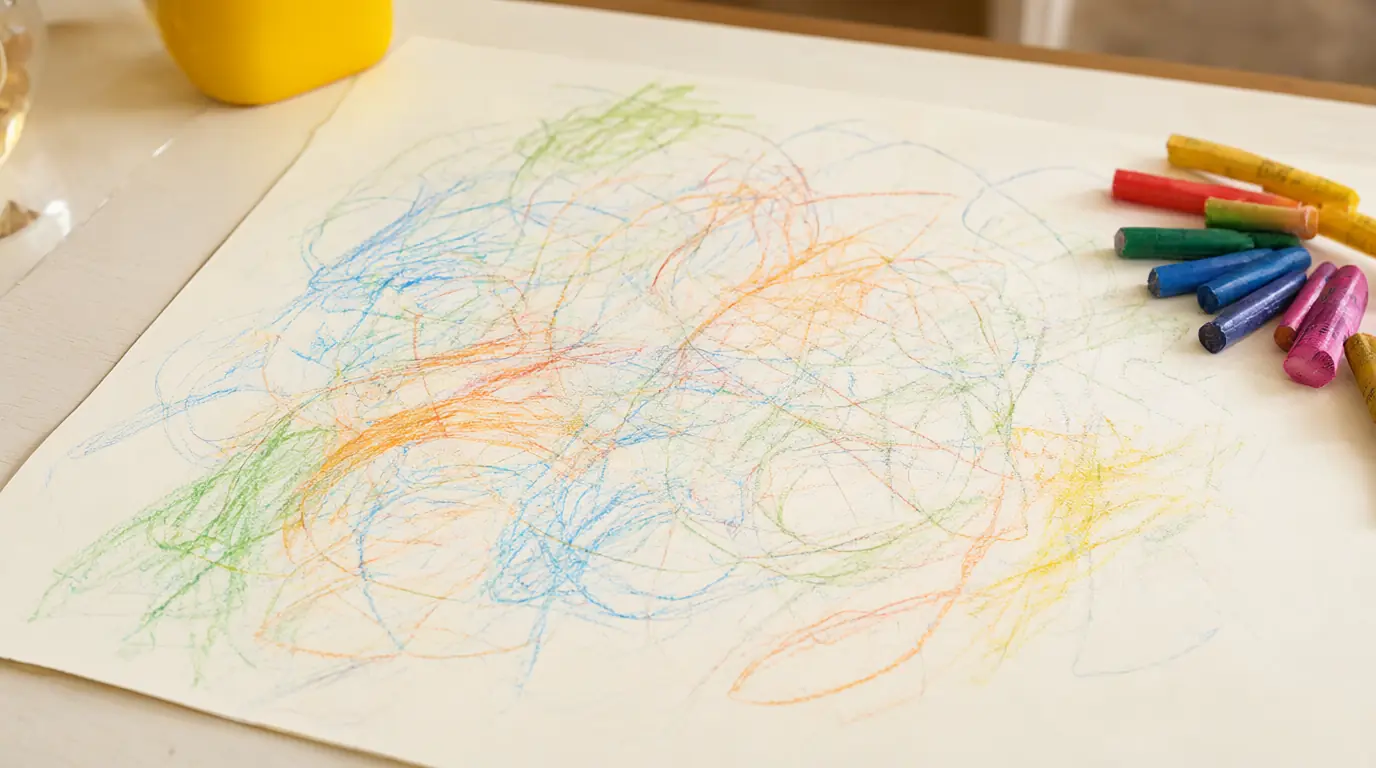
Make it your own: Younger children can simply pick a crayon to hand to you. Older children can try a colour message for a person they know, choosing the colours they think that person would enjoy.
Pattern clothing studio
An outfit outline offers a big, simple shape to fill, and the clothes can be as extravagant as your child likes. Patterns reward repeating a mark, which builds early maths and control, while naming an imaginary owner turns the colouring into a story. It suits children who like dressing up.
You’ll need
- A large paper doll or outfit outline drawn on a sheet
- Crayons in assorted colours
- Stickers or dot markers if you like
How to do it
- Draw a simple shirt, dress or coat outline on a sheet of paper.
- Ask your child to think of a person or animal who will wear it.
- Invite them to fill the outfit with patterns: stripes, spots, waves or squares.
- Add a second pattern for the sleeves or pockets if they want.
- Ask where the owner is going in their new outfit.
- Display the finished outfit and make another for a friend.
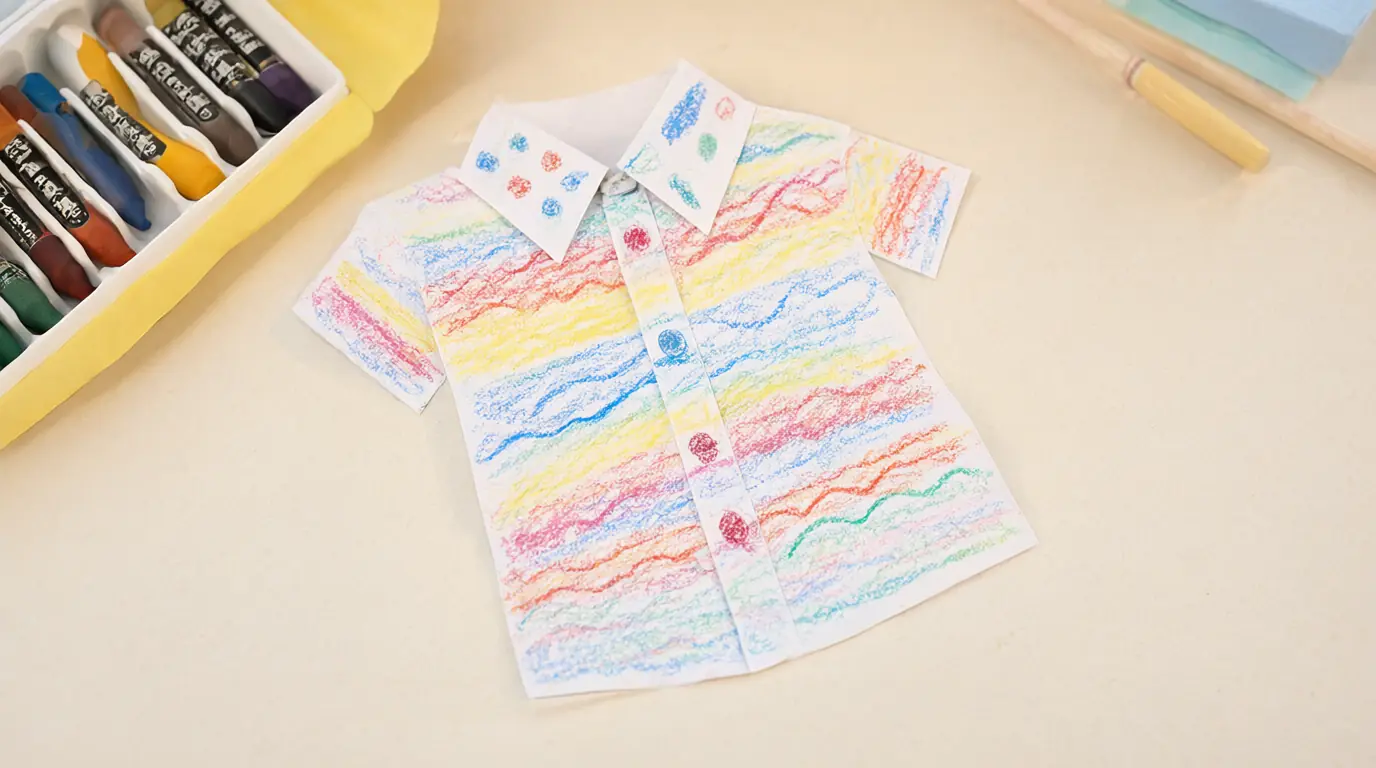
Make it your own: Younger children can scribble freely inside the shape. Older children can try a repeating pattern such as red, blue, red, blue and describe what comes next, or design matching outfits for the whole family.
Change the same scene
Colouring the same simple scene twice with different palettes lets children see how colour changes mood without trying to get anything right. A sunny and a night version of the same house, for example, show that the lines stay the same while everything feels different. It encourages noticing and comparing.
You’ll need
- Two copies of a simple outline, such as a house and a tree
- A warm set of crayons: yellow, orange and red
- A cool set of crayons: blue, purple and green
How to do it
- Hand your child the first copy and the warm crayons and ask them to colour the scene.
- Give them the second copy and the cool crayons for another version.
- Place the two pictures side by side.
- Ask what feels different between the two and what is the same.
- Talk about which details stand out in each picture without choosing a best one.
- Hang them together and tell a story about what happens in each.
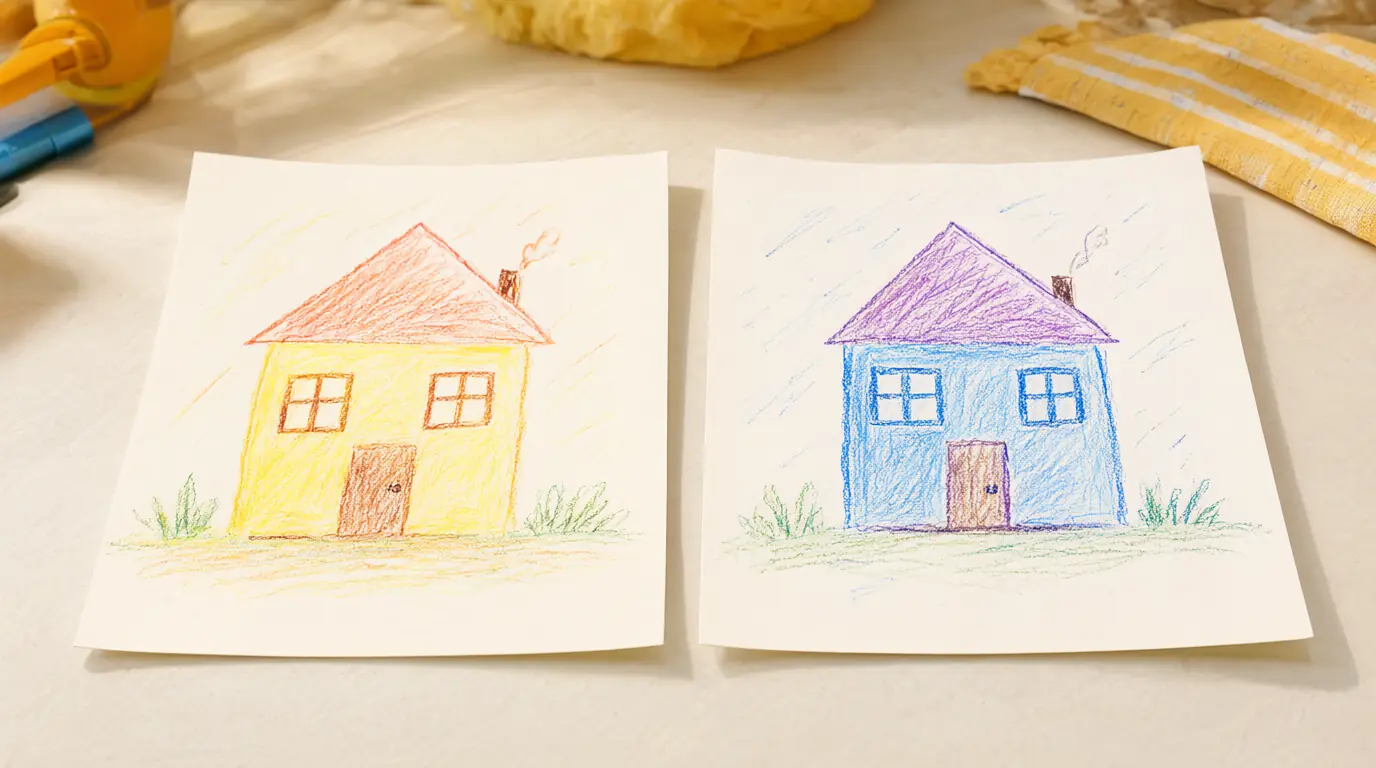
Make it your own: For younger children, use one large simple shape such as a sun or a circle. Older children can choose their own palettes and name the mood of each picture, or make a third version using colours they would not normally choose.
Mystery shade hunt
Looking closely at colours in the room is a quiet game that bridges looking and colouring. Children pick an object, find the crayon that best matches it and notice how many different versions of a colour exist. It also builds vocabulary for light, dark and in-between shades.
You’ll need
- A box of crayons with several shades of the same colour
- A few objects from the room, such as a leaf, a mug and a scarf
- Plain paper to test colours on
How to do it
- Place three or four objects on the table.
- Choose one object and ask your child to find the crayon that looks closest to it.
- Test the crayon on paper and hold it beside the object.
- Ask whether it is a good match, and try another crayon if they like.
- Colour a small patch of the matched shade to keep.
- Make a patch for each object and use them in a picture.
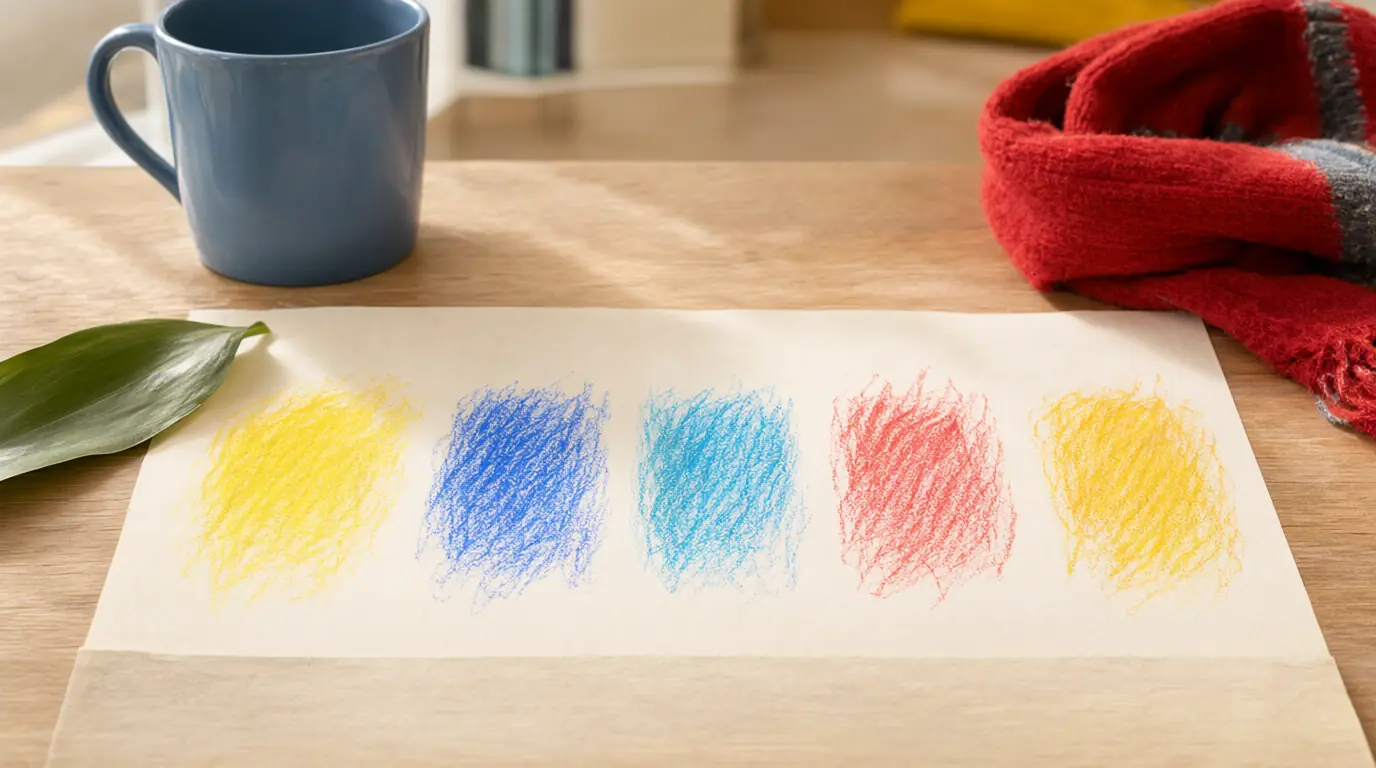
Make it your own: Younger children can choose from only three crayons. Older children can find two shades that sit between the lightest and darkest and give them names, such as pond green or toast brown.

Make it work for your family
Resist saying that the sky should be blue or that a cat cannot be purple. An unexpected colour may be the start of a story, and arguing about what is correct can make children stop experimenting. If a child asks what colour they should use, hand the question back: which colour would you like to try?
If your child scribbles outside the lines or covers the whole page, that is an important stage of building hand control, not carelessness. Offer chunkier crayons or bigger paper before expecting small detail. If a child only wants to use one colour, join in and notice what you can do with that colour, light and dark pressure, lines and dots. For more related ideas, see our easy painting ideas and guide to learning colours.

Parents also ask
At what age can a child start colouring?
Many children begin scribbling with chunky crayons from around 12 to 18 months, and colour more deliberately by age 3 or 4. Stay close with young children, use washable, non-toxic materials and expect scribbles, not neat shapes.
Is it bad if my child colours outside the lines?
No. Colouring outside the lines is typical for young children while they develop hand control, and a wide range of marks is part of exploring. Larger paper and chunkier crayons help, and lines usually become more controlled with practice and interest.
Should I give my child colouring pages or blank paper?
Both are fine. Blank paper gives complete freedom, while outlines give a starting point that some children enjoy. Offer both, let your child choose, and avoid correcting the colours they pick.
Choose materials and activities that suit your child, supervise as needed and adapt the ideas to their interests and abilities. About our editorial approach