Weebou Editorial Team
 7 min read

 In this article
A little preparation
Walk over the lawn first and check for holes, stones, animal waste, broken glass, thorny plants and anything a child could trip on. Check that gates are shut and the area is away from roads, ponds and sharp tools. Mark the play area with four cones or buckets so everyone can see the boundary, and keep a shady spot with water and a blanket for resting.
Play on dry grass if you can, as wet turf is slippery, and have children wear shoes or non-slip socks. Keep each game to about ten minutes and give each child a way to take part, whether that is rolling, carrying, calling out or arranging the toys. Remember sun protection for the hottest part of the day. For more garden ideas, look at yard games for an ordinary afternoon and outdoor games that fit the space you have.

Ideas to try together
Basket lawn roll
Rolling a soft ball towards a basket on its side gives a clear target and trains aim and force. The grass slows the ball slightly, which teaches children to adjust how hard they push. Because everyone takes the same turn, it works well for a mixed-age group.
 You’ll need
- A wide, low basket or laundry basket
- Two soft balls, such as foam or sponge balls
- A rope or ribbon for a start line
- A small bucket for collecting balls
How to do it
- Lay the basket on its side on flat grass and place the rope on the ground about two big steps away.
- Show your child how to roll the ball with two hands along the grass towards the basket.
- Let each child roll one ball, and wait until the ball has stopped before collecting it.
- Ask what they might change if the ball stopped short or rolled past: a bigger push or a different angle.
- After a few turns, move the rope further back and try again.
- End by rolling all the balls into the basket together, counting how many go in.
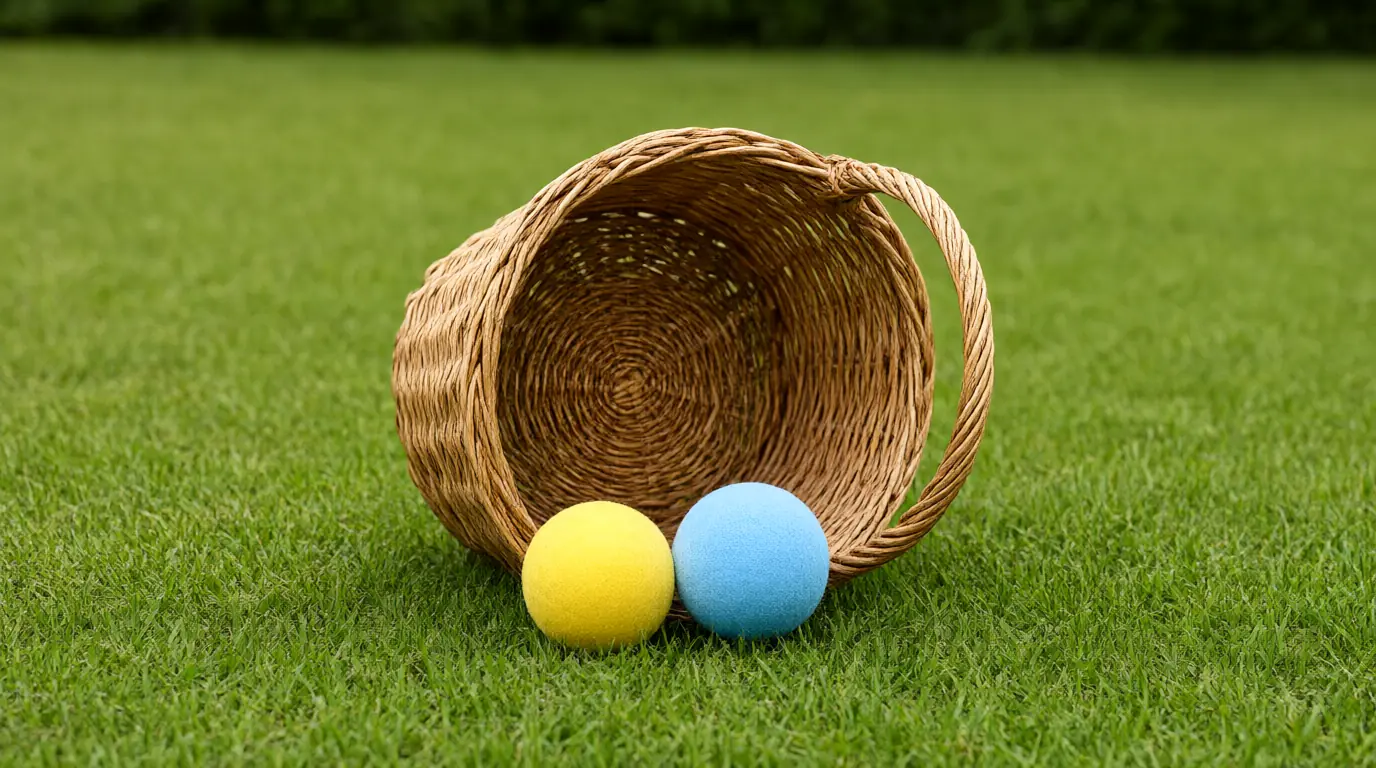
Make it your own: Younger children can start right beside the basket and drop the ball in. Older children can roll with the other hand or aim at a smaller target, such as a bucket.
Picture delivery to the right place
Large picture destinations scattered around the lawn turn walking into a purposeful job. Children match each card to a picture, which practises vocabulary and memory. A seated caller gives children who prefer not to run a role, and the game has no winner.
You’ll need
- Six large pictures, such as a tree, a house, a cat, a sun, a fish and a flower, taped to buckets or stakes
- Six matching cards in a basket
- A chair or blanket for the caller
How to do it
- Place the pictures around the lawn within the marked boundary, with at least two big steps between them.
- Put the matching cards in a basket beside the caller's seat.
- The caller shows a card and names it, such as 'A fish'.
- A delivery child walks or hops to the picture of the fish and places the card there.
- Everyone says the name together and checks that the card matches.
- Swap roles after four deliveries so everyone has a turn at calling.
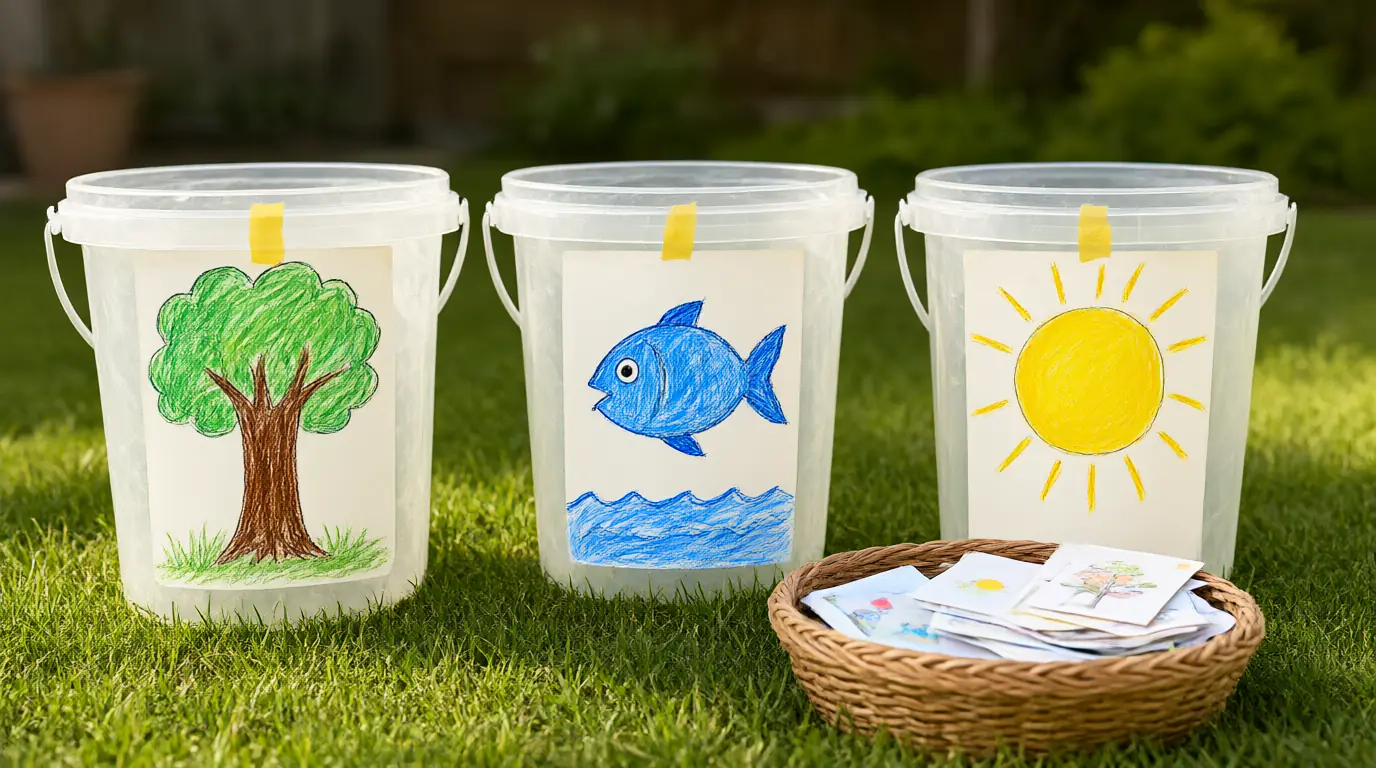
Make it your own: Younger children can match with only three pictures that are close together. Older children can listen to a clue, such as 'It swims', and work out which picture is meant.
A toy pattern on the blanket
A blanket on dry, level grass turns patterns into a shared project. Children collect large soft toys from a nearby pile and add them to a repeating line, which exercises sequencing and gentle movement. It is a calm game for a rest between more active ones.
You’ll need
- A picnic blanket
- Six to eight large soft toys or balls in two or three types
- A shady spot
- A basket for the toys
How to do it
- Lay the blanket on a flat patch of dry grass and put the toys in a pile a few steps away.
- Start a pattern on the blanket, such as bear, ball, bear, ball.
- Ask your child to fetch the next toy in the pattern and place it at the end.
- Say the pattern aloud together and point to each toy as you speak.
- Make a mistake on purpose and ask whether the child spots it and can fix it.
- Let your child design a new pattern for you to continue.
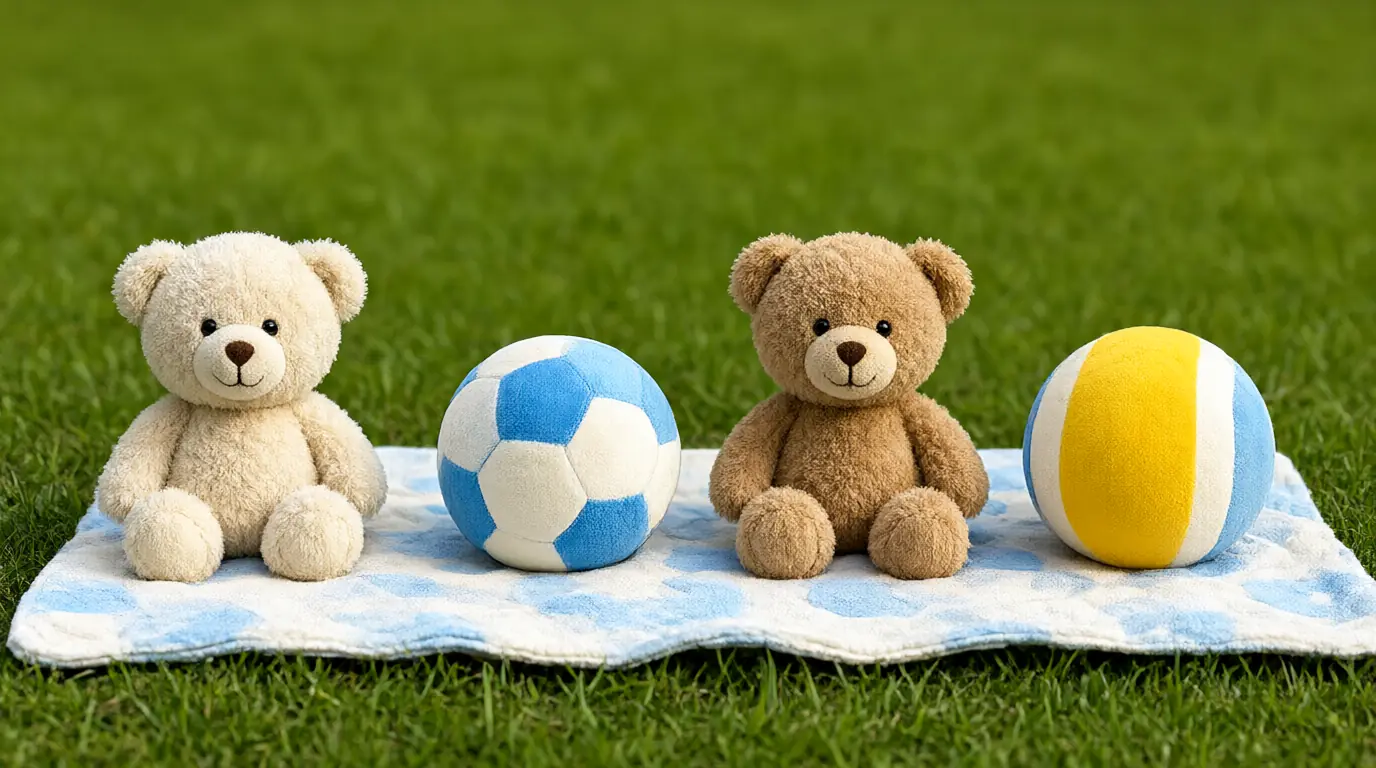
Make it your own: Younger children can match a toy to the one before it. Older children can try three-part patterns, such as bear, ball, cup, or make a pattern with their own movements.
Marker explorer routes
Design a route round a few markers and then follow it, taking turns to invent new paths. Children plan a sequence of directions, describe it in words and walk it, which links language to space. It also helps them practise left, right, round and between.
You’ll need
- Three large cones, buckets or cushions
- Chalk or rope for a start line
- A small beanbag or toy to carry
- A watering can or hoop as a finish
How to do it
- Place three markers in a triangle on flat grass with a gap of at least three big steps between them.
- Ask one child to describe a route: 'Go round the red one, then straight to the blue one'.
- Walk the route together at a comfortable pace while carrying the beanbag.
- Swap, so another child redesigns the route and the group follows.
- Add a rule, such as 'tiptoe past the yellow marker', and try the route again.
- Remove a marker if paths begin to cross, and talk about how to make the route safe.
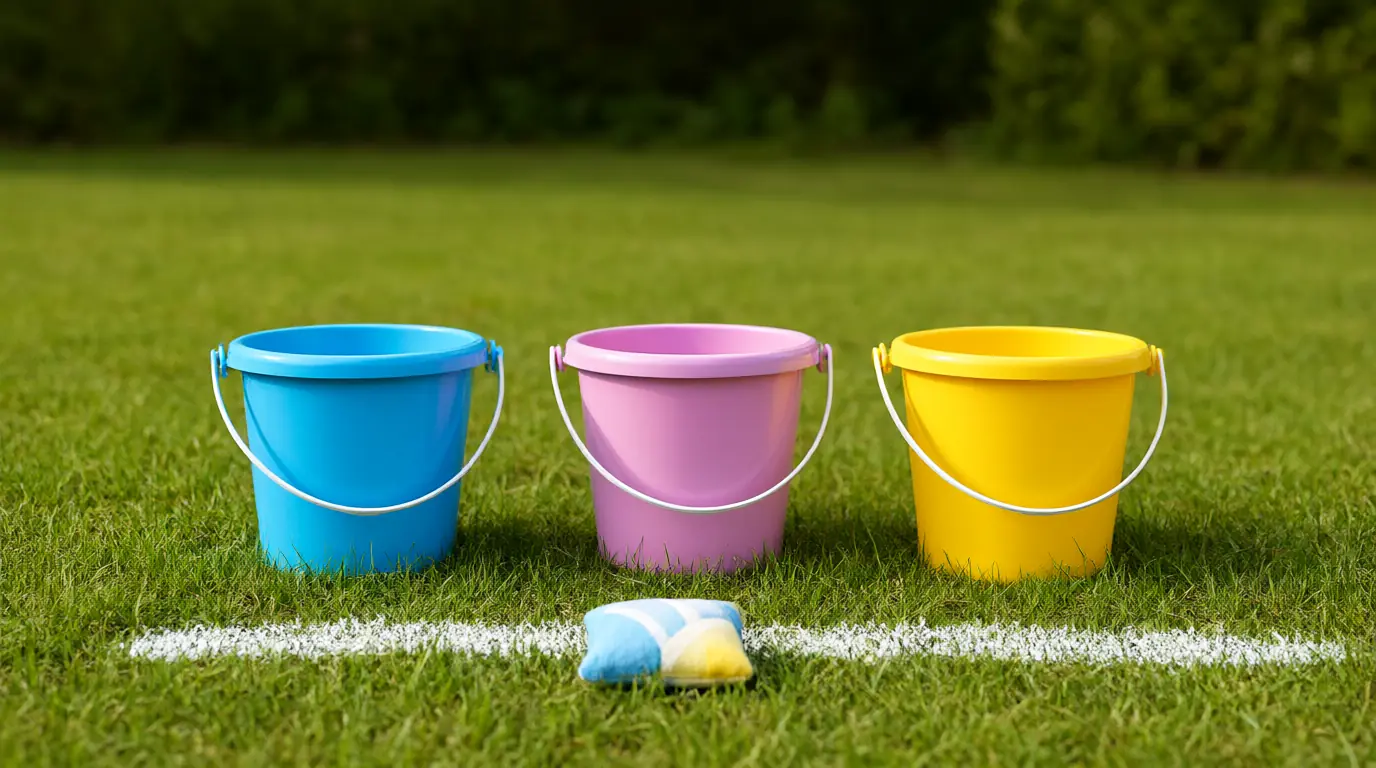
Make it your own: Younger children can follow one-step directions such as 'go to the blue bucket'. Older children can draw their route on paper before walking it, or give directions to a blindfold-free partner who follows them.

Make it work for your family
Walk through each game once without the ball so children know where to stand and where to wait. Rather than telling children to throw harder, move the target closer or make it wider by drawing a bigger circle with a rope. Keep turns short, and give anyone waiting a job, such as being the ball collector or the one who cheers.
Grass can make balls roll unevenly, so do not treat a wobbly roll as a mistake; say 'The grass bumped it' and try again. If the group has mixed ages, let younger children stand closer or use a bigger ball. When the game is over, tidy up together, which gives everyone a final task. For a rest, try a picnic game or a game from beach play beyond the water.

Parents also ask
What are good lawn games for toddlers and preschoolers?
Simple games with soft balls, baskets and large markers work well, such as rolling a ball into a basket or carrying toys across the grass. Keep distances short and equipment large and soft, and stay close to supervise.
How do I make lawn games safe for young children?
Check the grass for holes, stones and animal waste, and mark the boundary with cones. Keep play away from roads and water, use soft equipment and supervise closely. Provide shade, water and rest breaks, and apply sun protection.
What can I play on a lawn without much equipment?
A ball and a basket are enough for several games. You can also use a blanket for patterns, chalk or rope for routes and ordinary objects as markers. Children can invent rules, and a plain open space is often all you need.
Choose materials and activities that suit your child, supervise as needed and adapt the ideas to their interests and abilities. About our editorial approach