8 min read
 In this article
A little preparation
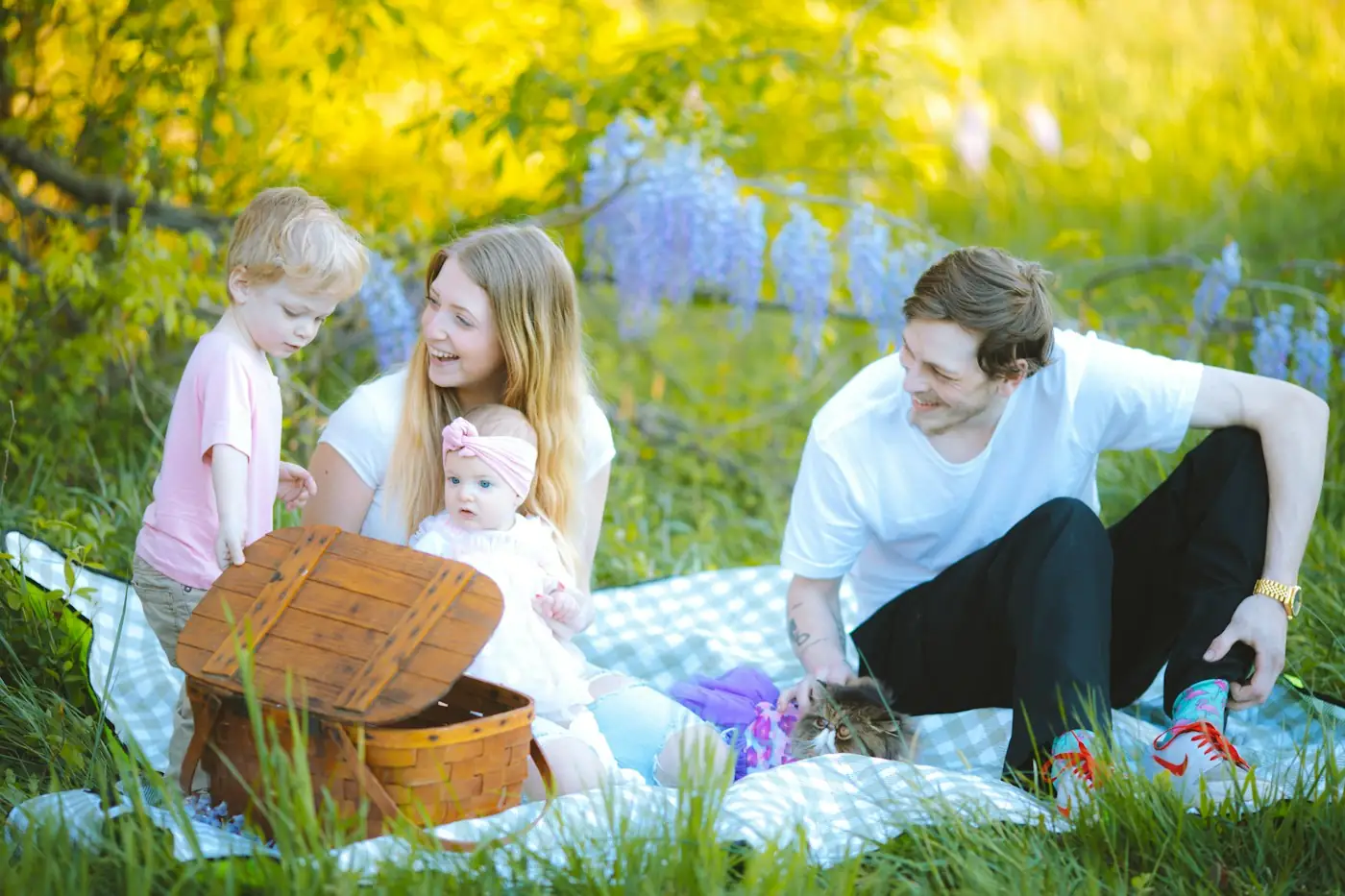
Before you unpack, look at the ground. Check for broken glass, wasps near bins, uneven slopes, water, and paths used by bikes or dogs, and choose a spot with some shade. Lay the blanket first and agree with the children what the edge of the picnic area is: the tree on one side and the bench on the other works well. Keep food on one corner of the blanket and games on the other so that crumbs and soft balls do not mix.
Pack the game kit in one small bag: a soft ball, three or four picnic items that are not food, such as a plastic cup and a wooden spoon, a few drawn cards and a pencil. Plan one quiet game and one moving game in case your children want both, and expect each to last about ten minutes. Check that nobody has a food allergy before anything edible becomes a counter or prize; most of these games use no food at all. Decide in advance how the day will end, for example one last game and then packing up together, so that leaving time is part of the plan.

Ideas to try together
Blanket memory
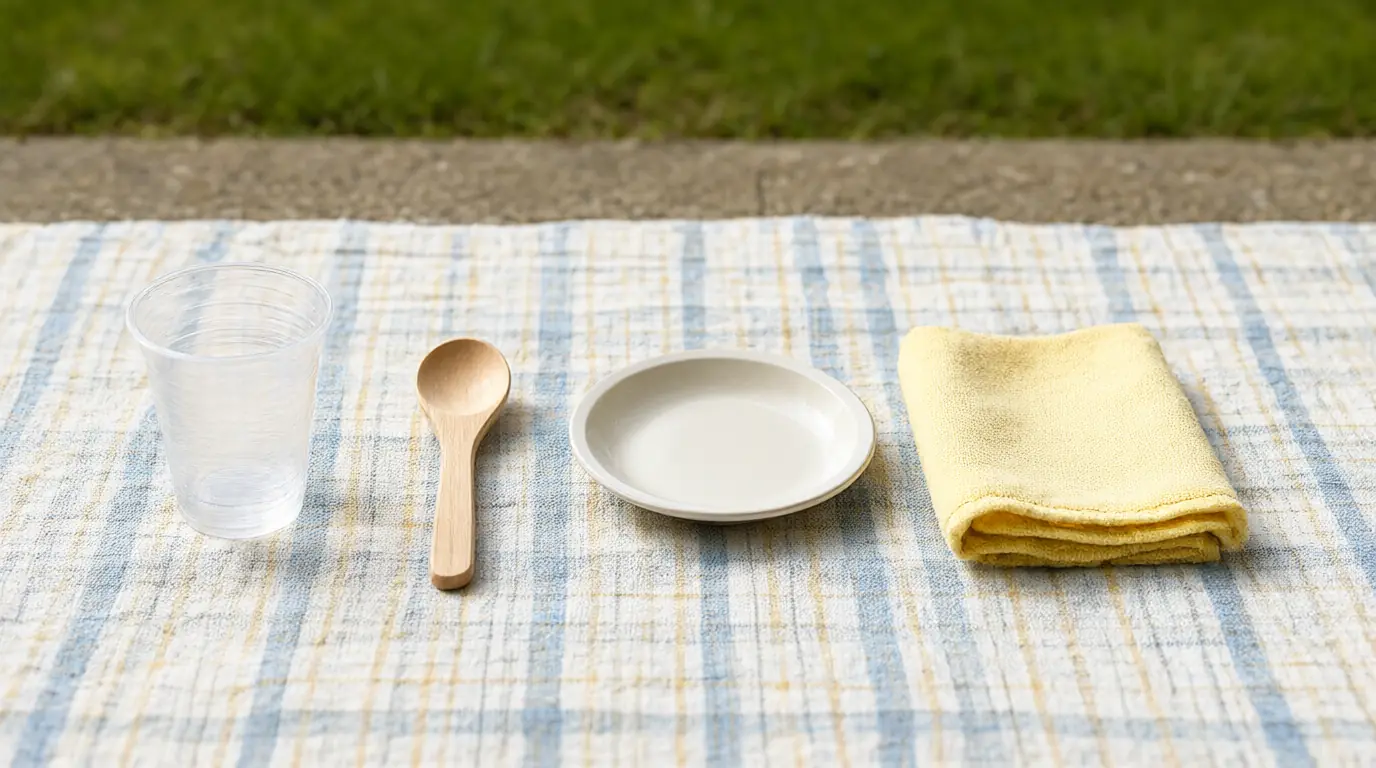
Four or five ordinary objects on a blanket become a simple memory game. The child who looks away has to say what changed when they look back, which sharpens attention and builds vocabulary. It is quiet enough to play beside a sleeping baby or after a big lunch.
 You’ll need
- 4 to 5 real picnic items that are not food, such as a cup, spoon, napkin, small plate
- A tea towel to cover them
- 1 extra spare object in a bag
How to do it
- Lay the objects in a row on the blanket and name each one together.
- Ask your child to close their eyes or look at the sky.
- Remove one object and hide it under the tea towel.
- Say 'open your eyes' and ask what has changed.
- Reveal the answer together and swap roles so your child hides one.
- Add the spare object for a longer game.
Make it your own: Start with only three objects for younger children and let them point rather than name. Older children can try swapping two items rather than removing one.
Picture invitations to pretend guests
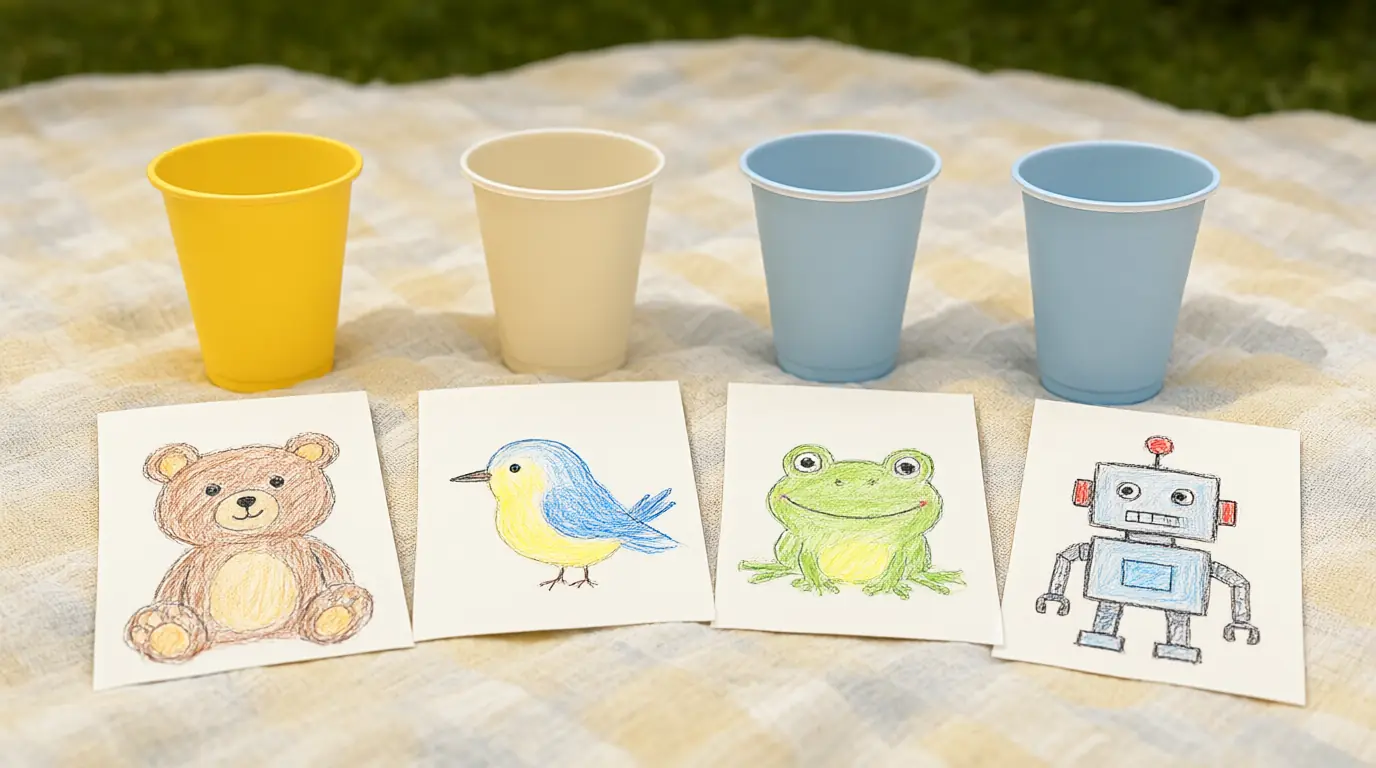
Drawing a few imaginary guests turns the blanket into a tea party where the guests have to be matched to the right seat. It encourages careful looking, early matching and storytelling, and it can be done sitting down. Children usually take delight in deciding who is coming.
You’ll need
- 4 small cards or squares of paper
- Crayons or a pencil
- 4 soft toys or cups as seats
- A small basket for the cards
How to do it
- Draw a different pretend guest on each card, such as a bear, a bird, a frog and a robot.
- Draw the same guests again on the seats or on small pieces of paper stuck to cups.
- Place the seats in a circle on the blanket.
- Pick a card out of the basket and ask where this guest should sit.
- Deliver the card to the matching seat and say hello to the guest.
- Repeat until everyone has arrived, then pretend to pour them tea.
Make it your own: Younger children can deliver only two cards. Older children can add a sentence about what each guest likes to eat or do.
Soft ball return
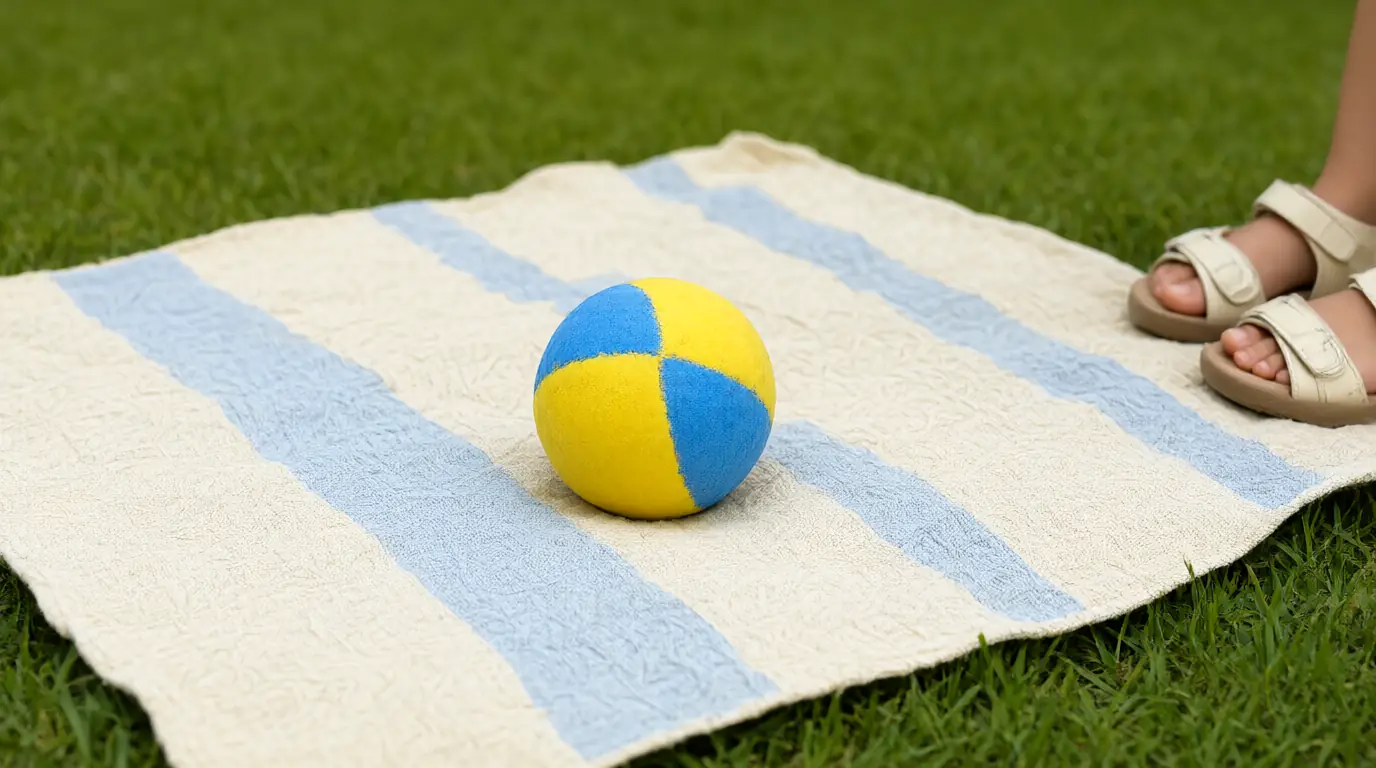
Two people sitting a short way apart on the blanket or the grass can roll a ball back and forth. Adding a spoken name before each roll makes it a game of attention as well as aim. It is a calm way to burn off energy without running.
You’ll need
- 1 soft, light ball
- A clear patch of grass or floor, about three big steps wide
- A basket or bag for the ball at the end
How to do it
- Sit facing each other about two big steps apart.
- Say your partner's name and gently roll the ball.
- Let them stop it with their hands or feet and say your name as they send it back.
- Move a little further apart if both are catching easily.
- If the ball rolls away, stop and fetch it together.
- End with a big roll into the basket.
Make it your own: Younger children can sit close and push the ball. Older children can roll with the other hand or add a second ball.
Picnic story map
A map drawn after the picnic helps children to recall the day and to place themselves in it. It turns a walk and a blanket into a small story with a beginning, middle and end. Tracing the route with a finger gives early practice in using maps.
You’ll need
- 1 sheet of paper
- A clipboard or hard book
- Crayons
- A few toy figures or a finger to trace the route
How to do it
- Ask your child what they remember: where did we walk, where did we sit, what did we see?
- Draw a square for the blanket and add a path leading to it.
- Add the tree, the bench or the pond if there was one.
- Move a finger along the path to retell the visit.
- Let your child add something imaginary, such as a dragon behind the tree.
- Keep the map in your bag and use it the next time you go.
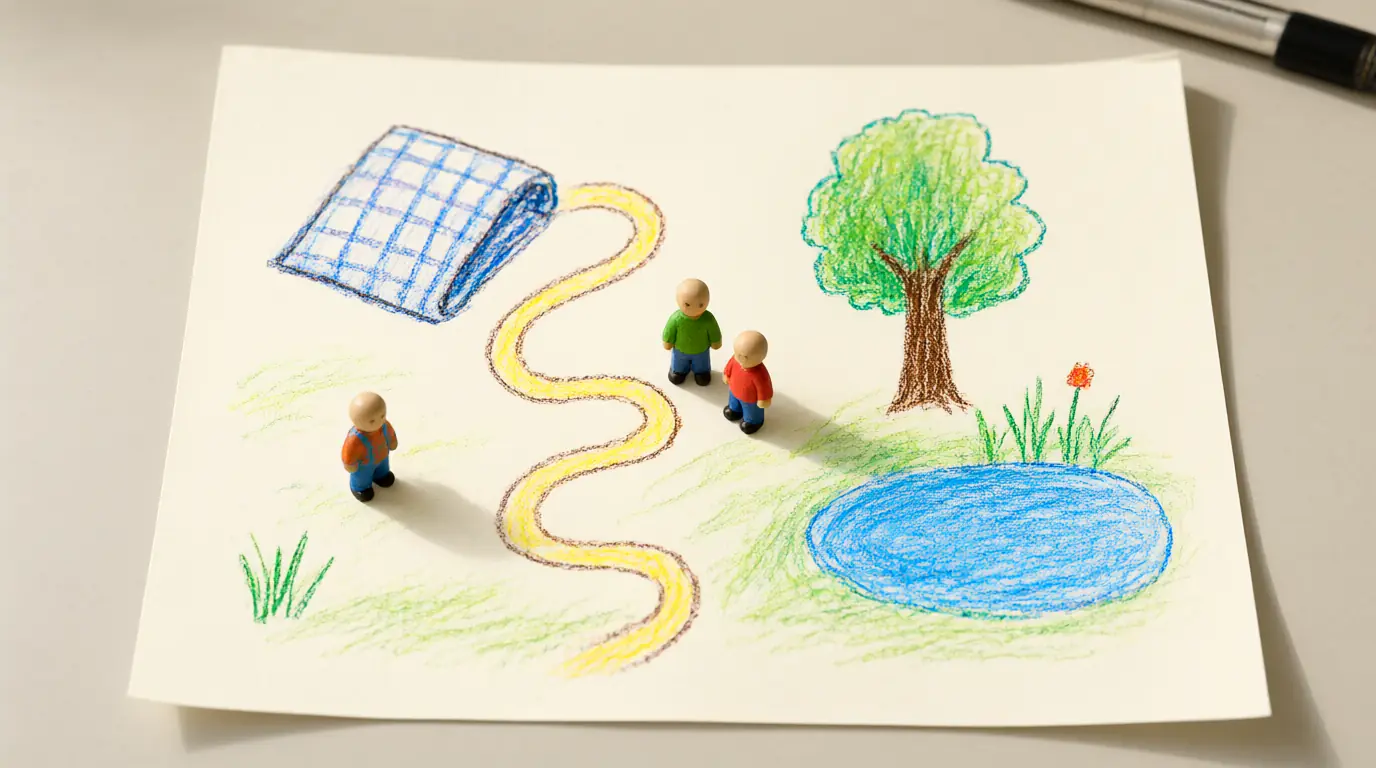
Make it your own: Younger children can draw one object and tell you about it. Older children can add arrows, a compass or a key with symbols.
Tidy-up treasure hunt
Packing up is part of every picnic, and a treasure hunt can make it faster and more cooperative. Children search for items that belong in the bag and collect them one at a time. It teaches responsibility for shared spaces and leaves the grass as you found it.
You’ll need
- A bag or basket for the collected items
- A list of three or four picture clues
- A reusable bag for rubbish
- Gloves for an adult if collecting litter
How to do it
- Before leaving, draw a picture of each item you need to collect, such as cups, spoons and napkins.
- Give your child the picture list and a basket.
- Invite them to find the matching item and place it in the basket.
- Tick or cross off each picture as it is found.
- Check the grass for any rubbish and let an adult pick it up.
- Wave goodbye to the spot together.
Make it your own: Younger children can find only two things. Older children can make their own picture list or search in a time limit with a family cheer rather than a race.

Make it work for your family
Let children choose between a seated and a moving role. A child who is tired after the walk can still be the card keeper, the judge or the person who names what changed, and a child with lots of energy can do the running. Swap roles half-way, and pause every game when food is served.
If other picnickers are nearby, keep your moving games on the side furthest from them and keep balls soft and small. When the weather turns or the crowd grows, change the game rather than pushing on: a memory game on the blanket works in drizzle under a tree. For more ideas about playing with food-related themes without eating the pieces, try food-themed play, or look at some lawn games for open grass.

Parents also ask
What are good picnic games for toddlers?
Quiet games that happen on the blanket work best: naming real objects, rolling a soft ball, or matching picture cards. Keep sessions to about ten minutes and have food, water and a rest ready. Stay within arm's reach on open ground.
How do I keep kids from running off at a picnic?
Choose a spot with a natural edge, agree the boundary before you unpack, and give children a job that keeps them near the blanket. Short games with a clear stopping signal help, and an adult should always have eyes on the group.
What can I use instead of food for picnic games?
Use cups, spoons, napkins, small plates or soft toys. They are easy to pack, safe to handle and avoid issues with allergies or crumbs. Any food you do bring is best kept for eating rather than playing.
Choose materials and activities that suit your child, supervise as needed and adapt the ideas to their interests and abilities. About our editorial approach