7 min read

 In this article
A little preparation
Choose a spot on dry sand, well away from the waterline and out of the way of other families. Check local flags, signs and tide times, and agree which adult is watching each child at any moment; water is the one thing at a beach that needs constant, close supervision, even with lifeguards present. Put up shade if you can, and offer water, sun protection and a hat before play starts rather than after.
Keep games short and portable. Bring only a bucket, two or three wide tools, a tray and a towel, so tidying up takes a minute and nothing blows away. Dig shallow holes only, and fill them in before you leave so nobody trips. Leave shells, plants and any creatures where you find them. Heat, crowds and tiredness change quickly, so be ready to move the game into the shade or stop it when your child has had enough.

What to know and try
Sand road network
Drawing roads in the sand is calm and creative, and it gives toy vehicles a real place to go. Children plan routes, notice that roads can turn and cross, and begin to describe where things are. It also keeps play in a small, dry patch, away from the water.
 You’ll need
- 1 wide-handled sand tool
- 1 small toy car or a smooth stone
- A flat patch of dry sand
- A bucket to carry water for smoothing
How to do it
- Find a flat dry patch and agree on a boundary using a towel or two buckets.
- Use the tool to draw one long road and let your child add a second one that crosses it.
- Add a mound for a house at the end of each road.
- Drive a toy car along one route while telling a short story about where it is going.
- Add a bridge made of a flat piece of driftwood or card if you have one.
- Smooth the sand flat before you leave.
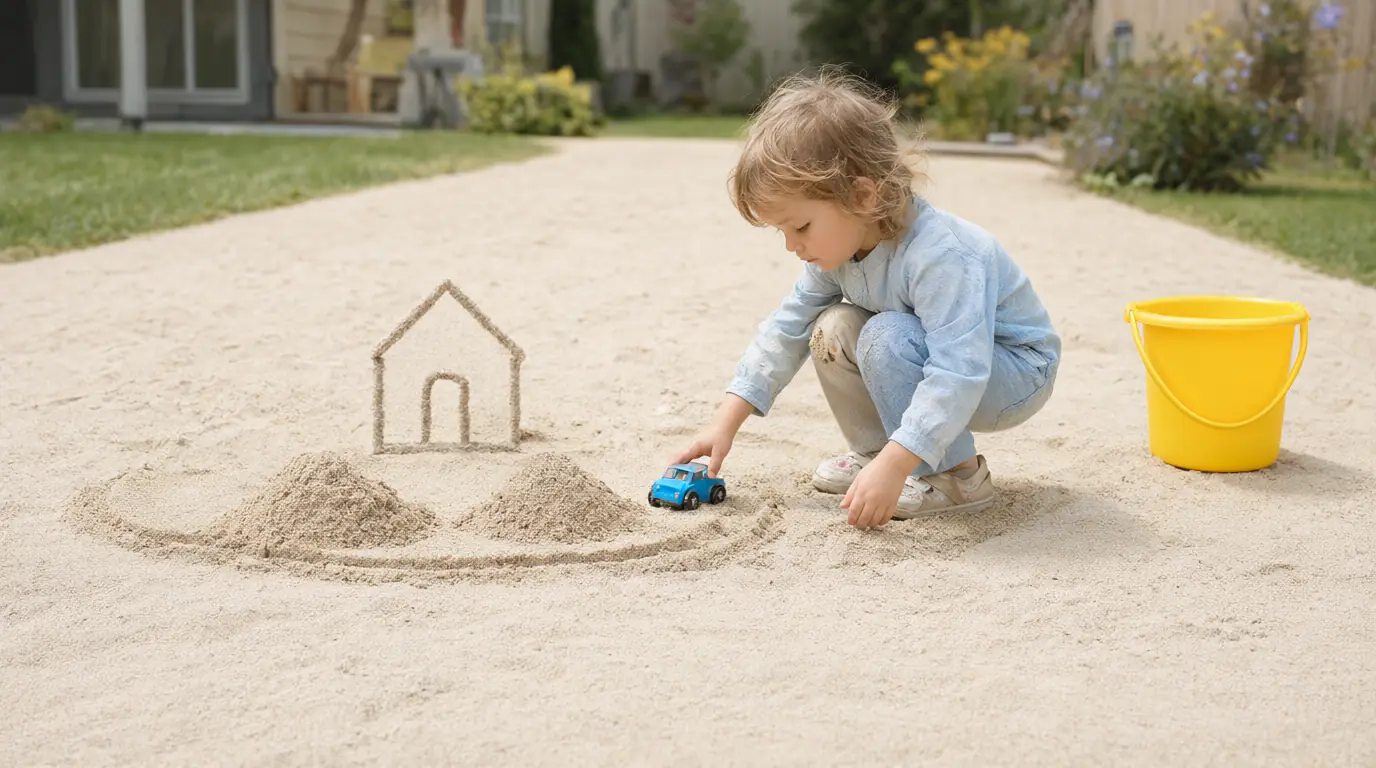
Make it your own: Toddlers can drive a hand through the sand to make a wide track. Older children can plan a map with a start, a middle and a finish, and explain the route to someone else.
Texture tray
A tray lets children examine small natural finds without carrying them off or putting them in their mouths. Looking at the same objects on a plain background helps them notice shape, colour and pattern, and gives you a simple way to talk about what things are made of.
You’ll need
- 1 shallow tray or plastic lid
- 3 to 5 small items already lying loose on the beach, such as a smooth pebble or a fallen leaf
- 1 towel
How to do it
- Sit together on the towel with the tray between you.
- Let your child pick up one item at a time and place it on the tray.
- Describe each one with a word: rough, smooth, heavy, light.
- Group the items by shape or size and explain why.
- Photograph the tray, then return everything to where it was found.
- Check the sand around you before leaving.
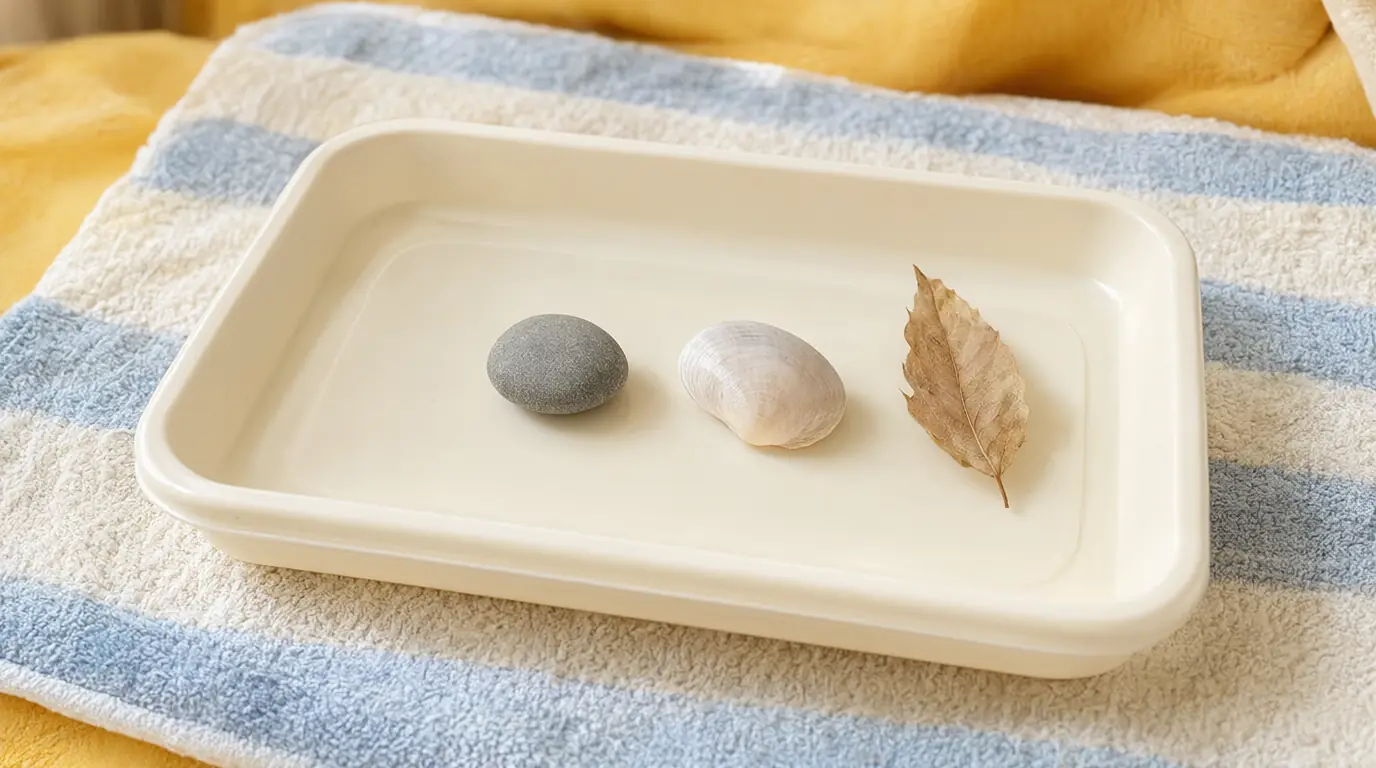
Make it your own: For toddlers, offer only two or three large, safe items and stay close because small things go into mouths. Older children can compare two pebbles and decide which is heavier before checking.
Towel island story
A towel becomes an island, and the sand around it becomes the sea. Children invent a character, decide who lives on the island and tell what happens, which builds vocabulary and imagination while keeping everyone on dry land. It also gives a clear boundary that is easy to keep.
You’ll need
- 1 beach towel
- A few small toys or smooth stones as characters
- Sand around the towel
How to do it
- Lay the towel flat on dry sand and tell your child it is an island.
- Place a few small toys or stones on it as its inhabitants.
- Ask who lives there and what they need.
- Invent a problem, such as the island is too hot, and let your child decide how the characters solve it.
- Add shade by lifting one corner of the towel with a bucket.
- End the story with the characters resting and shake out the towel.
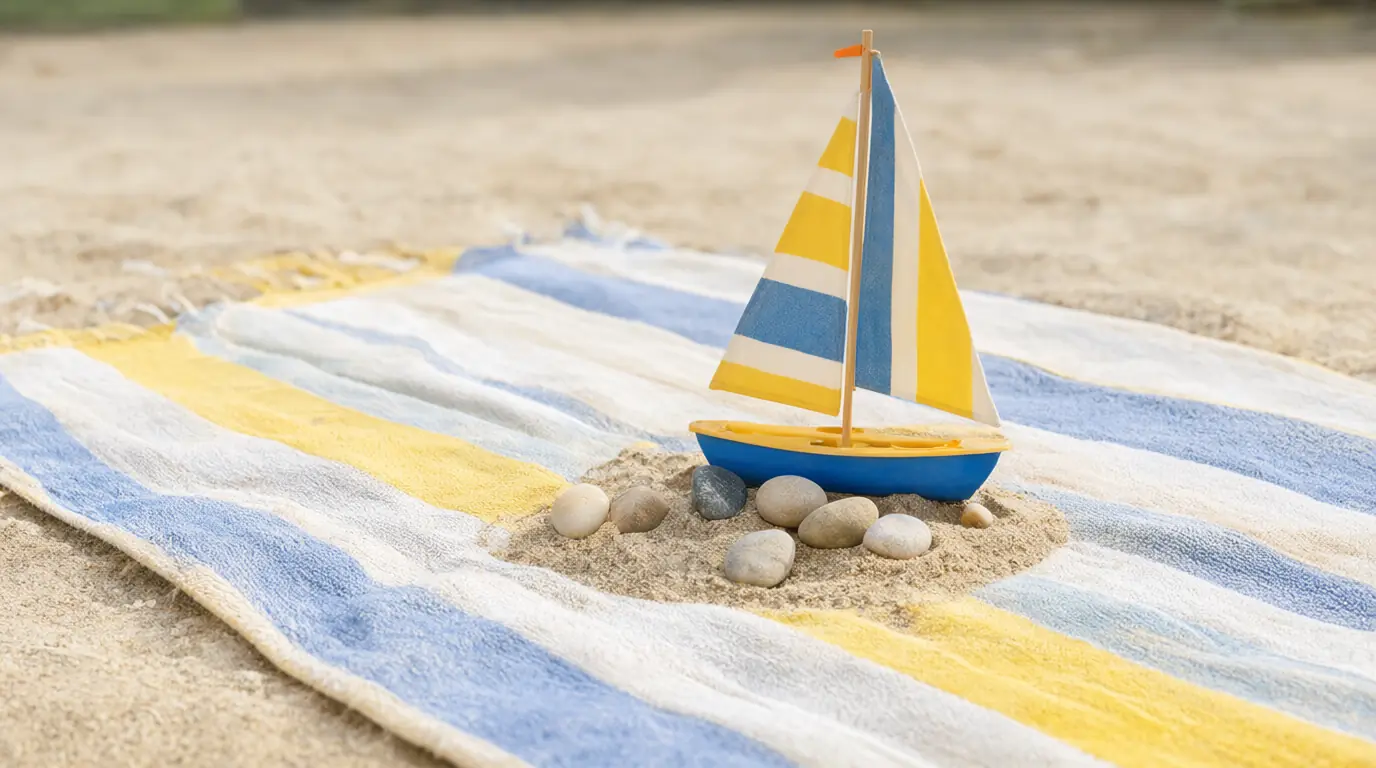
Make it your own: Younger children can simply move the characters around. Older children can draw a map of the island in the sand and add places such as a library or a market.
Shadow sketch
Tracing a shadow shows children that it moves as the sun does. It is a quiet, observational game that connects the day's light to something they can see and measure. Revisit the shadow after lunch and the change is easy to spot.
You’ll need
- 1 sturdy bucket or sand tool standing upright
- 1 stick or tool for drawing in the sand
- A sunny spot of dry sand
How to do it
- Stand a bucket upside down on flat sand and look at its shadow.
- Use a stick to trace around the edge of the shadow.
- Mark the line with a small shell or pebble if you have one, then play elsewhere.
- Come back in about half an hour and look at the shadow again.
- Trace the new shadow in a different line and compare them.
- Talk about where the sun was before and where it is now.
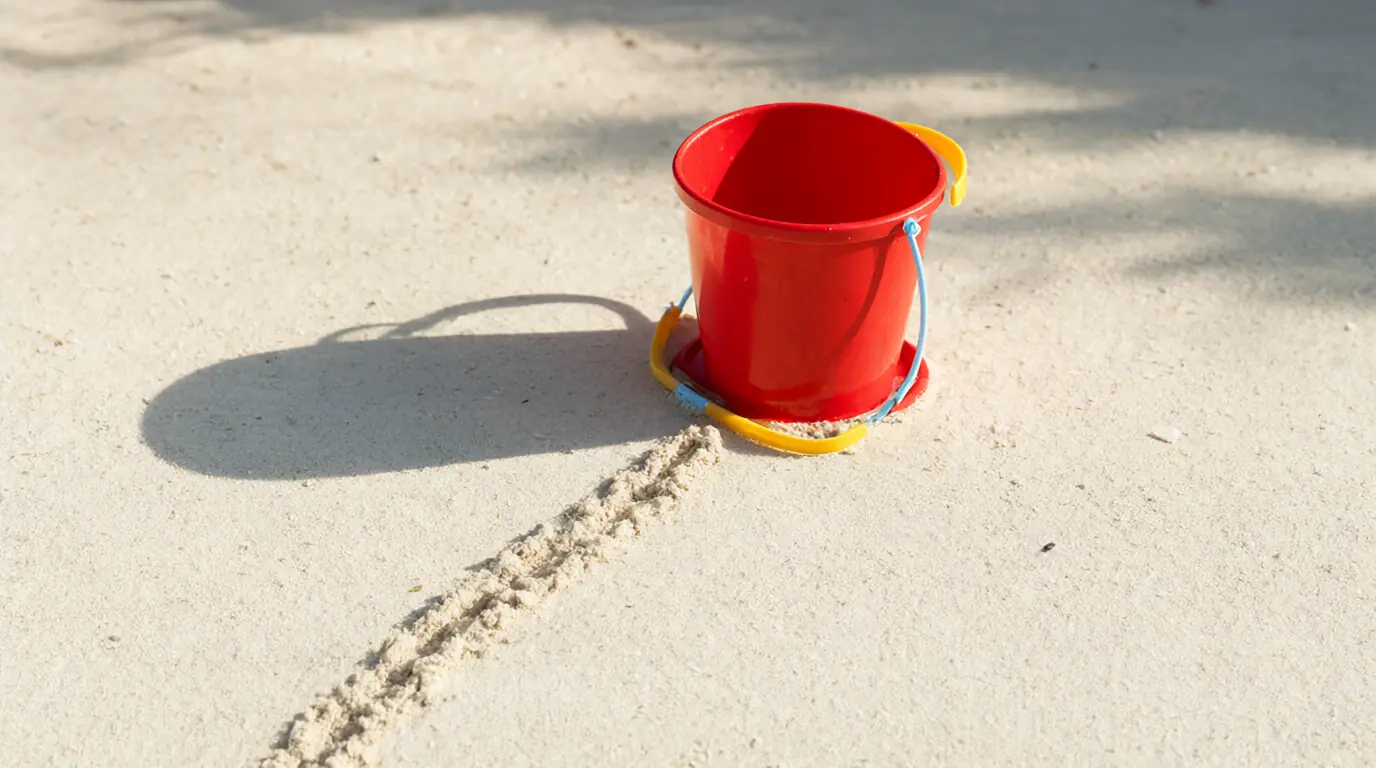
Make it your own: Younger children can step on the shadow and notice that it comes with them. Older children can predict whether the shadow will be longer or shorter, then check.

Make it work for your family
Beaches are exciting and overwhelming at the same time, so give your child a clear boundary for play: a towel, a line drawn in the sand or two buckets as gate posts. Say where the dry play area ends and tell them that is the place you will meet if they wander. Children generally relax more when they know exactly where the edge is. It also helps to name a few landmarks, such as the red flag on your left or the big towel with stripes, so a child who looks up from a sand road can find the family again at once. Pack a snack for the quiet stretches between games: hunger often looks like bad temper on a hot beach, and a cool drink and a short sit in the shade can reset a whole afternoon.
If your child wants to head straight for the water, treat that as a separate activity with its own adult, rather than trying to compete with it. After a swim or paddle you can return to quieter games. For more ways to extend sand play at home or on the beach, try more sand games for kids or some outdoor games for a whole afternoon.

Parents also ask
What are good beach games for toddlers?
Toddlers enjoy simple sensory play such as scooping sand into a bucket, patting a smooth surface, or driving a toy along a wide track. Keep the play area small, stay within arm's reach, and watch for small items going into mouths.
How do I keep children safe at the beach?
Choose a spot away from the waterline, give one adult responsibility for each child, and keep within sight of lifeguards where possible. Water play always needs close, constant supervision. Provide shade, drinking water and sun protection, and take breaks in the shade.
What can children do at the beach besides swimming?
They can draw roads and maps in the sand, build a small village, compare shadows over the afternoon, make a tray of natural finds or tell a story on a towel island. All of these work in a small dry patch and need very little equipment.
Sources & further reading
Explore these primary sources for further context on this topic.
Choose materials and activities that suit your child, supervise as needed and adapt the ideas to their interests and abilities. About our editorial approach