Weebou Editorial Team
 7 min read


 In this article
A little preparation
Choose a quiet moment when nobody is upset, such as after a meal or before bed. Pick one book or one pretend situation with a clear problem that a child can recognise: someone waiting for a turn, a toy that breaks, a friend who is not invited. Sit beside your child and keep the first few minutes light, so that talking about feelings does not feel like a test.
Avoid asking 'how do you think she feels?' in a way that expects a correct answer. Instead say what you notice, 'his shoulders are low and he is looking down', and wonder aloud what that could mean, giving more than one option. Accept 'I don't know' as a real answer. Offer drawing, acting or pointing at a card for children who find talking difficult. Keep each activity to about ten minutes and end before your child gets tired of it. You can return to the same book or toy situation another day and find new things to notice.

What to know and try
Pause a picture-book moment
Stopping on a page where a character is waiting, surprised or left out gives children a moment to look closely. Pictures often show more than the text does, such as a drooping tail or a turned back, and children enjoy being detectives. Reading on afterwards shows what the story says.
 You’ll need
- A picture book with expressive faces
- A cushion or sofa to share
- A sticky note to mark the page
How to do it
- Choose a page where a character is clearly in a feeling moment.
- Stop and ask, 'What can you see in this picture?'
- Point out one detail, such as the position of the arms or the look on the face.
- Offer two possibilities for what the character might want or need.
- Ask what your child thinks, and accept any answer.
- Turn the page and see what the story says.
Make it your own: Younger children can point to the character's face. Older children can suggest what a friend could do to help and compare it with what happens in the book.
Swap toy roles
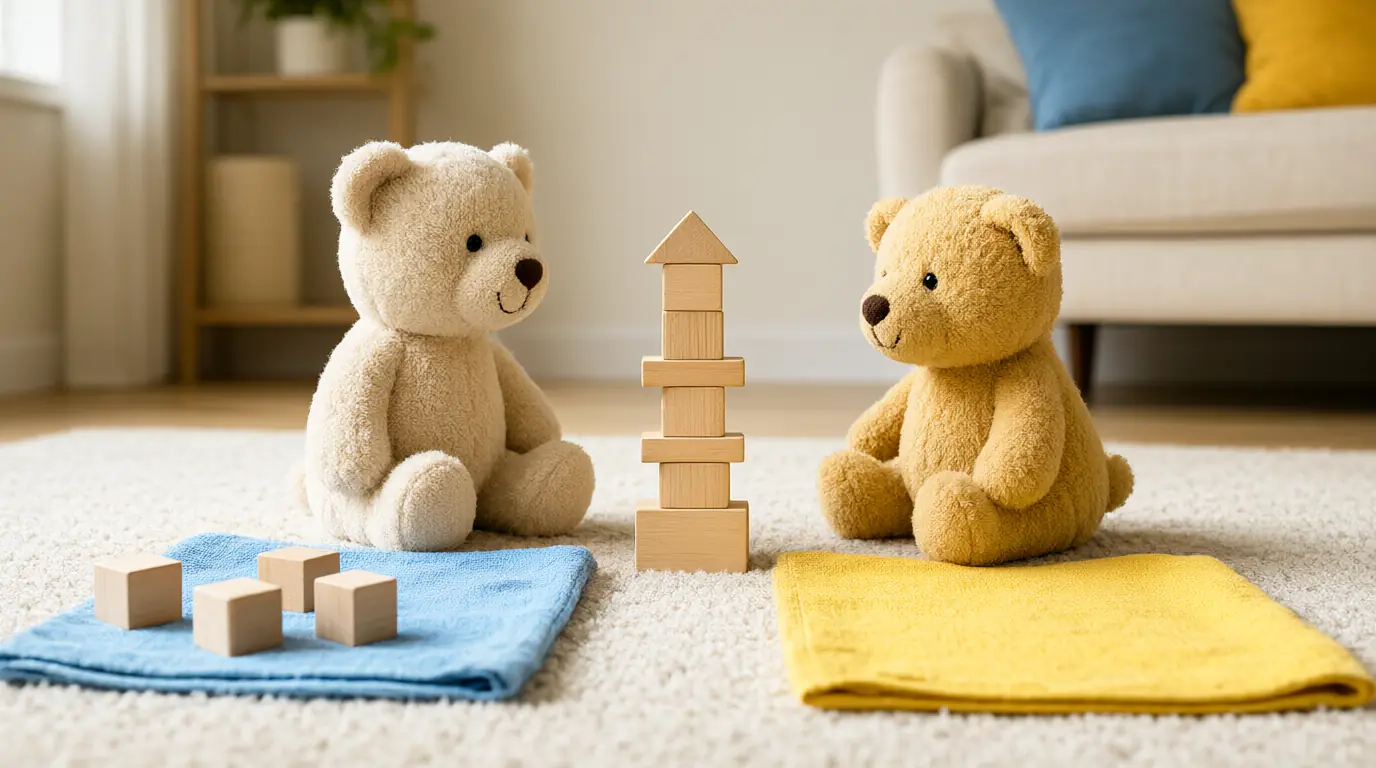
Two toys want different things: one wants to build and the other wants to knock down. Playing each role in turn helps children see that both wants are real. The goal is not to decide who is right but to find a plan that works for both.
You’ll need
- 2 soft toys or figures
- 6 to 8 blocks
- A small cloth to mark a building space
- A second cloth for a knocking-down space
How to do it
- Introduce the two toys and say what each one wants.
- Let your child speak for the builder while you speak for the knocker.
- Notice aloud when they clash: 'The builder looks upset.'
- Swap roles and speak for the other toy.
- Ask, 'Is there a way both could have a turn?'
- Try a plan, such as a building cloth and a knocking cloth.
Make it your own: Younger children can simply act out one role. Older children can suggest rules the toys might agree on and try them out.
Be a careful listener
One child describes a favourite place or event while the other listens without interrupting. The listener repeats one thing they heard and asks a question. It takes only a few minutes, and shows children that listening is an active way of caring.
You’ll need
- A soft toy as a talking buddy
- A cushion for each person
- A small timer or a song, optional
How to do it
- Sit face to face and decide who speaks first.
- Hold the toy while speaking and pass it over to swap.
- The speaker tells about a favourite place for about a minute.
- The listener says one thing they heard: 'You like the swings.'
- The listener asks one question, such as 'what do you do there?'
- Swap roles and thank each other.
Make it your own: Younger children can show a photo or a drawing instead of speaking. Older children can try remembering two things or asking a question about how the speaker felt.
Offer help with permission
Helping is kind when it is wanted. Practising the question 'would you like help?' shows children that caring means checking, not taking over. Accepting a no calmly is part of the lesson as well, and it protects the other person's pride.
You’ll need
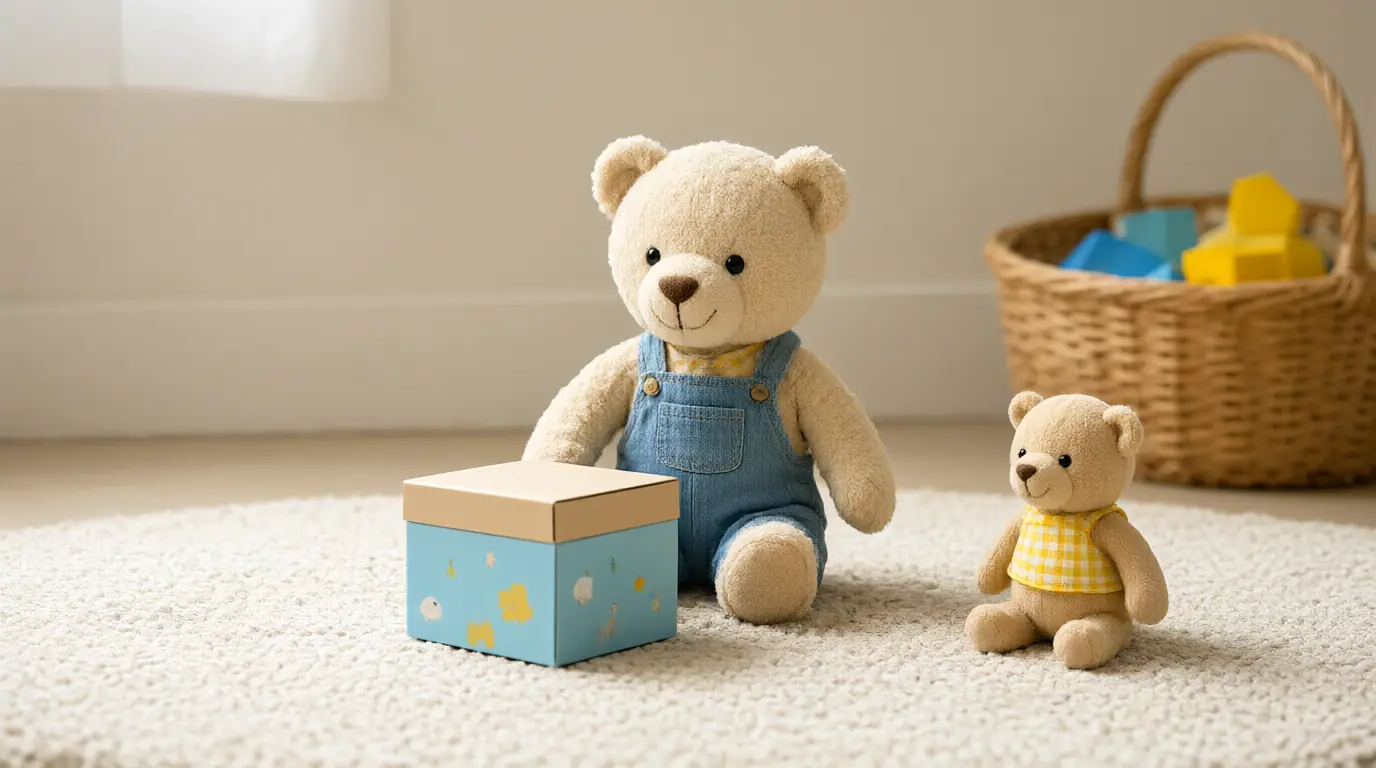
- A toy that is hard to use, such as a box with a lid
- 2 soft toys
- A basket of small objects
- A cloth
How to do it
- Let one toy struggle to open the lid.
- Ask your child what they notice about how the toy is doing.
- Practise saying, 'Would you like help?' in a gentle voice.
- Have the toy answer yes, then try again with a no.
- Show what to do if the answer is no: wait nearby or ask again later.
- Swap, so your child is the one who is struggling and you ask.
Make it your own: Younger children can offer a toy to hold. Older children can invent other ways to help, such as fetching something or keeping someone company.
A feelings map of the day
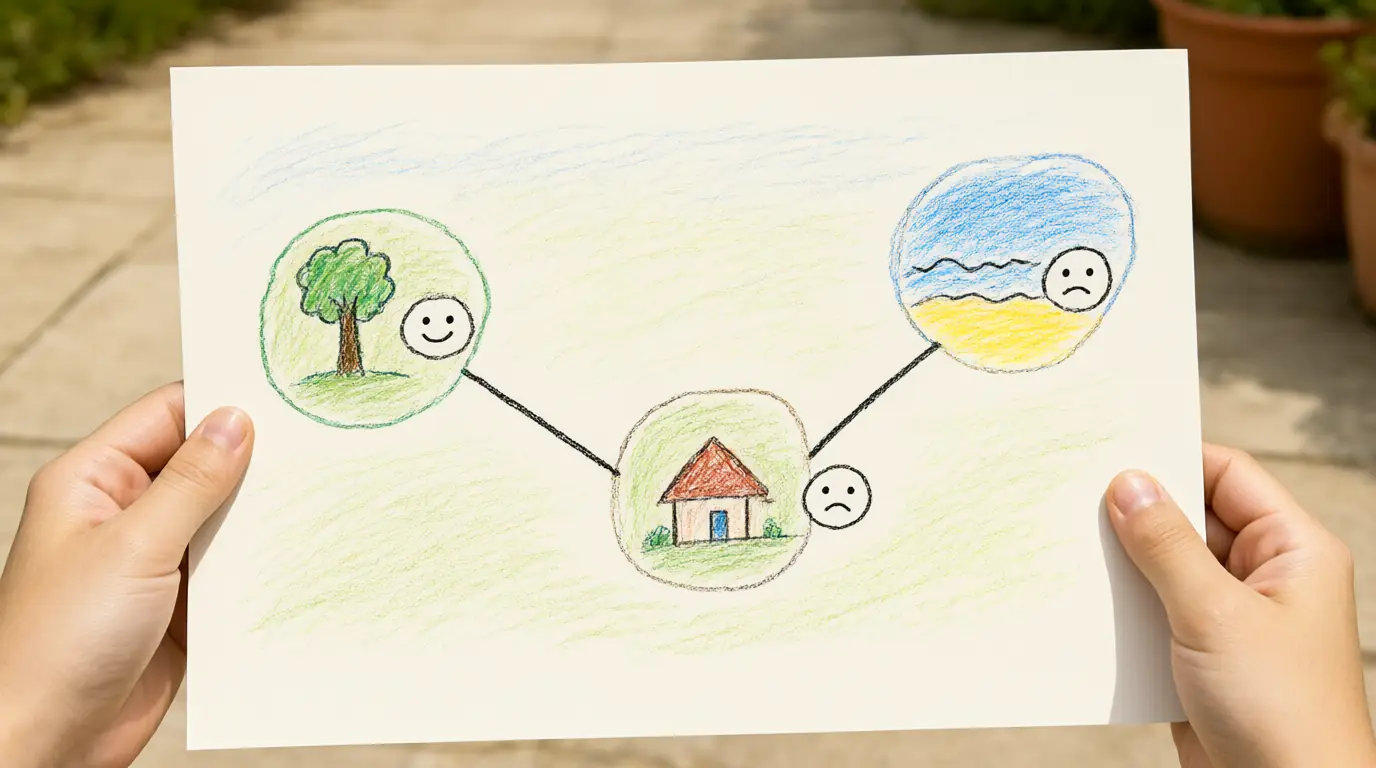
Drawing the places you went during the day and adding a face for how you felt gives a gentle way of reviewing it. Children see that feelings change from place to place and that others around them may have had different ones. It also gives you a record to talk about at bedtime.
You’ll need
- 1 sheet of paper
- Crayons
- A few cut-out paper faces, optional
- A pencil
How to do it
- Draw three or four places you went today: home, a shop, the park.
- Next to each place, draw a face showing how your child felt there.
- Ask what made them feel that way.
- Wonder aloud how someone else might have felt in the same place.
- Add a second face for another person, if your child wishes.
- Keep the map and add to it tomorrow.
Make it your own: Younger children can draw just one place and one face. Older children can add colours for feelings and compare maps from different days.
Make it work for your family
Empathy grows from being noticed as well as from noticing others. When your child is upset, name what you see before you fix it: 'You wanted to finish the tower and it fell.' Children who feel understood tend to find it easier to offer the same to someone else, but this takes time and cannot be rushed.
Do not force an apology or a hug. Instead, offer choices for how to help: 'You could bring a tissue, ask if they want company, or just wait nearby.' Be ready for children to respond differently from one another, and for the same child to respond differently on different days. If you are worried about how your child responds to others' feelings, speak with their paediatrician or an early-years professional. For more ideas on the feelings side, see gentle games for big feelings or everyday kindness ideas.

Parents also ask
At what age do children start to show empathy?
Many toddlers show early signs, such as offering a toy to someone who is upset, and the skill develops through the preschool years and beyond. Children differ widely, so look for small steps rather than a fixed milestone.
How can I teach empathy to a 4-year-old?
Talk about what you notice in books and in daily life, wonder what someone might need, and offer a way to help with permission. Model it by naming your child's feelings. Keep it short and playful and avoid forcing an apology.
What if my child seems not to care when someone is hurt?
Young children are still learning to read others' feelings, and some find it harder than others. Gently describe what you see and suggest a simple helpful action. If you are concerned, speak with your child's paediatrician or an early-years professional.
Choose materials and activities that suit your child, supervise as needed and adapt the ideas to their interests and abilities. About our editorial approach