Weebou Editorial Team
 7 min read
 In this article
A little preparation
Choose one activity and decide which parts your child will lead, such as picking the topic, the rules or the layout. Put paper, crayons and a few real objects on a table, and keep a familiar book or two nearby in case your child wants to check a word. Offer drawing, speaking and writing as equal ways to share ideas, and be ready to scribe if they dictate.
Children start kindergarten with very different experiences, so match the amount of print, the number of objects and the length of the task to your own child. Fifteen to twenty minutes with a pause is plenty. If you are unsure what the school expects, ask the teacher how home activities can connect with current classroom topics, and follow the school's letter-sound approach when you write. For more general ideas, see what to know before kindergarten and writing games where every mark has a purpose.
What to know and try
A toy museum with labels
A museum display gives writing a real job: visitors need to know what they are looking at. Children choose what to include, how to arrange it and what to say, which builds speaking, drawing and early writing. The label can be a word, a picture or a sentence, depending on what the child is ready for.
 You’ll need
- Five or six favourite toys or objects
- A shoebox lid or tray for each exhibit
- Index cards and a thick pen
- A scarf or table runner for the display
How to do it
- Ask your child to choose a few special objects for a museum and arrange them on the display table.
- Pick one exhibit and ask what a visitor should know: its name, its colour, where it came from.
- Write the label together: your child tells you the words and writes any letters they know.
- Place the label beside the object, and ask your child to read it back or tell you what it says.
- Invite a family member to visit, and let your child give a short tour.
- Ask the visitor one question about an exhibit to see whether the label was clear.
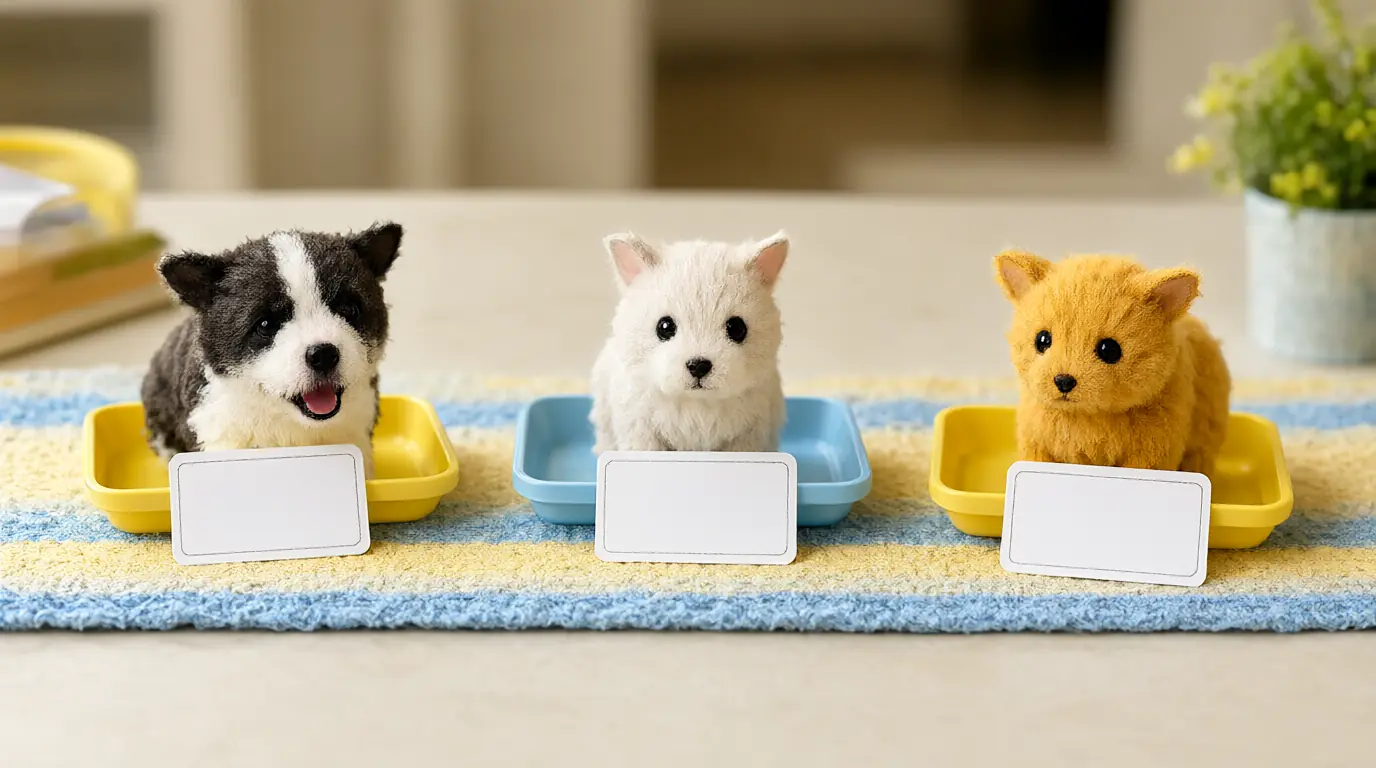
Make it your own: Younger children can draw a picture instead of writing words. Older children can add numbers, such as how many wheels or legs, or write a full sentence about an exhibit.
Invent a counting game
Designing a game lets children practise counting while making real decisions about rules. They have to think about how far to move, what happens at the end and whether the rules are fair. Playing the game afterwards shows whether the rules work and gives a natural reason to change them.
You’ll need
- A large sheet of paper or the back of a poster
- A marker
- Large counters or buttons as players
- A die or a spinner made from a paper plate
How to do it
- Draw a winding path of about ten spaces on the paper with a start and a finish.
- Ask your child to decide on one special space, such as 'go back two' or 'take an extra turn'.
- Write numbers in each space or let your child do so, and check them together.
- Roll the die and move your counter, counting each space aloud.
- Play once, then ask what was too hard, too easy or unfair, and change one rule.
- Play a second round with the new rule, and decide on a name for the game.
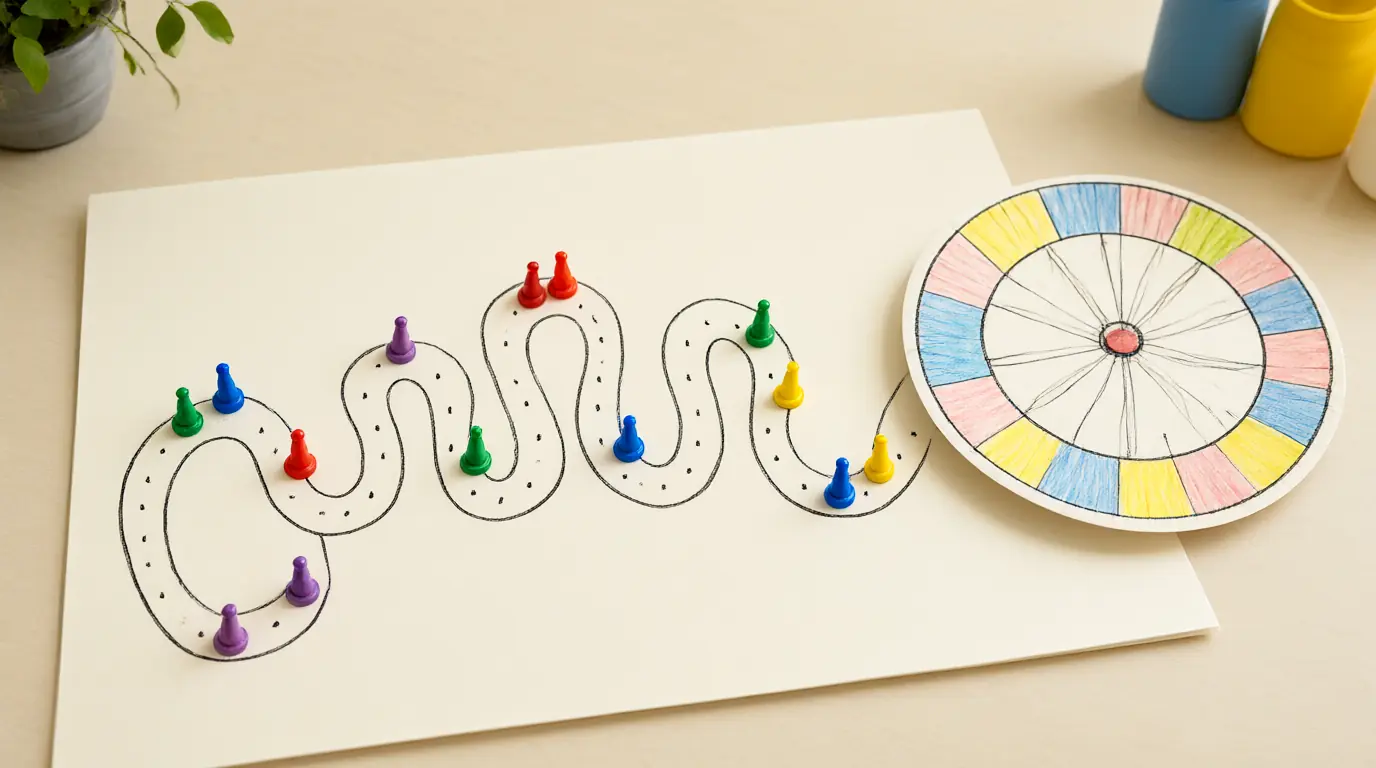
Make it your own: For younger children, use a path of five spaces and a die with one to three dots. Older children can add a rule that needs adding or subtracting, such as 'move forward three, then back one'.
Retell a story with objects
Retelling a familiar story shows what a child remembers and understands about sequence and characters. Using objects removes the pressure to produce perfect sentences, and the child can move them as they speak. It also makes the idea of beginning, middle and end visible on the table.
You’ll need
- A familiar picture book
- Three or four toys or objects that match parts of the story
- Three cards numbered 1, 2 and 3 (or with pictures of a sun, a cloud and a moon)
- A tray
How to do it
- Read the book together, or choose one your child already knows well.
- Ask your child to choose a toy for each main character and one object for an important place or event.
- Place the number cards in a row and put the first object on card 1.
- Ask what happened first, then move to the second object and ask what happened next.
- Finish with the last card and ask how the story ended.
- Ask whether they would like to change the story and retell it with a different ending.
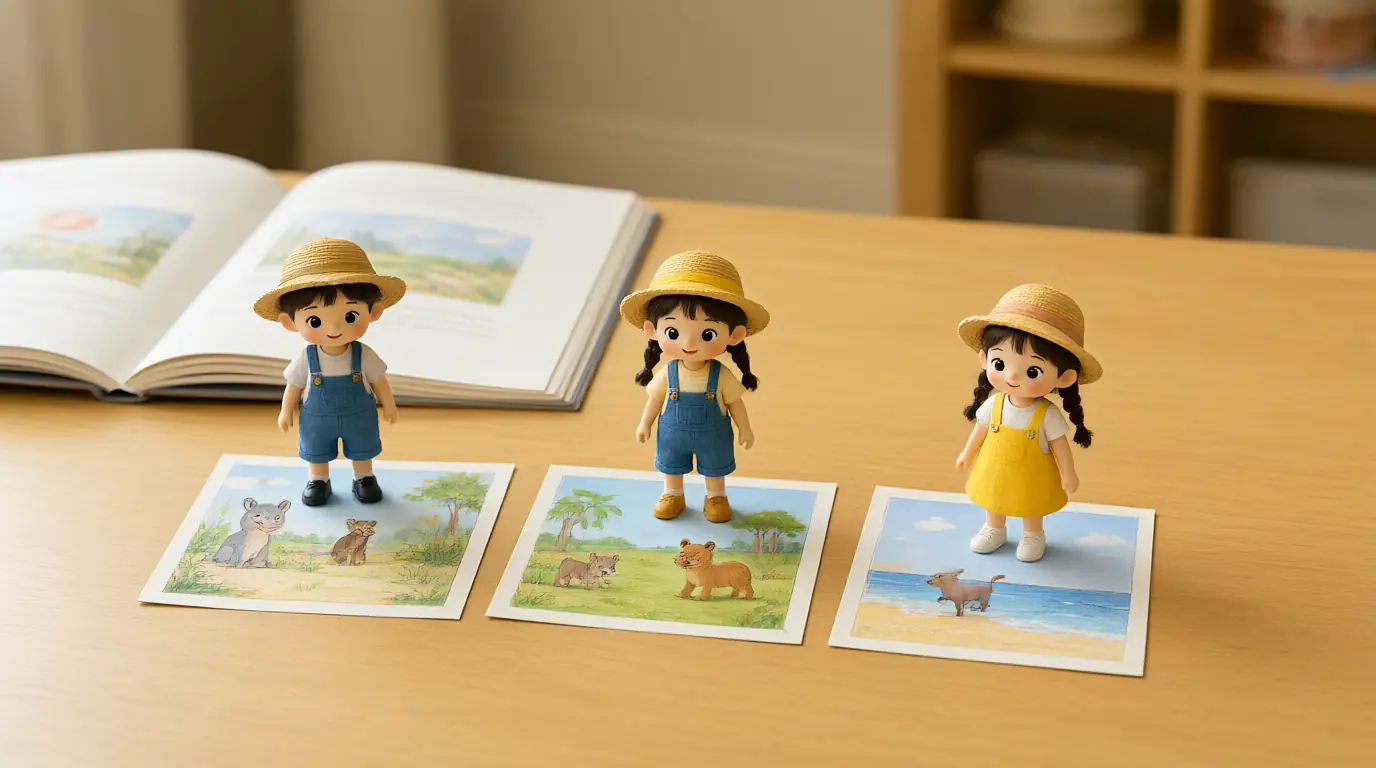
Make it your own: Younger children can retell with just two objects and one sentence. Older children can add feelings or a problem, using words like 'because' and 'then'.
A message centre for real notes
Writing for a purpose makes marks meaningful. A small station with paper, envelopes and a pen lets children make invitations, reminders and notes for family members. They practise early writing, but the focus stays on communication, so wobbly letters and invented spellings are welcome.
You’ll need
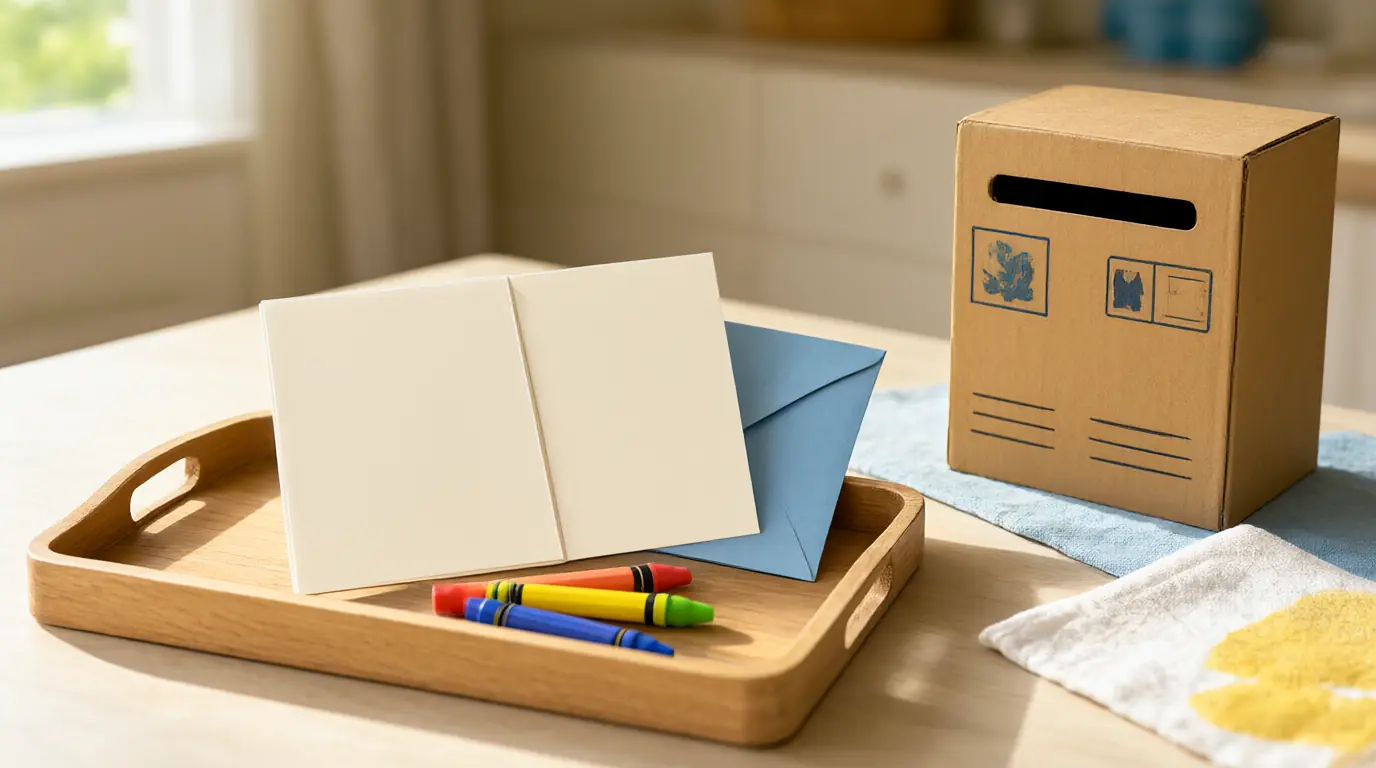
- A tray with paper, folded cards and envelopes
- Crayons and a pencil
- Sticky notes
- A small box as a 'post box'
How to do it
- Set up the tray on a low table and explain that messages can be drawings, letters or words.
- Ask who they would like to write to, and what they want to tell or ask that person.
- Let your child make marks, draw or write the first letter of a word, and offer to write the rest if they ask.
- Read the message back together, pointing at each word, and ask your child to check that it says what they meant.
- Put the message in the post box or deliver it to the person.
- When a reply arrives, read it together and write another.
Make it your own: Younger children can make a drawing as a message and tell you the words. Older children can add a date, a greeting and a name, and try sounding out each word.

Make it work for your family
Resist the urge to correct every spelling or counting slip while a project is in full swing. Instead, note one thing to practise later and tell your child what they did well: 'You put the number of steps on every square.' If your child says 'I don't know how to write that', offer to write it together by sounding it out, or let them draw.
Keep finished work visible for a while, since a displayed label or a game on the shelf shows that the work mattered. If frustration builds, stop and come back another day, perhaps with fewer objects. For help with specific skills, you can try letter activities using names and pictures, math games with counters and cups or the writing game.

Parents also ask
What should a child know before starting kindergarten?
Requirements differ by school, but common starting points are recognising their name, talking in sentences, counting small groups, holding a crayon or pencil and following simple instructions. Teachers expect a wide range of skills, so check with the school if you are unsure.
How long should kindergarten activities at home take?
Fifteen to twenty minutes is usually enough, with breaks to move or snack. Focus on enjoyment and one clear purpose, such as making a game or telling a story. Stop if your child is tired and return to it another day.
Do I need worksheets for kindergarten learning at home?
Worksheets are optional. Many children learn more from making things, telling stories, counting objects and writing for a purpose. If your child enjoys a worksheet, that is fine, but real tasks such as labels and messages often show more of what they understand.
Sources & further reading
Explore these primary sources for further context on this topic.
Choose materials and activities that suit your child, supervise as needed and adapt the ideas to their interests and abilities. About our editorial approach