Weebou Editorial Team
 8 min read

 In this article
A little preparation
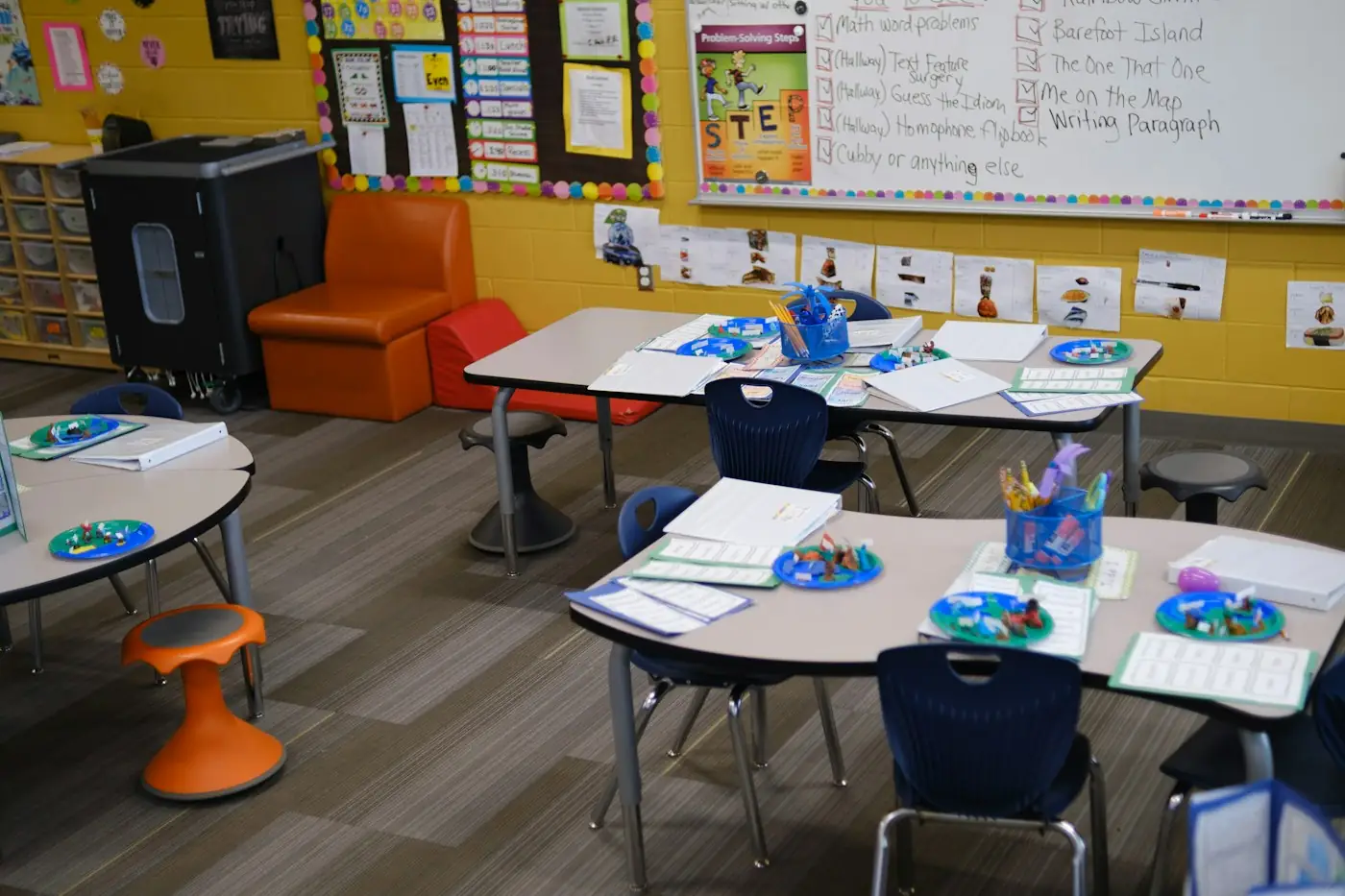
Start by asking the school what a typical day looks like. Find out when children arrive, where bags and coats go, how toileting and lunch are handled, how pick-up works and who a child can go to if they feel unsure. Many schools publish a welcome booklet or hold a visit day; use any photos of the classroom to make your own picture plan. Pick one routine to practise at a time rather than all at once, and keep sessions short and light.
Treat every online readiness list with caution: schools, regions and children differ. What matters is your child's own comfort and the expectations of the setting they will actually attend. Tell the school about home languages, medical needs, dietary needs and anything that helps your child settle, such as a favourite phrase or comfort object. If you want ideas for playful practice at home, you can look at preschool learning at home.
What to know and try
Practise a goodbye and arrival routine
The start of the day is often the hardest part. A predictable routine, practised at home in small pieces, gives a child something familiar to hold on to when the setting is new. It also lets you test what helps most: a special hug, a phrase or a drawing slipped in the bag.
 You’ll need
- The school bag they will use
- A picture plan on paper or cards
- A soft toy to play the role of the child
- A kitchen timer
How to do it
- Show the real bag and decide together where it will go at school.
- Draw or print three simple pictures: arrive, hang up the bag, say goodbye.
- Act it out with a soft toy and let your child be the adult for a moment.
- Practise your goodbye phrase and keep it the same each time.
- Talk about what happens after goodbye, such as play, snack, circle time.
- Leave the cards somewhere your child can look at them.
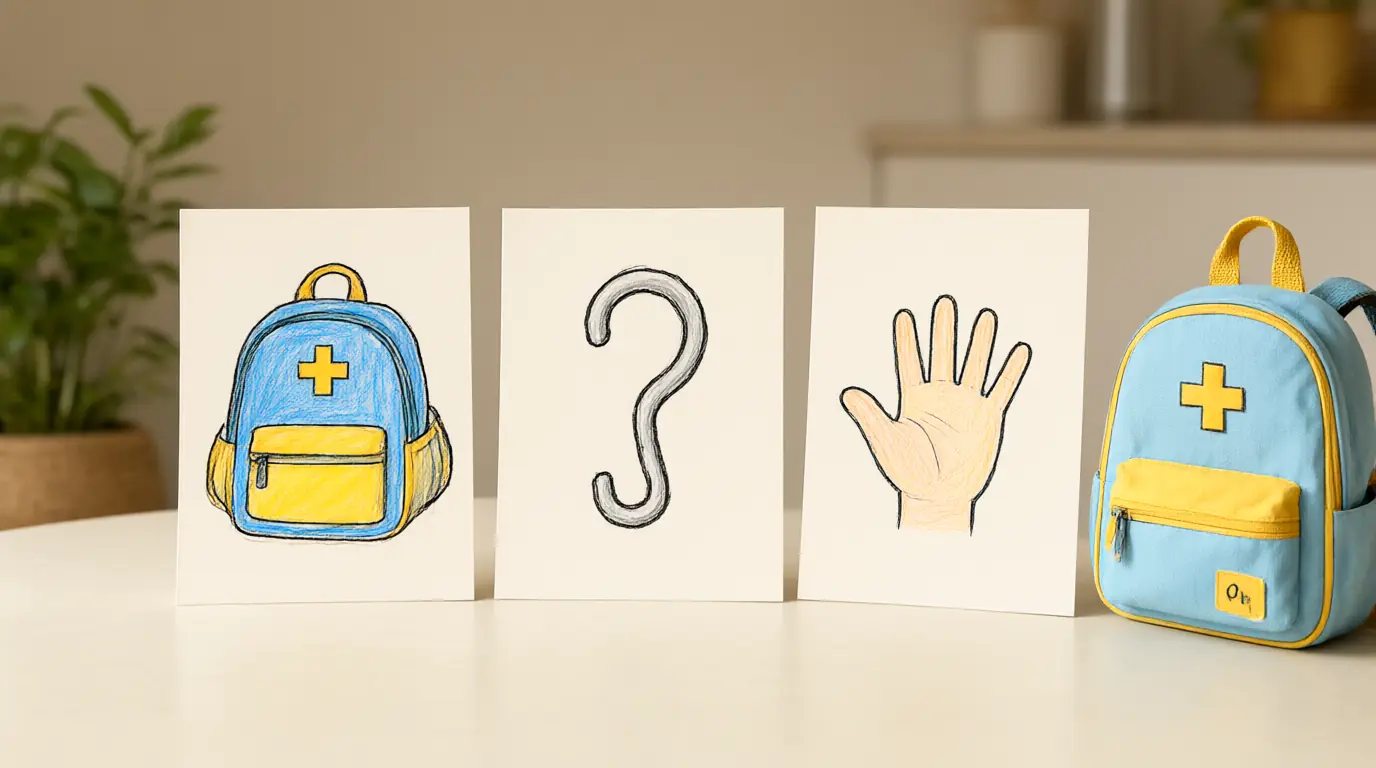
Make it your own: Younger children may need only one picture and one phrase. Older children can plan the morning themselves and tell you which step might be tricky.
Make asking for help familiar
Knowing how to get an adult's attention is one of the most useful school skills. Some children speak, others point, sign or use a card, and any of these is fine. Practising at home in low-stakes moments builds confidence, and telling the school which method works helps adults to notice a request quickly.
You’ll need
- A toy that cannot be opened or put together
- A small picture card showing a hand raised
- A cardboard tube or a tricky container
- A bag to hold the items
How to do it
- Pretend a toy is stuck and say "I need help" out loud.
- Invite your child to choose a way to ask: a word, a wave or the picture card.
- Respond straight away and with a smile.
- Practise asking for different things: a drink, a toilet, a pencil.
- Take turns playing the grown-up so your child can try both roles.
- Tell the school which way your child prefers to ask.
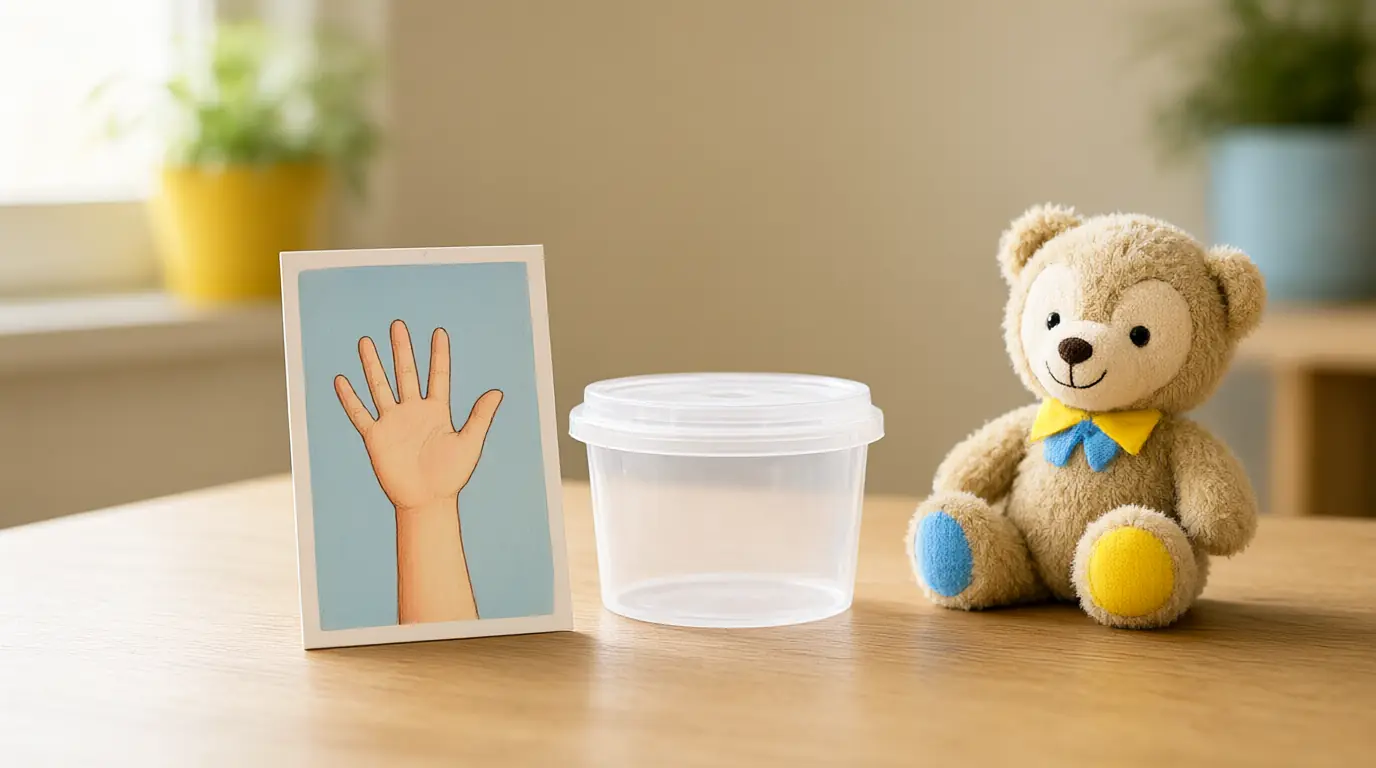
Make it your own: Younger children can practise just one signal. Older children can try asking a stranger-friendly adult, such as a shop assistant, with you nearby.
Look after belongings and personal care
Most schools expect children to manage coats, shoes, toilets and lunch boxes with some help. Practising with the real items shows which fasteners are tricky and which are easy. It is better to tell staff where help is useful than to treat any difficulty as a skill that must be mastered first.
You’ll need
- The coat, shoes and lunch box they will use
- A hook or a low peg
- A small pouch for a spare set of clothes
- A mirror
How to do it
- Try the coat together and note which zip or button is difficult.
- Practise opening the lunch box and drinks bottle without help.
- Rehearse putting shoes on the correct feet with a simple sticker or dot inside each.
- Show how to wash and dry hands and wait for a turn.
- Pack and unpack the bag together while naming each item.
- Choose one fastener to swap for an easier one if possible.
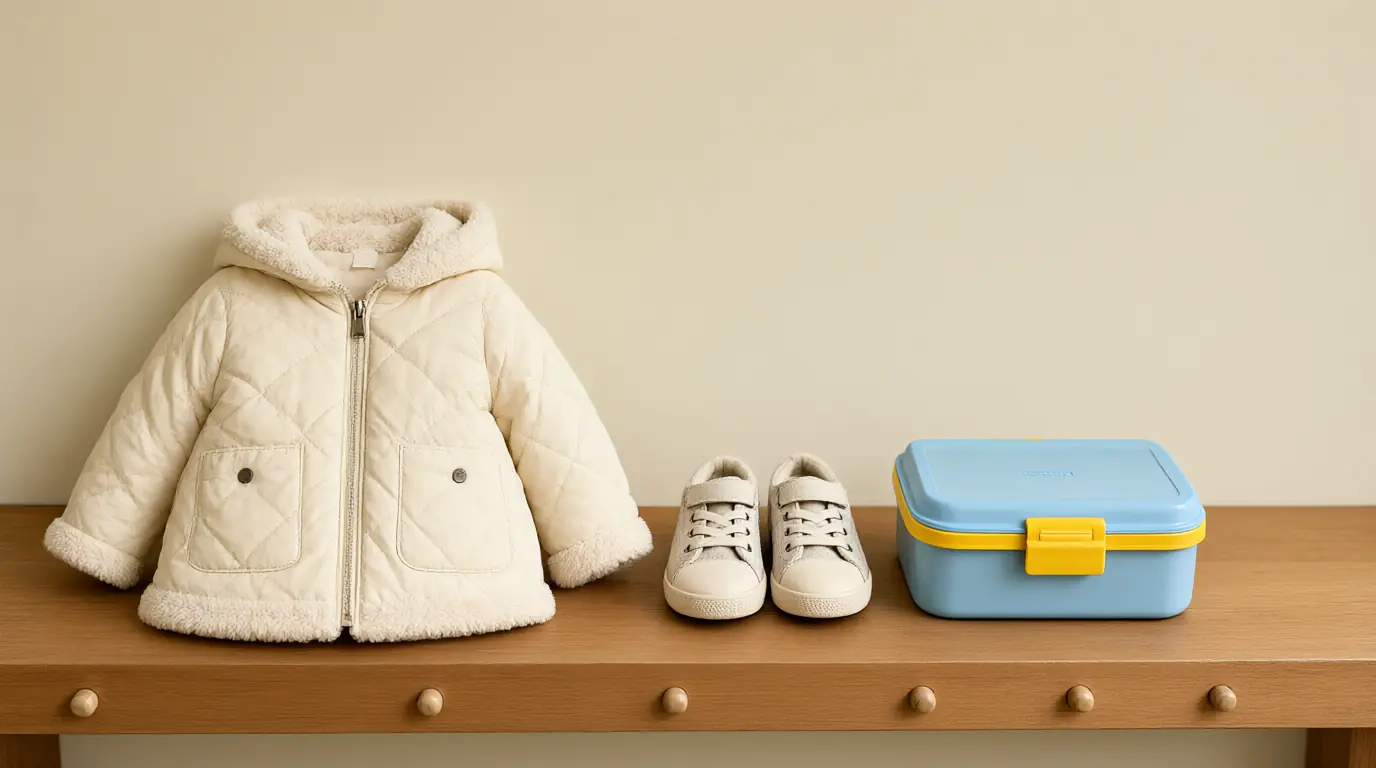
Make it your own: Younger children can practise one item at a time. Older children can pack their own bag and check it against a picture list.
Explore letters, numbers and books with purpose
Early literacy and number sense grow out of real uses: spotting a name on a coat, counting out snack pieces, listening to a story. Schools build on this, and many do not expect fluent reading or writing before entry. Following your child's interest keeps the experience positive and gives you useful things to share with their teacher.
You’ll need
- Familiar picture books
- Paper and chunky crayons
- Name labels or stickers
- A small basket of counters such as buttons
How to do it
- Read a favourite story and ask what the character might do next.
- Spot your child's name on their coat label and bag.
- Make a pretend shopping list with pictures and marks.
- Count snack pieces aloud and share them between two plates.
- Play a rhyming or first-sound game, such as finding things that start like their name.
- Ask the school what they would like children to explore before term.
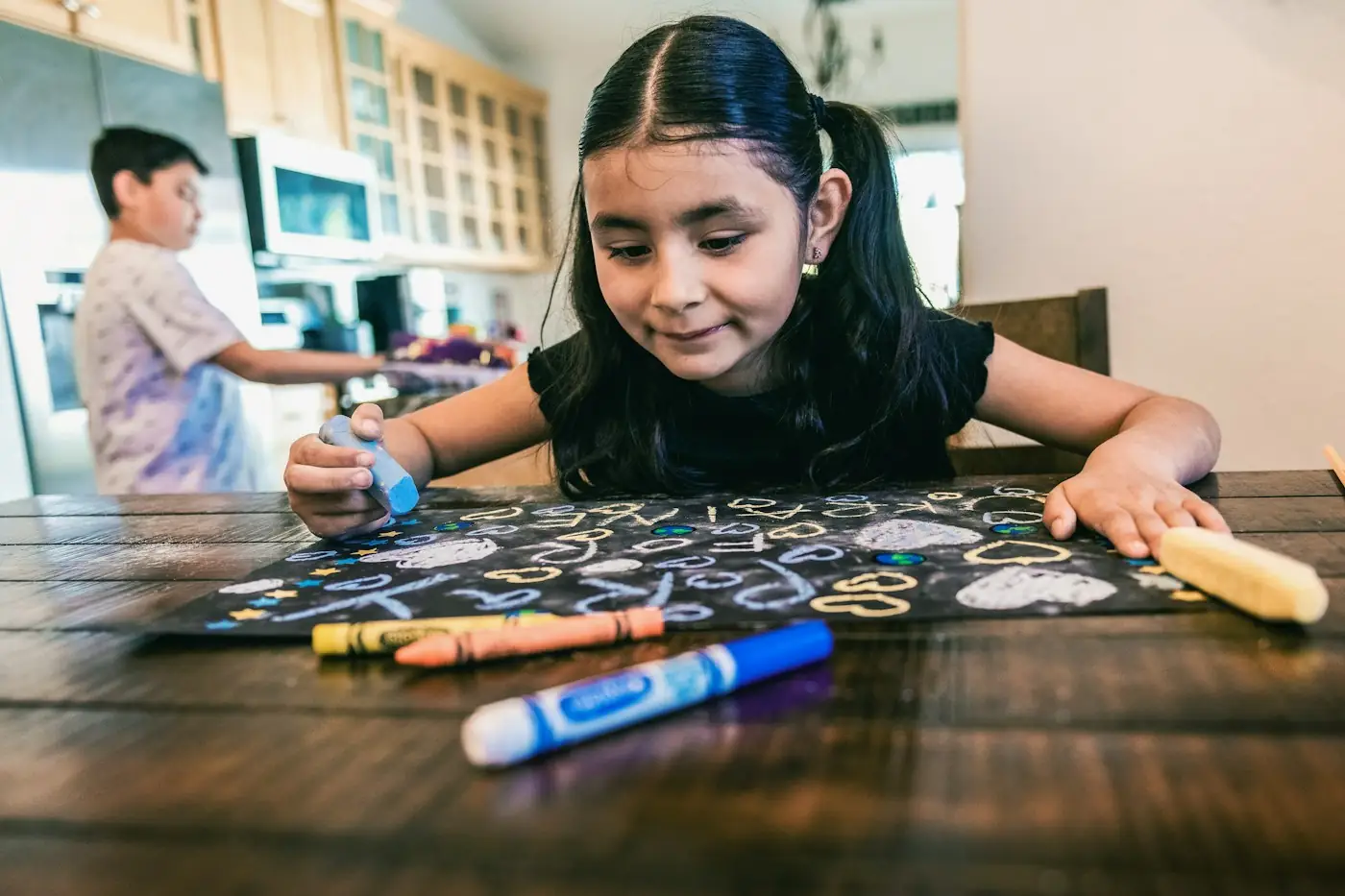
Make it your own: Younger children can focus on stories and names. Older children can try writing their first name or sorting counters by colour. For letter play, see the alphabet games.
Practise being part of a group
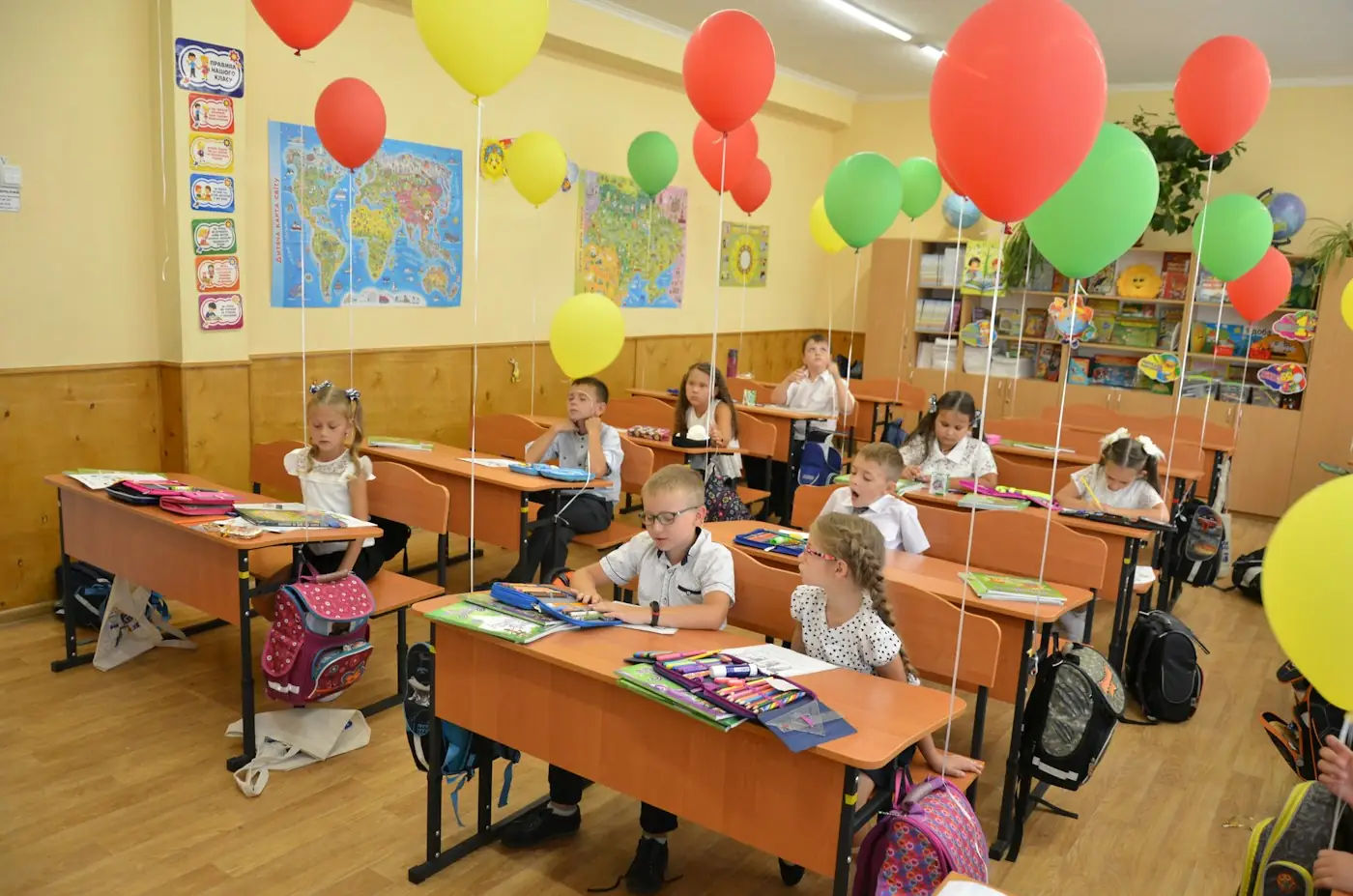
Kindergarten asks children to share adults, take turns, wait and join a game that is already going. These are social skills rather than facts, and they develop through play. Short, playful practice at home or in the park helps a child try phrases like "Can I play?" before the pressure of a new class.
You’ll need
- A simple board game or a set of cards
- A toy that two people share
- A kitchen timer
- A friend or sibling for a short play date
How to do it
- Play a simple game that needs turns and say "My turn, your turn".
- Practise a phrase for joining play, such as "Can I play too?".
- Use a timer to share a toy and agree who goes next.
- Talk about what to do if a game ends or someone says no.
- Meet one future classmate in a park or at a school open day if you can.
- Celebrate effort rather than winning.
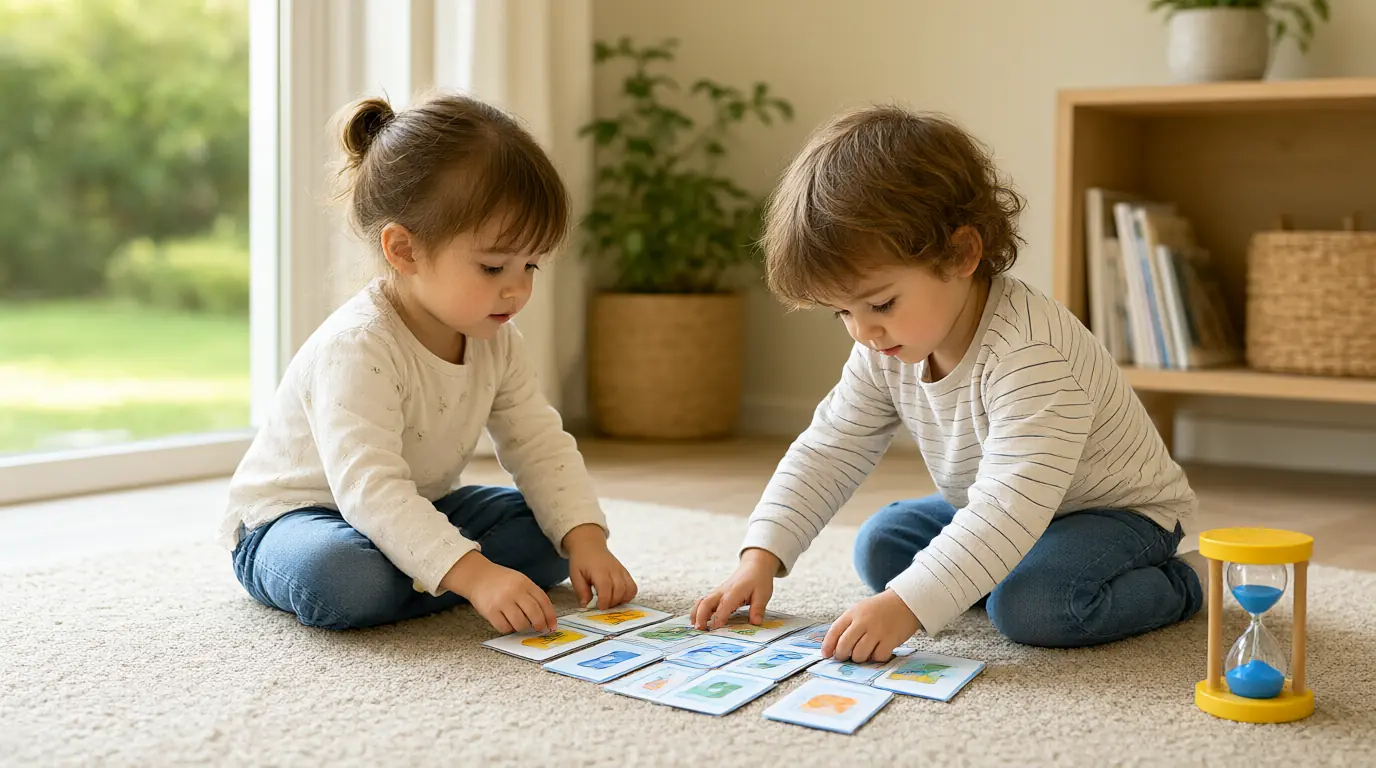
Make it your own: Younger children can practise with one trusted adult. Older children can role-play a classroom problem with a toy and suggest a kind way to solve it.

Make it work for your family
Persistent worries about speech, hearing, vision, movement, behaviour or friendships deserve a conversation with your doctor, health visitor or the school's support team, ideally well before term starts. That conversation is about support, not about a failing; many schools can plan a gentler start, a visual timetable or extra staff time once they know.
Resist the urge to turn the summer into a rehearsal. Children who have slept well, eaten breakfast and are looking forward to a friend usually settle faster than those who have drilled letters. If your child is nervous, talk about one specific thing they are looking forward to and one person they can find if they need help. For literacy, keep reading together and see when children learn to read for a calm picture of how the steps usually unfold.

Parents also ask
Does my child need to read before kindergarten?
Most schools do not expect children to read independently before starting. Enjoying stories, recognising their own name and noticing letters and sounds are useful foundations, but teachers expect a wide range. If you are unsure what your school expects, ask them directly.
What if my child is not toilet trained yet?
Policies differ between schools and countries, so check with the school early. Many will work with parents on a plan, and children with medical or developmental needs often receive extra support. Mention it in a calm, practical way and ask what help is available.
How can I help a nervous child get ready?
Visit the school or look at photographs together, practise the morning routine and name one person your child can find. Talk about specific things they are looking forward to. If the worry is strong or lasts a long time, speak to your doctor, health visitor or the school's support team.
Sources & further reading
Explore these primary sources for further context on this topic.
Choose materials and activities that suit your child, supervise as needed and adapt the ideas to their interests and abilities. About our editorial approach