8 min read


 In this article
A little preparation
Pick a moment when your baby is fed, changed and alert, often shortly after waking. Use a firm, flat, clean surface such as a blanket on the floor, with no pillows or loose bedding nearby. Sit or lie within a forearm's length so your face is easy to see, and keep sessions short: a few minutes is plenty, and many babies prefer a few seconds at a time with rests in between.
Watch for the signals that say "more" (bright eyes, kicking, reaching, a steady gaze) and the ones that say "pause" (looking away, arching, fussing, yawning, hiccups, hands over the face). A pause is not failure; it is your baby managing how much they can take in. Keep anything near their mouth clean and large enough that it cannot be swallowed or choke, stay with them throughout, and never leave a baby alone with play materials. Ask your health visitor or paediatric clinician about positioning, tummy time and any questions about development.

What to know and try
Answer their sounds like a conversation
When your baby coos, gurgles or makes a raspberry, you can treat it as their turn in a conversation. Copying a sound, then waiting, shows them that their voice makes something happen. The pause matters as much as the reply because it gives them space to try again.
 You’ll need
- Your face about 20–30 cm from theirs
- A calm, quiet room
How to do it
- Lie or sit face to face and wait until your baby makes a sound or movement.
- Copy the sound softly, or answer with a short phrase such as "Ooh, you said ah!".
- Stop and wait a few seconds with a friendly face.
- If they make another sound, copy it again; if they look away, stop and just hold them.
- End when they lose interest, with a cuddle and a quiet "All done."
Make it your own: For a newborn, a slow smile and a few soft words may be the whole game. With an older baby who babbles, try adding a new sound next to theirs and see whether they notice the change.
Peekaboo with a soft cloth
Peekaboo works because disappearing and returning is both surprising and safe. A light cloth over your own face lets your baby watch you vanish and return, and the repeated rhythm lets them guess when you will appear. Many babies start by watching, then smile or kick in anticipation.
You’ll need
- A light, clean muslin or cotton square
- A blanket on the floor
- Your own face
How to do it
- Sit facing your baby and hold the cloth in front of your own face.
- Say "Where's Mummy?" (or Daddy, or your own name) in a gentle, rising voice.
- Pull the cloth away slowly and say "Peekaboo!" with a big smile.
- Repeat three or four times, using the same words and timing so the pattern becomes familiar.
- Never cover your baby's face with the cloth; keep it over your own.
Make it your own: Younger babies may like the cloth lowered only halfway. Older babies often love pulling it off you themselves, and later may lift it over a favourite soft toy.
Look at one picture on a sturdy board book
Looking at a single clear picture for a few seconds is a good first book habit. Babies are drawn to faces and strong contrasts, so a book with one simple image per page is plenty. Your voice does the work: naming what is there and pausing so they can look.
You’ll need
- A sturdy board book with big, high-contrast pictures
- A supportive lap or a baby seat suitable for sitting
How to do it
- Hold the book about arm's length from your baby, with the cover or one page facing them.
- Point to one picture and say its name once: "Dog."
- Pause and watch where their eyes go, and whether they reach.
- If they look at your face instead of the page, that is fine; say something about their expression.
- Close the book when attention fades without finishing it.
Make it your own: Mouthing the book is normal, so choose a book with no small parts that can come away and wipe it clean afterwards. A little later, give them a board book of their own and just watch what they do with it. For more reading habits, see how to encourage reading in kids.
A reaching and rolling invitation
Placing something interesting just within reach encourages a baby to use the movements they already have. The aim is not to push a new skill; it is to give them a reason to stretch, grasp or look, in a position where they are comfortable. Stay beside them throughout.
You’ll need
- A clean, firm play mat or blanket
- One large, soft, washable toy or a rattle suited to their age
- A rolled-up towel for support if your clinician has suggested it
How to do it
- Lay your baby in a position they already use and enjoy, such as on their back or supported on their tummy while awake.
- Place one toy a short distance from their hands, where they can see it.
- Wait and watch rather than moving it for them.
- If they reach, bat or grasp, say what you see: "You got it!".
- Take the toy away when they lose interest or get tired, and finish with a cuddle.
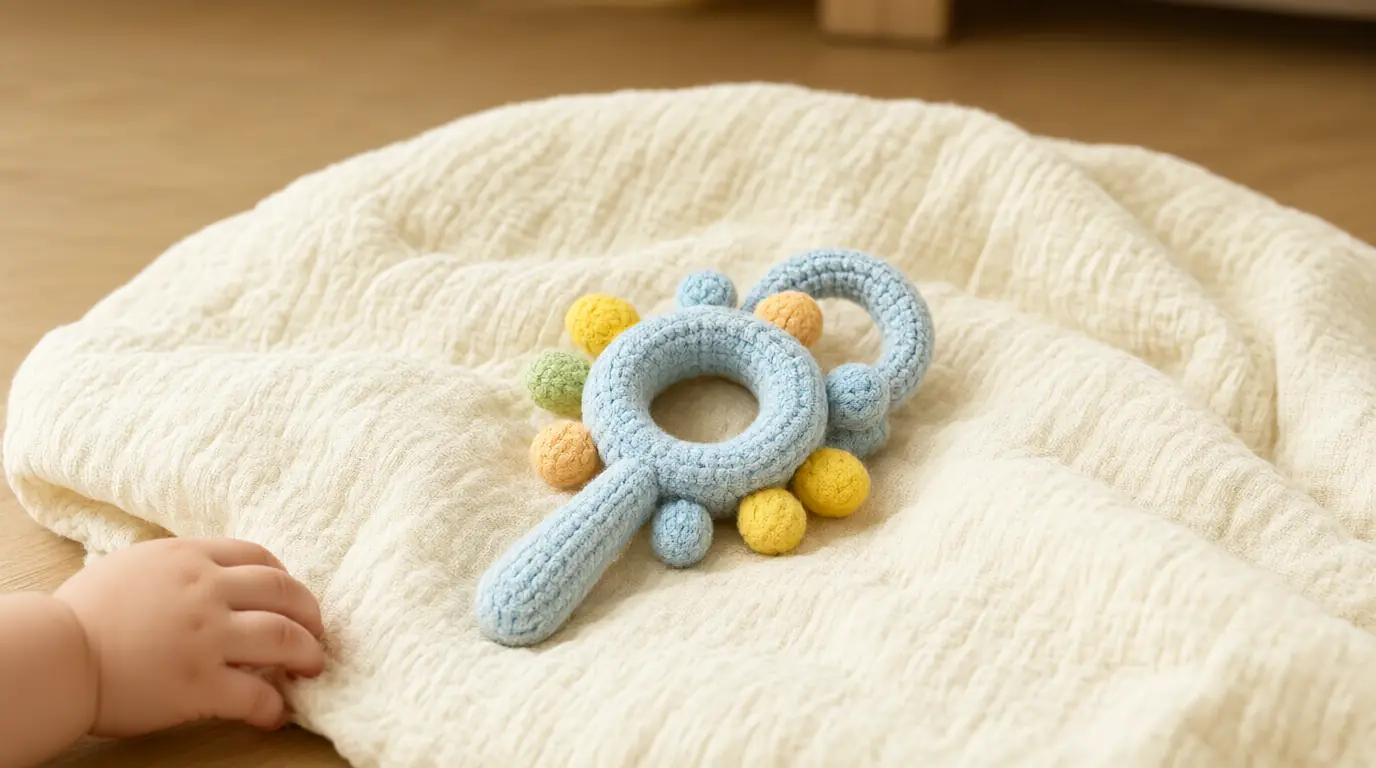
Make it your own: If your baby is not yet reaching, simply shake the toy slowly in their line of sight and let them track it. With a more active baby, vary the distance slightly, but never pull them into a posture they have not reached on their own. Ask your clinician about tummy time if you are unsure.
A rhyme for every care routine
Nappy changes, dressing and bath time happen several times a day, so they make a natural place to repeat a short rhyme. Using the same words each time helps your baby recognise the sequence, and the predictable pause gives them a chance to respond. It turns a chore into shared time without adding anything to your day.
You’ll need
- A short rhyme or a few words of your own
- A routine you already do every day
How to do it
- Choose one routine and one short line, for example "One sock, two socks, up we go".
- Say or sing it in the same rhythm each time, slowly and gently.
- Leave a pause before the last word and wait for a look, a sound or a kick.
- Finish the line with a smile and a small touch, such as tapping their foot lightly.
- Keep it up for a week or two, and notice any change in how your baby watches you.
Make it your own: If your baby is sensitive to touch or sound, keep your voice quiet and skip the touch. When they are a little older, try a new verse that includes their own name. For more singing ideas, see music games for kids.

Make it work for your family
If your baby cries as soon as you start, the problem is usually timing, not the activity. Try again after a feed or a nap, lower the light, turn off background noise and use fewer words. Some babies prefer to be held while they watch, and that counts as play. If you feel awkward talking to someone who cannot answer, narrate what you are doing in short sentences: "Now your sock. Now the other sock." That is enough.
Talk to a qualified professional if you are worried about how your baby sees, hears, moves or responds to you; no list of games can replace that conversation. As children grow, the same back-and-forth shapes later play: take a look at these screen-free ideas for one-year-olds and, a little later, indoor toddler play for small spaces. Weebou's app is for ages 2–6+; for babies, the best learning tool is you.

Parents also ask
How long should I play with my baby at a time?
Short bursts of a few minutes are enough, and many young babies manage only seconds before they need a rest. Follow their cues: bright eyes and reaching mean more, while looking away, fussing or yawning mean it is time to pause or stop.
Do I need special toys to play with a newborn?
No. Your face, voice and gentle touch are the best toys for a newborn. A few simple, safe items such as a soft cloth or a sturdy board book are plenty. Make sure anything within reach is clean and too big to swallow.
What if my baby does not seem interested in play?
Babies have quiet and busy times of day, so try again when they are fed, rested and calm. Short, gentle interaction counts even when they only watch. If you are concerned about how they respond or move, speak to your health visitor or paediatrician.
Sources & further reading
Explore these primary sources for further context on this topic.
Choose materials and activities that suit your child, supervise as needed and adapt the ideas to their interests and abilities. About our editorial approach