8 min read

 In this article
A little preparation
Walk through the room at toddler height before you start. Look for wobbly furniture, trailing cords, small parts that can be swallowed and sharp table corners, and move anything risky out of reach. Clear one patch of floor about the size of a bath mat; a small, tidy space helps a toddler focus better than a crowded one. Offer just one invitation at a time, and put the rest of the toys away where they cannot be seen.
Sit on the floor so your face is at your toddler’s level, and let them decide how long to play. Most toddlers stay with one game for only a few minutes, and many want to repeat the same action twenty times; both are normal. Use large, washable objects that are too big to fit through a toilet-roll tube, and stay within arm’s reach during all of these games, especially when cloths, cords or anything that could cover a face is involved. Naming what is happening in short sentences (‘in the basket’, ‘bump, bump, bump’) gives your toddler language without turning play into a lesson.

What to know and try
Open a soft-toy delivery service
Carrying objects from one place to another is something many toddlers do for the sheer joy of it, and a delivery game gives that urge a story. Your toddler practises walking while holding something, bending to put it down and understanding words such as ‘in’, ‘out’ and ‘there’. The game also stretches naturally, because each delivery can go somewhere new.
 You’ll need
- 2 low baskets or open boxes
- 3 or 4 large soft toys
- A small cloth to act as a ‘blanket’ for each passenger
How to do it
- Put the soft toys in one basket and place the empty basket across the room.
- Say, ‘Teddy needs a ride to the sofa’ and hand your toddler the first passenger.
- Walk beside them as they carry it to the other basket, naming the journey.
- Let them tuck the toy in with its cloth, then deliver the next one.
- When all the passengers have arrived, ask if they want to bring them back again.
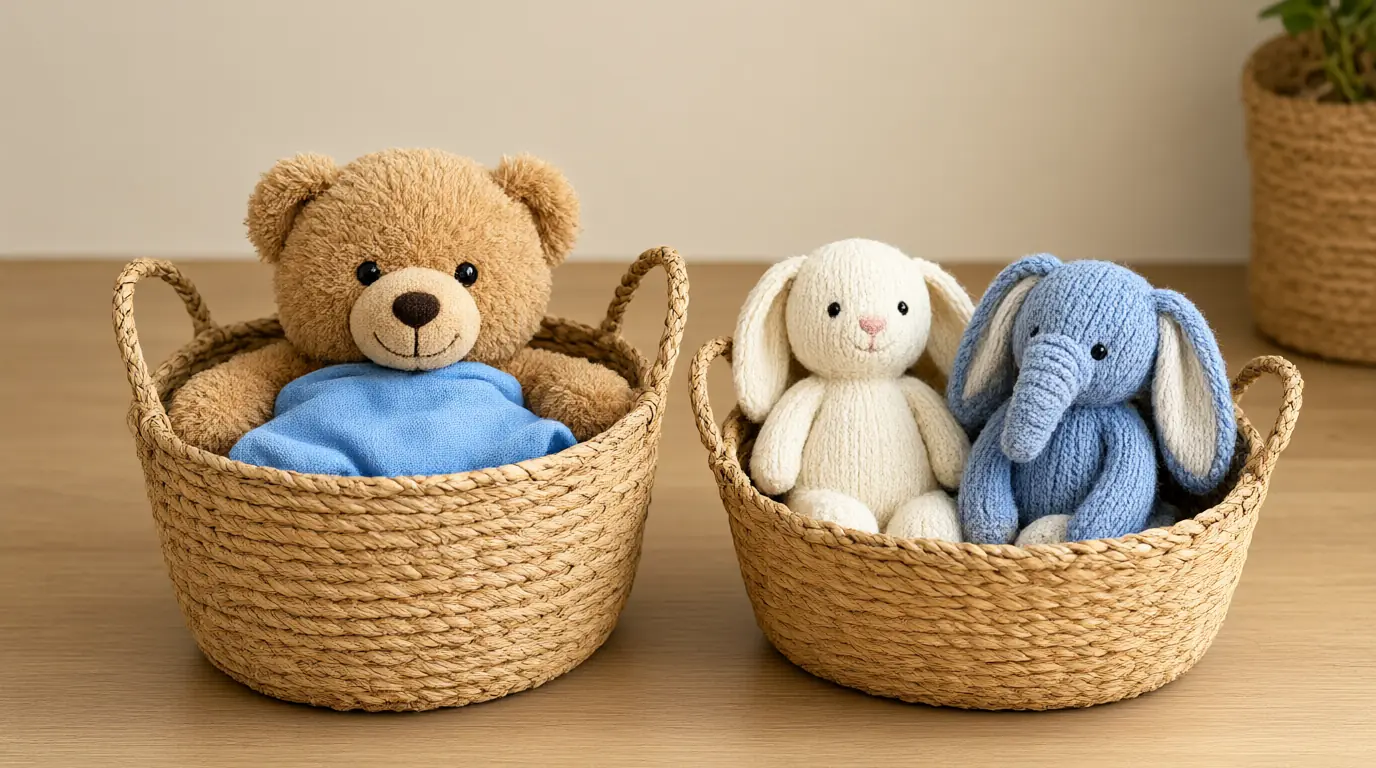
Make it your own: Start with one toy and a basket close by for a younger toddler. For an older child, add a second destination, such as the chair, and ask them to choose where each toy goes.
Play cloth peekaboo with objects
Toddlers are learning that things still exist when they can’t see them, and a partly hidden toy is a gentle way to practise. Because the child does the uncovering, it feels like magic that they control. The game also builds anticipation, which supports waiting, turn-taking and early conversation.
You’ll need
- 1 light, breathable cloth or muslin square
- A familiar toy, such as a stuffed duck
- A shoebox with a hole cut in the lid, edges smoothed by an adult
How to do it
- Show your toddler the toy and let them hold it for a moment.
- Place it on the floor and cover about half with the cloth, leaving a corner or tail sticking out.
- Ask, ‘Where did the duck go?’ and wait for your toddler to touch or pull the cloth.
- Cheer when it appears, then let your toddler hide it for you.
- Once the game is familiar, cover the whole toy and gradually add a second cloth.
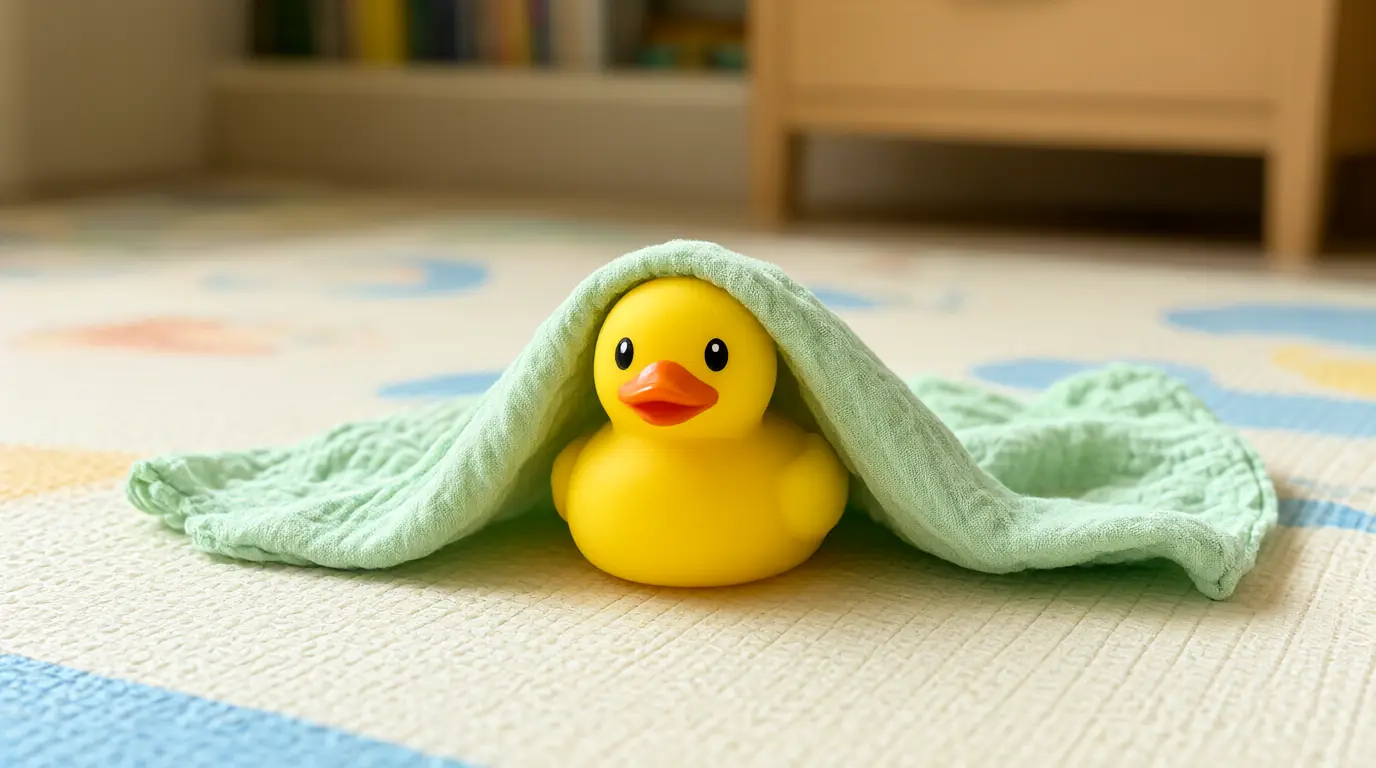
Make it your own: Keep part of the object visible for younger toddlers. For older ones, hide the toy under one of two cloths and ask them to choose which to lift. Keep cloths away from faces and never leave them alone with one.
Build a low block neighbourhood
Large blocks give toddlers a first taste of building: stacking, knocking down and arranging. A small toy animal turns the pile into a place with a story. A low design means a toppled tower is not a disappointment, since every collapse is another chance to rebuild.
You’ll need
- 6 to 10 large wooden or foam blocks
- 1 or 2 toy animals or figures
- A rug or play mat
How to do it
- Lay the blocks on the mat and let your toddler explore them first.
- Build a short wall or two blocks side by side and ask, ‘Where could the pig live?’.
- Place the animal inside the walls and describe what you see: ‘The pig is in the house.’
- Make a path with blocks lying flat, and walk the animal along it.
- Let your toddler knock everything down and start again, laughing along.
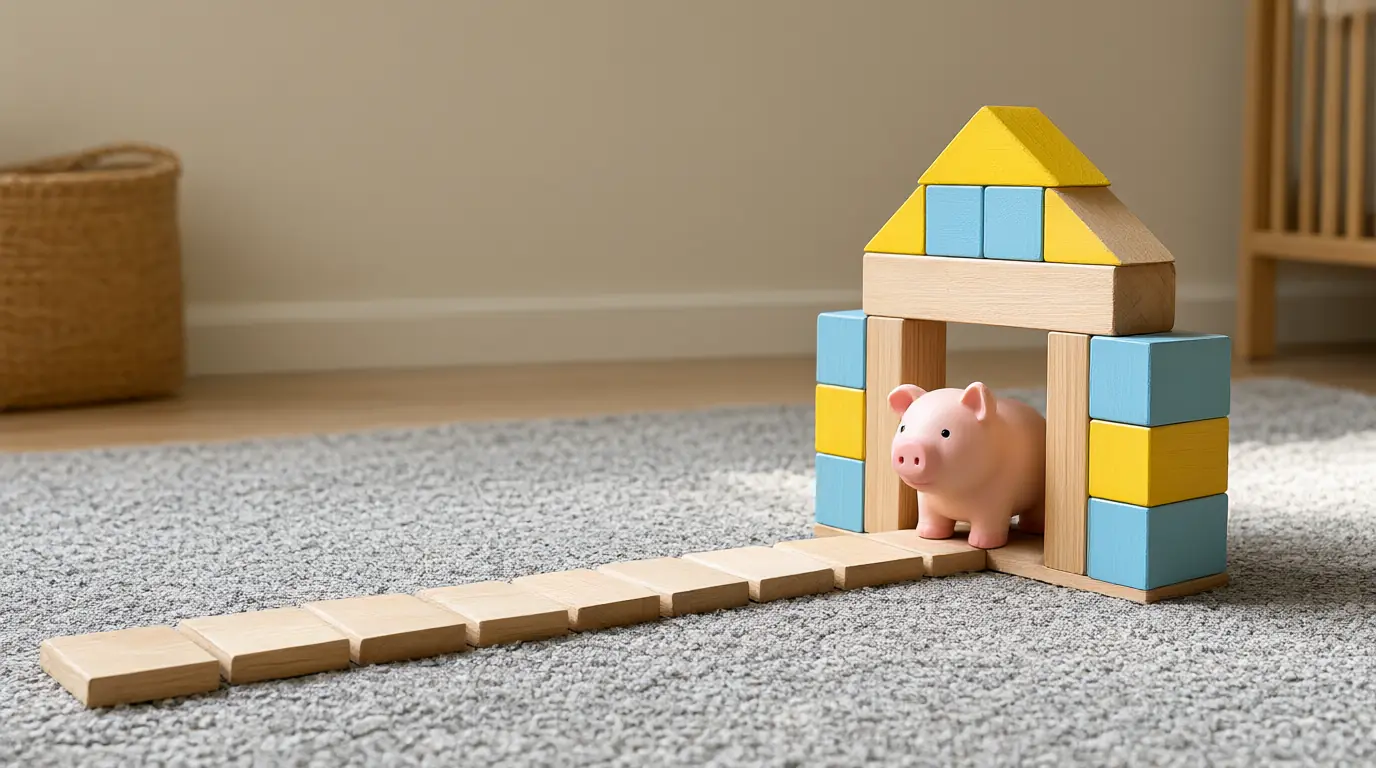
Make it your own: For the youngest children, simply stack two blocks and let them add the next. Older toddlers might copy a simple arrangement or build a gate for a second animal.
Make a soft cushion path
Climbing over, crawling under and stepping along a low path builds whole-body strength and balance, and it uses things you already own. The path turns a living room into an adventure without needing any equipment, and it uses up energy on days when you can’t get outside.
You’ll need
- 3 to 5 sofa cushions or floor pillows
- A folded blanket
- A soft toy waiting at the end
How to do it
- Lay the cushions in a line on the floor, close together and flat, with the blanket on top of one of them.
- Check that nothing hard is under or beside the path and that cushions can’t slide away.
- Show your toddler how to crawl or step along it, calling ‘Over the mountain!’.
- Hold their hand or stay at their side while they try it their own way.
- Place the soft toy at the end as a reward and give it a big greeting when they arrive.
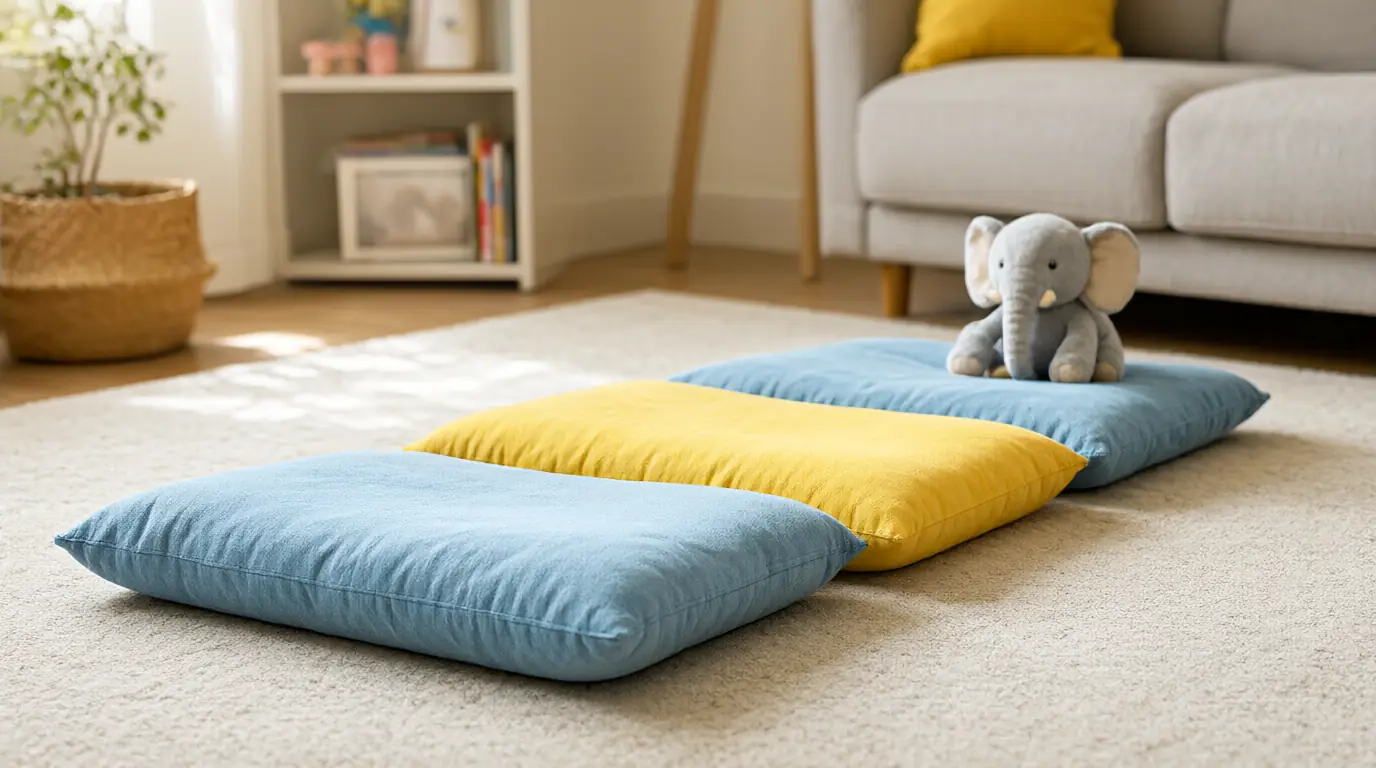
Make it your own: Younger toddlers can crawl over a single cushion. For more confident walkers, add a gap to step across or a cushion to crawl under a low blanket, always with you beside them.
Start a saucepan band
Banging and tapping let toddlers discover cause and effect: hit it, it makes a sound. A kitchen band gives that urge a safe outlet and a bit of structure. Listening for loud and quiet, fast and slow, helps children tune in to rhythm and attend to what you do.
You’ll need
- 1 or 2 saucepans or plastic bowls, turned upside down
- 2 wooden spoons
- A rice cake tin or plastic tub with a lid for a quieter drum
How to do it
- Place the pans upside down on a mat and hand your toddler a spoon.
- Tap one pan slowly and say ‘tap, tap, tap’, then wait for them to try.
- Take turns: you play three taps, they play however many they like.
- Try a quiet drum on the tub lid, then a loud drum on the pan, and say the words ‘quiet’ and ‘loud’.
- Finish with a big, final bang and a bow, then put the instruments in a basket.
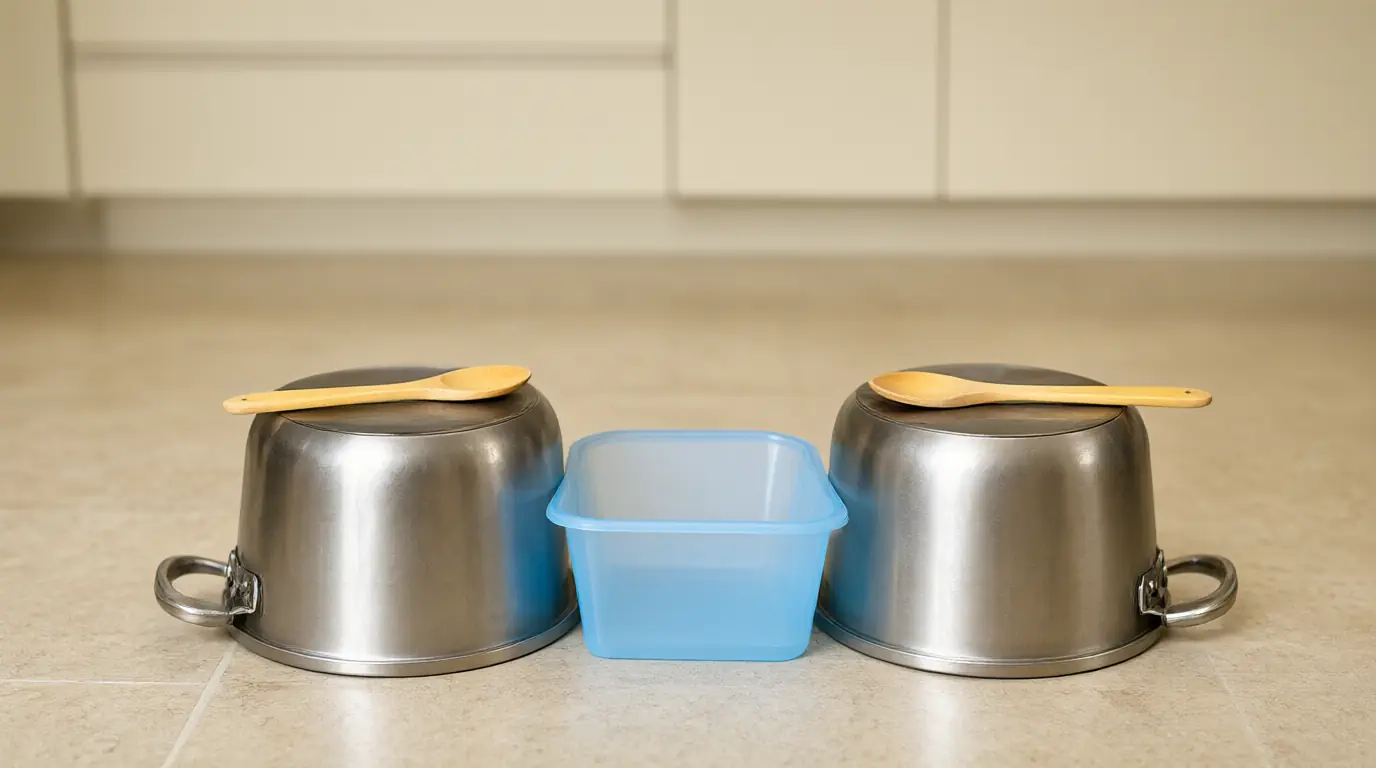
Make it your own: Offer a soft mallet or a wooden spoon with a thick handle for small hands. Older toddlers can copy a short pattern, such as two taps then a pause, or lead the band while you follow.

Make it work for your family
If a game falls flat, change one thing instead of explaining it more. Make the objects bigger, move to a different corner, or let your toddler take over and give you the instructions. Walking away from an idea for a day and coming back to it often works better than persisting; toddlers can suddenly discover a game they ignored last week.
Indoor days also go better with a rhythm: something active, then something calm, then a snack. After a cushion path or a band, try a short book or a few minutes with a soft toy. When you want to build the habit of tidying away, make it a game too: ‘Which basket does the block live in?’. For more ideas that don’t involve a device, see these rainy-day games for kids and the screen-free play ideas for one-year-olds.

Parents also ask
How long should an indoor activity last for a toddler?
Most toddlers focus on one activity for only a few minutes, then move on, and that is normal. Follow your child’s interest rather than a timer. Many will return to a game several times in a day, so keep it available instead of insisting that they finish.
What can I do with a toddler when I only have five minutes?
Choose a game with almost no set-up: a delivery run with a basket, a peekaboo with a muslin cloth or a quick saucepan tap. Sit down beside them, give your full attention for those five minutes, and finish with a clear signal such as a song or a cuddle.
Which household items are unsafe for toddler play?
Avoid anything small enough to swallow, items with long cords, plastic bags, button batteries and anything sharp or breakable. If an object fits inside a toilet-roll tube, it is too small for a child who still mouths things. Check labels and stay within reach.
Sources & further reading
Explore these primary sources for further context on this topic.
Choose materials and activities that suit your child, supervise as needed and adapt the ideas to their interests and abilities. About our editorial approach