Weebou Editorial Team
 7 min read
 In this article
A little preparation
Choose a room where noise is fine and the floor is clear. Check instruments and homemade shakers for loose parts, and use only ones made for children or with lids that are firmly taped shut. Agree a stop signal, such as raising your hand, before you start, and keep the volume at a level where you can talk to each other.
Some children love noise while others find it overwhelming, so offer choices: soft taps instead of drums, scarves or silent movement instead of singing. Try each game for five to ten minutes and stop while it is still fun. If a child would rather listen than join in, that is a real way to take part. Songs you know well, such as a favourite nursery rhyme, are easier to move to than new ones, so start with something familiar and add new music later.

Ideas to try together
Sound postcards
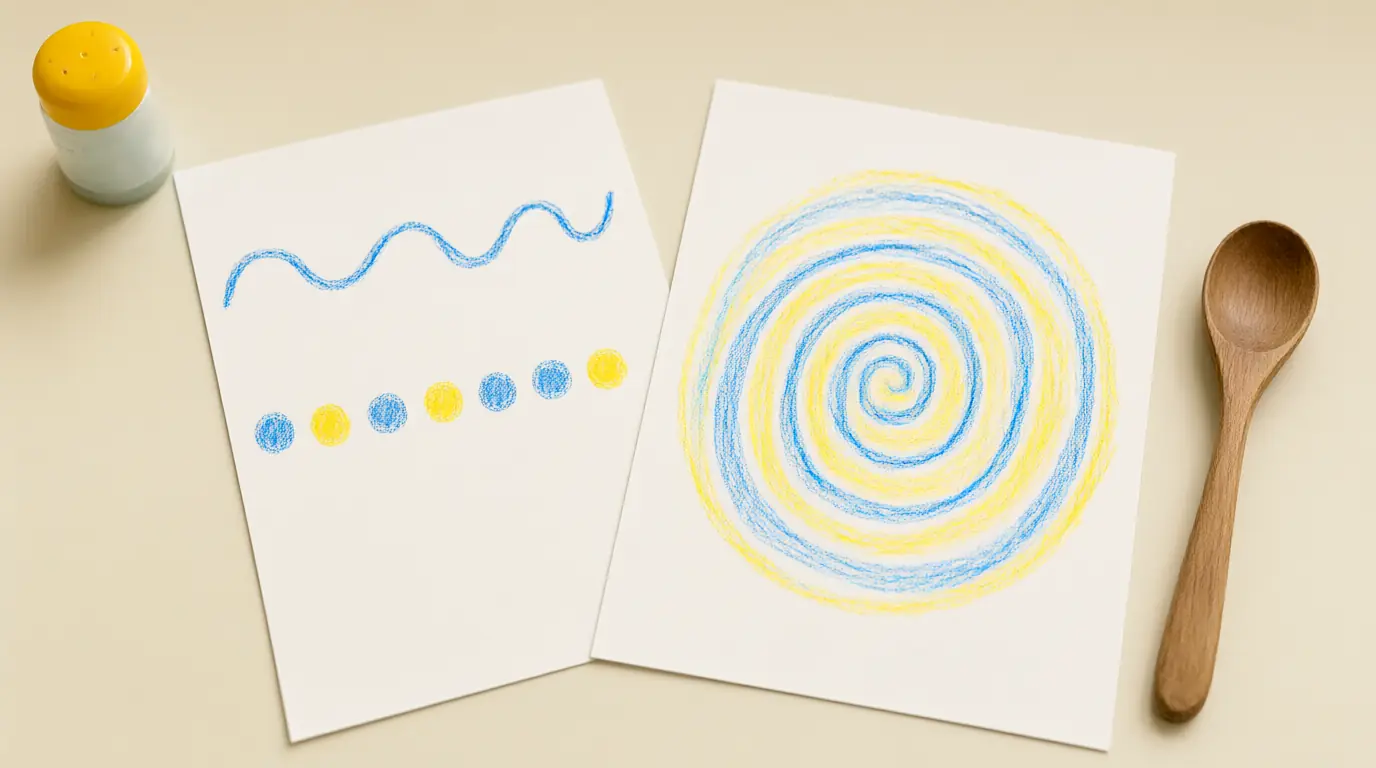
A sound postcard captures a short sound and turns it into a drawing. It helps children listen carefully, describe what they hear and notice that two people can hear the same sound differently. There is no correct picture, only an honest response to the sound.
 You’ll need
- A shaker or a spoon and a pan
- A few sheets of paper
- Crayons
- A soft cloth for muffling
How to do it
- Play one short sound and let it fade away completely.
- Ask your child to describe it with a word such as bumpy, long or sparkly.
- Draw a line or a shape that looks like the sound.
- Play it again, softer, and draw a second picture.
- Compare the two and say how they differ.
- Hide the postcards and play the sound, asking which one it matches.
Make it your own: Younger children can play the sound and just pat the paper. Older children can draw a three-sound sequence and perform it for someone else.
Rhythm reply
This is a call-and-response game: one person taps a short pattern and the other answers. It trains listening and memory, and it teaches turn-taking, because the leader has to wait. The reply can be an exact copy or a new idea, which keeps the game open to different levels.
You’ll need
- Your hands and your lap
- A wooden spoon and a pan (optional)
- A soft cushion
How to do it
- Sit facing each other and tap two slow beats on your lap.
- Leave a pause and let your child tap two beats back.
- Make the pattern three taps, then add a quick pair.
- Let your child lead and answer them yourself.
- Try changing one tap in the reply and see if they notice.
- End with a long, soft finish together.
Make it your own: Younger children can copy a single tap. Older children can use two different sounds, such as lap and floor, and invent a pattern for you to copy.
Freeze and flow
Move when the music plays and stop when it stops. This classic game gives children a chance to listen for a signal, control their bodies and show how the music feels. Using scarves or ribbons lets them move softly instead of stamping, and works well with calm music as well as lively tunes.
You’ll need
- A music player with two contrasting songs
- 2 light scarves
- A clear floor space
- A cushion as a resting place
How to do it
- Play a slow piece and invite your child to float a scarf.
- Stop the music and freeze like a statue.
- Play a fast piece and let them choose a different movement.
- Stop it again and ask how the movement changed.
- Swap, with your child controlling the music and you moving.
- Finish with some slow breathing on the cushion.
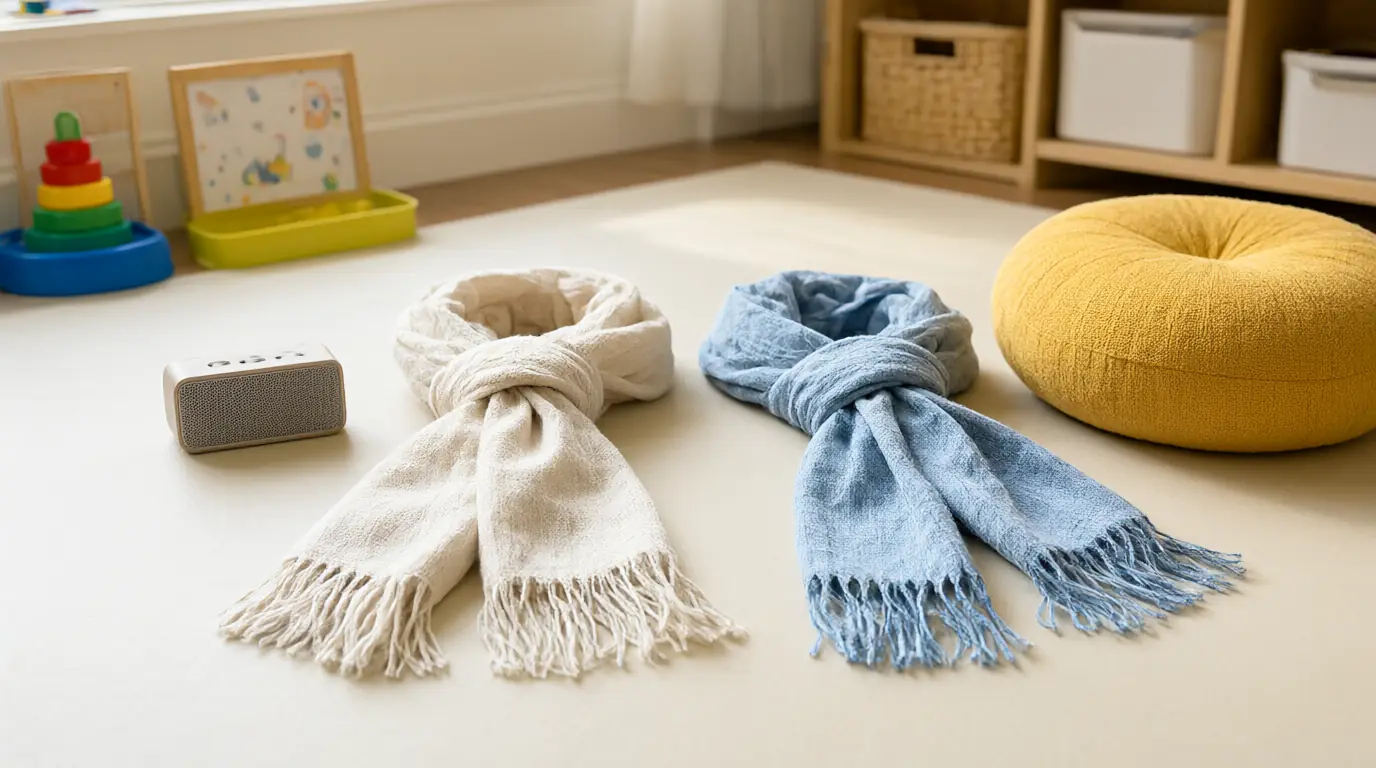
Make it your own: For younger children, use one song and a long pause. Older children can respond to three tempos: slow, medium and fast.
Kitchen band
A pot, a wooden spoon and a plastic tub are enough for a drum, and children quickly discover that different materials make different sounds. Playing together as a band lets them practise listening to each other and keeping to a steady beat, with a conductor to start and stop the music.
You’ll need
- A wooden spoon and an upturned pan
- A plastic tub with a lid
- A small rice shaker with taped lid
- A towel to muffle the sound
How to do it
- Let your child tap each object and listen to its sound.
- Sort the sounds into loud, soft, high and low.
- Choose one object each and play a slow steady beat together.
- Stop when the conductor raises a hand and start when it lowers.
- Swap instruments and play a faster beat.
- Take a bow and put all the instruments back in the kitchen.
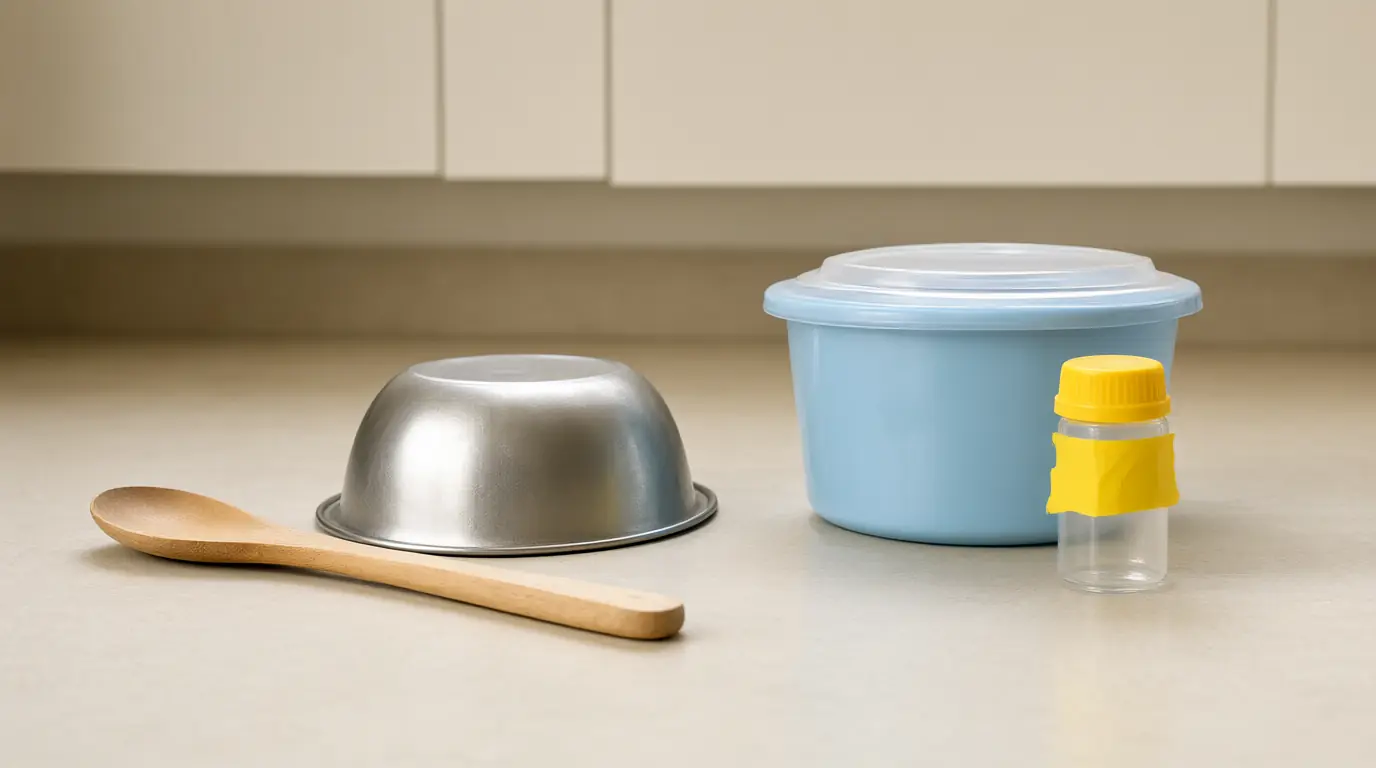
Make it your own: Younger children can play freely while you copy them. Older children can take turns as conductor, choosing who plays and when, and invent a short song.
A story with a soundtrack
Telling a short story and adding sounds to it connects music with imagination. Children decide which sound fits each event, which means deciding what a sound feels like, and they practise listening for cues. It also works for quiet, thoughtful children who prefer to create rather than perform.
You’ll need
- A short story you make up
- 3 or 4 simple sound makers
- A blanket to sit on
- Paper strips to mark each sound
How to do it
- Tell a short story about a walk, with three or four events.
- Pause at each event and ask which sound fits.
- Draw a small picture on a paper strip for each sound.
- Lay the strips in order on the blanket.
- Tell the story again while your child plays the sounds.
- Swap, so you play and your child tells the story.
Make it your own: Younger children can add one sound to a familiar story. Older children can make up a longer story with different moods and mark pauses on the strips.

Make it work for your family
Repeat a game a few times before you add anything new. Children often need several goes before they feel confident enough to improvise. When your child makes up a pattern, copy it back exactly before you change it, so they can see that their idea matters. Do not worry about getting the beat perfect: steadiness comes with practice and with lots of listening. A short routine helps: begin with a familiar song, play one game, then finish with a minute of quiet listening to the room. Children who finish a session calmly are usually keen to return to the instruments next time, and the quiet minute also teaches that silence is part of music.
For more rhythm play, try these clapping patterns or explore singing games for kids that let your child take turns with songs.

Parents also ask
What are good music games for toddlers?
Toddlers enjoy simple actions: tapping a spoon on a pan, shaking a taped-up shaker, moving to a favourite song or freezing when the music stops. Keep each game short, repeat favourites and let them join in at their own pace.
How do I teach a child a steady beat?
Tap a slow, regular pattern on your lap or a drum while a familiar song plays, and invite your child to copy. Walking or marching to the beat also helps. Steadiness develops with lots of listening and repetition, so keep it playful.
Do I need real instruments for music games?
No. Spoons, pans, plastic tubs and shakers with taped lids make good instruments. Check homemade ones for loose parts and keep the volume comfortable. Real child-sized instruments are a nice extra, but not a requirement.
Choose materials and activities that suit your child, supervise as needed and adapt the ideas to their interests and abilities. About our editorial approach