Weebou Editorial Team
 7 min read
 In this article
A little preparation
Choose a clear space where everyone can see one another, such as a rug or a circle of cushions. Start with a warm-up round with an adult: you say a sentence of a story, then pass it on with a nod. Show that anyone may pass, ask for help or change a scary idea into a funny one. Keep the group small, between two and six children, and give each game three to five minutes.
The golden rule is 'yes, and': whatever someone says, the next person accepts it and adds something. Explain it with a quick example, such as 'The dog wore a hat' and 'Yes, and the hat was full of buttons'. If a child offers an idea that does not fit, treat it as a twist rather than a mistake. For more role-play ideas, see acting games that explore characters and dress-up games that let children invent the character.

Ideas to try together
The helpful object
An ordinary object gets a surprising new job, and the group invents a situation where it is useful. This trains flexible thinking, since a spoon can be a telescope or a sock puppet can be a mayor. It is easy to join, because the object gives everyone something to hold and look at.
You’ll need
- A bag of four or five household objects such as a spoon, a sock, a cardboard tube and a tea towel
- A cushion circle
- A small bell (optional)
How to do it
- Pull one object from the bag and show it to the group.
- Say what it is not, for example 'This is not a spoon, it is a finder of lost socks'.
- Ask the next person to say how the object helps in a situation: 'It finds a sock under the sofa'.
- Each player adds a new problem or a new use, and the object is passed around.
- Ring the bell when the object has been used three times and pick another from the bag.
- At the end, ask which use was the most surprising.
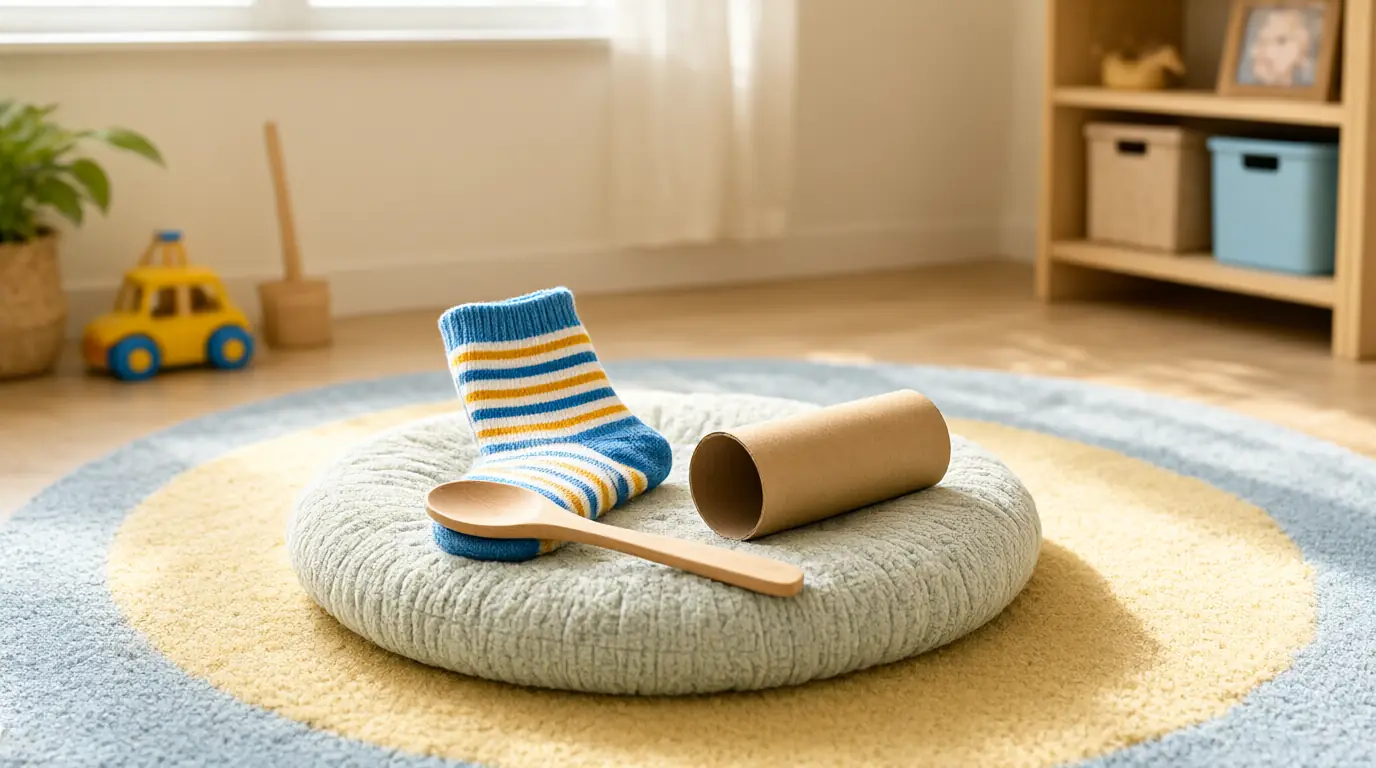
Make it your own: Younger children can mime the object's use without words. Older children can give the object a name and a personality and speak as that object.
One place, three sounds
Building a scene from sounds and movements means children do not have to speak, which suits quiet players. The group listens closely to each other and adds layers, a bit like a tiny soundtrack. It also shows how many different ideas can belong to one place.
You’ll need
- A picture of a setting such as a garden, a harbour or a farm
- Clapping hands and voices
- Soft instruments such as shakers (optional)
How to do it
- Show the picture and ask what sounds you might hear in that place.
- Choose one person to start a sound, such as rain pattering with fingers on the floor.
- Invite the next person to add a second sound that fits, for example a frog croak.
- Add a third sound, then let the group keep all three going quietly for ten seconds.
- Ask one child to be the conductor and make the scene louder, softer or stop.
- Choose a new place and begin again.
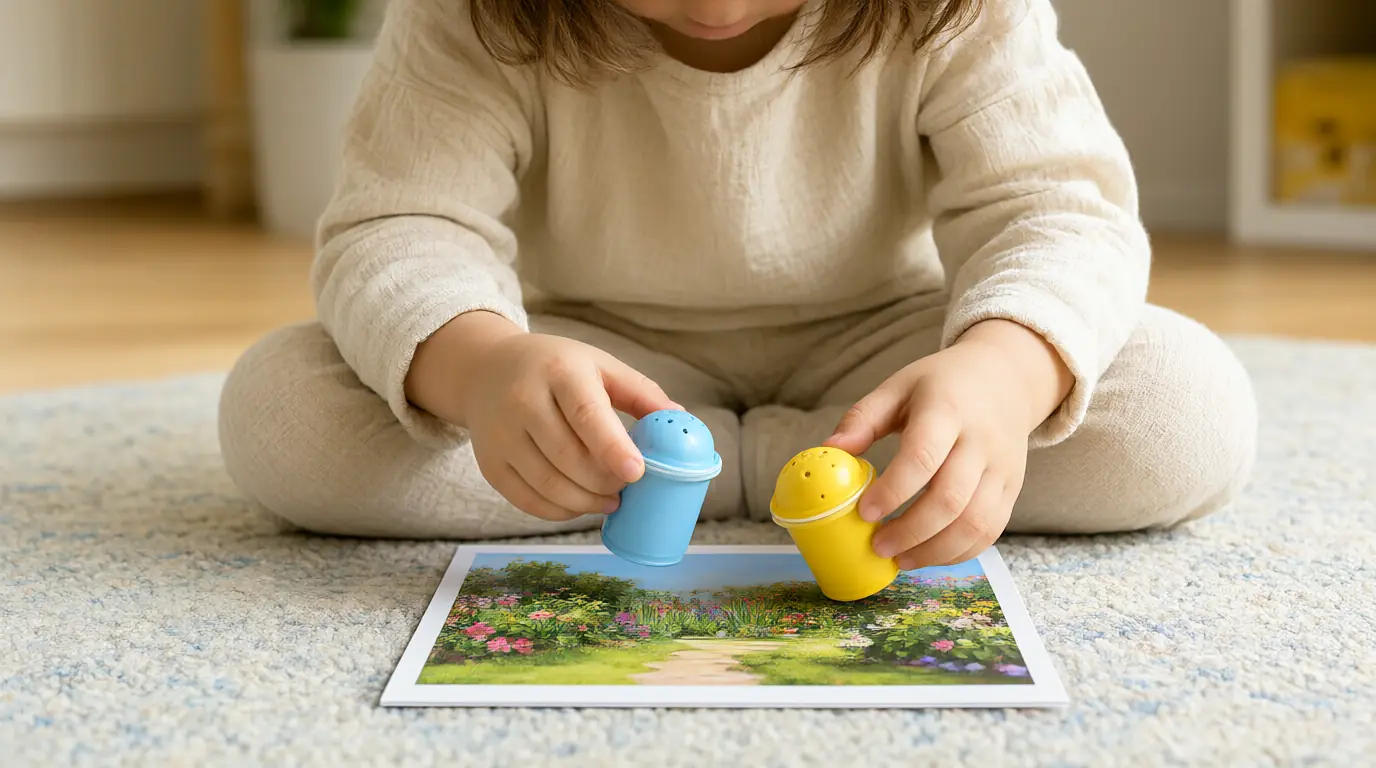
Make it your own: Younger children can copy a sound rather than invent one. Older children can add a short action or a character who enters the scene and reacts to the sounds.
Yes, and a picture
A chain of picture cards gives each player a visual prompt, which is less daunting than a blank 'make something up'. Children must listen to what came before and include it in their next sentence. This builds story sense and gives them practice in building on someone else's idea.
You’ll need
- Ten to twelve picture cards, such as a boat, a cat, a key and a cloud
- A basket
- A cushion to sit on
How to do it
- Turn the cards face down in the basket and pick the first card without looking.
- Start the story with one sentence using that picture: 'One day a cat found a key'.
- The next player takes a card and adds a sentence with that picture and something from before.
- Continue around the circle, with each player allowed to pass the card to someone else.
- After six cards, ask the group to decide how to end the story.
- Retell the story in a shorter version, pointing to the cards in order.
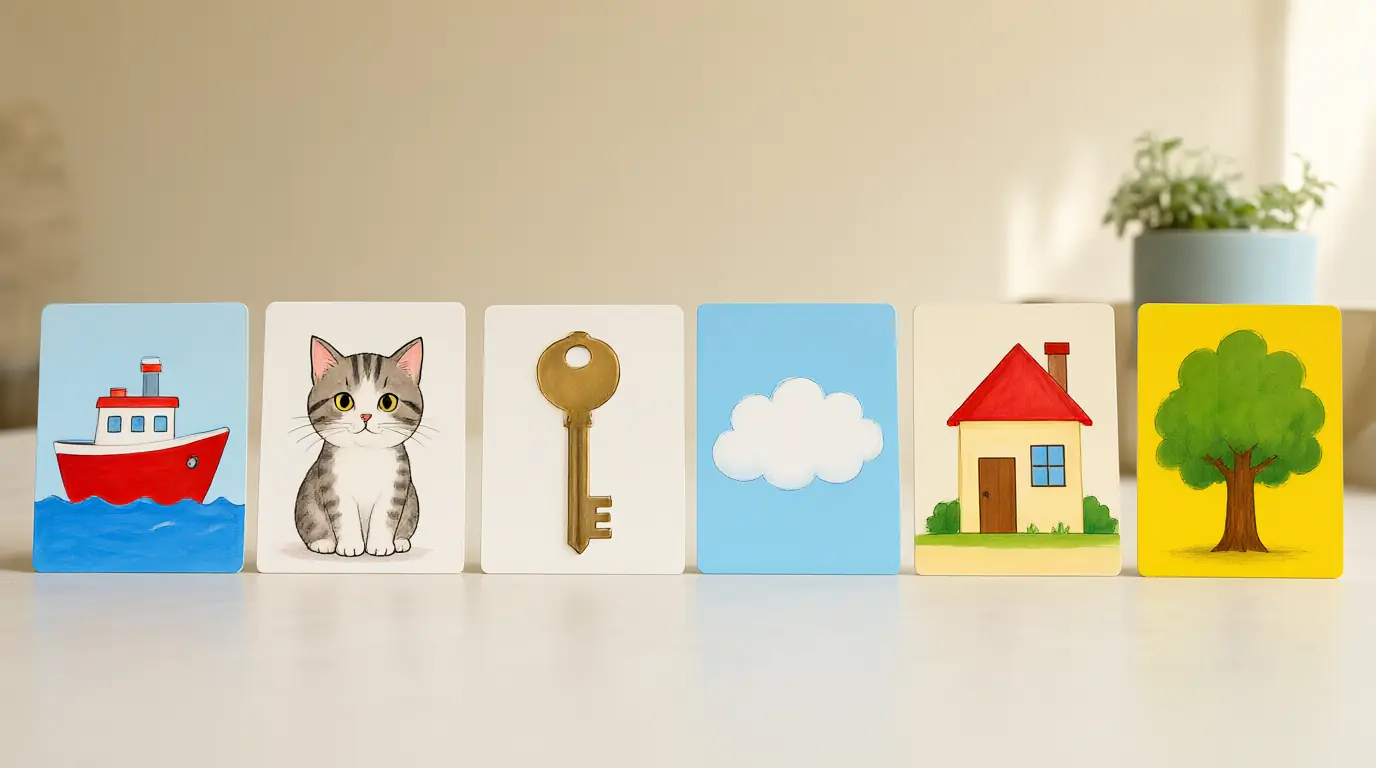
Make it your own: Younger children can say a single word for their picture. Older children can add a character's feeling or a problem for each card.
The changing journey
A pretend trip becomes the setting for problem solving, as each player adds a change that the group must respond to. It builds flexibility and cooperation, because plans keep shifting and the group has to adapt together. Children find it reassuring that a surprise can be handled calmly.
You’ll need
- A scarf or rope to use as a 'path'
- A few cushions as stepping stones
- A backpack or bag for pretend supplies
How to do it
- Agree on a destination, such as Grandma's house or the beach, and lay out the path.
- Walk or mime travelling along it while describing what you pass.
- Ask one player to suggest a change: 'It starts to rain' or 'The gate is closed'.
- Let the group decide how to deal with it, miming the action as they go.
- Add a second change from another player and carry on until the destination is reached.
- Sit and tell the journey back to someone who was not there.

Make it your own: For younger children, offer two choices for each change and let them pick. Older children can plan the journey in advance and secretly choose the problems for the others to solve.

Make it work for your family
Stop each game while children are still enjoying it, and keep turns short so nobody waits too long. If a child freezes, offer two choices ('Does the dragon sneeze or sing?') or let them add a sound instead of words. Join in yourself and make unexpected suggestions, which shows that surprises are welcome.
Watch for ideas that exclude someone or become too scary, and steer them gently: 'What if the monster is lost and needs help?' Do not correct grammar or logic during the game, and avoid asking who was best. Afterwards, ask what each person liked in the story. If you want a different way to tell stories, try these short story starters to finish together or paper games that make a map, a message or a mystery.

Parents also ask
What age is best for improv games?
Around four to eight, children can follow simple rules and enjoy pretend play. Younger children may join with sounds and movements, and older children can handle more complex scenes. Keep games short, voluntary and low pressure for any age.
How do I help a shy child join in?
Offer roles that do not need talking, such as making a sound or moving an object, and let them watch first. Allow them to pass, and give them time to join when they are ready. Playing in a pair with a friend or parent often helps.
What does 'yes, and' mean in children's improv?
It means accepting what someone else has said and adding something to it, instead of rejecting or ignoring the idea. If a friend says the dog is purple, you say 'Yes, and it has green spots'. It helps children listen and keep stories moving.
Choose materials and activities that suit your child, supervise as needed and adapt the ideas to their interests and abilities. About our editorial approach